-
-
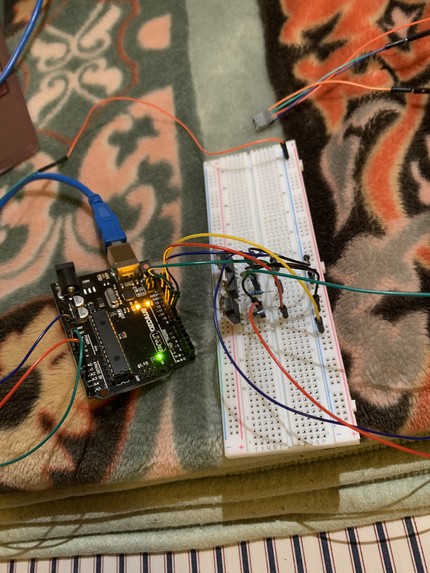
Low Pass Frequency Filter
-
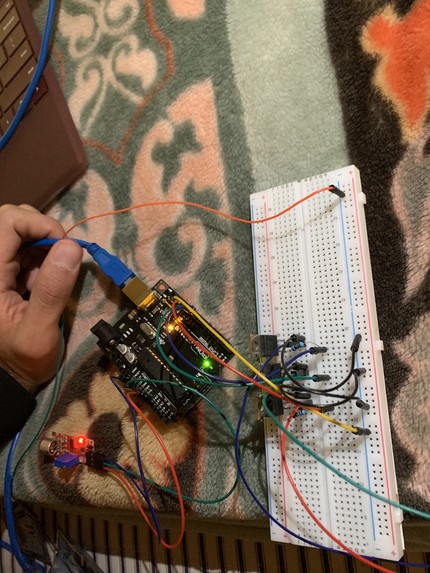
Fully Built Ciruit


Inspiration
The inspiration for VibeRate comes from wanting to create an inclusive listening environment that can be experienced by all individuals regardless of their background.
What it does
Using a strip of LEDs and a vibrating motor, the device detects the frequency of sound through a microphone and displays the appropriate colour scheme and vibration rhythm. The device creates to different types of stimulus that allows the user to quite literally feel the music.
How we built it
We used an arduino as a microcontroller to control the output of both the LEDs and vibration motors. Input for the program came in through a sound sensor which picked up the frequency of the sound in the surroundings. This data was firstly filtered through a low pass frequency filter to extract the pitch of the music and was designed using the circuit knowledge from our course. Then the sound data was later mapped to the colour spectrum of the LED through a mapping function which was developed using C++. The code was passed to the microcontroller which integrated all the input and output devices and led to the final project.
Challenges we ran into
A significant hurdle we faced was that the output from the sound sensor was initially mapped to discrete RGB values. This had a negative effect on the sensitivity of the LED strip since many parts of a song did not cross specific discrete boundaries to trigger a colour change. To tackle this, the sound value was evaluated using a continuous mapping function to increase sensitivity and user experience. Furthermore, the user has control to map a specific spectrum of RGB values that they would prefer, however, the current script integrates a full rainbow spectrum from red to blue representing high volume to low volume respectively.
Accomplishments that we're proud of
Our biggest accomplishment through this project was to make the music experience more inclusive to people with challenged hearing. It allows people to visually enjoy the music who find it challenging to experience it audibly while also providing a tool for individuals to complement their music experience.
What we learned
One thing we learned was programming for Arduinos (C-type language). We learned important considerations when working with Arduinos and how to read from and write to various pins. We also learned more about practical applications of various hardware components, such as transistors, and how they can be used to achieve the required results.
What's next for VibeRate
VibeRate’s next steps include incorporating a headphone input into the system, as we all integrating an application into the system that could control the colour scheme or intensity of vibration. Furthermore, getting feedback from stakeholders and using it to validate the efficiency of the device. Finally, making the device portable and wearable is essential to the success of the device.


Log in or sign up for Devpost to join the conversation.