-
-
Vitalert Logo
-
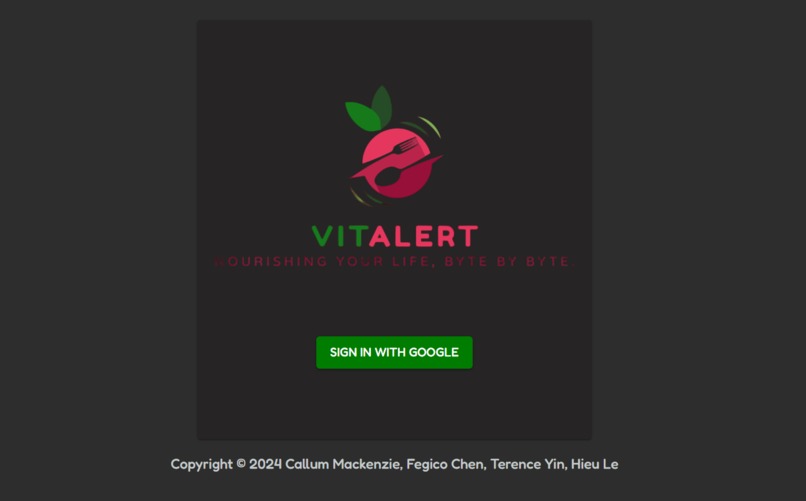
Sign in page
-
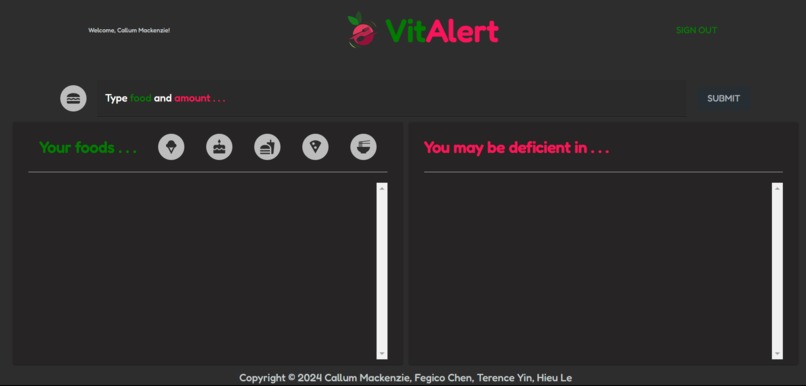
Homepage desktop unpopulated
-
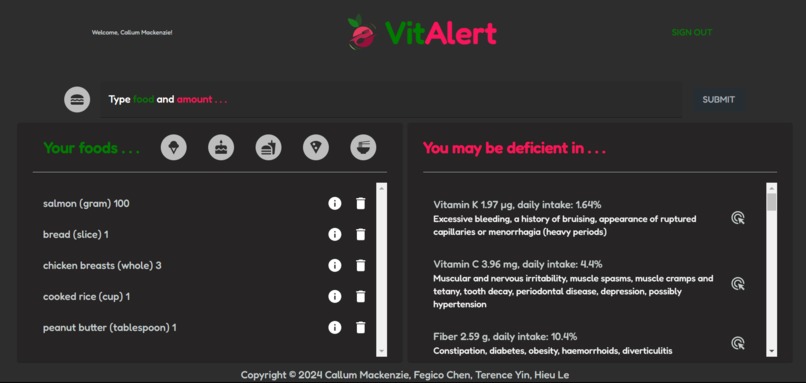
Homepage heavily populated desktop
-
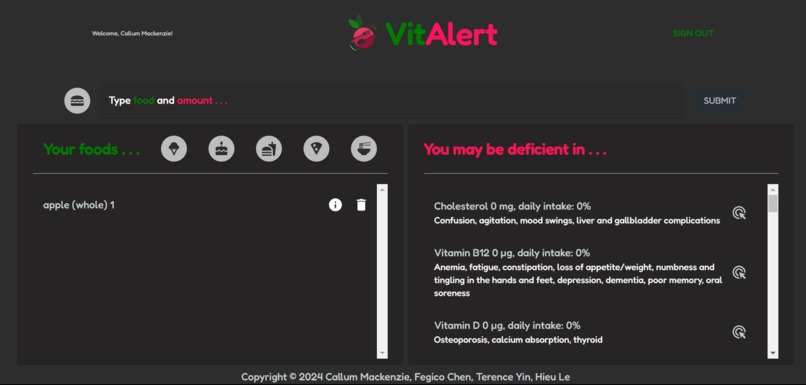
Homepage slightly populated desktop
-
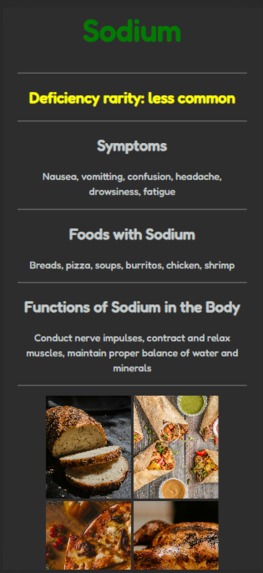
Nutrient info page
-
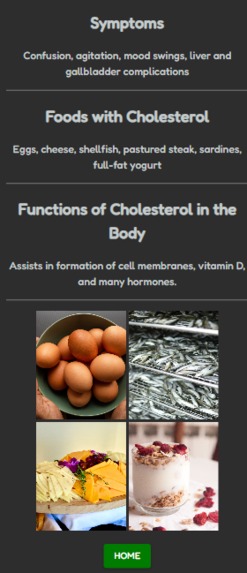
Nutrient info page mobile
-
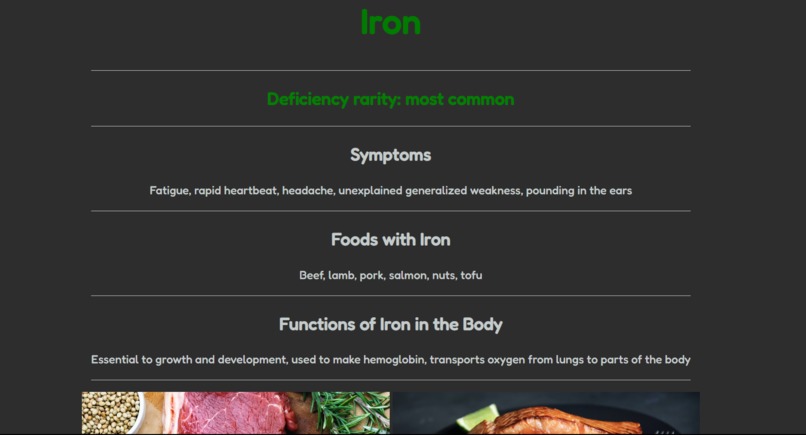
Nutrient info page desktop


Inspiration
Our entire group consists of avid health enthusiasts. We wanted to create a project that we could actually use after the hackathon and apply to our daily lives. Eating healthy and receiving enough nutrients daily is essential to proper growth and leads to healthy habits. Combining our enthusiasm for a healthy lifestyle, passion for hacking, and the growing prevalence of nutrient deficiencies we decided to create VitAlert.
What it does
VitAlert is a web application designed to help individuals maintain a balanced diet by tracking their daily food intake. Users can input an unlimited amount of food items, and will receive feedback based on their diet. User inputs are saved and will be cleared at the end of the day. VitAlert will display the total amount of specific nutrients, percentage of recommended daily intake achieved, and symptoms of deficiency of a specific nutrient. Each nutrient has a button that will redirect the user to a page with additional information about the nutrient. This additional information includes the deficiency rarity, deficiency symptoms , foods that contain the specific nutrient, and functions of the specific nutrient within the human body.
How we built it
To build VitAlert we used React, Firebase, Typescript, R, Figma, Edamam API (for nutritional data), Node, and HTML/CSS.
Challenges we ran into
- Figuring out the request format for the API input
- Parsing/Modelling data received from the API
- Coordinating development
Accomplishments that we're proud of
Accomplishments we are proud of include, successfully using the API, parsing/modelling large amounts of data, working together as a cohesive and efficient team, the appealing design and aesthetic of VitAlert, and completing our project on time.
What we learned
- Technical proficiency in Git and Version Control
- React, Typescript, Firebase
- The division of Front-end and Back-end work
- Effective communication within a team
- Time Management
- Allocating work based on strengths of teammates
What's next for VitAlert
The next steps for VitAlert are:
- Implementing additional features such as viewing historical food intake data to track nutritional habits over time (adding a calendar that allows the user to select a date and view their food intake)
- Implement an AI model that recommends meals based on the user's historical inputs and lack of specific nutrients


Log in or sign up for Devpost to join the conversation.