-
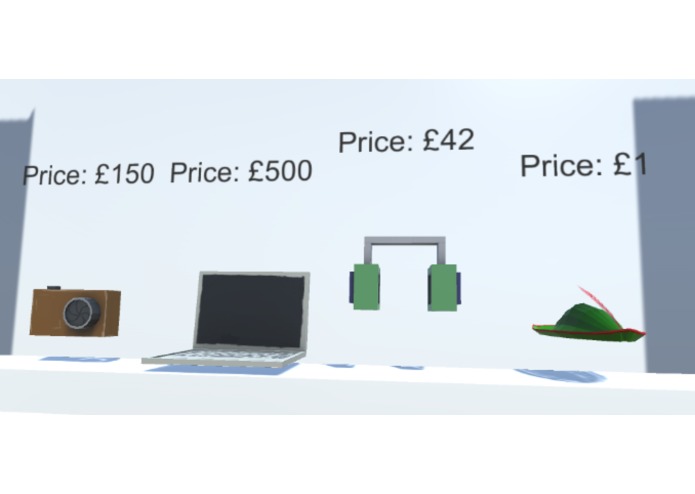
The product view

Inspiration
We had the chance to use the Oculus Rift and the Leapmotion during a Hackathon. We first had ideas of sci-fi inspired UI systems navigated with the Leapmotion, but as we had support for the Braintree api, the idea quickly evolved into a digital Storefront in VR, navigated with the Leapmotion
What it does
It shows a list 3D models of products that the user can scroll through, to then further inspect in the VR space. It lets the user manipulate the model through gestures, and buy the product right from within the VR app.
How we built it
The project uses Unity for the VR application, and a Heroku server to handle the interfacing with Braintree. In the Unity app, there are a few scripts which first filter down the Leapmotion gestures to the ones we are interested in, which are then passed on to the main product display to handle manipulation of the 3D objects. The code in Unity and all the Assets were done by me. The Braintree interaction and signup, as well as the interfacing between the Unity app and Braintree, was done with a Heroku server which would take web requests sent from Unity and handle the correct Api requrests to Braintree. This part was done by Marti.
Challenges I ran into
The main problem under our time constraints was that Leapmotion gestures are fairly unreliable and not as intuitive as one might like them to be. While we were able to make the gestures work fine with a bit of practise, they are still hard to instantly pick up when using the app the first time.
Accomplishments that I'm proud of
Making this project in the 24 hours we had during the Hackathon.
What I learned
Oculus and Leapmotion have a lot of potential, but you have to invest time to get everything out of them.
What's next for VR Storefront
As this was a quick Hackathon project, the project's current state will likely be its finished state.


Log in or sign up for Devpost to join the conversation.