-
-
-
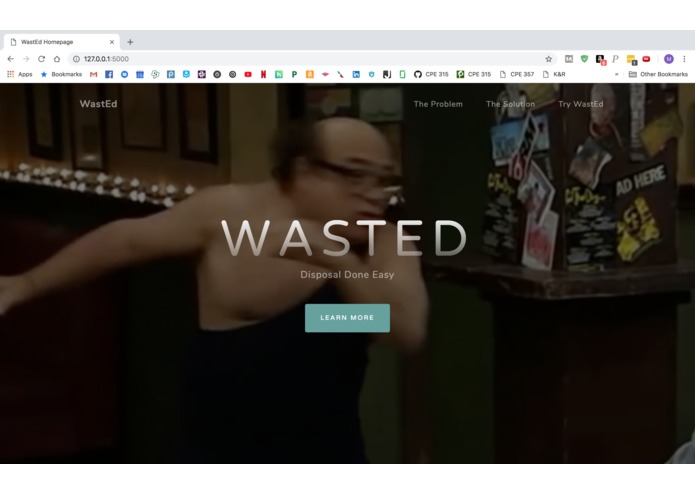
Website home
-

Website devs
-
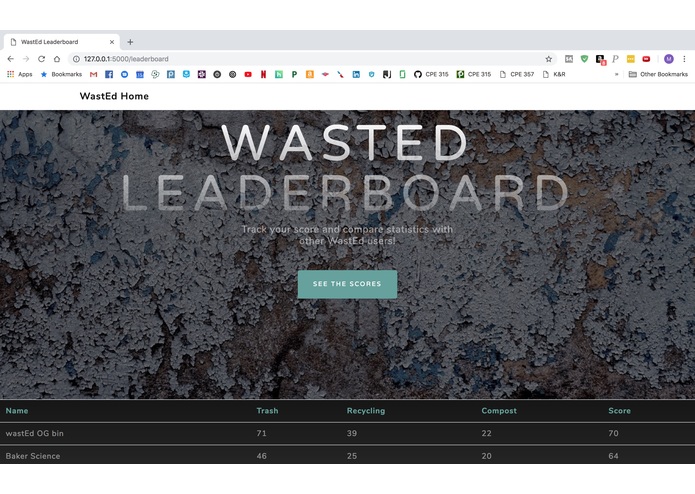
Website leaderboard


WastEd
Recognizes
- Camera sensor detects an object has entered the WastEd sorting bin
Captures
- Smart trashcan captures a picture of the object and sends it to the backend for processing
- OpenCV implementation in the backend filters the image before it's processed
Identifies
- Image is analyzed using Google Cloud Vision API
- Suggested object type and its properties are recorded
Classifies
- Based on the image processing results and their respective confidence levels, waste is considered for compost, recycling, or trash
- Backend sorting algorithm designates object for appropriate category of waste
Sorts
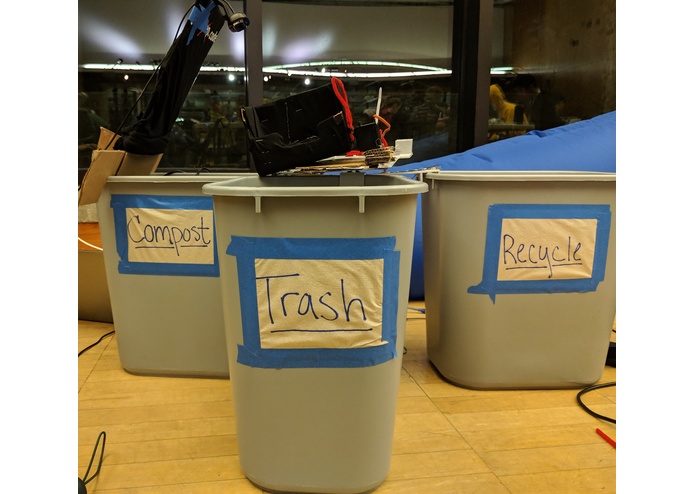
- Hand built hardware device comprised of sorting container and conveyor, 3-D print attachment, motor, Arduino, and standard web camera
- Hardware contraption receives signal from backend to sort waste into selected bin
- Sorting container moves toward appropriate bin, dumps the waste, and readjusts for more incoming trash
Updates
- Backend writes results of trash sort to Google Cloud Firestore Database using REST API
- Configured WastEd smart trashcans receive a comprehensive score based on input placed into compost, recycling, and trash
Compete
- WastEd users are encouraged to produce more compost and recycling, and less trash
- Companies and organizations will offer incentives for individuals and/or groups, depending on smart trashcan's private or public use
- Scores update to WastEd website, built on a Flask app for python
Keep Up
- WastEd custom website contains information about WastEd, including how it's made and where it's being used




Log in or sign up for Devpost to join the conversation.