-
-
Funny awesome main menu
-
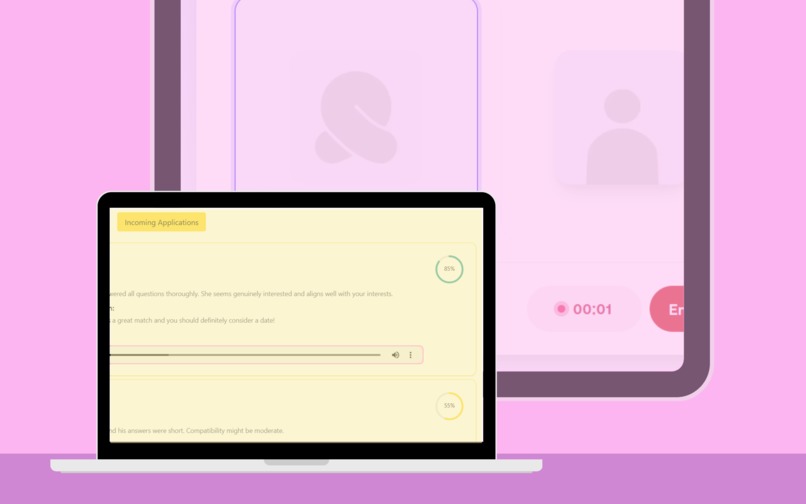
This looks great
-
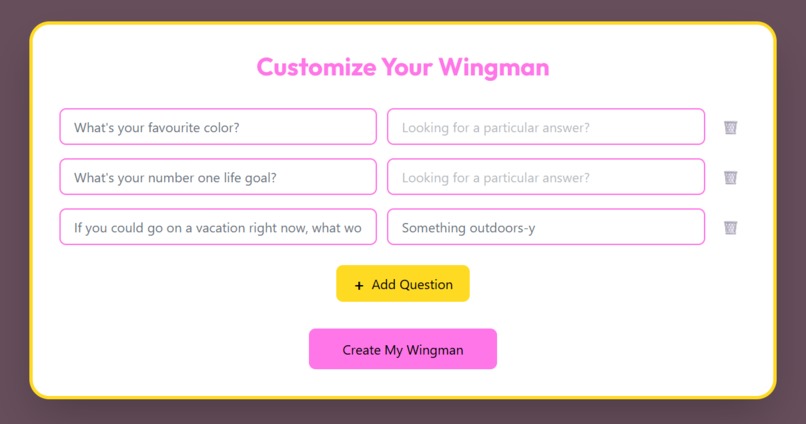
Create a wingman!
-
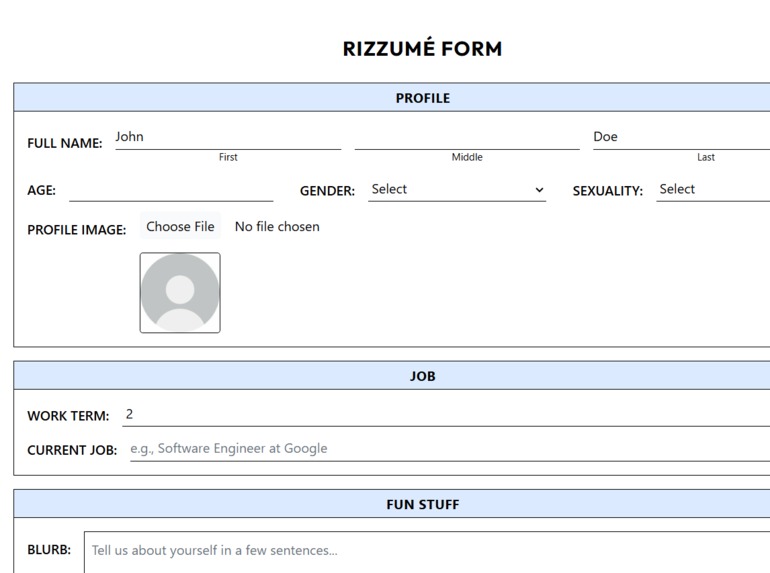
Create a "rizz-umé".
-
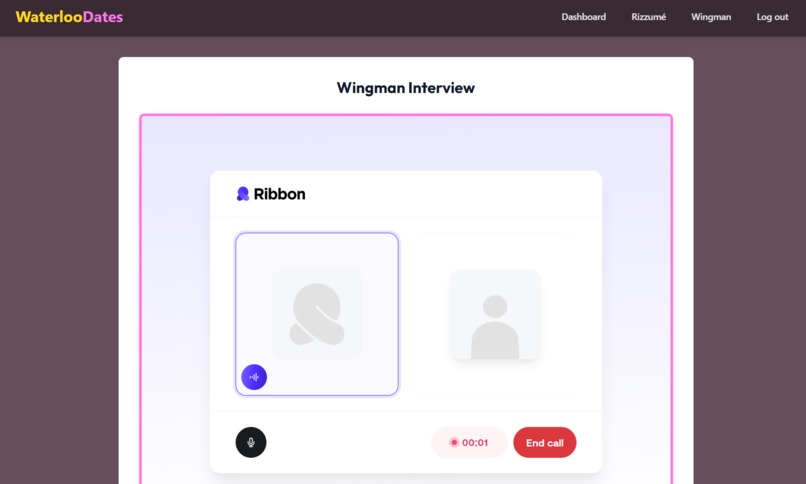
Chat with Ribbon.
-
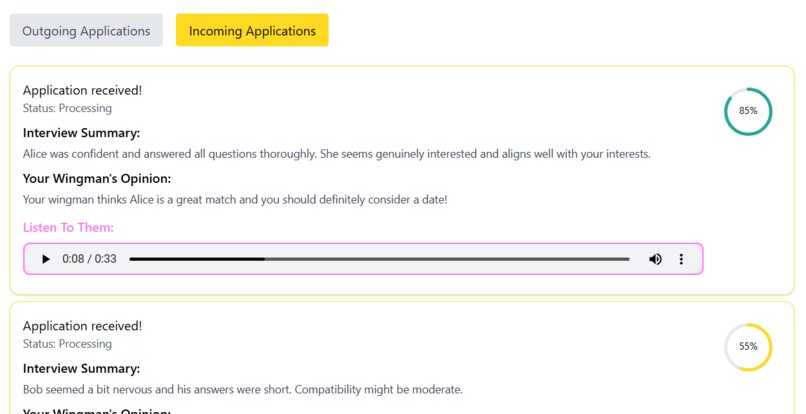
Learn about prospective applicants!
-
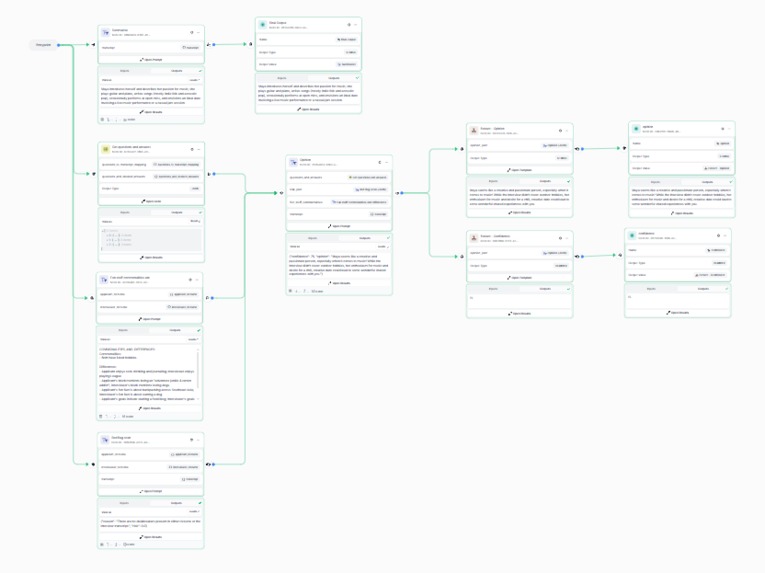
Our Vellum Workflow.
-
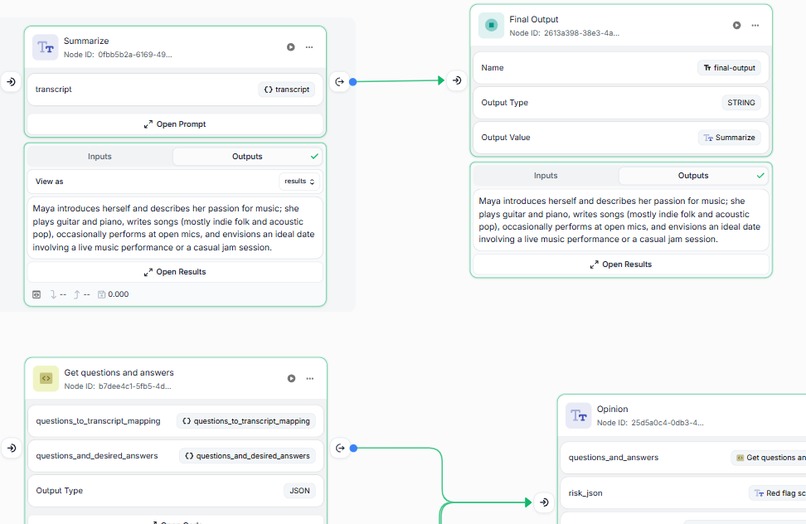
A close up of part of our Vellum Workflow.


Inspiration
At University of Waterloo, too often do we see people on their own; missing out on the delight of holding hands 👫, cuddling 🫂, and having someone to love 🥰!
If there’s one thing Waterloo students are good at, it’s applying for jobs. After all, lots of people have heard of the university’s internal job board, WaterlooWorks. Why not bring the rush and joy of Rank/Match to dating? Lots of dating apps require you to fill out boring questions about hobbies and aspirations, but we can inject even more excitement by integrating the familiar job interview!
Introducing WaterlooDates. 💞
Now everyone is playing on home field!
What it does
- Authenticate using Auth0 and create your user dating profile.
- Set up a “rizz-ume” to showcase the best parts of yourself — in resume format!
- Tell a voice AI “wingman” chat-bot the questions it should ask prospective applicants. Vet those who are interested in you!
- Search and filter for profiles for apply to: you’ve got to pass the test with their wingman AI bots to get their number.
How we built it
Front-end
- Next.js ⚫
- Typescript 📜
- TailwindCSS 🎨
- Authentication via Auth0 🔒
Back-end:
- MongoDB Atlas cloud database 🍃
- Python Flask server 🐍
- Ribbon.AI API for voice interview calls and transcription 🗣️
- Vellum.AI API for LLM workflow generation 🛠️
- Google Gemini API for AI summarization and wingman opinion-generation ♊
Challenges we ran into
Constantly running out of free Gemini API calls…
Accomplishments that we're proud of
- A super detailed MongoDB Atlas backend! We even had to write out a documentation file to keep track of what endpoints were available for the frontend.
- Lots of AI integration. We created the analysis and wingman opinion generation LLM chain using the Vellum Workflows SDK, with individual calls made to Google Gemini. Ribbon was also super fun and cool to use out of the box.
- The silly idea!
What we learned
This was our first time using Ribbon and Vellum.
What's next for WaterlooDates
Coming soon to a university near you! See our detailed README on GitHub.


Log in or sign up for Devpost to join the conversation.