-
-
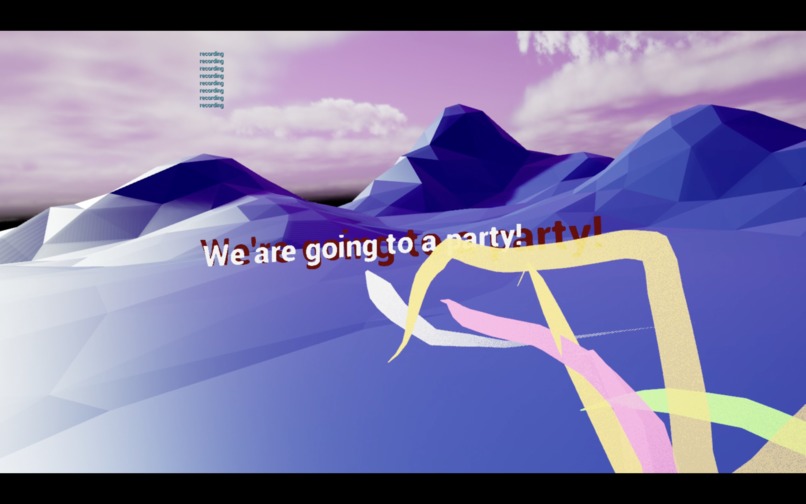
Stage 1: Instruction for the experience
-
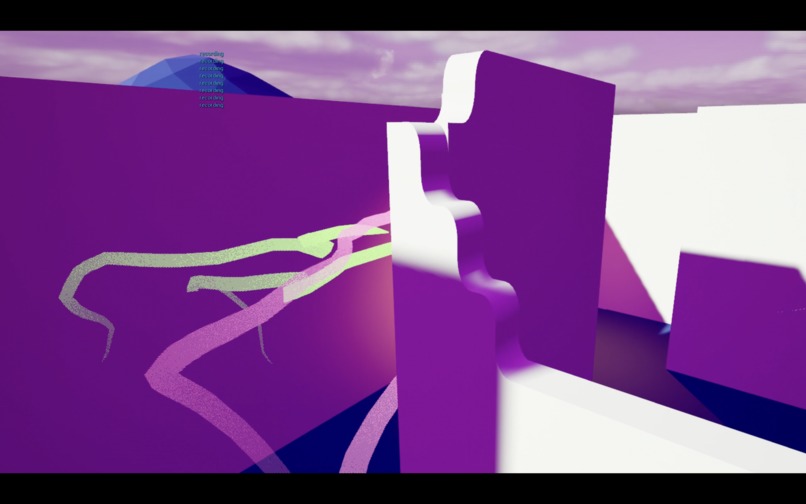
Stage 2: Solving a maze while seeing the paths previous players take.
-
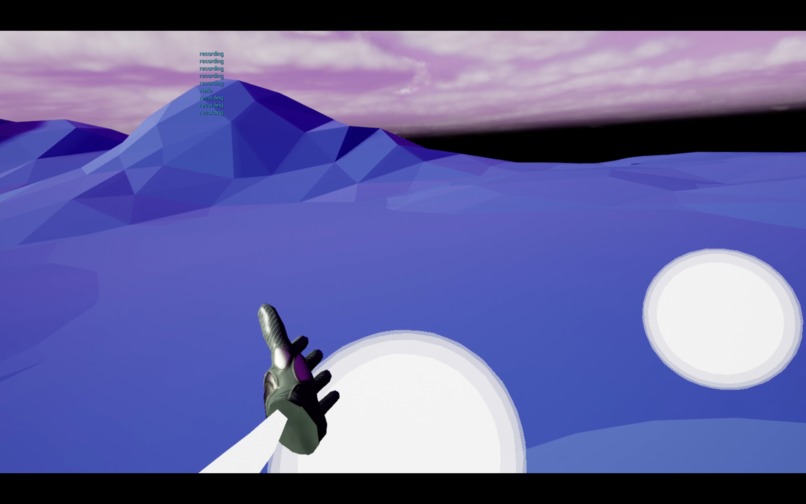
Stage 3: Interacting with musical orbs while hearing and seeing what other players played before you.


Inspiration
We tend to think that we can only feel the presence of others when we are instantaneous. But what could co-presence mean if we can share experiences across time? Inspired by interactive art installation, we wanted to create a and surreal and transcending experience in virtual reality where people could interact across the dimension of time, and through which enabling them to introflect and appreciate the presence of others for people who prefer or only able to engage in more indirect interactions, like people with Autism.
What it does
To demonstrate the concept of sharing experiences with the past, we propose a set of shared experiences that allow users to interact with others who have previously had the same experience. As the player moves their hands around the space, it will leave a trail behind which the next players will be able to see.
The first part of the experience is a guided self-exploration and instructions: by asking users to answer with movements, the prompts are designed to encourage users to try out the interactions and think about themselves.
After that, users will tackle the maze with others who are not in sync but will still be able to see the paths and actions of previous users. This will enable collaborative problem solving as users can learn from the mistakes and successes of others to find the solution more efficiently. The maze will slowly sink to the ground as the time is running out. Audio is also an integral part of the experience, where spatial audio helps guide the users.
The final experience is one of musical co-creation. Users will interact with orbs that produce different notes and will be able to hear what others are playing before. This will allow users to play music together even though they are not in sync. The shared experience of creating music together will add an extra layer of engagement and connection for users.
How we built it
At the beginning, we used Miro to brainstorm to generate and consolidate ideas. Then we settled on workflows using Figma. Going into the development phase, we used Unity and Fusion360 and Unreal Engine to create 3D assets and scenery, and Garageband was used to generate audio assets. Next up, our developer used C++, Blueprint, to develop the environment in virtual reality.
Challenges we ran into
- Solidifying a shared view of the concept within the team
- Brainstorming and selecting the shared experience that induces valuable interaction with others
Accomplishments that we're proud of
- We were able to reconcile our differing views of the same topic and merge them into an imaginative experience
- That we got it to work
What we learned
- How to communicate to share the vision and purpose in the team. (Keeping everybody on the same page.)
- How to collaboratively design the experience flow.
What's next
With the concept of sharing experiences across time, there are many potential real-world applications that can benefit from this technology. One application is for events such as RealityHack, where attendees may not be able to meet and interact with everyone in person but can still have a shared experience across the time through VR. Another application is for inter-timezone communication between family and friends who are living in different time zones and are not awake at the same time. This technology allows them to leave voice messages and have shared experiences such as talking or watching a movie together. Another potential application is for communication during shared watching experiences, such as call and response during a VR concert or inter-student discussions during asynchronous lectures. This new technology allows people to connect and share experiences even when they cannot meet in person, and opens new opportunities for communication and collaboration.
Built With
- autodesk-fusion-360
- blueprint
- c++
- quest
- unreal-engine


Log in or sign up for Devpost to join the conversation.