-
-
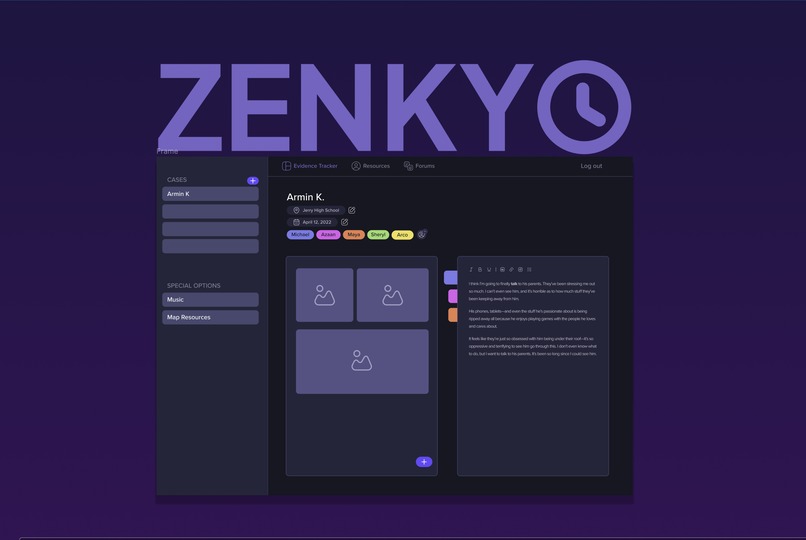
First image
-
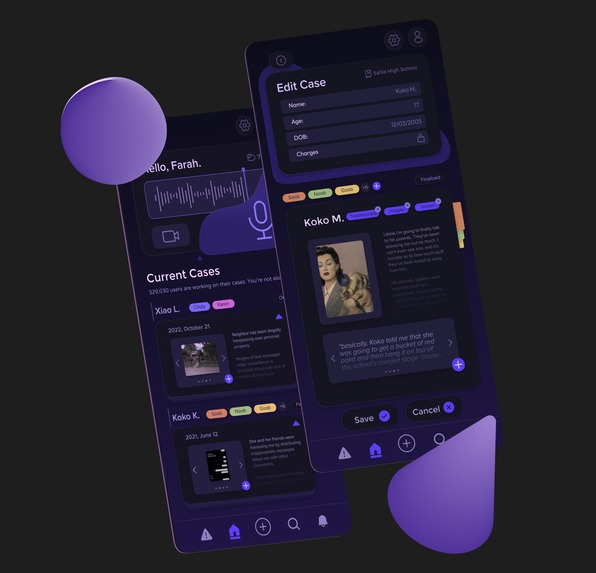
2nd screen
-
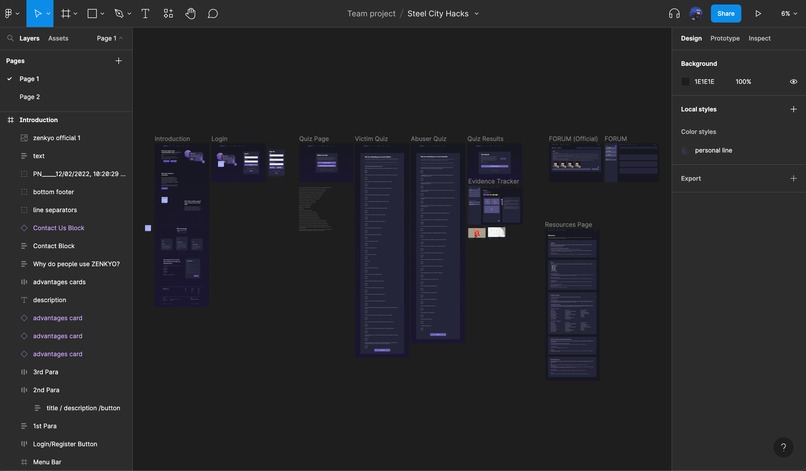
Figma designs
-
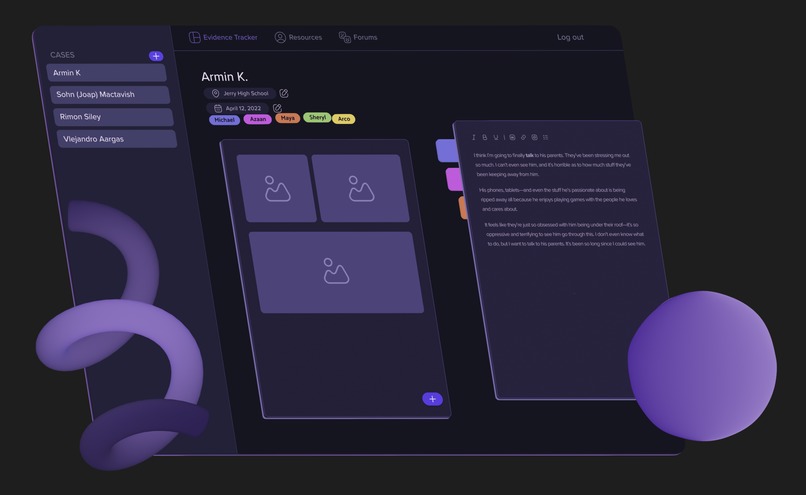
1st screen
-
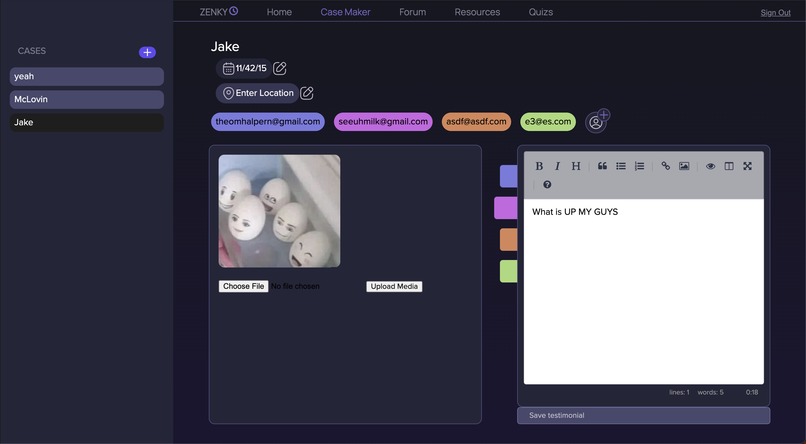
In action!


Inspiration
Our project was inspired by the problems that many members of our team have experienced personally, either from themselves, or from someone they know and love. Mental health issues are on the rise around the world, the amount of people suffering from abuse, bullying, depression, and other disorders is rapidly increasing and our team wanted to focus on stemming the tide of that.
This also directly plays into the name of our application–Zenkyo.
What it does
We offer each user a personalized experience, with a self quiz to direct them to the resources they need! Getting help is already hard enough, but knowing you need help is even harder.
Each user will have their personal account with their own logins and profiles. This data will be stored in a secure database through supabase(?) thanks to our great backend coder, Theo.
Equally important, we give users the ability to organize their thoughts, emotions, evidence into an evidence tracker. We were inspired to incorporate a streamlined productivity page to help victims that want to file a possible report. These cases also allow multiple people to be added through email for collaborative purposes and a consistent refresh function.
We also have an online forum function available for all users. One of the worst feelings a victim or person can have is the feeling that they are alone in their struggles and alone in their journeys. It would be a safe space platform for people all around the world to share their experiences, give advice, and help one another. Users can also SHARE cases on their forum, where people can comment their advice or suggestions.
Our website also heavily stresses our resources page that’ll serve to direct all our users to the help they need and deserve. This page also shows sources to international audiences, and a lot of our links lead to places that have Australia or UK services.
How we built it
We used Figma to design the UI of the entire app and website. I also designed the website and made references to popular websites that we liked, such as RAINN, an SA-help website.
To plan and execute our pitch, we used Google Slides, Notion, Google Docs, Milanote, and Taskade. Our personal experiences with these circumstances inspired me significantly, and I channeled that inspiration into my work. We aligned our graphics on Google Slides with the pitch.
The ZENKYO website was done through HTML and CSS with our back-end developer adding in personalized accounts and databases.
Challenges we ran into
The toughest thing we had to deal with in this hackathon by far was the time constraint. Our team was so inspired by this topic and inspired to create change that we really wanted our application to “have-it-all”. After all, our team’s main mission was increasing accessibility and versatility. However, we had to prioritize the features we felt would have the most impact and connect with the most amount of people possible. Another difficulty was connecting the frontend to the backend. With the amount of features we still wanted our application to have, we had several different developers working separately that had to synchronize their code and strategy. Specifically, for the forum, code generation was a difficulty. Overall, we were able to get through this hurdle by working collaboratively.
Accomplishments that we're proud of
Graphic design: Creating and discussing all of the graphics/design options in a limited amount of time was definitely a challenge, especially since I self learned an entirely new application for doing 3D modeling. I'm proud of how quickly my team and I were able to produce work with strong feedback and ideas.
Front-end: Creating the website in a short amount of time despite some bugs.
Back-end: All the quizzes and back-end stuff was fun to implement through some hurdles.
Pitch: I am once again surprised by how thoughtful our pitch and message was. I also really enjoyed using my spare time to give user feedback to the developers and advising for improvements.
What we learned
Graphic design- I learned how to use Spline more easily. It was fun to experiment with it more. I also researched a lot about frosted glass and composition. Choosing specific design choices, especially marketable aspects to our project was crucial. This meant we would want to use precise typography, fonts, colors, and overall style that emits the calming, comfortable vibe that our project needed to enunciate.
Back-end: Brushing up on Supabase/account/databases
Front-end: Brushed up on HTML/CSS skills—glad this was a good learning experience for us.
Marketer: One of my big takeaways is improving at planning for the product and writing good messaging for this productI adored narrating the slides, pitching, and editing the scripts. I particularly enjoyed collaborating with our team to create the most versatile project possible.
What's next for ZENKYO
With our time limitations but large aspirations, we actually wanted to create a fully functional IOS/Phone/Tablet version of our app. We had lots of fun thinking of features and mocking up an example UI of how it would look. However, time always wins.
We also would implement better graphics and more safety/organizational features for a more packed and powerful app, such as folders and a website version instead of just an app. Keyboards on a laptop or desktop are generally easier to type 40 pages on.
Another thing we wanted to implement was to contact nearby schools or businesses to introduce the app for students to have. With marketing and algorithm experience, we could also reach this app even further throughout social media. This app could help the youth and adults finally receive the justice they need in any situation.




Log in or sign up for Devpost to join the conversation.