

Download DiskAccess – Fast NFS Windows Client for Unix Disk Access
Overview
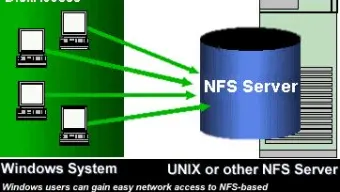
DiskAccess is a lightweight NFS (Network File System) client designed specifically for Windows environments that need seamless, secure access to Unix‑based file servers. First introduced in 2006, the utility has accumulated over 2,000 downloads worldwide, with a strong user base in Poland, China, and several other countries. Built for legacy systems such as Windows 95 and earlier, DiskAccess provides a straightforward, English‑only interface that eliminates the complexity typically associated with cross‑platform file sharing. The current version, 6.0, received its last update on March 16 2006, but the core functionality remains robust for organizations that still operate on older Windows platforms or maintain mixed‑OS networks. Whether you are a system administrator needing to mount Unix shares on a legacy workstation, or a developer requiring quick read/write access to NFS volumes without installing a full‑blown suite, DiskAccess offers a secure, low‑footprint solution that integrates directly into the Windows networking stack.
Key Features and Capabilities
- Native NFS v2/v3 support for Windows 95 and earlier versions.
- Minimal installation footprint – requires less than 2 MB of disk space.
- Secure authentication using standard UNIX user credentials.
- Transparent drive mapping – mount remote Unix directories as local Windows drives.
- Automatic reconnection on network interruptions.
- Command‑line interface for scripting and batch operations.
- Integrated logging for troubleshooting and audit trails.
- Compatibility with both 32‑bit and 16‑bit Windows environments.
- Simple English‑only UI that reduces the learning curve for new users.
- Free trial version that allows full feature testing before purchase.
The feature set of DiskAccess focuses on reliability and ease of use. By supporting NFS v2 and v3, it aligns with the most common Unix file‑sharing protocols still in use on many legacy servers. The client’s ability to map remote directories as local drives means users can work with Unix files using familiar Windows Explorer tools, eliminating the need for dual‑boot setups or virtual machines. Security is handled through standard UNIX authentication, ensuring that only authorized users can access sensitive data. Additionally, the automatic reconnection feature helps maintain productivity in environments where network stability can be unpredictable, automatically restoring the connection without user intervention.
Installation, Usage, and Compatibility
Installing DiskAccess is a straightforward process that can be completed in under five minutes. After downloading the installer from the official website, run the executable file (DiskAccess‑Setup.exe). The wizard guides you through a series of simple steps: accept the license agreement, choose an installation directory (the default location is recommended for most users), and confirm the creation of a shortcut on the desktop. Because the program is designed for older Windows versions, it does not require modern .NET frameworks or additional runtime libraries, making it ideal for machines that cannot be upgraded.
Once installed, launch DiskAccess from the Start menu or the desktop shortcut. The main window presents three tabs: Servers, Mount Points, and Settings. In the Servers tab, click “Add Server” and enter the Unix host’s IP address or hostname, followed by the NFS export path. Provide your UNIX username and password; the client will verify credentials against the remote system. After successful authentication, switch to the Mount Points tab to assign a drive letter and set optional parameters such as read‑only mode or automatic mounting at startup. Press “Apply” to finalize the configuration, and the selected Unix directory will appear as a new drive in Windows Explorer.
DiskAccess is officially compatible with Windows 95, Windows 98, Windows ME, and other legacy Windows releases that pre‑date the introduction of the Windows NT kernel. While the software does not support modern Windows 10/11 environments, many organizations still maintain legacy workstations for specialized equipment or legacy applications, making DiskAccess a valuable bridge between old Windows PCs and contemporary Unix file servers.
For power users, the command‑line interface (CLI) can be accessed by opening a Windows Command Prompt and typing diskaccess –mount \\server\share X:, where “X:” is the desired drive letter. This feature enables scripting of bulk mount operations across multiple machines, which is particularly useful in large IT deployments or automated testing environments. The built‑in logging facility writes events to %ProgramData%\DiskAccess\logs, providing detailed information about connection attempts, errors, and data transfer statistics. Administrators can review these logs to diagnose issues or audit file‑access patterns.
Pros, Cons, and Frequently Asked Questions
Pros
- Extremely low disk‑space requirement – ideal for thin clients.
- Works on very old Windows versions that many modern NFS clients abandon.
- Straightforward UI and CLI for both novice and advanced users.
- Free trial provides full access to all features before purchase.
- Secure authentication using existing Unix credentials.
Cons
- No support for NFS v4 or newer security extensions.
- Limited to English language interface.
- Not compatible with modern Windows 10/11 operating systems.
- Last software update was in 2006, so no recent bug fixes.
- Lacks graphical performance enhancements such as drag‑and‑drop between multiple mounts.
FAQ
Can DiskAccess connect to an NFS v4 server?
No. DiskAccess only supports NFS v2 and NFS v3 protocols. For NFS v4 environments, you would need a more recent client that includes the required security extensions.
Is the trial version fully functional?
Yes. The trial version unlocks all features, allowing you to test server connections, mount points, and the CLI without restriction. A license key is required only for continued use after the trial period.
What security measures does DiskAccess use?
DiskAccess authenticates users against the Unix server using standard UNIX credentials (username and password). It does not provide encryption for the data stream; therefore, it is recommended to run it within a secure, trusted network or VPN.
Can I automate mounting with a script?
Absolutely. The CLI allows you to mount shares with a single command, making it easy to incorporate into batch files or startup scripts for multiple machines.
Is DiskAccess still supported by the developer?
Official support is limited, as the last update was in 2006. However, the developer provides a knowledge base and email support for licensing inquiries and basic troubleshooting.
Conclusion and Call to Action
DiskAccess fills a niche that many modern NFS clients overlook: reliable, low‑overhead access to Unix file shares from legacy Windows systems. Its small footprint, straightforward UI, and robust NFS v2/v3 support make it an attractive choice for organizations maintaining older workstations, industrial control PCs, or any environment where upgrading the OS is not feasible. While the lack of NFS v4 support and the absence of recent updates may deter users seeking cutting‑edge security, the free trial gives you a risk‑free opportunity to evaluate whether the tool meets your specific workflow requirements.
If you need to bridge Windows 95/98 machines with Unix file servers quickly and securely, download DiskAccess today. The trial version is ready for immediate installation, and a simple license purchase unlocks continued use. Take advantage of its lightweight design to keep your legacy infrastructure productive without sacrificing access to critical data.
Overall Rating: 4 out of 5 stars