• Toes Day

    We agree 🙂

    Beyond GDPR: Is MyTerms the New Standard for Enforceable Personal Data Agreements? is a terrific new piece on MyTerms by Thomas Wieberneit in CustomerThink. A key paragraph:

    "From a CX perspective, there are a number of clear positives for customers. The more than annoying banner/toggle circus that we see these days gets replaced by a cleaner privacy contract handshake, which means less consent fatigue and less friction overall. As terms are to be legible, there is a trust impact. The risk of a mismatch between what customers think they have agreed to and what they actually have agreed to, gets reduced. Lastly, there is accountability, an enforceable contract; it changes the game from blind trust to trust but verify. Talking about trust, this is an important conversion lever for businesses. Not all businesses have understood it yet, but trust is a very valuable currency. As Nitin Bajatia said in a recent CRMKonvo, the free customer is more valuable than the captive one. Yet again, too many businesses have not yet got this memo."

    To answer the question in the headline, MyTerms is not "beyond" the GDPR, because the GDPR says contract is one of the six lawful bases for processing personal data. (See 1.b at that link.) It also lists consent as a lawful basis, but that is clearly a gigantic fail, for reasons Thomas gives here:

    "(Unwanted) tracking on the web is still the norm although a 'consent notice' regime has been established since the EU GDPR became enforceable on May 25, 2028. MyTerms is a direct response to regime with its associated high operational cost for operators, high cognitive load for users, and weak enforcement of user intent (preference signals can be ignored).

    "On top of this, many website operators and service providers still manage to keep their tracking-based advertising business running, by ignoring GDPR, by hiding behind 'legitimate interests or by simply making it very hard for people to not agree to tracking and sharing personal data."

    And I do like this: "All in all, MyTerms is a great initiative by IEEE that deserves full support. 

    Sounds right enough

    Axios: 1 big thing: 3 historic shifts. It begins,

    "You can only fully understand politics, business and your own anxiety in 2026 by reckoning with the three, once-in-a-generation shifts unfolding at once, Jim VandeHei and Mike Allen write in a "Behind the Curtain" column:

    • The ideologies, tactics and tone of governance.
    • The lightning-fast advancements in AI.
    • The overnight transformation of how our realities are shaped."
  • Funday

    Image
    Pink sands, on the east side of Harbour Island in The Bahamas.

    I shall not see my shadow

    It’s too cold to go out today, so far, here in The Bahamas. So I am staying bundled and warm, getting work done. This was not my vacation plan, but it’s cool.

    For maximum freakage and fascination

    Moltbook is it. Zvi Mowshowitz runs it down. “Best start believing in science fiction stories. You’re in one,” he says. Bonus link.

    Before it’s too late

    I finally finished my answers to the latest Pew questionaire. If you’re a future-ish kind of person, you can too.

    Good guidance

    Nice obituary for Catherine O’Hara (who, at 71, died way too young) in the Guardian. Excerpt: Explaining her initial approach to improv, O’Hara said: “My crutch was … when in doubt, play insane. Because you didn’t have to excuse anything that came out of your mouth. It didn’t have to make sense.”

    Of tunnels and lights

    I’m a registered and temperamental independent. No politics or party matches my personal positions.

    I love business, tech, free markets, and labor unions. I believe all rights are made up, but are necessary for civilization to exist and thrive. Among the most useful and necessary (though not natural) human rights is the one for health, which is why I think we need socialized medicine. I think owning and carrying guns should be a right, but for the fewest and most qualified and responsible people. I think most new laws tend to protect yesterday from last Thursday, and last decades or centuries past their initial relevance—but if we’re lucky will have collateral benefits that are still good in some ways. (Prime example: the US Constitution, with all its amendments.) I’m a pacifist who hates war, and honors selfless military service and bravery. I believe the best writing and thinking about politics and economics come from people who occupy or define the extremes (e.g. Marx, Hayek, Graeber, Buckley, Galbraith, Lowenstein, Friedman). And I love good writers who bring clarifying analogies and metaphors to our causes and arguments. The best today comes from Daniel Barkhuff, former Navy SEAL, front-line physician, and first-rank blogger.

    I bring this up because, while I understand why many people I know and love voted for Donald Trump, it should be clear by now to all but the slavishly devoted that the dude is a dictator who is at risk of succeeding to the limits of Caesar-grade vanity, and will finish destroying what’s left of the US’s respect in the eyes of the world, plus most of its own citizens, if he is not stopped.

    So, to those engaged in resistance to Trump’s ambitions, I commend Barkhuff’s latest post, in which he analogizes a sport in which I have no other interest: UFC, for Ultimate Fighting Championship:

    Trump himself has shown what he fears. He blinks under sustained scrutiny. He recoils when institutions hold. He bristles at collective action he cannot bully or exhaust. The NRA. Epstein. Yes. But most of all, he fears opponents who refuse to be intimidated, who stand their ground, meet his stare, and say: I’m not going anywhere. You’re just as tired as I am. Let’s finish this.

    Championship rounds are not about dominance. They are about resolve.

    American democracy is bruised, winded, and tested, but it is still standing. The question is not whether the fight has been ugly. It has. The question is whether, in these final rounds, enough people are willing to keep their hands up, keep their feet moving, and stay focused until the bell.

    Biology will defeat Trump anyway, as it defeated Biden, and is defeating me (one year Trump’s junior), and us all. But I hope, for the sake of the country and the world, that some of the babies in the MAGA bathwater (reduced influence of elites, smaller and more efficient government, respect for agriculture, manufacture, small business, and the working class) survive Trump’s defeat—and I hope the victors are respectful of those.

    Also the first story about it. Hats off.

    MyTerms: A New IEEE Standard Enabling Online Privacy and Aiming to Replace Cookies, by Sergio De Simone in InfoQ, does a nice breakdown of last week’s MyTerms launch in London.

    Story Bowl

    I’m a Patriots fan who was pained for the Seahawks when a bad play call (blame coaches) snatched defeat from the jaws of victory the last time the two teams met in the Super Bowl. So I won’t be too bummed if the Seahawks win this one. The Revenge Bowl will be a good story. So will the Redemption Game story for Sam Darnold. But there are good stories for the Pats as well. The MVP story for Drake Maye. The Huge Turnaround story for Mike Vrabel. The Nobody Believes in Us story for the team. My expectation: Patriots by less than a touchdown.

  • Shutter Day

    Image
    A bedroom gable at the house where we are staying in Harbour Island, Bahamas.

    Without losing its charm

    I am in Harbour Island, where all the old houses have shutters. The house where we’re staying is a small cottage built in 1832. It has survived countless hurricanes.

    Remember Her?

    Moltbook is a Reddit for AI chatbots. NBC: Humans welcome to observe: This social network is for AI agents only. Wikipedia. Google. Bonus link.

  • Now We Begin

    Image

    Yesterday, Customer Commons and MyData Global launched MyTerms at a London event correctly titled The Only Way to Get Real Privacy Online. (I explain only and real at that link.)

    MyTerms is the nickname for 7012-2025 – IEEE Standard for Machine Readable Personal Privacy Terms. Links:

    The text of the standard has a lot of prerequisite formal stuff up front. Here are the main parts:

    • The Introduction, starting on page 8.
    • Sections 4 and 5, starting on page 14.
    • The top Annexes, starting on page 21

    Note that the Introduction and the Annexes are informative, meaning not part of the standard itself. Between them is the normative, or operative, part of the standard.

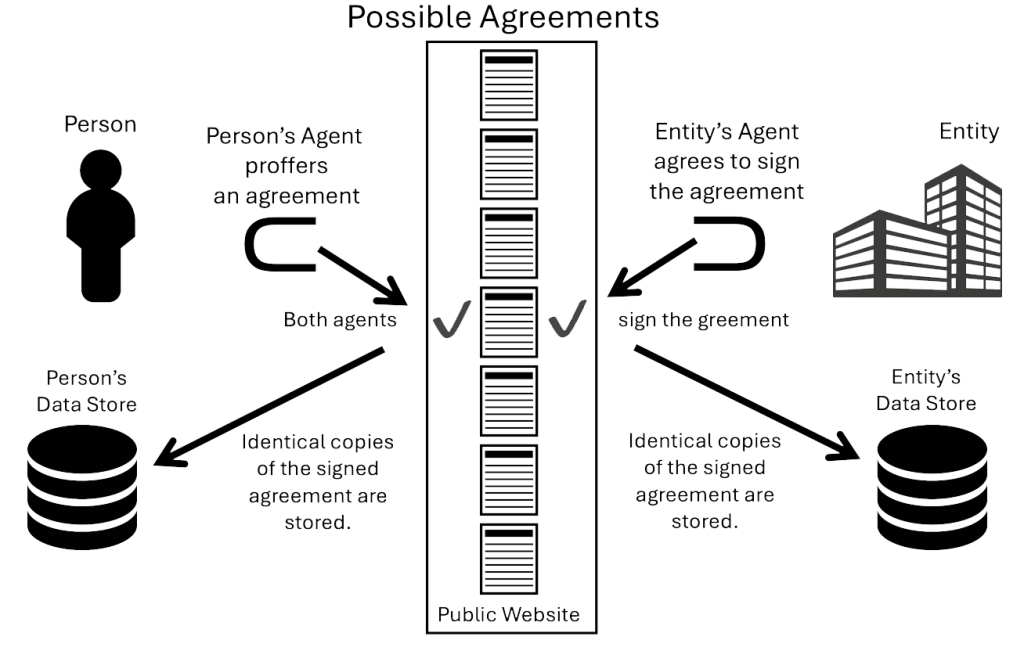
    The standard itself is simple. Here is a diagram that predates the one in the standard, but says the same thing:

    Image

    This is how it works:

    1. The person, acting as the first party, proffers an agreement to an entity (website, service, or organization of any kind), acting as the second party. The agreement is a contract. Note that the person here is neither a “user” nor a “client,” but rather a self-sovereign human being operating at full agency.
    2. The agreement chosen is one of a short list posted at the website of a neutral nonprofit, such as Customer Commons. This is on the Creative Commons model. MyTerms is to personal privacy agreements what Creative Commons is to personal copyrights.
    3. On the Creative Commons model, agreements are readable by ordinary folk, by lawyers, and by machines. MyTerms addresses the third of those.
    4. This ceremony is conducted by agents on both sides. These agents can be as simple as browser and web server plugins, or as fancy as personal and corporate AIs. The standard leaves these choices open.
    5. Both parties keep identical records of the agreement, for compliance auditing and dispute resolutions, should those needs arise
    6. The first party can also keep a record of which second parties passively or actively don’t agree.

    Obviously, this obsolesces cookie notices, and establishes much more solid grounds for relationships between people and organizations, customers and companies, demand and supply.

    If you want to dig wider and deeper, here are three textual sources:

    And here is the MyTerms video collection at YouTube. We have two so far:

    There will be more. I look forward to not being able to keep up with all of it.

    If you want to get involved, Customer Commons is forming the MyTerms Alliance. More at that link.

    If you want to join the conversation space out of which both Customer Commons and MyTerms were spawned, join the ProjectVRM mailing list, which has been going since I set it up as a new fellow of the Berkman Klein Center at Harvard in 2006. The entire archive is here. And we thank the BKC for its extreme patience with what began as a one-year project. 🙂

  • Watts Up

    Redraw your conclusions

    The GDPR Enforcement Tracker "is an overview of fines and penalties which data protection authorities within the EU have imposed under the EU General Data Protection Regulation (GDPR, DSGVO)." And extremely interesting. Dig around. You'll see fines against dentists, cops, a password management company, finaincial institutions, municipalities, website operators, a coin dealer, a YMCA, TikTok (£14+million), a cabinet office, Mermaids (sic), banks, retailers, universities, government agencies, a hospital, a city council, an insurance company, Amazon Europe Core S.à.r.l. (€746 million, by Luxembourg), and so on. The most common, it looks (at least to me) are government entities of many kinds. 

    A way to bet

    Will Lockett says OpenAI Is Headed For Bankruptcy. His case: "recent investigations have found that less than 5% of ChatGPT users actually pay for the service. That is a dogs**t conversion rate — especially when you consider OpenAI is selling ChatGPT at a staggering loss to try and get more customers through the door. Even their top-tier $200-per-month plan loses them buckets of money. In short, OpenAI’s income is devastatingly underperforming."

    He says Atlas and Sora are both duds, and OpenAI's new ad biz will fail too. I don't disagree.

    I'll add that I'm in that 5% of ChatGPT customers (not mere freeloading "users"), and lately I've found Gemini to be faster, free, and at least as good. Also, Google is in a far better position to leverage countless other advantages because it's a giant and diversified mf. That doesn't make me love Google, or even like it. In fact, I consider it the top stinker in the adtech fecosystem, and trust it as far as I can throw it.

    But, as a successful and generous (not enshittified) business guy told me a few years ago, "We need giants to throw off surpluses. It helps to have some outfits making too much money." He was talking about the real (aka Main Street) economy. Not the financial one. The relevant point here is that Google is investing its real economy surpluses into Gemini, while OpenAI is spending its investors' speculative bubble money into ChatGPT. Google, with deeper pockets, more science, and plenty of data centers, is far more poised to win the long game in Big AI, even if that game is over in two years. Ditto, in a smaller way, for Meta. Same reasons.

    You're welcome

    NASA: Asteroid 2024 YR4 will certainly miss Earth and has a 96.2% chance of missing the Moon. I share this in faint hope that when one sees BS on Facebook, Instagram, TikTok, or social media wherever saying the asteroid is going to have a spectacular impact on the Moon, they'll know it's BS.

  • Warm Takes

    Image
    From a Santa Barbara I Madonnari (street art) festival

    We still await truly personal AI.

    Google just launched Personal Intelligence. “Get highly personal help with everything from vacation ideas to project plans, and more. Gemini connects the dots across your Google apps—like Gmail, Photos, Search, and YouTube—and your chat history preferences to provide suggestions tailored to your world.”

    That should be called personalized, because it’s not yours. It’s Google’s.

    Oh, and this

    Privacy | The dark age of surveillance capitalism, by Prasanto K. Roy in India Today. His point: Besides gathering huge amounts of personal data just by talking to you, Big AI can improve personal data extraction from other ordinary activities online, then interpret and use it to manipulate people, based on what’s known by opaque and unaccountable systems.  For example, “Surveillance pricing is a thing once that dividend moves into the normal economy. Ride-hailing apps can charge you more if you use an iPhone, or have very low battery, and desperately need a ride.”

    Just what you didn’t ask for

    Show of hands: Does anyone here want ads on ChatGPT? (Don’t raise them if you work in the ad biz.)

    Did you want them in Amazon searches? How about Google’s before that?

    Expect ChatGPT to become just as enshittified.

    And now, naturally, we have ICE Explores Big Data, Ad-Tech Tools to Power Investigations. Why? “ICE said it is primarily interested in how technology solutions can help identify individuals, entities, or locations.” Also, “Ad-tech location data is collected from apps, websites, and connected devices. It is then aggregated and sold by data brokers for uses beyond advertising, including analytics and research.”

  • Whatknot

    Image
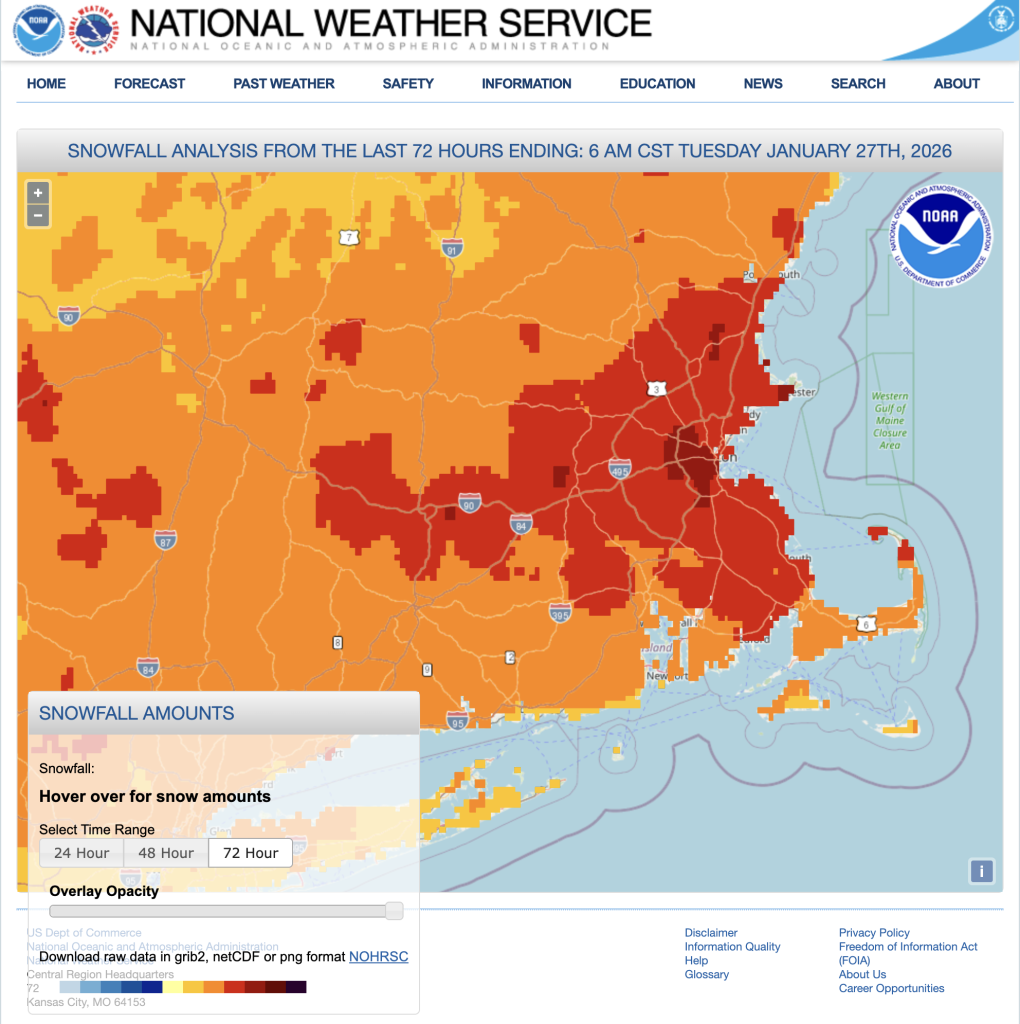
    National Weather Service Snowfall map.

    Boston wins

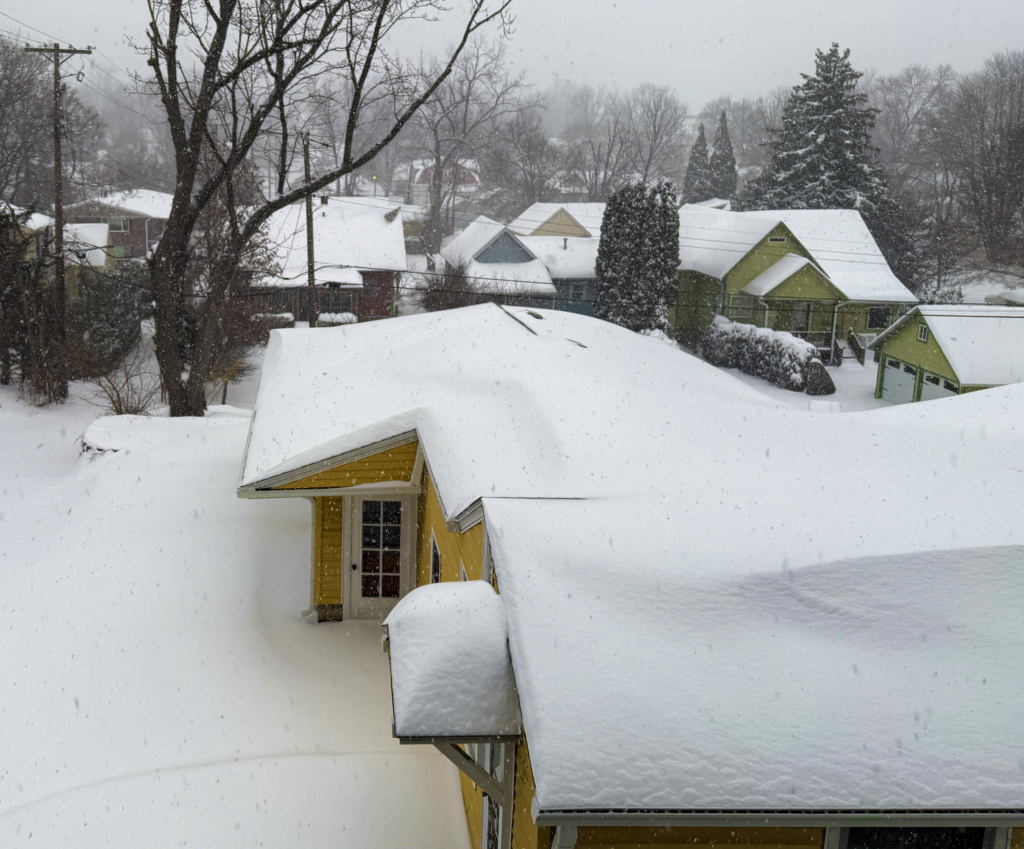
    We had some deep snows when I lived in Arlington, Mass (next to Cambridge), but nothing quite like the thick  blanket of white that got dumped on the Boston metro two days ago. The screenshot above is part of an NWS snow-depth map that will soon age out. So enjoy it while you can.

    Meanwhile, here in Bloomington, Indiana, the 14.5 inches we got from the same storm had me and my car isolated until Joe, the guy who built our house, came by with his front-loader and cleared the whole road in about five minutes.

    Here is a FlightAware MiseryMap video of the storm’s path across all the airports it closed:

    And I’m glad he did

    The Brothers Comatose and Sweet Sally nail Bob Dylan‘s Don’t Think Twice, It’s Alright. Their performance is so good that I got to thinking about how passive-aggressive the lyrics are. Then my mind wandered to Positively 4th Street and Like a Rolling Stone. I thought, “Man, Bobby sure had a lot of problems with people.”

    Saved some time

    The problem with online sports gambling is that steady winners get cut off. I was going to say a bunch about this, but just remembered that I did that already.

    What is the opposite of criticism?

    On a lead from a friend, I followed a thread from this patent to its author, Brian Dear (another friend), then to his about pagehis old bloghis BlueSky tweetingshis bandcamp page, his lettrboxd page, then to his criticism of Megan McArdle and the WaPo, and (not finally) to the work of critic A.S. Hamrah, whom Brian likes.

    All of that brought me to a self-admission: while I love and value criticism of many kinds, I am not a critic, because criticism tends to be about current work, people, and goings on. It’s not that takes on that stuff are wrong or bad. On the contrary (speaking critically), they can be very good. It’s just that I’m a long-term / long-view guy. As i said in My Three Hooks, I have, and subscribe to, purposes that are (or I hope or trust will be) good for the world. I also like unanswerable questions. If there is life after death, were you alive before your current bodily existence—and shouldn’t we have a word for that? What came before the Big Bang? What is eternity—and can we unbind it from the concept of time? Is life the exception to death—and can it be, if death is not a state but the absence of one? And…

  • Numb Day

    Image
    These aren’t relevant to anything below. But they were tasty, two weeks and two thousand miles ago.

    Clobbering tourism, sports, higher ed, and all tech conferences

    Privacy International says “The U.S. Government intends to force visitors to submit their digital history and DNA as the price of entry.” The proposed changes are here. Particulars from the piece:

    The changes include:

    • All visitors must submit ‘their social media from the last 5 years’
    • ESTA (Electronic System for Travel Authorization) applications will include ‘high value data fields’, ‘when feasible’
      • ‘telephone numbers used in the last five years’
      • ‘email addresses used in the last ten years’
      • ‘family number telephone numbers (sic) used in the last five years’
      • biometrics – face, fingerprint, DNA, and iris
      • business telephone numbers used in the last five years
      • business email addresses used in the last ten years.
    • All these travellers will now have to use an app provided by CBP (‘CBP Home’) and an app for their ESTA application (‘ESTA Mobile App’). The ESTA website is being decommissioned.
    • The ‘CBP Home’ mobile app will be used by people to provide biometric proof of their departure, to ‘close the information gap’. The app will disclose the user’s location once they have left the U.S. and run a liveness detection on the selfie photo.

    If approved, this policy would apply to all visitors who currently travel without a visa. For the estimated 14 million annual ESTA travellers, CBP thinks that this will take the average visitor 22 minutes to submit themselves and their family members.

    That is smart

    Why Intelligence Is a Terrible Proxy for Wisdom, by Joan Westerberg, says “Wisdom is knowing what you don’t know.”

    Because we need to save the Web from AI overviews

    I’ve read The Domain Name’s New Role in the AI Web, by Simone Catania, several times, and know there’s even more for me to get out of it.

    So call it a https://www.privacyinternational.org/news-analysis/5713/trump-administration-wants-your-dna-and-social-media

    Netflix is pitching their new talk videos as “podcasts.” They are not. If you want to know what a podcast really is, go to the blogfather: Dave Winer. Says Dave, “A podcast is a series of digital media files made available over the open web through an RSS feed with enclosures.”

    We need a word for what Netflix is pitching. When I posted Podcasts, Wallcasts, and Paycasts back in October ’24, audio that was also video wasn’t common. Now it is. We have almost reached the point where a podcast isn’t a podcast unless it’s also in video.

    On that post, I said, “For subscription-only ‘casts, such as some on SiriusXM*, I suggest paycasts.” And, “Bottom line: It can’t be a podcast if you have to pay for any of it, including archives.” Netflix isn’t free. And it’s not on the open Web. I also don’t know if it uses RSS. But it still fails to fit the definition of a podcast.

    Preach!

    Because you haven’t yet heard everything about Fernando Mendoza and the Indiana Hoosiers, I give you Mason Whitlock’s take.

    Snow ‘nuf

    My watch told me it was  minus-1° when I woke up this morning, just like it was a year ago today. There’s 14.5″ of snow on the ground, and I need to go shovel a sidewalk that’s 200 feet from here. For footwear, all I have are a pair of old hiking boots, which only go up to the ankle. I unloaded my nice calf-high Columbia snow boots last Summer when I left New York, because I had to purge 95% of my accumulated possessions there, and just take what fit in my small VW wagon.

    So, between the last paragraph and this, I waited until it was a balmy 9° and trudged up there. One of our kind neighbors had already cleared paths on the sidewalk and to the front porch. I widened the sidewalk, then tried to expose as much of the concrete surface as I could. Stopped when I couldn’t feel my fingers (the gloves aren’t great), and left satisfied. At 78, I’ve still got (some of) it.

  • Flying Fckery

    Image

    Go now to FlightAware’s MiseryMap. Cick on the blue Play button and watch The Great Storm of January 25-26 move across the land and cause massive delays at airports in its path.

    I have a 1.59 GB movie (.mov) of what you just saw. What should I do with it?

    Bonus image:

    Image
  • S’no Trouble

    Still falling

    Snow is the only thing I like about Winter.  I grew up on a hill in New Jersey, and sledding down that hill while school was canceled was a huge thrill for me. I see by my stats that I've written 179 other posts about snow

    And it's snowing now. Forecasts say one to twelve inches. So far, we've achieved the former.

    I'm alone here, but well provisioned. If the snow goes above eight inches, I won't drive on it, even though I have all-wheel drive and new Michelins that are good for snow. Last year, I gleefully plowed over and through the deep stuff, and misaligned the radar sensor, which is exposed low and inside the front grille. (See here.) Fixing that cost $1200. 

    Remembering Ransom Love

    Steven Vaughan-Nichols on LinkedIn shares news that Ransom Love has died. Ransom was one of the kindest, sweetest, smartest, most helpful, good-humored, and humble sources I ever had during my 24 years writing for Linux Journal. And our connection went back farther, through his years with Novell in the early '90s. It was a blessing to know him in life and remains one to remember him now. My best to his friends and family.

    What emerges?

    You know how Google's original  (and continuing) mission was "to organize the world's information and make it universally accessible and useful"? It didn't happen with Google. Gemini gets closer. So I'm thinking, if search was the larval stage, and now Gemini is the pupal stage…

  • The Room Where It Will Happen

    Image

    MyTerms is done and ready to begin.

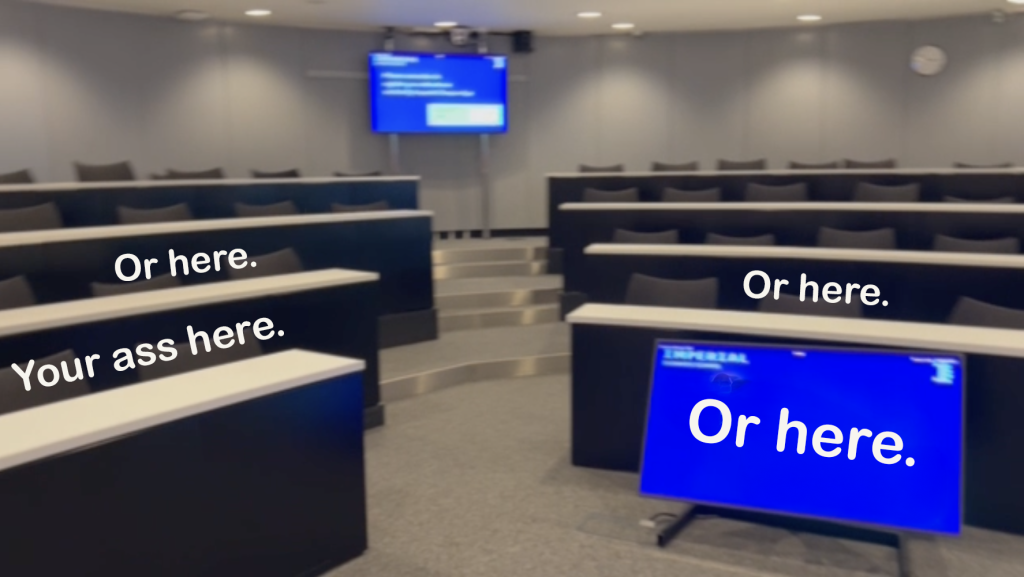
    The launch is next Wednesday, in the room above at Imperial College London.

    Back in ’22, I called MyTerms (IEEE 7012) The Most Important Standard in Development Today. Now it’s finished and more important than ever.

    Join the launch. Times:

    4 PM GMT
    11 AM EST
    8 AM PST

    You don’t have to be in London. It’ll happen live online too. But if you’re lucky to live, work, or hang within a train ride or few, please do come.

    Register—

    To attend in person

    To attend online

    See you there!

  • Dept. of Contentions

    Image
    After I wrote the first item below, I did some digging and found some history. This photo is by Mike
    Fisher on Flickr. Thanks, Mike!

    His story

    A thousand years ago, when I was in college, there was a traveling museum of some kind, I forget what. All I remember was a pair of very large bronze hands, from a plaster cast. The hands were thick and plainly those of man whose work was heavy manual labor.

    Then I looked at the plaque explaining them. The hands were Lincoln’s.

    See a 3-D view, with call-outs, at the Library of Congress.

    Nothing personal. Yet.

    The Resonant Computing Manifesto: “And so, we find ourselves at this crossroads. Regardless of which path we choose, the future of computing will be hyper-personalized. The question is whether that personalization will be in service of keeping us passively glued to screens—wading around in the shallows, stripped of agency—or whether it will enable us to direct more attention to what matters.”

    That sounds like computing is still corporate. Institutional. For us, but not ours. From Personal vs. Personalized AI:

    Technologies extend us. They enlarge our capacities in the world. Intelligence is one of those capacities. So is memory. Your rectangles help a lot with both. That’s why those have already scaled to ubiquity, or close enough.

    AI will do the same, but only if it’s personal. Not if it’s just “personalized.”

    As Jamie Smith made clear here a year ago, “your personal AI isn’t really personal.”

    Two years later, it still isn’t. Yes, there’s progress. And there are pockets. Companion Intelligence is one example. (Looks like a Mac Mini without Apple.)

    We’ll see

    Prophesy: Indiana in 2026 became to college football what Duke in 1991 became to college basketball.

    How Bloomington it is to stock up on greens?

    Consumageddon is here: 5 inches of snow is coming. We’re all gonna die folks.

    And how can this go well?

    YouTube plans to let creators make AI Shorts using their own likeness.

  • Thrustday

    Image

    That right?

    This is a slash: / This is a backslash: \ One can call the former a forward slash, but when telling people a URL, for example, one would say “slash.” That’s two syllables less than “forward slash.”

    I hope the answer is no

    In 2006, when Twitter and Facebook came along, this blog (well, its predecessor, but it was my eponymous blog, and it rolled over to this one) had dozens of thousands of readers per day. Now it gets dozens. (And thank you!)

    Here’s the thing. Twitter and Facebook didn’t just suck away attention and readers. It sucked away writers. So many great bloggers went over to those two social platforms, and abandoned their blogs.

    Now, blogging (personal publishing, syndicated with RSS) is having a resurgence. But on Substack, not on personal sites like this one. Not yet.

    I am sure my readership would go up into the thousands again if I blogged on Substack, but I don’t want to. Here’s why: this is a home. And it’s mine. I’m not in somebody’s walled garden.

    Am I wrong to have faith that independence will, in the long run, have more appeal (and effect) than dependence?

    Which is happening, but how much will it produce?

    Dana Blankenhorn says Big AI is now a commodity, and that doesn’t look good for OpenAI. ChatGPT’s market share is slowly yielding to Gemini and Claude, but still dominates.

    But I wonder about revenue. Google’s cash cow is advertising, especially with the search engine, usage of which is being cannibalized by Gemini. Will the whole world start paying for commodity AI? Only if all of them put up a paywall.

    Humbling

    Searches for my ass.

  • Wedmessday

    Image
    An aurora I enjoyed on a flight between the US and Europe a few years ago.

    Be ready the next time the Sun burps

    It was overcast here in Indiana, but there is a good chance that auroras were visible the last couple of nights where you live, thanks to a big coronal mass ejection. Examples: Arizona, New Jersey, Pennsylvania, Long Island, Texas, Brazil (see the “south Atlantic anomaly,” here).

    Your irregularly nonscheduled blogging program will continue returning shortly. Or at length. We’ll see.

    Woke up with a case of nausea and uselessness this morning. Took all day to get back to something like normal. And here we are, sort of. Cue Frank.

  • Now the Future Can Start

    Image

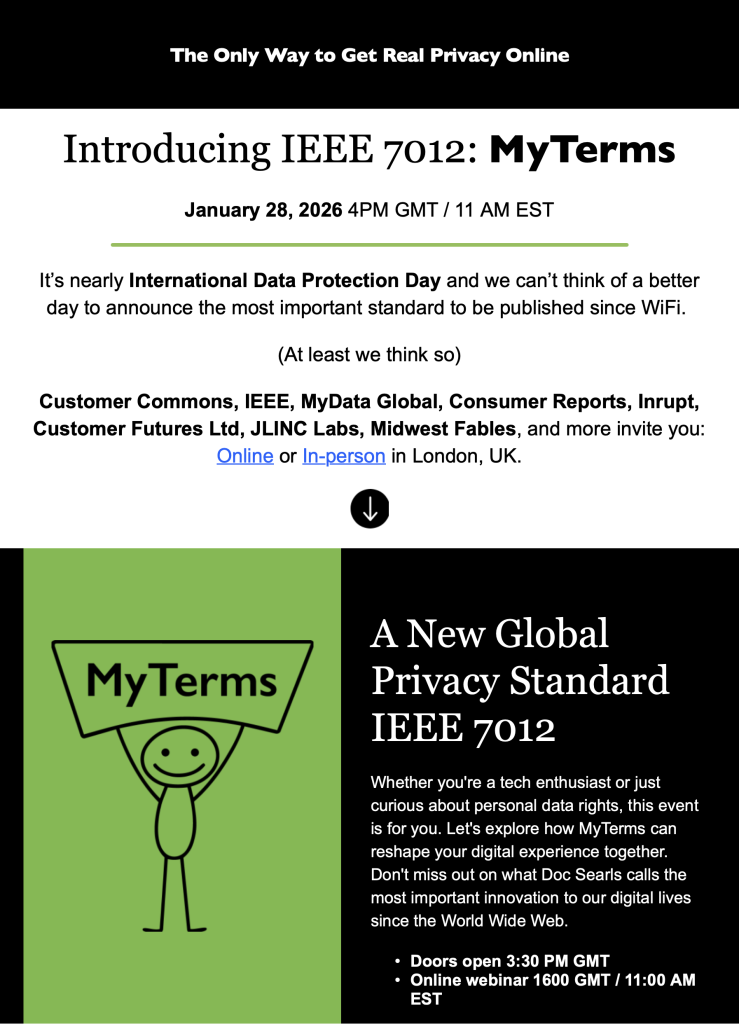
    That’s a screen grab of an email we’re sending out for the MyTerms launch in London. Links:

    Be there in a Zoom square. Or in old-fashioned reality.

  • Duesday

    Image
    The Love Ranch homestead, more than a century after it was built, and the site of countless true and remarkable stories about life in The West.

    Somebody please base a movie or a TV series on this ranch

    I just updated The Greatest Western I’ve Ever Read: a post that often gets visited, eleven years after I posted it.

    What a national leader should sound like. And mean it.

    “Principled and pragmatic: Canada’s path” Prime Minister Carney addresses the World Economic Forum Annual Meeting.

    And we need to grow more of those flowers

    A great Masters of Privacy interview of Alan Chapell by Sergio Maldonado. While the focus is on universal opt-out of tracking (e.g. with Global Privacy Control), the dialog provides a great overview of developments in regulation, business, and practice. MyTerms also gets some flowers from Sergio.

    Because depending on Big AI for privacy won’t work

    In Consumer AI Is Outpacing Enterprise, the VC firm Mayfield quotes Vanessa Parli, Managing Director of Programs and External Engagement at the Stanford Institute for Human-Centered Artificial Intelligence (HAI): “‘If we can build AI and…protect our privacy,’ she said, ‘there’s a big market for that, and I would prefer that it’s about educating the public.’” For me, this points to the need for truly personal AI and MyTerms.

  • We did it

    Image

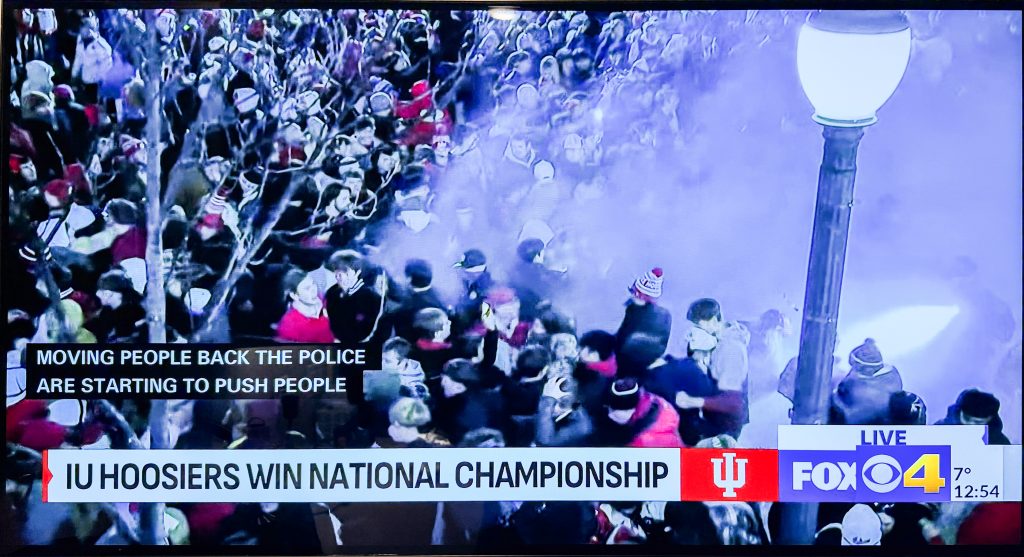
    Our Indiana Hoosiers Football team has won the National Championship.

    You can read about it everywhere. Probably hard to escape, because it’s the best story in sports right now, or perhaps ever: how the team that had lost a record number of games went undefeated this season, going 16-0, a feat not achieved since Yale did it sometime in the 19th century. And they did it with a Heisman-winning quarterback who seems near-perfect as a human being as well as a football player.

    I’m new to the possessive first-person pronouns here, having arrived in Bloomington only five years ago. I’ve been hanging out with people who have been Hoosier natives and fans for generations. To call this victory gratifying and uplifting for them is the height of understatement. This is a deeply personal moment. I’m just glad the Hoosiers won, and grooving on their amazing story.

    However, while correlation is not causation, I would like to point out that sports success seems to follow me. During my two decades in North Carolina, Duke, NC State and UNC became big basketball winners. Duke became an overdog after I became a devoted fan living in California.

    When I came to the Bay Area in the mid-’80s, the 49ers became something of a dynasty. The Giants and the Athletics were such hot shit that they played each other in the ’87 World Series, causing the Loma Prieta earthquake.

    After we moved to Boston in ’07, the Patriots went undefeated*, the Red Sox won the World Series, and the Celtics won the NBA championship. And the winnings persisted.

    And now we’re in Bloomington. So it follows.

    Keep going, Hoo Hoo Hoo Hoosiers!

    *But they lost to the NY Giants in the Super Bowl, leading to one of The Onion’s best stories, ever.

  • Go out and look up

    Image

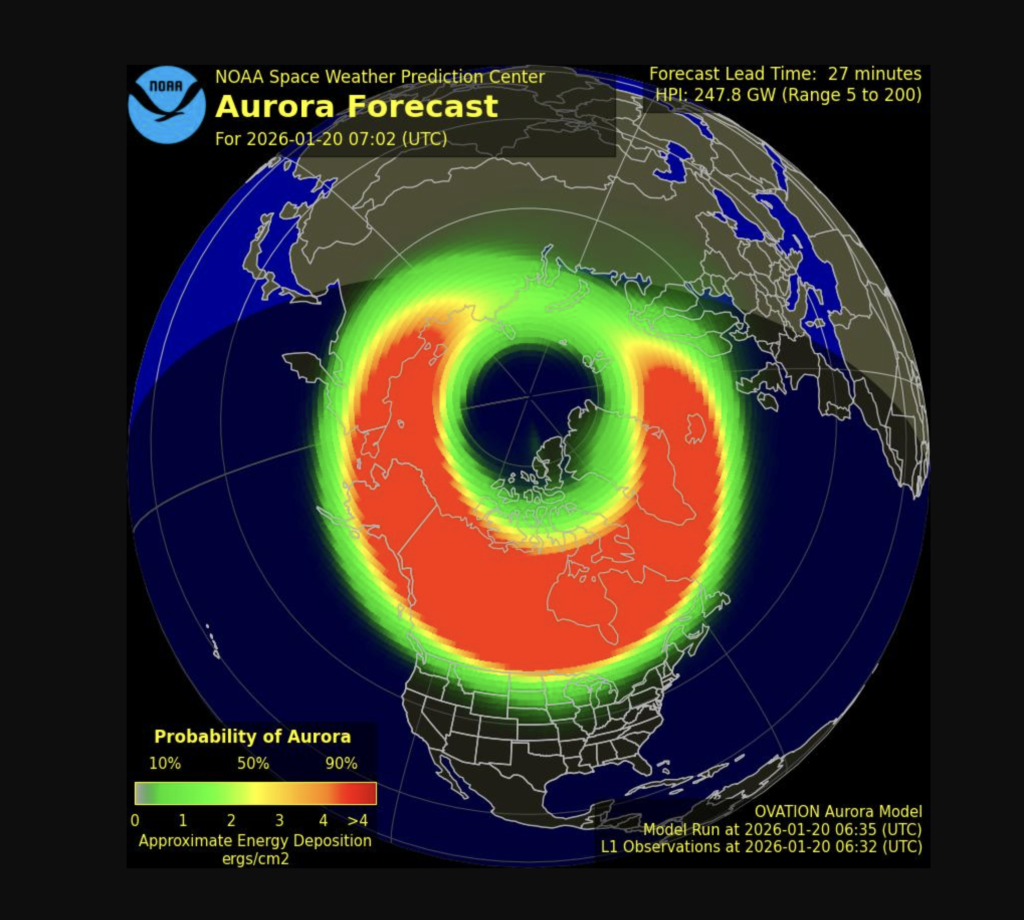
    There is a huge geomagnetic storm going on right now, producing auroras visible far south into the lower, um, maybe, twenty states, of the US.

    Note that auroras are a thousand miles high or so, so they can be seen far south of where they’re happening overhead.

    It’s overcast in Indiana right now, so I can’t see them. But they’re there. If it’s clear where you

  • Moanday

    Image
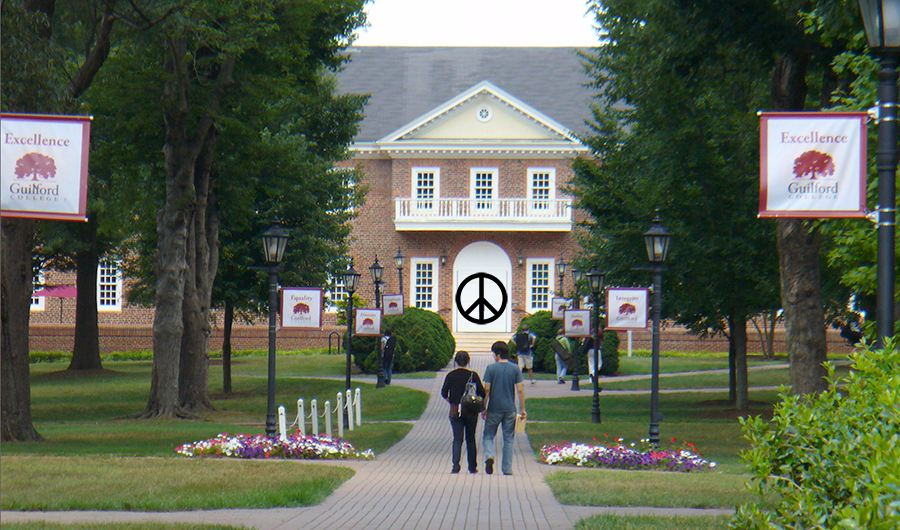
    My alma mater. I remember civil rights demonstrations on that walkway in front of Founders Hall.

    And here we are.

    I was completing my junior year at Guilford College in Greensboro, North Carolina, when Martin Luther King Jr. was assassinated. At that time, Greensboro was one of the main targets of the civil rights cause, and the site of much unrest. I was among those who marched and demonstrated. The antiwar movement was at high ebb at that time as well, because the Vietnam War was massively failing, and dozens of thousands of young male boomers were being drafted to die in it. Me included.

    I remember saying, when we heard MLK was gone, that this would end the civil rights movement and delay its fulfillment for fifty years. I was right about the former (see that last link) and wrong about the latter. Fifty-eight years have passed, and the long road istill stretches ahead of us.

    Back then I also had hope that nonviolence would at least persist as a value and a strategy for fighting war and injustice. I was wrong about that, too. Nonviolence didn’t die with Doctor King, but it lost its exemplar. None of his stature and weight have shown up since.

    Which will be good for MyTerms

    Mike O’Neill does a great job unpacking California”s new Delete Request and Opt-out Platform (DROP), and how it might be good for Europe, I’m also thinking about how it will also help thresh the wheat of websites and services not participating in the adtech fecosystem from the chaff of ones that do.

    This also sucks.

    Only 20,000,000 likes out of 100,000 views

    A porkwarming pig slaughter and community feast story from the BBC.

  • Discourse & Datcourse

    Image
    The best Gemini could do (for me anyway) at generating an image of Cory Doctorow’s “reverse centaur.”

    The reverse centaur. That’s where Big AI is the human part, and you’re just the horse part.

    If you have a suspicion that the AI bubble will burst, or even if you don’t, it’s worthwhile to read Cory Doctorow’s AI companies will fail. We can salvage something from the wreckage, in The Guardian. Some useful metaphors in there. For example…

    A way to see how typical and predictable you are

    https://alocalo.com/quiz

    The Net as one big gaslight

    Joan Westenberg: The Discourse is a Distributed Denial-of-Service Attack. Just one worthy pullquote: “The problem is structural. The total volume of things-you-should-have-an-opinion-about has exceeded our cognitive bandwidth so thoroughly that having careful opinions about anything has become damned-near impossible. Your attention is a finite resource being strip-mined by an infinite army of takes.”

    Hope Spring trains eternal

    Bummed to see the Mets trade Jeff McNeil to the A’s. At least he’s back home in California. But this move by the Mets looks like a good one.

    Unrelated, sort of: After watching Brett Butler play for the Durham Bulls, I followed his major league career for all nineteen (!!) of his seasons as a leadoff hitter. Fun guy to watch.