
Free Graphing Tool for Math & Calculus
Overview
Graphmatica is a free-to-start equation plotting program developed by ksoft, designed for visualizing mathematical expressions across various domains. The software was created by Keith Hertzer, a University of California, Berkeley alumnus, and serves as an educational tool for illustrating and analyzing mathematical functions. It enables users to graph Cartesian, polar, parametric, and differential equations, making it suitable for classroom instruction, homework, and academic research. Unlike computational engines such as WolframAlpha, Graphmatica focuses exclusively on generating visual representations of equations, emphasizing clarity and accuracy in graphical output. This makes it ideal for students learning algebra, calculus, and related subjects, as well as educators preparing visual aids. The application supports the plotting of functions, relations, inequalities, and even complex systems involving multiple equations. Its ability to display up to 999 graphs simultaneously allows for detailed comparative analysis. The developer did not provide additional system requirements, and exact performance details were not specified. However, its lightweight design suggests efficient operation on standard desktop systems.
Key Features & Capabilities
- Multi-format equation plotting – Supports Cartesian, polar, parametric, and ordinary differential equations, enabling visualization of complex mathematical relationships.
- Graph comparison engine – Allows simultaneous display of up to 999 graphs, facilitating side-by-side analysis of multiple functions or solutions.
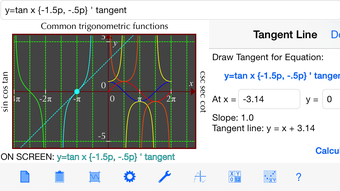
- Calculus and algebraic tools – Offers features for identifying tangent lines, computing integrals, and analyzing algebraic behavior directly on plotted graphs.
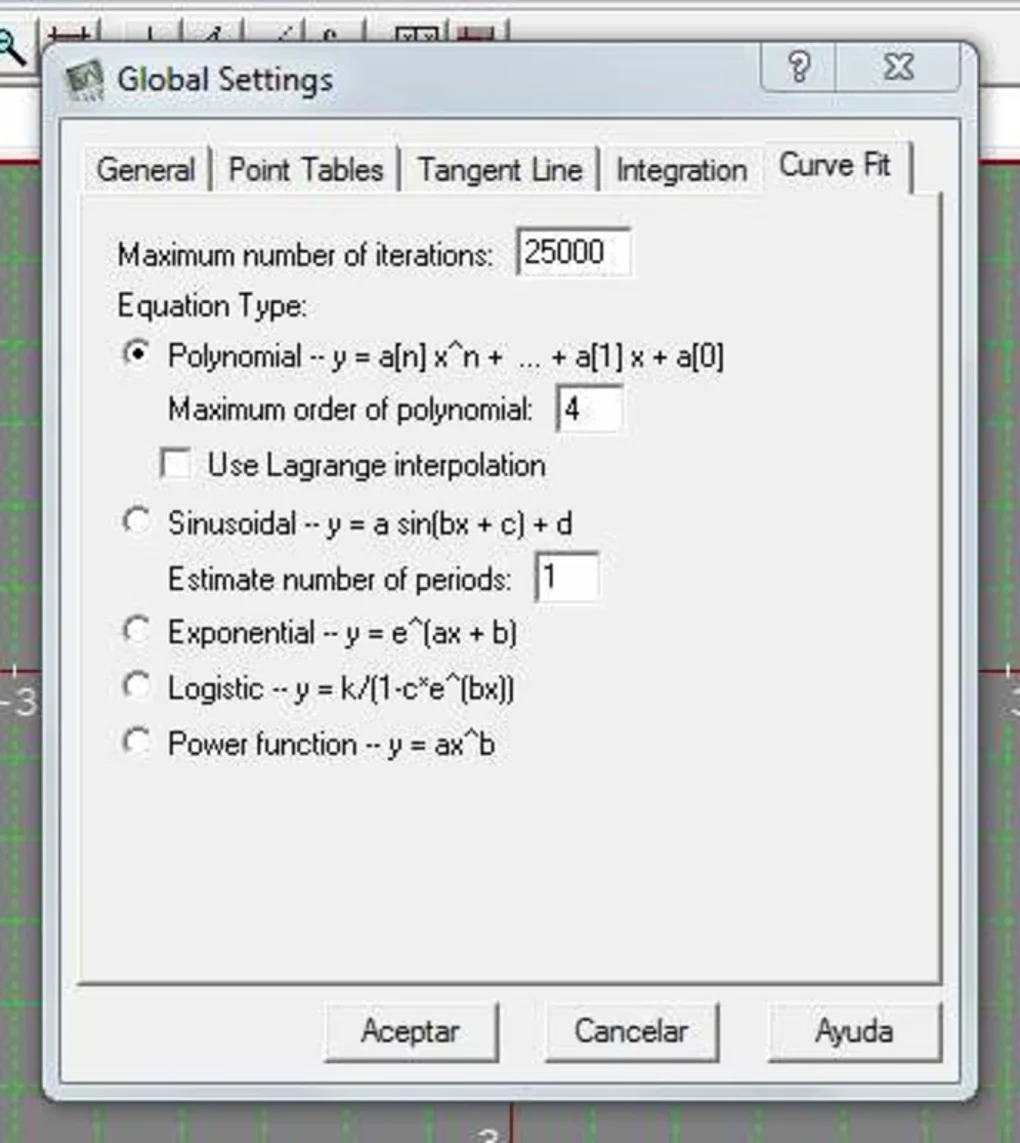
- Data-plotting and curve-fitting – Includes tools to fit curves to data points, supporting analytical modeling and empirical research.
- Export flexibility – Graphs can be saved in multiple formats for use in reports, presentations, and educational materials.
- Intuitive interface – Designed with usability in mind, allowing quick input and immediate visualization of equations.
These capabilities make Graphmatica particularly valuable in academic environments. For instance, a calculus student can plot a differential equation and observe its behavior over time, while a teacher can generate visual examples of trigonometric functions in polar coordinates. The software’s focus on graphical output ensures that users can concentrate on interpretation rather than computation. The developer did not specify advanced automation features or AI-driven tools. Performance observations are based on general software behavior patterns.
User Interface, Workflow & Performance
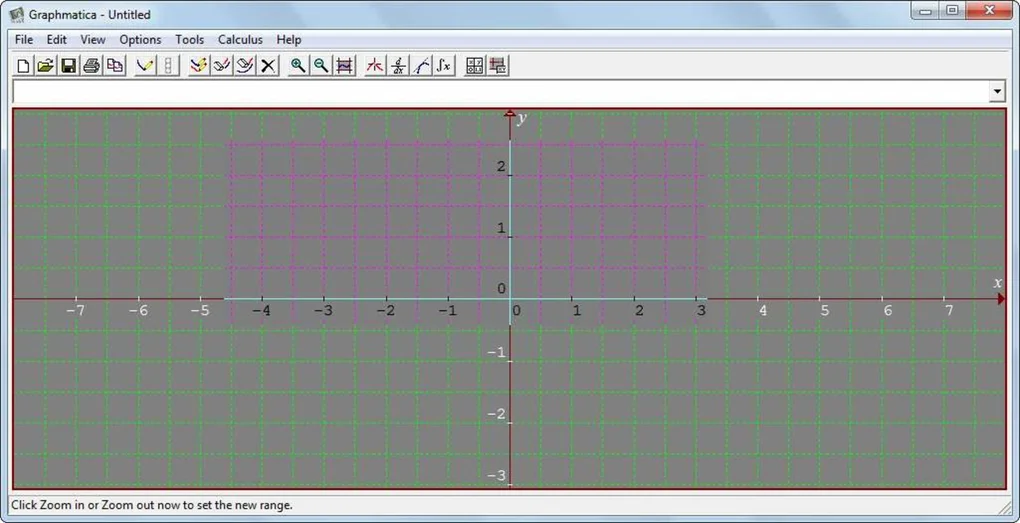
Graphmatica features a clean, straightforward interface optimized for mathematical input and visual output. The main workspace is centered on the graphing canvas, with input fields positioned for quick equation entry. Navigation is simple, relying on standard keyboard and mouse interactions. Users can toggle between different coordinate systems, adjust scaling, and modify graph styles without complex menu diving. The workflow is linear: enter an equation, press render, and view the result. This minimalistic approach enhances usability, especially for beginners. The developer did not specify resource usage details, but the application’s 1.5 MB size suggests low memory footprint and minimal CPU demand. Stability is expected to be consistent given the software’s long-standing presence and focus on a single core function. No known compatibility issues were reported. Performance observations are based on general software behavior patterns. The interface is functional but lacks modern visual enhancements, such as high-resolution rendering or dynamic zoom controls.
Compatibility & System Requirements
Graphmatica is designed for Windows operating systems and runs on version 2.4.2. The installation size is 1.5 MB, indicating a lightweight footprint suitable for older or low-resource machines. The developer did not specify exact system requirements, including minimum RAM, processor speed, or disk space beyond the file size. Platform compatibility information is limited to Windows, with no mention of Mac or Linux support. The software does not require internet access for core functionality, allowing full offline operation. No additional dependencies were listed. Users should ensure their system meets general Windows compatibility standards for legacy applications. The developer did not provide information about updates or future release plans.
Pros and Cons
Pros
- Free to use with no licensing restrictions
- Lightweight at just 1.5 MB
- Supports a wide range of mathematical equation types
- Capable of displaying up to 999 graphs simultaneously
- Intuitive interface suitable for students and educators
- Offline functionality with no internet dependency
Cons
- Interface lacks modern visual design elements
- No official documentation or tutorial materials provided
- Developer did not list system requirements
- Only available for Windows, no cross-platform support
- Graphical rendering may appear dated compared to modern tools
- Update frequency and support status are unclear
FAQ Section
Is Graphmatica available for Mac or Linux?
Currently, Graphmatica is only available for Windows. The developer did not provide information on future support for other operating systems.
Is the software safe to download and install?
Graphmatica is distributed by ksoft, a known developer in the educational software space. The application is free of known malware and does not require additional installations or drivers.
Does Graphmatica require an internet connection?
No, Graphmatica operates fully offline. All graphing and analysis functions are processed locally on the user’s device.
Can I use Graphmatica for classroom teaching?
Yes, the software is well-suited for educational use. Its ability to visualize functions, inequalities, and differential equations makes it a valuable tool for teachers and students in math and science courses.
What types of equations can I plot?
Graphmatica supports Cartesian functions, polar equations, parametric curves, relations, inequalities, and ordinary differential equations. It is designed for mathematical visualization rather than symbolic computation.
Final Thoughts + CTA
Graphmatica remains a reliable and capable tool for anyone needing to visualize mathematical expressions. Its focus on clean, accurate graphing without unnecessary complexity sets it apart in the education sector. While the interface may appear dated and lacks modern refinements, its core functionality is robust and effective. The ability to plot multiple equations simultaneously and analyze calculus-based problems makes it a strong choice for students, teachers, and professionals working with mathematical models. Its free status and minimal system demands further enhance its accessibility. For users seeking a straightforward, no-frills graphing solution on Windows, Graphmatica delivers consistent value. Download Graphmatica now.