Art of 3D printer in the middle of printing a Hackaday Jolly Wrencher logo

Does Carbon Fiber PLA Make Sense?

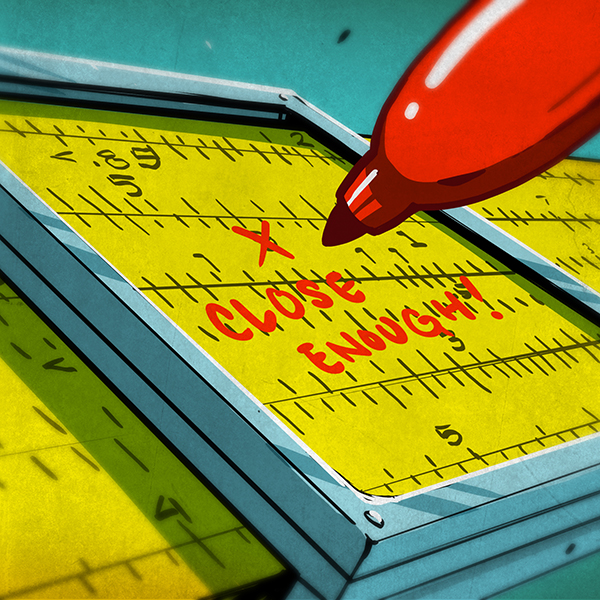
Carbon fiber (CF) has attained somewhat of a near-mystical appeal in consumer marketing, with it being praised for being stronger than steel while simultaneously being extremely lightweight. This mostly refers to weaved fibers combined with resin into a composite material that is used for everything from car bodies to bike frames. This CF look is so sexy that the typical carbon-fiber composite weave pattern and coloring have been added to products as a purely cosmetic accent.

More recently, chopped carbon fiber (CCF) has been added to the thermoplastics we extrude from our 3D printers. Despite lacking clear evidence of this providing material improvements, the same kind of mysticism persists here as well. Even as evidence emerges of poor integration of these chopped fibers into the thermoplastic matrix, the marketing claims continue unabated.

As with most things, there’s a right way and a wrong way to do it. A recent paper by Sameh Dabees et al. in Composites for example covered the CF surface modifications required for thermoplastic integration with CF.


Continue reading “Does Carbon Fiber PLA Make Sense?”

Image

Tech In Plain Sight: Finding A Flat Tire

There was a time when wise older people warned you to check your tire pressure regularly. We never did, and would eventually wind up with a flat or, worse, a blowout. These days, your car will probably warn you when your tires are low. That’s because of a class of devices known as tire pressure monitoring systems (TPMS).

If you are like us, you see some piece of tech like this, and you immediately guess how it probably works. In this case, the obvious guess is sometimes, but not always, correct. There are two different styles that are common, and only one works in the most obvious way.

Obvious Guess

We’d guess that the tire would have a little pressure sensor attached to it that would then wirelessly transmit data. In fact, some do work this way, and that’s known as dTPMS where the “d” stands for direct.

Of course, such a system needs power, and that’s usually in the form of batteries, although there are some that get power wirelessly using an RFID-like system. Anything wireless has to be able to penetrate the steel and rubber in the tire, of course.

Continue reading “Tech In Plain Sight: Finding A Flat Tire”

Image

Finding A Way To Produce Powerful Motors Without Rare Earths

The electric vehicle revolution has created market forces to drive all sorts of innovations. Battery technology has progressed at a rapid pace, and engineers have developed ways to charge vehicles at ever more breakneck rates. Similarly, electric motors have become more powerful and more compact, delivering greater performance than ever before.

In the latter case, while modern EV motors are very capable things, they’re also reliant on materials that are increasingly hard to come by. Most specifically, it’s the rare earth materials that make their magnets so good. The vast majority of these minerals come from China, with trade woes and geopolitics making it difficult to get them at any sort of reasonable price. Thus has sprung up a new market force, pushing engineers to search for new ways to make their motors compact, efficient, and powerful.

Continue reading “Finding A Way To Produce Powerful Motors Without Rare Earths”

Image

Japan’s Forgotten Analog HDTV Standard Was Well Ahead Of Its Time

When we talk about HDTV, we’re typically talking about any one of a number of standards from when television made the paradigm switch from analog to digital transmission. At the dawn of the new millenium, high-definition TV was a step-change for the medium, perhaps the biggest leap forward since color transmissions began in the middle of the 20th century.

However, a higher-resolution television format did indeed exist well before the TV world went digital. Over in Japan, television engineers had developed an analog HD format that promised quality far beyond regular old NTSC and PAL transmissions. All this, decades before flat screens and digital TV were ever seen in consumer households!

Continue reading “Japan’s Forgotten Analog HDTV Standard Was Well Ahead Of Its Time”

Image

Analog Surround Sound Was Everywhere, But You Probably Didn’t Notice

These days, most of the media we consume is digital. We still watch movies and TV shows, but they’re all packaged in digital files that cram in many millions of pixels and as many audio channels as we could possibly desire.

Back in the day, though, engineering limitations meant that media on film or tape were limited to analog stereo audio at best. And yet, the masterminds at Dolby were able to create a surround sound format that could operate within those very limitations, turning two channels in to four. What started out as a cinematic format would bring surround sound to the home—all the way back in 1982!

Continue reading “Analog Surround Sound Was Everywhere, But You Probably Didn’t Notice”

Image

Ore Formation: Return Of The Revenge Of The Fluids

In the last edition of our ongoing series on how planets get ore– those wonderful rocks rich in industrial minerals worth mining– we started talking about hydrothermal fluid deposits. Hydrothermal fluid is the very hot, very salty, very corrosive water that sweats out of magma as it cools underground and under pressure.

We learned that if the fluid stays in the magma chamber and encourages the growth of large crystals there, we call that a pegmatite deposit. If it escapes following cracks in the surface rock, it creates the characteristic veins of an orogenic deposit. What if the fluid gets out of the magma chamber, but doesn’t find any cracks?

Perhaps the surrounding rock is slightly permeable to water, and the hydrothermal fluid can force its way through, eating away at the base rock and remineralizing it with new metals as it goes. That can happen! We call it a porphyry deposit, particularly in igneous rock. It’s not exactly surprising that a hydrothermal fluid would find igneous rock: the fluid is volcanic in origin, after all, just like igneous rock. (That’s the definition of igneous: a rock of volcanic origin.) Igneous rocks, like granite, tend not to be terribly reactive so the fluid can diffuse through relatively unchanged.

Igneous rocks aren’t the only option, though. If the hydrothermal fluid hits carbonates, well, I did mention it’s acidic, right? Acid and carbonates are not friends, so all sorts of chemistry happens, such that geologists give the resulting metamorphic formation a special name: skarn. Though similar in origin, skarns are often considered a different type of deposit, so we’ll talk about the simpler case, diffusion through non-reactive rocks, before getting back to the rocks that sound like an 80s fantasy villain. (Beware Lord Skarn!)

Continue reading “Ore Formation: Return Of The Revenge Of The Fluids”

Image

Airbags, And How Mercedes-Benz Hacked Your Hearing

Airbags are an incredibly important piece of automotive safety gear. They’re also terrifying—given that they’re effectively small pyrotechnic devices that are aimed directly at your face and chest. Myths have pervaded that they “kill more people than they save,” in part due a hilarious episode of The Simpsons. Despite this, they’re credited with saving tens of thousands of lives over the years by cushioning fleshy human bodies from heavy impacts and harsh decelerations.

While an airbag is generally there to help you, it can also hurt you in regular operation. The immense sound pressure generated when an airbag fires is not exactly friendly to your ears. However, engineers at Mercedes-Benz have found a neat workaround to protect your hearing from the explosive report of these safety devices. It’s a nifty hack that takes advantage of an existing feature of the human body. Let’s explore how air bags work, why they’re so darn loud, and how that can be mitigated in the event of a crash.

Continue reading “Airbags, And How Mercedes-Benz Hacked Your Hearing”