Image

Computer History Museum Opens Virtually

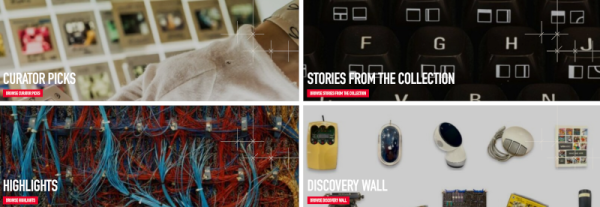
If your travels take you near Mountain View, California, you can have the pleasure of visiting the Computer History Museum. You can see everything from a PDP-1 to an Altair 8800 to a modern PC there. If you aren’t travelling, the museum has launched a digital portal that expands your ability to enjoy its collection remotely.

CEO Marc Etkind said, “OpenCHM is designed to inspire discovery, spark curiosity, and make the stories of the digital age more accessible to everyone, everywhere. We’re unlocking the collection for new audiences to explore.”

The portal features advanced search tools along with browsable curated collections and stories. There’s also an album feature so you can create and share your own custom collections. If you are a developer, the portal also allows access via an API.

As an example, we checked out the vintage marketing collection. Inside were a 1955 brochure for a Bendix computer you could lease for under $1,000 a month, and a 1969 brochure for the high-performance Hitachi HITEC 10. It had 4K words of 16-bit memory and a clock just a bit more than 700 kHz, among others.

If you are on the other side of the Atlantic, you might want to check out a very large museum there. There’s also a fine museum in the UK.
Image

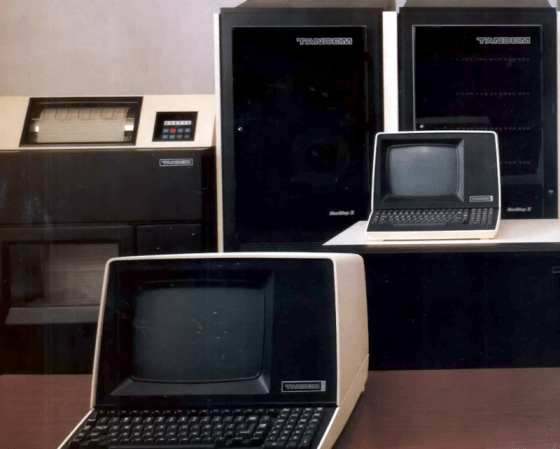
The History Of Tandem Computers

If you are interested in historical big computers, you probably think of IBM, with maybe a little thought of Sperry Rand or, if you go smaller, HP, DEC, and companies like Data General. But you may not have heard of Tandem Computers unless you have dealt with systems where downtime was unacceptable. Printing bills or payroll checks can afford some downtime while you reboot or replace a bad board. But if your computer services ATM machines, cash registers, or a factory, that’s another type of operation altogether. That was where Tandem computers made their mark, and [Asianometry] recounts their history in a recent video that you can watch below.

When IBM was king, your best bet for having a computer running nonstop was to have more than one computer. But that’s pricey. Computers might have some redundancy, but it is difficult to avoid single points of failure. For example, if you have two computers with a single network connection and a single disk drive. Then failures in the network connection or the disk drive will take the system down.

Continue reading “The History Of Tandem Computers”

Image

Commodore 64 Helps Revive The BBS Days

Before the modern Internet existed, there were still plenty of ways of connecting with other computer users “online”, although many of them might seem completely foreign to those of us in the modern era. One of those systems was the Bulletin Board System, or BBS, which would have been a single computer, often in someone’s home, connected to a single phone line. People accessing the BBS would log in if the line wasn’t busy, leave messages, and quickly log out since the system could only support one user at a time. While perhaps a rose-tinted view, this was a more wholesome and less angsty time than the modern algorithm-driven Internet, and it turns out these systems are making a bit of a comeback as a result.

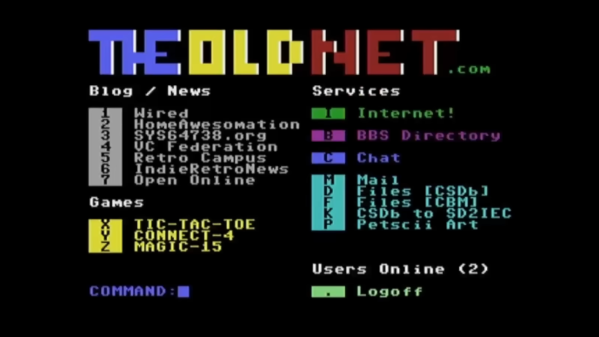
The video by [The Retro Shack] sets up a lot of this history for context, then, towards the end, uses a modern FPGA-based recreation called the Commodore 64 Ultimate to access a BBS called The Old Net, a modern recreation of what these 80s-era BBS systems were like. This involves using a modern networking card that allows the C64 to connect to Wi-Fi access points to get online instead of an old phone modem, and then using a terminal program called CCGMS to connect to the BBS itself. Once there, users can access mail, share files, and even play a few games.

While the video is a very basic illustration of how these BBS systems worked and how to access one, it is notable in that it’s part of a trend of rejecting more modern technology and systems in favor of older ones, where the users had more control. A retro machine like a C64 or Atari is not required either; modern operating systems can access these with the right terminal program, too. A more in-depth guide to the BBS can be found here for those looking to explore, and we’ve also seen other modern BBS systems recently.

Thanks to [Charlie] for the tip!

Continue reading “Commodore 64 Helps Revive The BBS Days”

Image

Crazy Old Machines

Al and I were talking about the IBM 9020 FAA Air Traffic Control computer system on the podcast. It’s a strange machine, made up of a bunch of IBM System 360 mainframes connected together to a common memory unit, with all sorts of custom peripherals to support keeping track of airplanes in the sky. Absolutely go read the in-depth article on that machine if it sparks your curiosity.

It got me thinking about how strange computers were in the early days, and how boringly similar they’ve all become. Just looking at the word sizes of old machines is a great example. Over the last, say, 40 years, things that do computing have had 4, 8, 16, 32, or even 64-bit words. You noticed the powers-of-two trend going on here, right? Basically starting with the lowly Intel 4004, it’s been round numbers ever since.

Image
Harvard Mark I, by [Topory]
On the other side of the timeline, though, you get strange beasts. The classic PDP-8 had 12-bit words, while its predecessors the PDP-6 and PDP-1 had 36 bits and 18 bits respectively. (Factors of six?) There’s a string of military guidance computers that had 27-bit words, while the Apollo Guidance computer ran 15-bit words. UNIVAC III had 25-bit words, putting the 23-bit Harvard Mark I to shame.

I wasn’t there, but it gives you the feeling that each computer is a unique, almost hand-crafted machine. Some must have made their odd architectural choices to suit particular functions, others because some designer had a clever idea. I’m not a computer historian, but I’m sure that the word lengths must tell a number of interesting stories.

On the whole, though, it gives the impression of a time when each computer was it’s own unique machine, before the convergence of everything to roughly the same architectural ideas. A much more hackery time, for lack of a better word. We still see echoes of this in the people who make their own “retro” computers these days, either virtually, on a breadboard, or emulated in the fabric of an FPGA. It’s not just nostalgia, though, but a return to a time when there was more creative freedom: a time before 64 bits took over.

Image

A 1970s Electronic Game

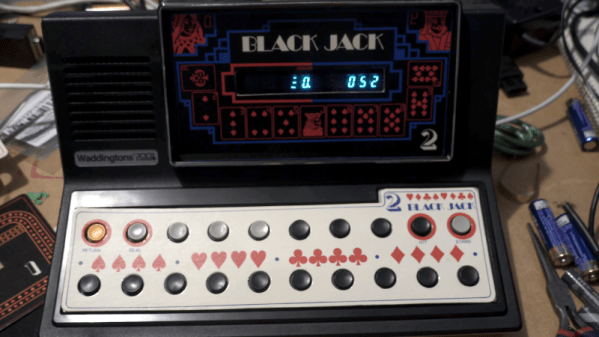
What happens when a traditional board game company decides to break into electronic gaming? Well, if it were a UK gaming company in 1978, the result would be a Waddingtons 2001 The Game Machine that you can see in the video from [Re:Enthused] below.

The “deluxe console model” had four complete games: a shooting gallery, blackjack, Code Hunter, and Grand Prix. But when you were done having fun, no worries. The machine was also a basic calculator with a very strange keyboard. We couldn’t find an original retail price on these, but we’ve read it probably sold for £20 to £40, which, in 1978, was more than it sounds like today.

Continue reading “A 1970s Electronic Game”

Image

Retrotechtacular: RCA Loses Fight To IBM

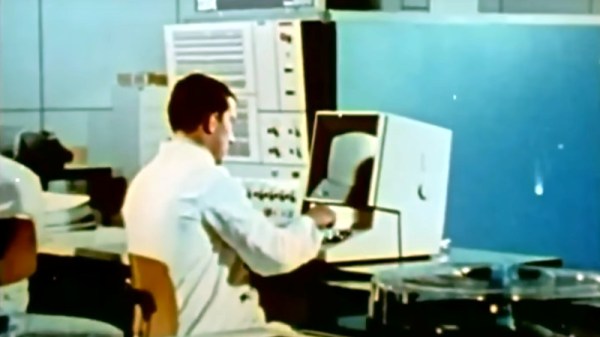
If you follow electronics history, few names were as ubiquitous as RCA, the Radio Corporation of America. Yet in modern times, the company is virtually forgotten for making large computers. [Computer History Archive Project] has a rare film from the 1970s (embedded below) explaining how RCA planned to become the number two supplier of business computers, presumably behind behemoth IBM. They had produced other large computers in the 1950s and 1960s, like the BIZMAC, the RCA 510, and the Spectra. But these new machines were their bid to eat away at IBM’s dominance in the field.

RCA had innovative ideas and arguably one of the first demand paging, virtual memory operating systems for mainframes. You can hope they were better at designing computers than they were at making commercials.

Continue reading “Retrotechtacular: RCA Loses Fight To IBM”

Image

Inside Air Traffic Control

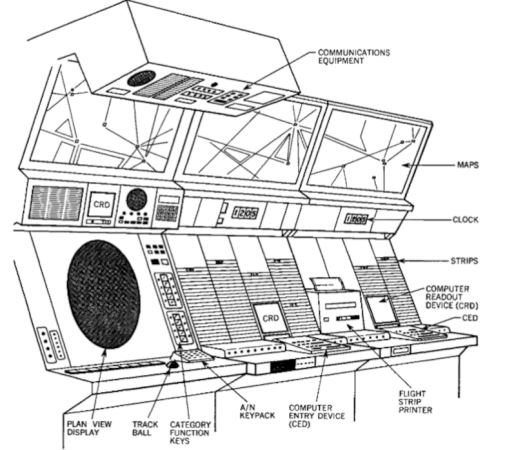
It is a movie staple to see an overworked air traffic controller sweating over a radar display. Depending on the movie, they might realize they’ve picked the wrong week to stop some bad habit. But how does the system really work? [J. B. Crawford] has a meticulously detailed post about the origins of the computerized air traffic control system (building on an earlier post which is also interesting).

Like many early computer systems, the FAA started out with the Air Force SAGE defense system. It makes sense. SAGE had to identify and track radar targets. The 1959 SATIN (SAGE Air Traffic Integration) program was the result. Meanwhile, different parts of the air traffic system were installing computers piecemeal.

SAGE and its successors had many parents: MIT, MITRE, RAND, and IBM. When it was time to put together a single national air traffic system the FAA went straight to IBM, who glued together a handful of System 360 computers to form the IBM 9020. The computers had a common memory bus and formed redundant sets of computer elements to process the tremendous amount of data fed to the system. The shared memory devices were practically computers in their own right. Each main computing element had a private area of memory but could also allocate in the large shared pool.

The 9200 ran the skies for quite a while until IBM replaced it with the IBM 3083. The software was mostly the same, as were the display units. But the computer hardware, unsurprisingly, received many updates.

If you’re thinking that there’s no need to read the original post now that you’ve got the highlights from us, we’d urge you to click the link anyway. The post has a tremendous amount of detail and research. We’ve only scratched the surface.

There were earlier control systems, some with groovy light pens. These days, the control tower might be in the cloud.