Image

FLOSS Weekly Episode 862: Have Your CAKE And Eat It Too

This week Jonathan chats with Toke Hoiland-Jorgensen about CAKE_MQ, the newest Kernel innovation to combat Bufferbloat! What was the realization that made CAKE parallelization? When can we expect it in the wild? And what’s new in the rest of the kernel world? Watch to find out!

Continue reading “FLOSS Weekly Episode 862: Have Your CAKE And Eat It Too”

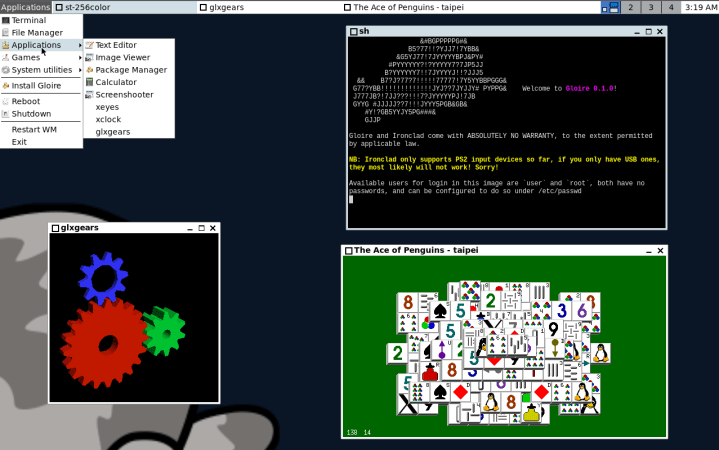
Screenshot of X running on Gloire

There’s No Rust On This Ironclad Kernel

Rust is the new hotness in programming languages because of how solid its memory protections are. Race conditions and memory leaks are hardly new issues however, and as greybeards are wont to point out, they were kind of a solved problem already: we have Ada. So if you want a memory-protected kernel but aren’t interested in the new kids’ rusty code, you might be interested in the Ironclad OS kernel, written entirely in Ada.

OK, not entirely in classic Ada– they claim to use SPARK, too, but since SPARK and Ada converged syntax-wise over a decade ago, we’re just going to call it Ada. The SPARK toolchain means they can get this kernel “formally-verified” however, which is a big selling point. If you’re not into CS, that just means the compiler can confirm the code is going to do what we want under all possible conditions — which is a nice thing to be able to say about the heart of your operating system, I think we can all agree. It’s a nice thing to be able to say about any code, which is one reason why you might want to be programming in Ada.

Continue reading “There’s No Rust On This Ironclad Kernel”

Image

C Project Turns Into Full-Fledged OS

While some of us may have learned C in order to interact with embedded electronics or deep with computing hardware of some sort, others learn C for the challenge alone. Compared to newer languages like Python there’s a lot that C leaves up to the programmer that can be incredibly daunting. At the beginning of the year [Ethan] set out with a goal of learning C for its own sake and ended up with a working operating system from scratch programmed in not only C but Assembly as well.

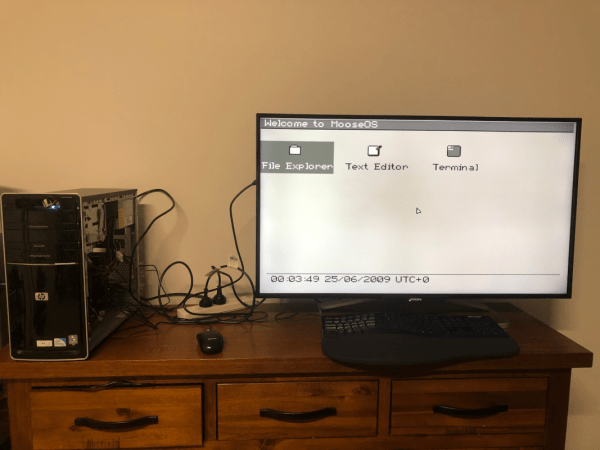
[Ethan] calls his project Moderate Overdose of System Eccentricity, or MooseOS. Original programming and testing was done in QEMU on a Mac where he was able to build all of the core components of the operating system one-by-one including a kernel, a basic filesystem, and drivers for PS/2 peripherals as well as 320×200 VGA video. It also includes a dock-based GUI with design cues from operating systems like Macintosh System 1. From that GUI users can launch a few applications, from a text editor, a file explorer, or a terminal. There’s plenty of additional information about this OS on his GitHub page as well as a separate blog post.

The project didn’t stay confined to the QEMU virtual machine either. A friend of his was throwing away a 2009-era desktop which [Ethan] quickly grabbed to test his operating system on bare metal. There was just one fault that the real hardware threw that QEMU never did, but with a bit of troubleshooting it was able to run. He also notes that this was inspired by a wiki called OSDev which, although a bit dated now, is a great place to go to learn about the fundamentals of operating systems. We’d also recommend checking out this project that performs a similar task but on the RISC-V instruction set instead.

Image

Mini Laptop Needs Custom Kernel

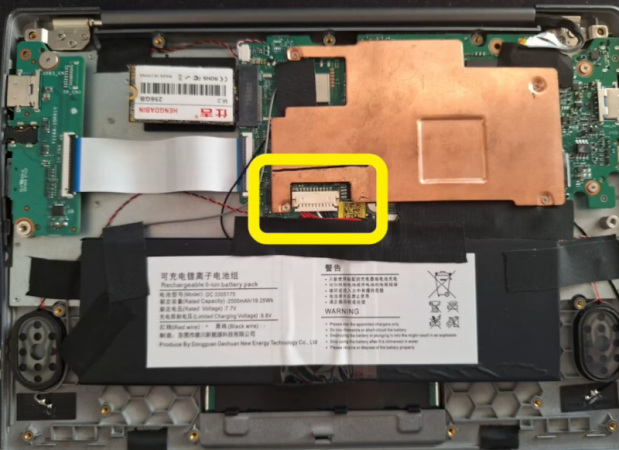
These days, you rarely have to build your own Linux kernel. You just take what your distribution ships, and it usually works just fine. However, [Andrei] became enamored with a friend’s cyberdeck and decided that he’d prefer to travel with a very small laptop. The problem is, it didn’t work well with a stock kernel. So, time to build the kernel again.

Of course, he tried to simply install Linux. The installer showed a blank screen. You might guess that you need to add ‘nomodeset’ to the kernel options. But the screen was still a bit wacky. [Andrei] likens troubleshooting problems like this to peeling an onion. There are many layers to peel back, and you are probably going to shed some tears.

Continue reading “Mini Laptop Needs Custom Kernel”

Image

If Your Kernel Development Is A Little Rusty

To paraphrase an old joke: How do you know if someone is a Rust developer? Don’t worry, they’ll tell you. There is a move to put Rust everywhere, even in the Linux kernel. Not going fast enough for you? Then check out Asterinas — an effort to create a Linux-compatible kernel totally in Rust.

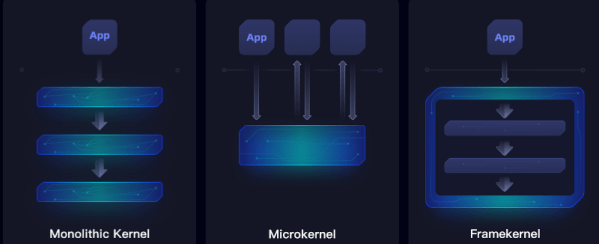
The goal is to improve memory safety and, to that end, the project describes what they call a “framekernel.” Historically kernels have been either monolithic, all in one piece, or employ a microkernel architecture where only bits and pieces load.

A framekernel is similar to a microkernel, but some services are not allowed to use “unsafe” Rust. This minimizes the amount of code that — in theory — could crash memory safety. If you want to know more, there is impressive documentation. You can find the code on GitHub.

Will it work? It is certainly possible. Is it worth it? Time will tell. Our experience is that no matter how many safeguards you put on code, there’s no cure-all that prevents bad programming. Of course, to take the contrary argument, seat belts don’t stop all traffic fatalities, but you could just choose not to have accidents. So we do have seat belts. If Rust can prevent some mistakes or malicious intent, maybe it’s worth it even if it isn’t perfect.

Want to understand Rust? Got ten minutes?

Image

Windows On ARM On Arm

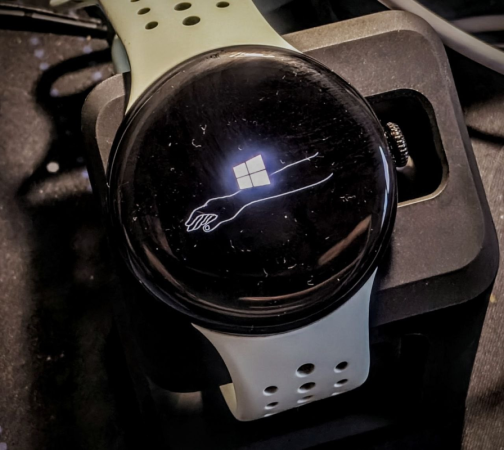
While some companies like Apple have gone all-in on the ARM architecture, others are more hesitant to dive into the deep end. For example, Microsoft remains heavily invested in the x86 architecture and although it does have some ARM offerings, a lot of them feel a bit half-baked. So you might question why someone like [Gustave] has spent so much time getting Windows to run on unusual ARM platforms. But we don’t need much of a reason to do something off-the-wall like that around these parts, so take a look at his efforts to get Windows for ARM running on a smartwatch.

The smartwatch in question here is a Pixel Watch 3, which normally runs a closed-source Android implementation called Wear OS. The bootloader can be unlocked, so [Gustave] took that approach to implement a few clever workarounds to get Windows to boot including adding UEFI to the watch. During the process Google updated these devices to Android 15, though, which broke some of these workarounds. The solution at that point was to fake a kernel header and re-implement UEFI and then load Windows (technically Windows PE) onto the watch.

Although this project was released on April 1, and is by [Gustave]’s own admission fairly ridiculous and not something he actually recommends anyone do, he does claim that it’s real and provides everything needed for others to run Windows on their smartwatches if they want to. Perhaps one of our readers will be brave enough to reproduce the results and post about it in the comments. In the meantime, there are a few more open options for smartwatches available if you’re looking for something to tinker with instead.

Thanks to [Ruhan] for the tip!

Image

Linux, Now In Real Time

Although Linux runs almost every supercomputer, most of the web, the majority of smart phones, and a few writers’ ancient Macbooks, there’s one major weak point in the Linux world that will almost always have developers reaching for a different operating system. Linux is not a real-time operating system (RTOS), meaning that it can’t respond to requests in the real world within a set timeframe. This means that applications needing computer control in industry, medicine, robotics, and other real-world situations generally need a purpose-built RTOS. At least, that was true until recently when an update to the Linux kernel added real-time capabilities.

The feature, called PREEMPT_RT, forces the Linux kernel to respond to certain request within a set limit of time. This means that a system with this support built into the kernel can “preempt” any current task, stopping everything else a computer is doing in order to execute that task right away. There are some existing solutions to getting a functional equivalent system working with Linux now, but they can be clunky or inelegant, requiring the user to install patches or other software to get it to work. With the support built directly into the kernel this will become much less of a pain point for anyone who needs this functionality going forward.

This feature has been in the works for around two decades now, so with this entering general use now we would expect to start seeing it show up in various projects as well as in commercial offerings soon, especially since other RTOS solutions can be pricey. Don’t recompile the kernel in your desktop for this feature just yet, though; real-time function can cause some unintended consequences with normal use you’ll need to account for. There’s some more discussion on this in the /r/Linux subreddit and there are some other real-time operating systems available for computers not typically capable of running Linux to take a look at as well.