Image

Driving A DAC Real Fast With A Microcontroller

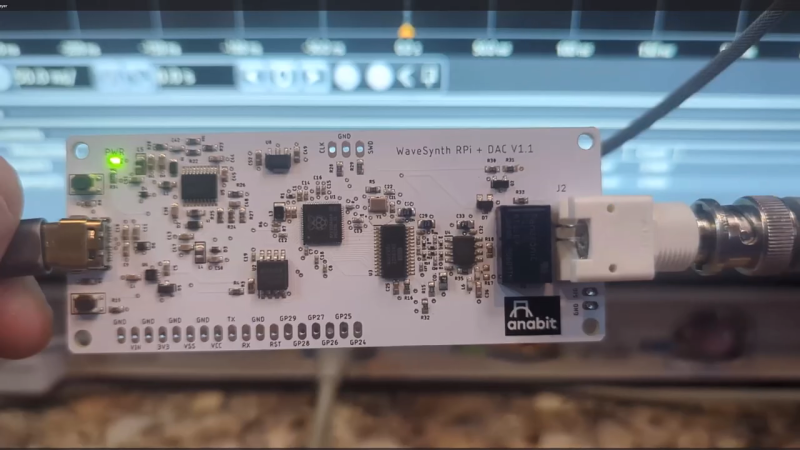
Normally, if you want to blast out samples to a DAC in a hurry, you’d rely on an FPGA, what with their penchant for doing things very quicky and in parallel. However, [Anabit] figured out a way to do the same thing with a microcontroller, thanks to the magic of the Raspberry Pi Pico 2.

The design in question is referred to as the PiWave 150 MS/s Bipolar DAC, and as the name suggests, it’s capable of delivering a full 150 million samples per second with 10, 12, or 14 bits of resolution. Achieving that with a microcontroller would normally be pretty difficult. In regular linear operation, it’s hard to clock bits out to GPIO pins at that sort of speed. However, the Raspberry Pi Pico 2 serves as a special case in this regard, thanks to its Programmable I/O (PIO) subsystem. It’s a state machine, able to be programmed to handle certain tasks entirely independently from the microcontroller’s main core itself, and can do simple parallel tasks very quickly. Since it can grab data from RAM and truck it out to a bank of GPIO pins in a single clock cycle, it’s perfect for trucking out data to a DAC in parallel at great speed. The Pi Pico 2’s clock rate tops out at 150 MHz, which delivers the impressive 150 MS/s sample rate.

The explainer video is a great primer on how this commodity microcontroller is set up to perform this feat in detail. If you’re trying for accuracy over speed, we’ve explored solutions for that as well. Video after the break.

Continue reading “Driving A DAC Real Fast With A Microcontroller”
Image

TV Remote Uses Floppy Disks

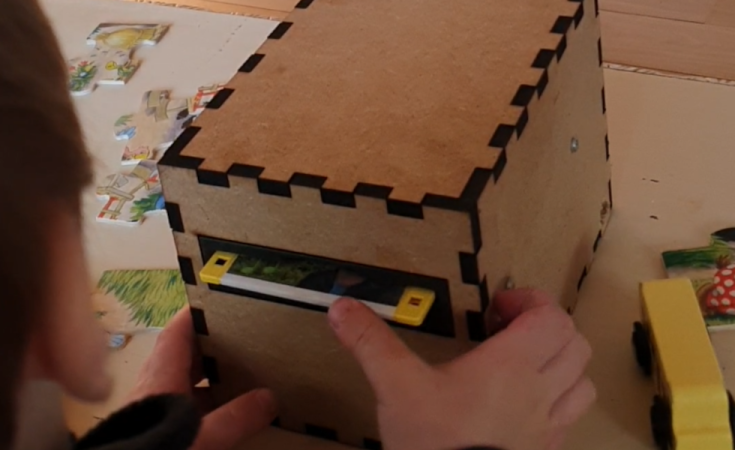
Famously, the save icon on most computer user interfaces references a fairly obsolete piece of technology: the venerable floppy disk. It’s likely that most people below the age of about 30 have never interacted with one of these once-ubiquitous storage devices, so much so that many don’t recognize the object within the save icon itself anymore. [Mads Chr. Olesen]’s kids might be an exception here, though, as he’s built a remote control for them that uses real floppy disks to select the programming on the TV.

This project partially began as a way to keep the children from turning into zombies as a result of the modern auto-play brainrot-based economies common in modern media. He wanted his kids to be able to make meaningful choices and then not get sucked into these types of systems. The floppy disk presents a perfect solution here. They’re tangible media and can actually store data, so he got to work interfacing a real floppy disk drive with a microcontroller. When a disk is inserted the microcontroller wakes up, reads the data, and then sends out a command to stream the relevant media to the Chromecast on the TV. When the disk is removed, the microcontroller stops play.

Like any remote, this one is battery powered as well, but running a microcontroller and floppy disk drive came with a few challenges. This one is powered by 18650 lithium cells to help with current peaks from the drive, and after working out a few kinks it works perfectly for [Mads] children. We’ve seen a few other floppy disk-based remote controls like this one which replaces the data stored on the magnetic disc with an RFID tag instead.

Image

Keep An Eye On Your Air-Cooled Engine

There was a time, long ago, when passenger vehicles used to be much simpler than they are today. There were many downsides of this era, safety chief among them, but there were some perks as well. They were in general cheaper to own and maintain, and plenty could be worked on with simple tools. There’s perhaps no easier car to work on than an air-cooled Volkswagen, either, but for all its simplicity there are a number of modern features owners add to help them with these antiques. [Pegor] has created his own custom engine head temperature monitor for these vehicles.

As one could imagine with an air-cooled engine, keeping an eye on the engine temperature is critical to ensuring their longevity but the original designs omitted this feature. There are some off-the-shelf aftermarket solutions but this custom version has a few extra features that others don’t. It’s based on a ATMega32u4 microcontroller and will work with any K-type thermocouple, and thanks to its open nature can use a wide array of displays. [Pegor] chose one to blend in with the rest of the instrumentation on this classic VW. The largest issue that needed to be sorted out was around grounding, but a DC-DC converter created an isolated power supply for the microcontroller, allowing the thermocouple to be bonded to the grounded engine without disrupting operation of the microcontroller.

The finished product looks excellent and does indeed blend in to the dashboard more than the off-the-shelf temperature monitor that was in use before. The only thing that is planned for future versions is a way to automatically dim the display when the headlights are on, as [Pegor] finds it a little bright at night. We also enjoy seeing anything that helps these antiques stay on the road more reliably as their modern descendants don’t have any of the charm or engineering of these classics.

Image

Using An MCU’s Own Debug Peripheral To Defeat Bootrom Protection

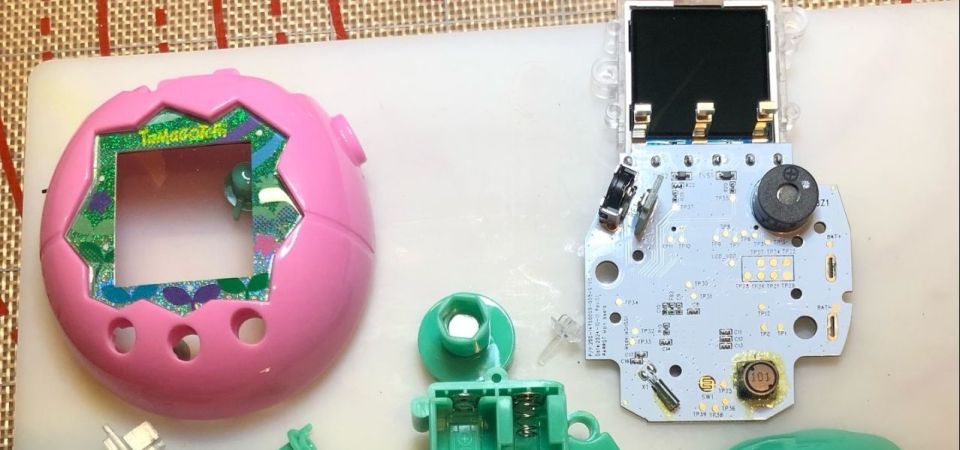
The patient hooked up for some reverse-engineering. (Credit: Caralynx, Twitter)

Released in July of 2025, the Tamagotchi Paradise may look somewhat like the late 90s toy that terrorized parents and teachers alike for years, but it’s significantly more complex and powerful hardware-wise. This has led many to dig into its ARM Cortex-M3-powered guts, including [Yukai Li] who recently tripped over a hidden section in the bootrom of the dual-core Sonix SNC73410 MCU that makes up most of the smarts inside this new Tamagotchi toy.

Interestingly, [Yukai] did see that the visible part of the bootrom image calls into the addresses that make up the hidden part right in the reset handler, which suggests that after reset this hidden bootrom section is accessible, just not when trying to read it via e.g. SWD as the hiding occurs before the SWD interface becomes active. This led [Yukai] to look at a way to make this ROM section not hidden by using the Cortex-M3’s standard Flash Patch and Breakpoint (FPB) unit. This approach is covered in the project’s source file.

With this code running, the FPB successfully unset the responsible ROM hide bit in the OSC_CTRL register, allowing the full bootrom to be dumped via SWD and thus defeating this copy protection with relatively little effort.

Heading image: PCB and other components of a torn-down Tamagotchi Paradise. (Credit: Tamagotchi Center)

Image

Web Dashboard For Zephyr

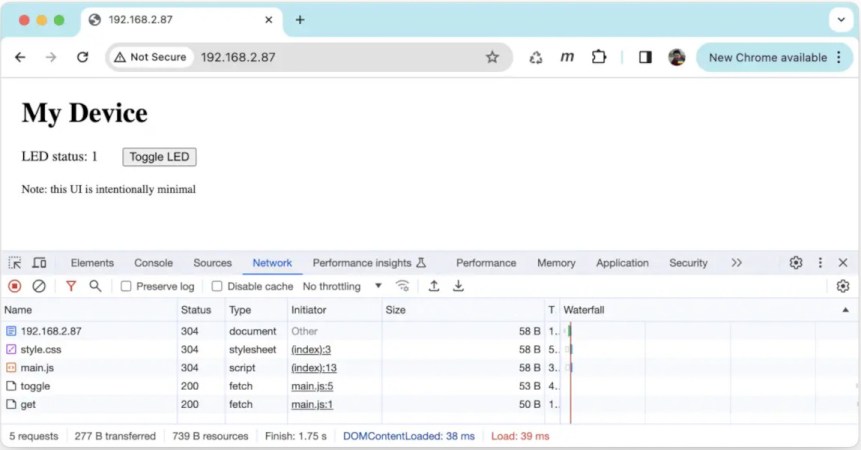
Over time, web browsers have accumulated a ton of features beyond what anyone from the 90s might have imagined, from an application platform to file management and even to hardware access. While this could be concerning from a certain point of view, it makes it much easier to develop a wide range of tools. All a device really needs to use a browser as a platform is an IP address, and this project brings a web UI dashboard to Zephyr to simplify application development.

Zephyr is a real-time operating system (RTOS) meant for embedded microcontrollers, so having an easy way to access these systems through a web browser can be extremely useful. At its core, this project provides a web server that can run on this operating system as well as a REST API that can be used by clients to communicate with it. For things like blinking lights this is sufficient, but for other things like sensors that update continuously the dashboard can also use WebSocket to update the web page in real time.

The web dashboards that can be built with this tool greatly reduce the effort and complexity needed to interact with Zephyr and the microcontrollers it typically runs on, especially when compared to a serial console or a custom application that might otherwise be built for these systems. If this is your first time hearing about this RTOS we recently featured a microcontroller-based e-reader which uses this OS as a platform.

Continue reading “Web Dashboard For Zephyr”

Image

Open-Source, Flexible E-Reader

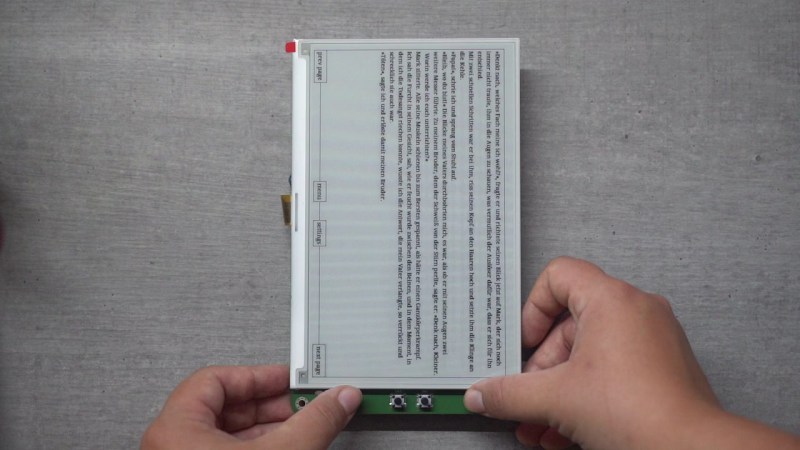
Although the most popular e-reader by far is the Kindle, some argue that its primary use isn’t even as an e-reader at all but rather as a storefront for one of the world’s richest companies. For those who want user-focused consumer electronics instead, we’ll often reach for something more untethered, like an off-brand ebook that’s nothing more than an Android tablet with an e-paper display or even a jailbroken Kindle freed from the chains of Amazon. But as our 555 enthusiast community continually points out, even these are overkill for reading books. Enter the ZEReader.

The ZEReader started out as a bachelor’s engineering thesis project by [Anna-Lena Marx], whose goal was an open-source, microcontroller-based e-reader instead of the Linux or Android ones most commonly available. She’s based the firmware around the Zephyr Real-Time Operating System, which is an RTOS geared towards embedded devices. With this as a backbone, it’s trivially easy to implement the e-reader on different microcontrollers as well as use a wide variety of screens. Although the firmware is a work-in-progress, it’s already mature enough to support all of the basics of an e-reader, such as reading .epub files, navigating through the book, and saving progress. It even includes basic HTML parsing.

Continue reading “Open-Source, Flexible E-Reader”

Image

2025 One-Hertz Challenge: Pokémon Alarm Clock Tells You It’s Time To Build The Very Best

We’ve all felt the frustration of cheap consumer electronics — especially when they aren’t actually cheap. How many of us have said “Who designed this crap? I could do better with an Arduino!” while resisting the urge to drop that new smart doorbell in the garbage disposal?

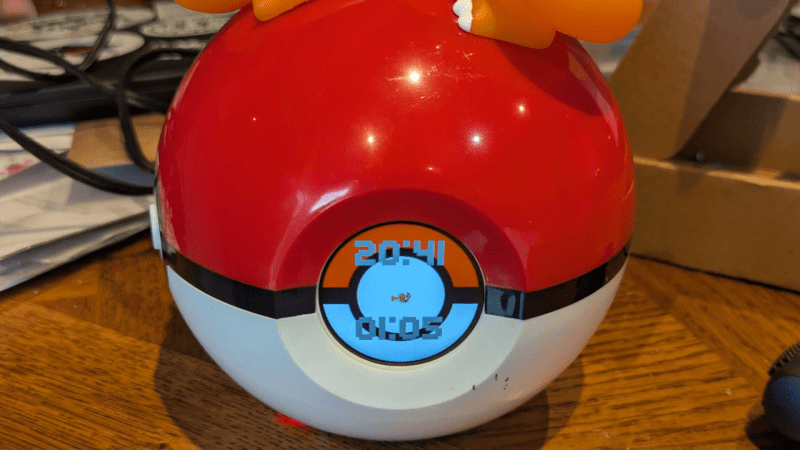
It’s an all-too familiar thought, and when it passed through [Mathieu]’s head while he was resetting the time and changing the batteries in his son’s power-hungry Pokémon alarm clock for the umpteenth time, he decided to do something about it.

The only real design requirement, imposed by [Mathieu]’s son, was that the clock’s original shell remained. Everything else, including the the controller and “antique” LCD could go. He ripped out the internals and installed an ESP32, allowing the clock to automatically sync to network time in the event of power loss. The old-school LCD was replaced with a modern, full-color TFT LCD which he scored on AliExpress for a couple of Euros.

Rather than just showing the time, the new display sports some beautiful pixel art by Woostarpixels, which [Mathieu] customized to have day and nighttime versions, even including the correct moon phase. He really packed as much into the ESP32 as possible, using 99.6% of its onboard 4 MB of flash. Code is on GitHub for the curious. All in all, the project is a multidisciplinary work of art, and it looks well-built enough to be enjoyed for years to come.

Continue reading “2025 One-Hertz Challenge: Pokémon Alarm Clock Tells You It’s Time To Build The Very Best”