Image

Inside Air Traffic Control

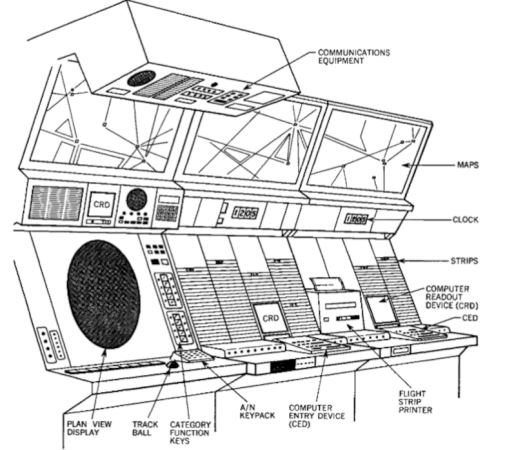
It is a movie staple to see an overworked air traffic controller sweating over a radar display. Depending on the movie, they might realize they’ve picked the wrong week to stop some bad habit. But how does the system really work? [J. B. Crawford] has a meticulously detailed post about the origins of the computerized air traffic control system (building on an earlier post which is also interesting).

Like many early computer systems, the FAA started out with the Air Force SAGE defense system. It makes sense. SAGE had to identify and track radar targets. The 1959 SATIN (SAGE Air Traffic Integration) program was the result. Meanwhile, different parts of the air traffic system were installing computers piecemeal.

SAGE and its successors had many parents: MIT, MITRE, RAND, and IBM. When it was time to put together a single national air traffic system the FAA went straight to IBM, who glued together a handful of System 360 computers to form the IBM 9020. The computers had a common memory bus and formed redundant sets of computer elements to process the tremendous amount of data fed to the system. The shared memory devices were practically computers in their own right. Each main computing element had a private area of memory but could also allocate in the large shared pool.

The 9200 ran the skies for quite a while until IBM replaced it with the IBM 3083. The software was mostly the same, as were the display units. But the computer hardware, unsurprisingly, received many updates.

If you’re thinking that there’s no need to read the original post now that you’ve got the highlights from us, we’d urge you to click the link anyway. The post has a tremendous amount of detail and research. We’ve only scratched the surface.

There were earlier control systems, some with groovy light pens. These days, the control tower might be in the cloud.
Image

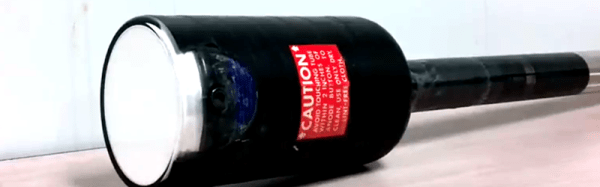
Stromberg Carlson Charactron Tube

Flat panel TVs have spoiled us. It used to be that a big display took up a lot of room on your desk or living room because of the depth of the CRT’s electron gun. We wonder what the designers of the charactron would think if they could see our big flat screens today. Never heard of a charactron? Check out [uniservo’s] video of one of these old character display tubes.

You might think the device is just a simple small CRT. However, it is much stranger than that. Inside the tube was a stencil that contained all the characters the device could display. A deflection coil would move an electron beam to light up a particular character. Then another coil would deflect the patterned electron beam to the desired space on the screen. In some cases, the entire set of stencils would get the beam and the first deflection coil would pick which character made it through an aperture. Either way, the tube was not just a display, but a character generator.

Continue reading “Stromberg Carlson Charactron Tube”

Image

Retrotechtacular: Wising Up With The SAGE System

The birth of the supersonic jet made the United States’ airstrike defenses look antiquated. And so, during the Cold War, the government contracted a number of institutions and vendors to create and maintain the Semi-Automatic Ground Environment (SAGE) aircraft detection system with Western Electric as project manager.

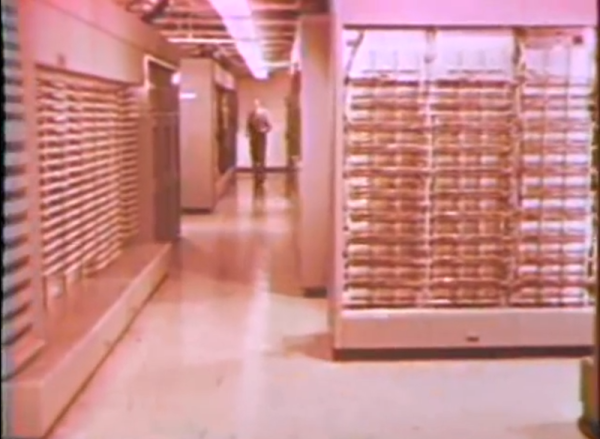
SAGE was developed at MIT’s Lincoln Laboratory on computers built by IBM. It used the AN/FSQ-7 in fact, which was The Largest Computer Ever Built. SAGE operated as a network of defense sectors that divided the continental U.S. and Canada. Each of these sectors contained a directional center, which was a four-story concrete blockhouse that protected and operated a ‘Q7 through its own dedicated power station. The SAGE computers employed hot standby processors for maximum uptime and would fail over to nearby direction centers when necessary.

Information is fed into each directional center from many radar sources on land, in the air, and at sea. The findings are evaluated on scopes in dimly-lit rooms on the front end and stored on magnetic cores on the back end. Unidentifiable aircraft traces processed in the air surveillance room of the directional center are sent to the ID room where they are judged for friendliness. If found unfriendly, they are sent to the weapons direction room for possible consequences.

Continue reading “Retrotechtacular: Wising Up With The SAGE System”