Image

Astronomy Live On Twitch

Although there are a few hobbies that have low-cost entry points, amateur astronomy is not generally among them. A tabletop Dobsonian might cost a few hundred dollars, and that is just the entry point for an ever-increasing set of telescopes, mounts, trackers, lasers, and other pieces of equipment that it’s possible to build or buy. [Thomas] is deep into astronomy now, has a high-quality, remotely controllable telescope, and wanted to make it more accessible to his friends and others, so he built a system that lets the telescope stream on Twitch and lets his Twitch viewers control what it’s looking at.

The project began with overcoming the $4000 telescope’s practical limitations, most notably an annoyingly short Wi-Fi range and closed software. [Thomas] built a wireless bridge with a Raspberry Pi to extend connectivity, and then built a headless streaming system using OBS Studio inside a Proxmox container. This was a major hurdle as OBS doesn’t have particularly good support for headless operation.

Continue reading “Astronomy Live On Twitch”

Image

Building A Low-Cost Satellite Tracker

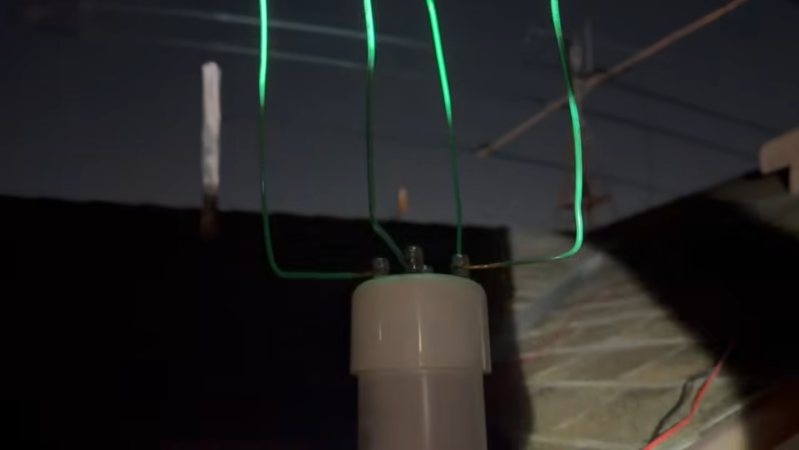
Looking up at the sky just after sunset or just before sunrise will reveal a fairly staggering amount of satellites orbiting overhead, from tiny cubesats to the International Space Station. Of course these satellites are always around, and even though you’ll need specific conditions to view them with the naked eye, with the right radio antenna and only a few dollars in electronics you can see exactly which ones are flying by at any time.

[Josh] aka [Ham Radio Crash Course] is demonstrating this build on his channel and showing every step needed to get something like this working. The first part is finding the correct LoRa module, which will be the bulk of the cost of this project. Unlike those used for most Meshtastic nodes, this one needs to be built for the 433 MHz band. The software running on this module is from TinyGS, which we have featured here before, and which allows a quick and easy setup to listen in to these types of satellites. This build goes much further into detail on building the antenna, though, and also covers some other ancillary tasks like mounting it somewhere outdoors.

With all of that out of the way, though, the setup is able to track hundreds of satellites on very little hardware, as well as display information about each of them. We’d always favor a build that lets us gather data like this directly over using something like a satellite tracking app, although those do have their place. And of course, with slightly more compute and a more directed antenna there is all kinds of other data beaming down that we can listen in on as well, although that’s not always the intent.

Continue reading “Building A Low-Cost Satellite Tracker”

Image

Drone Motion Capture, The Open Source Way

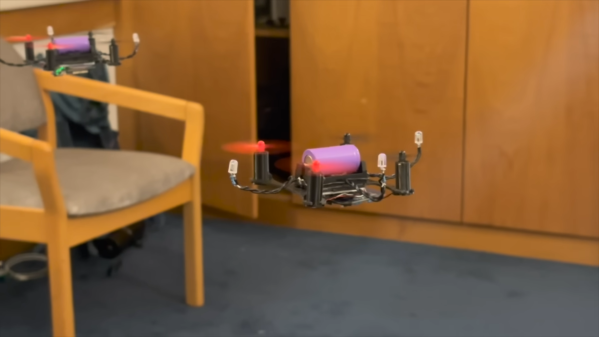
If you want to do some really advanced flying with drones, you typically need to be able to track them in space. [Joshua Bird] has whipped up a drone tracking system that can do the job for as little as $20 with millimeter-scale precision.

The system uses four PS3 Eye cameras which can be had second-hand at a cost of just $5 each. They’re modified by removing their IR cut filter, and putting in an IR-passing filter in the form of a cut-up slice of floppy disk. The system tracks the drones via their infrared indicators and the known locations of the four cameras themselves, which the system is capable of mapping out automatically. By using four cameras, the system is robust in the event the view of a camera is occluded. The system can track multiple drones at the same time, with [Joshua] demonstrating it working with two drones each carrying three infrared markers. He has the system set up to send positional updates to ESP32 microcontrollers on the drones themselves, which command the drones to hold them in set positions.

Code is available on GitHub for the curious. We’ve seen other similar work before, too.

Continue reading “Drone Motion Capture, The Open Source Way”

Image

Open Source Tracker Keeps An Eye On Furry Friends

Most of the time, you’ll know where your cats are — asleep on the bed about 23.5 hours a day and eating or pooping the rest of the time. But some cats are more active than others, so there’s commercial options for those who want to keep tabs on their pet. Unfortunately, [Sahas Chitlange] didn’t like any of them, so he designed and built his own open source version: FindMyCat.io.
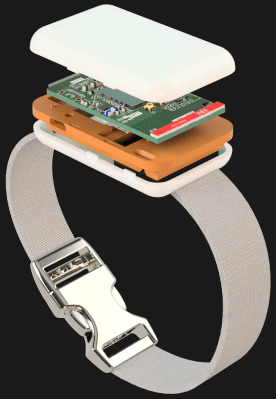
ImageThe system is in two parts: a module that fits onto a cat collar, and a home station that, well, stays at home. It offers a variety of tracking modes. In home mode, the home station signals the collar every 10 seconds, which stays in a deep sleep most of the time. If the collar doesn’t get a signal from the home station, it switches to ping mode, where it will wait for a signal from the FindMyCat over the LTE-M connection and report its location.

Finally, the app can set the collar to Lost Kitteh mode, where the collar will send a location to the app every seven minutes or thirty seconds. The collar also supports a direction-finding feature, using the ultra wideband (UWB) feature of recent Apple iPhones to point you in the direction and distance of the tracked cat.

The collar is built around a Nordic Semiconductor NRF-9160, a System in a Package (SiP) that does most of the heavy lifting as it includes GPS, an LTE-M modem, and an ARM processor. One interesting feature here: [Sahas] doesn’t make his antennas on the PCB, but instead uses an Ignion NN03-310, an off-the-shelf antenna that is already qualified for LTE-M use. That means this system can be connected to almost any LTE-M network without getting yelled at for using unqualified hardware and making the local cell towers explode.

The collar also includes a DWM3001CDK ultrawideband (UWB) module used for the locator feature. The accompanying app uses this and Apple’s UWB support to show the user which direction the cat is in, and how far away it is. The app isn’t in the Apple App Store yet, so you’ll need to sign up for an Apple Developer account to use it. We’d love to hear from anyone who takes it for a test drive with their own pet.

Continue reading “Open Source Tracker Keeps An Eye On Furry Friends”

Image

Smart Occupancy Sensor Knows All

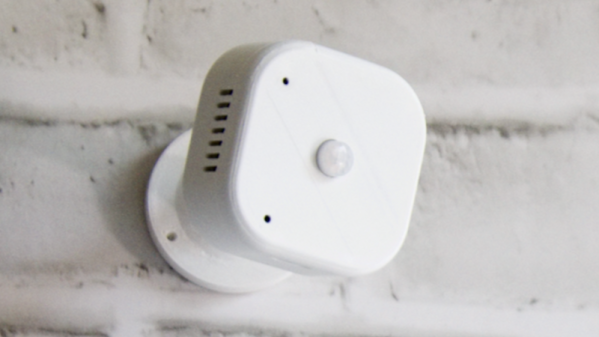
In the last few decades, building engineers and architects have made tremendous strides in improving the efficiency of various buildings and the devices that keep them safe and comfortable to live in. The addition of new technology like heat pumps is a major factor, as well as improvements on existing things like insulation methods and building materials. But after the low-hanging fruit is picked, technology like this smart occupancy sensor created by [Sina Moshksar] might be necessary to help drive further efficiency gains.

Known as RoomSense IQ, the small device mounts somewhere within a small room and uses a number of different technologies to keep track of the number of occupants in a room. The primary method is mmWave radar which can sense the presence of a person up to five meters away, but it also includes a PIR sensor to help prevent false positives and distinguish human activity from non-human activity. The device integrates with home automation systems to feed them occupancy data to use to further improve the performance of those types of systems. It’s also designed to be low-cost and easy to install, so it should be relatively straightforward to add a few to any existing system as well.

The project is also documented on this GitHub page, for anyone looking to build a little more data into their home automation system or even augment their home security systems. We imagine that devices like this could be used with great effect paired with a heating device like this, and we’ve also seen some other interesting methods of determining occupancy as well.

Continue reading “Smart Occupancy Sensor Knows All”

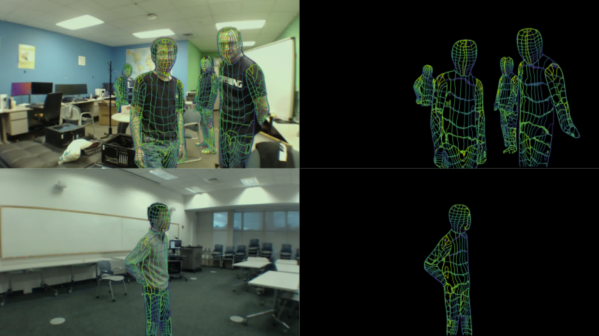
Four images in one. Top left is an image of four individuals in a room with whiteboards and desks in the background along with various clutter on the floor. Over the people is a wireframe overlay of their poses. The image on the top right is just the wireframe people on a black background. Bottom left image is of a single individual standing in a room with the pose wireframe overlay. Bottom right image is the single pose wireframe on a black background.

Tracking Humans With WiFi

In case you thought that cameras, LiDAR, infrared sensors, and the like weren’t enough for Big Brother to track you, researchers from Carnegie Mellon University have found a way to track human movements via WiFi. [PDF via VPNoverview]

The process uses the signals from WiFi routers for an inexpensive way to determine human poses that isn’t hampered by lack of illumination or object occlusion. The system produces UV coordinates of human bodies by analyzing signal strength and phase data to generate a 2D feature map and then feeding that through a modified DensePose-RCNN architecture which corresponds to 3D human poses. The system does have trouble with unusual poses that are not in the training set or if there are more than three subjects in the detection area.

While there are probably applications in Kinect-esque VR Halo games, this will probably go straight into the toolbox of three letter agencies and advertising-fueled tech companies. The authors claim this to use “privacy-preserving algorithms for human sensing,” but only time will tell if they’re correct.

If you’re interested in other creepy surveillance tools, checkout the Heat-Sensing Crotch Monitor or this Dystopian Peep Show.

Hackaday Links Column Banner

Hackaday Links: August 7, 2022

If you ever needed proof that class-action lawsuits are a good deal only for the lawyers, look no further than the news that Tim Hortons will settle a data-tracking suit with a doughnut and a coffee. For those of you who are not in Canada or Canada-adjacent, “Timmy’s” is a chain of restaurants that are kind of the love child of a McDonald’s and a Dunkin Donut shop. An investigation into the chain’s app a couple of years ago revealed that customer location data was being logged silently, even when they were not using the app, and even far, far away from the nearest Tim Hortons. The chain is proposing to settle with class members to the tune of a coupon good for one free hot beverage and one baked good, in total valuing a whopping $8.68. The lawyers, on the other hand, will be pulling in $1.5 million plus taxes. There’s no word if they are taking that in cash or as 172,811 coffees and doughnuts, but we think we can guess.

Continue reading “Hackaday Links: August 7, 2022”