Linux Shared Hosting Features Overview
| Provider | Starting Price | Free Domain | Free SSL | Storage (GB) | |
|---|---|---|---|---|---|
![]() | $2.39 | Yes | Yes | 100-200 | Visit Hostinger |
![]() | $1.00 | Yes | Yes | 10- Unlimited | Visit IONOS |
![]() | $1.49 | Yes | Yes | 15-40 | Visit HostArmada |
![]() | $1.39 | Yes | Yes | 20-40 | Visit Neoxea |
![]() | $0.59 | Yes | Yes | 30-100 | Visit Verpex Hosting |
![]() | $4.00 | No | No | 20-4000 | Visit Kamatera |
![]() | $1.79 | Yes | Yes | 15-100 | Visit Hosting.com |
![]() | $1.95 | Yes | Yes | 20-50 | Visit ChemiCloud |
![]() | $2.32 | No | Yes | 5-100 | Visit Cloud86 |
What Is Linux Shared Hosting?
Linux shared hosting is a type of web hosting where multiple websites share the same server resources—such as CPU, RAM, and storage—on a server running the Linux operating system. It’s the go-to choice for most small to medium websites thanks to its low cost and compatibility with open-source tools like PHP, MySQL, Apache, and cPanel.
This hosting type is ideal for blogs, business sites, portfolios, and small eCommerce stores that don’t require dedicated server power. It includes features like email hosting, website builders, SSL certificates, and easy installation for CMS platforms like WordPress, Joomla, or Drupal.
When to Use and When to Avoid Linux Shared Hosting
| When to Use | When to Avoid |
| You’re hosting a small website, blog, or portfolio | You need root access or advanced server control |
| You want an affordable and beginner-friendly plan | Your app needs high CPU, memory, or traffic handling |
| You’re using open-source stacks like PHP & MySQL | You’re running Windows apps or need MSSQL |
| You don’t want to manage server security or updates | You need custom software or complex backend tasks |
| You want a control panel like cPanel for site management | You’re deploying a high-performance or enterprise site |
If Best Linux Shared Hosting Isn’t Right for You, Consider These Alternatives:
- Cloud Hosting: A scalable option for hosting websites with high performance and reliability, ideal for handling fluctuating traffic.
- VPS Hosting: Offers dedicated resources and better control, suitable for advanced customization and more robust server management.
- Dedicated Servers: Perfect for large-scale projects requiring maximum performance, full server control, and high uptime.
- Shared Hosting: A budget-friendly option for smaller websites or personal projects, where resources are shared among multiple users.
- Managed WordPress Hosting: Optimized for WordPress sites, offering excellent performance and ease of use for users needing minimal technical setup.
How to Choose the Best Linux Shared Hosting
- cPanel Access: Ensure the provider includes cPanel or a similar dashboard for easy website and email management.
- Performance: Look for SSD or NVMe storage, high uptime (99.9%+), and optimized servers for PHP and MySQL.
- Resource Limits: Review CPU, RAM, and inode limits to avoid slowdowns or site suspensions.
- Security: Choose a host offering malware scanning, DDoS protection, firewalls, and free SSL.
- One-Click Installs: Softaculous or similar tools make it easy to install WordPress, Joomla, or other CMS platforms.
- Support & Pricing: Ensure 24/7 support is available, and that renewal rates stay within budget.
The Best Linux Shared Hosting Services of 2026
-
Top 25 Windows Hosting 2023
-
Top VPS Hosting 2023
-
Top Offshore Hosting 2023
-
Top Cheap Hosting 2023
-
User's Top Choice - Hostinger 2022

Hostinger is among the best Linux shared hosting providers. It not only offers affordable plans, but it provides them with top-tier features. It proves to be a suitable option especially when you are setting up a new site.
- Overall Score: 4.6
- Features: 4.7
- Reliability: 4.6
- User-Friendly: 4.7
- Support: 4.6
- Pricing: 4.7
All of Hostinger’s shared plans ensure impressive speed and performance. They also offer a free domain if you subscribe for Premium and Business shared plans. Zyro collaborates with Hostinger to offer its free website builder. With this free website builder, creating your website from scratch is a breeze.
Features: Hostinger offers a wide array of standard features such as SSD storage, lightning-fast speed, Cloudflare CDN, a 99.9% uptime guarantee, SSL certificate, PHP speed boost, free migration, and DDoS protection. Some hosting plans also offer a one-click installer, unlimited MySQL databases, and SSH access.
Reliability: With a 99.9% uptime guarantee, Hostinger deserves a good score in terms of reliability. You can enjoy fast page load speed with its LiteSpeed servers.
User-Friendly: The 1-click installer allows you to install all types of web apps and CMSs. The user-friendly interface and guided setup make it easy for those who are getting started with their website’s setup.
Support: The customer care service is accessible via live chat. The trained support team is capable of offering quick solutions to your hosting-related issues.
Pricing: Single Shared Hosting plan costs $1.99/month. It comes with features like 50 GB SSD storage, 10,000 Visits Monthly, 1 Email Account, 100 GB Bandwidth, 2 Databases, Security, Unlimited Free SSL, Cloudflare, etc.
Pros & Cons
- Affordable Linux shared hosting provider
- Optimized performance
- Friendly support team
- 1-click installer
- Dedicated IPv6
- Datacenters at multiple locations
- Free SSL and domain
- Full root access
- 30-day money-back guarantee
- Lacks daily backup feature

-
Top WordPress Hosting 2023
-
Top Windows Hosting 2023
-
Top Cheap Hosting 2023
-
Top 10 VPS Hosting 2022

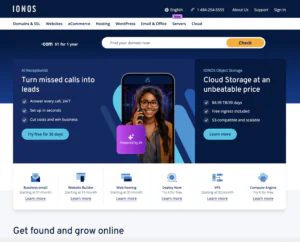
IONOS is one of the best and largest hosting providers in Europe, serving over 22 million domains. It uses cutting-edge cloud technology to deliver maximum performance across all plans. It deploys each service from 10 sustainable, geo redundant, ISO-certified data centers located across the US, UK, and Europe. Moreover, it provides many free and paid features across all plans and has a 99.9% uptime guarantee for all services.

- Overall Score: 3.9
- Pricing: 3.9
- Features: 3.5
- Performance: 4.3
- Support: 4.0
- User Friendly: 3.8
Pricing: The cheapest IONOS Linux shared hosting plan costs $1 per month and renews at $12 after one year. It includes hosting for unlimited websites, unlimited storage, unlimited databases, a free domain for one year, free SSL, and a 30-day money-back guarantee.
Features: IONOS provides many free and excellent features, including free SSL, DDoS protection, a cloud infrastructure, free plugins for TYPO3, Joomla, Drupal, and PrestaShop, daily backups, support for multiple PHP versions, Cloudflare CDN, HTTP/2 support, and free professional email.
Performance: The provider offers a 99.9% uptime guarantee across all plans. It maintains geo-redundant data centers in 10 locations across the US, UK, and Europe, which are all ISO-certified and PSI-DSS compliant.
Support: IONOS offers 24/7 customer support via live chat, phone, and cloud support. You can also get your own personal consultant at an extra cost. Additionally, the provider has a vast help center filled with many helpful solutions.
User Friendly: IONOS provides its own cloud control panel, which is simple and easy to use. It also has a special “Deploy Now” feature that allows you to deploy your site in three quick steps.
Pros & Cons
- Ten geo-redundant, ISO-certified, and PCI-DSS-compliant data centers
- Many free features
- Cloudflare CDN
- A 99.9% uptime guarantee
- Some hidden fees

-
Top 5 USA Web Hosting 2025
-
Top 5 Germany Web Hosting 2025
-
Top 5 UK Web Hosting 2025
-
Top 10 Linux Hosting 2025
-
Top 10 WordPress Hosting 2025

HostArmada boasts its AI-based and innovative security features. So, your website gets an extended level of protection against cyber-attacks. With 99.9% guaranteed uptime, HostArmada stands among the best Linux shared hosting providers.
- Overall Score: 4.8
- Features: 4.9
- Reliability: 4.8
- User-Friendly: 4.9
- Support: 4.8
- Pricing: 4.7
HostArmada is a popular cloud-based hosting. This Linux shared hosting provider stores customer data on multiple servers, which offers a wide array of benefits. Cloud-based hosting tends to be more secure and also improves the page loading speed and overall website performance. Furthermore, strategic distribution of resources lowers the load on each server.
HostArmada restricts the number of clients per server to a minimum. This ensures optimal uptime, better load management, and minimum hardware failures. This host also offers daily backup solutions. The intuitive and impressive caching mechanism allows your website to load faster.
Features: HostArmada comes with a range of attractive features. These include native SSD Drives, LiteSpeed web server, RAID controllers (battery-powered), free Domain, malware detection & removal mechanism, free SSL, 99.9% uptime, unmetered bandwidth, cPanel, free SSL certificate, and daily backups.
Reliability: HostArmada is a fast and reliable hosting provider. The Cloud SSD drives perform much better and are fast too. This helps improve the overall performance of your website. In addition, the 99.99% uptime guarantee is another notable feature.
User-Friendly: The 1-Click Installer and cPanel are two of the most user-friendly features offered by HostArmada. You can install a range of software and applications within no time. With cPanel, controlling and managing your website is also convenient.
Support: HostArmada offers a vigilant and highly responsive support service. You can contact the support team via multiple channels including, phone and live chat. In most cases, the response comes within 10 minutes of ticket submission.
Pricing: Start Dock is the basic shared hosting plan that costs $2.99/month. Features available with this plan include, 1 Website, 2 Cores CPU, 15 GB SSD Storage, 2 GB RAM, etc. Other key features are free domain, free SSL, and 7 Daily Backups.
Pros & Cons
- Free website migration service
- 45 days money-back guarantee
- No cancellation fees
- Automatic daily backups
- 1-click application installer
- Relatively expensive upon renewal
- LiteSpeed web server is only available with the Speed Reaper plan

-
Great Support 2025
-
Top 10 WordPress Hosting 2025
-
Top 10 Cloud Hosting 2025
-
Top 25 WordPress Hosting 2025
-
Top 5 Australia Web Hosting 2025

Neoxea’s Linux Shared Hosting provides a reliable and cost-effective solution for hosting Linux-based websites. Designed for businesses and individuals, it offers robust features and performance, making it suitable for small to medium-sized projects.
Rating Based on Expert Review:
- Overall Score: 4.7
- Features: 4.8
- Reliability: 4.7
- User-Friendly: 4.6
- Support: 4.7
- Pricing: 4.6
Detailed Analysis
- Features: Neoxea includes SSD storage, unlimited bandwidth, and support for multiple Linux distributions. It offers one-click installations for popular CMS platforms like WordPress and Joomla, free SSL certificates, and daily backups for enhanced security and convenience.
- Reliability: Neoxea ensures a 99.9% uptime guarantee, backed by stable infrastructure optimized for Linux hosting environments.
- User-Friendly: The control panel is intuitive, allowing users of all experience levels to manage their hosting environment with ease. Advanced users benefit from SSH access and development tools.
- Support: Neoxea provides 24/7 customer support through live chat and email. Their team is knowledgeable in handling Linux-based hosting queries and offers efficient solutions.
- Pricing: Plans start at $6 per month, offering competitive pricing for Linux hosting. Flexible options allow users to scale resources as needed.
Pros and Cons
- SSD storage and unlimited bandwidth for better performance
- Free SSL certificates and daily backups included
- Support for popular Linux distributions and CMS platforms
- Intuitive control panel for easy management
- 24/7 responsive customer support
- Limited scalability compared to VPS or dedicated hosting
- Entry-level plans may lack advanced features
-
Best Reseller Hosting Provider 2026
-
Top 5 Australia Web Hosting 2026
-
Top 5 UK Web Hosting 2026
-
Top 10 Windows Hosting 2026
-
Top 10 VPS Hosting 2026

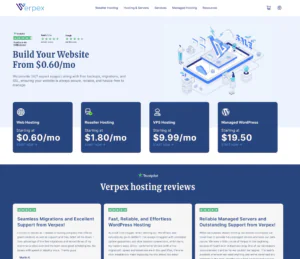
Verpex is a fast and well-optimized Linux hosting provider. With the availability of cPanel, managing and controlling your site won’t be an issue. The customer service is outstanding too. You can access the support team round the clock and resolve your issues within minutes.
- Overall Score: 4.7
- Features: 4.8
- Reliability: 4.6
- User-Friendly: 4.6
- Support: 4.8
- Pricing: 4.7
Verpex offers cPanel, an easy-to-use control panel, suitable for both Linux and Windows-based websites. Another amazing feature is the auto-installer, which makes it easy to install any kind of web app or CMS.
This hosting provider owns state-of-the-art hardware. So, you might not face issues like disruption or downtime. The infrastructure runs automatically without any input. On the other side, the servers continue to run without any issues, thanks to multiple cloud providers.
Features: Verpex is a feature-loaded Linux shared hosting provider. A few of the most notable features include SSD storage, unlimited SSL certificates & website migrations, LiteSpeed web server, and multiple PHP versions. Besides, SitePad, Imunify360, JetBackup, Softaculous, and Cloudlinux are some additional features that Verpex users can enjoy.
Reliability: Talking about performance and reliability, Verpex proves to be a highly reliable hosting provider. It ensures fast page loading speed and better load handling during peak traffic. The 99.99% guaranteed uptime is another factor that improved Verpex’s reliability score.
User-Friendly: Just like other top Linux shared hosting providers, Verpex offers an easy-to-use interface. It relies on cPanel, which is a simple and user-friendly control panel. Even if you come across any difficulty, the expert team is at your disposal for required technical assistance.
Support: The customer care team consists of experts and friendly people. The knowledgeable technical assistants can assist you with almost any kind of issue related to your hosting plan. The support team can be accessed via phone or live chat.
Pricing: The Iron Plan costs $0.50 for the first month. Upon renewal, you will be paying $5/month. So, this might not be a cheap Linux hosting option. The features that come with this plan include 10GB bandwidth, 1GB SSD disk space, free SSL Certificates, free migrations, and daily Backups.
Pros & Cons
- Free domain name
- Softaculous app installer
- Impressive customer support
- Free and unlimited migrations
- 45-day money-back guarantee
- 99.99% guaranteed uptime
- Renewal rates are considerably higher

-
Top VPS Hosting 2023
-
Top WordPress Hosting 2023
-
Top Windows Hosting 2023
-
Top Dedicated Hosting 2023
-
Top Cloud Hosting 2023

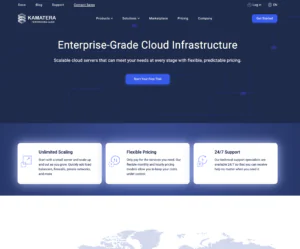
Kamatera doesn’t sell traditional Linux shared hosting plans in the classic sense; it’s primarily a cloud VPS/IaaS platform where you build your own hosting environment. For users who want “shared hosting-like” simplicity, the closest fit is launching a small Linux server and adding a control panel (like cPanel) to manage domains, email, databases, and multiple sites from a familiar interface. This approach is best for developers, agencies, and site owners who’ve outgrown shared hosting limitations and want more predictable resources—without jumping straight to expensive dedicated hardware. The value is strong if you’re comfortable with basic server decisions (sizing, updates, backups), and the 30-day trial credit helps you validate the setup before committing.
Rating Overview
- Overall Score: 4.3
- Performance: 4.7
- Support: 4.4
- Security: 4.4
- Pricing: 4.5
- Ease of Use: 4.0
Detailed Analysis
Performance: VPS resources are dedicated to your instance, so you avoid many “noisy neighbor” issues typical of shared hosting. Performance is excellent when you size CPU/RAM appropriately for your sites. However, results depend on how well you configure the stack and caching.
Support: 24/7 support is available, which is reassuring when provisioning or troubleshooting infrastructure issues. Help is strongest at the platform level rather than deep application tuning. If you need hand-holding like managed shared hosting, you may find the model more self-service.
Security: You gain control over firewall rules, access policies, and patching schedules, which can be a big upgrade from shared hosting defaults. This flexibility also means security quality is partly on you—especially for OS updates and control panel hardening. Using a standard panel can simplify routine security tasks.
Pricing: Pay-as-you-go pricing can be cost-efficient for right-sized servers and predictable workloads. Costs can climb if you overprovision resources or add paid licenses without tracking margins. The trial credit reduces early risk while you benchmark real usage.
Ease of Use: Deploying a server is straightforward, but it’s not the one-click experience of shared hosting. You’ll likely need to install or deploy a panel (e.g., cPanel) and set up backups/monitoring yourself. This is manageable for technical users, less ideal for beginners.
Pros and Cons
Strong performance potential with dedicated VPS resources
Flexible Linux configurations for different site needs
24/7 support availability for platform-level issues
Pay-as-you-go pricing helps control costs when right-sized
cPanel deployment option for more familiar hosting management
No traditional Linux shared hosting plans offered
More setup and maintenance than standard shared hosting
Control panel licensing and add-ons can increase total cost

Hosting.com offers stable Linux-based shared hosting that’s budget-friendly and well-suited for simple websites, blogs, or small business pages.
Rating Overview:
- Overall Score: 4.4
- Pricing: 4.5
- Features: 4.4
- Performance: 4.4
- Support: 4.4
- User Friendly: 4.5
Detailed Analysis:
- Pricing: Hosting.com’s Linux shared hosting plans keep costs low and predictable, making it easy to host personal or business sites on a proven Linux environment.
- Features: Includes cPanel for easy management, PHP/MySQL support, free SSL, email accounts, and one-click installs for WordPress or other popular CMSs.
- Performance: Solid uptime and decent speeds for light to moderate traffic — ideal for business sites, blogs, or portfolio pages.
- Support: 24/7 support is available via live chat and tickets for setup help, domain issues, and hosting troubleshooting.
- User Friendly: Intuitive dashboard and auto-installers make site setup and management stress-free, even for beginners.
- Affordable Linux hosting
- Easy cPanel access
- Good for beginners and small businesses
- Limited resources for larger sites
- Basic support only covers hosting essentials
Hosting.com is a good pick if you want cost-effective, simple Linux shared hosting that’s easy to run and maintain for small websites.
-
Best Customer Service 2024
-
Great Support 2024
-
Excellent Service 2024
-
Over 99% Uptime 2024
-
Top 25 Cloud Hosting 2024

ChemiCloud is a solid choice for Linux shared hosting if you want a reliable, beginner-friendly environment for common website stacks. Linux shared hosting is ideal for PHP-based sites, WordPress, Joomla, Drupal, and typical small business workflows, and ChemiCloud pairs that compatibility with an experience that’s easy to manage day to day. It’s well suited for bloggers, freelancers, and small businesses that want dependable uptime, smooth site administration, and responsive support for migrations or troubleshooting. While it isn’t built for highly custom server stacks, it offers a strong balance of performance, security, and usability for mainstream Linux hosting needs.
Rating Overview
- Overall Score: 4.6
- Performance: 4.5
- Support: 4.7
- Security: 4.5
- Pricing: 4.4
- Ease of Use: 4.6
Detailed Analysis
Performance: ChemiCloud’s Linux shared hosting performs well for WordPress and PHP-based sites when themes are lightweight and plugins are kept under control. It’s a good fit for steady traffic and typical small business workloads with responsive page loads. For heavier ecommerce or busy membership sites, you may need higher tiers or a VPS, but Linux shared hosting covers most standard use cases comfortably.
Support: Support is a standout and particularly helpful for Linux hosting users who need assistance with migrations, email setup, DNS changes, and SSL configuration. It’s also useful when troubleshooting performance issues tied to caching, PHP settings, or site configuration. Deep code-level debugging remains user-led, but the hosting-layer support is consistently practical.
Security: Linux shared hosting provides a solid baseline security posture, and ChemiCloud’s approach suits typical small business risk levels. Keeping CMS software updated and using strong credentials still matters most. For sensitive sites, you’ll want additional layers such as hardened admin access and disciplined backup routines.
Pricing: Pricing is competitive for the reliability and support quality offered, though it may not be the absolute cheapest shared host. Value is strong if you want fewer headaches and faster issue resolution. Long-term budgeting should include renewals, but the overall cost-to-experience ratio remains attractive.
Ease of Use: The management experience is beginner-friendly, making it easy to handle routine tasks like creating emails, installing WordPress, managing SSL, and handling backups. Linux hosting doesn’t require special expertise for typical website ownership. Advanced users may want more low-level control, but for shared hosting it’s a smooth and accessible platform.
Pros and Cons
Strong Linux compatibility for WordPress and PHP sites
Excellent support for migrations and troubleshooting
Reliable performance for everyday shared hosting workloads
Easy management for non-technical site owners
Solid security baseline for mainstream websites
Not ideal for resource-heavy ecommerce at peak traffic
Cheapest rates usually depend on longer-term billing
Limited low-level server customization on shared plans

Cloud86’s Linux shared hosting targets budget-conscious sites that still want professional reliability. With data centers in Europe and plans that scale from simple blogs to active e-commerce catalogs, it aims at freelancers, agencies, and small businesses that need predictable performance without the overhead of server management. You get the usual cPanel stack with SSD/NVMe storage, free SSL, and automated backups, paired with sensible resource allocations. Pricing is competitive rather than rock-bottom, and the value comes from steady uptime, quick support responses, and a tidy control panel experience that’s friendly for non-admins yet flexible enough for developers. Overall, it’s a pragmatic choice for EU websites that prioritize stability and straightforward operations.
Rating Overview
Overall Score: 4.6
Performance: 4.7
Support: 4.6
Security: 4.6
Pricing: 4.5
Ease of Use: 4.7
Detailed Analysis
Performance: NVMe storage and optimized LiteSpeed/OPcache deliver quick page loads under typical shared workloads. Resource isolation is fair, so neighbors rarely impact your site noticeably. Burst handling is decent, though consistently heavy apps may need a higher-tier plan.
Support: Responses are timely and knowledgeable for common CMS issues and DNS/cPanel tasks. Escalations are handled transparently with clear remediation notes. Live chat or ticket coverage is dependable, though deep code debugging remains out of scope, as expected for shared hosting.
Security: Free SSL, proactive malware scanning, and account isolation reduce common risks. Regular patching and server-level WAF rules help shield popular CMS stacks. Backups are automated, but customers should still configure secondary off-site copies for critical projects.
Pricing: Entry plans are competitively priced with promotional discounts; renewals remain reasonable. Resource ceilings are clearly documented, avoiding surprise throttling. Add-ons like dedicated IPs or staging may add cost, but they’re optional rather than forced.
Ease of Use: cPanel is clean with sensible defaults and one-click installers for WordPress and PHP apps. Staging and cloning flows are straightforward for non-technical users. Developers get SSH, Git, and version-selectable PHP to streamline deployments.
Pros and Cons
Solid NVMe performance and stable uptime
Helpful support for CMS and DNS basics
Clean cPanel with staging and backups
Transparent resource limits and upgrade path
Good value for EU-focused sites
Heavy apps may outgrow shared limits
Some advanced features locked behind higher tiers
Limited scope for deep custom server tuning
Linux Shared Hosting vs Windows Shared Hosting: Key Differences
| Feature | Linux Shared Hosting | Windows Shared Hosting |
| OS | Linux (AlmaLinux, CentOS, Ubuntu) | Windows Server |
| Language Support | PHP, Python, Perl, Ruby | ASP.NET, .NET, MSSQL |
| Control Panel | cPanel, DirectAdmin | Plesk |
| Cost | More affordable | Typically more expensive |
| Use Case | Blogs, CMS, open-source apps | Microsoft-based web apps, Exchange, SharePoint |
Conclusion: Choose Linux shared hosting for open-source stacks and affordability. Opt for Windows hosting if your app requires Microsoft technologies.
Use Cases for Linux Shared Hosting
- Personal Blogs: Install WordPress or Joomla and manage content easily through cPanel.
- Small Business Websites: Affordable way to create an online presence with email and contact forms.
- Landing Pages: Launch quick campaigns or promotional pages with reliable uptime.
- Freelance Portfolios: Host your personal brand or showcase past projects on a budget.
- Nonprofits & Community Sites: Provide information, event updates, and basic services online without heavy resource needs.
Why Trust Our Recommendations?
We tested dozens of Linux shared hosting providers by deploying real-world websites using WordPress, static HTML, and CMS tools. We monitored uptime, page load speeds, and server response time from multiple locations.
We also assessed control panel usability, one-click installer options, security tools, and support responsiveness. Only providers offering consistent performance, solid support, and beginner-friendly features at low prices made the list.
How We Test and Rank
Our team used tools like GTmetrix, Pingdom, and UptimeRobot to monitor performance across test sites. We evaluated ease of setup, installation tools, dashboard usability, and support quality through actual service tickets and live chat.
Each provider was scored based on speed, uptime, security, usability, value for money, and customer service. Those delivering fast, secure, and easy-to-manage Linux hosting were ranked highest.
Best Linux Shared Hosting: Final Recommendations
Linux shared hosting is the easiest way to launch a website with minimal cost and hassle. It offers reliable performance, open-source compatibility, and user-friendly tools like cPanel—perfect for beginners and growing businesses.
If your website runs on PHP and MySQL or uses CMS platforms like WordPress or Joomla, Linux shared hosting is likely your best choice. Look for providers that offer good speed, security, and support without hidden renewal fees.