SOURCE: RAUNAK KUNDE / NEWS BEAT / IDRW.ORG

As India stands on the brink of sealing one of its most consequential naval defence agreements in decades, fresh details are emerging about what the $10 billion Project 75(I) submarine programme could truly represent for both the Indian Navy and the country’s defence industry. The government-to-government pact with Germany is expected to clear the way for six next-generation conventional submarines, but these will not be off-the-shelf platforms. According to information shared with idrw.org, India is set to receive a customised hybrid design derived from the U-214 and the newer U212CD class, tailored specifically for Indian operational needs and industrial ambitions.
The most striking aspect of this emerging configuration is its size and capability. The Indian variant is expected to displace around 2,500 tonnes, making it roughly 500 to 600 tonnes heavier than the base export model. This growth in tonnage is not just about scale but about endurance, payload, and adaptability. A larger hull allows for additional fuel, improved habitability for long patrols, and greater space for advanced combat systems and weapons, all of which align with the Indian Navy’s requirement for extended operations across the vast Indian Ocean Region.
Continue readingSOURCE: RAUNAK KUNDE / NEWS BEAT / IDRW.ORG

India’s push for self-reliance in armoured vehicle technology is entering a crucial phase as the Combat Vehicles Research and Development Establishment (CVRDE) of DRDO advances work on an indigenous 800 horsepower engine with an automatic transmission. The new powerpack is derived from the 600 HP engine already developed jointly with Ashok Leyland for the Light Tank program and is intended to replace the imported Cummins engine currently planned for the production batches of the Zorawar Light Tank.
According to information accessed by idrw.org, the upcoming 800 HP engine will retain the same core design philosophy as the 600 HP unit developed for the WhAP 8×8 class of armoured personnel carriers. However, the power output has been significantly enhanced to meet the more demanding operational profile of a light tank, which requires higher torque, improved thermal management, and greater endurance under combat conditions, especially in high-altitude and extreme climates.
Continue readingSOURCE: RAUNAK KUNDE / NEWS BEAT / IDRW.ORG

As India looks toward the centenary of its independence in 2047, the country’s maritime ambitions are quietly being reshaped by a far-reaching idea: a fully self-reliant navy built around indigenous technology and, eventually, a nuclear-powered aircraft carrier. Senior naval officials have told idrw.org that long-term planning is already underway for such a platform, reflecting how India’s economic rise and strategic responsibilities are expected to expand together over the next two decades.
According to the official, India is projected to become a fully developed economy with a size of around 35 trillion dollars by 2047, and possibly even beyond that figure. In parallel, the Indian Navy is expected to grow in both size and capability to match the country’s global role. One of the clearest symbols of this future force structure would be a nuclear-powered aircraft carrier, a class of warship operated today by only a handful of major powers.
Continue readingSOURCE: AFI

India’s ambitious Advanced Medium Combat Aircraft (AMCA) programme has quietly crossed an important industrial milestone. Speaking to CNBC-TV18, Rajesh Kumar Singh, Secretary in the Department of Defence, confirmed that seven industry consortiums had submitted bids for the fifth-generation fighter aircraft project. After the pre-qualification process, only three contenders have been shortlisted, and these selected bidders will receive the Request for Proposal (RFP) within the next two to three months.
This development signals that the AMCA project is moving beyond concept and design into a phase where industrial execution becomes central. While the government has not yet disclosed which three consortiums made the cut, the initial race itself reflected the scale of interest from Indian industry. The bidders included groupings such as Larsen & Toubro with BEL and Dynamatic Technologies; BFL with BEML and Data Patterns; Tata Advanced Systems Limited as a standalone contender; HAL partnered with VEM and JK; Adani with MTAR; Icomm with PTC; and BATL with Goodluck and Axiscades.
Continue readingSOURCE: AFI

India’s long pursuit of an indigenous high-thrust fighter jet engine has finally been placed on a realistic timeline, and it comes straight from the country’s top defence scientist. DRDO Chairman Samir V. Kamat has acknowledged that aero-engine development is not a sprint but a marathon, one that typically takes a decade or more even for established powers. His remarks underline both the ambition and the patience required as India prepares to power its fifth-generation Advanced Medium Combat Aircraft, or AMCA, with a homegrown engine in the long run.
Kamat explained that globally, any clean-sheet fighter engine programme takes between 10 and 13 years to reach maturity before it can be fully integrated with an aircraft platform. Applying that benchmark to India’s case, he noted that if the Cabinet Committee on Security grants approval this year, the indigenous engine could be ready for integration around 2035 or 2036. Development trials would take place well before that, alongside the AMCA airframe, but formal acceptance trials would only begin once the engine reaches that maturity point in the mid-2030s.
Continue readingSOURCE: AFI
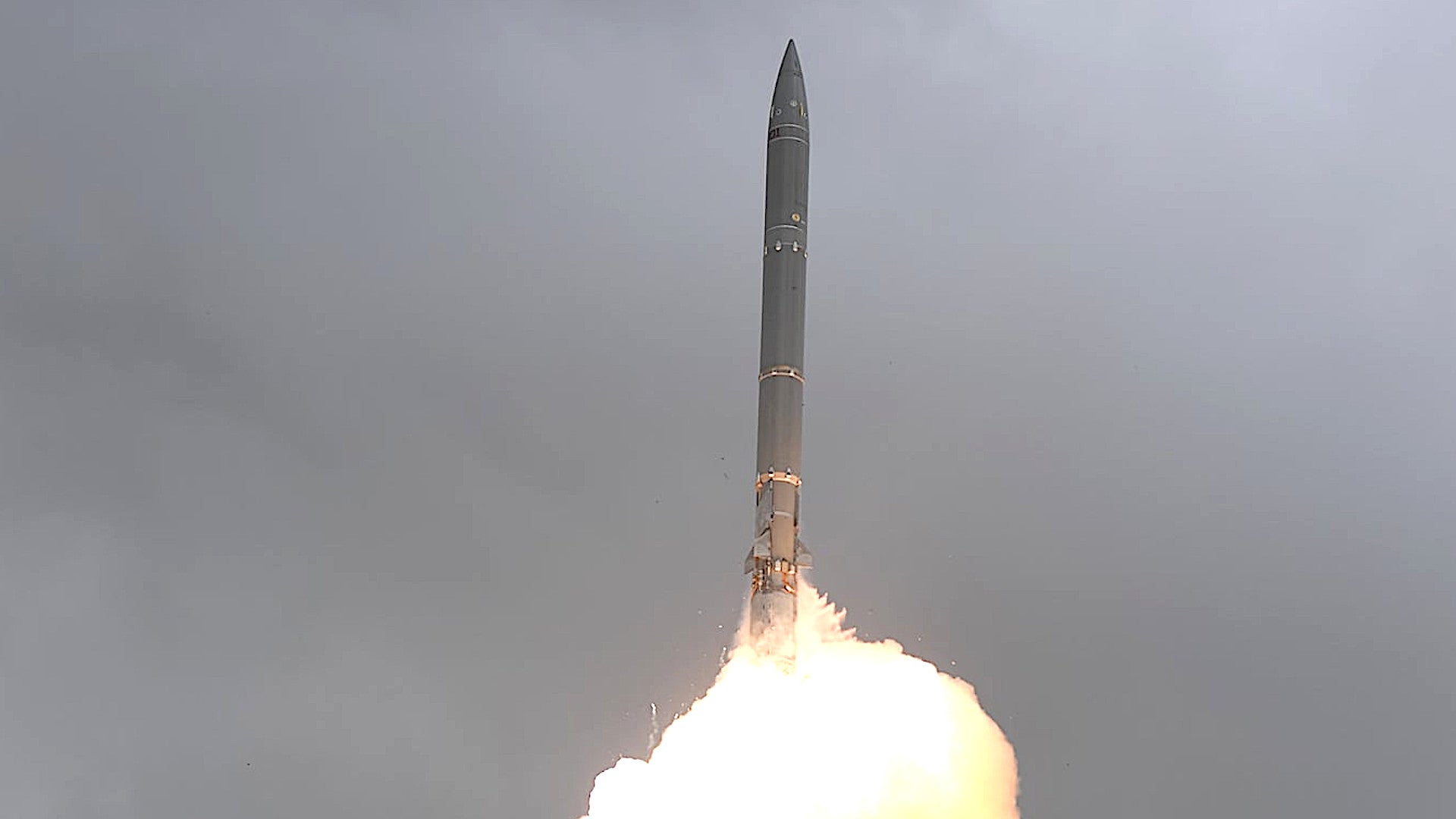
Fresh on the heels of the Long Range Anti-Ship Missile, India’s missile programme is moving rapidly into undersea warfare with the fast-tracking of SMART, a next-generation canister-based anti-submarine weapon developed by the Defence Research and Development Organisation. According to inputs accessed by idrw.org, the Indian Navy is expected to give its formal green light to the system in 2026, marking the beginning of a new era in how India hunts submarines across vast ocean spaces.
SMART, which stands for Supersonic Missile Assisted Release of Torpedo, is being shaped around a simple but powerful idea: strike enemy submarines from hundreds of kilometres away instead of closing in dangerously close. With a stand-off range exceeding 600 kilometres, the system is designed to counter the growing presence of advanced submarines in the Indian Ocean Region, particularly those operated by the PLA Navy. In strategic terms, this means Indian surface forces will be able to threaten hostile submarines long before they approach sensitive sea lanes or carrier battle groups.
Continue readingSOURCE: AFI

The next chapter of the BrahMos story is quietly advancing. The CEO of NPO Mashinostroyeniya, Alexander Leonov, has confirmed that development work on BrahMos NG is underway. Described by BrahMos Aerospace as a “smaller, lighter, smarter and stealthier” evolution of the original missile, BrahMos NG aims to preserve the defining traits of its predecessor while reshaping the weapon for a new generation of platforms and missions.
Unlike the existing BrahMos, which is optimised primarily for heavy fighters and large surface combatants, the NG variant is being designed from the outset as a multi-platform missile. It is intended for launch from aircraft, land-based launchers, warships and even submarines, reflecting a push toward compact, high-speed strike systems that can be deployed across the full spectrum of military operations. The emphasis is not just on reducing size and weight, but on increasing flexibility in how and where the missile can be used.
Continue readingSOURCE: IANS

An analysis of India’s security challenges and discussions on modern and futuristic war fighting are slated to top the agenda at the third edition of the tri-services Future Warfare Course commencing at Manekshaw Centre here, an official statement said on Monday.
This edition, scheduled from February 2 to 25, features an enhanced curriculum covering specialised subjects and domain-specific warfare developments in military operations, the Defence Ministry statement said.
Continue readingSOURCE: IANS

Defence Minister Rajnath Singh has approved the grant of ‘Miniratna’ Category-I status to Yantra India Limited (YIL), an official said on Monday.
Congratulating the Defence Public Sector Undertaking (DPSU) for its transformation from a government organisation to a profit-making corporate entity in a short span of about four years, the Defence Minister expressed satisfaction over the initiatives taken by the management of the YIL to increase the turnover of the company, maximise indigenisation and meet other performance parameters for grant of Miniratna (Category-I) status.
Continue readingSOURCE: IANS
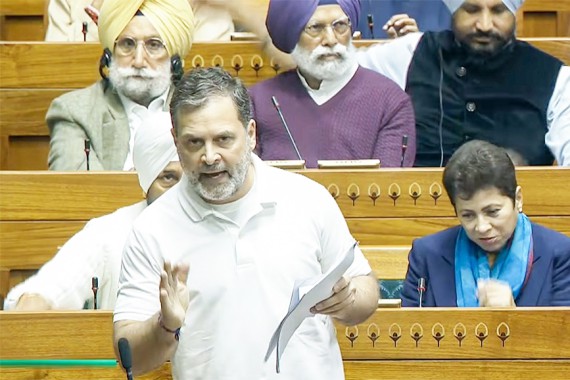
Leader of Opposition (LoP) in the Lok Sabha Rahul Gandhi’s remarks on the floor of the Parliament, quoting excerpts from what is claimed to be an “unpublished work” of former Indian Army chief, General M.M. Naravane (retd), and questioning India’s position on border issues with China has sparked a sharp political clash.
Gandhi’s statement and subsequent insistence triggered an uproar in the House and have since spilt into a heated war of words outside the Parliament.
Continue readingSOURCE: PTI

The Centre and the Union Territory of Ladakh administration told the Supreme Court on Monday that jailed climate activist Sonam Wangchuk tried to instigate Gen Z for protests like in Nepal and Bangladesh.
A bench of Justices Aravind Kumar and P V Varale was told by Solicitor General Tushar Mehta that Wangchuk even referred to ‘Arab Springs’ like agitation which has led to the overthrow of multiple governments in countries of the Arab world.
Continue readingSOURCE: PTI
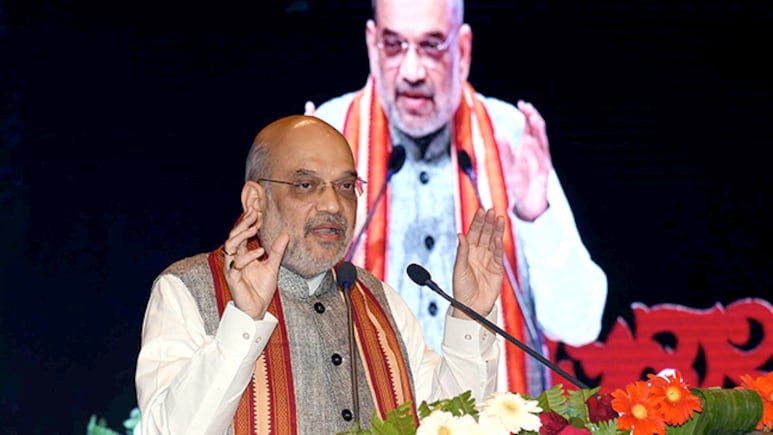
Union Home Minister Amit Shah on Monday said the trade deal between the US and India will elevate strategic partnership between the two countries, paving the way for stronger trade ties and mutual growth.
In a post on X, Shah said the deal will greatly benefit both nations and their people with business between India and US set to flourish further. “A big day for India-US relations as the trade deal has been locked with a significantly reduced tariff of 18 per cent, paving the way for stronger trade ties and mutual growth,” he said.
Continue readingSOURCE: PTI
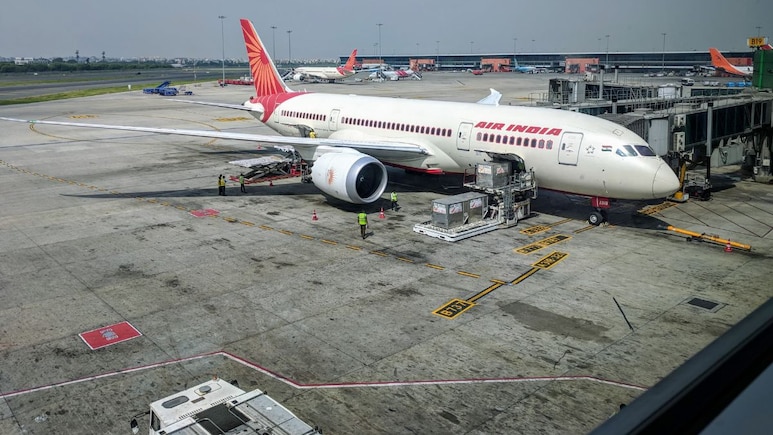
President of the Federation of Indian Pilots (FIP), Captain CS Randhawa, on Monday called for urgent inspections of all Boeing 787 aircraft for electrical system faults, citing recurring incidents that he said compromise flight safety.
His remarks follow the grounding of an Air India Boeing 787-8, earlier in the day, after a pilot reported a possible defect in the fuel control switch.
Continue readingSOURCE: PTI
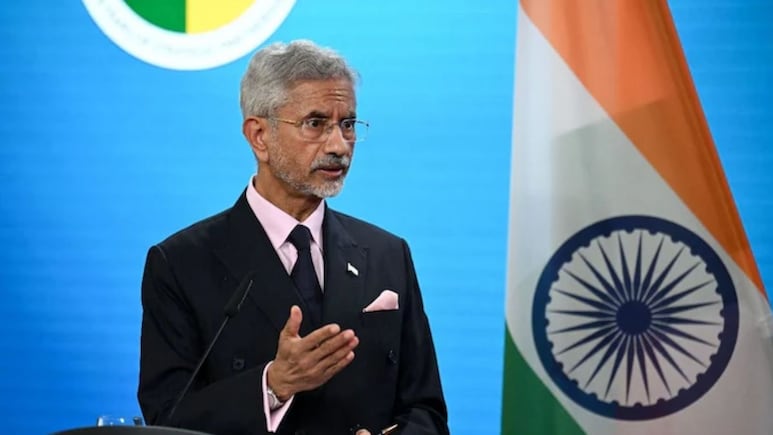
External Affairs Minister S Jaishankar on Tuesday welcomed the India-US trade agreement, saying it will spur growth in both economies and strengthen the country’s ‘Make in India’ endeavours. Jaishankar, who is on a three-day visit to the US to attend a Washington-led ministerial meeting on critical minerals supply chain, said he “welcomed the announcements on bilateral trade”.
India and the US agreed to a trade deal under which Washington will bring down reciprocal tariff on Indian goods to 18 per cent from current 25 per cent, US President Donald Trump said on Monday after a phone conversation with Prime Minister Narendra Modi.
Continue readingSOURCE: IANS
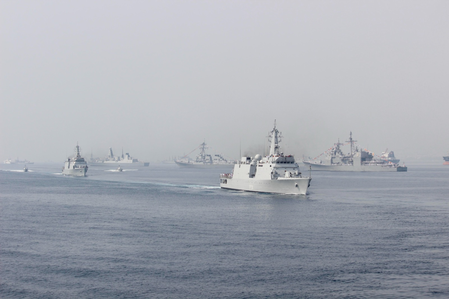
With the International Fleet Review (IFR) to be held off Visakhapatnam on February 18, followed by the multinational exercise Milan-2026 on February 19, officials met on Wednesday to discuss the arrangements.
President Droupadi Murmu will review the capabilities of the Indian Navy during IFR. Ships from 19 countries, including Sri Lanka and Iran, and approximately 4,000 delegates will be attending the event.
Continue reading