
Screenshots


App details
- Version
- varies-by-device
- Updated
- February 8, 2017
- Requires
- Windows 10
- Language
- English
- License
- Free
- Developer
- Dev.call2aman
- Category
- Windows OS
About Inbox
Download Inbox – Free Multi‑Account Email Manager for Windows, macOS, Android & iOS
Overview
Managing several email accounts has become a daily reality for many professionals, freelancers, and even casual users. Switching between Gmail, Outlook, Yahoo, or a corporate Exchange server often means logging in and out, remembering multiple passwords, and juggling browser tabs. The free software Inbox was built to eliminate that friction. Designed as a lightweight yet secure hub, Inbox lets you access dozens of mailboxes with a single click, while keeping each account isolated behind encrypted connections. Whether you are on a desktop workstation, a MacBook, or a mobile device, the application presents a clean unified interface that mirrors the look and feel of the native email service you are using. This approach not only saves time but also reduces the risk of credential leaks that can happen when you repeatedly type passwords on public computers or insecure networks. In addition to its core swapping capability, Inbox offers one‑touch login, quick compose windows, and a notification system that aggregates unread counts across all linked accounts. All of these features are bundled in a free package that receives regular updates to stay compatible with the latest security standards of major email providers. By centralising your inboxes, Inbox helps you maintain focus, protect your data, and stay organized without the need for a heavyweight email client.
Core Features & Advantages
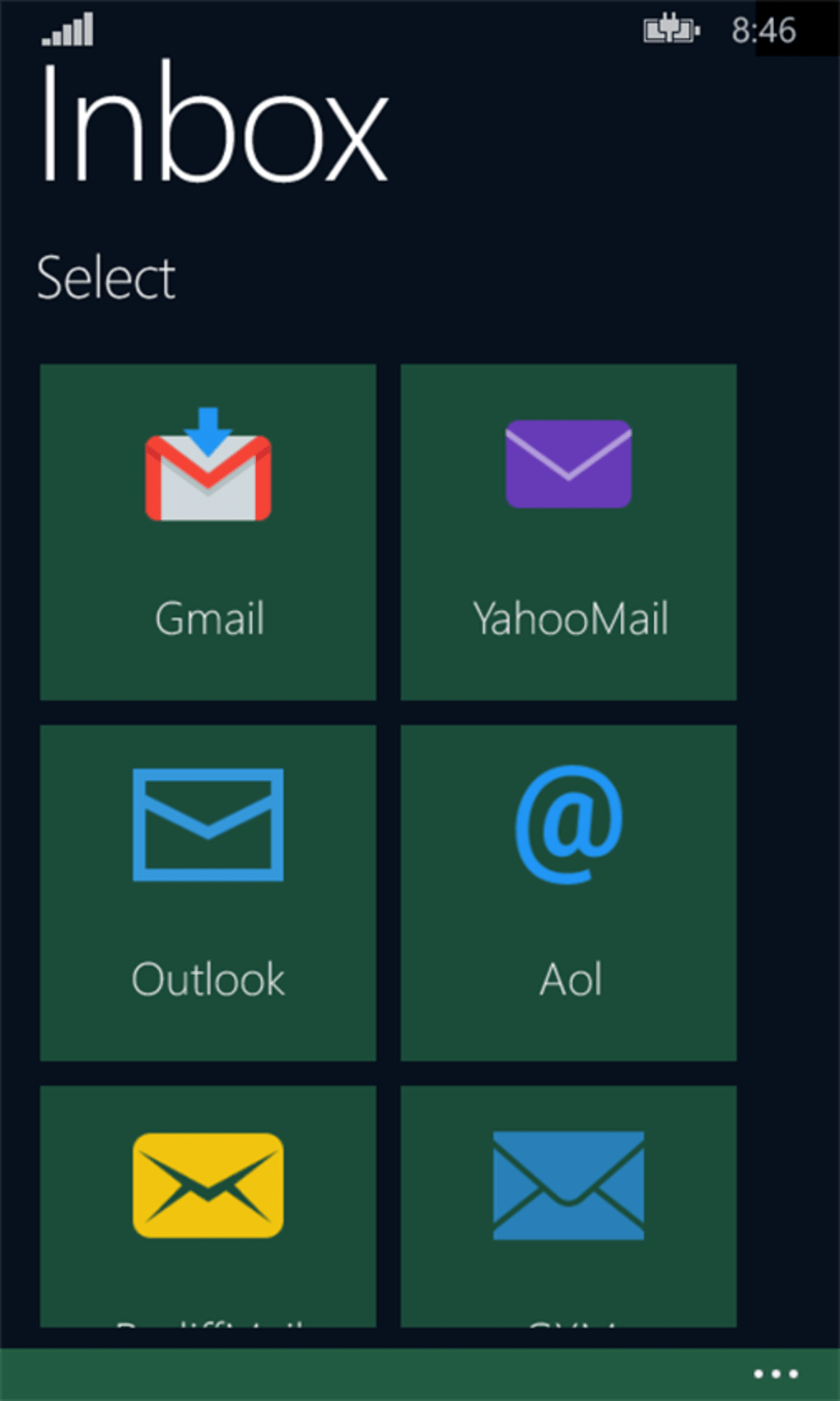
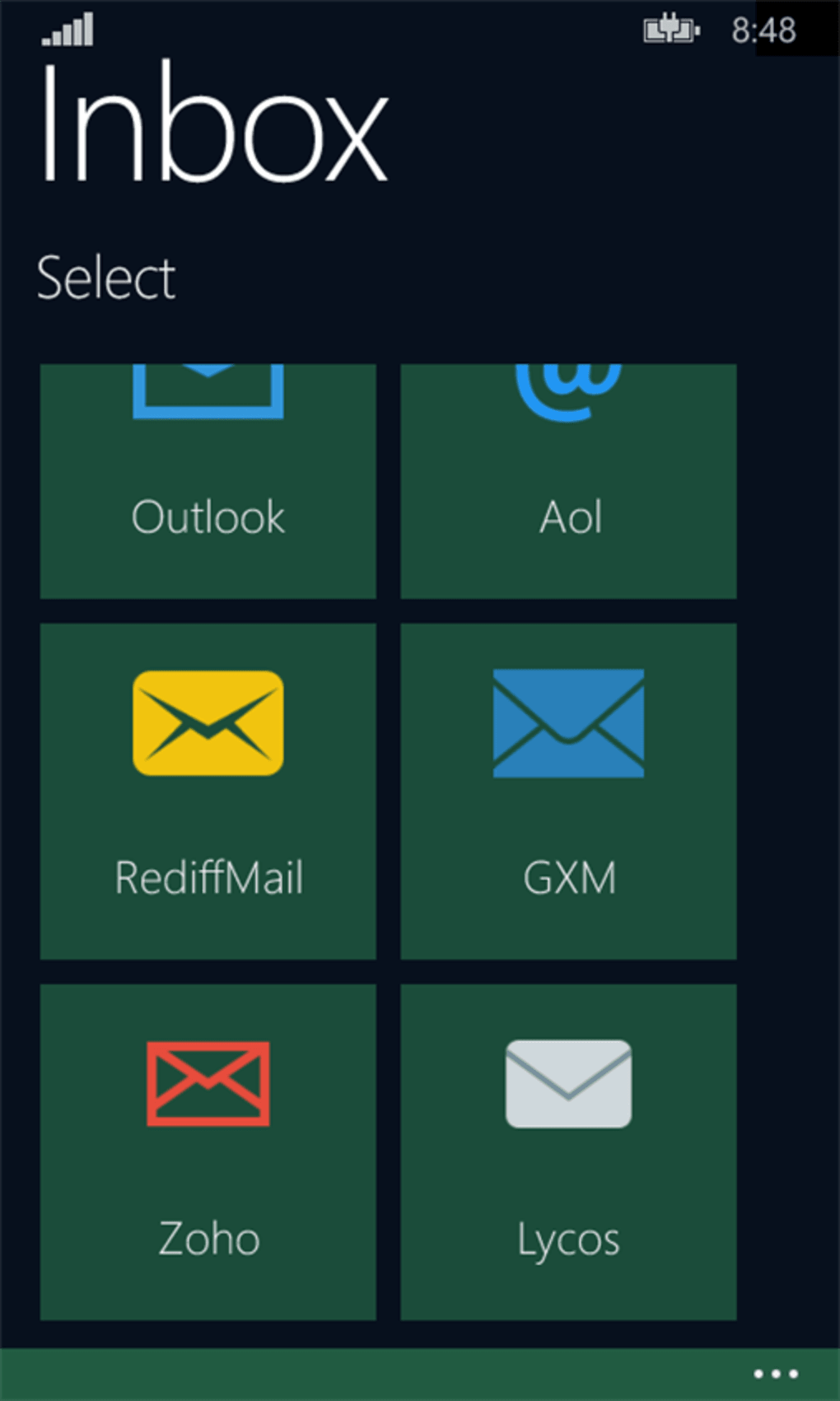
- One‑Touch Account Switching – Click an icon (Gmail, Outlook, Yahoo, etc.) and instantly load the selected mailbox.
- Secure OAuth Integration – Uses industry‑standard OAuth tokens; passwords are never stored locally.
- Unified Notification Center – Consolidates unread counts and alerts from all connected accounts.
- Cross‑Platform Sync – Settings and account links are synced via encrypted cloud backup.
- Lightweight Design – Less than 30 MB install size; runs smoothly on older hardware.
- Customizable Themes – Dark mode, high‑contrast, and brand‑specific colour schemes.
- Quick Compose Shortcut – Open a new message window for any account with a single hotkey.
- Multi‑Device Support – Available for Windows 10/11, macOS 10.13+, Android 6.0+, and iOS 12+.
Pros
- Free to download and use with no hidden subscription fees.
- Eliminates the need to remember multiple passwords thanks to OAuth.
- Fast, one‑click access reduces time spent navigating between webmail portals.
- Light on system resources, ideal for low‑end laptops and mobile devices.
- Regular security updates keep connections compliant with provider policies.
Cons
- Lacks advanced email management features such as rules, filters, or calendar integration.
- No built‑in search across all accounts; you must search within each mailbox separately.
- Limited to mainstream providers; some niche or self‑hosted IMAP accounts may require manual configuration.
Step‑by‑Step Installation & Daily Workflow
Installing Inbox is straightforward on every supported platform. Below is a concise guide that walks you through the process from download to everyday use.
Desktop (Windows & macOS)
- Visit the official Inbox download page and click the Download for Windows or Download for macOS button.
- Run the installer (InboxSetup.exe on Windows, InboxInstaller.dmg on macOS) and follow the on‑screen prompts. The wizard will request permission to create a shortcut on your desktop and add the app to your start menu or Applications folder.
- After installation, launch Inbox. The first‑time launch triggers the account‑link wizard.
- Select the email providers you wish to connect. For each provider, you will be redirected to the provider’s OAuth login page. Enter your credentials there; Inbox never sees your password.
- Once authentication succeeds, an icon representing the account appears on the main dashboard. Repeat the process for every additional mailbox.
- Customize notification preferences in Settings → Notifications. You can choose to receive a single aggregated alert or separate alerts per account.
Mobile (Android & iOS)
- Open Google Play Store or Apple App Store and search for “Inbox – Multi‑Account Email”.
- Tap Install. The app will automatically download and install.
- Launch the app; you will be greeted by a welcome screen offering the “Add Account” button.
- Tap the provider icon (e.g., Gmail) and complete the OAuth flow. The app stores a secure token on the device.
- After adding all desired accounts, swipe left or right on the dashboard to switch between them instantly.
- Enable push notifications in the app’s Settings to receive real‑time alerts even when the app is running in the background.
Once your accounts are linked, the daily workflow becomes remarkably efficient. The main dashboard shows a thumbnail of each inbox, the number of unread messages, and quick‑action buttons for “Compose”, “Refresh”, and “Settings”. Clicking an icon instantly loads the full web view of that mailbox inside the app, preserving all native functionalities (labels, filters, attachments) without ever leaving Inbox. For power users, hotkeys such as Ctrl + 1 (Windows) or ⌘ + 1 (macOS) can be assigned to specific accounts, enabling keyboard‑only navigation. On mobile, a long‑press on an account icon brings up a context menu with options to mute, reorder, or remove the account. This design philosophy keeps the experience fluid across devices, allowing you to start a conversation on your phone and finish it on your desktop without any extra steps.
Supported Platforms and System Compatibility
Inbox has been engineered to run on the most common operating systems used today. Below is a detailed compatibility matrix:
- Windows: 10 (64‑bit) and 11 – requires .NET 4.7 or later.
- macOS: 10.13 (High Sierra) and newer – requires macOS Catalina for the latest security patches.
- Android: 6.0 (Marshmallow) and up – optimized for both phones and tablets.
- iOS: 12.0 and later – supports iPhone, iPad, and iPod touch.
The application runs with a minimal memory footprint (approximately 80 MB RAM on desktop, 40 MB on mobile) and does not require admin privileges for installation on personal machines. For corporate environments, the installer can be deployed via standard software distribution tools (e.g., Microsoft SCCM or Jamf Pro). All data traffic between Inbox and email providers is encrypted using TLS 1.2 or higher, meeting the security compliance requirements of most enterprises. Because the app relies on OAuth, there is no need to configure SMTP/IMAP settings manually, which greatly simplifies deployment in locked‑down networks.
Frequently Asked Questions & Final Verdict
Is Inbox really free, or are there hidden costs?
Inbox is completely free to download and use. There are no subscription fees, no premium tiers, and no hidden in‑app purchases. All core features—including unlimited account linking and cross‑platform sync—are available at no cost.
How does Inbox keep my login credentials safe?
Inbox never stores your passwords. It uses OAuth authentication, which means you are redirected to the email provider’s secure login page. After you grant permission, the provider returns an access token that Inbox stores in an encrypted local vault. Tokens can be revoked at any time from the provider’s security settings.
Can I add non‑mainstream email services (e.g., self‑hosted IMAP) to Inbox?
Inbox currently supports the major providers—Gmail, Outlook/Hotmail, Yahoo, and Exchange Online—through native OAuth. Adding a custom IMAP/SMTP server is not part of the free version, but the development roadmap includes experimental support for manual configuration in future releases.
Does Inbox work offline or without an internet connection?
Inbox requires an active internet connection to authenticate and fetch messages. While it caches a limited amount of recent email data for quick viewing, any actions such as sending, deleting, or searching beyond the cached range will need connectivity.
How often is Inbox updated, and does it receive security patches?
The development team releases a minor update roughly every 4‑6 weeks, which includes bug fixes, UI tweaks, and security patches. Major version upgrades (e.g., adding a new provider) are announced on the official blog and are also free for all existing users.
Final Verdict: If you juggle multiple email accounts and are looking for a fast, secure, and absolutely free way to consolidate them, Inbox delivers exactly what you need. Its one‑touch switching, lightweight footprint, and cross‑device sync make it a practical companion for both business professionals and everyday users. While it doesn’t replace a full‑featured email client with advanced filtering or calendar integration, its core mission—to let you access every inbox with a single click—works flawlessly. Download Inbox today, link your accounts, and experience the productivity boost that comes from saying goodbye to endless log‑ins and browser tabs.
Download Inbox now and start managing all your email accounts in one secure, unified space.
Guides & Tutorials
How to install Inbox
- Click the Download button above.
- Once redirected, accept the terms and click Install.
- Wait for the Inbox download to finish on your device.
How to use Inbox
This software is primarily used for its core features described above. Open the app after installation to explore its capabilities.
User Reviews
No reviews yet. Be the first to share your experience.
You may also like
more
Llama 2
Free-to-use large language model As the new addition to Meta’s arsenal of langua...

NotebookLM
Revolutionizing the note-taking and idea-generation process NotebookLM is an exp...

Github co pilot
AI-inspired software development and coding platform GitHub Copilot is a browser...

Google Gemma
Google’s lightweight AI models Introducing Google Gemma , a family of cutting-ed...

AI Image Enlarger
A free app for Windows, by ai-image-larger. AI Image Enlarger is a free software...

DALL E
AI-driven text-to-image transformation engine DALL·E is a free graphic and desig...
