
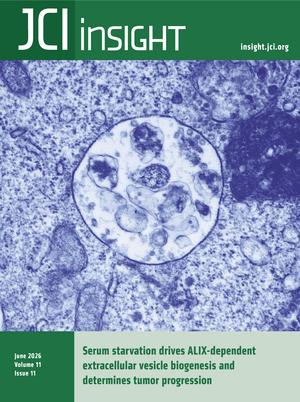
Serum starvation drives ALIX-dependent extracellular vesicle biogenesis and determines tumor progression
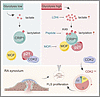
Peng et al. report that serum starvation promotes multivesicular body biogenesis, extracellular vesicle formation, and cargo selection in tumor cells. The cover image is a colored transmission electron micrograph of a HeLa cell expressing Rab5Q79L, which induces the formation of enlarged multivesicular body–like vesicles containing multiple small intraluminal vesicle–like structures. At the ultrastructural level, this image demonstrates that Rab5Q79L promotes abnormal endosomal expansion and the accumulation of intraluminal vesicles
-
Research Letter
×
In vivo characterization of candida extracellular vesicles reveals unique infection pathway proteins
Abstract
Authors
Justin Massey, Robert Zarnowski, William Hartman, Jeniel Nett, David Andes
-
Research Articles
×
Abstract
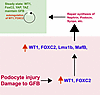
Transcriptional reprogramming has an important role in kidney glomerular disease. Using in vivo murine models of podocyte injury, we studied the roles of the FOXC2 and WT1 transcription factors (TFs) in podocyte injury. Podocytes are a crucial cell type of glomeruli, the filtration units of each nephron. Podocyte injury is often the incipient event leading to chronic kidney disease. It is well established that the TFs FOXC2 and WT1 are required in podocytes to maintain the glomerular filtration barrier. Their role in the response to injury is less well understood. Here, we tested the hypothesis that FOXC2 and WT1 act together to mediate transcriptional reprogramming in response to podocyte injury. Similarly to that of WT1, genome-wide FOXC2 binding to target genes is dynamic during the course of injury, initially increasing, but late in injury there is a dramatic decrease in FOXC2 expression and in its binding to target genes. Podocyte-specific inactivation of FoxC2 or Wt1 in adult mice limits the transcriptional response to injury. Correlating FOXC2 and WT1 ChIP-seq analyses demonstrated that they co-bind many genes expressed in podocytes. Thus, reprogramming the transcriptome involves dynamic changes in the binding of FOXC2 and WT1 to their target genes during a reparative injury response.
Authors
Sandrine Ettou, Anya Greenberg, Sangyoon Lee, Arjun Rajesh, Liang Sun, Nahid Tabibzadeh, Haruka Oishi, Ran Konoe, Phillip J. McCown, Sean Eddy, Victoria Driscoll, Tomoya Miyoshi, Ken Hiratsuka, Jason Lam, R. Sathish Srinivasan, Youngsook L. Jung, Biju Isaac, Mingwei Sun, Mary E. Taglienti, Keith Keller, Hong Chen, Matthias Kretzler, Astrid Weins, Ryuji Morizane, Shira Rockowitz, Valerie A. Schumacher, Dongwon Lee, Jordan A. Kreidberg
×Abstract
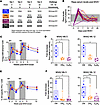
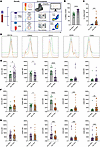
Inhibiting the mammalian target of rapamycin (mTOR) during acute viral infection generates highly functional memory CD8+ T cells. We investigated the effects of inhibiting mTOR by using rapamycin during the effector and contraction phases of the immune response to a DNA prime and Modified Vaccinia Ankara (MVA) boost SIV vaccination in rhesus macaques. Rapamycin administered either during MVA boosts alone (DMR) or during both primes and boosts (DRMR) reduced the contraction of effector CD8+ T cells, resulting in higher frequencies of SIV-specific memory CD8+ T cells with enhanced quality, as indicated by expression of Bcl2 and CD127. Additionally, rapamycin reduced the frequency of proliferating CCR5+CD4+ T cells in the blood following the MVA boost. After SIVmac251 infection, rapamycin-treated macaques demonstrated marked expansion of SIV-specific CD8+ T cells (reaching up to 50% in blood and 25% in gut). The heightened expansion of SIV-specific CD8+ T cells in the DMR group was associated with markedly lower (2-logs compared with unvaccinated and 1-log compared with DM) peak viral load in the gut and set-point viremia, along with improved survival after infection. Thus, inhibiting the mTOR pathway during MVA boosts of a DNA/MVA vaccine enhances vaccine efficacy by improving memory CD4+ and CD8+ T cell function.
Authors
Shanmugalakshmi Sadagopal, Kasey Stokdyk, Suefen Kwa, Rahul Basu, Sailaja Gangadhara, Rafi Ahmed, Smita S. Iyer, Koichi Araki, Rama Rao Amara
×Abstract
Heterozygous TBX4 variants are the second most common genetic cause of pediatric pulmonary hypertension (PH), yet mechanisms underlying TBX4-related lung disease remain poorly understood. This study developed a lung-mesenchyme-specific Tbx4 loss-of-function (Tbx4cKO) mouse model that bypasses embryonic lethality to investigate this condition. Adult Tbx4cKO mice demonstrated significantly impaired pulmonary flow acceleration consistent with PH. Three-dimensional analysis of embryonic lungs revealed reduced lobe volumes and decreased distance between pleural edges and muscularized vessels. In adult Tbx4cKO lungs, we identified extensive vascular remodeling characterized by medial thickening and the extension of muscularized arteries into normally non-muscularized subpleural parenchymal zones. Contrary to previous reports suggesting vascular simplification, 3-dimensional analysis demonstrated an elaborated pulmonary artery tree in addition to pathologic wall muscularization. Depletion of a single Tbx5 allele in addition to both Tbx4 alleles exacerbated histologic phenotypes, with worsened right ventricular dilation. This model also demonstrated dysregulated airway smooth muscle patterning and prominent subpleural smooth muscle bands, similar to those in human TBX4 syndrome. We identify TBX4 as a critical regulator of smooth muscle differentiation and patterning across multiple lung compartments. Our model recapitulates key features of human TBX4 syndrome and identifies dysregulated smooth muscle differentiation as a potential future therapeutic target.
Authors
Lea C. Steffes, Kaylie A. Chiles, Sehar R. Masud, Aleen Rahman, Madeline Dawson, Csaba Galambos, Maya E. Kumar, Ripla Arora
×Abstract
Mixed hematopoietic chimerism after hematopoietic cell transplantation (HCT) can modulate the immune system and induce tolerance to allogeneic tissues. However, bone marrow conditioning–related toxicities preclude wider adoption of HCT for transplant allotolerance. We sought agents that reduced conditioning intensity, while promoting durable mixed chimerism after HCT across complete MHC mismatch in diabetic mice, permitting islet allotransplantation and diabetes reversal. We systematically tested baricitinib (JAK1/2 inhibitor), venetoclax (Bcl-2 inhibitor), and CD47 antibody, agents in current clinical use, and quantified hematopoietic chimerism after HCT. Combined with CD117 antibody, transient T cell depletion, and just 10 centigray total body irradiation, these agents enabled durable mixed chimerism and matching alloislet tolerance to cure diabetes without evidence of graft-versus-host disease. Thus, we have developed a conditioning regimen to promote allogeneic mixed hematopoietic chimerism and transplanted islet allotolerance that minimizes conditioning radiation and cures diabetes.
Authors
Stephan A. Ramos, Preksha Bhagchandani, Diego M. Burgos, Xueying Gu, Richard Rodriguez, Nadia Nourin, Martin Neukam, Shiva Pathak, Judith A. Shizuru, Seung K. Kim
×Loss of tumor-infiltrating lymphocytes and poor response to immunotherapy in IDH GOF mutant melanoma
Abstract
Recent innovations in melanoma treatment with immune checkpoint blockade (ICB) have improved overall outcomes for patients; however, over 50% of patients still develop resistance to treatment. These patients either have intrinsic resistance and never respond to therapy or develop acquired resistance months or years into treatment. The mechanisms underlying ICB resistance remain poorly understood. Our data show that patients with isocitrate dehydrogenase gain-of-function (IDH GOF) mutant melanoma have a worse response to anti-PD1 immunotherapy. IDH mutations have been found to be oncogenic and associated with differential methylation in multiple cancers but are not yet characterized in human melanoma. Here, we investigate the clinical, immune, and transcriptional phenotypes of IDH GOF melanomas through analyses of clinical response, single-cell RNA-seq, bulk RNA-seq, and DNA methylation data. Single-cell data analysis showed decreased immune infiltrate and activity in the IDH GOF tumors. Bulk sequencing data demonstrated the association among IDH mutation, immune exclusion, and disruptions in global DNA methylation. The melanoma-derived genomic data presented support previously described resistance mechanisms of IDH mutation in other cancer types and is the first demonstration to our knowledge of the role of IDH GOF in the human melanoma tumor microenvironment.
Authors
Emma Specht, Lakshmi Pakanati, Meng-Ju Wu, Russell W. Jenkins, Derek N. Effiom, Nabeel Bardeesy, Bradley E. Bernstein, Moshe Sade-Feldman, Christine G. Lian, Genevieve M. Boland, Elena Torlai Triglia, Sonia Cohen
×Abstract
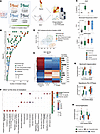
Tumor cells are constantly confronted with nutrient deprivation; however, the effect of serum starvation on the remodeling of endosomal compartments and extracellular vesicles (EVs) in tumor cells remains unclear. Here, we found that serum starvation pronouncedly promotes multivesicular body (MVB) biogenesis, EV formation, and cargo selection. Specifically, by generating a constitutively active Rab5Q79L mutant to induce the enlargement of MVB, we revealed for the first time to our knowledge that ANXA3 is sorted into intraluminal vesicles (ILVs) of MVB. Mechanistically, we confirmed that serum starvation regulates the endosomal sorting complex required for transport–associated (ESCRT-associated) protein ALG-2 interacting protein X (ALIX), which recruits ESCRT-III to MVB and binds to annexin A3 (ANXA3) to mediate its sorting into ILVs of MVB. Our study highlights that serum starvation promotes an ALIX-dependent ESCRT-III recruitment pathway, which loads protumor ANXA3 cargo to exert a profound effect on tumor progression.
Authors
Xueqiang Peng, Jiaxing Liu, Guolong Zeng, Yafei Xiao, Zhixiong Hao, Guangpeng He, Hongyuan Jin, Yu Gao, Shilei Tang, Shibo Wei, Yan Li, Yifan Yu, Liang Yang, Hangyu Li
×Abstract
BACKGROUND Cancer accounts for over 20% of late posttransplant mortality, yet the contribution of genetic susceptibility to posttransplant cancer risk remains unclear. This study investigates germline genetic risk factors for posttransplant cancer in the Finnish population using data from the FinnGen cohort.METHODS A pan-cancer polygenic risk score (PRS) was constructed using genetic variants identified in UK and US populations to assess the influence of common germline variants on time to first cancer diagnosis in 1,802 Finnish kidney transplant recipients (KTRs), of whom 317 developed posttransplant cancer. The PRS was first validated in the FinnGen non-transplantation cohort and subsequently applied to KTRs, with replication in lung and liver transplant recipients (n = 476). Functional relevance was explored by assessing associations between the PRS and expression levels of 2,923 plasma proteins in the UK Biobank (n = 53,013).RESULTS Compared with a matched non-transplantation cohort (n = 68,294), KTRs exhibited earlier cancer onset. The PRS was significantly associated with time to first cancer diagnosis in the non-transplantation population (HR 1.04, 95% CI 1.038–1.056, P = 3.75 × 10⁻²⁵). Among KTRs younger than 40 years, higher PRS was associated with earlier cancer onset (HR 1.08, 95% CI 1.01–1.17, P = 0.036), indicating a stronger genetic effect at younger ages. The PRS significantly (Bonferroni < 0.05) altered the regulation of 87 plasma proteins, several of which were known cancer-related markers.CONCLUSION Inherited genetic predisposition, captured by pan-cancer PRS, may contribute to individual susceptibility to cancer after solid organ transplantation, particularly at younger ages.FUNDING State research funding (Helsinki and Uusimaa Health District), the Foundation for Pediatric Research, and the Sigrid Jusèlius Foundation.
Authors
Jarmo Ritari, Kati Hyvärinen, Kirsi Jahnukainen, FinnGen Consortium, Jukka Partanen, Ilkka Helanterä, Timo Jahnukainen
×Abstract
Fibroblast-like synoviocytes (FLSs) are crucial in driving synovial inflammation and joint damage in rheumatoid arthritis (RA). This study explored the functions and underlying mechanisms of GALNT1-mediated O-glycosylation, which is markedly upregulated in RA FLSs, in synovial aggression and subsequent experimental joint damage. Targeted suppression of GALNT1 effectively curtailed migration and invasion in RA FLSs and mitigated arthritis severity in a collagen-induced arthritis model in rats. Mechanistically, NEK9 was identified as a pivotal substrate and downstream effector of GALNT1, affecting the aggressive phenotype of RA FLSs. In vitro experiments further demonstrated that O-glycosylation of NEK9, mediated by GALNT1, promotes the pathogenic phenotype of RA FLSs by promoting cytoskeleton reorganization and restraining excessive ER stress activation. Our study provides mechanistic insights into the activation of RA FLSs and identifies GALNT1 as a potential therapeutic target for RA.
Authors
Yaoyao Zou, Haobo Lin, Jianling Su, Jieying Wang, Qin Zeng, Tianxiao Feng, Yunxia Lei, Jianda Ma, Hudan Pan, Hanshi Xu, Lie Dai, Yang Li
×Abstract
Human CD4+ T cells utilize nutrients, including lipids, to support their activation and polarization. Considering the pivotal role of lipoproteins in lipid transport, we reasoned that lipoprotein uptake and processing could effect CD4+ T cell function. Here, we demonstrate that activation of human CD4+ T cells induced expression of LDL receptor (LDLR) to facilitate LDLR-mediated endocytosis of LDL. Degradation of surface LDLR on CD4+ T cells with PCSK9 hampered activation and proliferation of the cells. Lipoprotein deprivation or blocking of lysosomal cholesterol egress impaired activation of mechanistic target of rapamycin complex 1 (mTORC1), affecting CD4+ T cell activation and proliferation. Furthermore, lipoprotein deprivation of cultured primary CD4+ T cells lead to reduced expression of c-MAF and FOXP3, key transcription factors for IL-10, accompanied by reduced IL-10 secretion. The pivotal role of LDLR-mediated lipoprotein uptake for mTORC1 activity, c-MAF and FOXP3 expression, and IL-10 secretion was confirmed using LDLR-dysfunctional CD4+ T cells from patients with homozygous familial hypercholesterolemia. Our study offers valuable insights into the lipoprotein metabolism of human CD4+ T cells and their reliance on the LDLR pathway for activation and polarization, a feature that may be leveraged to modulate CD4+ T cell function.
Authors
Angela Markovska, Niels S. van Heusden, Dagmar Duijzer, Alejandra Bodelón, Greta Rogani, Enric Mocholi, Edwin C.A. Stigter, Can Gulersonmez, Sander Kooijman, Leonie Van der Zee, Monique T. Mulder, Jeanine E. Roeters van Lennep, Patrick C.N. Rensen, Jorg van Loosdregt, Sebastiaan J. Vastert, Noam Zelcer, Marianne Boes, Henk S. Schipper
×Abstract
Natural killer (NK) cells are pivotal in the early immune response to Plasmodium falciparum infection, yet their functional dynamics and regulation remain incompletely understood. In a longitudinal study of patients with malaria in a nonendemic setting, we observed a transient but potent activation of NK cell cytotoxicity during acute malaria, characterized by rapid granzyme B–mediated killing and elevated expression of genes associated with cytotoxicity (PRF1, GZMB, and GZMA). This heightened activity was supported by increased plasma levels of granzymes and proinflammatory cytokines, which enhanced NK cell function in vitro. However, plasma samples from clinical malaria also contained inhibitory mediators, including soluble cytokine receptors, which dampened NK cell responses. These findings reveal that the host microenvironment orchestrates a tightly regulated NK cell response that potentiates cytotoxicity during acute infection and rapidly downmodulates it after treatment. Understanding this balance between activation and suppression may inform strategies to harness NK cells for malaria control while minimizing immunopathology.
Authors
Pengjun Xi, Patrick A. Sandoz, Maximilian Julius Lautenbach, Eleni Bilev, Björn Önfelt, Anna Färnert, Quirin Hammer, Christopher Sundling
×Abstract
Central insulin action in the brain is thought to contribute to metabolic regulation, but the specific hypothalamic nuclei affected in type 2 diabetes (T2D) remain poorly characterized. We performed high-resolution functional MRI (fMRI) during intranasal insulin administration to assess nucleus-level hypothalamic responses in 21 Japanese men with T2D and 20 individuals acting as healthy controls. In controls, insulin rapidly suppressed fMRI signals within 5 minutes in the posterior hypothalamic nucleus; this early suppression was not observed in T2D, indicating impaired hypothalamic insulin responsiveness. In an independent older cohort, structural MRI further revealed decreased gray matter volume in the corresponding posterior hypothalamus in participants with diabetes. These converging functional and structural findings implicate the posterior hypothalamus as a candidate locus associated with brain insulin resistance in T2D, warranting longitudinal and interventional validation.
Authors
Hideyoshi Kaga, Akitoshi Ogawa, Takahiro Osada, Mai Kiya, Satoshi Oka, Yusuke Adachi, Mengping Yu, Shota Sakamoto, Saori Kakehi, Toshiki Kogai, Tsubasa Tajima, Hitoshi Naito, Naoaki Ito, Satoshi Kadowaki, Yuya Nishida, Ryuzo Kawamori, Seiki Konishi, Hirotaka Watada, Yoshifumi Tamura
×Abstract
Increased consumption of ultra-processed foods (UPFs) is a risk factor for metabolic disorder–associated heart failure (HF). Here, we demonstrate that UPF-induced calpain-1 aggravated oxidative stress, thereby increasing high mobility group box 1–mediated (HMGB1-mediated) myocardial inflammation, which contributes to cardiac dysfunction. After illustrating the dysregulated inflammatory pathways in human and murine hearts upon metabolic stress, we revealed an increase in calpain-1 alongside profound oxidative stress and inflammation in the failing myocardium. Mechanistically, in neonatal rat cardiomyocytes and human induced pluripotent stem cell–derived cardiomyocytes, HMGB1 was upregulated by calpain-1 and reactive oxygen species (ROS) upon stress of saturated and trans fatty acids. Consequently, HMGB1 promoted a proinflammatory response in macrophages. In contrast, inhibition of calpain or ROS efficiently repressed HMGB1 in cardiomyocytes. Therapeutically, either recombinant adeno-associated virus 9–delivered inhibitor of calpain-1 or its pharmacological inhibitor attenuated ROS and HMGB1-induced inflammation in the myocardium and mitigated HF in both male and female mice fed with an ultra-processed diet. Collectively, we have demonstrated the effects of suppressing calpain-1 and oxidative stress on alleviating myocardial inflammation via blockage of HMGB1 and cardiac dysfunction. The results provide a promising therapeutic strategy for preventing or treating HF in metabolic disorders.
Authors
Claire Ross, Sanskruti Ravindra Gare, Nasser H.O. Alatawi, Oveena Fonseka, Xinyi Chen, Jiayan Zhang, Yihua Han, Andrea Ruiz-Velasco, Riham R.E. Abouleisa, Yingjuan Liu, Xiangjun Zhao, Han Xiao, Bernard D. Keavney, Gareth J. Howell, Tao Wang, Tamer M.A. Mohamed, Elizabeth J. Cartwright, Wei Liu
×Abstract
It remains unclear why vaccines targeting prominent microbial virulence factors often fail in clinical trials. Because microbial virulence depends on interaction with the host immune system, we investigated how changes in host immune function alter vaccine efficacy. Using a vaccine against Staphylococcus aureus α-toxin (Hla), which targets host metalloprotease ADAM10 on myeloid cells, we show that Hla virulence is reduced in aged mice due to diminished ADAM10 activity and impaired myeloid cell function. Depletion of myeloid cells with cyclophosphamide in young mice similarly reduced toxin virulence. Immunization against Hla conferred strong protection against S. aureus infection in young but not aged mice. These findings indicate that pathogenic functions of microbial factors characterized in immunocompetent young animals may not predict virulence or vaccine efficacy in immunocompromised hosts. These findings underscore the need to account for host immune status in the development and evaluation of vaccines targeting microbial virulence factors.
Authors
Xin Du, Ching Wen Tseng, Elisabet Bjånes, Hunter Gage, Jaclyn Swan, Chih-Ming Tsai, Irshad A. Hajam, Cesia Gonzalez, Brian Lin, Victor Nizet, George Y. Liu
×Abstract
Stem cell–derived β cells offer a promising approach for type 1 diabetes (T1D) treatment. However, the processes of graft infiltration and rejection by immune cells remain poorly understood in humans. In this study, autologous or allogeneic stem cell–derived islets (SC-islets) were transplanted in human immune system mice and analyzed 14 to 18 weeks later. Imaging mass cytometry revealed unique characteristics of SC-islet grafts, including a high percentage of glucagon+ cells and the presence of cysts and CD57+ enterochromaffin cells, features not typically observed in endogenous or transplanted allogeneic primary pancreatic islets. Allogeneic SC-islet grafts exhibited heavy immune infiltration, cell proliferation, and pro-fibrotic processes, whereas autologous grafts showed minimal infiltration and little fibrosis. In some mice, autologous T cells expressing islet antigen-reactive (IAR) T cell receptors (TCRs) were adoptively transferred. Three weeks after transfer, autologous grafts injected with IAR-TCR+ T cells showed negligible immune infiltration, even though IAR-TCR+ T cells were detected in the spleen. Under the conditions tested, human SC-islet grafts were not rejected by an autologous immune system, even in the presence of autoreactive T cells, pointing to several limitations that remain to be addressed for a model of spontaneous autologous SC-islet infiltration and destruction.
Authors
Camillo Bechi Genzano, Giorgia Zanetti, Qian Du, Daniel Traum, Deeksha Lahori, Grant M. Downes, Sakshi A. Bhatele, Xiaolan Ding, Kyle D. Apley, Rebuma Firdessa Fite, Matthew Ishahak, Enrique Eduardo Sanchez-Castro, Jeffrey R. Millman, Yiming Luo, Klaus H. Kaestner, Cory Berkland, Dieter Egli, Megan Sykes, Remi J. Creusot
×Abstract
Synovial hyperplasia is a hallmark of rheumatoid arthritis (RA), yet its mechanism remains unclear. RA synovium exhibits metabolic shift, characterized by upregulated glycolysis and enhanced lactate production. In this study, we elucidated the mechanism underlying the roles of lactate metabolism and protein lactylation in RA pathology. In patients with RA, both lactate production and protein lactylation were elevated and showed a positive correlation with clinical disease activity. These changes were further implicated in driving synovial proliferation. Among the lactylated proteins, Cysteine-rich intestinal protein 1 (CRIP1) exhibited a marked increase in modification and played a central role in promoting synovial proliferation. Mechanistically, CRIP1 underwent MOF-mediated lactylation in RA synovial fibroblasts. Lactylated CRIP1 hijacked the cell-cycle regulator p21, disrupting its interaction with cyclin-dependent kinase 2 (CDK2), thereby facilitating the G1/S phase transition. Functionally, AAV-mediated delivery of a lactylation-deficient CRIP1 K49R significantly reduced synovial proliferation compared with WT CRIP1. Peptide-based interventions targeting CRIP1 K49 lactylation effectively inhibited synovial hyperplasia and disease severity in both Collagen II–induced arthritis (CIA) and humanized NSG chimeric models. Collectively, CRIP1 protein lactylation drives synovial proliferation in RA by hijacking p21 from CDK2, thereby facilitating cell cycle progression. Targeting this pathway may serve as a promising strategy for RA.
Authors
Meican Ma, Yu Zhou, Qianlin Li, Zhao Wang, Shangqi Guan, Xiaoxue Wang, Han Zhao, Zhenke Wen, Ting Liu, Fenghong Yuan
×Abstract
Sepsis is a leading cause of death for which host-directed therapies are urgently needed. We performed high-dimensional flow cytometry, measurement of soluble biomarkers, and lipopolysaccharide (LPS) stimulation of neutrophils to characterize neutrophil heterogeneity and function in patients with sepsis. We observed that in patients with sepsis, low-density neutrophils (LDNs) are elevated and phenotypically diverse populations of innate immune cells with varying degrees of maturity and myeloperoxidase expression. Spleen tyrosine kinase (SYK) expression was found to be higher in whole blood neutrophils and LDNs of patients with sepsis compared with healthy donors. Importantly, SYK+ LDNs associated with increased levels of intracellular myeloperoxidase (MPO) and soluble biomarkers. Furthermore, SYK+ LDNs correlated with clinical outcomes of sepsis disease severity, including sequential organ failure assessment score, mechanical ventilation, and vasopressors. Functionally, the SYK inhibitor R406 suppressed changes in neutrophil features of activation from normal-density neutrophils and LDNs, including the SYK+ and SYK– neutrophil subsets, and MPO release from LDNs following LPS stimulation of sepsis neutrophils. Combined, these results establish LDNs as a heterogenous population of neutrophils that express high levels of SYK and support SYK inhibition as a potentially novel therapeutic target aimed at suppressing overactive neutrophils in sepsis.
Authors
Heather L. Teague, Lauren Knabe, Raquel S. Da Cruz, Xianglan Yao, Kiana C. Allen, Trenton Williams, Cumhur Y. Demirkale, Merte Woldehanna, Ernest Evans, Amir Hobson, Jared D. Wilkinson, Steven D. Nathan, Christopher S. King, Jeffrey R. Strich
×Abstract
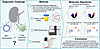
BK polyomavirus–associated nephropathy (BKVN) adversely impacts kidney allograft survival and often mimics acute T cell–mediated rejection (TCMR), confounding diagnosis and management. To address this conundrum, we performed unbiased RNA sequencing of urinary cells matched to biopsies classified as BKVN with intragraft inflammation (BKVN-P), BKVN without inflammation (BKVN-N), TCMR, or no rejection (NR). BKVN-N displayed dominant host DNA replication, cell cycle, and repair programs, while BKVN-P samples exhibited expansive innate immune activation, antigen presentation, chemokine upregulation, and epithelial injury. Both BKVN subtypes shared signatures of T cell exhaustion and mature and tolerogenic dendritic cell activation but differed in immune orientation — Th1 predominance in BKVN-N versus Treg and CD8 enrichment in BKVN-P. Compared with TCMR samples, BKVN-P lacked robust TCR/CD28 signaling and was enriched for viral and innate modules; BKVN-N lacked alloimmune activation. B cell exhaustion characterized BKVN-N, while BKVN-P displayed robust B cell activation with metabolic downregulation. A ratiometric urinary cell biomarker, CXCL10 mRNA/CD3E mRNA, distinguished both BKVN subtypes from TCMR with diagnostic accuracy, replicated by quantitative reverse transcription PCR for clinical translation, and confirmed in an independent cohort. These findings demonstrate the utility of urinary cell transcriptomics for resolving viral injury from alloimmunity, enabling precision diagnostics and targeted immunomodulation in kidney transplantation.
Authors
Franco B. Mueller, Carol Li, Darshana M. Dadhania, Surya V. Seshan, Thalia Salinas, Vijay K. Sharma, Jenny Z. Xiang, Hans H. Hirsch, Thangamani Muthukumar, Manikkam Suthanthiran
×Abstract
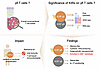
Human γδ T cells are a rare but functionally diverse lymphocyte subset critical for tumor surveillance and antimicrobial immunity. Although they express NK cell–associated receptors such as killer-cell immunoglobulin-like receptors (KIRs), the relevance of KIR expression on γδ T cells remains largely unexplored. Using flow cytometry, ATAC-seq, and RNA-seq, we identified KIR expression as a marker that distinguished 2 functionally and molecularly distinct γδ T cell subsets. KIR+ γδ T cells exhibited an advanced, memory-like differentiation state characterized by heightened cytotoxicity, stable epigenetic remodeling, and a predominant IFN-γ–producing profile. In contrast, KIR– γδ T cells maintained a naive-like phenotype and preferentially produced IL-17 upon polarization. Notably, KIR+ γδ T cells were consistently observed across individuals but were significantly enriched in cytomegalovirus (CMV)-seropositive donors, suggesting that chronic antigenic stimulation could promote the emergence of KIR+ effector γδ T cells. These findings reveal a functional dichotomy in human γδ T cells defined by KIR expression, linking IFN-γ–driven cytotoxicity with KIR+ cells and IL-17 production with KIR– cells. This insight advances our understanding of γδ T cell heterogeneity and has implications for viral immunity, immune memory, and the development of γδ T cell–based immunotherapies.
Authors
Mahya Razmi, Yeganeh Almasi, Marilee Larrivée, Jonathan B. Angel, Alexandre Blais, Zakia Djaoud
×Abstract
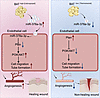
Interscapular brown adipose tissue (BAT), one of the most vascularized tissues in the body, exemplifies the intricate crosstalk between the vascular system and adipocytes. BAT is known to secrete abundant exosomes into circulation, and exosomes are known to play a key role in vascular remodeling and cell migration. However, whether BAT-derived exosomes (BATexos) modulate peripheral vasculature remains unclear. Here, we report that BATexos promoted peripheral angiogenesis and vascular repair. Among their cargo, miR-378a-3p was highly enriched and identified as a key mediator of endothelial angiogenic function. The overexpression of miR-378a-3p in endothelial cells substantially promoted cell migration and tube formation. Conversely, inhibition of exosome secretion from BAT impaired vascular repair and delayed wound healing. Mechanistically, miR-378a-3p directly targeted the phosphatase and tensin homolog (Pten), thereby activating the PI3K/AKT signaling pathway. Liposomes encapsulating miR-378 mimics promoted angiogenesis and accelerated wound healing in a diabetic mouse model. Collectively, this study uncovers BAT-derived miR-378a-3p as a key regulator of vessel regeneration and tissue repair after injury, offering therapeutic potential for treating vascular complications in metabolic disease.
Authors
Hongyan Deng, Yuyu Xie, Jiadai Liu, Jing Ge, Qianqian Kang, Rui He, Zhihan Wang, Xuemin Peng, Zengzhe Zhu, Wenshe Wang, Yulian Liu, Ronghui Gao, Ruping Pan, Min Yang, Yong Chen
×Abstract
Although inflammatory complications are common in preterm infants, the effects of these conditions on neonatal immune development remain poorly defined. We therefore investigated whether severe bronchopulmonary dysplasia (BPD) and systemic infection, 2 major complications of prematurity, produce distinct immune signatures and change immune composition over time. We performed longitudinal high-dimensional immune profiling of residual whole blood from 38 preterm infants sampled every 2 weeks, along with 10 term infants at birth. Preterm infants with severe BPD showed a progressive increase in Th17-polarized CD4+ T cells, neutrophils, and Th17-related cytokines compared with age-matched infants with moderate BPD. In contrast, some preterm infants with systemic bacterial or viral infections mounted exceptionally robust CD8+, CD4+, and γδ T cell responses, with oligoclonal expansion, terminal differentiation, and coordinated plasma cytokine shifts that persisted well beyond resolution of infection. These findings demonstrate that different preterm comorbidities imprint the neonatal immune system in divergent ways. Thus, comprehensive and longitudinal immune profiling may not only identify connections between clinical inflammatory complications and underlying immune pathways but also reveal potential targets for intervention.
Authors
Benjamin A. Fensterheim, Michelle L. McKeague, Divij Mathew, Shwetank, Ajinkya Pattekar, Matthew Lee, Zahabia Rangwala, Sean Nasta, Macy C. Kee, Cynthia Clendenin, Zachary Martinez, Caroline Diorio, Allison R. Greenplate, Krithika Lingappan, E. John Wherry
×Abstract
Hypothalamic melanocortin 4 receptors (MC4Rs) play a central role in regulating food intake and energy homeostasis. In fact, inactivating mutations in the MC4R gene are the most common form of monogenic obesity. Agonist activation of MC4Rs reduces food intake by modulating hypothalamic signaling circuits. Thus, a detailed understanding of the signaling pathways that regulate MC4R activity is of considerable translational relevance. Ligand-activated MC4Rs not only interact with heterotrimeric G proteins but also can recruit β-arrestin-2 (barr2) to the receptor. The potential functional role of barr2 in regulating the anorectic effects of MC4R signaling remains unexplored. In the present study, we used mutant mouse models to demonstrate MC4R-mediated activation of barr2/ERK signaling in MC4R neurons of the paraventricular nucleus leads to reduced food intake. We also found the appetite-suppressing effect of setmelanotide, an MC4R agonist FDA approved for the treatment of certain types of obesity, requires the presence of barr2 in MC4R-containing neurons. These data suggest that MC4R agonists able to promote MC4R/barr2 interactions with high efficacy may become useful as appetite-suppressing drugs.
Authors
Misbah Rashid, Lei Wang, Zhenzhong Cui, Oksana Gavrilova, Huiyan Lu, Kozo Kaibuchi, Sarah Zeitlmayr, Thomas Gudermann, Andreas Breit, Jürgen Wess
×Abstract
Inactivating NOTCH1 mutations in head and neck squamous cell carcinoma (HNSCC) were described over a decade ago, suggesting a tumor suppressor function — unlike its oncogenic role in other tumors. Today, much debate persists regarding a putative oncogenic role in HNSCC as well, with reports that NOTCH1 signaling drives tumor growth and a cancer stem cell (CSC) phenotype. In this work, comprehensive experiments unequivocally demonstrate that NOTCH1 is a tumor suppressor in HNSCC regardless of mutation or activation status and that it reduces CSC frequency. We developed a signature of NOTCH1 activation showing the pathway is associated with very early differentiation, an altered tumor microenvironment, and better prognosis. Clarifying whether NOTCH1 occasionally functions as an oncogenic driver in HNSCC is crucial to prognosis and personalized therapy. The results presented unify the field, reconcile conflicting data, and provide critical insights into the biological and clinical significance of NOTCH1, with broader implications in other squamous carcinomas with NOTCH1 mutations.
Authors
Chenfei Huang, Shhyam Moorthy, Qiuli Li, Kazi M. Ahmed, Kalil Saab, Defeng Deng, Jiping Wang, Xiayu Rao, Jiexin Zhang, Yuanxin Xi, Jing Wang, Zhiyi Liu, Noriaki Tanaka, David A. Wheeler, Eve Shinbrot, Rami Saade, Curtis R. Pickering, Tong-Xin Xie, Adel K. El-Naggar, Abdullah A. Osman, Kunal Rai, Patrick A. Zweidler-McKay, John V. Heymach, Lauren A. Byers, Faye M. Johnson, Vlad C. Sandulache, Jeffrey N. Myers, Pedram Yadollahi, Mitchell J. Frederick
×Abstract
The RhoBTB1/Cullin-3 (CUL3) pathway in smooth muscle cells (SMCs) controls the ubiquitination and proteasomal degradation of target proteins that regulate vasodilation, vasoconstriction, and the actin cytoskeleton and, through this, blood pressure (BP) and arterial stiffness. Using proximity labeling coupled with mass spectrometry in A7R5 SMCs, we identified proteins that bound to the C-terminal half of RhoBTB1, which functions as an adaptor to deliver substrates to CUL3. We examined the physiological relevance of one of these substrates, RbFox2. Coimmunoprecipitation validated the interaction of RbFox2 with RhoBTB1. RbFox2 expression was elevated in response to inhibition of the ubiquitination-proteasomal pathway, CUL3 deficiency, and RhoBTB1 inhibition by either siRNA or angiotensin II (ANG). RbFox2 was ubiquitinated in a RhoBTB1- and CUL3-dependent manner, suggesting its regulation through the RhoBTB1/CUL3-dependent ubiquitin-proteasome pathway. Inhibition of RbFox2 impaired the actin cytoskeleton in A7R5 cells and in primary SMCs from RbFox2fl/fl mice and decreased the levels of globular and filamentous actin. ANG increased BP and arterial stiffness of RbFox2fl/fl mice, but the progression of arterial stiffness was halted after SMC-specific RbFox2 deletion despite a continued rise in BP. We conclude that RhoBTB1 and RbFox2 are important regulators of arterial stiffness through a mechanism that influences cytoskeletal integrity.
Authors
Gaurav Kumar, Nisita Chaihongsa, Daniel T. Brozoski, Daria Golosova, Ibrahim Vazirabad, Ko-Ting Lu, Kelsey K. Wackman, Ravi K. Singh, Curt D. Sigmund
×Abstract
Community-acquired pneumonia is a major cause of morbidity and mortality globally. Specific molecular endotypes are currently not well defined, and different viral or bacterial pathogens may trigger specific host responses and pathogenic mechanisms. We performed longitudinal proteomic profiling of bronchoalveolar lavage fluid and plasma from bacterial, influenza, and SARS-CoV-2–driven pneumonia. Our analysis revealed highly pneumonia type–specific proteomic signatures, including COVID-19–specific antibodies locally produced in the lung. These antibodies showed biased immunoglobulin V–domain usage, linked to a CD69/CD83 plasma cell state associated with disease severity and degree of autoimmunity. Using mass spectrometry–driven autoantibody profiling in 2 independent COVID-19 cohorts, we identified 177 putative autoantibodies targeting extracellular matrix, nuclear, and immune-related proteins. Of note, temporal changes in autoantibody profiles correlated with clinical markers of inflammation, organ dysfunction, and duration of hospitalization. These findings highlight the autoimmune aspects of COVID-19 and provide potential biomarkers and therapeutic targets to help improve patient outcomes.
Authors
Anna Semenova, Taylor A. Poor, Johannes B. Müller-Reif, Sai Rama Sridatta Prakki, Phillip Geyer, Martin Mück-Häusl, Rogan A. Grant, Luke Rasmussen, Lesca M. Holdt, Daniel Teupser, Matthias Mann, Ali Ö. Yildirim, Richard G. Wunderink, Alexander V. Misharin, Ben D. Singer, G.R. Scott Budinger, Theodore S. Kapellos, Herbert B. Schiller
×Abstract
Non-small cell lung cancer (NSCLC) remains a leading cause of cancer-related mortality worldwide, yet its molecular drivers are not fully defined. Emerging evidence highlights the importance of tumor-stroma interactions mediated by secreted glycoproteins. However, the mechanisms by which cancer cells regulate the secretion of these protumorigenic proteins remain largely unknown. Endoplasmic reticulum–resident (ER-resident) N-glycan–processing enzymes regulate proper protein folding, a prerequisite for glycoproteins to exit the ER and undergo secretion. By evaluating their prognostic significance in lung tumors and conducting functional screening in lung cancer cells, we identify α-glucosidase II (α-Glc II) as a key regulator of NSCLC progression. α-Glc II promotes tumor growth and dissemination in a glucosidase activity–dependent manner in orthotopic mouse lung tumor model. Genetic disruption of α-Glc II induced ER stress and reduced cell proliferation and motility. Mechanistically, α-Glc II–mediated N-glycan modification regulated the ER-to-Golgi trafficking and secretion of specific oncogenic glycoproteins, including lysyl hydroxylase 2 (LH2), Tissue Inhibitor of Metalloproteinase 1 (TIMP1), and TGF-β, which are known to be associated with extracellular matrix remodeling. These findings uncover a role for ER glycosylation machinery in shaping the NSCLC secretome and highlight α-Glc II as a potential therapeutic target.
Authors
Shike Wang, Na Ding, Angelo Chen, Derrick Cardin, Yuting Xu, Kate Grimley, William K. Russell, Jun Xu, Jonathan M. Kurie, Guan-Yu Xiao, Xiaochao Tan
×Abstract
Aortic dissection (AD) is a catastrophic vascular emergency with high mortality, and current pharmacological interventions to prevent its progression are limited. Vascular smooth muscle cells (VSMCs) undergo a pathological phenotypic switch from a contractile to a synthetic state during AD, compromising aortic wall integrity; however, the underlying metabolic mechanisms remain poorly understood. In this study, we performed integrative transcriptomic analyses and identified glutaminase 1 (GLS1) as a key regulator of VSMC phenotypic switching in AD. GLS1 expression was significantly downregulated in VSMCs from both human AD aortic tissues and mouse models. Functionally, GLS1 deficiency promoted PDGF-BB–induced VSMC dedifferentiation in vitro. Smooth muscle cell–specific Gls1-knockout (Gls1SMKO) mice exhibited aggravated AD after β-aminopropionitrile treatment, whereas VSMC-specific GLS1 overexpression improved the contractile phenotype and reduced AD incidence. Mechanistically, GLS1 downregulation impaired glutamate metabolism, leading to reduced levels of glutathione and α-ketoglutarate. This metabolic disruption promoted reactive oxygen species accumulation and mitochondrial dysfunction, ultimately triggering VSMC phenotypic switching. Furthermore, we found that GLS1 transcription was repressed by retinoic acid receptor-α (RARα). Pharmacological inhibition of RARα with AR7 restored GLS1 expression, ameliorated VSMC phenotypic switching, and conferred protection against AD. These findings reveal a critical role of GLS1-mediated glutamate metabolism in VSMC phenotypic switching and suggest a promising therapeutic strategy for AD.
Authors
Wei Xie, Chen Ning, Chen Lu, Dongjin Wang, Shuang Zhao, Tianyu Song, Hailong Cao
×Abstract
BACKGROUND IL-7 is a critical cytokine in T cell development, survival, and homeostasis. Previous preclinical and clinical studies reported that IL-7 treatment increased T cell counts, but its effect on peripheral blood T cells in cancer patients and molecular mechanisms have not been explored.METHODS We investigated effects of long-acting recombinant human IL-7 conjugated to a hybrid IgD/IgG4 Fc domain (rhIL-7-hyFc) on peripheral T cells in patients with advanced solid tumors. Peripheral blood samples were collected before and after treatment, followed by analysis through single-cell transcriptomics and flow cytometry.RESULTS We found that rhIL-7-hyFc induced marked expansion of proliferating T cells, and promoted transcriptional changes associated with immune activation, cell cycle progression, and antiapoptosis. Trajectory analysis revealed that posttreatment T cells had distinct transcriptional states enriched for cytokine- and TCR-mediated signaling pathways. Notably, a second dose administered after 3 weeks yielded diminished proliferation and minimal transcriptional changes, which were independent of antidrug antibody or CD127 downmodulation. Examination of elements of the IL-7 signaling pathway revealed intact proximal signaling (e.g., STAT5 phosphorylation) but downregulation of distal elements, including PIM-1 kinase and c-Myc.CONCLUSIONS Our results demonstrate that rhIL-7-hyFc induces robust peripheral T cell expansion and activation in patients with solid tumors, supporting its potential use for lymphopenic patients treated with cancer immunotherapy.TRIAL REGISTRATION ClinicalTrials.gov NCT03478995 and NCT03619239.FUNDING National Research Foundation of Korea (NRF-2022R1A2C3007292 and RS-2024-00439160), Ministry of Food and Drug Safety (RS-2025-02213409), and the Korea Health Technology R&D Project through the Korea Health Industry Development Institute (RS-2025-25460003).
Authors
Hocheol Jang, Jeong Yeon Kim, Sojeong Kim, Heewon Kim, Mi Sun Byun, Myung Ah Lee, Jong Hee Chang, Do-Hyun Nam, Tae Won Kim, Sin-Soo Jeun, Joo Hyuk Sohn, Su-Hyung Park, Eui-Cheol Shin

In-Press Preview - More
Abstract
Significant loss of pigmentation can increase visual disability, skin cancer risk, and psychosocial stress. Tyrosinase (TYR) catalyzes the first and rate-limiting step of melanin synthesis. Inhibitors of TYR are well established and are currently used in clinical settings; however, there is a dearth of direct activators of TYR. Here, using a human TYR construct, we developed high-throughput screening methods, in cell confirmatory assays employing 13C-tyrosine tracing, and computational analysis techniques, and identified ampyrone (4-aminoantipyrine) as a TYR activator. Ampyrone increased the in vitro catalytic activity of the human recombinant intra-melanosomal domain of TYR (hTYR) and its hypomorphic variant, Pro406Leu (P406L), a cause of oculocutaneous albinism type 1B (OCA1B). Moreover, ampyrone induced melanin synthesis in both wild-type and OCA1B human melanocytes, mouse OCA2 melanocytes, as well as 3-dimensional (3D) human skin cultures. Computational studies provided additional insight into the effects of direct TYR agonists on enzyme activity. Our results identified ampyrone as a lead candidate for TYR activation, potentially supporting the development of therapies for patients with genetic and acquired diseases of hypopigmentation.
Authors
Monika B. Dolinska, Yuhong A. Wang, Nathan P. Coussens, Vijay K. Kalaskar, Zuhal Eraslan, Samuel J. Grondin, Joseph Bonica, Sarah Toay, Matthew D. Hall, Min Shen, Matthew Boxer, Qiuying Chen, Steven S. Gross, Nabeel Attarwala, Yingyos Jittayasothorn, Ramakrisha P. Alur, Dhyanam Shukla, Robin Kee, Charles DeYoung, Cuilee Sha, David R. Adams, Stacie K. Loftus, Tiziana Cogliati, Yuri V. Sergeev, Jonathan H. Zippin, Brian P. Brooks
Abstract
Several genes guide inner ear development, and mutations in these genes can cause malformations that result in congenital hearing loss. However, the contribution of noncoding regulatory elements remains largely unclear. This study investigates the function of distal enhancer elements in the transcriptional regulation of GDF6, a gene implicated in cochlear development. Using mouse models with targeted deletions, human inner ear organoids, and CRISPR interference (CRISPRi), we identified a downstream regulatory interval harboring a developmental enhancer required to maintain GDF6 expression during otic epithelial maturation and cochlear morphogenesis. Deletion of this regulatory region or targeting of CRISPRi-based repressors to these regions resulted in decreased GDF6 expression, failure of otic-epithelium development, and prevention of hair cell-like differentiation, reflecting cochlear aplasia observed in patients with corresponding genomic deletions. These findings highlight the contribution of long-range regulatory elements to auditory development and illustrate how their disruption contributes to human deafness.
Authors
Mohammad Faraz Zafeer, Clemer Abad, Havva Ortabozkoyun, Memoona Ramzan, Guney Bademci, Maria C. Robayo, Duygu Duman, Rolen M. Quadros, Shengru Guo, Juan I. Young, Anthony J. Griswold, Channabasavaiah B. Gurumurthy, Derek M. Dykxhoorn, Katherina Walz, Mustafa Tekin
Abstract
Pulmonary arterial hypertension (PAH) is a progressive vascular syndrome characterized by aberrant signaling, severe pulmonary artery remodeling, and right ventricular (RV) failure, a major driver of morbidity and mortality. Dysregulation of the apelinergic pathway has been implicated in pulmonary vascular remodeling in PAH. Using a sugen-hypoxia rat model of PAH, we assessed the ability of a novel apelin analog, resistant to native peptidase degradation, to reverse the pathological hallmarks of PAH and RV dysfunction. Apelin analog therapy corrected the vascular lesions in the lungs and nearly normalized pulmonary arterial pressures. Early cardiorenal syndrome, RV dilation and dysfunction as well as RV cardiomyocyte and fibroblast activation induced by pressure overload, were also reversed by apelin analog treatment. Single-nucleus RNA sequencing of the lungs and RV revealed apelin-analog treatment activated several protective pathways, including rebalancing protective BMPR2 (bone morphogenetic protein receptor type 2) signaling to counteract excessive pathogenic TGFBR2 (transforming growth factor β receptor 2) activity in PAH. These findings highlight the therapeutic potential of exogenous apelin in reversing pulmonary vascular and cardiac pathologies in PAH and support further investigation to evaluate the clinical benefits of apelin analog treatment in patients with PAH and RV failure.
Authors
Jennie Vu, Pavel Zhabyeyev, Kemar J. Brown, Joshua M. Gorham, Daniel M. DeLaughter, Huachen Chen, Thilina U. Jayawardena, Ander Vergara, Maria Alexiou, Anjalee Wijewardane, Conrad Fischer, Charlotte Avet, Abby Ewasiuk, Faqi Wang, Mark C. Chappell, Yuri Kim, Michel Bouvier, John C. Vederas, Christine E. Seidman, Jonathan G. Seidman, Gavin Y. Oudit
Abstract
Circulating fatty acids (FA) are constitutively taken up by basolateral kidney proximal tubule transporters and are the preferred metabolic substrate. In many chronic kidney diseases, the damaged glomerular filtration barrier permits passage of albumin-bound FA, which are reabsorbed by apical FA transport protein-2 (FATP2). Bilateral FA uptake leads to lipotoxicity and progressive renal function decline, but the relative apical versus basolateral contribution and intracellular mechanisms are not established. Apical or bilateral (but not basolateral) palmitate incubation with human proximal tubule cells stimulated endoplasmic reticulum (ER) stress gene expression, ER stress pathway activation, and ER fragmentation. Apical or bilateral palmitate was associated with reduced lipid droplets, and decreased expression of ER-localized lipid droplet biogenesis transcripts. Inhibition of lipid droplet formation also precipitated ER stress, suggesting diminished sequestration of FA metabolites as the cause. Indeed, C16:0 ceramide was increased in bilateral palmitate-treated cells, and in kidneys from mice that phenocopy progressive diabetic kidney disease. Ceramide synthesis inhibition abrogated ER stress, and transfection with C16:0 ceramide decreased ER membrane fluidity and caused ER stress. We conclude that aberrant filtration and uptake of FA by apical FATP2 exceeded the capacity for lipid droplet incorporation, and led to cytotoxicity from ceramide-induced ER lipid bilayer stress.
Authors
Zhiyu Liu, Robert J. Gaivin, Shenaz Khan, Vincent Li, Amal Chaba, Fraser J. Moss, Usman Sabir, Takhar Kasumov, Tingwei Mu, Jeffrey R. Schelling
Abstract
Recent evidence suggests a role for biological factors to explain increased risk for active pulmonary tuberculosis (PTB) among men. We conducted a prospective cohort study in Mali of treatment naive males and females with laboratory-confirmed PTB and latent TB infection (LTBI) and healthy controls of similar ages to determine the relationship between alterations in gonadal steroids, tuberculosis (TB) disease status, and treatment outcomes. Prior to treatment, males with PTB had lower testosterone concentrations compared to males with LTBI or healthy males. Reduced testosterone concentrations in males with PTB were transient, returning healthy ranges by month 2 of treatment, which corresponded to the end of intensive TB treatment. Estradiol concentrations in females were not altered by PTB or infection status yet increased at month 6 of treatment. Testosterone, but not estradiol, was a strong predictor of cure during treatment. Testosterone, but not estradiol, concentrations in PTB cases were inversely correlated with IFN-γ, IL-6, and IL-2. Concentrations of IL-17 and IL-10 were lower in males than females at the end of TB treatment. Our results suggest that TB-induced changes in testosterone concentrations during PTB and in response to treatment occur in males and could contribute to sex differences in TB pathogenesis.
Authors
Djeneba Dabitao, Bocar Baya, Ibrahim Sanogo, Amadou Somboro, Mamadou Wague, Mamadou D. Coulibaly, Isaac Koloma, Mahamadou Kone, Mohamed Nantoume, Nadie Coulibaly, Behinan Stephane, Mariam Coulibaly, Mamadou Perou, Moumine Sanogo, Ayouba Diarra, Seydou Samake, Bassirou Diarra, Mahamadou Diakite, Souleymane Diallo, Yacouba Toloba, Chad J. Achenbach, Jane L. Holl, Seydou Doumbia, Robert L. Murphy, William R. Bishai, Sabra L. Klein


