


Categories
- 3d CGI
- Amusements
- Animation
- Anime & Manga
- Art Materials
- Art Videos
- Blogroll
- Cartoons
- Color
- Comics
- Concept & Visual Dev.
- Creativity
- Digital Art
- Digital Painting
- Displaying Art on the Web
- Drawing
- Eye Candy for Today
- Gallery and Museum Art
- High-res Art Images
- Illustration
- Motion Graphics & Flash
- Museums
- Online Museums
- Outsider Art
- Painting
- Painting a Day
- Paleo Art
- Pastel, Conté & Chalk
- Pen & Ink
- Prints and Printmaking
- Reviews
- Sc-fi and Fantasy
- Sculpture & Dimensional
- Site Comments
- Sketching
- Storyboards
- Tools and Techniques
- Uncategorized
- Vector Art
- Videos & Podcasts
- Vision and Optics
- Watercolor and Gouache
- Webcomics
Archives
- January 2026
- December 2025
- November 2025
- October 2025
- September 2025
- August 2025
- July 2025
- June 2025
- May 2025
- January 2025
- December 2024
- November 2024
- October 2024
- September 2024
- August 2024
- June 2024
- April 2024
- March 2024
- February 2024
- January 2024
- December 2023
- November 2023
- October 2023
- September 2023
- August 2023
- July 2023
- May 2023
- April 2023
- March 2023
- February 2023
- January 2023
- December 2022
- November 2022
- September 2022
- August 2022
- July 2022
- June 2022
- May 2022
- April 2022
- March 2022
- February 2022
- January 2022
- December 2021
- November 2021
- October 2021
- September 2021
- August 2021
- July 2021
- June 2021
- May 2021
- April 2021
- March 2021
- February 2021
- January 2021
- December 2020
- November 2020
- October 2020
- September 2020
- August 2020
- July 2020
- June 2020
- May 2020
- April 2020
- March 2020
- February 2020
- January 2020
- December 2019
- November 2019
- October 2019
- September 2019
- August 2019
- July 2019
- June 2019
- May 2019
- April 2019
- March 2019
- February 2019
- January 2019
- December 2018
- November 2018
- October 2018
- September 2018
- August 2018
- July 2018
- June 2018
- May 2018
- April 2018
- March 2018
- February 2018
- January 2018
- December 2017
- November 2017
- October 2017
- September 2017
- August 2017
- July 2017
- June 2017
- May 2017
- April 2017
- March 2017
- February 2017
- January 2017
- December 2016
- November 2016
- October 2016
- September 2016
- August 2016
- July 2016
- June 2016
- May 2016
- April 2016
- March 2016
- February 2016
- January 2016
- December 2015
- November 2015
- October 2015
- September 2015
- August 2015
- July 2015
- June 2015
- May 2015
- April 2015
- March 2015
- February 2015
- January 2015
- December 2014
- November 2014
- October 2014
- September 2014
- August 2014
- July 2014
- June 2014
- May 2014
- April 2014
- March 2014
- February 2014
- January 2014
- December 2013
- November 2013
- October 2013
- September 2013
- August 2013
- July 2013
- June 2013
- May 2013
- April 2013
- March 2013
- February 2013
- January 2013
- December 2012
- November 2012
- October 2012
- September 2012
- August 2012
- July 2012
- June 2012
- May 2012
- April 2012
- March 2012
- February 2012
- January 2012
- December 2011
- November 2011
- October 2011
- September 2011
- August 2011
- July 2011
- June 2011
- May 2011
- April 2011
- March 2011
- February 2011
- January 2011
- December 2010
- November 2010
- October 2010
- September 2010
- August 2010
- July 2010
- June 2010
- May 2010
- April 2010
- March 2010
- February 2010
- January 2010
- December 2009
- November 2009
- October 2009
- September 2009
- August 2009
- July 2009
- June 2009
- May 2009
- April 2009
- March 2009
- February 2009
- January 2009
- December 2008
- November 2008
- October 2008
- September 2008
- August 2008
- July 2008
- June 2008
- May 2008
- April 2008
- March 2008
- February 2008
- January 2008
- December 2007
- November 2007
- October 2007
- September 2007
- August 2007
- July 2007
- June 2007
- May 2007
- April 2007
- March 2007
- February 2007
- January 2007
- December 2006
- November 2006
- October 2006
- September 2006
- August 2006
- July 2006
- June 2006
- May 2006
- April 2006
- March 2006
- February 2006
- January 2006
- December 2005
- November 2005
- October 2005
- September 2005
- August 2005
Relevant Blogs
Art, Painting & Sketch
- Gurney Journey
- Underpaintings
- Art and Influence
- Painting Perceptions
- Oil Painters of America
- Vasari Paint POV
- Flying Fox
- Urban Sketchers
- Bento (Smithsonian)
- Art Inconnu
- The Hidden Place
- Still Life
- Making a Mark
- The Art of the Landscape
- Exploring Color & Creativity
- Art Contrarian
- Artist A Day
- beinArt Surreal Art Collective
- Eye Level
- David Dunlop
- p.i.g.m.e.n.t.i.u.m
- CultureGrrl
- Joaquín Sorolla blog
- Artists in Pastel
“Painting a Day”
- A Painting a Day (Keiser)
- On Painting (Keiser)
- Julian Merrow-Smith
- Karen Jurick
- Jeffrey Hayes
- Carol Marine
- Abbey Ryan
- Daily Paintworks
Other Painting Blogs
- Virtual Gouache Land
- Neil Hollingsworth
- Marc Hanson
- Kevin Menck
- Marc Dalessio
- Larry Seiler
- Stapleton Kearns
- Colin Page
- Roos Schuring
- Hans Versfelt
- Titus Meeuws
- Régis Pettinari
- René Plein Air
- Belinda Del Pesco
- Robin Weiss
- Nathan Fowkes (Land Sketch)
- William Wray
- Frank Serrano
- Stephen Magsig
- Michael Chesley Johnson
- Twice a Week
- Sarah Wimperis
- Rob Adams
- Michael Cole Manley
- The Dirty Palette Club
- Mike Manley’s Draw!
Gallery Art & Illustration mix
Illustration
- Howard Pyle
- 100 Years of Illustration
- BibliOdyssey
- Illustration Art
- Today’s Inspiration
- Illustration Mundo
- Little Chimp Society
- Danny Gregory
- R D (John Martz
- Illustration Friday blog
- Monster Brains
- Illustrators & Illustrations (RU)
- Elwood H. Smith
- DaniDraws.com
- Designers Who Blog
- iSpot Blog
Sci-Fi & Fantasy
Illustration & Comics
Comics & Cartoons
- Comics Beat
- Robot 6
- Newsarama Blog
- Comic Vine
- Comics Alliance
- Forbidden Planet Int.
- Paolo Rivera
- Bolt City
- Flight
- Scott McCloud
- The Comics Journal
- Comixpedia
- Funnybook Babylon
- James Baker
- Middleton’s Sketchbook
- Boneville
- The Hotel Fred
- Paul Rivoche
- Daily Cartoonist
- Mad About Cartoons (William Wray)
- Digital Strips
Illustration & Concept
Animation & Concept
- Cartoon Brew
- Animation Blog
- Cold Hard Flash
- Concept Art World
- The CAB
- FY Concept Art
- Concept Ships
- Concept Robots
- John Nevarez
- Armand Serrano
- Marcos Mateu-Mestre
- all kinds of stuff (Kricfalusi)
- Yacin the faun (Man Arenas)
- Kelsey Mann
- Cre8tivemarks Blog
- Ice-Cream Monster Toon Cafe
- AAU Character & Creature Design
- AAU Animation Notes
- Articles and Texticles
Paleo & Scientific
Tools & Techniques
Other
Lists of Art Blogs
Art Image Resource Links
Historic Art Images
- Wikimedia Commons: Paintings
- Wikimedia Commons: Drawings
- The Athenaeum
- WikiArt (WikiPaintings)
- Google Art Project: Artists
- Google Art Project: Collections (Museums)
- ArtCyclopedia
- Web Gallery of Art
- Art Renewal Center
- Web Gallery of Impressionism
Auction Consolidation sites
Auction sites
- Sotheby’s
- Bonham’s
- Christies
- Heritage Auctions: Fine Art
- Heritage Auctions: Illustration
- Freeman’s Auctions
- Bukowskis
- Shannon’s
Image Search
Reverse Image Search (search by image)
- Tin Eye
- RevImg
- Google Image Search (camera icon)
- Bing Image Search (camera icon)
Promoting some friends and some clients of my website design business
- Twin Willows T’ai Chi studio in Wilmington DE. Taiji classes with Bryan Davis.
- OldHead Tattoo studio and Art Gallery in Wilmington DE. Tattoos and paintings by Bruce Gulick
- Sharon Domenico Art, pet portrait oil paintings
- Platinum Paperhanging, wallpaper hanging, Main Line and Philadelphia, PA
- Lisa Stone Design, interior designer, Main Line and Philadelphia, PA
- Studio12KPT, original art, prints, calendars and other custom printed items by Van Sickle & Rolleri
-
The Undraped Artist Podcast


Years ago, when Apple’s popular stand-alone music player was called the “iPod”, programs, independently produced on a low budget, usually interviews and primarily audio only, came to be called “podcasts”. These days, the format is often meant to be enjoyed either in audio or with accompanying video, and the YouTube landscape is full of them.
One of the most notable of these for those interested in art is Jeff Hein’s The Undraped Podcast, in which Hein, a highly accomplished portrait artist, interviews a range of some of the best known and well regarded artists working today.
In keeping with the title of the show, these are often revealing and dig deep into the artists’ techniques, philosophies and career path. I’ve only scratched the surface of the available titles, but some of my favorite contemporary artists are featured, and Hein’s interaction with them is well informed and often insightful.
The artist interviews are offset by what at first glance appear to be interviews with long dead artists. These are actually conversations on the subject Hein has with noted art scholar and historian Dr. Micah Christensen (see the mention in my post on Théo van Rysselberghe).
In general, these are some of the most rewarding of the artist oriented podcasts I’ve come across. I recommend them highly.
Categories:
-
Théo van Rysselberghe
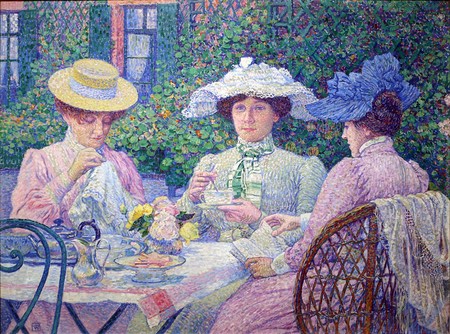

Théo van Rysselberghe was a Belgian painter active in the late 19th and early 20th centuries. He is generally considered a Neo-Impressionist or Post-Impressionist. He was classically trained and throughout his career explored a variety of styles and influences but focused primarily on Divisionism (AKA Pointillism).
Divisionism is a style associated with the French painter Georges Seurat who is credited with its inception. It involves complex surfaces of color in the form of small dots, meant to blend in the eye (which seems to me the broken color and optical blending effects of Monet taken to their extreme).
Van Rysselberghe took the influence of Seurat and Signac and ran with it, but in a different direction. Instead of dissolving his figures, interiors and landscapes into a haze of broken color, he applies that technique to a more traditional, academic structure and refinement resulting in a different level of visual effect.
In the process of researching Van Rysselberghe, I came across this episode of The Undraped Artist Podcast with Jeff Hein and Micah Christensen. Their insightful discussion, and particularly Christensen’s admiration for Van Rysselberghe, increased my appreciation for his skill and accomplishments.
Categories:
-
Eye Candy for Today: Auguste Lepere etching

Old Housea at Amiens, Auguste Lepère, etching. This is in the collection of the National Gallery of Art in DC, which has a high resolution downloadable and zoomable image file. For some reason, they don’t list the etching’s physical size. My guess from the size of the needle marks would be around 5×7″ (13 x 18 cm) or so.
Louis-Auguste Lepère, a French paintinter and printmaker active in the late 19th and early 20the century, was a prolific printmaker, producing etchings, wood engravings and lithographs.
For me this etching just radiates visual charm. At first glance, it looks straightforward enough, but when we look closer, almost every line is wavering or curved. Look at how delightfully loose and casual his hatching is.
Interestingly, his light lines on the cathedral in the distance — used to indicate atmospheric perspective — are straighter than their darker foreground counterparts. Even the vertical lines used to make tone on the cathedral are straighter than those in the set-back house in the middle ground (images above, second from the bottom).
The proportions, structural components and perspective are all solid, but the free spplication of his line gives the print the feeling of a casual sketch.
Categories:
-
Eye Candy for today: Jean-Etienne Liotard pastel portrait


Portrait of Maria Frederike van Reede-Athlone at Seven Years of Age, Jean-Étienne Liotard, pastel on vellum, 22 x 18 in. (55 x 45 cm), in the collection of the Getty.
18th century Swiss artist Jean-Étienne Liotard gives a beautiful demonstration of the sensitivity and finess possible in pastel.
There is a subtle teture throughout, likely from the nature of the surface, which is natural vellum (a parchment made from calf skin, as contrasted with the modern use of the term to simply indicate a mild texture of paper or board).
Categories:
-
Serge Pelle


Serge Pellé is a French comics artist known best for his work on the science fiction series Orbital (Amazon link), along with writer Sylvain Runberg.
Pellé’s dramatic scenes of futuristic structures, often in deep perspective and extensive detail, are set off by imaginative spacecraft designs intense lighting and otherworldly creatures.
It’s an entertaining series available in the US in an English translation ,published by Cinebook. I think there are eight volumes in total.
Pellé doesn’t appear to have a dedicated website, but there is an extensive selectin of his work on the Character Design References website.
Categories:
-
Eye Candy for Today: Egyptian encaustic portrait


Portrait of the Boy Eutyches, Egypt, Roman Period, encaustic on wood panel, 15 x 8 in. (38 x 19 cm), in the collection of the Metropolitan Museum of Art.
What appears at first glance to be a sophisticated contemporary oil portrait, is, in fact, an encaustic painting that is roughly 2,000 years old.
Painted in Egypt during the time of Roman occupation, around 100 -150 C.E., this is a beautiful example of the durable and non-yellowing medium of encaustic. Pigment is suspended in hot wax, often augmented with linseed oil, cold wax, egg yolk or resins, and applied to a wood panel.
We know the boy’s name because of the inscription at the collar of his tunic.
Categories:





Charley’s Picks
Bookshop.org
(Bookshop.org affilliate links; sales benefit independent bookshop owners; I get a small percentage to help support my work on Lines and Colors)

John Singer Sargent: Watercolors


Urban Sketching: Understanding Perspective


Charley’s Picks
Amazon
(Amazon.com affiliate links; sales go to a larger yacht for Jeff Bezos; but I get a small percentage to help support my work on Lines and Colors)
John Singer Sargent: Watercolors
Urban Sketching: Understanding Perspective
