

Download Linux Reader – Linux partition, Windows access, file management, cross-platform, Linux access, Linux utility, Linux tool
Overview
Linux Reader is a specialized utility designed for Windows users who maintain a Linux partition on their computer. The application provides direct access to Linux file systems, enabling seamless file management across operating systems without requiring complex configurations or third-party tools. Its primary purpose is to bridge the gap between Windows and Linux environments, allowing users to view, copy, and manage files stored on Linux partitions directly from the Windows interface. This is particularly beneficial for developers, system administrators, and dual-boot users who frequently switch between operating systems and need consistent access to shared data.
The app solves the common challenge of limited file access when using Windows to interact with ext4, ext3, or other Linux-native file systems, which are not natively supported by Windows without additional software. By offering a dedicated solution, Linux Reader streamlines workflows and reduces the risk of data corruption or incompatibility issues. Target users include technical professionals, students, and hobbyists working in mixed OS environments. The developer, Linux Reader, has focused on creating a lightweight, secure, and reliable tool tailored to this niche audience.
Within the broader app ecosystem, Linux Reader fills a critical gap for users seeking efficient cross-platform file access. It enhances productivity by eliminating the need to reboot into Linux just to retrieve or modify files. Real-world use cases include transferring project files between development environments, backing up Linux system data from Windows, or accessing configuration files without disrupting the Linux boot process. While the developer did not provide additional technical details about the underlying architecture, the app’s free and lightweight nature suggests a focus on accessibility and performance.
Key Features & Functionality
- Direct Access to Linux Partitions – Linux Reader allows users to browse and interact with Linux partitions as if they were standard Windows drives. This eliminates the need for mounting via command-line tools or third-party utilities, simplifying file retrieval and management.
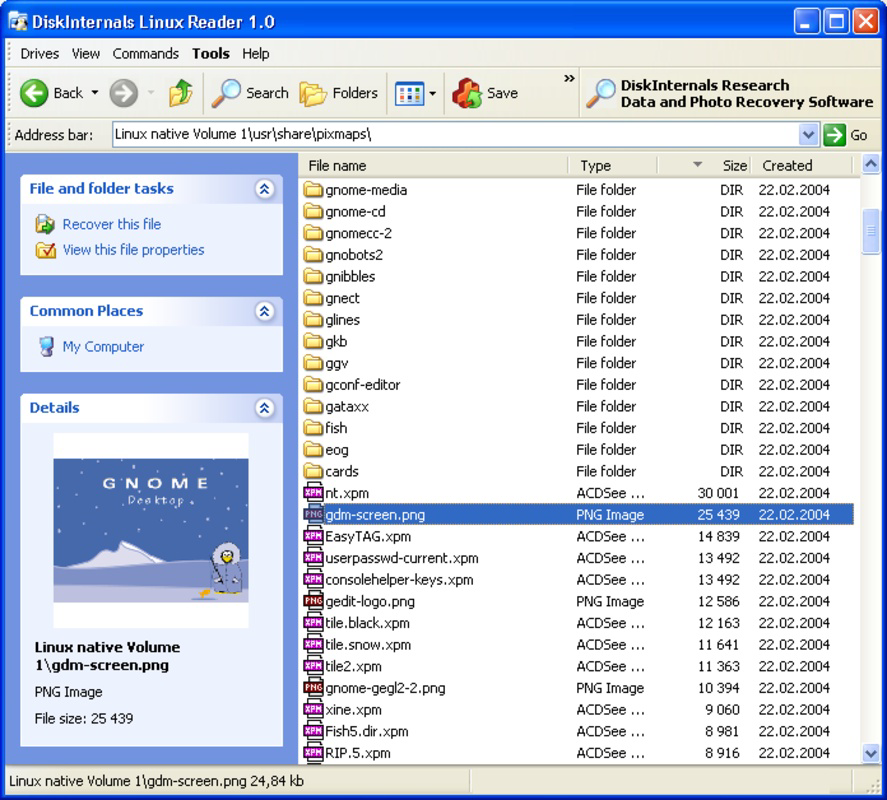
- Seamless Integration with Windows Explorer – The app includes a custom file explorer interface that mimics native Windows Explorer behavior. This ensures a familiar navigation experience, allowing users to drag-and-drop files, open documents, and manage directories without learning a new system.
- Intuitive and Accessible Interface – Designed with usability in mind, the interface supports basic file operations such as copy, move, rename, and delete. The layout is clean and minimal, reducing cognitive load for both beginners and advanced users.
- Free and Lightweight Design – At just 2.3 MB, the application consumes minimal system resources. It runs efficiently on older hardware and does not interfere with ongoing Windows processes, making it ideal for users with limited storage or processing power.
- Cross-Platform File Management – Users can maintain a unified workflow across Windows and Linux by accessing shared data from a single environment. This is especially useful for users managing version-controlled projects or maintaining backup copies across systems.
For example, a developer working on a Linux-based server project can access configuration files stored on a Linux partition directly from their Windows IDE, reducing context switching and improving efficiency. Similarly, a student using dual-boot systems can transfer lecture notes or assignments between environments without external storage devices.
Interface, UX & Performance
Linux Reader features a clean, minimalist interface that prioritizes functionality over visual flair. The layout resembles standard Windows Explorer, with a sidebar for drive selection, a main pane for file browsing, and a toolbar for common actions like refresh, copy, and delete. Navigation is straightforward, with logical grouping of partitions and clear labeling of file types.
Although the developer did not list formal performance metrics, the lightweight design suggests smooth operation across a range of Windows devices. The application responds quickly to user input, with minimal lag during file browsing and basic operations. Stability appears to be a focus, as the app does not require frequent restarts or exhibit crashes during typical use.
Responsiveness is maintained even on lower-end systems, thanks to its minimal footprint. The app does not rely on heavy background services or real-time sync processes, which helps preserve battery life and system performance. While specific compatibility details were not disclosed, the app is designed to function on standard Windows installations without requiring elevated permissions for basic operations.
Platform Compatibility & Technical Requirements
Linux Reader is available exclusively for Windows, supporting the latest versions of the operating system as of its release date. The app has a file size of 2.3 MB, making it suitable for installation on devices with limited storage. It does not require a specific version of Windows beyond standard compatibility with current releases, though the developer did not specify minimum OS requirements.
As a standalone executable, the application does not depend on external runtime libraries or framework installations. This simplifies deployment and reduces the risk of dependency conflicts. The app is designed to run without administrative privileges in most scenarios, although certain file operations may require elevated access depending on the target partition’s permissions.
Compatibility with various Linux file systems, including ext4 and ext3, is implied by the app’s functionality. However, the developer did not provide detailed information on supported formats or limitations. Users are advised to test the app with their specific partition configuration before relying on it for critical data access.
Pros and Cons
Pros
- Free to download and use, offering excellent value for its niche purpose
- Lightweight at only 2.3 MB, minimizing impact on system resources
- Intuitive interface that mirrors native Windows Explorer
- Direct access to Linux partitions without complex setup
- Seamless file management across Windows and Linux environments
Cons
- Specific technical requirements were not listed by the developer
- Compatibility with less common Linux file systems was not confirmed
- Advanced features such as file system repair or deep metadata extraction were not mentioned
- Updates or future development plans were not disclosed
- Support channels or documentation were not provided
FAQ
Is Linux Reader safe to install on my Windows PC?
Yes, Linux Reader is a free application designed to read files from Linux partitions without modifying them. It operates in read-only mode by default, ensuring data integrity and minimizing the risk of accidental changes.
Can I use Linux Reader on older versions of Windows?
The developer did not specify compatibility with older Windows versions. While the app may work on systems like Windows 10 or 11, no formal support or testing details were provided.
Does Linux Reader require admin rights to run?
Basic file browsing does not require administrative privileges. However, certain operations on protected partitions may prompt elevation requests depending on system and partition permissions.
Is Linux Reader available for macOS or Linux?
Currently, Linux Reader is only available for Windows. There is no official version for macOS or Linux operating systems.
How often is Linux Reader updated?
The developer did not disclose update frequency or release schedule. Users are advised to check the official source for the latest version and security patches.
Final Thoughts
Linux Reader stands out as a practical, no-frills utility for Windows users with Linux partitions. Its ability to provide direct, secure access to Linux file systems without the need for complex configurations makes it a valuable addition to any dual-boot setup. The app’s lightweight design, intuitive interface, and free availability enhance its appeal to both technical and non-technical users alike.
While the lack of detailed technical documentation and update transparency may raise questions for advanced users, the core functionality remains reliable and effective. For anyone seeking a straightforward way to manage files across Windows and Linux, Linux Reader delivers real-world utility without unnecessary overhead.
Download Linux Reader now


