The Super Mario Bros. theme is, by any reasonable estimate, one of the most widely recognised pieces of music composed in the second half of the twentieth century. Billions of people across multiple generations can hum it with accuracy — more, almost certainly, than can identify the most celebrated film scores of the same era. This fact alone establishes game music's cultural significance beyond serious dispute. What it does not yet have is the critical infrastructure that its cultural significance warrants: dedicated serious critics, academic study at the level the form deserves, and recognition as a distinct compositional tradition rather than an appendage to either film scoring or classical music.
That gap is closing, and it is closing in part because the music itself has developed to a point where ignoring it requires genuine effort. The broader gaming ecosystem has matured alongside it, with communities, platforms, and brands such as 7Gear and their
7Gear Casino no deposit bonus contributing to a culture where games are no longer treated as disposable entertainment products but as artistic works with their own aesthetics, histories, and critical traditions.
The Technical Challenge Unique to Game Music
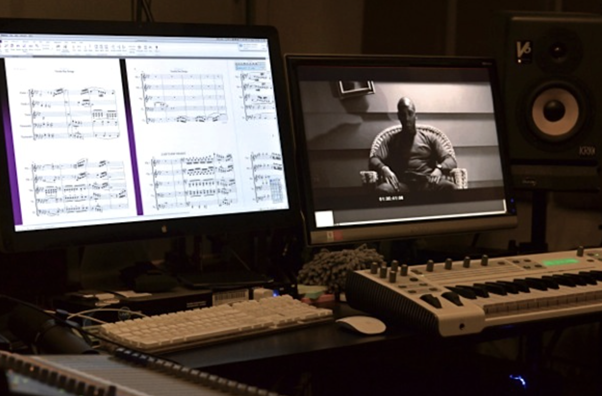
Film composers face a demanding brief: create music that serves a fixed visual sequence, supports the intended emotional arc, and integrates with dialogue and sound design in a specific duration. The brief is highly constrained, but the constraint is consistent — the same sequence plays the same way every time, and the music can be composed to fit it precisely.
Game composers face a fundamentally different brief, one with no precedent in any prior compositional tradition. The music must function across variable durations — a track that plays during combat must be compelling whether the encounter lasts two minutes or twenty. It must respond to player actions, transitioning smoothly from exploration music to combat music to victory music without audible seams, at moments that cannot be predicted in advance. It must loop indefinitely without becoming irritating, which imposes compositional constraints that film scoring simply does not encounter. And it must support emotional states that are player-determined rather than director-determined: the player who approaches a given sequence in a state of exhilaration requires music that serves a different emotional function than the player who approaches the same sequence cautiously.
Adaptive music systems — the technical infrastructure that dynamically adjusts game music in response to gameplay state — are the composer's tool for managing these requirements. The sophistication of these systems has increased enormously over the past decade, enabling musical responses to player action that are increasingly seamless and emotionally precise.
The Pioneers Who Built the Form
The history of game music as a compositional tradition has a small number of figures whose work established the aesthetic vocabulary that the medium still operates within. Koji Kondo's work for Nintendo — the Mario and Zelda series above all — demonstrated in the 1980s and early 1990s that game music could achieve genuine melodic memorability within the severe technical constraints of early hardware. His themes are not merely functional; they are compositionally elegant in ways that remain impressive when analysed independently of their gaming context.
Nobuo Uematsu's Final Fantasy series, beginning in 1987 and continuing through dozens of entries with varying collaborators, is the most sustained body of compositional work in game music history. Uematsu developed a compositional voice that drew on classical, jazz, and rock influences to create orchestral scores that communicated emotional and dramatic weight comparable to the major film composers of the same era. The Final Fantasy concert tour Distant Worlds — which fills major concert halls globally with audiences paying premium prices to hear game music performed by full orchestras — is the clearest cultural signal of the music's standing.
Yasunori Mitsuda, composer of Chrono Trigger and Xenogears, brought Celtic and world music influences to game scoring in ways that significantly expanded the aesthetic vocabulary of the form. His music is among the most analytically interesting in the medium's history — harmonically sophisticated, emotionally rich, and entirely specific to the worlds it was designed to inhabit.
The Emotional Function of Game Music
The emotional function of game music differs from film scoring in a specific and important way: game music must support states of sustained attention rather than directed emotional journeys. A film score guides the audience through a predetermined emotional arc. Game music must create an environment in which the player's own emotional experience unfolds, without predetermining what that experience will be.
This requires a different compositional approach. Music that is too emotionally specific risks clashing with the player's actual emotional state. Music that is too neutral fails to create the atmosphere that supports the experience the designer intends. The best game composers navigate this tension by creating music that is emotionally resonant without being prescriptive — music that amplifies emotional states rather than specifying them.
The dungeon themes of early JRPGs, the ambient scores of games like Shadow of the Colossus and Journey, and the dynamic soundscapes of open-world games like Red Dead Redemption 2 each represent different approaches to this challenge. What they share is a compositional intelligence that is invisible when it works — you feel the world more fully without necessarily noticing the music as a separate element contributing to that feeling.
Contemporary Masterworks
The current generation of game music has produced a body of work that represents the form at its most compositionally sophisticated. Keiichi Okabe's score for NieR:Automata is, in the assessment of many serious listeners, among the most emotionally complex musical compositions of the twenty-first century in any medium. The score incorporates choral elements, distorted electronics, and Japanese folk influences in a coherent compositional language that both supports the game's philosophical themes and functions as an independent musical experience. It does not sound like a game score. It sounds like music that happens to be from a game, and the distinction matters.
Darren Korb's work for Hades represents the most successful integration of a distinctive sonic identity with adaptive music design — the score shifts dynamically between exploration and combat states with a fluency that makes the transition feel compositional rather than technical. Ennio Morricone-influenced Americana in Red Dead Redemption 2, Gustavo Santaolalla's devastatingly understated acoustic work for The Last of Us, and Lena Raine's intimate piano compositions for Celeste each demonstrate that contemporary game music has moved well beyond functional accompaniment into deliberate artistic expression.
The Live Concert Phenomenon
The commercial success of game music in concert settings is the most culturally legible evidence of its standing as serious music. Distant Worlds, the Final Fantasy concert series, has toured globally since 2007, performing to sold-out concert halls with full orchestras and choirs. Video Games Live has presented game music in concert format across more than forty countries. The Legend of Zelda: Symphony of the Goddesses has filled symphony halls from New York to Tokyo.
Audiences do not pay concert hall prices for music they experience as background. The willingness of audiences to pay premium prices, dress appropriately for concert settings, and spend an evening attending a formal performance of game music demonstrates that the emotional and artistic significance of the material is experienced by its audience as genuinely substantial — not as nostalgia for a childhood entertainment but as serious music that warrants serious presentation.
The Critical and Academic Gap
For all its cultural significance and artistic development, game music lacks the critical infrastructure that film scores, classical music, and even popular music have developed over decades. There are relatively few dedicated serious critics writing about game music with the analytical vocabulary its complexity warrants. Academic musicology has been slow to incorporate game music into its canon. The major awards that recognise music across media — the Grammy, the BAFTA, the BRIT — treat game music as a minor subcategory rather than a distinct and mature compositional tradition.
The form deserves its own critical vocabulary, its own analytical frameworks, and its own canon of landmark works that are studied as seriously as the landmark film scores or compositions of comparable periods. The music has earned that attention. The critical infrastructure is the work still ahead.
