
Download MeshLab – Free 3D Design & Photography Tool for Windows
Overview
MeshLab is a lightweight, open‑source (GPL) application designed for processing and editing 3‑dimensional meshes. Created by the Visual Computing Lab, it targets professionals and hobbyists who need a powerful yet free solution for tasks such as cleaning, repairing, converting, and visualizing point clouds or polygonal models. Although MeshLab’s primary audience consists of designers, photographers, and researchers, its intuitive interface makes it approachable for anyone interested in 3D content creation. The current stable release, version 1.2.3a, dates back to June 20 2012 and runs on Windows XP and later versions, delivering a compact footprint that occupies far less storage than many commercial competitors. With over 9 000 downloads since its inclusion in our catalog, MeshLab remains a popular choice in regions like China, Austria, and the United States, largely because it offers a secure, no‑cost alternative for handling complex mesh workflows without sacrificing quality.
Key Features and Capabilities
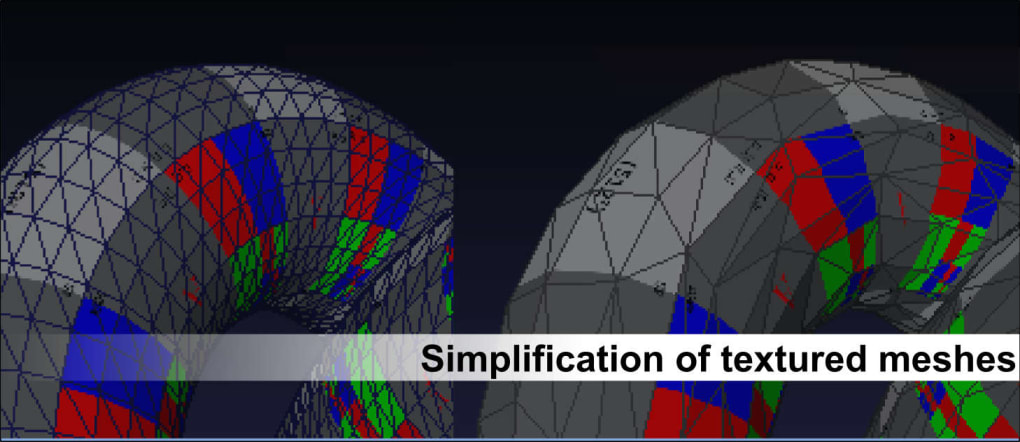
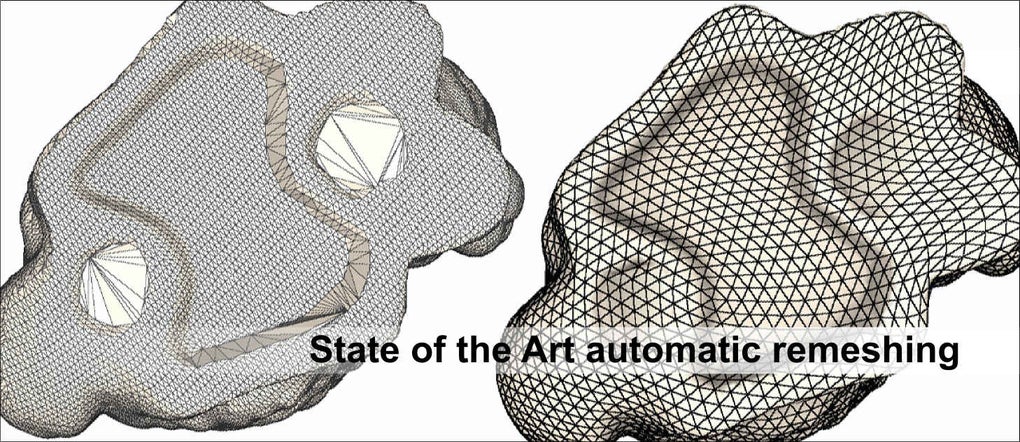
- Advanced mesh cleaning tools – remove duplicate vertices, fill holes, and simplify geometry.
- Rich set of filters – includes Laplacian smoothing, Poisson reconstruction, and curvature analysis.
- Extensive file format support – import and export OBJ, STL, PLY, OFF, VRML, and many others.
- Texture handling – map, edit, and preview UV coordinates directly within the viewer.
- Batch processing – automate repetitive tasks using the built‑in scripting engine.
- High‑resolution rendering – real‑time shading, lighting, and ambient occlusion for accurate previews.
- Measurement tools – distance, area, and angle calculations directly on the mesh.
- Plugin architecture – community‑driven extensions add functionality such as point‑cloud registration and 3D printing preparation.
Why These Features Matter
For designers, the ability to clean and simplify meshes quickly can shave hours off a typical workflow, especially when dealing with scanned data that often contains noise and imperfections. Photographers who work with photogrammetry benefit from MeshLab’s robust texture mapping, allowing them to generate realistic 3D reconstructions from a series of images. Researchers in computer vision appreciate the extensive filter library, which provides ready‑made algorithms for surface analysis without needing to write custom code. Moreover, the batch processing capabilities enable users to apply the same series of filters to multiple files, ensuring consistency across large datasets—a crucial requirement for academic and industrial pipelines.
Because MeshLab is open‑source, its development community continuously contributes new plugins and updates, extending the software’s lifespan well beyond its last official release. Users can also access the source code to tailor the application to specific needs, making it a flexible platform for both education and professional production.
Installation, Usage, and Compatibility
Step‑by‑Step Installation
Downloading MeshLab is straightforward. Visit the official website, locate the Windows installer (usually a .exe file), and click “Download.” Once the file is saved, run the installer and follow the on‑screen prompts: accept the license agreement, choose an installation folder (the default location works for most users), and click “Install.” After the process completes, you’ll find a shortcut on your desktop and a start‑menu entry for quick access.
Getting Started Quickly
When you launch MeshLab for the first time, you’ll be greeted by a clean workspace with a central viewport and a toolbar of common actions. To open a model, select File → Import Mesh and browse to your OBJ, STL, or PLY file. The model appears in the viewer, and you can rotate, pan, or zoom using the mouse or navigation keys. From here, the Filters menu provides access to the extensive toolbox described earlier. For newcomers, the “Cleaning & Repairing” submenu is a good entry point; applying “Remove Duplicate Vertices” followed by “Close Holes” often yields a ready‑to‑use mesh.
Operating System Support
MeshLab officially supports Windows XP, Windows 7, Windows 8, and Windows 10 (including 64‑bit editions). Although the software is not natively compiled for macOS or Linux, community‑maintained ports exist and can be compiled from source on those platforms. The Windows version runs efficiently on modest hardware—systems with as little as 2 GB RAM and a basic integrated graphics card can handle moderate‑size meshes (up to several hundred thousand vertices) without noticeable lag.
Security and Updates
Because MeshLab is distributed under the GPL license, the source code is publicly available for inspection, ensuring transparency and security. While the official release schedule has slowed, the community frequently publishes patches on GitHub that address bugs or add minor enhancements. Users who wish to stay up‑to‑date can enable automatic checks for new releases via the “Help → Check for Updates” option, which redirects to the project’s download page.
Pros, Cons, and Frequently Asked Questions
Pros
- Completely free and open‑source, eliminating licensing costs.
- Lightweight installer and modest system requirements.
- Broad file‑format compatibility suitable for most 3D pipelines.
- Powerful set of cleaning and reconstruction filters.
- Active community that provides plugins and regular bug‑fixes.
Cons
- Interface can feel dated compared to modern commercial alternatives.
- No native macOS or Android version; Windows‑only official release.
- Documentation is sparse, requiring users to rely on forums and tutorials.
- Last major stable release dates back to 2012, which may raise concerns for some enterprises.
FAQ
Is MeshLab suitable for 3D printing?
Yes. MeshLab includes tools for checking manifoldness, fixing non‑watertight geometry, and exporting to STL—a format widely accepted by 3D printers. The “Close Holes” and “Repair Non‑Manifold Edges” filters are especially useful for preparing models for print.
Can MeshLab handle large point‑cloud datasets?
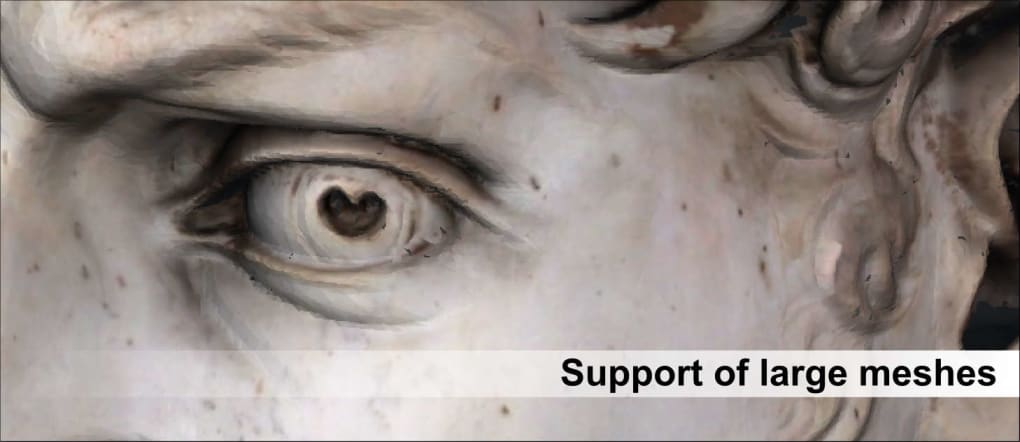
MeshLab can import point‑cloud files (e.g., PLY) containing millions of points, but performance depends on your hardware. Using decimation filters to reduce point count before heavy processing can improve responsiveness.
Is there a way to automate repetitive tasks?
Yes. MeshLab provides a scripting engine based on the Qt framework. Users can write XML‑style scripts that chain multiple filters, then run them in batch mode to process a folder of files automatically.
What language is MeshLab available in?
The official Windows build is available only in English. Community translations exist for some languages, but they must be compiled manually from source.
How does MeshLab compare to commercial alternatives?
While commercial tools like Autodesk Meshmixer or ZBrush offer polished interfaces and dedicated support, MeshLab matches many of their core capabilities—especially in mesh cleaning and conversion—without any cost. For users who prioritize budget and open‑source flexibility, MeshLab remains a compelling choice.
Conclusion & Call to Action
MeshLab stands out as a free, secure, and feature‑rich solution for anyone working with 3D meshes on Windows. Its extensive filter library, broad file‑format support, and low system requirements make it an ideal companion for designers, photographers, and researchers who need reliable mesh processing without a subscription fee. Although the user interface may feel a bit dated and the official releases are infrequent, the active open‑source community continually injects new functionality and fixes, keeping the application relevant for modern workflows.
If you’re looking for a cost‑effective way to clean, repair, or visualize 3D models, download MeshLab today and experience a professional-grade tool that won’t weigh down your hard drive. Remember to explore the community forums for tutorials, plugins, and scripting tips that can further extend the software’s capabilities.
MeshLab delivers a powerful set of mesh processing tools in a lightweight package. Its open‑source nature and zero cost make it especially attractive for students and small studios. While the UI could use a refresh, the depth of functionality more than compensates, earning it a solid 4.5‑star rating.