
Screenshots


App details
- Version
- 5.1.50907 | 5.1.20125.0 | 2.0
- Size
- 15.10 MB
- Updated
- April 25, 2025
- Requires
- Mac OS X
- Language
- English | Italian | Japanese
- License
- Free
- Developer
- Microsoft Corporation
- Category
- Mac OS
About Microsoft Silverlight
Download Microsoft Silverlight – lightweight streaming plug‑in, secure browser experience, free update
Intro: Why Microsoft Silverlight Still Matters in a Flash‑Free World
When Microsoft launched Silverlight in 2007, the goal was clear: give developers a modern, browser‑based platform that could rival Adobe Flash for rich media delivery. Fast‑forward to today, the web has largely migrated to HTML5, yet a surprising number of enterprise portals, streaming services, and legacy web applications still depend on Silverlight’s unique capabilities. The plug‑in remains a lightweight, secure way to render high‑definition video, interactive graphics, and DRM‑protected content without the heavy overhead of a full‑blown browser extension. Its cross‑browser support—including Firefox, Safari, Chrome, and Edge—means users on Windows, macOS, and even some Linux distributions can enjoy seamless playback with a single install.
Microsoft has positioned the latest Silverlight release as a business‑focused tool rather than a consumer‑grade multimedia player. Companies such as Continental Airlines and several financial institutions have adopted it for internal dashboards, reservation systems, and secure video streams. For developers, Silverlight still offers a robust XAML‑based UI framework, deep integration with Visual Studio, and a suite of 60 customizable controls that simplify complex data visualizations. While Adobe Air and HTML5 have taken the spotlight for new projects, Silverlight’s stability, smooth‑streaming technology, and out‑of‑browser mode keep it relevant for organizations that cannot afford a full rewrite of their legacy web assets.
In this review we’ll explore the core features, walk through the installation process, examine OS compatibility, weigh the pros and cons, and answer the most common questions users have about Microsoft Silverlight. By the end, you’ll know whether this free plug‑in is the right addition to your browser toolbox or if it’s time to migrate to newer technologies.
Overview & Core Features: What Silverlight Brings to the Table
Microsoft Silverlight is a lightweight browser plug‑in designed to deliver rich interactive content, high‑definition video, and secure media streams directly within the web page. Though originally built to compete with Adobe Flash, Silverlight has evolved to focus on business‑grade scenarios, offering developers a reliable platform for data‑driven applications, smooth streaming, and DRM support. The current version supports HD video up to 1080p, adaptive bitrate streaming, and an out‑of‑browser mode that lets users launch Silverlight apps as desktop‑like experiences without leaving the browser environment.
- Smooth Streaming: Adaptive bitrate technology automatically adjusts video quality when bandwidth drops below 3 Mbps, preventing buffering and ensuring uninterrupted playback.
- DRM Management: Integrated support for PlayReady and other DRM schemes keeps premium content secure.
- Out‑of‑Browser Player: Allows Silverlight applications to run as standalone desktop apps, useful for internal tools and kiosks.
- 60 Customizable Controls: Includes charts, data grids, media players, and navigation elements that can be styled via XAML.
- Deep Linking & SEO: Supports URL fragment navigation and meta‑tag optimization for better search engine indexing.
- Enhanced Data Support: Native bindings for JSON, XML, and OData services streamline data consumption.
- Cross‑Browser Compatibility: Works with Firefox, Safari, Chrome, Edge, and Internet Explorer on both Windows and macOS.
From a developer’s perspective, Silverlight shines when paired with Microsoft Expression Studio and Visual Studio. The IDE integration offers a visual designer for XAML layouts, real‑time debugging, and a rich set of libraries for handling media, animation, and data binding. For end users, the plug‑in delivers a consistent experience across browsers, with quick start‑up times and low CPU usage compared to older Flash implementations. The inclusion of an out‑of‑browser mode is especially valuable for enterprises that need secure, offline‑capable applications without the overhead of a full desktop install.
Installation, Usage & Compatibility: Getting Silverlight Up and Running
Installing Microsoft Silverlight is straightforward and can be completed in just a few minutes. Follow these steps to ensure a smooth setup on Windows or macOS:
- Visit the official Microsoft Silverlight download page and click the “Download” button for your operating system.
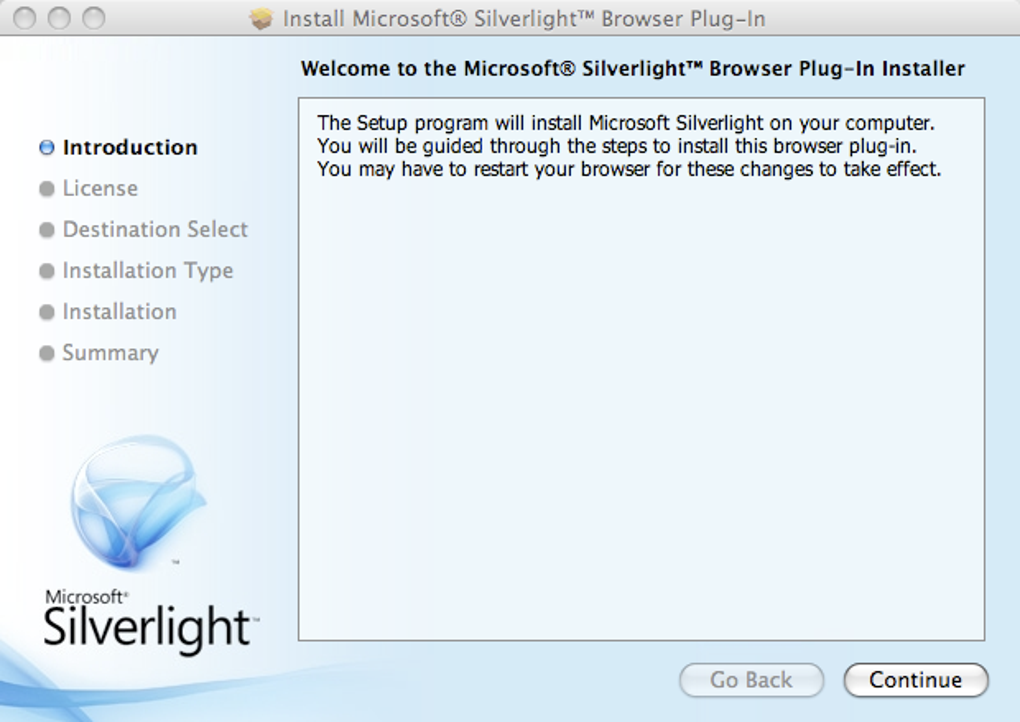
- Run the installer (Silverlight.exe for Windows, Silverlight.pkg for macOS). The wizard will guide you through the license agreement and installation location.
- Although the plug‑in does not force a browser restart, we recommend closing all browser windows after installation to clear any cached plug‑in data.
- Open your preferred browser (Firefox, Safari, Chrome, or Edge) and navigate to a site that uses Silverlight. You should see a prompt confirming the plug‑in is active.
- If you encounter a browser crash, verify that you have the latest version of your browser and that no conflicting extensions (e.g., older Flash plug‑ins) are enabled.
Supported Platforms
- Windows 10, 8.1, 7 (32‑bit and 64‑bit)
- macOS 10.12 Sierra and later (Intel‑based Macs only)
- Limited support on Linux via Wine, though not officially recommended.
Once installed, using Silverlight is as simple as clicking on embedded media or interactive elements on a web page. For developers, the workflow typically involves creating a XAML project in Visual Studio, adding the required Silverlight SDK references, and publishing the .xap package to a web server. End users will automatically download the .xap file when they visit a Silverlight‑enabled site, after which the plug‑in renders the content within the browser window.
Security updates are delivered through Windows Update on Windows machines and via the Microsoft Update Catalog for macOS. It’s crucial to keep the plug‑in current, especially because Silverlight handles DRM‑protected streams that rely on up‑to‑date encryption libraries. Regular updates also address the occasional bug that can cause browser instability on older macOS versions—a known issue that Microsoft continues to patch.
Conclusion, Pros & Cons, & Frequently Asked Questions
Microsoft Silverlight remains a viable solution for organizations that need a stable, secure platform for streaming high‑definition video and delivering data‑rich web applications. While the broader web community has largely embraced HTML5, Silverlight’s niche strengths—adaptive streaming, out‑of‑browser capabilities, and deep integration with Microsoft development tools—keep it relevant for legacy systems and enterprise environments. If you’re evaluating whether to adopt Silverlight for a new project, consider the long‑term maintenance implications and whether your target audience already uses browsers that support the plug‑in.
Pros
- Adaptive smooth streaming ensures consistent video playback even on fluctuating bandwidth.
- Robust DRM support for premium content protection.
- Out‑of‑browser mode delivers desktop‑like experiences without additional installations.
- Extensive library of customizable XAML controls for rapid UI development.
- Cross‑browser compatibility on both Windows and macOS.
Cons
- Limited future development; Microsoft has shifted focus to newer web technologies.
- Mac users may encounter occasional stability bugs, especially on older OS versions.
- Requires a separate plug‑in, which some users consider a security risk.
- Out‑of‑browser features depend on developer adoption, limiting real‑world examples.
- Not supported on many modern mobile browsers, restricting mobile usage.
Frequently Asked Questions
Is Microsoft Silverlight still receiving security updates?
Yes, Microsoft releases periodic security patches through Windows Update and the Microsoft Update Catalog for macOS. However, the update frequency has slowed as the product reaches end‑of‑life status.
Can Silverlight run on mobile devices?
Officially, Silverlight is not supported on iOS or Android browsers. Some third‑party solutions attempt to emulate the plug‑in, but they are not reliable for production use.
Do I need a paid license to use Silverlight?
No, Microsoft Silverlight is free to download and use. Development tools such as Visual Studio Community are also free for individual developers.
How does Silverlight’s out‑of‑browser mode differ from a native app?
Out‑of‑browser Silverlight apps run in a sandboxed environment using the same runtime as the browser plug‑in, providing a lightweight desktop experience without full OS integration.
What browsers are compatible with the latest Silverlight version?
The plug‑in works with the current versions of Microsoft Edge, Google Chrome, Mozilla Firefox, and Apple Safari on both Windows and macOS.
Ready to experience smooth streaming and secure media delivery? Download Microsoft Silverlight today and give your browser the power to handle high‑definition video and interactive web applications with confidence.
Guides & Tutorials
How to install Microsoft Silverlight
- Click the Download button above.
- Once redirected, accept the terms and click Install.
- Wait for the Microsoft Silverlight download to finish on your device.
How to use Microsoft Silverlight
This software is primarily used for its core features described above. Open the app after installation to explore its capabilities.
User Reviews
No reviews yet. Be the first to share your experience.
You may also like
more
DiffusionBee
Generate unique art with this app DiffusionBee is a free and accessible artifici...

Excire Foto Light
Organize your snapshots Excire Foto Light is a free-to-download AI -powered phot...

Topaz Photo AI
Photo enhancement tool with AI Topaz Photo AI is a premium AI image editor for P...

anonymoX
Surf anonymously with Firefox anonymoX for Firefox is an add-on that gives you f...

DownThemAll
Download Them All! Downloading anything or everything on a webpage can be a labo...
.webp)
DuckDuckGo Privacy Essentials
A free program for Mac, by DuckDuckGo, Inc.. DuckDuckGo Privacy Essentials is a...
