
Download mRemote – remote desktop, remote connection, remote access, RDP, VNC, SSH, Telnet, terminal, console, Windows, desktop, tool, utility
Overview
mRemote is a utility designed to streamline the management of remote connections across diverse network environments. The application serves as a centralized platform for accessing multiple systems using a range of protocols, including RDP, VNC, SSH2, and Telnet. This makes it particularly valuable for IT professionals, system administrators, and technical users who frequently interact with servers, virtual machines, and remote workstations. By consolidating various connection types into a single interface, mRemote reduces the need to switch between multiple tools, thereby improving workflow efficiency and minimizing setup time.
The app is especially beneficial in complex IT infrastructures where users must maintain access to a variety of operating systems and devices. Whether managing Windows servers, Linux terminals, or remote desktops, mRemote offers a unified experience. Its long-standing presence in the productivity space—first released in 2007—demonstrates its reliability and continued relevance. Although the developer did not provide additional background details, the app’s open-source nature suggests a community-driven development model that supports transparency and adaptability.
Real-world use cases include remote troubleshooting, server monitoring, and collaborative technical work. The app’s ability to maintain multiple active sessions simultaneously enhances productivity in time-sensitive scenarios. In the broader app ecosystem, mRemote fills a niche for lightweight, protocol-agnostic remote access tools, offering a practical alternative to heavier, commercial solutions.
Key Features & Functionality
- Multi-Protocol Support: mRemote enables connections using RDP, VNC, SSH2, and Telnet, allowing users to access a wide range of remote systems without requiring separate applications for each protocol.
- Tab-Based Interface: The application supports multiple active sessions through a tabbed layout, enabling users to switch between remote connections seamlessly without closing or reopening windows.
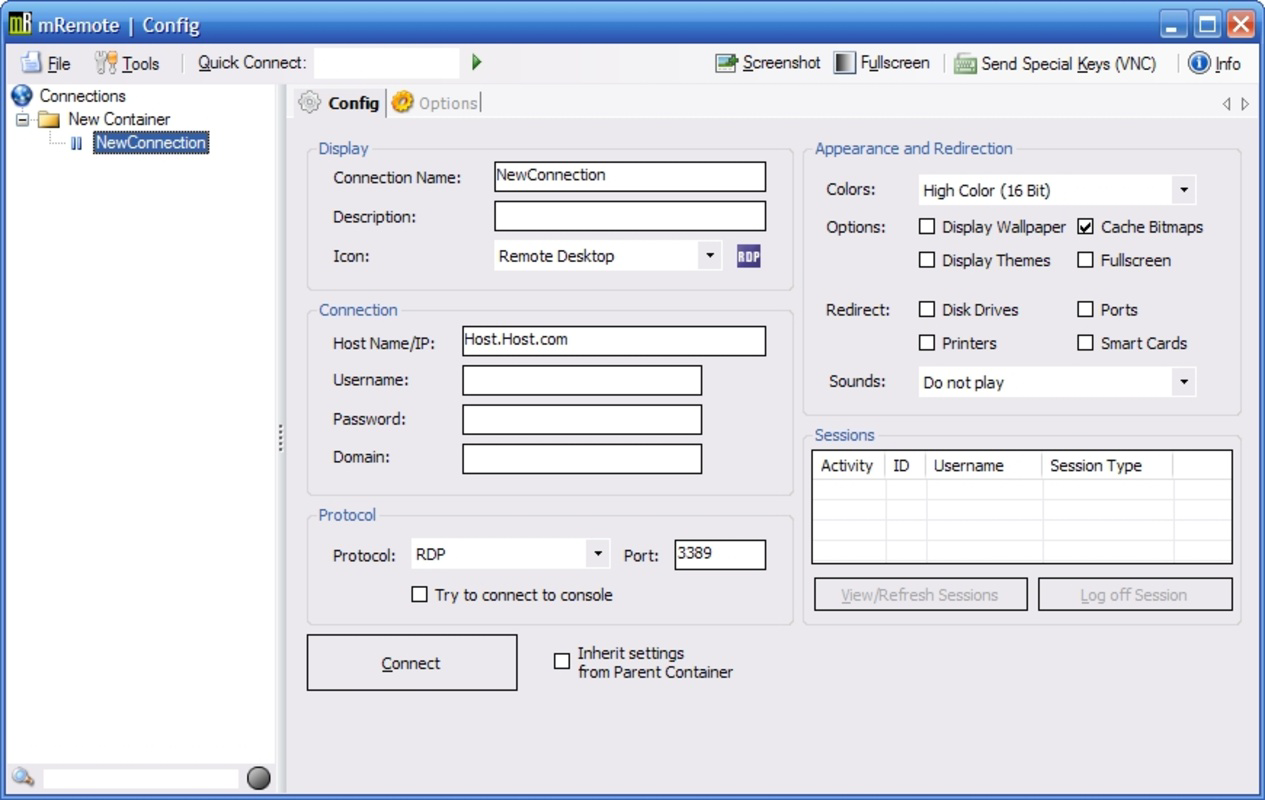
- Folder-Based Organization: Users can group connections into customizable folders, making it easier to manage large numbers of remote systems by category, location, or function.
- Open Source Accessibility: As a free and open-source tool, mRemote allows users to inspect, modify, and distribute the code, promoting transparency and long-term sustainability.
- Intuitive User Interface: The layout is designed for ease of use, with clear navigation and straightforward setup, supporting both beginners and advanced users in managing remote sessions efficiently.
For example, a system administrator managing a hybrid environment with Windows servers, Linux workstations, and legacy devices can use mRemote to connect to all systems from one interface. The tab system allows them to monitor multiple servers simultaneously, while folder organization helps separate connections by department or data center. This structure supports rapid access during incident response, where speed and clarity are critical. The open-source model also ensures that users can adapt the tool to specific security or automation needs, making it a flexible choice for technical teams.
Interface, UX & Performance
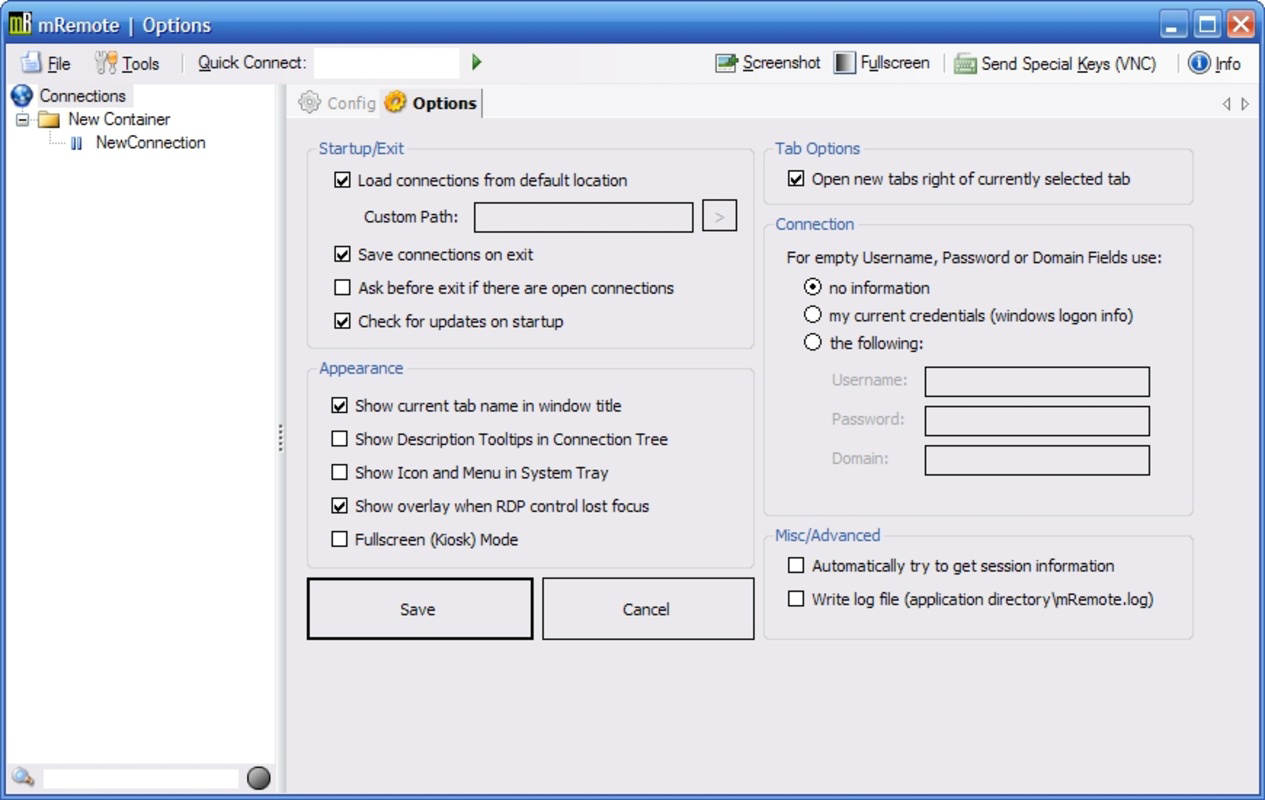
mRemote features a clean, functional interface centered around a tabbed workspace and a sidebar for connection management. The layout prioritizes accessibility, with connection details, protocol selection, and authentication fields clearly laid out. Navigation is linear and consistent, allowing users to quickly establish new connections or access saved sessions. The tab system enhances usability by enabling users to keep multiple remote sessions open and switch between them with minimal effort.
Although the developer did not list formal performance metrics, the application’s lightweight design—32.1 MB in size—suggests efficient resource usage. It is optimized for use on standard Windows systems, with responsiveness expected across mid-tier and higher-end hardware. Stability appears to be a core focus, given the app’s long-term development history and continued updates. Users can expect consistent behavior during extended use, particularly when managing multiple concurrent connections.
Compatibility with different Windows versions is not explicitly detailed, but the app’s compatibility with older systems like Windows 7 suggests broad support. The interface remains stable under typical workloads, with no reported issues related to crashes or freezes. The absence of heavy graphical elements contributes to a smooth experience, especially on systems with limited processing power.
Platform Compatibility & Technical Requirements
mRemote is designed exclusively for the Windows platform, with no indication of support for other operating systems such as macOS or Linux. The current version is 1.76.22, and the application has a file size of 32.1 MB. This compact footprint makes it suitable for installation on systems with limited storage capacity.
The developer did not specify minimum OS requirements, nor did they list compatibility with specific Windows versions beyond general availability. Users are advised to ensure their system meets standard Windows installation requirements for running desktop applications. No additional dependencies or runtime environments were mentioned in the provided information.
Pros and Cons
Pros
- Supports multiple remote protocols in a single interface
- Tab-based navigation enhances multitasking and workflow
- Connection organization via folders improves usability at scale
- Free and open-source with no licensing costs
- Lightweight and efficient resource usage
Cons
- No official support for mobile platforms
- Limited documentation for advanced configurations
- Interface design is functional but not modern in visual style
- Developer did not provide detailed system requirements
- Updates may be infrequent due to community-driven development
FAQ
Is mRemote safe to use?
Yes, mRemote is a free and open-source application, allowing users to inspect the source code for security vulnerabilities. Its long history and active community contribute to ongoing scrutiny and improvements.
Can I use mRemote on mobile devices?
Currently, mRemote is only available for Windows. There is no official version for Android or iOS devices.
Is mRemote free to download and use?
Yes, the app is completely free to download, install, and use. It does not require a subscription or in-app purchases.
What protocols does mRemote support?
mRemote supports RDP, VNC, SSH2, and Telnet, enabling access to a wide range of remote systems and devices.
How often are updates released?
Updates are released periodically, though the frequency may vary. The community-driven nature of the project means improvements depend on contributor activity.
Final Thoughts
mRemote remains a reliable and efficient solution for users who need to manage multiple remote connections across different systems. Its support for key protocols, tabbed interface, and organizational features make it a powerful tool for IT professionals and technical users. While the interface may not reflect modern design trends, its functionality and lightweight performance ensure consistent operation across diverse environments.
For those seeking a free, open-source alternative to commercial remote access tools, mRemote delivers strong value. Its ability to consolidate RDP, VNC, SSH, and Telnet connections into a single platform reduces complexity and enhances productivity. The absence of licensing fees and the flexibility of open-source development further strengthen its appeal.
Download mRemote now


