
You must be logged in to view this content.
As an Amazon Associate, I earn from qualifying purchases.
-

-

I have never been a singer, in fact I sound like a howling banshee searching for the correct note when I even try to sing. That said, I have always thought that it would be nice to be able to sing and so I purchased this book without reading the title correctly.
The (paid link) Solfege Teaching Guide by Eileen Sauer was an interesting book, but was just what is says in the title, a guide to teaching solfege, not to learning it, which is more what I was looking for.

Despite my inability to purchase an appropriate book, I did enjoy it. It was interesting to read about the ‘French System’, the solfege methodology taught at The French School of Music in Plainfield, NJ.
I guess in some ways it gives an insight into how this method is taught which I am sure will be helpful trying to learn this stuff.
The author’s writing style was good and she explained things well.
It was also fascinating to read about the involvement of the parents of children being taught in this way and how they organized classes, even down to the arrangement of things in the room.
I imagine that this would be a very useful book for someone wanting to know how to teach solfege classes following the methodology outline within.
Even though ultimately, I enjoyed this book I guess I should consider it a cautionary tale to myself to be more vigilant in reading book descriptions before purchasing to ensure I get what I am looking for.
-
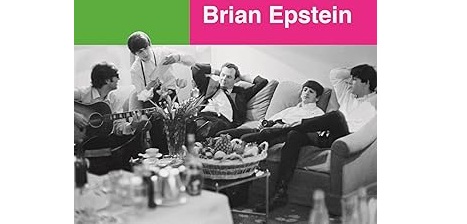
I found this a fascinating account of the early years of the Beatles and the life of Brian Epstein as told in his own words. (paid link) A Cellarful of Noise was an erudite recounting of the authors early life, his encounter with the Beatles, his subsequent management of them, and those fast moving early years of madness.

It is a relatively short book, at about 160 pages, but is crammed full of witty anecdotes and is written in the same erudite manner in which he spoke. He was obviously devoted to the Beatles and that comes through in his writing, despite his frustrations sometimes dealing with the four wild men from Liverpool.
In addition to managing the worlds biggest band and all the incumbent pressures of doing things that had never been done before, amidst the sheer insanity of the crowds and the stress of trying to advance the career of the Beatles, he was also managing other bands in his stable.
The honesty presented is rare and the insight into the stresses and strains upon him dealing with the entirety of the business side of things was evident.
I thought this was a great read and the narrative style was wonderful. All in all a fantastic read. I found myself wishing that it was much longer than it was. How he went from a record store manager to the manager of the most famous band in the world is amazing, along with the meticulous nature that he exhibited in providing for their every whim. It is unfathomable how he seemed to deal with these four, cranky youngsters and retain a smile.
-

Introduction
This tutorial will look at what inversions are, how we create them for the seventh chords and how we know what inversion a particular chord voicing is. We will also look at two methods by which we can notate and identify seventh chord inversions.
What is a seventh chord?
In the tutorial on seventh chords, we discussed the construction of the most common seventh chords using stacked thirds so we should be clear on what a seventh chord is.
This stacking of three thirds results in intervals from the root of
- Root – 1
- Third – 3
- Fifth – 5
- Seventh – 7
Depending upon the quality of triad we have, major, minor, diminished, or augmented, and that of the seventh note, the quality of these intervals will be different, but for the purpose of looking at inversions we will just need to consider the numerical value of the interval, not the quality.
What is an inversion?
A discussed in the tutorial on triad inversions an inversion of chord is the same notes of the chord arranged in a different order, or more specifically with a different note as the bass. We only use the existing notes of the chord.
Since there are four notes in a seventh chord there are four different inversions available to us. We call these four different arrangements of the pitches
- Root position
- First inversion
- Second inversion
- Third inversion
We have our four distinct pitches that define our seventh chord. For example, a C dominant seventh chord
Root – C
Major third – E
Perfect fifth – G
Minor seventh – Bb
When the bass note, the lowest pitch of the triad, is the root note the triad is said to be a root position seventh chord. When the third is the bass note the chord triad is said to be a first inversion, if the fifth is in the bass we have a second inversion chord, and if the seventh is in the bass we have a third inversion seventh chord.
This same process applies to all the seventh chords as discussed in the earlier tutorial on the construction of the seventh chords.
The following table indicates the inversion, note order, and intervals above the root note, not the same as the bass note, for the C dominant seventh chord.

The four inversions of the C dominant seventh chord can be seen on the manuscript below.

It is important to note that the order of the upper notes does not change the inversion, it is only which note is present in the bass.
The inversion is defined by which note occupies the bass.
Why use inversions with seventh chords?
Inversions can impart a different sound to the same seventh chord
- Root position – Stable, full, centered
- First inversion – Warm, blended, softer
- Second inversion – Open, suspended, floating
- Third inversion – Tense, leaning, urgent
Here is a summary table of this information

Afterword
If you wish to learn more about how inversions and how they are identified using slash chord notation or figured bass notation, then please consider subscribing to the silver membership package where a more complete tutorial will be available alongside a downloadable pdf of the tutorial for reference.
-

I really enjoyed (paid link) Musicophilia: Tales of Music and the Brain by Oliver Sacks. It was certainly an interesting topic.

Oliver Sacks writes in an amusing, but very informative style. It is very well written and covers all manner of different mental conditions that affect the ability to hear or appreciate music as others do.
There were all manner of different conditions that I had no idea existed,
Just imagine if the sound of a symphony is the clattering of pots and pans to you, or you can remember music but have no other memory longer than seven seconds.
In some ways it was quite frightening to hear that these kids of conditions actually existed and that people suffered from them.
The book is filled with many, many case studies of the experiences and conditions of many people, all elucidated with compassion, thoughtfulness, intelligence, and not a small dose of humor.
Oliver Sacks, M.D. is a neurologist, as well as a professor of clinical neurology at NYU’s medical school and so is eminently qualified to take us on this journey inside the mind and on a journey of discovery of the many music related conditions that exist in both the positive and negative.
I would highly recommend this book.
-

Having finished the Foundations of Music course from ThinkSpace Education I have now embarked on another free course, this time Getting Started with Songwriting.
This looks like it will be another interesting course and has Irwin Sparkes from The Hoosiers as a guest to discuss getting started with songwriting with the ThinkSpace presenter, Bradley.
The course consists of the modules
- Introduction
- Writing Lyrics
- Melody and Harmony
- Adding the Rhythm
- More Ways then One
I think that is interesting to look at many different courses and viewpoints, musical styles, genres, and so on as each has their own take to offer. These different styles and genres may differ greatly on the surface, but at the root of it they are all music. They all rely to a greater or lesser degree on the same foundations of music.
They all have something to teach us, even if it is that we do not want to create a sound like that, though more likely exposure to different courses, musical styles and genres, techniques and methods will enable us to create something that draws from many different sources and pools of knowledge.
So to further that aim I will take as many courses as I can, read as many books and scores as I can, listen to and play as many different types of music as I can and try to learn from it all.
-
I have now completed the Foundations of Music Course from ThinkSpace Education.
I really enjoyed this course and it was very useful as a refresher and consolidator of information.
This was a short course and only lasted an hour or so, but it packed plenty into that hour.
When I say that it lasted about an hour I realize that that is not quite right since there was an assignment in nearly each module in order to work on the topics covered and so ultimately lasted considerable longer than an hour.
There was an assignment for each of these modules
- Harmony and Chords
- Melody
- Rhythm
- Texture
- Structure and Form
The assignments were fun and worked on each part separately until the final assignment that then brought everything together to work on a small piece of music that combined all of the elements that had been covered.
I highly recommend ThinkSpace’s courses as they are fun and well taught, giving a lot of emphasis to practical work and composing yourself
-
You must be logged in to view this content.
-

I received the (paid link) Midiplus AKM320 Mini Keyboard as a gift from my son a few years ago to use when I was experimenting with Garageband before I decided to get back into music seriously.

This works surprisingly well, and I am considering taking it with me on trips to have something to use with my laptop. The price was a big bonus too.

The keyboard just worked when I plugged it in, no setup required, that was on an iMac at the time but I have also used it on a windows machine with no issues whatsoever. Just plug in the provided USB cable and get to work.

It has 32-note velocity sensitive mid-size keys that even my fumbling fingers can hit. There are also a Pitch Wheel, Modulation Wheel, Octave Up/Down Buttons, and Transpose Up/Down Buttons.
The octave buttons function well and are crucial with the limited range of the keyboard.
This is very definitely a good deal for the price and it feels like a solid keyboard and plays without any real issues.
Some may find it too small, but small is sometimes good – fits in a bag nicely.
-

I am trying to work my way through the ThinkSpace Education courses that I have.
I bought a couple of courses Mastering Orchestral Composition with Spitfire Audio and How to Write Music, but I have also signed up to several other courses that are Free micro courses that appear to be more of an introduction to certain topics to allow you to see whether it is something you are interested in and want to look at the longer courses.
As I said in an earlier post, I am going to start working on the How to Write Music short course, but I thought I would look at the free courses first just to get an idea and go through them at a relatively fast pace. Hopefully I have a good grasp on a lot of the topics included but you can always pick up extra information.
I decided to look at the Getting Started with Music Theory course yesterday and found that it was very good, but definitely an introduction. The course lasted about 30 minutes but was packed with useful information. I am glad that I took the course, and I enjoyed it a lot. As I have mentioned before I love their presentation style.
I thought that I would look at the Foundations of Making Music next and see what I can pick up from that.
I think, given the courses that I have, running through the free courses before moving on to the next short course will be beneficial.
As is usual I need to be careful of just doing courses and not actually implementing anything that I learn. This is one of the areas where I like these courses as they usually also include some exercises and assignments as a taster.
