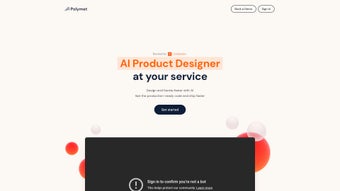

Download Polymet – AI‑Powered Rapid Product Design Tool, Free & Secure
Overview
Polymet is a cutting‑edge, AI‑driven web application that transforms vague product ideas into polished prototypes and production‑ready code at lightning speed. Built for designers, developers, product managers, and even non‑technical stakeholders, Polymet bridges the gap between concept and implementation by letting users describe desired outcomes in plain language or simply upload reference images. The platform’s intelligent engine then generates high‑fidelity interface designs, offers instant visual previews, and produces clean React code that can be directly integrated into existing projects. By automating repetitive design‑to‑code tasks, Polymet dramatically shortens development cycles, reduces hand‑off friction, and frees creative teams to focus on strategic problem‑solving rather than manual UI construction.
Beyond its core AI capabilities, Polymet embraces collaboration. Users can share functional prototypes via secure links, gather feedback from teammates, and iterate in real time without leaving the browser. The tool also supports seamless integration with industry‑standard design environments such as Figma, allowing designers to import components or export Polymet‑generated assets back into their design system. For development teams with legacy codebases, Polymet can ingest existing components and suggest enhancements, ensuring that new ideas respect the architectural conventions already in place.
Polymet’s roadmap includes expanding language support beyond React to Vue, Svelte, and mobile frameworks like React Native, positioning the platform as a universal “design‑to‑code” hub. Whether you’re a solo founder sketching a MVP or a large enterprise looking to accelerate feature rollout, Polymet promises a secure, cloud‑based environment that keeps your data private while delivering rapid, production‑grade outputs. The service also adheres to strict GDPR and CCPA compliance, providing end‑to‑end encryption for all uploads and generated assets. In short, Polymet offers a free tier for early experimentation, a paid tier for unlimited usage, and an enterprise tier with on‑premise deployment options for the most security‑conscious organizations.
With its intuitive interface, robust AI engine, and deep integrations, Polymet is quickly becoming a go‑to solution for teams that need to move from idea to interactive prototype without the traditional bottlenecks of manual design and hand‑coded implementation. The combination of speed, accuracy, and collaborative features makes it an indispensable tool for modern product development pipelines.
Key Features & Capabilities
- AI‑Generated UI Designs: Describe a screen in natural language or upload an image; Polymet instantly creates responsive mockups.
- Production‑Ready React Code: One‑click export of clean, component‑based code that follows modern best practices.
- Figma Integration: Sync designs directly with Figma files, import components, and push updates back to your design system.
- Iterative Refinement: Real‑time previews let you tweak layouts, colors, and interactions without re‑starting the generation process.
- Collaboration Links: Share functional prototypes with stakeholders via secure URLs, collect comments, and merge feedback instantly.
- Codebase Compatibility: Upload existing React components; Polymet suggests enhancements and ensures new designs align with your code standards.
- Future Framework Support: Planned export for Vue, Svelte, and React Native, expanding the tool’s utility across web and mobile.
- Version History & Rollback: Automatic saving of each iteration, allowing you to revert to previous designs with a single click.
- Secure Cloud Architecture: End‑to‑end encryption for uploaded assets and generated code, complying with GDPR and CCPA standards.
- Customizable Design Tokens: Adjust typography, color palettes, and spacing globally to match brand guidelines.
Each feature is built to reduce friction in the product development pipeline. For example, the AI‑generated UI designs eliminate the need for manual wireframing, while the production‑ready React export cuts down on front‑end development time by up to 70 %. The collaboration links empower product managers and marketers to validate concepts without waiting for a developer to spin up a sandbox environment. Moreover, the version history feature ensures that teams can experiment fearlessly, knowing that any misstep can be undone instantly.
Polymet also shines in its extensibility. By exposing design tokens and allowing custom component libraries, the tool can be adapted to any corporate design system, ensuring consistency across multiple products. This flexibility, combined with a roadmap that embraces additional frameworks, makes Polymet a future‑proof investment for organizations aiming to stay ahead in the fast‑moving digital market. The platform’s ability to ingest existing code and suggest improvements means that it can be introduced into mature codebases without causing disruption, fostering a smooth transition toward AI‑assisted design workflows.
Finally, the security model deserves special mention. All data transfers use TLS 1.3, and assets are encrypted at rest using AES‑256. Enterprise customers can opt for dedicated VPC isolation or on‑premise deployment, giving them full control over data residency while still benefiting from Polymet’s AI capabilities. In practice, this translates to a tool that not only speeds up development but also aligns with the strict security and compliance requirements of regulated industries.
Installation, Usage & Compatibility
Getting Started – No Download Required
Polymet is a fully cloud‑based SaaS solution, which means there is no traditional installer or heavyweight client to download. To begin, simply visit www.polymet.com, create a free account, and verify your email. The onboarding wizard walks you through setting up your first project, choosing a workspace, and linking external tools such as Figma or your Git repository. Because the entire application runs in the browser, you can start prototyping within minutes, even on a low‑spec laptop.
Step‑by‑Step Workflow
- Project Creation: Click “New Project,” name it, and select the target framework (currently React).
- Input Your Idea: Choose between text description (e.g., “a dashboard showing real‑time sales metrics”) or image upload (sketch or screenshot).
- AI Generation: Polymet’s engine processes the input, producing a set of design mockups and the corresponding React component files.
- Preview & Refine: Use the built‑in preview pane to interact with the prototype. Adjust layout, color, or component hierarchy using the side‑panel controls.
- Export Code: Once satisfied, click “Export” to download a ZIP file or push directly to your connected GitHub/Bitbucket repository.
- Collaborate: Generate a shareable link, set permission levels (view, comment, edit), and invite teammates for feedback.
- Iterate & Version: Each change creates a new version in the history log, allowing you to revert or branch as needed.
Operating System Support
Polymet runs entirely in the browser, making it compatible with any modern operating system that supports Chrome, Edge, Firefox, or Safari. Whether you’re on Windows 10/11, macOS Monterey or later, Linux distributions, or even a Chrome OS device, you can access the full feature set without installing additional software.
System Requirements & Security
The platform requires a stable internet connection and a minimum screen resolution of 1280 × 720 for optimal layout editing. All data transfers are encrypted via TLS 1.3, and stored assets are encrypted at rest using AES‑256. Enterprise plans include Single Sign‑On (SAML 2.0), role‑based access control, and optional on‑premise deployment for highly regulated sectors. The free tier imposes a monthly credit limit of 10 AI‑generated prototypes, while paid tiers unlock unlimited generations, priority processing, and advanced framework exports.
Performance Tips
To maximize speed, keep image uploads under 5 MB and use descriptive, concise text prompts. Complex multi‑screen projects may benefit from breaking the workflow into smaller modules, each exported separately and later combined in your codebase. Leveraging Polymet’s API (available for paid plans) can further automate batch generation and integrate AI‑driven design directly into CI/CD pipelines.
Pros, Cons, FAQ & Final Verdict
Pros
- Rapid conversion of ideas to functional prototypes.
- Zero‑install, browser‑based access across all major OS platforms.
- Native React code export reduces front‑end development effort.
- Deep Figma integration streamlines design hand‑off.
- Collaboration links simplify stakeholder feedback cycles.
- Version history safeguards against accidental loss.
- Secure cloud infrastructure meets GDPR/CCPA standards.
- Free tier available for small teams and early testing.
- API access for automation in paid plans.
- Scalable enterprise options with on‑premise deployment.
Cons
- Currently limited to React; Vue/Svelte/React Native support is still in beta.
- Advanced custom component logic may require manual tweaking after export.
- High‑resolution image uploads can increase processing time.
- Free tier imposes a cap on monthly generation credits.
- Learning curve for non‑technical users unfamiliar with AI prompts.
- Enterprise on‑premise deployment adds additional cost and setup complexity.
FAQ
Is Polymet really free to use?
Polymet offers a free tier that includes 10 AI‑generated prototypes per month, which is ideal for freelancers or small teams testing the concept. Paid plans unlock unlimited generation, priority support, and advanced features like Vue export.
Can I export code to a repository other than GitHub?
Yes. Polymet supports GitHub, GitLab, Bitbucket, and also provides a direct ZIP download for manual integration into any repository of your choice.
How does Polymet handle design system consistency?
You can upload your design tokens (colors, typography, spacing) and Polymet will automatically apply them to generated prototypes. This ensures that every AI‑created screen adheres to your brand guidelines.
Is there an on‑premise version for highly regulated industries?
Enterprise customers can request a self‑hosted deployment that runs behind their firewall, offering full control over data residency and compliance requirements.
What kind of support is available for new users?
All users receive access to a knowledge base, video tutorials, and community forum. Paid plans include live chat support and a dedicated account manager for onboarding assistance.
Can I integrate Polymet with my CI/CD pipeline?
Yes. The paid plans provide an API that can be called from build scripts to generate UI components automatically, enabling fully automated design‑to‑code workflows.
Final Verdict
Polymet stands out as a powerful ally for anyone looking to accelerate product design and bring ideas to market faster. By marrying AI‑driven visual generation with clean, production‑ready React code, it eliminates the tedious back‑and‑forth that traditionally plagues design‑to‑development hand‑offs. Its browser‑based nature ensures universal accessibility, while deep integrations with Figma and version control systems keep teams synchronized. Although the current focus on React may limit early adopters who favor other frameworks, the roadmap’s promise of Vue, Svelte, and mobile exports, combined with robust security and enterprise options, makes Polymet a forward‑looking solution worth serious consideration.
For startups and small teams, the free tier provides a risk‑free entry point, and for larger organizations the enterprise offering adds the compliance and data‑control features required in regulated markets. The combination of speed, collaboration, and security makes Polymet an essential component of a modern, agile development process.
Conclusion
In summary, Polymet provides a seamless, secure, and free‑to‑try environment that empowers teams to move from concept sketches to functional, code‑ready prototypes in minutes rather than weeks. Its AI engine, comprehensive feature set, and commitment to data privacy make it a standout choice for both budding startups and large enterprises. By adopting Polymet, organizations can reduce development costs, improve time‑to‑market, and maintain consistent design standards across all products. Ready to experience the future of rapid product design? Start your free account today and see how quickly you can turn an idea into a fully interactive, secure prototype.



.png)