Image
(G Smedley)

Master Mechanic Geoff Smedley made a pretty fine part-time photographer while fettling racing cars for the likes of John and Gavin Youl.

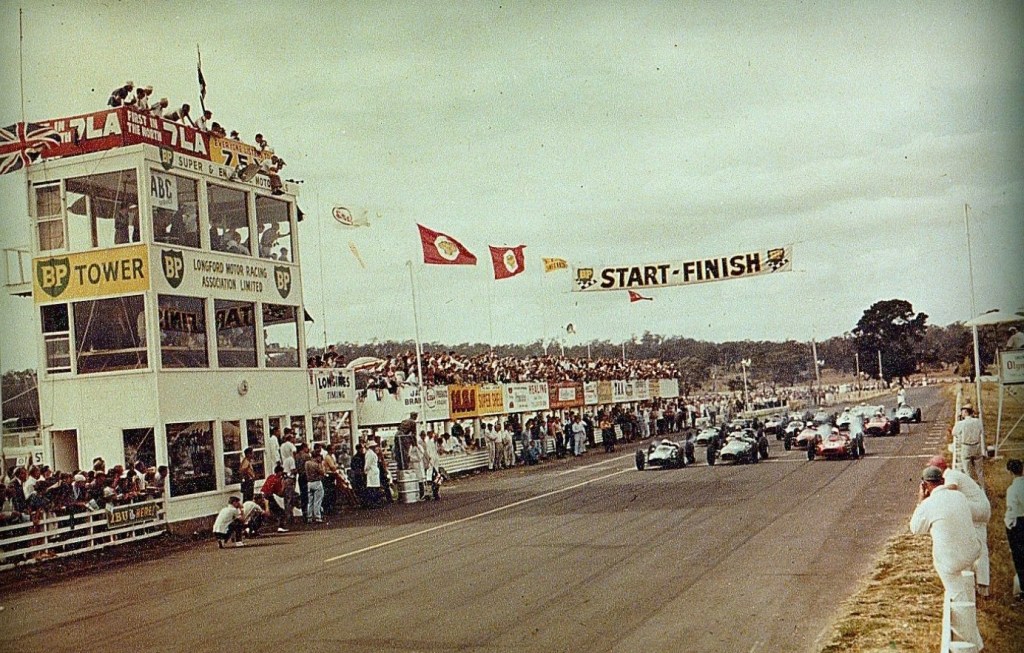
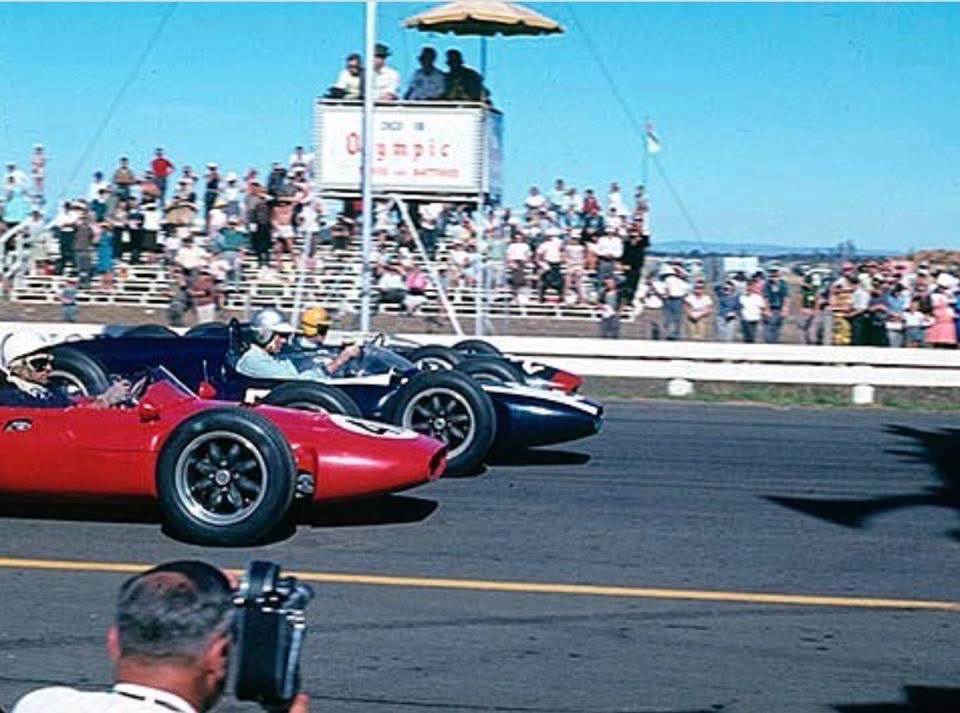
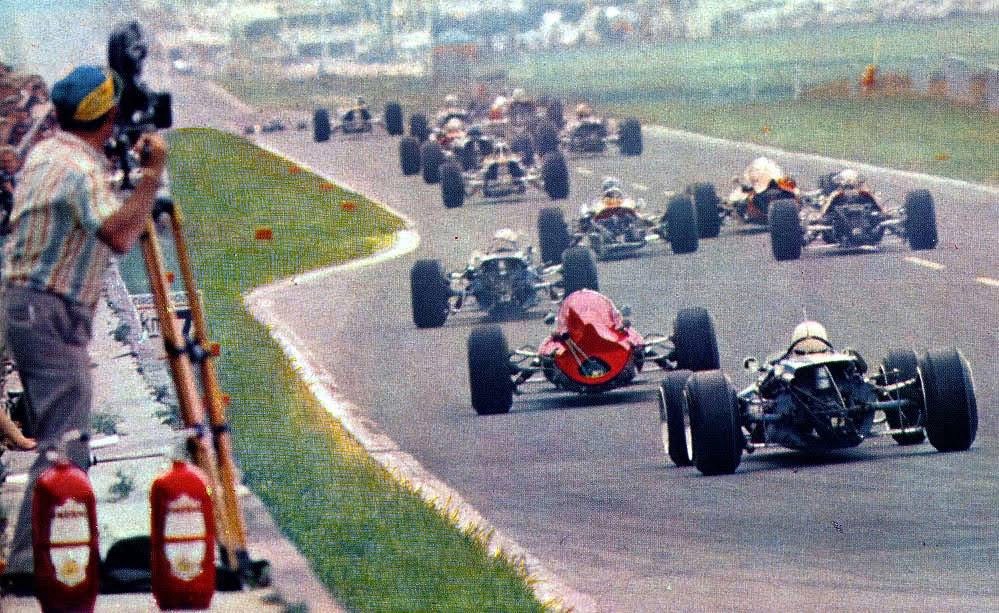
The 1963 South Pacific Championship has just got underway at Longford on March 4. Bruce McLaren is on pole in his Cooper T62 Climax at left with Bib Stillwell’s new Brabham BT4 Climax in the middle and Lex Davison’s Cooper T53 Climax on the right.

McLaren won the race comfortably from Bib Stillwell after Bruce’s dice with Jack Brabham’s leading BT4 Climax 2.7 ended with engine failure on lap 14 John Youl was third in his Cooper T55
Image
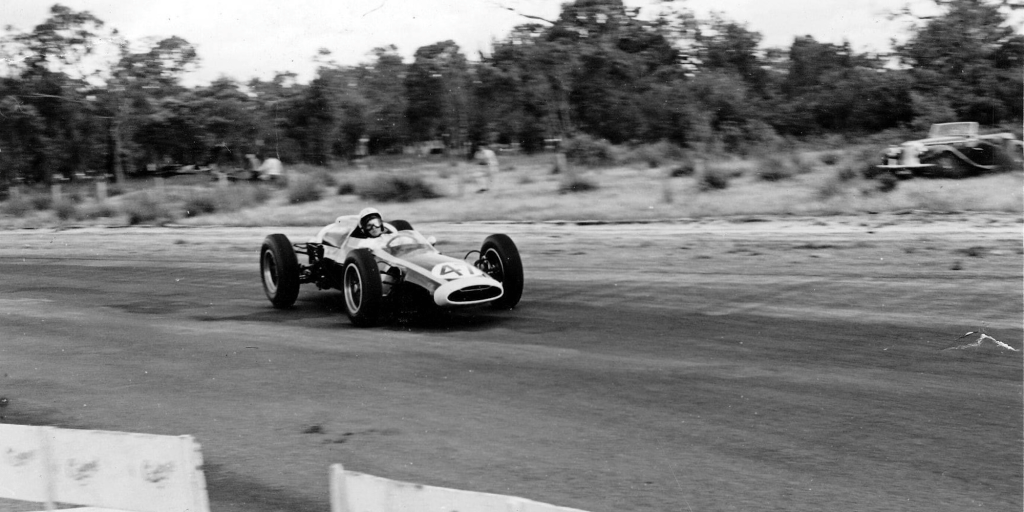
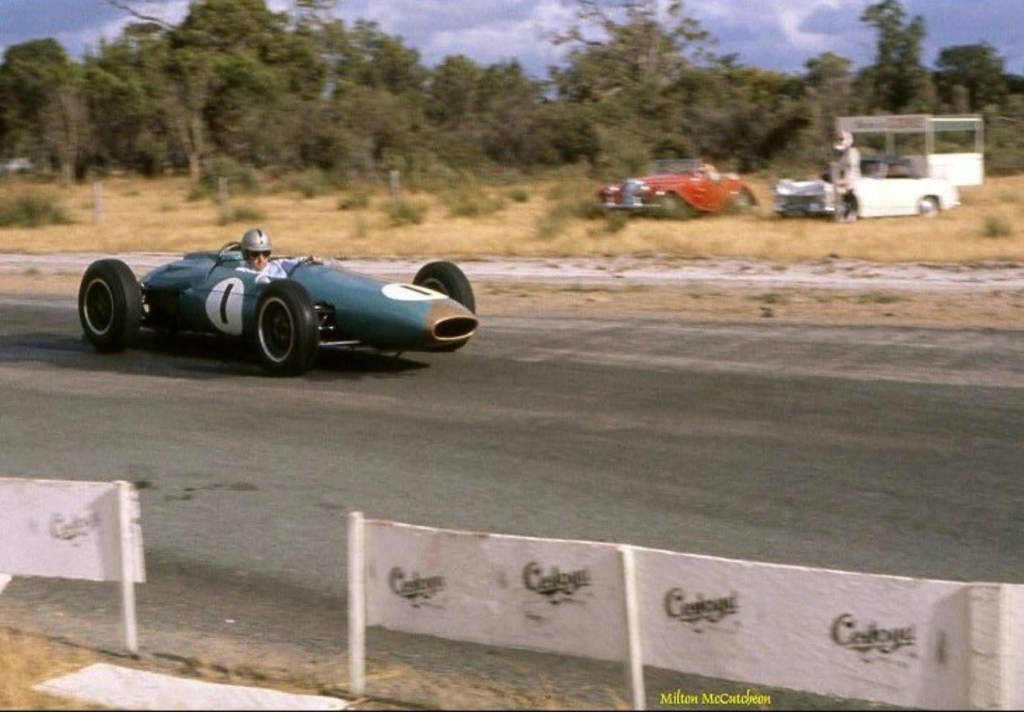
Bruce McLaren on his way to winning the 1962 Australian GP, Caversham, Western Australia, Cooper T62 Climax (K Devine)
Image
Jack Brabham debuts the BT4 Climax, Caversham AGP, November 1962. BT4 #IC-1-62 was the first in a long line of very successful, profitable ‘Intercontinental’ Brabhams from Ron Tauranac

Context…

The Cooper vs Brabham Australasian summer was set during the 1962 Australian Grand Prix, November 18 weekend at Caversham, outside Perth, when McLaren’s new Cooper T62 Climax and Jack Brabham’s equally new Brabham BT4 Climax faced off for the first time. A fantastic dice between Bruce and Jack that day was resolved in McLaren’s favour after a passing he-zigged-when-I-zagged manoeuvre between Brabham and Arnold Glass’s BRM P48 Buick V8 went awry.

Both machines were inspired by their Coventry Climax FWMV 1.5-litre V8-powered Grand Prix siblings: the Cooper T60 and Brabham BT3. By the time the eight-race Tasman Circus travelled to Warwick Farm, round five, the weight of numbers favoured Jack Brabham and Ron Tauranac’s Motor Racing Developments business with BT4s in the hands of Brabham, David McKay, who had bought Jack’s ’62 AGP car’, and Bib Stillwell, who had acquired a newie.
Image
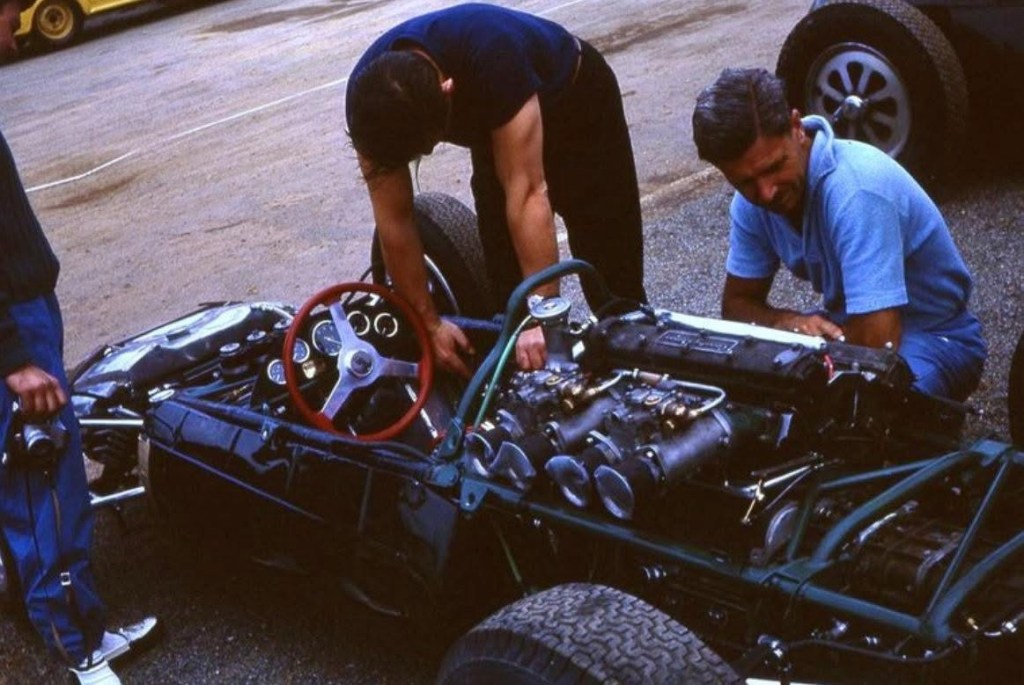
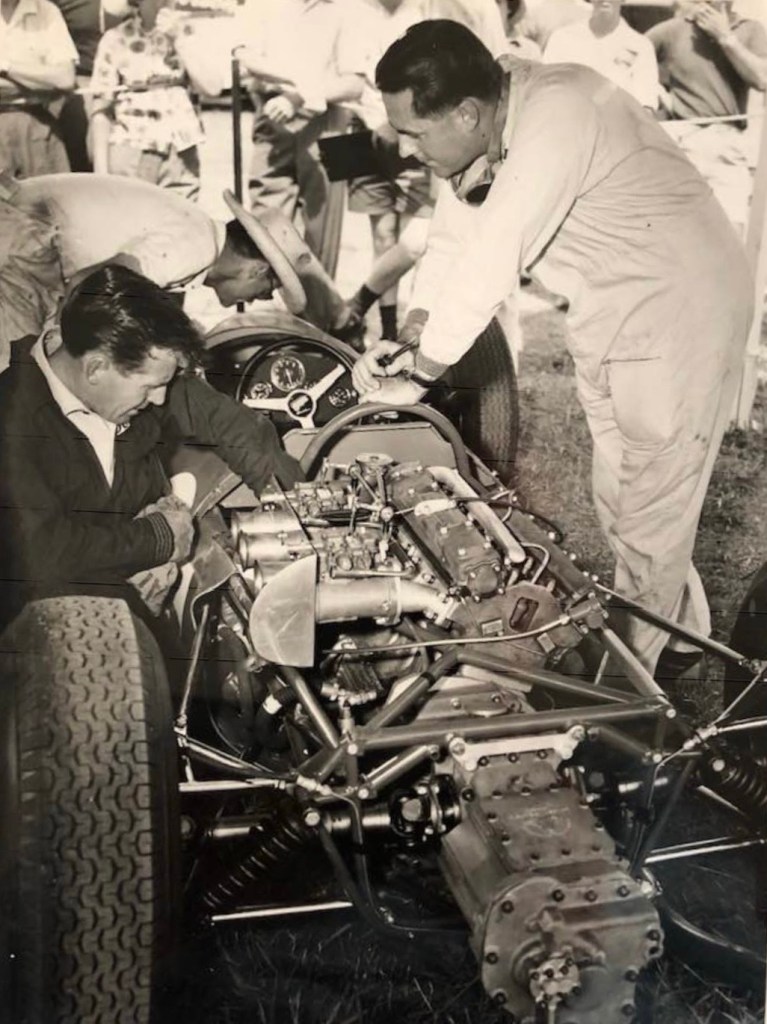
McLaren and the business end of his Cooper T62 FPF, Caversham 1962, with David McKay, Cooper racer/writer/later Scuderia Veloce supremo, showing more than cursory interest in the car given his pending car update considerations (T Walker)
Image
BT4 Tim Wall, Jack Brabham and Repco Indy 2.7 in the Sandown paddock. By then, Repco’s Michael Gasking was preparing Jack’s Tasman FPFs, and Repco was or were soon to be the Australian importer/distributor of Coventry Climax spares (Repco)

Bruce won two of the four Kiwi rounds at Wigram and Teretonga with his Cooper T62, while John Surtees won the NZ GP at Ardmore in an ex-F1 Lola Mk4A Climax 2.7, with Jack taking a Levin win in his BT4.

The additional power and torque from 2.7-litre Coventry Climax FPF Indy four-cylinder engines were causing a great deal of driveline stress to gearboxes, clutches and driveshafts.

At Warwick Farm, Brabham won in his new BT4-IC-2-62 from Surtees’ Lola Mk4A, McLaren and McKay in his first race of the ex-Jack BT4-IC-1-62 with Stilwell fifth in his new BT4-IC-1-63; all cars powered by Indy 2.7s.

At Lakeside on February 17, Surtees won from Graham Hill’s Ferguson P99 Climax 2.5 FPF and Stillwell. It was a great shame that the Ferguson went home at this point, we Victorians and Taswegians didn’t get to see it. McLaren spun and could’t restart while Jack was a no-show. It was an even greater shame the Fergy didn’t arrive in New Zealand with a pair of 2.7-litre FPFs…

Then Bruce won at Longford and at Sandown Park on March 10, so McLaren and Cooper won the 1963 Faux Tasman Cup. Jack was a DNF with engine failure with Tony Maggs in the other Bowmaker Racing Lola Mk4A Climax 2.7 second and McKay third.
Image
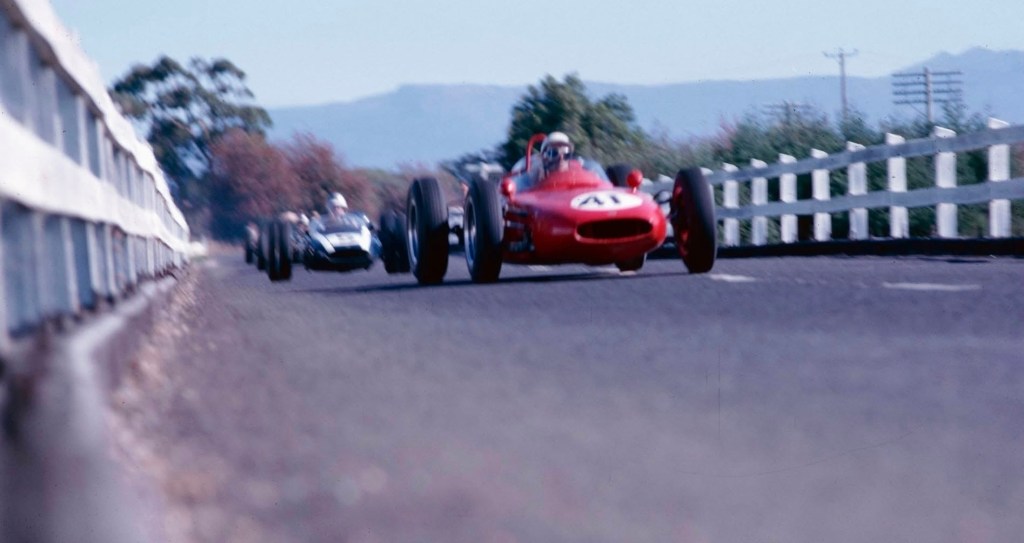
Lex Davison turns into the exit of Long Bridge, closely followed by John Youl, Coopers T53 and T55. Lin Gigney, the snapper of many of these shots, was a flaggie right here… (L Gigney)

Longford…

Down in the South Island Lex Davison was having a whale of a time in the Cooper T53 John Surtees used to win at Longford in 1962! He won both the Saturday 45-mile Formula Libre preliminaries, the first from Bib Stillwell and John Youl after Bruce McLaren retired from the leadership of the race with a broken universal joint.

The second Saturday race also fell to Melbourne’s famous cobbler, from Chris Amon, Cooper T53 Climax 2.5 and John Youl, Cooper T55 Climax 2.5. McLaren didn’t start this race; Brabham did, but then had carburettor problems during lap two that caused his retirement.

Image
Lex Davison, Ford Galaxie – what a massive bit of real estate! – from Ern Abbott Chrysler Valiant on Long Bridge (L Gigney)

On top of that, the staunch traditionalist continued his flirtation with touring cars, finishing second in the 45-mile Touring Cars Championship aboard Len Lukey’s Ford Galaxie behind Bob Jane’s then-dominant Jaguar Mk2 3.9, with Ern Abbott’s Chrysler Valiant 3.9 in third.

The Jag was timed at 142mph on The Flying Mile, the Galaxie did 141mph in an experience Davison told Autosport reporter FGN Ewence as ‘Like Driving a Haystack.’ Ewence wrote that ‘It came out of corners as though they were launching pads, but its braking and handling let it down.’
Image
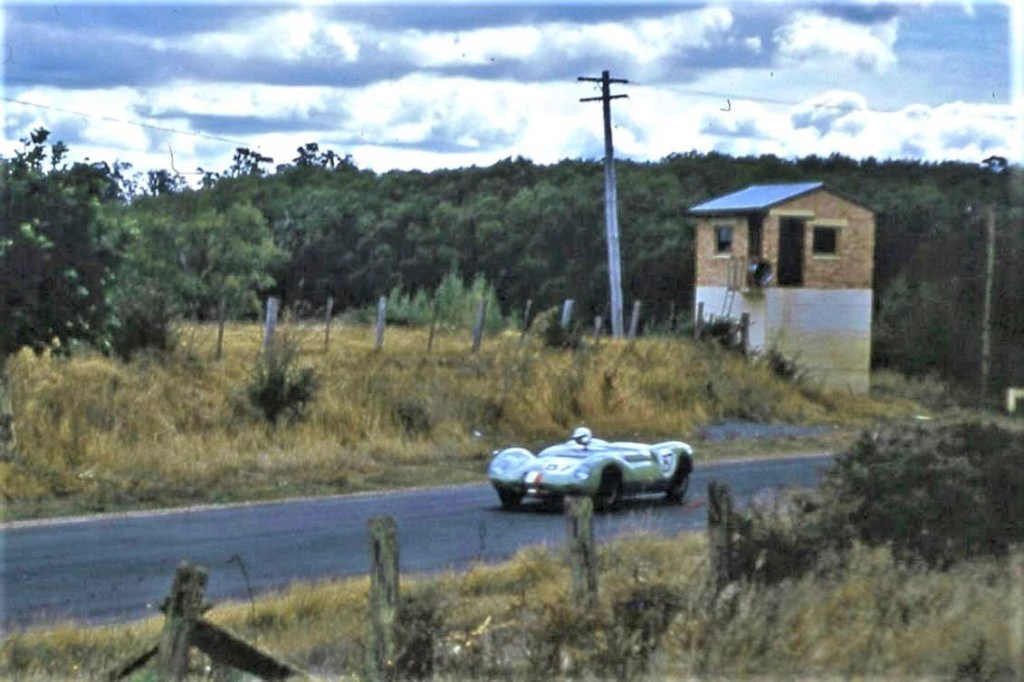
Frank Matich, Lotus 19 Climax, having just exited Kings Bridge and passed the irrigation water pumphouse (B Wright)

Bigger FPFs were fitted to Australian sports cars as well, notably Bib Stillwell’s Cooper T Monaco and Frank Matich’s Lotus 19, with FM winning the 45-mile Sports and GT Cars Championship from Stillwell and Bob Jane’s Jaguar E-Type.

Matich pushed his own lap record up to 108mph and was chuffed enough about the pace of his Lotus two-seater that he entered it in the Formula Libre feature.

Friday qualifying comprised two sessions, one in the morning and another in the afternoon. The quicks were McLaren on 2:23.3, McKay 2:27.0, Davison on 2:27.3. Of Davo, Ewence recorded that ‘Alan Ashton, got the 2.7 Climax to its bellowing best, and his wider wishbones had improved the car’s stability, and he had the brakes to a pitch which enabled Davison to rush up on his opponents as they approached corners.

Youl did a 2:27.4. Ewence noted that John’s Cooper ‘was handling much better following extensive modifications to the suspension, including widening of the track.’ Geoff Smedley was the engineer/mechanic involved.
Image
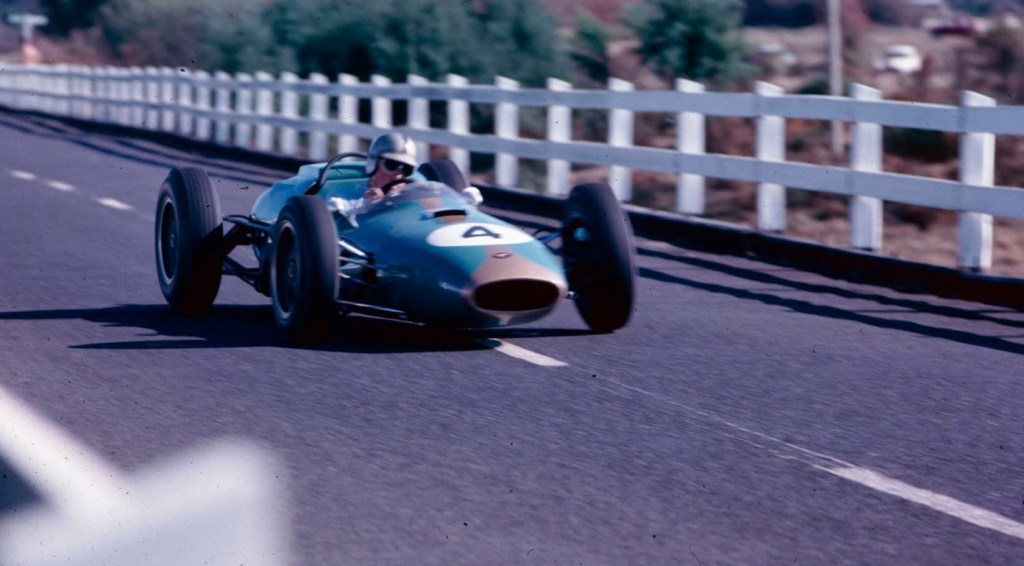
Jack Brabham lines up his BT4 for the very strong timber Long Bridge exit clipping point! (L Gigney)

Brabham didn’t arrive from London, then Sydney, and on to Launceston until after 11am on the Friday morning and then spent most of the day chasing engine problems. Refer to the Climax twin-plug note in Etcetera.

The top three grid slots from times recorded in Saturday’s two races noted above were McLaren, Stillwell and Davison. Then came Maggs, McKay and Brabham, then Youl, Chris Amon, Jim Palmer, and the rest. The only starters from this race still alive are, I believe, Bob Holden, who raced his 1.5-litre Lynx Peugeot Formula Junior from grid 15, and Jim Palmer.

The Race…

Raceday at Longford was always on the Monday Labour Day holiday. There was no racing on the Sunday, giving plenty of time for dramas to be sorted: Jack’s engine, McLaren’s uni and driveshaft, Gardner’s clutch, Magg’s engine mount, etc. Bruce McLaren noted in his March 15, 1963 ‘From The Cockpit’ Autosport column how busy Repco Launceston and Merv Gray’s engineering shop were over that weekend.
Image
(HRCCT)

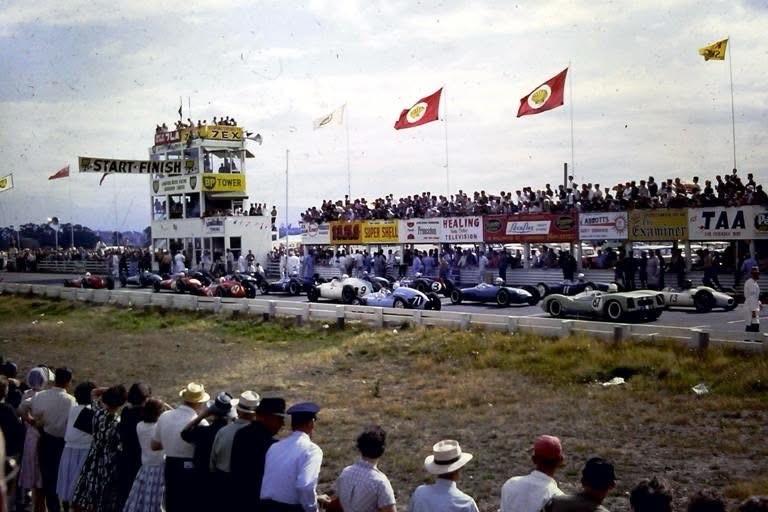
The rear of the grid (above) before the South Pacific Championship, showing #87 Frank Matich Lotus 19 Climax, #13 Bob Holden Lynx Peugeot 1.5, on the next row is Frank Gardner’s Brabham BT2 Ford FJ, which is sandwiched by Tony Shelley’s Lotus 18/21 Climax against the pits and Peter Boyd-Squires Cooper T45 Climax. The white #9 Cooper T51 is Bill Patterson, and alongside him is the #3 Cooper T53 of Jim Palmer. Then Chris Amon in the red Cooper T51 #14 with John Youl alongside, Cooper T55 Climax and an obscured Jack Brabham in his BT4. On the second row is David McKay’s Brabham BT4 Climax and an obscured Tony Maggs’ Lola Mk4 Climax with Davison, Stillwell and obscured McLaren up the front.
Image
(unattributed)

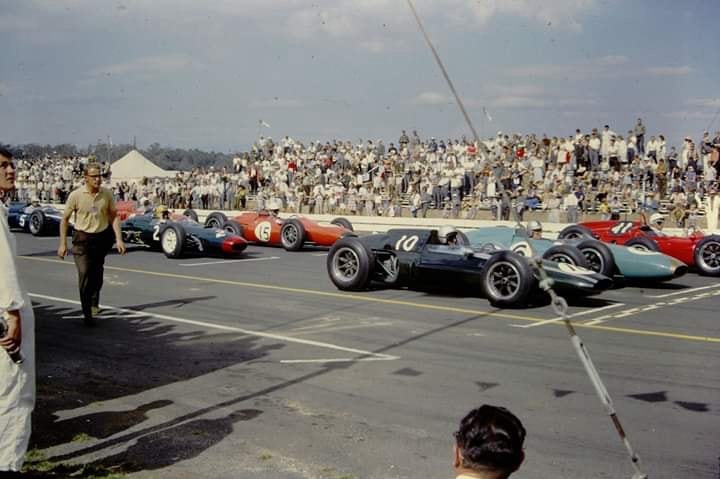
South Pacific Championship 3-2-3 grid, 14 starters, Longford, Monday, March 4, 1963.

Bruce McLaren Cooper T62 2.7, Bib Stillwell, Brabham BT4 2.7 and Lex Davison, Cooper T53 2.5, then on row two, Tony Maggs, Lola Mk4 2.7 and David McKay, Brabham BT4, on the third row, we can get a glimpse of Chris Amon’s Cooper T53 2.5 near the fence, and #5 John Youl’s Cooper T55 2.5 alongside.

All of the engines were Coventry Climax FPF, whether John Youl was using his Geoff Smedley-developed twin-plug, twin-Magneto 2.5, I don’t know.
Image
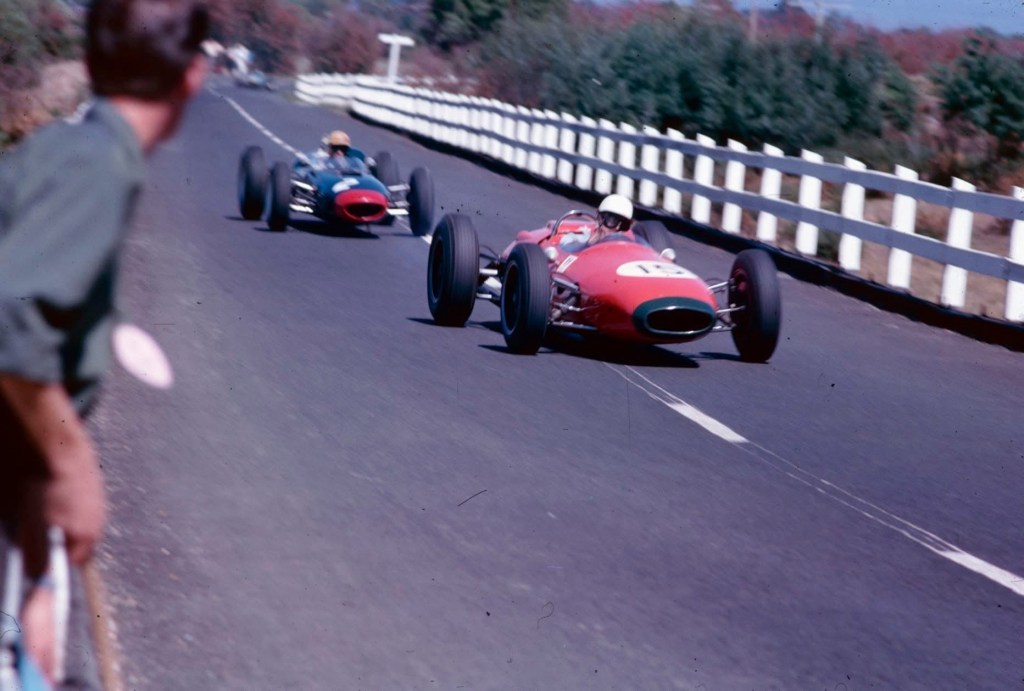
David McKay, Brabham BT4 from Tony Maggs, Lola Mk4, Long Bridge (L Gigney)

F.G.N Ewence reported that it was a great first lap for the Brabham marque with the three of them leading in line astern across Long Bridge. David McKay’s run was short-lived with leaking cylinder head sealing rings; he only compltetd the first lap.

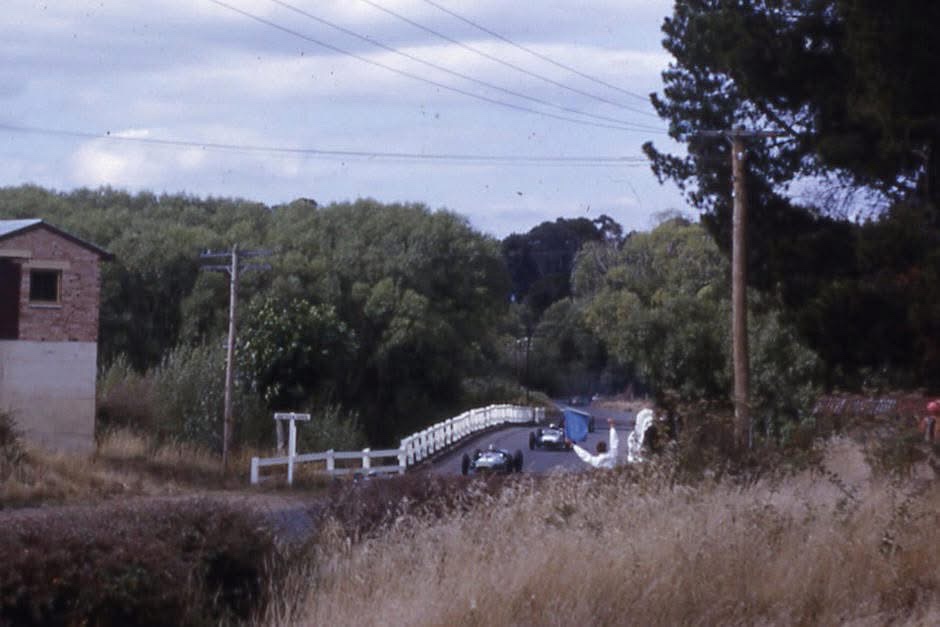
Brabham sat behind McLaren then he took the lead on lap 10, with Bib Stillwell third, but four laps later Jack’s run came to nought with the BT4 puffing plumes blue smoke of increasing volume on The Flying Mile, then through Mountford and into the pits. The ‘manifold leak’ caused a pit fire which was quickly extinguished with Jack leaving an oily calling card at Mountford that caused others some grief.
Image
Brabham from McLaren on Kings Bridge, circa laps 10-14. The Viaduct is some way behind them, beyond the trees, with Longford village in front (Bob Wright)

Bruce took the lead back, having done the fastest lap of the race at 114mph on lap 13 in pursuit of Jack. He then modulated his pace to keep ahead of Bib Stillwell and John Youl. Bill Patterson was fifth behind Jim Palmer’s Cooper T53, and Tony Maggs demonstrated his professionalism by bringing the Lola home sixth despite being liberally coated with engine oil that escaped from a crack in the chassis tube, which conveyed the slippery stuff to and from engine and radiator.
Image
(P Longley)

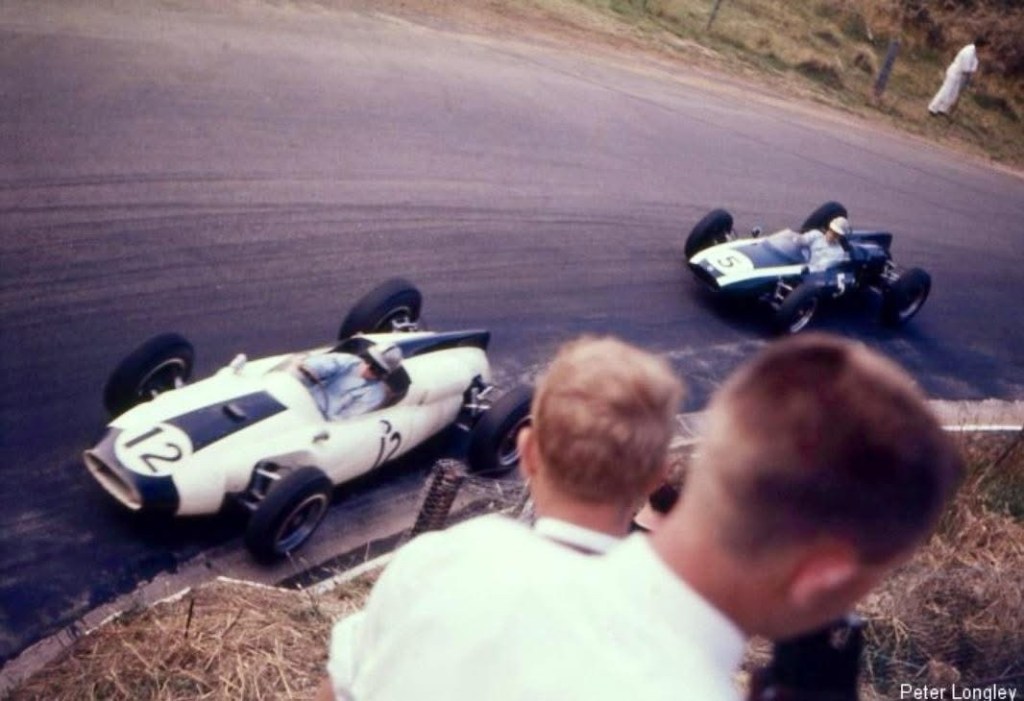
This scrap between Kiwi, Jim Palmer, Cooper T53 Climax and local boy, John Youl, Cooper T55 Climax was over third place, an argument resolved in Youl’s favour.

Palmer was a multiple Kiwi Gold Star Champion, a Tasman Cup perennial whose best placings were fourth in 1966, ex-Clark Lotus 32B Climax and equal fourth with Phil Hill in 1965, Brabham BT7A Climax. Youl was ‘one who got away’, the incredibly gifted driver was fourth in that old T55 in the ‘ 64 Tasman before taking up family farming responsibilities at their Symmons Plains property, not too far from Longford.
Image
(R Bell)

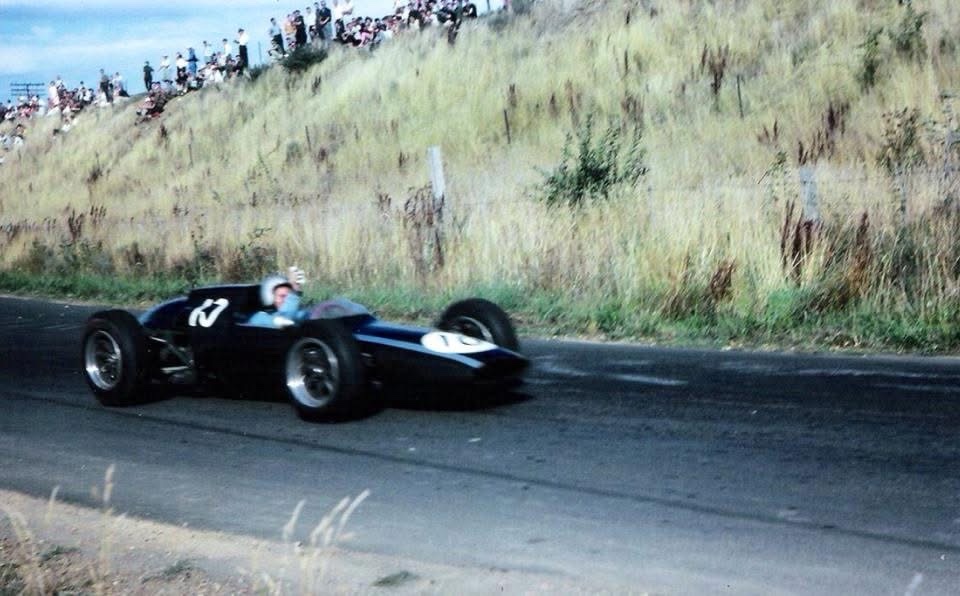
Bruce McLaren receives the plaudits of the Longford crowd from atop the Viaduct, he had a good summer in his Cooper T62 Climax, winning the 1963 Faux Tasman Cup, then came back in ‘64 and won the real one!

The views of experienced outsiders is always an interesting perspective. Here is Ewence’s race report Postscript in full.

‘Postscript: Despite the fact that the Longford Motor Association has no paid officials, it is limited by a lack of population. The whole State of Tasmania has only 350,000 inhabitants. To get 30,000 of them to a meeting is equivalent to an attendance of some four million at a British meeting! This makes the £20,000 budget something of a nightmare for the L.M.R.A. The two previous years’ operations had resulted in losses after necessary capital expenditure was met. This year, the hats went in the air when Treasurer Geoff Hudson’s casting of accounts revealed a small profit. Longford will be on again next year, and State Premier Reece seemed so upset about an interruption caused by a passenger train at the level crossing in Longford township that those on the inside believe that the trains will be very strictly controlled in the future.’

Etcetera…
Image
(oldracephotos.com)

The start of one of the 45-lap preliminaries with Lex Davison on this side, then John Youl, and Tony Maggs in the yellow helmet. Davo won them both.

Image
(Andrew Lamont)
Image
(W ‘i anson)

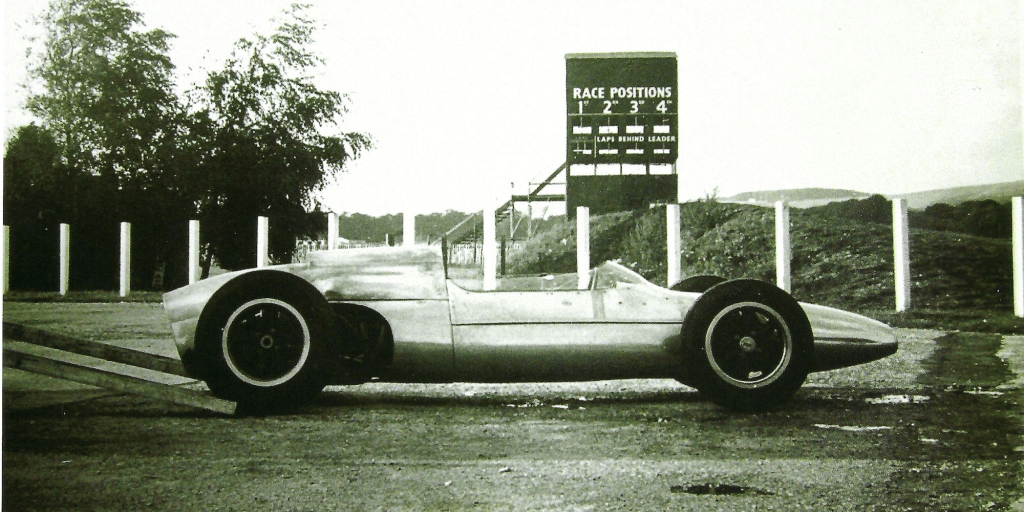
Bruce McLaren’s unpainted Cooper T62 Climax at Goodwood for a test session on September 26, 1962 not long before the car was shipped to Fremantle, Western Australia for the 1962 Australian GP at Caversham.

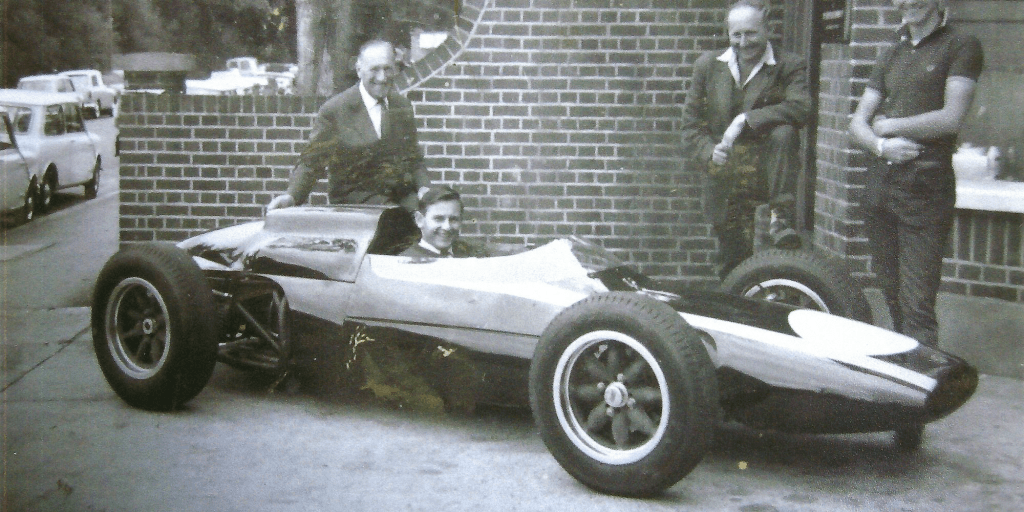
McLaren’s T62 – #CTA/BM/2 – was built on Cooper’s T60 1961-63 jig by Tommy Atkins’ team at his Chessington workshop. Harry Pearce and Wally Willmott were the artisans who built the car. The rear was designed to take a BRM P56 1.5-litre F1 V8; Bruce planned to contest the non-championship F1 races that Coopers chose to ignore. When that engine ran late, Atkins and McLaren decided to convert the car to Climax Tasman spec, gearbox, and a Colotti T32 five-speed.
Image
Tommy Aktins, Harry Pearce, partially beheaded Wally Willmott and completed T62 at Coopers in Hollyfield Rd, Surbiton (W i’ anson))
Image
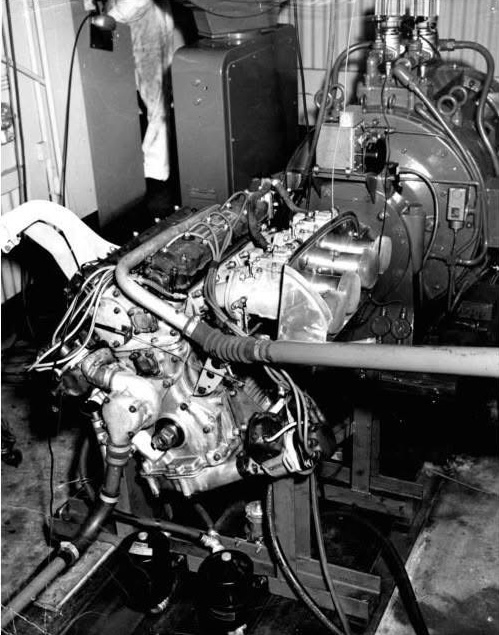
Geoff Smedley’s Coventry Climax 2.5 FPF twin-plug on the Repco Research dyno in November 1963 (G Smedley)

Bruce McLaren (Eoin Young ghosting Bruce) wrote in ‘From The Cockpit’, ‘Brabham’s car was the centre of interest, sporting an 8-plug head. This was a very impressive looking set-up, but it must have been firing the right plug at the wrong time or the wrong plug at the right time, because he had a lot of trouble getting it to run right.’

‘That was Friday. The Saturday morning practice was kind to most of us except poor Jack again. The Brabham was smoking a lot more than a young car should, and he had to rush back to Launceston to take the engine out and fit his spare 2.7 Climax for the races in the afternoon..

Those with a keen memory may recall that Geoff Smedley developed a race-winning 2.5-litre Coventry Climax twin-plug in Tasmania for John Youl. That engine, with the necessary sparks provided by twin-magnetos, was first raced by Youl fitted to his winning Cooper T55 in the October 14 1963, Gold Star round at Mallala. The engine was then used in the ’64 Tasman, in which Youl finished fourth in that ageing Cooper behind Bruce’s new Cooper T70, Brabham’s new BT7A and Hulme’s year old BT4. Youl and Smedley’s was a mighty effort!

I recorded Geoff Smedley’s twin-plug story here:https://primotipo.com/2017/11/16/geoff-smedleys-twin-plug-coventry-climax-2-5-fpf/

In it, Geoff recalled that ‘Frank Hallam at Repco Research had been playing around with a twin-plug head for one of Brabham’s engines, using two distributors driven from the rear of each cam bank and couldn’t make it work through an inaccurate spark which was put down to windup in the camshafts in the high rev range.’

So it seems the Repco FPF twin-plug was tested over the Longford ’63 weekend. I wonder whether Jack tried it elsewhere? Does anybody know what became of that pair of twin-plug heads?

Credits…

Geoff Smedley, Bob Wright via Kay Wright, Andrew ‘Slim’ Lamont Collection, Historic Racing Car Club Tasmania, Ray Bell, Terry Walker, Ken Devine, Repco. The detail in this article is via Paul Cummin’s archive, specifically F.G.N Ewence meeting report and Bruce McLaren’s ‘From The Cockpit’ column published in Autosport, March 15, 1963, Willian i’anson Ltd, Geoff Smedley, Stephen Dalton

Tailpiece…
Image
(E French)

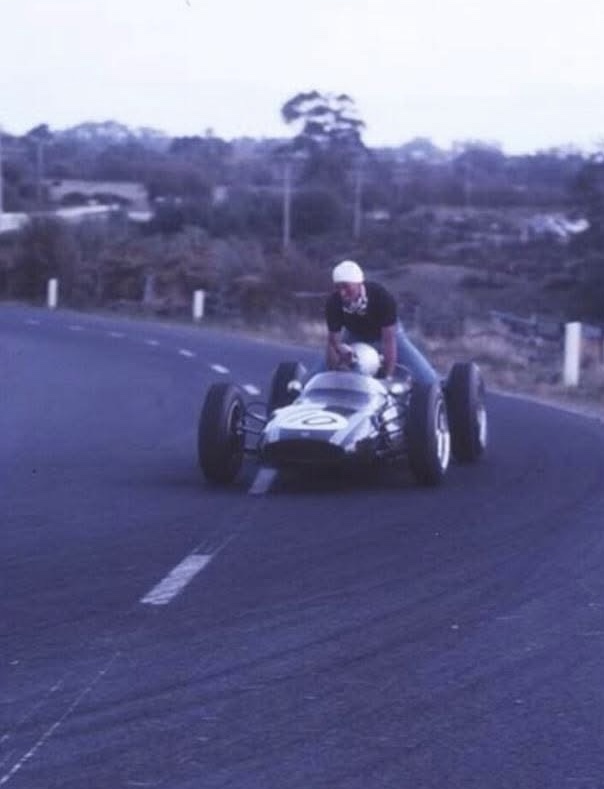
One of the men of the weekend, Lex Davison, had gear-selector problems on his sixth lap with his Cooper T53 and is shown bumming a ride from Bruce McLaren, who is just starting the Newry ascent. Ewence reported that Davo ‘Broke down near the pub, where last year he had so spectacularly lost his first 2.7 Cooper in a 130 m.p.h skid. “Why hello, Mr Davison, back again?’ remarked the landlord’s wife as he entered the portals.’

Davo famously wore his cloth helmet under his real one throughout his career. Lex turned 40 on February 12, 1963, and was still mighty fast indeed!

Finito…
Image

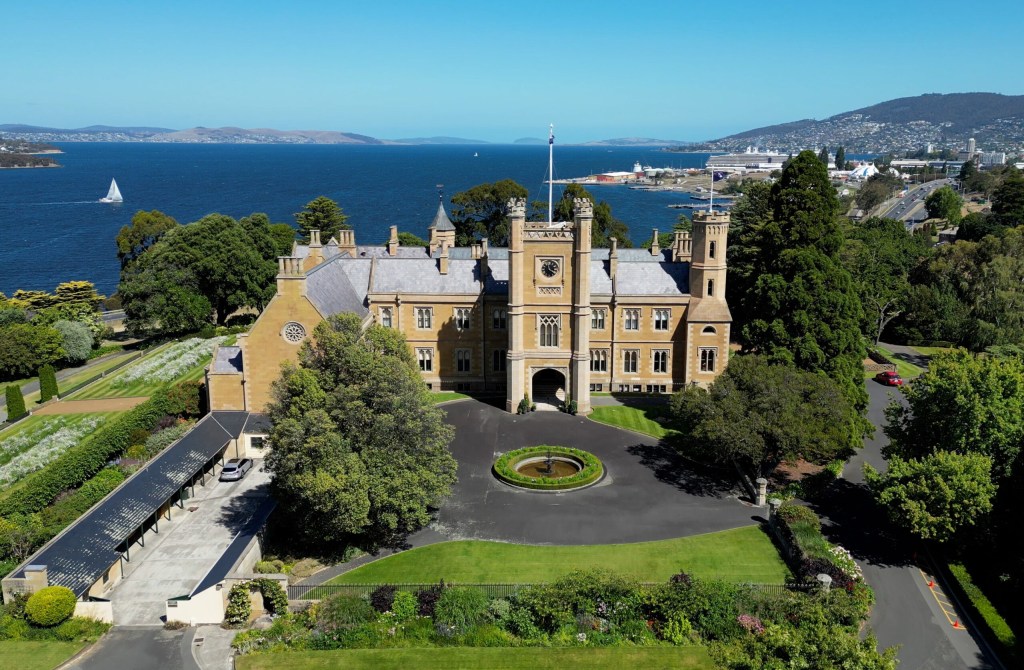
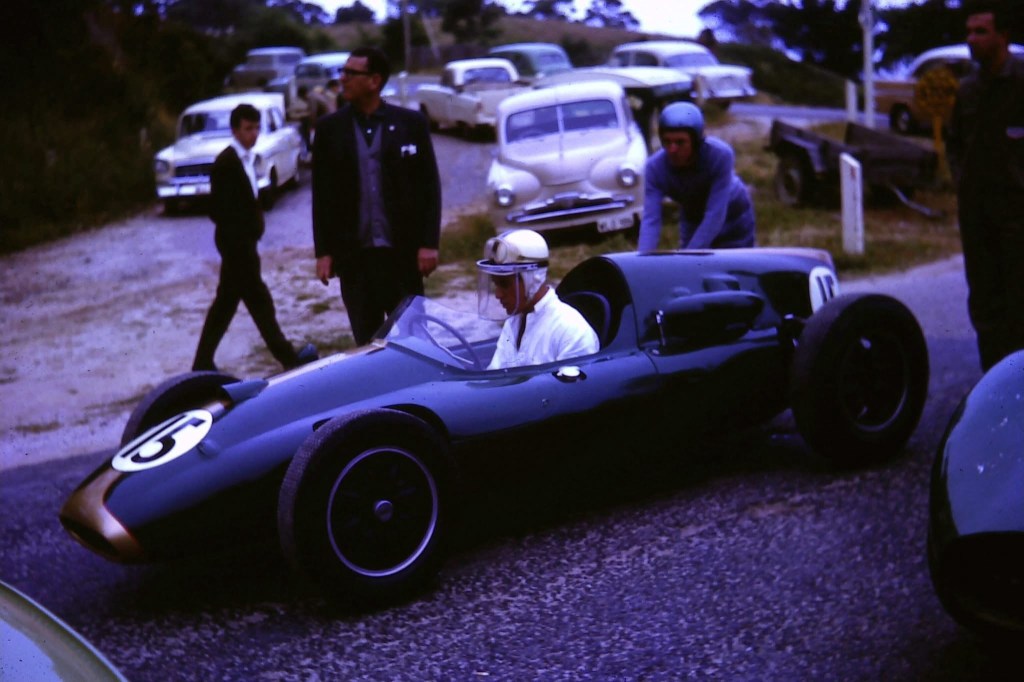
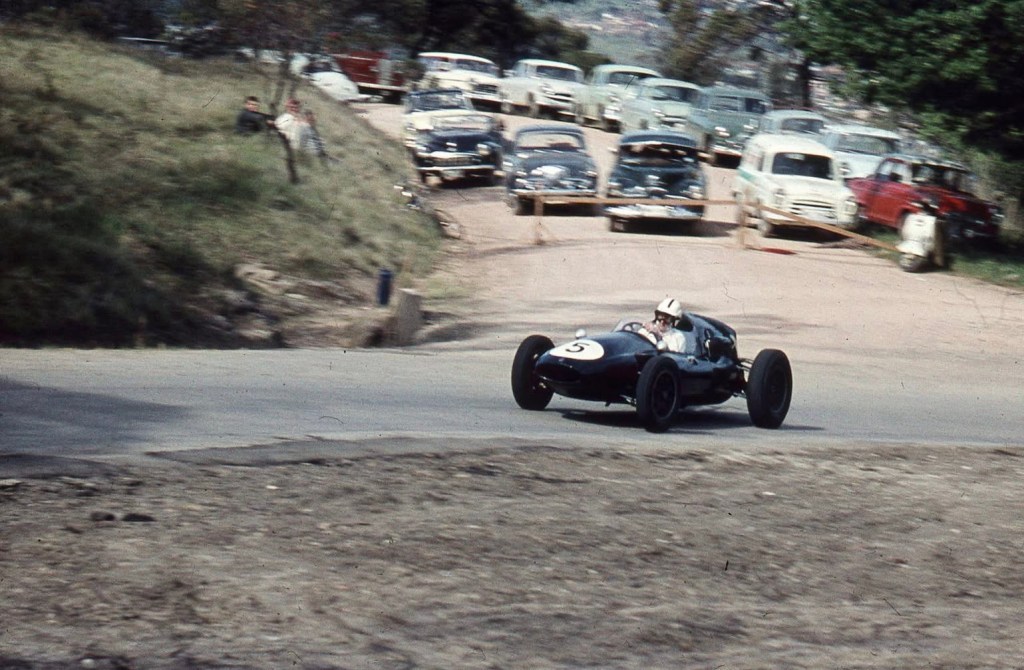
David Sternberg corrects a delicate slide in his Cooper T51 Climax at the Queens Domain hillclimb, Hobart, Tasmania, early 1960s. Date folks? As the name suggests, the locale contains the Governor’s Tasmanian pad.

I wrote about Lex and David Sternberg and this T51 a while back, see here:https://primotipo.com/2025/08/12/double-trouble/

Its a magnificent shot, photographer unknown, of a short-lived venue in central Hobart that was used from circa-1955-65. A modern event is held there. The climb was well regarded enough to hold the November 14, 1959, Australian Hillclimb Championship, which was won by the legendary Bruce Walton in his Walton Cooper.

Image
Government House within the Queens Domain. Where are the hillclimb roads? Good question (Australian Gardens)
Image
(G Brooks)

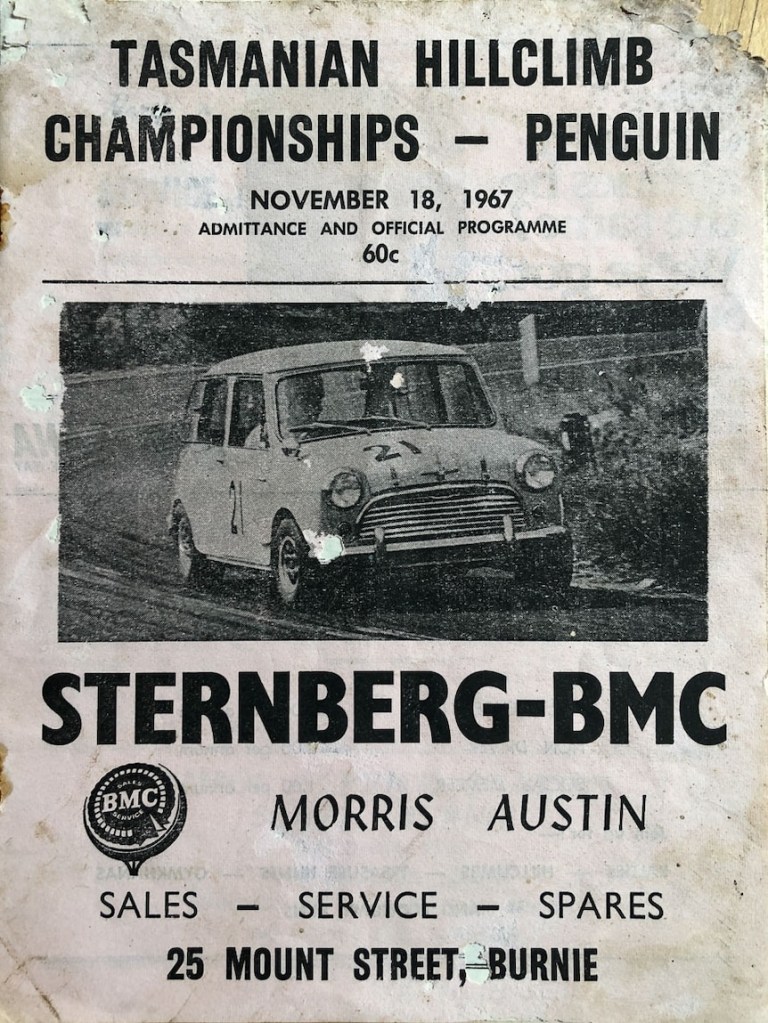
David Sternberg lines up the family Cooper at Penguin Hillclimb, on the island’s north coast at about the same time. That’s father Lex hanging onto the right rear.

Image

Credits…

Grant Brooks, Australian Gardens

Finito…
Image
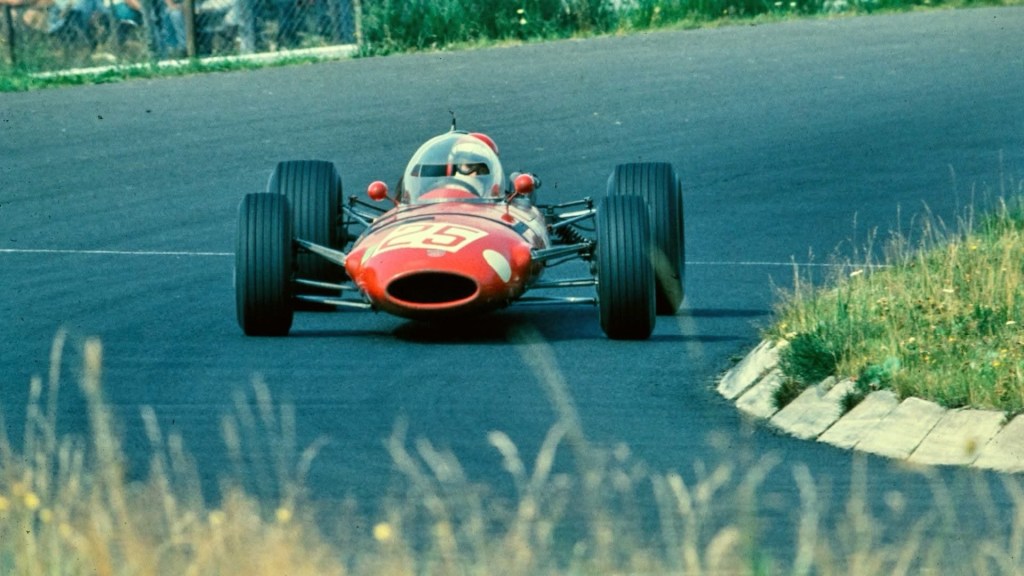
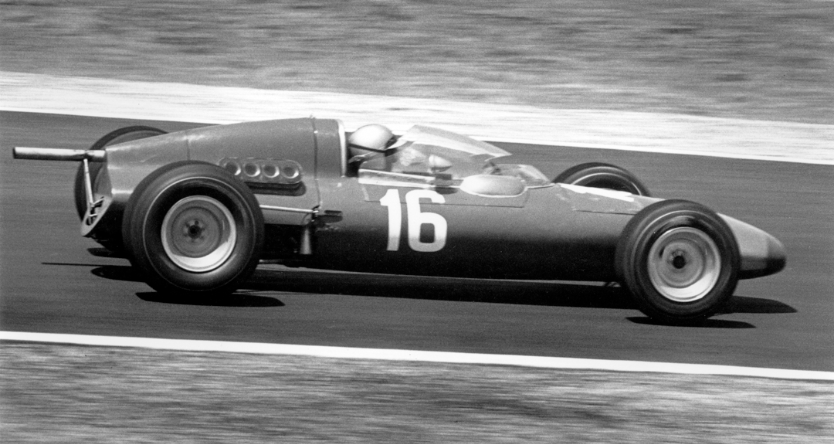
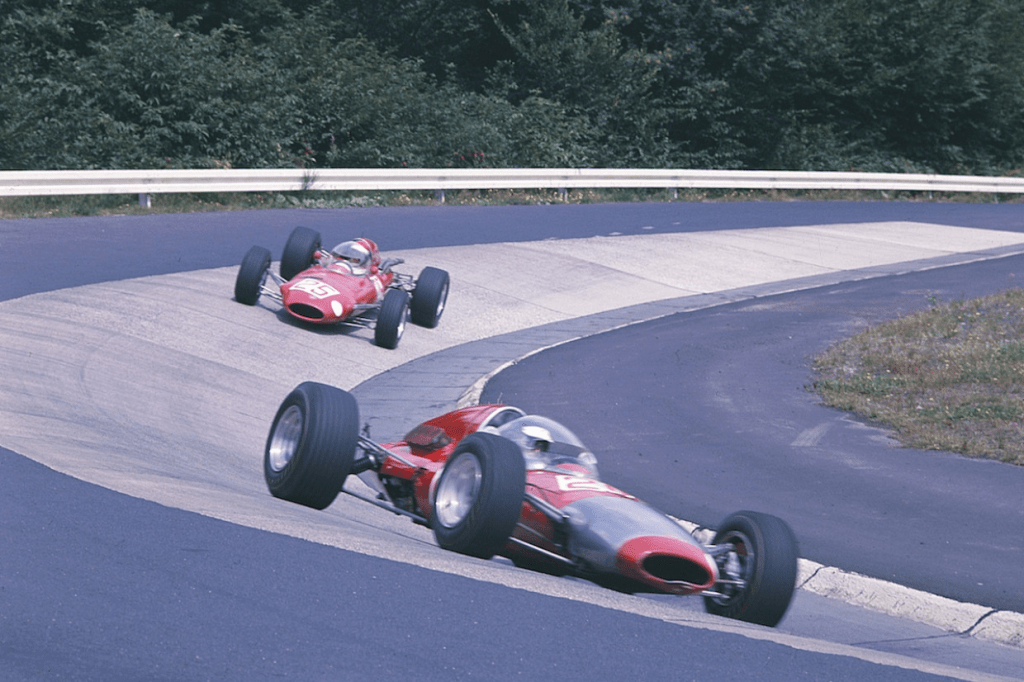
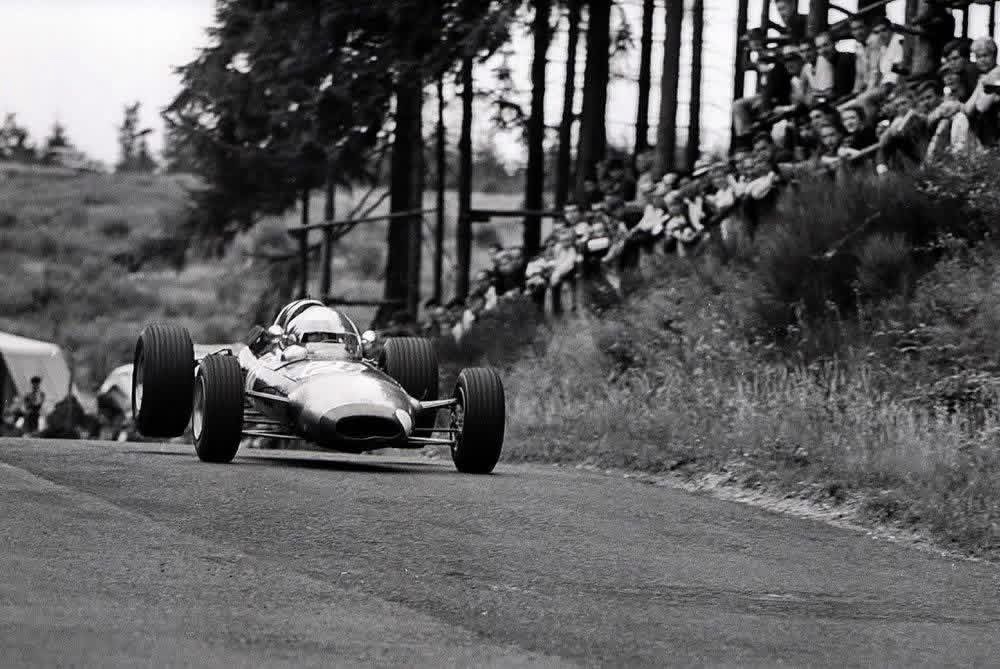
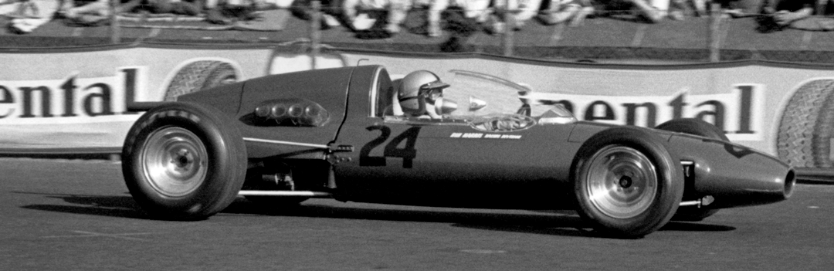
Sighting an apex, Brian Hart, Protos 16 Ford FVA, German Grand Prix, Nurburgring 1967

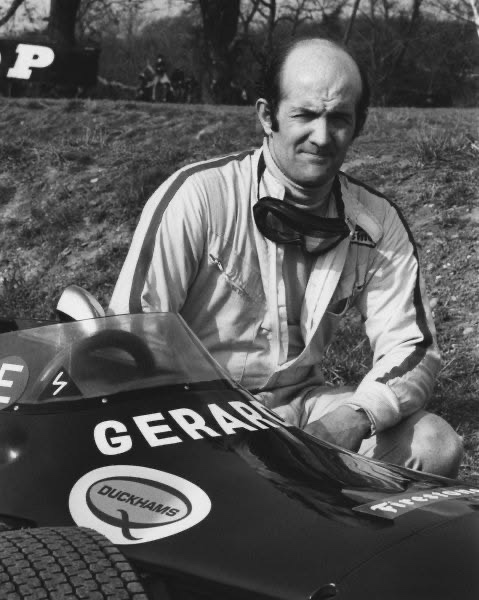
Brian Hart raced a Lotus F2 and F3 cars for Ron Harris in 1964-66 and was looking for opportunities in the 1.6-litre F2 that had been announced for commencement in 1967. He was after an Unfair Advantage as an innovative engineer.

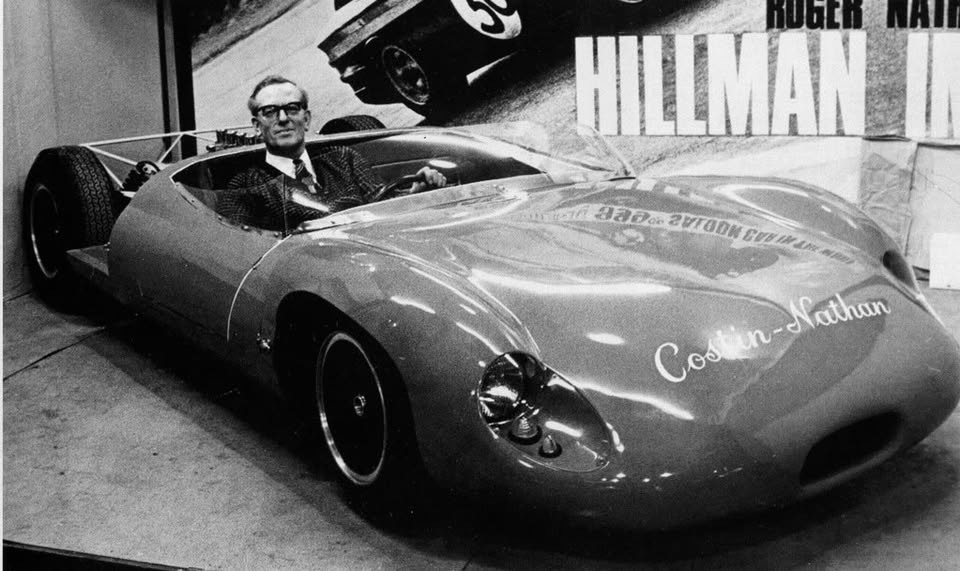
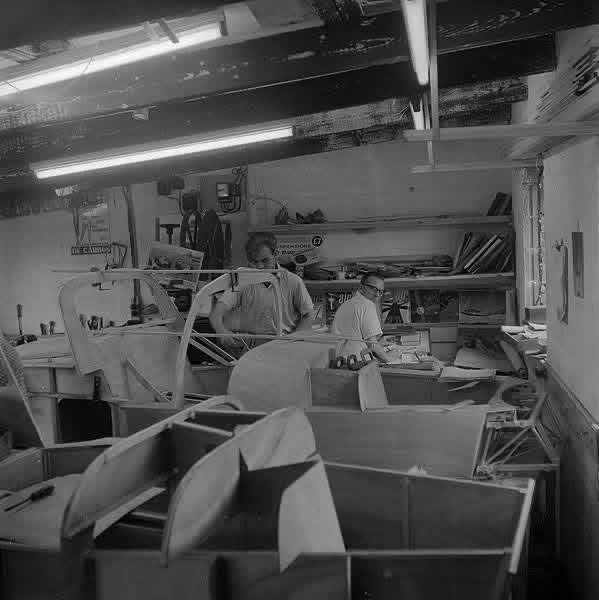
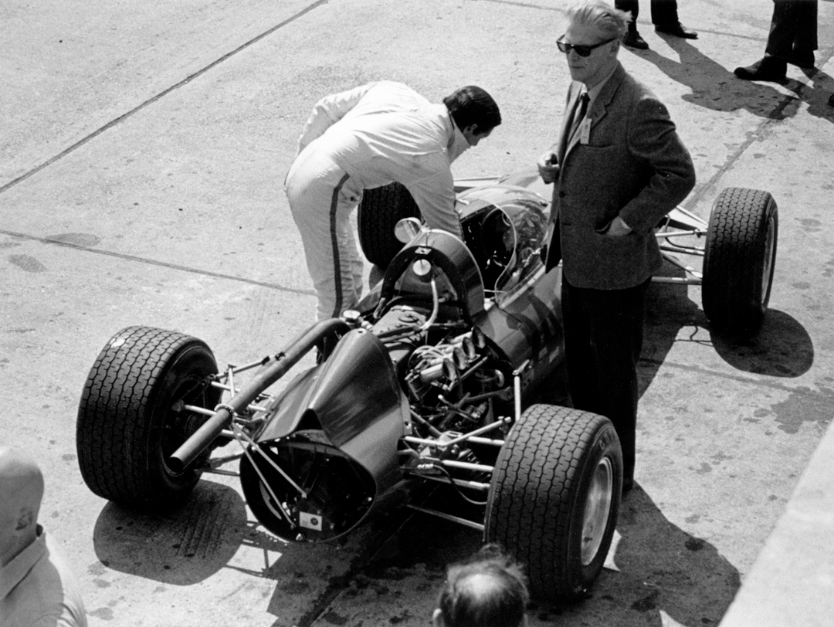
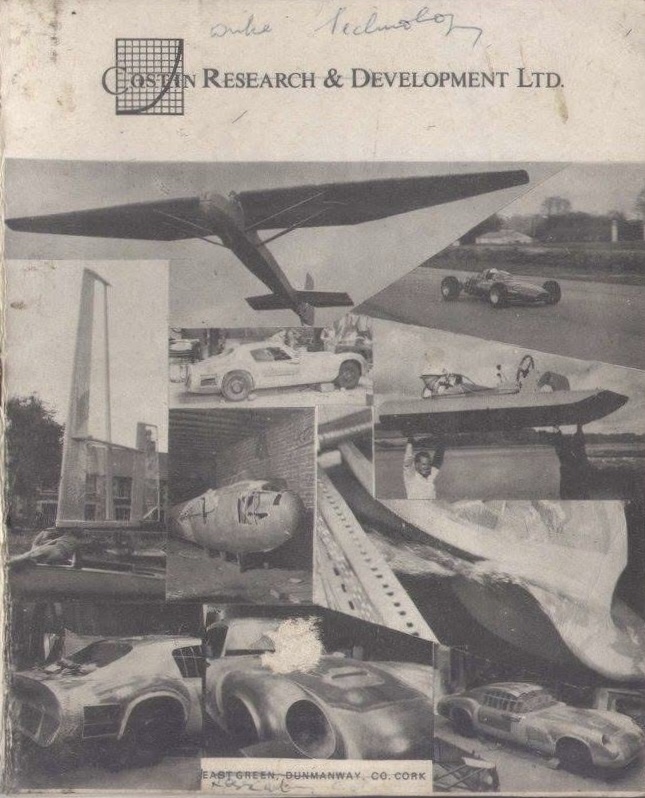
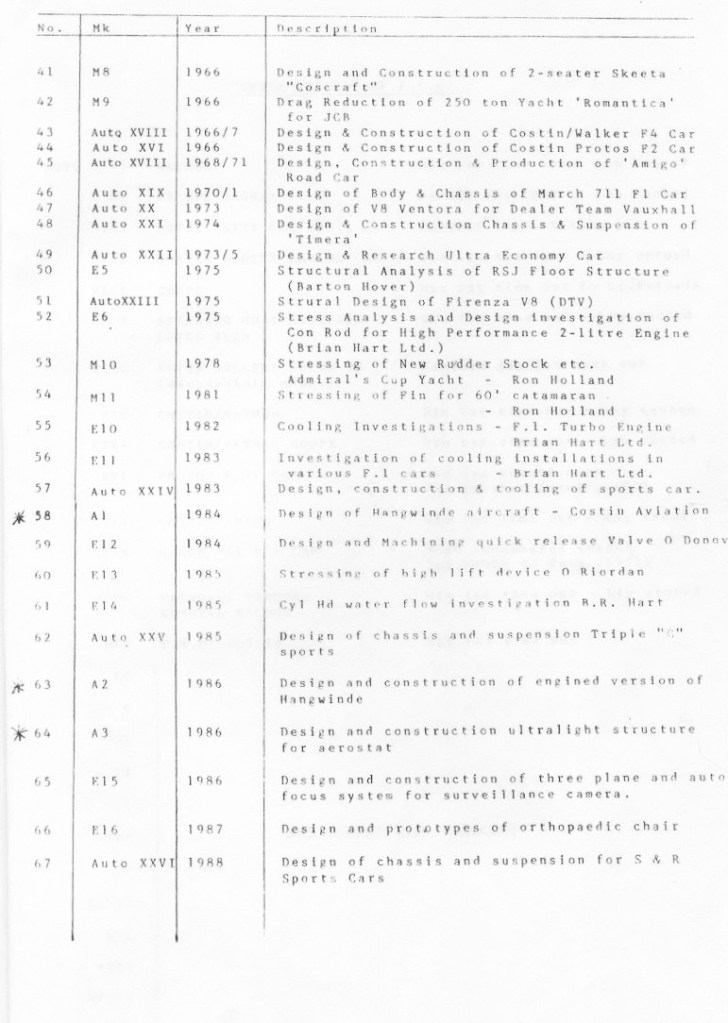
At the January 1966 London Racing Car Show, Hart sought out aerodynamicist/engineer Frank Costin – both were De Havilland Aircraft graduates – about the coming season. Costin was there to sell his new, very light Hillman Imp-powered wooden chassis Costin-Nathan sports car (below). Hart knew of Frank via his younger brother, Mike, who co-founded Cosworth Engineering together with Keith Duckworth, where Brian was an employee.

Image
Image
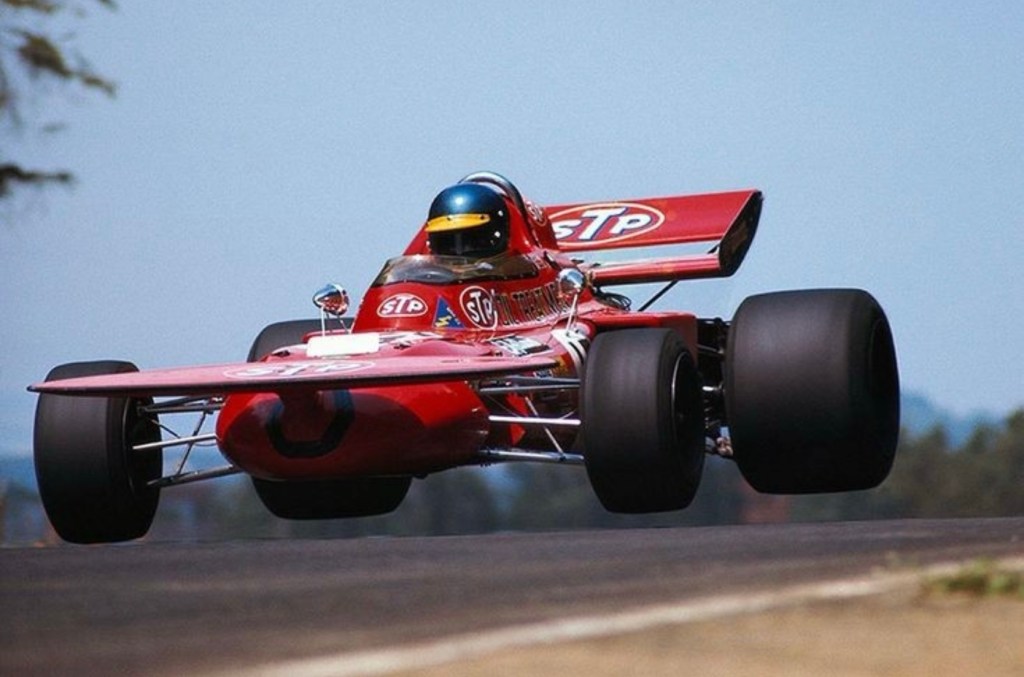
Ronnie Peterson, March 711 Ford, Nurburgring 1971 (R Schlegelmilch)

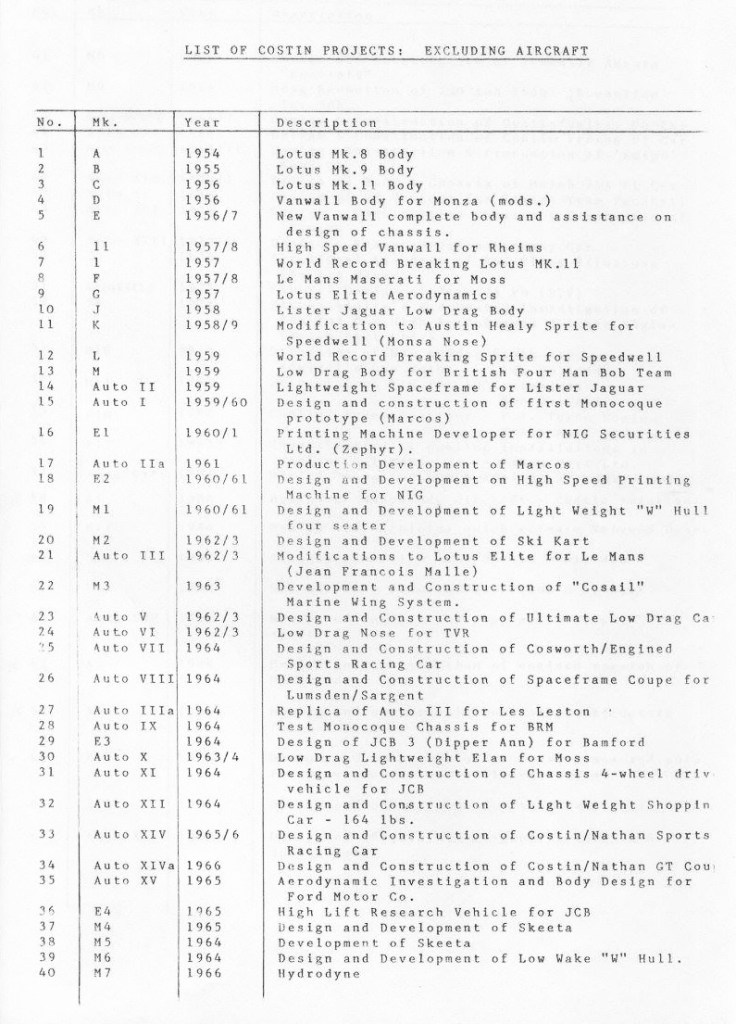
Earlier, Frank Costin had started Marcos with Jem Marsh. The first Marcos had a wooden chassis too, but Costin’s reputation came from 20 years in aviation, where he developed vast knowledge of the use of wooden structures and aerodynamic theory and practice, to wit, the De Havilland Mosquito

Post war Frank had been summoned by Mike to assist Colin Chapman on the Lotus Mk 8 sports car. Costin improved the car and worked on several more of Chapman’s designs, including Vanwall VW5, the 1958 F1 Manufacturers Championship (then called the International Cup) winning car.

Frank’s Grand Prix involvement extended to the body design of the March 711 Ford Ronnie Peterson drove to second place in the 1971 F1 Drivers World Championship.

Image
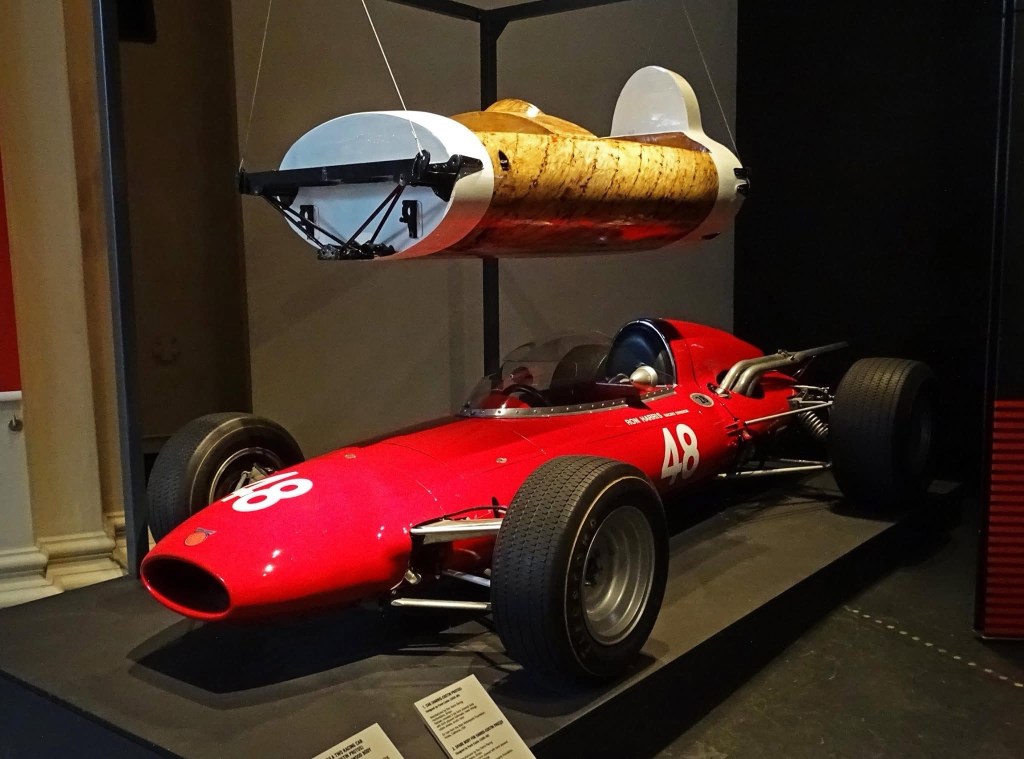
Protos 16 Ford FVA and spare monocoque on display in the Victoria and Albert Museum in 2017 (V & A Museum)

Protos Design and Construction…

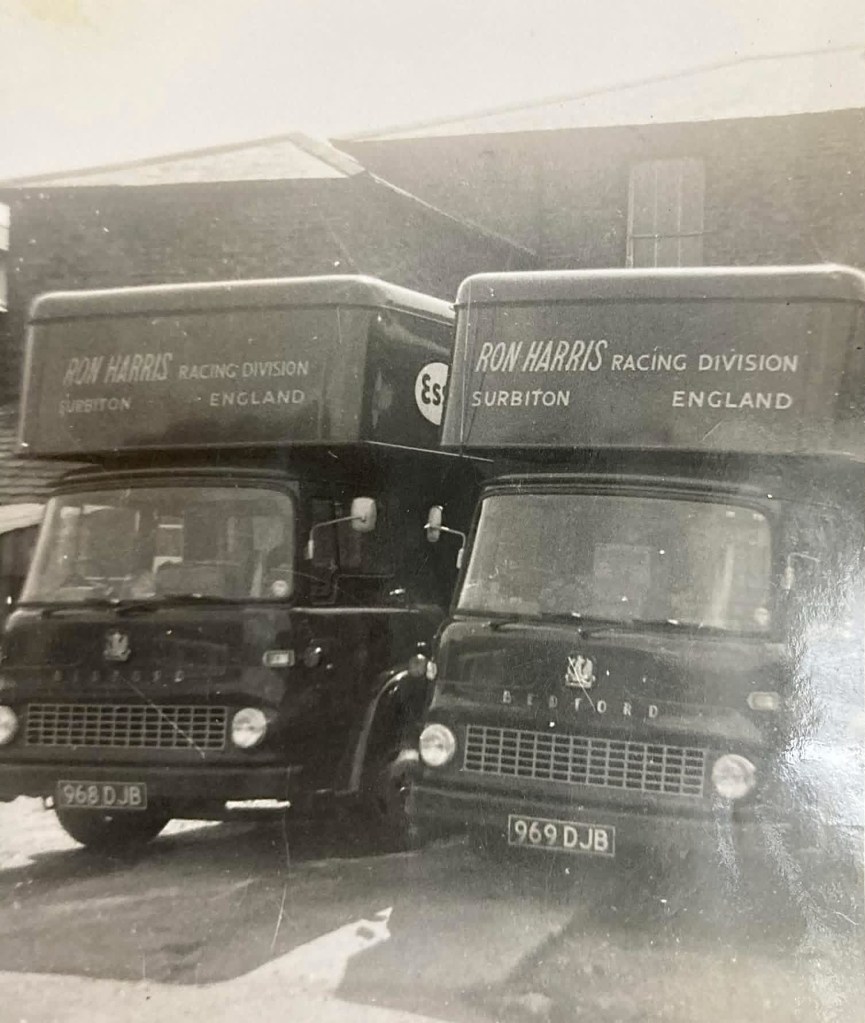
Ron Harris (24/12/1905-18/9/1975), hailed from Maidenhead, Surrey, and was a motorcycle racer/dealer who made his name on Manx Nortons and other machines from the early 1930s until the war. Post conflict, he was involved in film distribution, the cash flow from that business initially funded his return to motorsport, the Ron Harris Racing Division, which ran a pair of Lotus 20 Ford FJs in 1961 (John Turner/Mike Ledbrook).

Success with them attracted Lola’s Eric Broadley’s attention in 1962 (John Fenning/John Rhodes in Lola Mk5s) and the Team Lotus F2 machines from 1963 – Lotus 35/44 – where the driving roster included Peter Revson, Brian Hart, Peter Arundell, Francisco Godia, Piers Courage, Picko Troberg, Eric Offenstadt, Jackie Stewart, Jim Clark etc.

Harris’ Lotus gig came to an end in 1966; it was time to become a manufacturer in 1967!

Image
Ron Harris, Jim Clark and Mike Spence with the works Ron Harris Racing Division Lotus 35 Cosworth SCA. Gold Cup Oulton Park, September 18, 1965
Image
Frank Costin in Costin Research & Development’s first factory in North Wales (Wales Library)

Set in his ways, Costin built the prototype at his home in North Wales with Brian Hart doing the legwork, over 40,000 miles of fetch and carry of component purchase and sub-contracting between London and Wales in the early months of 1967. ‘Frank was a fascinating chap and spoke with such enthusiasm: he was adamant that he could build an F2 car way ahead of its time.’ Brian Hart told Paul Fearnley in a MotorSport 2009 interview.

There was huge excitement among drivers and racing car manufacturers for the new 1.6 F2 with monocoque designs, including the Matra MS5/7, McLaren M4A, and Lola T100, as well as spaceframes, with the dominant car of the year in a variety of hands, Ron Tauranac’s new, spaceframe Brabham BT23.

What became the ubiquitous engine/gearbox combination for the duration of 1967-71 1.6-litre F2, was the Ford Cosworth circa 220bhp @ 9000rpm twin-cam, four-valve, Lucas injected four, and the Hewland FT200 five-speed transaxle, was used by most. BMW, Alfa Romeo four-valve engines, the Ferrari Dino 166 and several others duly noted.

Into that environment of competitive activity, the Costin and Harris team – based in Maidenhead, Hertfordshire – designed and built two strong, light, aerodynamically advanced Protos 16 Ford FVA timber-skinned monocoques in 128 days.

Hart, ‘We were making everything apart from the engine and gearbox; there was no template like there was on a privateer Brabham.’

Image
Brian Hart with his Brabham BT30 Ford FVA at Mallory Park in 1970 (LAT)
Image
(L Ghys)

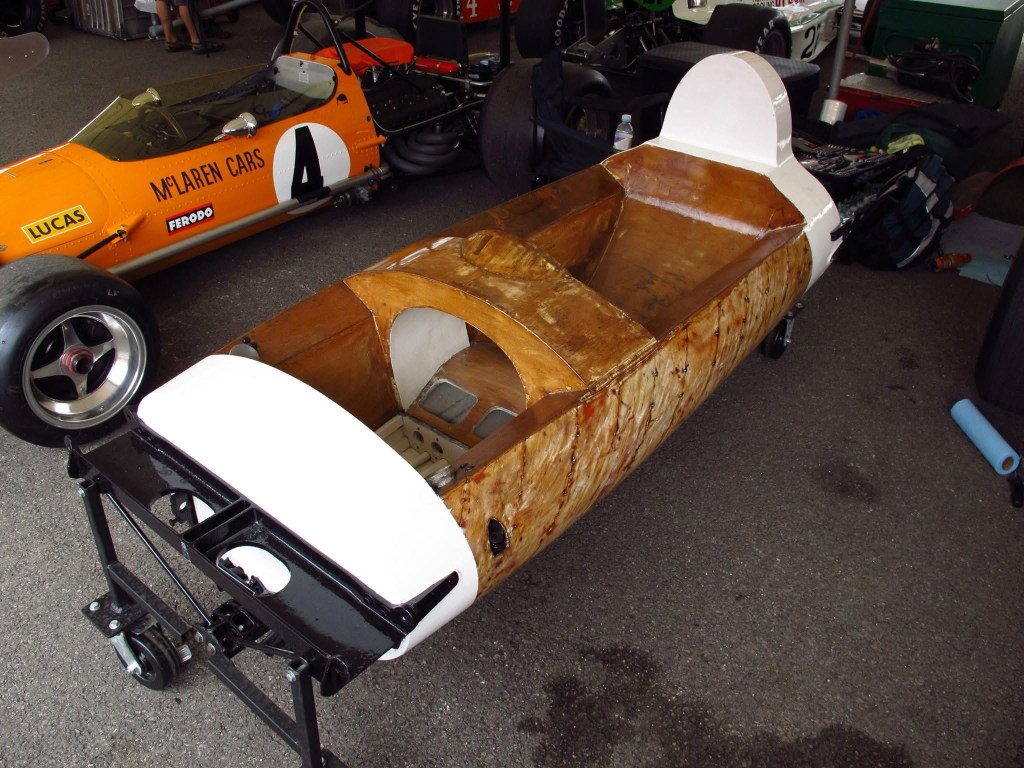
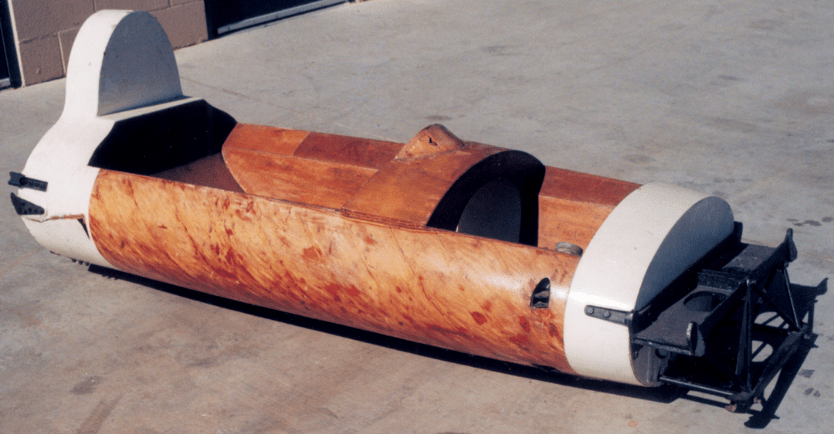
Ed McDonough wrote of the chassis that, ‘Costin’s original intention was to have one set of plywood panels bonded to elliptical plywood end panels and bulkheads with adhesives and further stress-bearing panels of spruce made to form strong box shapes on both sides of the cockpit area. Then, further layers of overlapping strips would form the outer skin. Much like modern carbon-fibre construction, Costin intended for the whole monocoque unit to be placed into a rubber tube to clamp the adhesive and form the proper shape, with the air being sucked out by vacuum. The outcome, Costin reasoned, would be very high levels of strength and low weight in a smooth shape.’

‘Unfortunately, the old spectre of time rushing by meant this elaborate process wouldn’t be possible. So birch plies were used for the outer skin, and the whole thing was clamped conventionally, and the finished wooden structure was smooth-sanded when the glue was dry.’ While this process added weight, after painting, it was hard to tell the difference between this and a steel or alloy unit.’

Image
A tub with a difference, note the diagonal banding of the birchwood plies (Blain Motorsports Foundation)

With the prototype finished in Wales, the other cars were built in Harris’s Maidenhead workshop. Given its unusual construction, Harris coined it ‘Protos’, first in Greek.

With inherent fire risk, Costin designed neoprene-coated alloy fuel tanks, housed in fragile wooden bearers within the chassis. In the event of a big one, the tanks were designed to break away from the car, an element that was tested all too soon…

A magnesium bulkhead was mounted across the front of the car, and together with a light tubular subframe, located top-rockers which actuated vertically mounted, inboard Armstrong shockers, wide-based lower wishbones and an adjustable roll-bar. Front and rear uprights were magnesium.

Image
Brian Hart’s Protos 16 HCP-1 BARC 200 Wills Trophy Silverstone March 27, 1967
Image

At the rear, a complex steel tubular spaceframe structure supported the FVA/FT200 combo with six bolts attaching the mechanicals to the tub with the load spread through the wooden monocoque via clever internally glued metal spreaders.

The rear suspension was a combination of magnesium uprights, twin top links, a wide-based wishbone with a pair of radius rods doing fore and aft locational duties, Armstrong shocks and an adjustable roll-bar. Brakes were Girling and tyres Firestone: 9 x 13 inches at the front and 11 x 13 at the rear, with wheels also magnesium.

The car looked the goods when it was launched with some fanfare at Selfridges London store’s ‘Grand Prix Exhibition’ on March 3, 1967.

1967 European F2 Championship…

Harris’s outfit built four tubs (it’s not clear to me if the four build number includes the prototype made in Wales or not), two of which were built up into complete racers with Brian Hart testing HCP1 – Harris Costin Protos – at Goodwood, putting in some competitive times despite the bodywork snagging Hart’s right-hand gear shifting gears, a ‘bubble’ alleviated the problem. Excessive front understeer was cured with changes to the ‘bars and springs.

The cars were entered in the first round of the European F2 Championship on March 24, but failed to appear. All of the other new cars were present with the heats going to Jochen Rindt and Denny Hulme, in Winkelmann and works Brabham BT23 FVAs, with Rindt – the King of F2 – taking the final from Graham Hill, works Lotus 48 FVA and Alan Rees in the other Winkelmann Brabham.

Rees took the Euro F2 Championship points as an ungraded driver. The FIA cleverly created a two-class system. Graded drivers were those who had achieved/won in F1, Can-Am, WSC etc. Ungraded drivers were up-and-comers who had not. Graded drivers could win the races and prize money but were ineligible for Euro F2 Championship points.

Hart raced the car at Silverstone three days later, on March 27, in the BARC Wills Trophy. From grid 16 alongside the Lola T100 BMW of Jo Siffert, Hart and HCP-1 retired in heat 1 when a fuel pump belt broke, while a misfire cruelled his second heat, a recurrent problem throughout the season. Rindt won again.

Image
Eric Offenstadt, Montjuïc Parc, Barcelona 1967 (H Fohr Collection)
Image
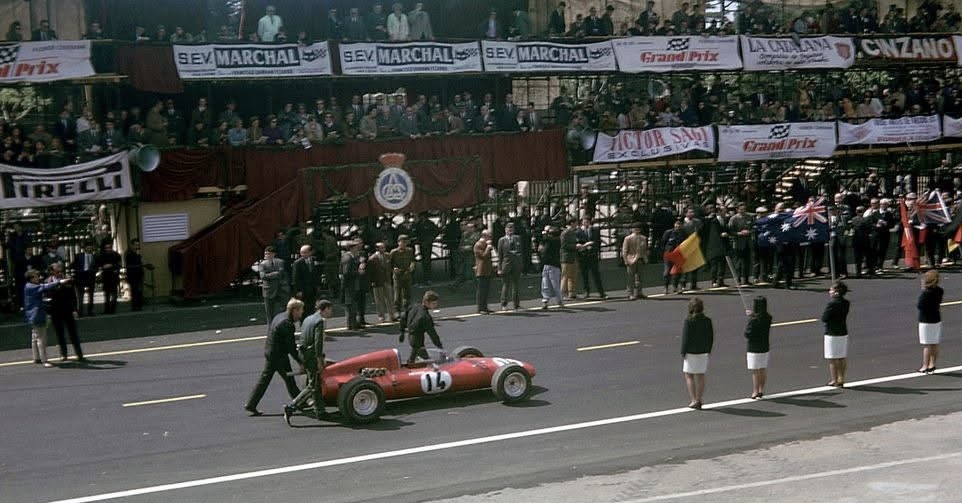
Pomp and ceremony as Offenstadt’s car is rolled onto the Magic Montjuïc grid (J Arch)

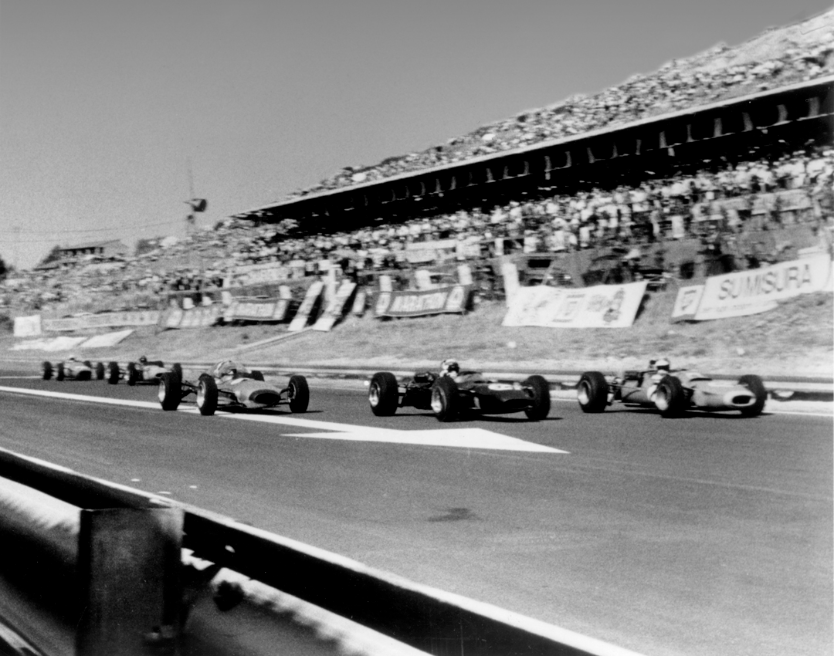
Harris entered two cars in the Pau Grand Prix (Rindt, Brabham BT23) on April 4 but the machines weren’t ready, with only Offenstadt contesting the GP de Barcelona at Montjuïc Parc on April 9. After several off-course excursions, he retired with brake and misfiring problems, having done only 12 of the 60 laps completed by Jim Clark’s winning Lotus 48 FVA.

The team missed the Spring Trophy at Oulton Park where many of their competitors raced against Grand Prix cars. Up front the Brabham BT20 Repco V8s of Brabham and Hulme were first and second, with the first F2 home Jackie Oliver’s Lotus 41B FVA.

Just two weeks later, the F2 Circus were off to the Nurburgring for the Eifelrennen and there Offenstadt took Graham Hill off in practice and non-started HCP-1.

HCP-2, was finally finished and tested by Hart. Engine misfires continued to come and go, but the team were optimistic as they headed for the RAC Autocar Trophy at Mallory Park on May 14, a British F2 Championship round. Hart qualified a good fifth, but both cars were withdrawn from the race after Costin found a crack in an upright following another shunt by Offenstadt.

New uprights were cast but the team missed the May 21, Limborg GP at Zolder, where John Surtees’ Lola T100 FVA won.

Hart tested HCP-2 at Brands Hatch, where the misfire appeared to have been cured. He then raced it in the London Trophy British F2 Championship round at Crystal Palace on May 29. Offenstadt was allocated HCP-1.

Both did well in practice and in their heat until the misfire returned: Eric was sixth and Brian seventh. On a track he knew well, Hart ran as high as third in the final before troubles dropped him back to tenth. Offenstadt’s troubles continued; this time, he retired with a broken engine mount, while up front was Jacky Ickx in a Ken Tyrrell Matra MS5 FVA.

The next championship round wasn’t until Hockenheim on July 9, so the team set to with some strengthening modifications while noting that both drivers reported the chassis itself to be immensely stiff.

Image
(M Stegmann Arc)

With the work completed the Ron Harris Racing trucks headed for Dover to contest the non-championship Rhein-Pokalrennen on June 11.

Offenstadt demonstrated the promise he showed in 1965 and Hart was in the leading group when he lost fuel pressure.

‘I thought I could win. The car was capable of 180mph, and I was cruising. I could pick up five to six places a lap,’ before the dreaded misfire returned. Brian eventually finished tenth with Offenstadt in a personally rousing fourth. Post-race calculations indicated a top speed of 163 mph without a tow and 172 with one! The customer car favourite Brabham BT23 Ford FVA indicated its user friendliness in that Chris Lambert won the race in a privateer BT23.

Costin observed of his Hockenheim handiwork in 1975, ‘The Protos was approximately 9mph faster at maximum speed than the slowest opposition, and 3-4mph faster than the quicker opposition. This means, given all cars were using the same engine (Cosworth FVA giving 218-220bhp), the aerodynamic advantage of the Protos was about 15bhp over the faster rivals and 40bhp over its slowest competitors at maximum speed.’

Image
Brian Hart was the class of the field during the June 25, 1967 Reims Grand Prix (unattributed)

With the high-speed Reims Grand Prix coming up on June 25 the team continued to refine the Protos aero, including the extension of the cockpit canopy back to the roll bar.

Practice was again marred by problems, not least Offenstadt crashing again. ‘Some of these problems stemmed from the fact that one of the sponsors hadn’t paid some bills, so there wasn’t the funding for bigger brakes, a real limitation at Reims’, McDonough wrote.

‘Hart and the Protos amazed everyone with the car’s speed, catching and passing Jim Clark and Jackie Oliver (Lotus 48/41B) after a spin. The French crowds cheered as Hart would drop back under braking and then catch and retake the leaders. Unfortunately, the swirlpot cracked on lap 37, and the overheated engine quit, but the car was clearly the fastest of all the F2 machines on the day.’ Despite not finishing, Brian was classified ninth…

Image
Pedro is bubbled-up by Ron Harris before heading out at Hockenheim on the July 9, 1967 weekend for his Protos race debut (Blain Motorsports Foundation)

The team elected to miss the non-championship GP de Rouen-les-Essarts (Rindt, Brabham BT23 FVA) on July 9 to contest the Deutschland Trophäe Preis Von Baden on high-speed Hockenheim, on the same day.

Offenstadt was replaced by Pedro Rodriguez from this meeting. Mechanical changes included new front and rear subframes, bigger brakes, and on Rodriguez’s rebuilt HCP-1, a more enclosed rear body section.

Rodriguez turned Q3 into the lead of heat 1, but he spun the Protos in the stadium section when it jumped out of gear and ultimately finished fourth in front of Hart. The Mexican again led heat 2, spun again, and then retired with a bent wishbone while Brian was third. Better was to come in the final, where Hart drove an inspired race, battling with Jackie Ickx and Frank Gardner, and ultimately finished third and bagged fastest lap. Gardner won the round on aggregate in a works BT23 FVA from Hart, with Piers Courage’s McLaren M4A FVA third.

Image
Johnny Servoz-Gavin’s works Matra MS5 FVA from Hart’s UFO Protos (fifth) at Zandvoort July 30, 1967 (LAT)

Ron Tauranac watched Protos progress closely and figured Costin’s something-for-nothing aerodynamic lessons were worth pursuing. Brabham was battling for F1 World Championship honours with Team Lotus and their Ford Cosworth-powered Lotus 49s, so Ron developed his own canopy cover and bodywork to the very rear of his Brabham BT24 Repco’s Hewland gearbox to buy critical RPMs at Monza. Brabham had trouble sighting apexes so equipped, and didn’t race the car in that form. The point is that Costin had some of the competition thinking…

Image
Rodriguez, Jarama, July 23, 1967 (Whittlesea Collection)

The team missed the Tulln-Langenlebarn aerodrome race in Vienna on July 16 for undisclosed reasons but rejoined the fray in Spain, where Hart and Rodriguez contested the GP de Madrid at Jarama on July 23. Hart retired his car due to overheating, and Rodriguez was seventh in the race won by Clark’s Lotus 48 FVA.

Zandvoort hosted an F2 Championship round on July 30 that year; the race in Holland was won by Ickx’s Matra MS5 FVA. Hart was sixth, with Rob Slotemaker a DNF due to gearbox problems after only eight of the 30 laps. The Dutchman stood in for Rodriguez, who was racing a JW Automotive Mirage M1 Ford in the Brands Hatch 6-Hours.

Image
Kurt Ahrens from Brian Hart during the August 1967 German GP, Nurburgring (LAT)
Image
Ahrens landing at Flugplatz? DNF radiator (K Tweddel)

Talented German, Kurt Ahrens, raced HCP-1 in the F2 class of the German Grand Prix at the Nurburgring on August 6 and retired, while Hart finished fourth in class with Jackie Oliver the first of the F2s in this non-championship Euro F2 round. Ahrens was an F3 and F2 Brabham veteran of some years, his opinions of the Protos would have been interesting.

The Harris equipe missed the non-championship Kanonloppet, the Swedish Grand Prix, at Karlskoga on August 11, where Jackie Stewart prevailed in a Tyrrell Matra MS7 FVA. The F1 championship aspirant added his name to a long list of F2 race winners (in all championships) in 1967: Rindt, Clark, Brabham, Surtees, Ickx, Widdows, Gardner and Oliver.

The long haul to the wilds of Sicily for the GP del Mediterraneo at Enna-Pergusa on August 20 followed, a day on which Rodriguez put Costin’s woodie to the ultimate test!

Luc Ghys was there. ‘The track, similar to Hockenheim with long straights, led to fierce slipstream battles. On lap 10, Jackie Stewart’s Matra had Pedro on his tail, and both were passing Beltoise’s leading Matra. The Frenchman gave way to Stewart but immediately tucked in behind, touching Pedro’s car at high speed.’

Beltoise told Ed McDonough decades later how he had been surprised by the speed of the Protos. When Rodriguez attempted to pass the Frenchman’s Matra, Beltoise admitted not being ready for the move and didn’t give Pedro enough room as a consequence.

Image
Enna-Pergusa August 1967. Stewart Matra MS7 in the middle has just jumped out of Beltoise’s MS7 slipstream on the right, JYS then passes JPB, who immediately pulls in behind JYS and collects Pedro the Innocent at left, who was in the process of making his own run in the slippery Protos (Blain Motorsports Foundation)
Image
One careful lady owner…Protos wooden, aluminium and rubber remains at Enna (J Gleave)

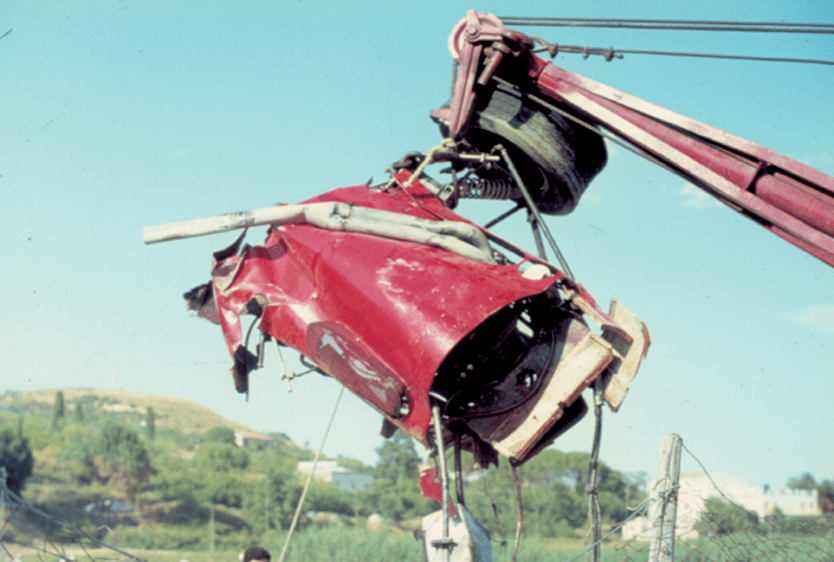
The car careered out of control, hit the guardrails and broke in half, jettisoning the fuel cells as intended. The tub bore the impact as designed and protected the Mexican from serious nasties: he was still in second place as the Protos-in-bits blasted past the finishing line! Said components were then deposited into Enna’s famous snake-infested lake! Hart had a weekend of consistency, finishing eighth in both heats and the final; both Protos did 165 mph on Enna’s straights.

Pedro, interviewed not long after the race, said philosophically, ‘If it wasn’t for that Protos, I wouldn’t be here talking to you now. It has a wooden monocoque body, you see, and at about 150 miles an hour, it absorbed the impact completely. The car starts to disintegrate, and I went out of the car with the seat on in the middle of the road! The only thing that happened to me was that my right heel was what they call a poolverise fracture.’ Pedro also suffered a small fracture in his left ankle.

‘Ron called us into his hotel room (after the race),’ says Hart, ‘and not only did he say that there wouldn’t be a next year, he also said that he wouldn’t be able to pay off Frank for the remainder of this year.’ Hart’s eighth at Enna was the programme’s denouement. ‘I don’t think we would have won in our second year, but we would have been closer to the front; I think Frank could see that some compromises were needed. But we never got the chance. But what a project. I’ve got a soft spot for that car.’

Despite making four tubs, no more than two complete cars ever existed; HCP-1 was rebuilt over the winter, consuming one of the spare monocoques. Harris and Costin had initially intended to run an evolved Protos in 1968; the same decision was made by most of the major manufacturers to run evolutions of their ’67 cars, but the year had been so expensive that Harris decided to run Tecnos instead.

Image
The Carnival is Over. Rodriguez prepares to saddle up at the Nurburgring on April 21, 1968 while Ron Harris waits, and below on track. The last Protos in-period race (Blain Motorsports Foundation)
Image
(Blain Motorsports Foundation)

When the Pederzanis delivered the Tecnos hopelessly late, Rodriguez, clearly fond of the Woodies, asked Harris to enter a Protos for the non-F2 Championship Eifelrennen at the Nurburgring on April 21.

Pedro raced HCP-1 and Vic Elford HCP-2 on his single-seater debut. Rodriguez retired out of fuel while Vic finished a splendid seventh. Man On The Rise Chris Irwin won in a works Lola T100 FVA, his next visit to the Eifel didn’t end quite so well.

Sadly, that was it, Rodriguez raced the first of Harris’ Tecno PA68 FVAs at Crystal Palace on June 3 1968, then added insult to Ron Harris’ injury by crashing it on the first lap of the final, having placed fifth in his heat…the Protos never raced again.

The 1968 season was so expensive and difficult for Harris that it ended his active involvement in racing. Much of his equipment disappeared or was damaged on the late-season Temporada tour in South America, so ultimately everything was sold off.

Image
Vic Elford and Pedro Rodriguez in the final race weekend for the Protos 16 Ford FVA during the April 21, 1968 Eifelrennen weekend

Hindsight…

Brian Hart told Paul Fearnley, ‘It was incredibly fast in a straight line (a useful asset in those slipstreaming days), but it had shortcomings. The engine was carried in a metal subframe, and where this was affixed to the wooden tub was a weak point. And because the car had a rounded shape, the side fuel tanks were carried quite high, giving a bad CoG. It was heavy, too – about 25kg more than the rest – and when this was coupled with an initial lack of anti-roll bars (Costin had yet to be convinced of their necessity), it was a bit of a handful in the corners. One of our biggest failings was our inability to engineer the car once the season had started: money was tight, and we had no baseline from which to work.’

Eric Offenstadt said of the car to Michael Dawson, ‘I had a picture of my pole position at Hockenheim in front of Jochen Rindt with the Protos…but I lost it. The roadholding was “peculiar”, not because of the wooden chassis, but because of “rare suspension geometry”.

Firestone funded the project, which explains in part why Ron Harris was adventurous. The challenge to design, build, develop, prepare and race a new car was a far more complex and costly process than racing works-Lotuses that were competitive outta the box.

That the designer was reluctant to leave Wales must have made the development of the car a challenge!

Despite the design’s shortcomings, it was clearly competitive on faster tracks, with suspension geometry the area that required focus over the 1967-68 winter, had the Harris team raced on with the Protos.

The Ford Cosworth FVA engine problems the Harris team experienced in 1967 are somewhat ironic given Brian Hart Engines Ltd’s capabilities in preparing and developing these engines by 1969!…

What extraordinary racing cars those Protos were/are.

Historic Era…

Englishman Richard Whittlesea bought the two cars, HCP-1 complete and HCP-2 as a rolling chassis, restoring and racing HCP-1 and displaying it at Donington, before selling the cars to American Norbert McNamara, then later he sold them to Californian Brian Blain/Blain Motorsports Foundation, who retains them.

Etcetera…

Image

Image
Image
Image
(Getty Images-GP Library)

The Protos Ford FVA of Eric Offenstadt on the Montuic Park grid, April 9, 1967. Nice shot of the swept-back rockers and cast-mag upright

image

Credits…

Getty Images, Hans Fohr Collection, Steve Wilkinson Archive, Ed McDonough article on supercars.net, Pete Austin, Les Thacker, Josef Arch, ‘Aerodynamics of the modern car’, Frank Costin in Automotive Engineer magazine in 1975, ‘Ply in The Ointment’ Paul Fearnley, MotorSport November 2003, Formula 2 Racing and Frank Costin Autos Facebook pages, Mike Stegmann, Rafael Calatayud Collection, Blain Motorsport Foundation, Jim Gleave

Tailpiece…

Image
(R Calatayud)

Hmmm…which cars are the Protos’ I wonder?

Reims June 25, 1967. DNF’s for both Hart and Offenstadt. Jochen Rindt’s Winkelmann BT23 FVA won from Graham Hill, John Surtees, Jackie Stewart and Denny Hulme, World Champions all! In its heyday(s) F2 was absolutely marvellous.

Finito…


Image
(J Lloyd)

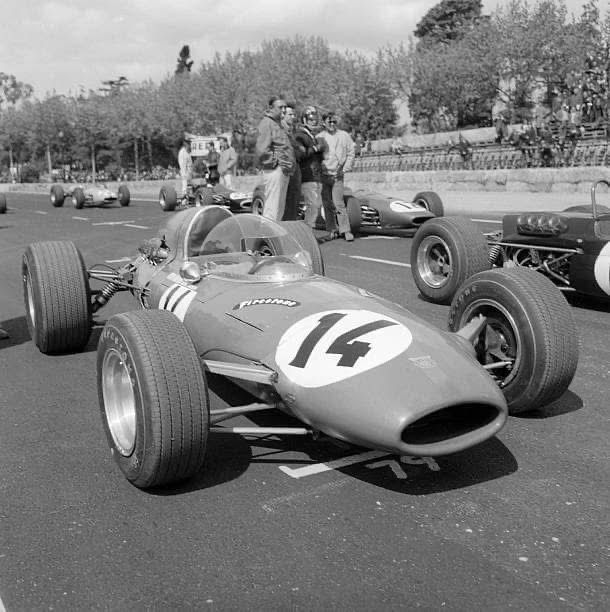
Surely the most exotic rally machine to ever come to Australia was Ric ‘Skid’ Marks’ Lancia Stratos which contested the 1976 Castrol International and other local events before seemingly disappearing…

I really know SFA about this car, but shall make good in the next few weeks and assemble some details. In the meantime, the photos will have to suffice. Not still here, I guess?

Image
(J Lloyd)
Image
(J Lloyd)
Image

David McKay’s Aston Martin DB3S with trick Rice trailer behind, Fisherman’s Bend 1958.

This was as good a racer and rig as it got in Australia at the time. The machine is the second of these cars the Sydney racer/writer/entrepreneur owned, click here for a a piece on the cars; https://primotipo.com/2017/09/28/david-mckays-aston-martin-db3ss/

Image
(Leon Sims Collection)

Jack Godbehear, Ringwood orchardist, racer and great engine builder in his JGS-JAP 298cc (Jack Godbehear Spl) at Rob Roy on November 3, 1959.

Jack came up most recently in conversation with Alan Hamilton (gee, I drafted this a while back!). Jack rebuilt the engine of Norman Hamilton’s Porsche 550 Spyder after Harry Firth got into a bit of strife! Jack’s motorcycle experience with bevel-gears meant he was familiar with the complexities of the German engine.

I know of Jack as a Formula Ford and Lotus-Ford twin-cam engine builder. Someone who taught Larry Perkins plenty of engine tricks. If anybody has a document about Jack, or can spend a few minutes on the phone and give me the gen, I’d love to hear from you. He was behind many a race win, not least his son-in-law, Tony Stewart’s.

Image
(D Friedman)

Jack Brabham, Peter Revson and Ron Tauranac at Indianapolis in 1969.

Revvie finished fifth in a good run in the Brabham BT25 760 Repco 4.2 V8 whilst Jack retired.

A couple of months later, Peter won the Indianapolis Racing Park 200, an event comprsing two 100 mile heats on a road course. He won one heat and was second in the other taking a great win for the much-maligned four-valve Repco motor.

To be clear, these results and Matich’s win aboard the 4.8-litre V8 760-powered Matich SR4 in the 1969 Australian Sportscar Championship proved there was nothing wrong with the design, development could not have fixed.

Image

Racer Reg in the Elsternwick, Melbourne, back streets.

Not going for a suburban blast but Reg Hunt posing for a ‘paper shoot in his just arrived 2.5-litre, Maserati 250F engined Maserati A6GCM, what a car! Click here for a feature on it:https://primotipo.com/2017/12/12/hunts-gp-maser-a6gcm-2038/

And below, with Bira before the start of the 1956 AGP at Albert Park. Graham Hunt outta focus at the right rear, I suspect.

Image
(NatLib)
Image
(oldracingcars.com)

Garrie Cooper, Elfin MR9 Chev from Bob Minogue in the ex-Brown/Costanzo Lola T430 Chev at Calder on February 28, 1982, in the dying ‘Arco Graphite Days’ days of F5000, and not too long before Garrie’s sad, untimely passing. A bit about the Elfin MR9 here:https://primotipo.com/2016/06/10/elfin-light-aircraft/

John Wright won the 25-lap race in his Lola T400 from Bruce Allison in Reg Orr’s Elfin MR8B-C and Cooper, all cars Chev-engined. Minogue was fifth.

Image
(D Foster)

Arnold Glass in the cookie-cutter or bacon-slicer braked ex-works BRM P48 at Lakeside in 1961 or 1962.

The car was still at this stage powered by the original 2.5-litre BRM four-cylinder GP engine rather than the aluminium Traco-Buick V8 which followed. See here for the gen; ‘Bourne to Ballarat’- BRM P48 Part 2… | primotipo…

Image
(S5000)

I was very much looking forward to S5000 making a splash this year and regaining the Gold Star awards credibility, hopefully they will be on circuit soon!

I must have drafted that line during Covid. It’s one of Garry Rogers Ligier JSF3-S5000 Fords, I don’t recall the locale.

Chris Lambden is a close mate, I must invite him to do an article on how the CAMS/Supercar Junta and related Vested Interests fucked S5000 to a standstill and destroyed what could and should have been easily Australia’s most spectacular racing category. Watch this space.

Image
(An1images.com)

Bob Morris was a goer wasn’t he!

Here he is doing the Light Car Club of Australia a favour by cutting the grass on the inside of Dandy Road. He is running, or trying to, up the inside of the A9X Torana driven by Pete Geoghegan, Geoghegan won his last ATCC race that April 1978 day. Pete won from Morris and Allan Grice, also Torana A9X mounted.

I loved the way the Ron Hodgson boys stuck it up the ‘factory team’ for so long.

Image
(W Reid)

Budgie Smugglers, Stirl? Close, but not quite.

Stirling Moss catches up with Roger Bailey during preparation of the Ferrari Dino 246T, which Chris Amon drove to within a bees-dick of beating Jim Clark’s Lotus 49 Ford in the following day’s 1968 Australian GP at Sandown Park. See here for more Dino: Amon’s Tasman Dino… | primotipo…

Image
Ah…the old Sandown paddock was as tight as, but a wonderful place for spectators at least! F Vees in close attendance to Chris (W Reid)
Image
(unattributed)

Marvin the Marvel’s Mustang leads the field at the start of the 1968 Sebring 12 Hour. Not quite. Jo Siffert’s Porsche 907 is to the left and off-screen, the winning car Jo shared with the very recently departed Hans Hermann.

Allan Moffat is aboard a Shelby Ford Mustang he shared with fellow ‘Australian’ Horst Kwech, click here for a lengthy epic on Moffat’s American career; Moffat’s Lotus Cortina, Shelby, K-K and Trans-Am phases… | primotipo…

#50 is the Ludovico Scarfiotti Porsche 907, #29 Paul Hawkins, Ford GT40 – note his JW Automotive teammate #28 Jacky Ickx is still belting-up and has not yet dropped the clutch – #9 is Scooter Patrick’s Lola T70 Mk3 GT Chev, with Jo Bonnier’s yellow similar car standing out further back. #42 is the Lucien Bianchi blue with taped up lights Alpine A211 Renault , the white #56 Porsche 910 was started by Foitec. A Chev Corvette is well forward but I’m not sure which one, so too is one of Roger Penske’s Chev Camaros, probably the car started by Mark Donohue. And the rest…

Image
(unattributed)

Lorraine Hill’s Swallow Doretti at Warwick Farm in the early 1960s, a mighty fine racer at a time women behind the wheel were a rare thing. Later married to racer Brique Reed, of course, a speedy couple indeed. Who are the MGA racers folks?

Image

Reigning J.A.F. Japanese Grand Prix winner Leo Geoghegan during practice of the May 1970 event at uber-fast, daunting Fuji International Speedway.

Leo is chasing more straight-line speed in his Lotus 59B Waggott 2-litre by running wingless. Jackie Stewart won the race in a Brabham BT30 Ford FVC, from his namesake, Max Stewart’s Mildren Waggott, with Leo sixth. See here for Leo’s ’69 victory; Leo Geoghegan: Australian Driving Champion RIP… | primotipo…

Image
(Cummins Archive)

Lex Davison’s high born Alfa Romeo Tipo B being chased through Forrest’s Elbow by Doug Whiteford’s more utilitarian but very fast Ford V8 Spl ‘Black Bess’ at Mount Panorama during the Over 1500cc Handicap race, October 1950.

This dice up front lasted for most of the race until Lex locked a brake with two laps to go; Whiteford won on scratch, but ’51 AGP winner, Warwick Pratley took the handicap win, the money and cup with Dicer Doug behind him. See here for more on Bess; Doug Whiteford: ‘Black Bess’: Woodside, South Australia 1949… | primotipo…

Image

Mark Webber cruising the streets of London in his Porsche 919 Hybrid in 2016, the PR perks of the job! See here; Le Mans Arty Farty… | primotipo…

Image
(K Devine)

From the state of the sportscar art in 2016 to the equivalent in the late 1950s, the Lotus 15 Climax raced by owner Derek Jolly and John Roxburgh to victory in the Caversham 6 Hour in 1962 from the Dave Sullivan and George Wakelin Holdens.

See here for a piece about Derek and his two Lotus 15s; Derek’s Deccas and Lotus 15’s… | primotipo…

Image
(K Devine)
Image
(unattributed)

One of my favourite categories in one of my favourite years. 

Leo Geoghegan’s works-Birrana 273 Lotus-Hart-Ford 416-B leads the field in the September 1973 Symmons Plains, Tasmania, round of the Australian F2 Championship, which he won.

In line astern is the similarly powered Bob Skelton’s Bowin P6, Enno Buesselmann’s Birrana 273, Chris Farrell’s Dolphin 732 and Bruce Allison’s Bowin P6. See here for more ’73 ANF2; Testing Times… | primotipo…

Image

Don O’Sullivan in his Matich SR3 Repco 4.4 V8 at Surfers Paradise in May 1969.

This is one of the two SR3s FM raced in the 1967 Can-Am Cup, and then ‘belted’ Chris Amon’s Ferrari Can-Am 350 with in the 1968 Tasman Cup support races, here in hi-winged form.

This epic about the SR4 also has a bit about the SR3: Matich SR4 Repco…by Nigel Tait and Mark Bisset | primotipo…

Image
(I Smith)

What a superb looking racing car the Lola T400 Chev is, especially this one.

John Leffler braking hard into Shell Corner at Sandown, possibly during the February 1976 Rothmans round, he crashed out after five laps.

I’ve never done a piece on Leffo, time I did, he was our Gold Star champion in this car, T400-HU15, after all. A bit here:https://primotipo.com/2025/11/17/1975-australian-grand-prix-surfers-paradise/

And below blasting down the Surfers Paradise main straight, what meeting given his regular use of #7, who knows, but 1976-77.

Image
(T Garbett)
Image
(G Jamieson)

George Jamieson, Lotus 11 Climax FWA, chassis 358 on the grid above (and with fag below) during the 1960 Lowood, Australian Grand Prix weekend. See here for Mildren and the 1960 AGP:https://primotipo.com/2018/06/08/mildrens-unfair-advantage/

Car #135, an AC Ace, is not listed in the race program. I’m intrigued to know who it is. Jamieson DNF the race won by Alec Mildren’s Cooper T51 Maserati.

Image
(G Jamieson)
Image
(Via Doug Grant)

Racetracks in Australia ‘under snow’ is rather a rare event, ‘Skyline’ at Mount Panorama on August 22, 2020. Tangentially, see here:https://primotipo.com/2018/11/26/bathurst-lap-record/

Image
(unattributed)

Dave Walker, Lotus 72D Ford during the 1972 Austrian Grand Prix weekend at the Osterreichring. DNF after engine failure in the race won by his teammate Emerson Fittipaldi. See more on Dave here:https://primotipo.com/2024/06/01/dave-walker-obituary/

Image
(B Anstee)

Multiple Australian Hillclimb Champion Bruce Walton gives the Norman Hamilton crew a lift through the Fisherman’s Bend paddock in 1958, Porsche 550 Spyder. See here for a feature on this car; Hamilton’s Porsche 550 Spyder… | primotipo…

Credits…

John Lloyd, Leon Sims Collection, David Friedman, David Zeunert Collection, oldracingcars.com, Trevor Garbett, Darren Foster, S5000, An1images.com, Warren Reid, Cummins Archive, Ken Devine Collection, Graham Ruckert, Ian Smith, George Jamieson via Janice Jamieson, Barry Anstee

Tailpiece…

Image
oldracingcars.com

Battle of the Queenslander Lotus 23 racers at Longford in 1968. Glyn Scott’s Lotus 23B Ford from Lionel Ayers MRC Lotus 23B Ford diving into The Viaduct. See here for Glyn; Glyn Scott… | primotipo… and here for Lionel; Sportscar Stalwarts… | primotipo…

Image
(gthoregister.com.au)

One for FoMoCo Oz race fans.

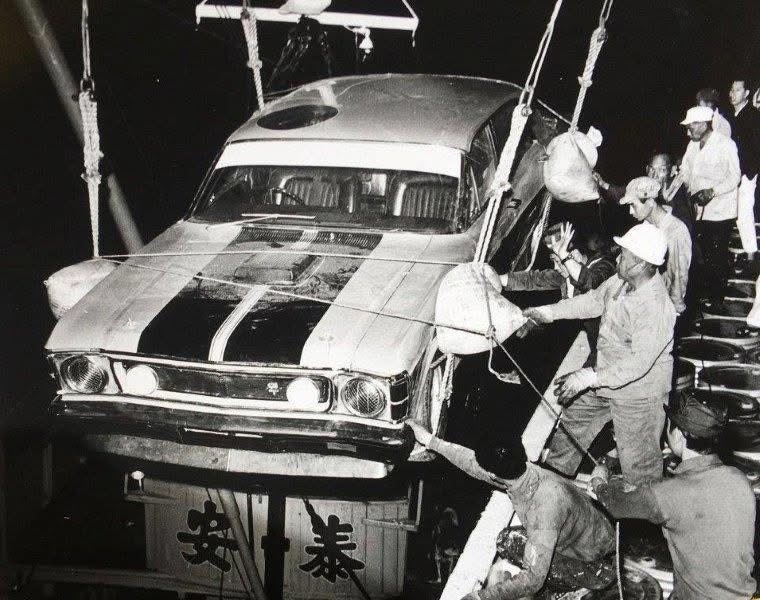
Allan Moffat’s works GTHO being unloaded off a ship onto the Macau docks in advance of the 1971 Macau GP carnival held on the weekend of November 20.

‘Be careful, blokes, if we drop it, they’ll shove us on the other side of the border! I couldn’t give a toss about Mao or his Little Red Book’. There is something rather surreal about the whole scene.

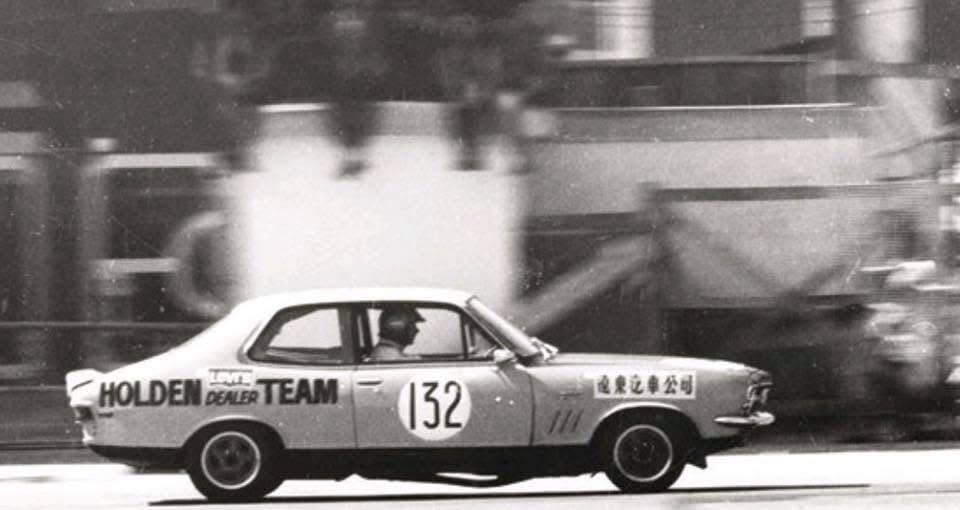
Ford entered this car, while the Holden Dealer Team – the works team – took an LC Torana GTR XU-1 up for Peter Brock. Both were Group E Series Production machines, whereas that Guia 200/ACP Cup was a Group 2 event, run to more liberal modification rules.

Image
Brock’s LC XU-1, local signage probably the car’s entrant, Far East Motors. Wheels Globe Rallymasters or Sprintmasters (unattributed)
Image
Glemser and RS2600 are on the way to a record breaking pole of 2 min 56 sec (unattributed)

The star car/driver combo was recently minted European Touring Car Champion, Dieter Glemser aboard a 2.9-litre Ford Cologne entered ETCC Ford Capri RS2600 V6; 265-286bhp/ZF 5-speed/940kg/disc-disc/10×13 and 11.5×13 wheels. A weapon.

Brock’s XU-1 was ‘lightly modified’ from Series Production specifications, the only obvious external mod being fitment of a set of Globe Rallymaster aluminium wheels.

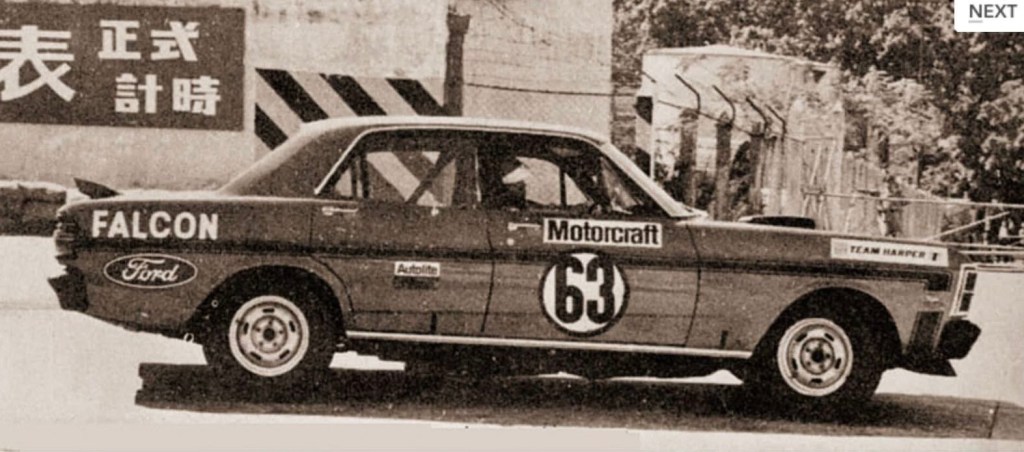
Moffat’s HO, upon closer inspection than most shots of this race in circulation allow – generally screen grabs of a video – is the more interesting as the machine is an XW HO gussied up to look a bit like an XY with its bonnet and shaker-air scoop. Is that attached to a 351 Windsor or Clevo?

Given the proximity of the late-season Australian enduros: Sandown, Bathurst, Surfers and Phillip Island, Howard Marsden shipped up an XW XY-HO Development Mule rather than the Real McCoy, it seems. Moffat won the last Manchamp round at Surfers on November 7. His and John French’s XY HOs finished in one piece, but maybe there wasn’t the time to prep and ship one of these cars to Macau. More likely, it just didn’t matter. Did FoMoCo Oz export any Falcons?

What are the VINs/names of the HO and XU-1 folks??

Image
Moffat’s XW-XY HO Bitza. Team Harper, aka Wallace Harper & Co, the Hong Kong Ford distributors
Image
Brock and Moffat on the first lap with Moffat about to exit stage right into the run-off area having messed up his Lisboa corner braking point in the bulky HO . Poon’s Alfa behind Brock with a BMW 2002 Tii looming as well (P Bennett)

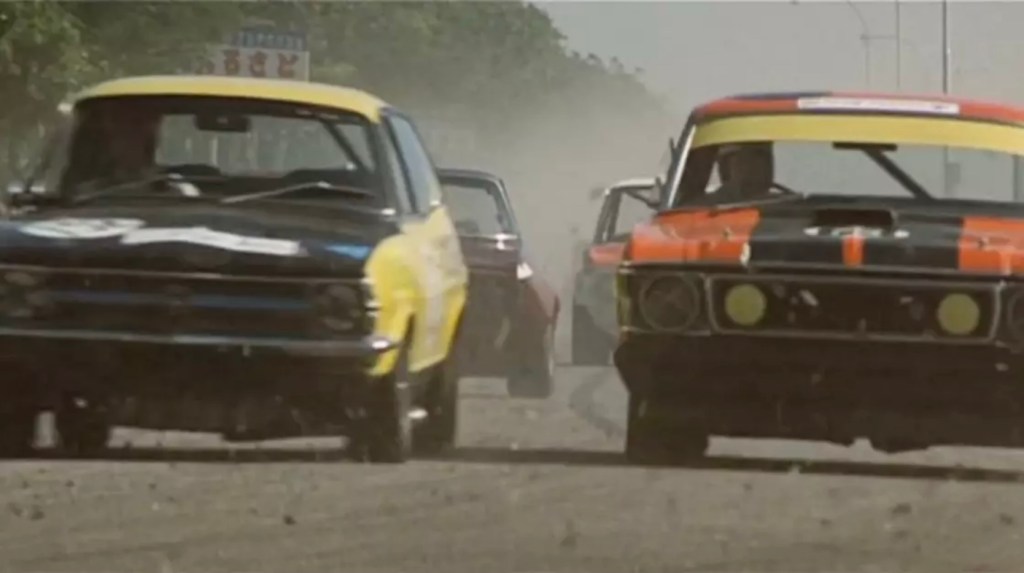
The touring car events that weekend comprised two heats and a final. Brock qualified third in his Far East Motors-entered car behind Glemser and Albert Poon, who raced an Alfa Romeo 2000 GTAm lookalike; Autodelta engine and ‘Poon suspension. Neither Moffat nor Jim Smith – he of Cooper S and Camel Rover Repco-Holden fame – who raced a Teddy Yip-owned BMW 2002, cop a qualifying mention in my reference material, but the video indicates a row three start or thereabouts for Moff.

Image
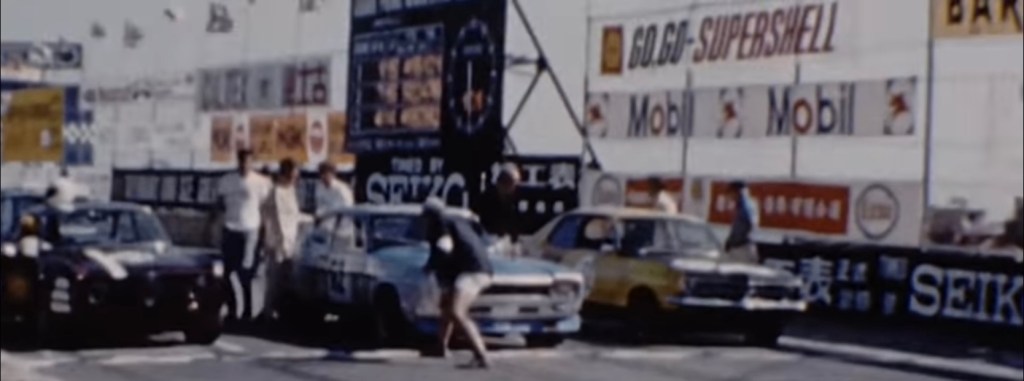
Poon ? Glemser and Brock before the off (P Bennett)
Image
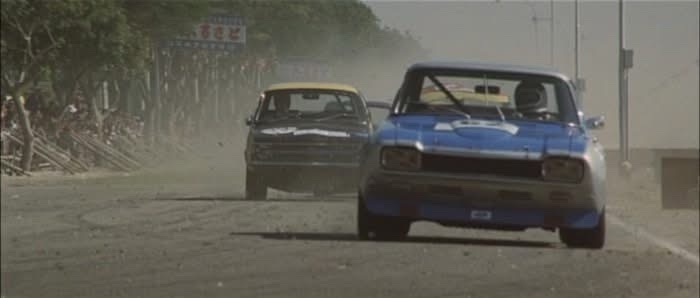
Stature and stance of Glemser’s Group 2 Capris contrasts with Brock’s Series Torana (P Bennett)

The final comprised two events run concurrently: the Guia 200 was 20 laps of the demanding, unforgiving 6.115-mile track, and the ACP Cup 15 laps.

The perils of Macau were demonstrated all too sadly during practice when David Ma lost control of his Lotus 47 Ford FVA under braking for Statue Corner, while trying in the final session to qualify for the Grand Prix, and crashed fatally into a lamp post .

Glemser was an easy winner of the Guia from Poon and Brock, who diced throughout. Note that some references – all of the Australian ones – have Brock in second place having finished ahead of Poon who ran low on fuel in his last lap. Moffat went up the escape road on the first lap in the Big Henry and recovered to finish fifth.

The ACP Cup was taken by Ted Morrat’s BMW 2002 Tii from P Ramirez Toyota Corolla and Xie Dewen’s Cooper S. I don’t have a full list of competitors, but the videos show far more starters than my list of finishers, meaning my finishers list is incomplete.

See Paul Bennett’s video of the meeting here:https://youtu.be/ZsCohn9sCdk?si=AJx5RnG_3IRdOs55

Image
Ted Morrat, BMW 2002 Tii, 1971 ACP Cup winner (J Santos)
Image
Moffat enroute to winning the Guia in 1973 aboard a works- Team Harper Ford Capri RS2600 (Getty)

Etcetera…

Allan Moffat was very impressed by Dieter Glemser and his Capri. Allan shared his Falcon XB GT Hardtop with the German in Moff’s unsuccessful 1974 Bathurst 1000 challenge.

Moffat returned to Macau. In 1973, he won the Guia in a 3-litre Ford RS2600. He was impressed enough to get FoMoCo Oz to buy him one of the Ducks Guts ultimate spec Capri’s in late 1974. Moff’s ex-works 3.4-litre Ford Cosworth GAA-powered RS3100 first raced in Australia in the Sandown Tasman meeting in February 1975, and at Macau that November, DNF.

Image
Moffat’s FoMoCo Oz Capril RS3100 at Macau in 1975 (unattributed)

In the 1981 Guia, he was 11th in an RX-7. His final visit – his final ever race – was in 1989, when he finished third in the ‘Teddy Yip Mazda (MX5) Race of Champions’ on November 26 (below).

Image
(Official Allan Moffat)

Harry Firth felt that Brock’s performance that ’71 Macau weekend, when he was very quick, changed him. Frankly, other than Glemser, who would hardly have extended his car more than he needed, it was not a field of great depth.

‘Peter came back from that a totally different person. He realised what international racing was all about. Totally different world. And he realised he was as good as any of them.’ Less than twelve months later, he bagged his first Bathurst crown.

Credits…

touringcarracing.net, Harry Firth quote from V8Sleuth, Getty Images, Official Allan Moffat FB page, Jose Santos, Paul Bennett Video

Finito…

Image

Bill Pitt, Jaguar D-Type, leads Doug Whiteford, Maserati 300S and race winner David McKay heading up Mountain Straight during the early stages of the 31-lap, 100-mile Australian Tourist Trophy at Mount Panorama, Bathurst, on October 6, 1958.

That weekend was an incredible double-header combining the Australian Grand Prix won by Lex Davison’s Ferrari 500/625, and the Australian Tourist Trophy.

It was the second running of an event first won by Stirling Moss in a Maserati 300S during the 1956 AGP carnival at Albert Park.

Image
McKay, Whiteford, Phillips and Kiwi, Frank Cantwell’s Tojeiro Jaguar (unattributed)

By then, we had a good grid of outright current sports cars, including: Aston Martin DB3S – ex-works car for David McKay, and Warren Blomfeld’s Tom Sulman-owned customer machine, Maserati 300S – Doug Whiteford’s ex-works car, Derek Jolly’s ex-works Lotus 15 Climax FPF 1.5, Ron Phillips’ ex-Peter Whitehead Cooper T38 Jaguar, customer Jaguar D-Types for Bill Pitt and Jack Murray, plus a C-Type for young thruster Frank Matich. The quickest of the local cars was Gavan Sandford Morgan in Derek Jolly’s Decca Mk 2 Climax FWA.

Image

Pitt and McKay head up Mountain Straight, while Whiteford, Phillips and Jolly negotiate Hell Corner (P Longley)

McKay won with Jolly’s 1.5-litre Lotus second – first in class – then Ron Phillips’ Cooper T38, Frank Matich in the Leaton Motors C-Type, Gavan Sandford Morgan, Decca MK2 Climax then Warren Blomfield’s Aston Martin DB3S in sixth.

Image
(Edgerton Family Arc)

Etcetera…

Image
(R Reid)

Early laps I suspect with Bill Pitt in the Geordie Anderson D-Type from the obscured Jolly Lotus 15 and distinctive blue flash of Ron Phillip’s Cooper Jag.

Image

As many of you may recall, Ron Phillips won the 1959 Australian Tourist Trophy in the Cooper held at Lowood in June from Pitt’s Jag and Bob Jane’s Maserati 300S. See MotorSport feature about the Cooper-Jag here:https://www.motorsportmagazine.com/archive/article/april-2022/137/home-away-a-cooper-jaguars-racing-adventures/

Image
(K Devine Arc)
Image
Cooper T38 Jag, Bathurst paddock (P Kelly)

Not to forget Derek Jolly of course. He took ATT honours in the second of his Lotus 15s at Longford in March 1960, on that occasion Doug Whiteford’s Maserati 300S was second and Frank Matich third in a D-Type.

Image

McKay in DB3S/9 and Warren Blomfeld in DB3S/103 below.

Image

Image

The Leaton C-Type was Frank Matich’s first Big Car and he handled it rather well in a career that stretched all the way to the end of the 1974 Tasman Cup.

He won the Australian Tourist Trophy four times: 1964, Lotus 19B Climax, 1966, Elfin 400 Oldsmobile, and 1967-68 in his Matich SR3: Oldsmobile powered in ’67, Repco-Brabham 4.4 powered in 1968. Not to forget the Australian Sports Car Championship aboard the 4.8-litre Matich SR4 Repco in 1969.

Image
(K Devine Arc)

Educated guess territory…Jim Wright’s Buchanan TR2 from Harry Capes’ Jaguar XK120. 14th and 19th respectively. And below, Phillip’s Cooper Jag again, in front of I’m not sure who.

Image
(K Devine Arc)

Credits…

Des Lawrence, Peter Longley, Edgerton Family Archive, Bob Ross Collection, Ron Reid, David Medley, Paul Kelly Collection, Ken Devine Archive

Finito…
moss targa
(M Wright)

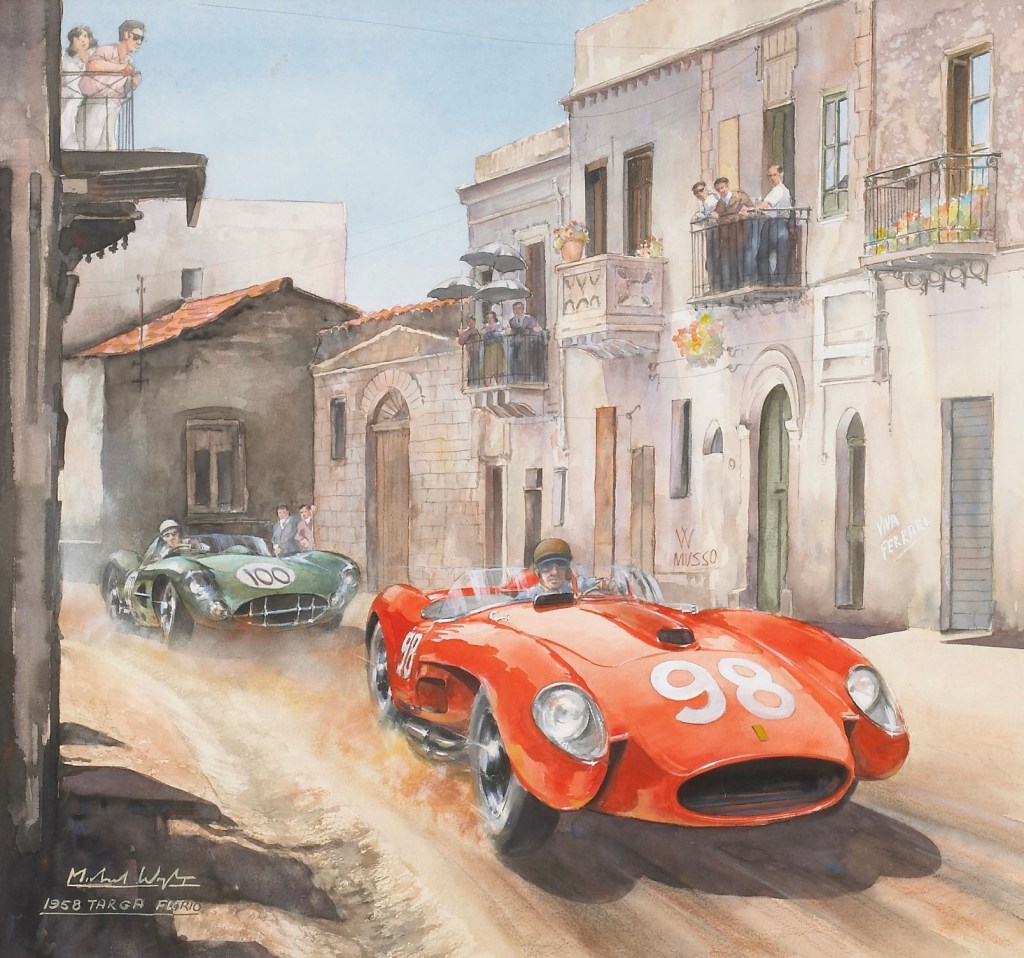
Stirling Moss, Aston Martin DBR/1, May 11, 1958, Targa Florio…

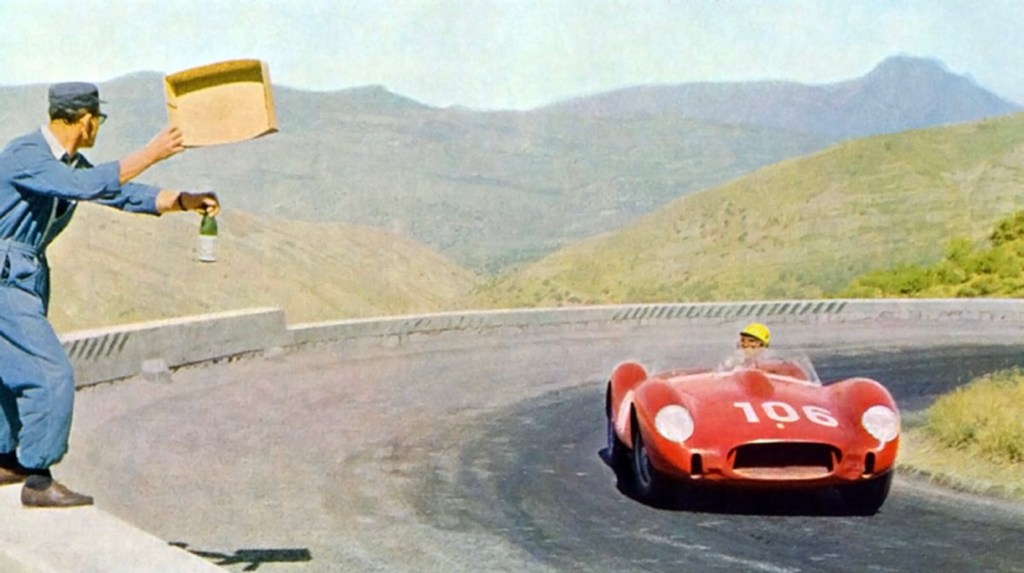
Luigi Musso was the class of the field that day and led from the first lap in a works-Ferrari 250 Testa Rossa 3-litre V12 co-driven by Olivier Gendebien. Moss went off the road and damaged a wheel early on, then redeemed himself with a lap record more than a minute quicker than Musso, but the solitary Aston’s gearbox cried enough under the strain during its fifth lap.

Image
‘Yep, I’ll supersize that with fries.’ Musso in command of the leading 250 Testa Rossa, not in need of assistance from the Ferrari pit, way out west (unattributed)
Image
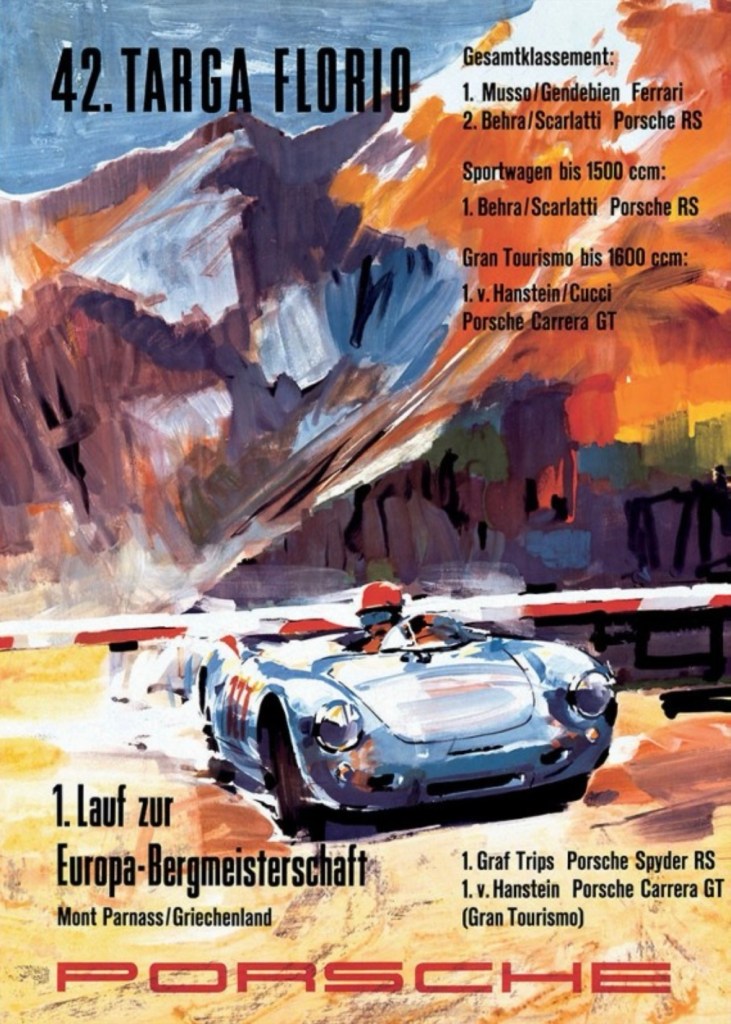
Porsche did well with results as per the postcard

Musso’s car lost its brake fluid, but such was the car’s lead that he pitted, the Scuderia mechanics fixed the problem and Gendebien brought the car home first in the 10 lap race on 10hr 37.58 from Jean Behra/Giorgio Scarlatti Porshe 718RSK 10:43.38 with Wolfgang von Trips/Mike Hawthorn third in another works Ferrari 250TR on 10:44.29.

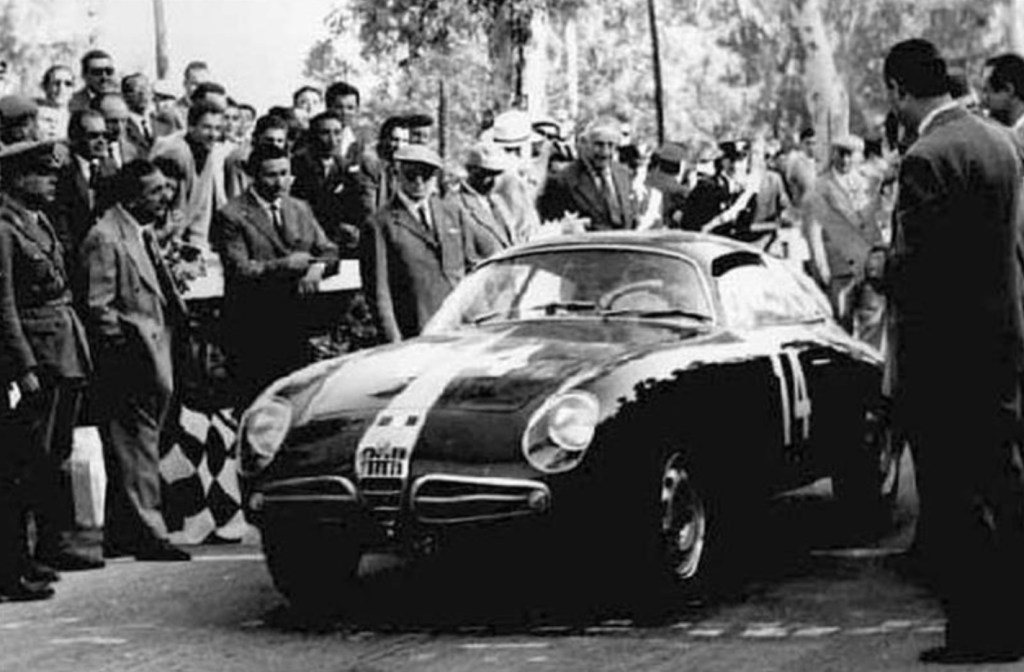
38 cars started the race, 15 finished, the last pair home was Sig Ada Pace and Carlo Peroglio’s Alfa Romeo Giulietta SV, below, time undisclosed. More about Ada here:https://www.adrenaline24h.com/2020/04/pit-stop-ada-pace-pioniera-del-motorsport-al-femminile/

Image
(targapedia.com)
Image
(targapedia.com)

Luigi Musso and Olivier Gendebien before the off, while below, Jean Behra gets ready to start in the RSK he shared with Giorgio Scarlatti, and below that, the same car at rest.

Image
Image
Porsche 718 RSK Spyder 1498cc flat-four (T Walker)

Classic Targa family shot, the cautious family man on the inside of the corner watch the Ferraro brothers – Pietro and Paolo – Ferrari 250 GT LWB (DNF) while macho-man puts himself and the babe at risk on the outside.

Image
(unattributed)
Image

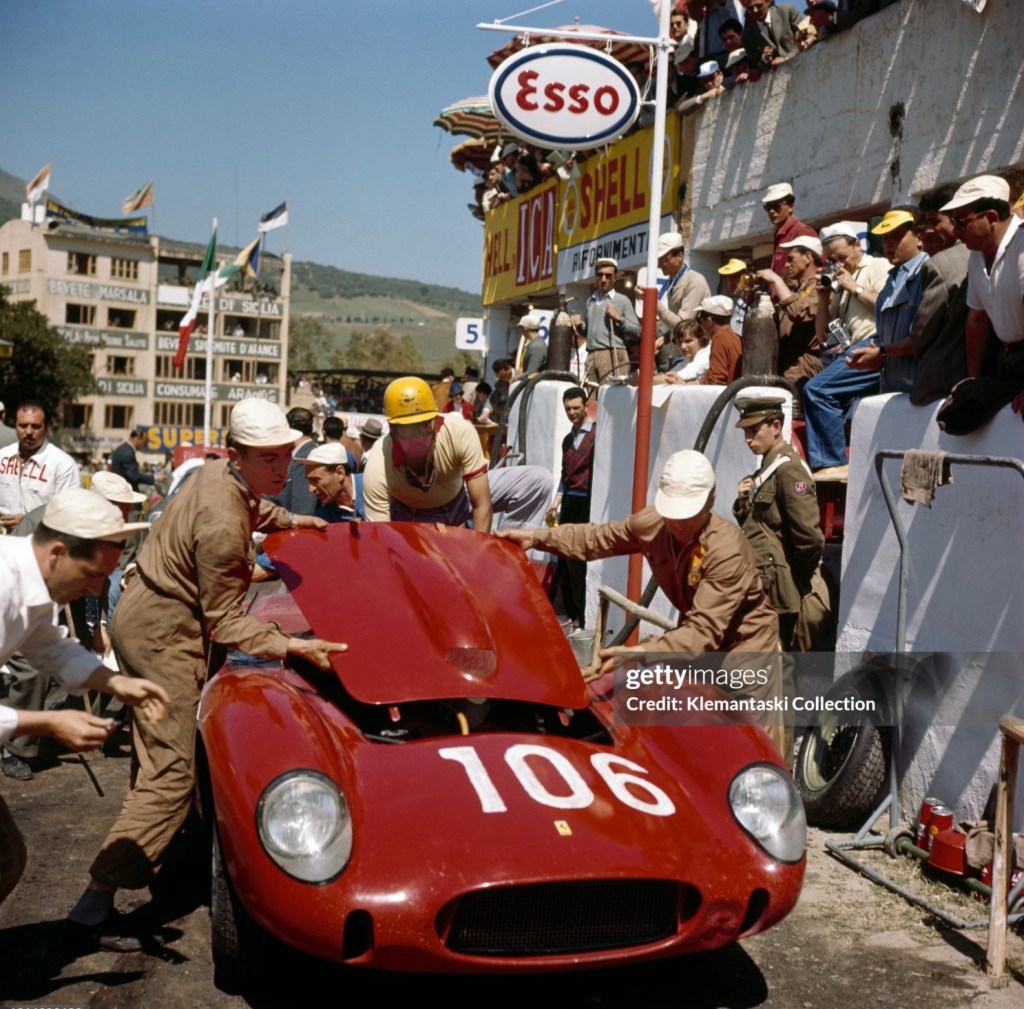
Luigi Musso jumps out of the winning car in the shot above, the more you look the more you see! Mechanics in natty brown overalls, lots of ’em, quick-lift jack to the right, the Shell man to the left and overall vibe grab mine.

While Peter Collins does his thing in the Testa Rossa he shared with Phil Hill to fourth place, 2.5 minutes or so behind the race winners, below.

Image
(Getty-Klemantaski)
Image
(J Alexander)

This pairing reminds me that Phil Hill made his Grand Prix debut with Scuderia Ferrari on the Nurburgring, during the 1958 German Grand Prix on August 3, the day Peter Collins died at the wheel of a Ferrari Dino 246, Phil was in a 156, the F2 variant, shot above.

Luigi Musso died chasing Mike Hawthorn during the French Grand Prix at Reims a month before on July 6, both on 246 Dinos.

Alfonso de Portago died at Cavriana during the May 12, 1957 Mille Miglia aboard a Ferrari 335S, while Eugenio Castellotti was killed at the wheel of Ferrari 801 testing at Modena that March 14.

Mike Hawthorn’s death at the wheel of his Jaguar Mk1 on the Guildford Bypass – as the reigning but retired Ferrari World Champion – bookended a horrific two years for Ferrari. Driver error in all cases folks, mistakes could be awfully expensive in them-thar days…

Etcetera…

Image

Image

Jean Behra blows off a bus during practice…while Peter Collins shows off the voluptuous lines of the Testa Rossa below.

Image
(Wikipedia)

The FIA reacted to the 1955 Le Mans and 1957 Mille Miglia tragedies by limiting outright cars contesting the 1958 World Sportscar Championship to a capacity of no more than 3-litres.

Ferrari picked up where they left off with the 4-litre 335S, the 3-litre, circa 300bhp 250 Testa Rossa won four of the six championship rounds: Buenos Aires, Sebring, Targa and Le Mans and the championship from Porsche, the other pair of outright wins on the Nurburgring and at Goodwood went to the Aston Martin DBR1/300 who were third in the title chase.

Image
Collins, maaagic shot! (Y Debraine)
Image
(T Matthews)

Technical Specifications in brief…

Tipo 128LM 60° SOHC two-valve Colombo V12, alloy block and head. Bore/stroke 73.0/58.8 – 2953cc, Compression ratio 9.8:1, six Weber 36DCN carbs, two distributors, circa-300 bhp @ 7200rpm.

Four speed all synchro gearbox, diff ratios:3.55, 3.77, 4.00, 4.25, 4.59, 4.86:1

Tipo 526 welded steel ladder frame chassis, 2350mm wheelbase, 1308 front track, 1300 rear track.

Independent front suspension by upper and lower wishbones, coil springs and Houdaille shocks. Rigid rear axle on customer cars, De Dion on factory cars, coil springs, Houdaille shocks

Drum brakes, Borrani wire wheels with 5.50 x 16 inch front tyres and 6.00 x 16 rears. Body by Scaglietti. Weight circa-900kg

Image
Moss chases Collins

Credits…

Michael Wright, targapedia.com, Ted Walker, Getty Images-Bernard Cahier-Louis Klemantaski, Yves Debraine, Tony Matthews, Jesse Alexander, barchetta.cc

Finito…

Ferrari 330 TRI/LM Spyder…

Posted: January 6, 2026 in Uncategorized
Image
(MotorSport)

The victorious Olivier Gendebien/Phil Hill 4-litre Ferrari 330 TRI/LM V12 chassis # 0808 blasts through The Esses on the way to victory at Le Mans over the June 23-24, 1962 weekend.

Ferrari finished 1-2-3 in a dominant display, the one-off car of the Belgian/American duo completed 331 laps with Pierre Noblet’s Ferrari 250GTO five laps in arrears, the driving duties shared with Jean Guichet. In third was the Leon Dernier/Jean Blaton Equipe National Belge entered 250 GTO on 314 laps.

In fourth and fifth place – best of the rest – were two of the new Jaguar E-Type Lightweights, Briggs Cunningham and Roy Salvadori in an open drophead, and Peter Lumsden and Peter Sargent aboard the latter’s coupe.

Image
Superb weather to start the race. Paddy Hopkirk in the Sunbeam Alpine he shared with Peter Jopp (DNF) with Leon Dernier in the third placed Ferrari 250 GTO alongside (MotorSport)
Image
(MotorSport)

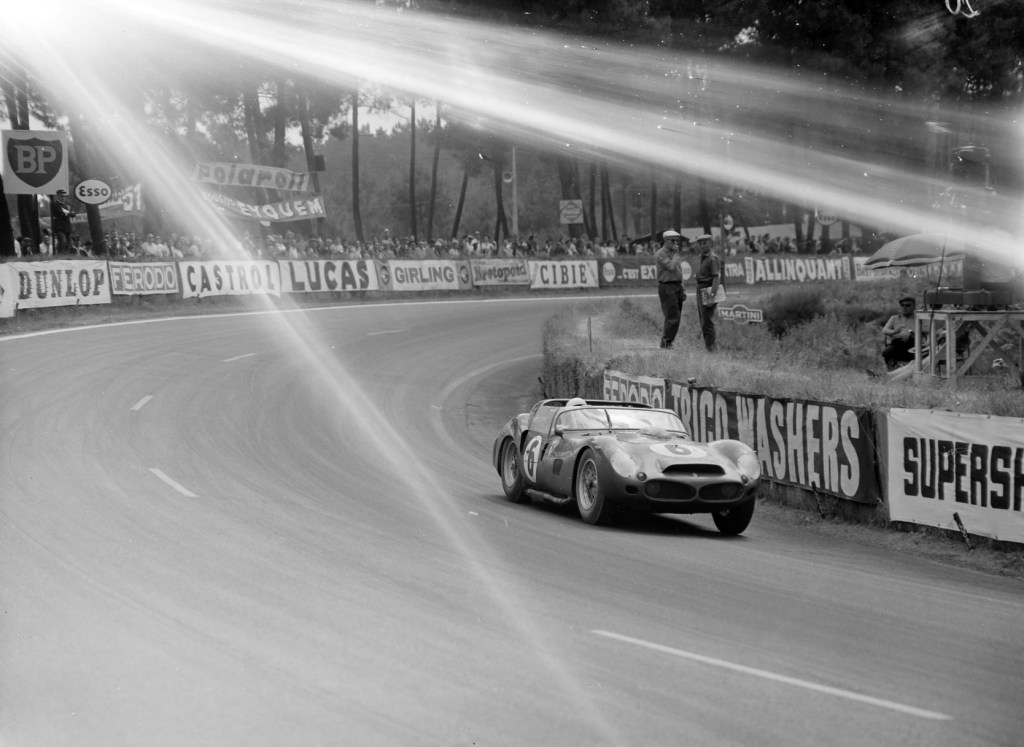
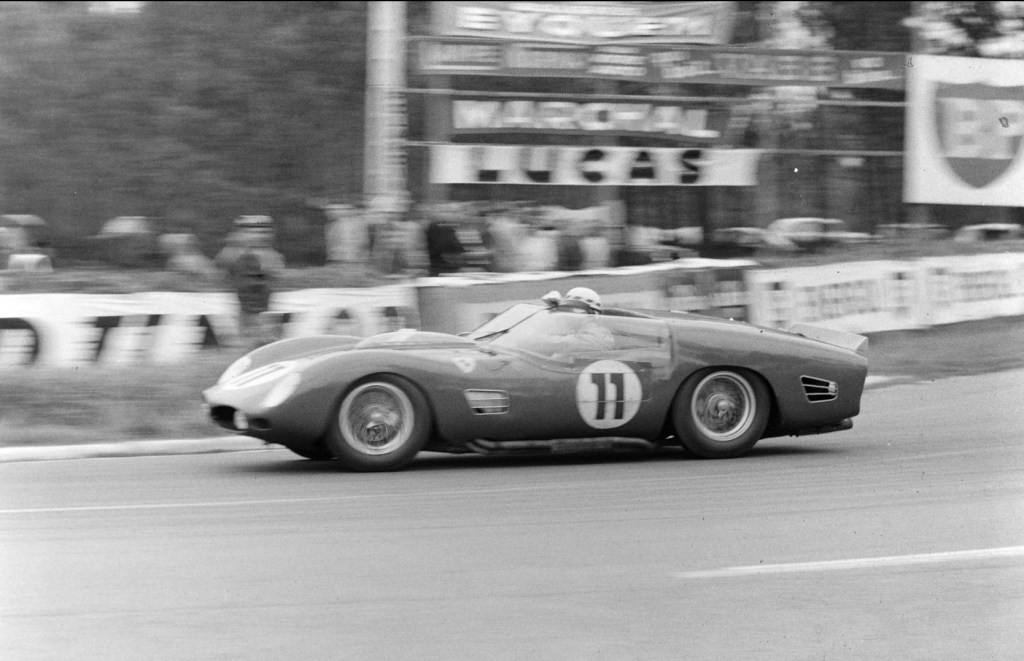
When the CSI/ACO created a new outright ‘experimental’ class for cars of no more than 4-litres (GT cars had the same capacity limit) Ferrari built one final variant of the long running and so successful Testa Ross sportscars and ‘threw its keys’ to their most experienced endurance pairing, the Gendebien/Hill duo having won at La Sarthe in 1958 Ferrari TR/58, and 1961 Ferrari 250 TRI/61. Gendebien also won in 1960, sharing his Ferrari 250 TR59/60.

Image
Olivier Gendebien practising the mid-engined Ferrari 268 SP during the Targa weekend in May 1962. The car didn’t start after Phil Hill ran off the road (MotorSport)

The Maranello mob had been focusing their energies on new fangled mid-engined Dino V6 and V8 sportscars (above), but rightly figured they may be able to squeeze one more win out of old hardware. In so doing Ferrari 330 TRI/LM 0808 became the last front-engined car to win the 24 hour classic outright.

Image
(MotorSport)

The 1962 Le Mans winner started life as 250 TRI/60 chassis, #0780TR, a Fantuzzi Spyder that was badly damaged by Cliff Allison at the Targa Florio in March 1960. He had a front tyre blowout in practice. Back at Maranello it was rebuilt from bits donated by the wrecked 250 TR59/60 #0772TR then raced at Le Mans. Willy Mairesse and Richie Ginther drove the car but retired with a broken driveshaft on the Sunday morning.

#0780 was then returned to the factory and fitted with a TRI61-style high rear body incorporating a Kamm tail, the front was unchanged. In this form it was used as an aerodynamic test-bed by Carlo Chiti and Giotto Bizzarini to develop the ’61 TRI body.

Image
The Mairesse/Parkes Ferrari 250 TRI/61 chassis #0780 on the way to second place at Le Mans in 1961. This swoopy, sensational car was torn down and donated much of its parts except engine, chassis, body, etc to create 330 TRI/LM #0808 (MotorSport)

The car was raced extensively in 1961, placing second at Sebring (Giancarlo Baghetti, Ginther, Taffy von Trips) and at Targa where it was crashed. This time the car was fitted with a new TRI/61 nose before finishing second at the Nurburgring 1000Km driven by the Rodriguez brothers, Ricardo and Pedro. A late pitstop to replace a broken front wheel lost the chance for the NART entered car to win. Mairesse and Mike Parkes raced it at Le Mans, finishing second behind the winning sister, works Gendebien/Hill Testa Rossa. The chassis finally bagged an overdue win when Lorenzo Bandini and Georgio Scarlatti won the Pescara 4 Hours late in the year.

Image
Gendebien 1962 (MotorSport)
Image
#0808 Le Mans 1962 (MotorSport)

Convinced that one of their big front-engined TRs could still do the trick, #0780 was torn down and rebuilt around a new chassis – #0808 – and Tipo 163 Colombo 4-litre SOHC, two-valve V12. The dry-sumped, 60 degree, 3967cc (77×71 mm) engine had modified cylinder heads incorporating bigger valves, fed by six twin-choke Weber 42DCN carbs, it gave about 390bhp @ 7500rpm, about 50bhp more than the 250TR unit. The five speed gearbox was modified to take the extra power and torque.

The new chassis, a more sophisticated mix of traditional ladder frame, and multi-tube spaceframe was 63mm longer than the 250’s, in part this was to accommodate the slightly longer engine and to improve overall balance. Suspension design was a carryover from the 250; upper and lower wishbones, coil springs and Koni dampers both front and rear. Steering was by way of worm and sector.

Image
Nice shot showing the the rear aero/roll bar of #0808 in 1962, whereas the shot below is of the cockpit 12 months hence at Le Mans, with the aero structure removed by NART (MotorSport)
Image
(MotorSport)

Wheels/tyres were Borrani wire/Dunlop-6×16 inch and 7x16inch front/rear, brakes were Dunlop disc front and rear, front/rear tracks 1225mm, the wheelbase 2400mm – same as the short-block – and weight quotes very from 685Kg to 820Kg!

To cap it all off, Carozzeria Fantuzzi built a new body, developed with the aid of Ferrari’s small wind tunnel installed in 1960, to Pininfarina’s design incorporating an aerodynamic roll hoop which served to aid the flow of turbulent air caused by the cockpit/windscreen and therefore improve high speed stability.

#0808 first appeared at the Le Mans test in April driven by the defending winners, Gendebien and Hill. It recorded fastest time of the day despite damp conditions and being fitted with only three Webers, so wasn’t raced, but was rather developed further at the factory and one test at Monza before dominating Le Mans.

Image
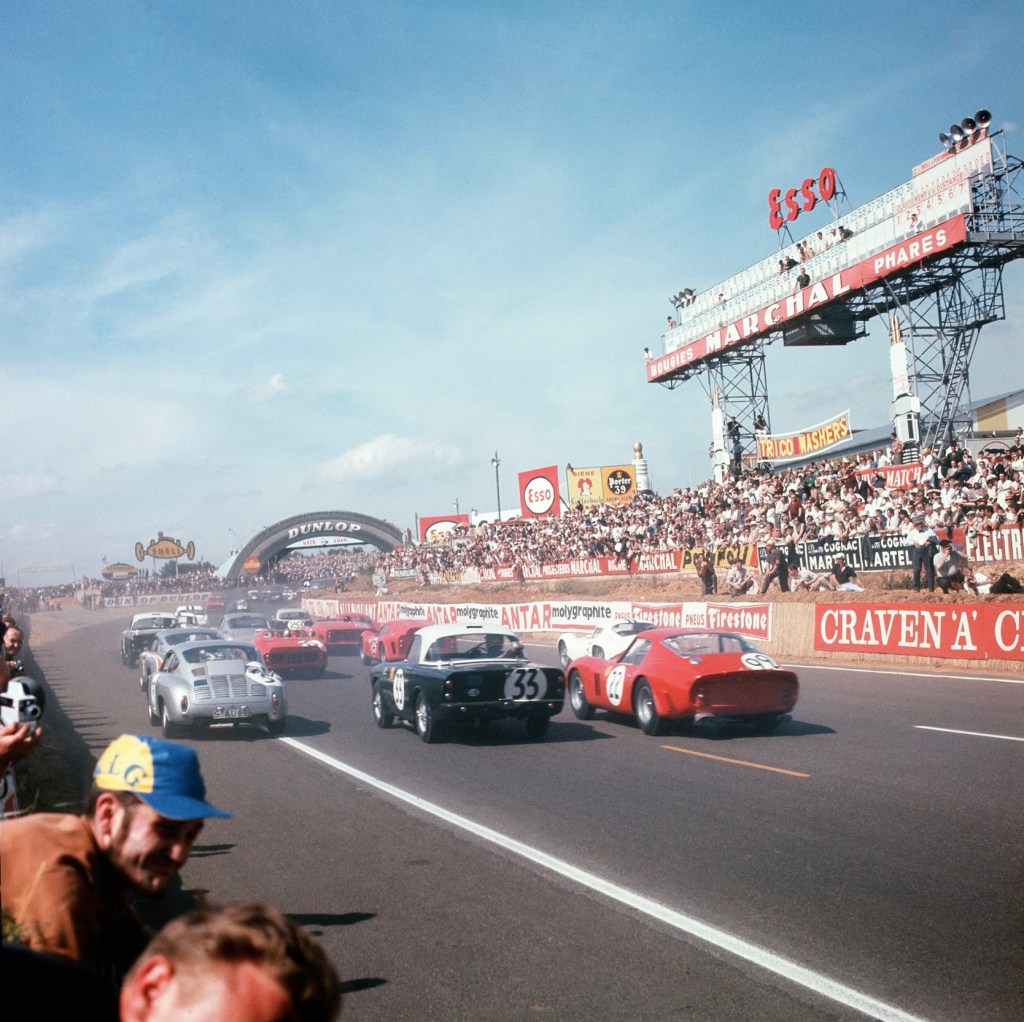
The off, Le Mans 1962. (MotorSport)
Image
(MotorSport)

It wasn’t a cakewalk though. Hill broke Mike Hawthorn’s lap record in practice but both drivers experienced a slipping clutch all weekend. This had to be managed by precise ‘changes and using a taller gear than optimal, neither driver expected it to last the race.

The major potential opposition comprised a mix of other Ferraris, two Maserati Tipo 151s entered by Briggs Cunningham and the works Aston Martin DP212. After the Rodriguez brothers’ works-Dino 246SP retired at 4.30am on Sunday morning, the 330 inherited a four lap lead, they extended to five laps before the end.

Image
(MotorSport)
Image
(MotorSport)

Don Rodriguez acquired the car after the race, with Pedro driving the NART prepared car – now devoid of roll hoop which Chinetti didn’t consider aerodynamic – win to a Bridghampton GP win and second place in the Canadian GP in late ’62. After Ricardo Rodriguez was killed in the Mexican GP, Master Gregory raced #0808 to fourth in the Nassau Trophy.

Into 1963, Pedro and Graham Hill raced the car to third at Sebring behind two new, mid-engined 3-litre V12 250Ps. At one stage the 330 led by three laps until mechanical, electrical and exhaust manifold problems intervened.

Image
Graham Hill, #0808 at Sebring in 1963 (L Galanos)
Image
Pedro during a pitstop at Le Mans in 1963 (unattributed)
Image
Penske, Le Mans 1963 NART 330 TRI/LM (MotorSport)

NART entered the car at Le Mans to defend its title, Pedro and Roger Penske started from pole, then trailed the works 250Ps until a rod failed during the ninth hour. Lubricant on tyres can be a lethal mix, Penske lost the car and took Jo Bonnier’s Porsche 718/8 GTR out in the ensuing prang which left Penske uninjured but #0808 severely damaged, and never to be raced again.

Returned to the factory for repair, the car was fitted with a Fantuzzi coupe body (below) and returned to the US where it was purchased by Hisashi Okada who used it as roadie from 1965 to 1974. Pierre Bardinon used it similarly until commissioning Fantuzzi to return it back to ’62 specs in 1974-75. It continues its life as global investable commodity

Image
Scrappy, crappy shot of #0808 in Fantuzzi coupe guise circa 1963 (Wikipedia)
Image
Le Mans 1963 (MotorSport)

Etcetera…

Image
(MotorSport)

The Mairesse/Parkes 250 TRI/61 #0780 – the 330 ‘donor car’ – with a touch of the opposites at Le Mans in 1961.

Image
(MotorSport)

“The clutch Mauro, the clutch…”. “Treat it like your girlfriend Pheel…very, very gently.” Or words to that general effect.

Read the rest of this entry »
Image
(K Oblinger)

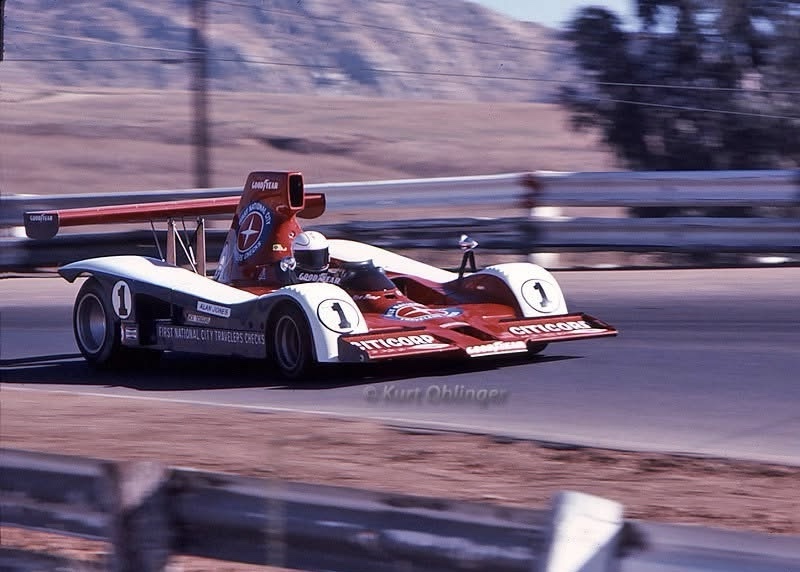
Alan Jones was a formidable weapon in anything; it took him four or so years to clear F3, but it was whammo after that as he stepped into more powerful cars: Formula Atlantic, F5000 and F1.

He raced F5000 on most continents, here in an F5000 in drag, a 5-litre central-seat Can-Am car, Carl Haas Lola T333CS Chev, at Riverside on October 15, 1978, where he won from fellow Aussie, Warwick Brown’s similar VDS Racing machine.

Image
(R Deming)

Jones won five of the 1978 championships’ ten rounds, gathering 2712 points and the title from Brown, on 2548 then Al Holbert in another T333 on 1674 points.

Image
Watkins Glen 1978 (P Goesina)

Jones is swapping notes in the Watkins Glen pits above with Jean-Pierre Jarier who raced a works Shadow DN10 Dodge, Q6/DNF gearbox. Brown won that round from Al Holbert and Rocky Moran, all three raced Lola T333CS, with Jones a DNF.

Image
Jones at Watkins Glen (P Goesina)
Image
(P Goesina)

The rear of Jones’ T333CS Chev in the Watkins Glen paddock, essential elements at this end of the car are a 5-litre 525bhp or so Chev V8 and Hewland DG300 five-speed transaxle.

In the US, many Lola T332 Chev F5000 cars became Lola T332CS Chev Can-Am cars by buying the requisite body kit from Lola. You could buy a T332CS from the factory as well. The mildly updated Lola T333CS could be converted back the other way. The VDS Racing Lolas that Warwick Brown raced in the 1978-79 Rothmans F5000 internationals were T333 HU1 and HU2 fitted with good ‘ole T332C bodywork.

Check out the Lola T333CS on the Lola Heritage website:https://www.lolaheritage.co.uk/type_numbers/t333cs/t333cs.html and the 1978 Can-Am season here:https://www.oldracingcars.com/canam/1978/

Etcetera F5000…

Image

Despite missing half the season, Jones was equal seventh in the 1975 Shellsport British F5000 Championship 1975, together with Bob Evans. He won two rounds in RAM Racing cars, here at Brands Hatch on August 25, aboard a March 75A powered by the Ford Cosworth GAA 3.4-litre twin-cam, four-valve V6 fitted to Ford’s Cologne Capri RS3100 touring cars. Tony Brise and Guy Edwards were second and third aboard T332 Chevs.

Image
Redman, Lola T332C Chev, Jones, Lola T332 Chev, Ongais, Lola T332 Chev, Oliver, Shadow DN6B Dodge and the rest #4 Pilette, Lola T430 Chev and #7 Sam Posey Talon MR-1A Chev (Getty)

Brian Redman and Alan Jones on the front row of the rolling start Mosport Park round of the 1976 US F5000 Championship on June 20, 1976.

Jones won here and at Watkins Glen later in a season where Jones mixed his Surtees F1 and F5000 programs, finding the latter much more satisfying!

Allan Brown wrote, ‘With two rounds to go, Jones (2 round wins) and Oliver (1 win Shadow DN6B Dodge) were tied for the championship lead, but when Oliver retired at Road America, and Jones had to miss the race to be at the Dutch GP, Redman (3 wins) won and leapt into a significant points lead. Third place in the last round secured the Lancastrian his third successive title, while Al Unser’s win (1 win Lola T332) propelled him into second place in the final points table.’

Grids of great depth that year, in addition to the above, competitors included Warwick Brown, Vern Schuppan, Teddy Pillette, Peter Gethin, Graham McRae, John Cannon, Brett Lunger, Danny Ongais, and occasionals/one-offs David Purley, Bruce Allison, Derek Bell, Maurizio Flammini and Patrick Tambay.

Image
Jones, Sid Taylor/Teddy Yip Lola T332 Chev leads Peter Gethin, VDS Racing Chevron B37 Chev early in the 1977 Sandown International won by Max Stewart, his final race win (B Forsyth)

Jones was far and away the quickest bloke on the grid in Australia’s four-round Rothmans F5000 Championship in 1977. Still, he jumped the start in the Oran Park AGP, boofed a car in Surfers Paradise, then had overheating at Sandown and DNFd. Still, he won in Adelaide and made it awfully clear to his countrymen – having not raced in Australia since finishing second in the September 1968 Sandown 3-Hour touring car race in a Holden Monaro GTS327 shared with Clive Millis – just how blindingly quick he was!

Image
Sandown pits (R Steffanoni)
Image

The Jones/Millis second place Holden HK Monaro GTS327 at Shell Corner, Sandown during the September 3-Hour ‘Bathurst warm up’.

While entered by Jones, the car has Lloyd Holyoak Holden signage on it. Holyoak – still with us – was one of Stan Jones’ oldest friends/employees/confidants/supporters, so for sure Lloyd will have pulled the car off his Warrandyte dealership forecourt. One little old lady owner etc…

Image
(M Bisset)

Melbourne enthusiast/historian David Zeunert (second from right) organised a small gathering of Stan Jones Nutters to pay our respects on the centenary of Stans birthday, March 16, 2023, at Springvale Cemetery, a stone’s throw from Sandown.

That’s Lloyd Holyoak sharing his recollections of all things Stan. Some Melburnian Aussie Rules fans may recall Holyoak, a very handy cricketer and football player in his youth, as the North Melbourne Football Club President when North won the VFL ’77 Flag.

Image
(M Bisset)

Credits…

Kurt Oblinger, Richard Deming, Peter Goesina, Lola Heritage, Rod Steffanoni, autopics.com.au

Finito…

image
(Zoltan Glass)

The magic hands are those of Bugatti’s Chief Mechanic, ‘Le Grand Robert’, Frenchman Robert Aumaitre working on a T51 straight-eight, twin-cam, 2.3-litre engine

Image
Louis Chiron with his Bugatti Type 51 near Molsheim in 1931 (sciencephoto.com)
image
T51, Nurburgring German GP July 19, 1931. Race won by Rudy Caracciola’s Mercedes-Benz SSKL by over a minute from the Louis Chiron and Achille Varzi Bugatti T51s (Z Glass)

Bugatti’s Miller 91-inspired twin-cam design – 1931-35 T51 2262cc 60×100, T51A 1493cc 60×66, T51C 1991cc 60×88 – featured a monobloc design with a shared crankcase. The main bearings comprised three ball bearings in the middle and two roller bearings, one at each end. Rod bearings were roller. Lubrication was by jet and splash with a special oil pipe for the front main bearing.

The twin overhead camshafts were driven by a train of gears mounted at the front of the engine and operated two valves per cylinder. A single (T51) Zenith 48K carb fed a Roots type supercharger, with a Scintilla magneto firing one plug per cylinder. The engine gave about 180bhp @ 5500rpm.

image
T51 Nurburgring German Grand Prix July 19, 1931. Inlet side (Z Glass)
Image
Robert Aumaitre and Pierre Veyron at the Avus, Berlin. Veyron won the Avusrennen Voiturette race, 197km, in a Type 51A on May 21, 1933, from Ernst Burggaller’s similar car (Z Glass)

Robert Aumaître ‘came to service with Bugatti in 1930 and was Jean Bugatti’s mechanic. He experienced Jean’s last moments, when he was killed on August 11, 1939, a traumatic experience that haunted hm until his own death,’ recorded the bugattipage.com.

‘After WW2, he assisted French driver Jean Monneret and was involved in record attempts with various Vespas at Montlhery. He designed a Vespa-driven catamaran that crossed the channel in 1947, and was involved in a rally for bicycles with engines from Paris to Alpe d’Huez. After his retirement as manager of a big Cognac company, he spent his last years in Molsheim,’ where he died aged 93 on January 11, 1997.

Strange is that this piece omits Aumaitre’s time with Gordini post-war, where he was again Chief Mechanic.

Credits…

Zoltan Glass/Science and Society Picture Library, bugattipage.com, National Science and Media Museum, Bradford, sciencephoto.com

 Finito…