
Download Process Explorer – System Monitoring, Process Analysis, Windows Utility
Overview
Process Explorer is a powerful system utility developed by Microsoft, designed to provide users with deep visibility into the processes running on their Windows operating system. This tool enables users to analyze, monitor, and manage active processes in real time, offering detailed insights into system behavior and resource usage. It serves as a more advanced alternative to the standard Task Manager, delivering comprehensive data on processes, their associated files, loaded libraries, and open handles. The app is particularly useful for diagnosing performance issues, identifying resource-hogging applications, and detecting potentially problematic or malicious processes.
Target users include system administrators, IT professionals, developers, and advanced Windows users seeking greater control over their system’s operations. Its utility extends to troubleshooting software conflicts, optimizing system performance, and ensuring security by identifying suspicious activity. The app is especially valuable in environments where system stability and efficiency are critical.
Although the developer did not provide additional technical details, the app’s reputation and long-standing presence in the Windows ecosystem affirm its reliability and functionality. Process Explorer plays a key role in the broader category of system utilities, offering a robust solution for users who require more than basic process management. It enhances the user’s ability to understand and manage their system’s inner workings, contributing to a more secure and efficient computing experience.
Key Features & Functionality
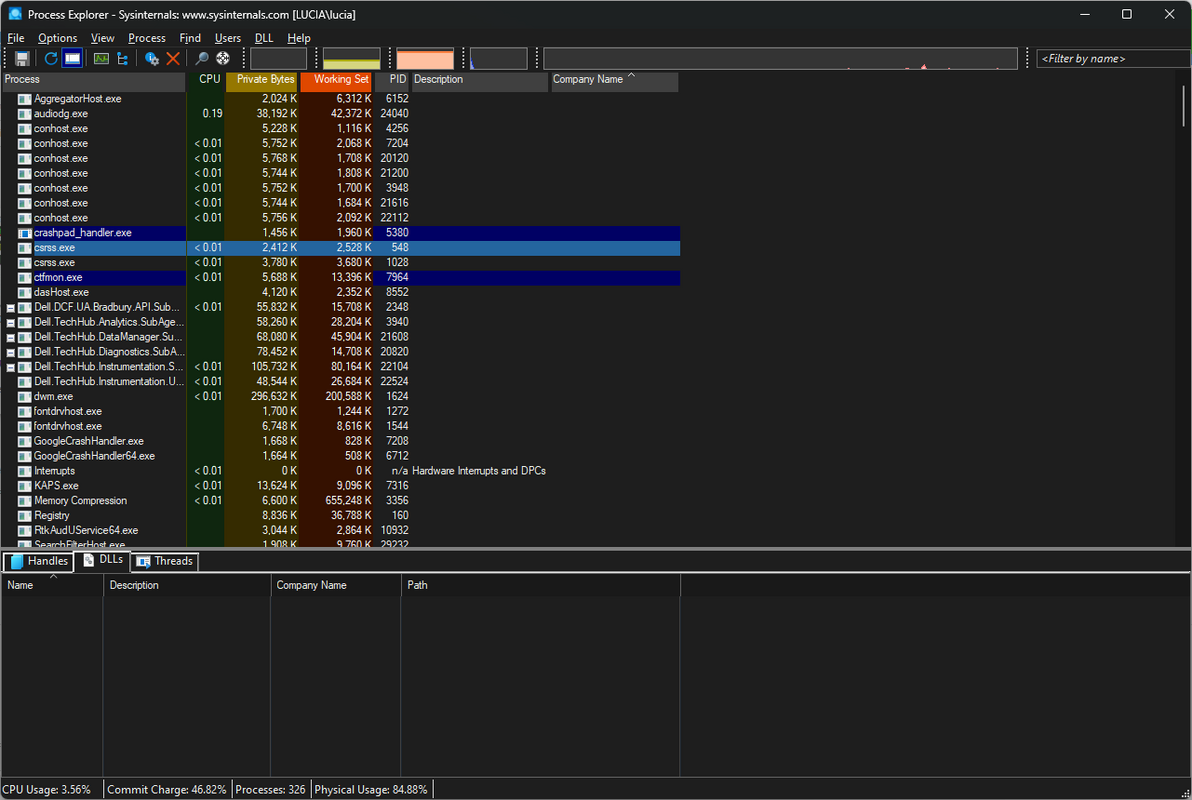
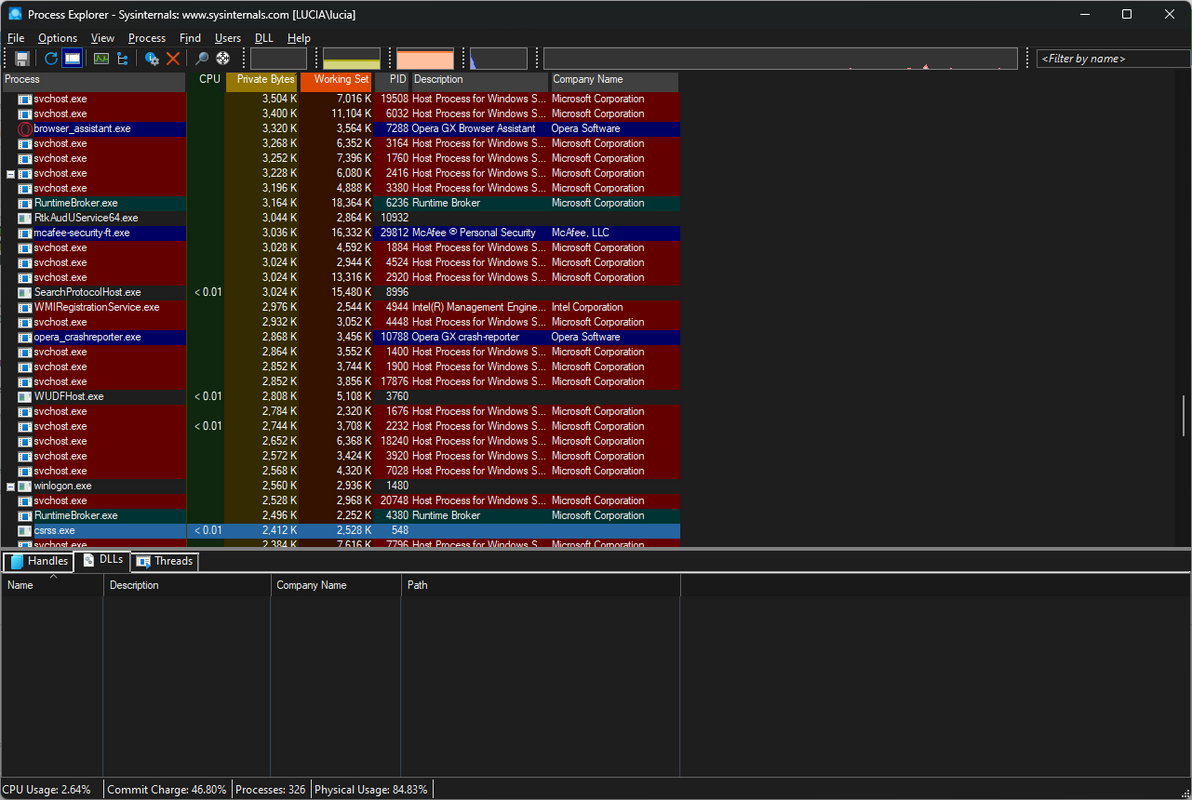
- Real-Time Process Monitoring: Displays a live list of all running processes with detailed metadata, including CPU, memory, and disk usage, enabling users to identify performance bottlenecks instantly.
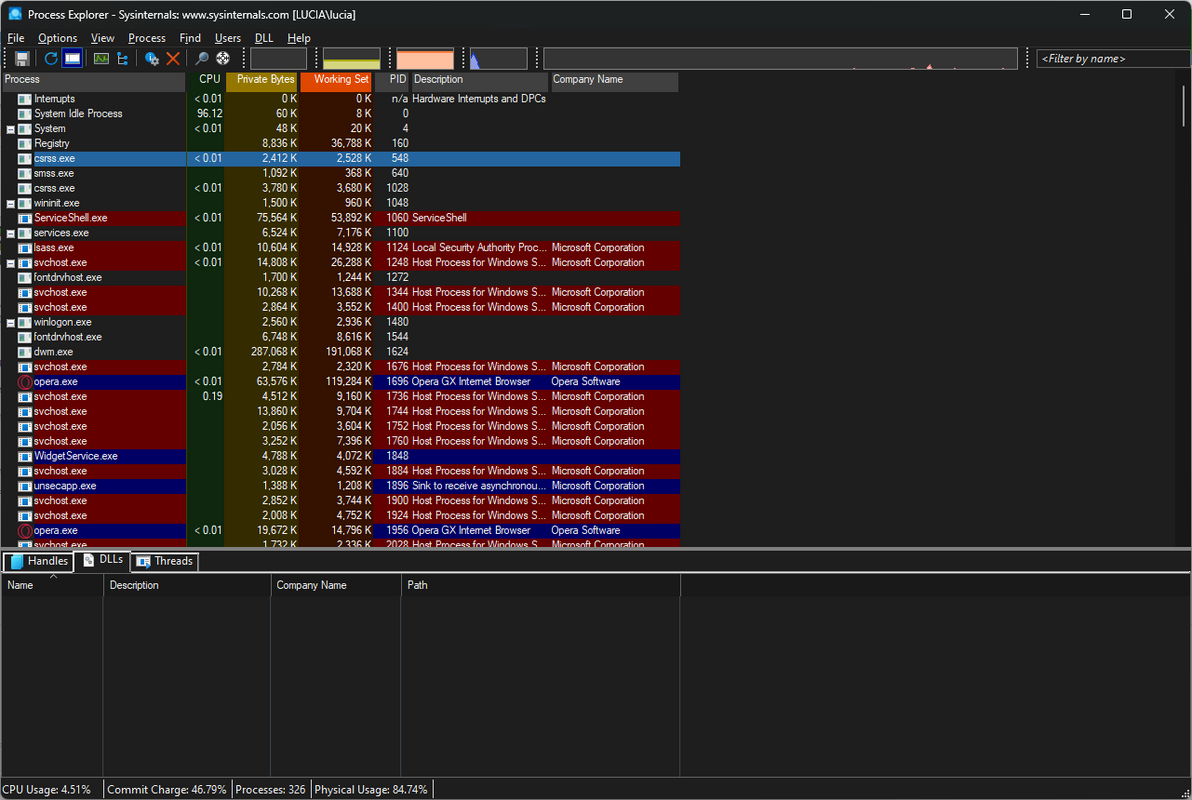
- Visual Process Hierarchy: Presents processes in a tree-like structure, making it easy to trace parent-child relationships and understand how applications interact with the system.
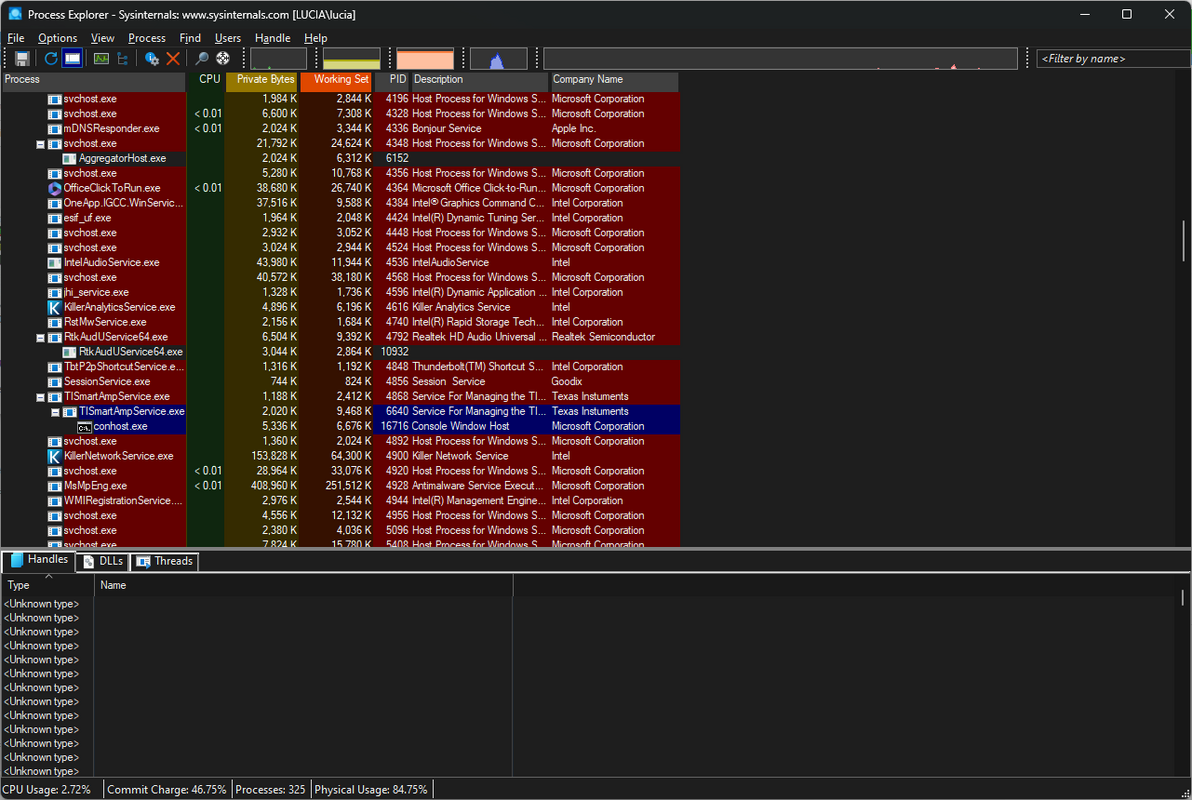
- DLL and Handle Analysis: Allows users to inspect all loaded Dynamic Link Libraries (DLLs) and open handles for any process, helping to detect file locks, memory leaks, or unauthorized access.
- Advanced Search Functionality: Enables users to search for processes based on specific file names, DLLs, or open handles, streamlining the identification of processes using particular resources.
- Process Management Tools: Offers the ability to terminate, suspend, or adjust the priority of any process directly from the interface, providing granular control over system behavior.
For example, a developer troubleshooting an application crash can use Process Explorer to identify which DLL is causing the issue by searching for the file across all active processes. Similarly, a system administrator can monitor unexpected memory consumption by filtering processes with high memory usage. These features empower users to take proactive steps in maintaining system health and performance.
Real-World Use Cases
Process Explorer is widely used in enterprise IT environments for incident response, software deployment verification, and security audits. It can help detect unauthorized software or malware by revealing processes with unusual behavior or suspicious file paths. In personal computing, it assists users in resolving system slowdowns or application freezes by pinpointing the root cause. Its integration with Windows system data ensures accurate and reliable insights, making it a trusted tool across diverse user groups.
Interface, UX & Performance
Process Explorer features a clean, two-pane interface that organizes information logically. The upper pane displays a list of active processes with essential details such as process name, CPU usage, memory consumption, and the company or publisher responsible. The lower pane dynamically updates based on the selected view mode, showing either loaded DLLs, open handles, or other relevant process data.
Navigating the app is intuitive, with context menus, keyboard shortcuts, and filtering options that enhance usability for both beginners and experts. The layout remains responsive across different screen sizes and resolutions, ensuring accessibility on various Windows devices. Although the developer did not list formal performance metrics, the tool is known for its lightweight footprint and minimal impact on system resources during operation.
Users report consistent stability during extended monitoring sessions, with no observed crashes or freezes under normal usage. The interface updates in real time without lag, providing a smooth and reliable experience. Performance may vary slightly depending on system configuration and the number of active processes, but the app maintains responsiveness even under heavy loads.
Platform Compatibility & Technical Requirements
Process Explorer is designed exclusively for the Windows operating system. The app is compatible with modern Windows versions, including Windows 10 and Windows 11, though specific OS version requirements were not listed. The file size is approximately 1.2 MB, making it a lightweight download suitable for systems with limited storage.
Although the developer did not specify minimum OS requirements, the tool is intended for desktop environments and does not support mobile platforms. It is distributed as a standalone executable file, requiring no installation—users can run it directly from a USB drive or local folder. This portability enhances its utility for on-the-go diagnostics and system recovery tasks.
Pros and Cons
- Provides detailed, real-time process and system insights
- Offers advanced search and filtering capabilities
- Lightweight and portable with no installation needed
- Developed by Microsoft, ensuring high reliability and security
- Intuitive interface with clear visual hierarchy
- Requires technical knowledge for optimal use
- Not available on mobile platforms
- Limited support for non-English users
- Interface may appear overwhelming to novice users
- Does not include automated alerting or reporting features
FAQ
Is Process Explorer safe to use?
Yes, Process Explorer is a legitimate tool developed by Microsoft and is widely trusted in IT and security communities. It does not contain malware or unwanted behavior.
Can I use Process Explorer on Windows 10 and Windows 11?
Yes, Process Explorer is compatible with both Windows 10 and Windows 11. The developer did not specify exact version requirements, but it is known to function properly on these platforms.
Do I need to install Process Explorer?
No, the app is portable and runs as a standalone executable. It does not require installation and can be used directly from a USB drive or local folder.
Is Process Explorer available for Android or iOS?
No, Process Explorer is designed exclusively for Windows desktop systems and is not available on mobile platforms.
How often does Process Explorer update?
Updates are released periodically by Microsoft to improve functionality, fix bugs, and ensure compatibility with new Windows versions. The latest version is available through the official Microsoft Sysinternals website.
Final Thoughts
Process Explorer stands out as a vital tool for anyone seeking deeper control and understanding of their Windows system. Its powerful features, intuitive interface, and reliability make it indispensable for both technical professionals and advanced users. While it may have a learning curve for beginners, the benefits far outweigh the initial complexity. Whether you're troubleshooting performance issues, investigating system anomalies, or simply monitoring resource usage, Process Explorer delivers unmatched insight and control.
For users who value system transparency, security, and performance optimization, this utility offers exceptional value. Its lightweight design and portability further enhance its appeal across diverse use cases.
Download Process Explorer now


