.webp)
.webp)

.webp)

Download PSeInt – free beginner programming tool, learn pseudocode, and start coding
Overview
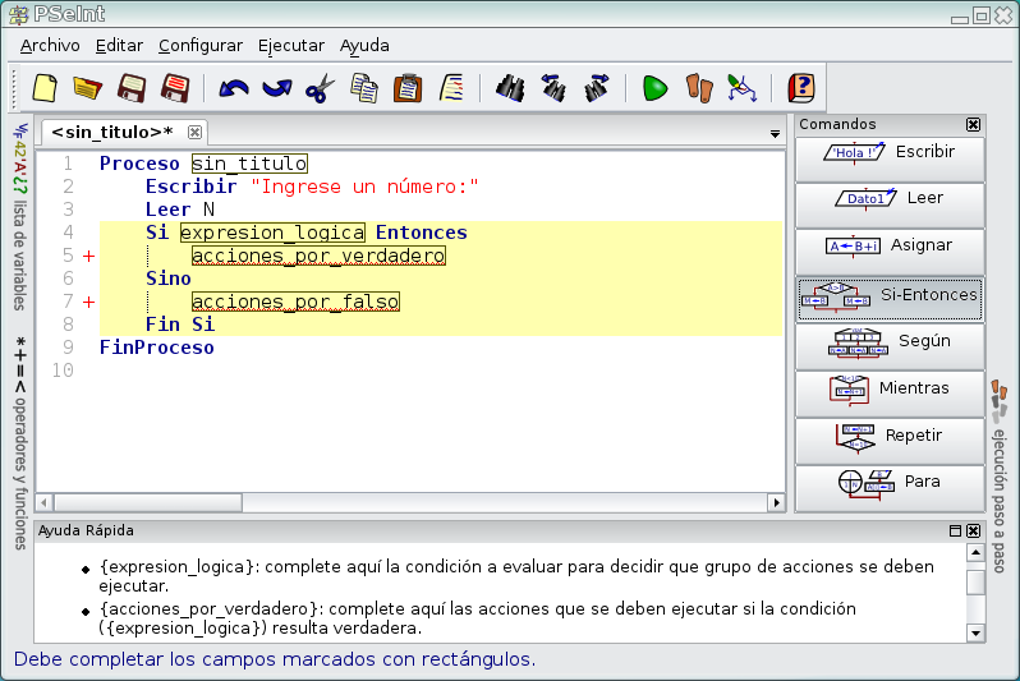
PSeInt (Pseudo-Intérprete) is a lightweight, free software application designed specifically for students and absolute beginners who want to dip their toes into the world of programming without the steep learning curve of a full‑featured language. By providing a clear, English‑like pseudocode environment, PSeInt lets users focus on the logical structure of algorithms—control structures, loops, conditionals, variables, and basic I/O—while sidestepping syntax errors that can frustrate newcomers. The interface is intentionally simple: a text editor on the left, a step‑by‑step execution window on the right, and a series of visual aids such as flow‑chart generation, syntax highlighting, and real‑time error detection. These aids encourage a trial‑and‑error learning style that mirrors how programmers think, making it easier to internalize concepts that later translate directly into languages like Python, Java, or C++. PSeInt also ships with a library of built‑in examples ranging from classic “Hello, World!” programs to more complex sorting algorithms, all written in the same pseudocode style. Because it runs on Windows, Linux, and macOS, it is accessible to most educational institutions without additional licensing costs. In short, PSeInt offers a secure, ad‑free environment where students can experiment, receive instant feedback, and build a solid foundation before moving on to professional development tools.
Key Features and What They Mean for Learners
- Intuitive Pseudocode Editor – Write algorithms using a plain‑English syntax that mirrors natural language, reducing the intimidation factor of cryptic symbols.
- Step‑by‑Step Execution – Run your code line by line, watch variable values change in real time, and understand exactly how each instruction affects program flow.
- Automatic Flow‑Chart Generation – Convert pseudocode into visual diagrams with a single click, helping visual learners grasp branching and looping structures.
- Real‑Time Error Highlighting – The editor flags undeclared variables, mismatched loops, and other common mistakes before you even execute the program.
- Extensive Sample Library – Over 150 ready‑made examples cover topics from basic arithmetic to recursion, providing a ready reference for classroom assignments.
- Multi‑Platform Support – Available for Windows, macOS, and Linux, ensuring that schools with diverse hardware can adopt the tool without extra cost.
- Export Options – Export your pseudocode to PDF or plain text, and generate corresponding flow‑charts for reports or presentations.
- Free and Open Source – No hidden fees, no subscription, and a community‑driven development model that encourages contributions and continuous improvement.
Each of these features is built around the central goal of making programming concepts approachable. For example, the step‑by‑step execution window not only shows the current line of code but also displays a snapshot of the memory table, so learners can see how values evolve. This visual feedback eliminates the “black box” feeling many students experience when a program runs without explanation. The flow‑chart generator is particularly powerful for subjects like computer science fundamentals, where understanding branching logic is crucial. By converting text into diagrams, students can discuss algorithm efficiency in a language that transcends code, fostering deeper analytical skills. Moreover, because PSeInt is open source, educators can customize the interface or add language packs to match curriculum requirements, ensuring the tool stays relevant as teaching methods evolve.
Installation, Usage Instructions, and Compatibility
Getting started with PSeInt is straightforward. First, visit the official website and click the Download button that matches your operating system. The installer is a single executable (.exe for Windows, .dmg for macOS, and a compressed .tar.gz for Linux). After downloading, run the installer and follow the on‑screen prompts: accept the license agreement, choose an installation folder, and click “Install.” The process typically completes within two minutes on a standard PC.
Once installed, launch PSeInt from the desktop shortcut or the applications menu. The first screen presents a welcome wizard that offers three pathways: Start a New Project, Open an Existing File, or Explore Sample Algorithms. For beginners, the wizard recommends opening the “Introduction to Pseudocode” tutorial, which walks you through creating a simple program that prints “Hello, World!” and explains each line of code. The editor includes a toolbar with icons for saving, running, stepping through code, and generating flow‑charts. To write your first algorithm, type pseudocode into the left pane, then click the green “Run” button. The right pane will highlight the current line and display variable values at each step.
Compatibility – PSeInt runs on Windows 7 and later, macOS 10.12 Sierra and newer, and most Linux distributions with a graphical desktop environment (GTK+ libraries required). The application is 64‑bit, but a 32‑bit version is also available for older hardware. Because the software is lightweight (under 30 MB), it works well on low‑spec machines, making it ideal for school computer labs.
For users who prefer command‑line usage, PSeInt includes a minimal CLI mode that can execute pseudocode files directly from a terminal, useful for batch testing or integration with teaching scripts. Regular updates are released quarterly, adding new sample algorithms, fixing minor bugs, and improving the UI based on community feedback. All updates are free and can be applied via the built‑in “Check for Updates” feature, ensuring that your installation stays current and secure.
Pros and Cons
Advantages
- Completely free and open source – no hidden costs for students or institutions.
- Beginners‑friendly pseudocode eliminates the intimidation of strict syntax.
- Real‑time error detection and step‑by‑step execution accelerate learning.
- Automatic flow‑chart generation supports visual learners and documentation.
- Cross‑platform support ensures accessibility on Windows, macOS, and Linux.
- Extensive library of sample algorithms provides ready‑made teaching material.
- Lightweight installation makes it suitable for low‑spec computers and school labs.
Limitations
- Not intended for production‑level software development; transition to a real language is required.
- Limited support for advanced data structures (e.g., trees, graphs) beyond basic arrays.
- Interface, while functional, looks dated compared to modern IDEs.
- Documentation is primarily in Spanish; English resources exist but are less comprehensive.
- No built‑in debugging tools beyond step execution and variable watch.
Frequently Asked Questions
Is PSeInt really free for commercial use?
Yes. PSeInt is released under the GNU General Public License (GPL), which allows free use, modification, and distribution for both educational and commercial purposes, provided that any derivative work also remains open source.
Can I export my pseudocode to a real programming language?
PSeInt does not include an automatic translator, but the clear structure of its pseudocode makes manual conversion to languages such as Python, Java, or C++ relatively straightforward. Many educators provide conversion guides alongside the tool.
Does PSeInt support Unicode characters for non‑English languages?
Yes, the editor supports Unicode, allowing you to write comments and variable names in Spanish, French, or any other language that uses Unicode characters.
How often are updates released and are they safe?
Updates are typically released every three months. Each update is digitally signed and distributed through the official website, ensuring that you receive a secure and verified version.
Can I integrate PSeInt with other teaching platforms like Moodle?
While there is no native plugin, you can export pseudocode files as plain text and upload them to Moodle assignments. Some educators also create custom scripts that automatically grade pseudocode based on output comparison.
Final Verdict and Call to Action
PSeInt shines as an introductory programming environment that removes the barriers many beginners face when confronting formal syntax. Its blend of real‑time feedback, visual flow‑chart generation, and a rich sample library makes it an excellent supplemental tool for high‑school computer science courses, coding bootcamps, or self‑taught enthusiasts. While it is not a substitute for a full‑featured IDE, its free, cross‑platform nature and focus on conceptual understanding give it a unique place in the educational software landscape. If you’re a student eager to grasp the fundamentals of algorithmic thinking, or an instructor looking for a low‑maintenance teaching aid, download PSeInt today and start building logical foundations that will serve you well in any programming language you choose next.