

Download Qube – Next‑Generation Multi‑Engine Search Tool
Overview
Qube (also stylised as q3) is a forward‑thinking web‑search client that lets you tap into the collective index of the world’s biggest search engines with a single click. Instead of opening a browser, navigating to Google or Bing, and typing your query, Qube captures any selectable ASCII text on your screen—whether it lives in a document, an e‑mail, a menu, or even an open application—and instantly sends it to a combined search backend. The results appear in a dedicated left‑hand pane, mirroring the familiar layout of mainstream search engines while freeing you from the constant context‑switching that slows productivity.
The brain behind Qube is the Intelligent Text Capturing Engine (ITCE). This lightweight engine parses the visual text of any window, extracts the relevant string, and forwards it to a server‑side aggregator that queries multiple search providers in parallel. The returned data is de‑duplicated and displayed in real‑time, giving you a single, comprehensive result set. In theory, Qube aims to replace the traditional browser as the primary gateway to information, turning your desktop into a “search‑first” environment.
While the concept is compelling, Qube is still a work‑in‑progress. Users have reported that the built‑in updater can be resource‑hungry, occasionally causing system slowdowns. Additionally, the free version is bundled with unobtrusive ads that become more noticeable during prolonged sessions. Nevertheless, the core idea—instant, context‑aware searching—remains solid, and the tool continues to evolve through community feedback and regular patches.
Key Features & Technology
- Intelligent Text Capturing Engine (ITCE): Detects and extracts ASCII text from virtually any on‑screen source, including PDFs, word processors, code editors, and system dialogs.
- Multi‑Engine Aggregation: Simultaneously queries Google, Bing, DuckDuckGo, and other partner indexes, then merges results into a single, ranked list.
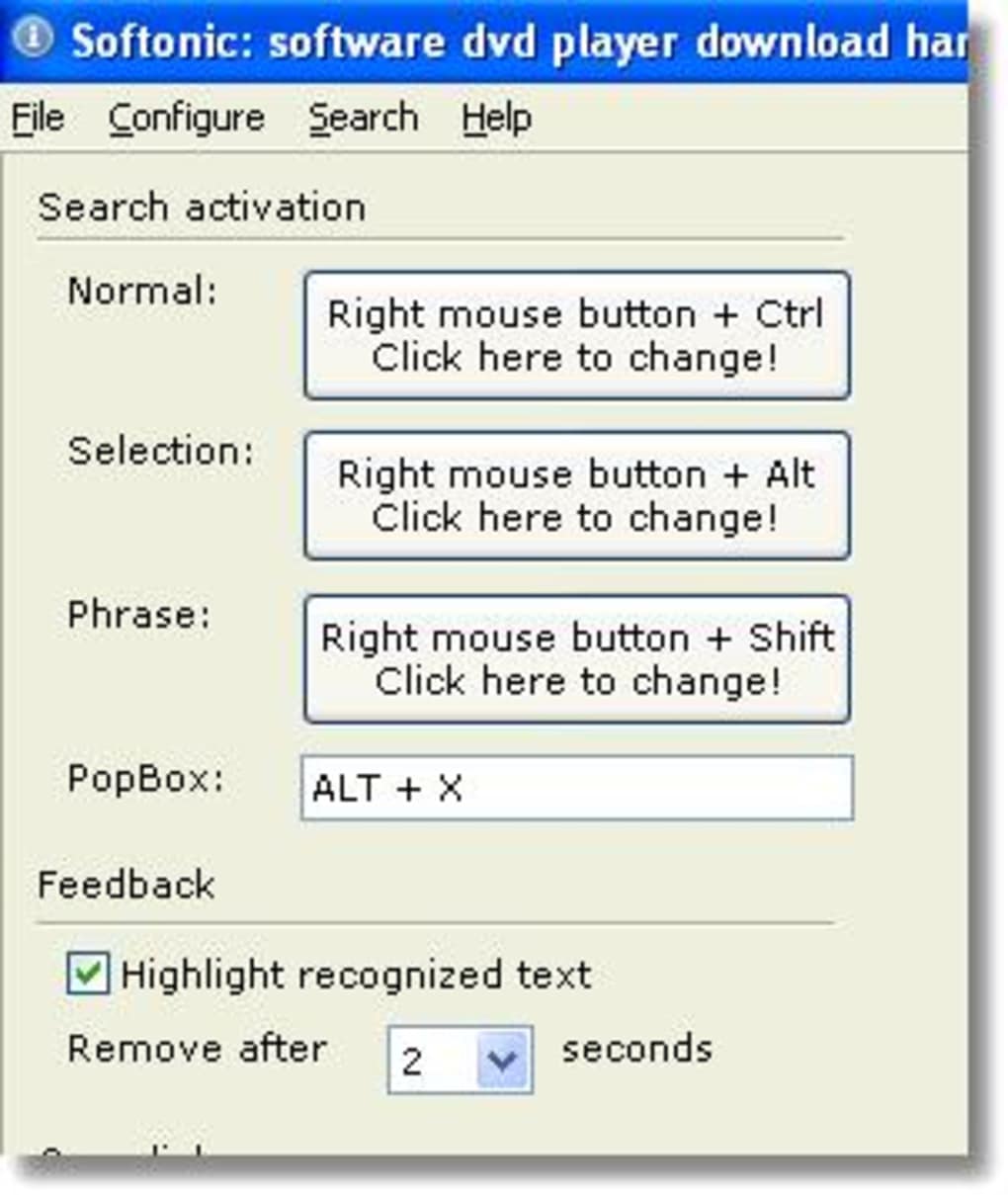
- One‑Click Search: Assign a global shortcut (default Ctrl + Shift + S) to launch a search without leaving the current application.
- Side‑Pane Results: Displays search outcomes in a detachable left pane, keeping your main workspace intact.
- Customizable Search Sources: Enable or disable individual engines, add private APIs, or prioritize specific providers.
- Lightweight UI: Minimalist design that loads in under 2 seconds on a typical Windows 10 machine.
- Ad‑Supported Free Tier: Offers a no‑cost version with optional ad removal via a one‑time license key.
- Secure Update Mechanism: Uses HTTPS and digital signatures to verify the integrity of each patch.
Beyond the feature list, Qube’s architecture is deliberately modular. The front‑end (the UI pane and shortcut handler) communicates with the back‑end via a local REST‑like interface, making it straightforward for developers to create plugins or integrate custom search providers. This extensibility is a key differentiator from traditional browsers, which often lock users into a single search ecosystem.
From a security standpoint, Qube never stores the captured text on your hard drive unless you explicitly enable the “History” option. All queries are encrypted in transit, and the aggregator never logs personally identifiable information. For privacy‑focused users, the application also supports a “Do‑Not‑Track” mode that suppresses all third‑party analytics.
Overall, the feature set positions Qube as a productivity‑oriented tool rather than a full‑blown browser replacement. It shines in scenarios where quick look‑ups are required—coding, research, technical support, and even everyday office tasks.
Installation & Daily Usage
Downloading Qube is straightforward. Visit the official website, click the “Download for Windows” button (or select the appropriate installer for macOS, Linux, Android, or iOS), and save the executable. The installer is signed with a valid code‑signing certificate, ensuring a secure, tamper‑free installation.
After running the installer, follow the on‑screen wizard:
- Accept the license agreement and choose the installation folder (default C:\Program Files\Qube).
- Select optional components such as “Start on Windows boot” and “Create desktop shortcut.”
- Configure the global shortcut. The default works for most users, but you can customize it in the Settings → Keyboard tab.
- Choose whether to enable automatic updates. While the updater has been noted to cause occasional slowdowns, keeping the software current is essential for security patches.
- Finish the wizard and launch Qube.
First‑time usage is intentionally simple. When Qube runs, a thin vertical bar appears on the left edge of the screen. Clicking the bar expands the results pane. To perform a search, highlight any text on your desktop—say, a product name in an email—press the global shortcut, and Qube instantly launches the search. Results populate within seconds, and you can click any entry to open it in your default web browser.
For power users, Qube offers a “Search‑Only Mode” that hides the results pane after each query, returning focus to the original application. This mode is perfect for developers who need rapid API lookups without losing their IDE context. Additionally, the Settings menu lets you fine‑tune the number of results per provider, set a safe‑search filter, and enable/disable ad display.
Because Qube runs as a background service, it consumes minimal RAM (approximately 40 MB on idle) and negligible CPU cycles. The occasional spike you may notice is usually linked to the auto‑updater fetching a new version; you can manually trigger updates at a convenient time to avoid interruptions during critical work.
Compatibility, Pros & Cons
Qube is designed to be cross‑platform, supporting the following operating systems:
- Windows 10, 11 (64‑bit)
- macOS 12 Monterey and later (Intel & Apple Silicon)
- Linux distributions with GTK 3+ (Debian, Ubuntu, Fedora)
- Android 9+ (as a lightweight app)
- iOS 13+ (via a companion web‑view)
Pros
- Instant, context‑aware searching without leaving your current application.
- Aggregates results from multiple major search engines, reducing the need for repeated queries.
- Lightweight UI that does not replace your preferred browser.
- Secure HTTPS communication and optional “Do‑Not‑Track” mode for privacy.
- Highly configurable shortcuts and search source preferences.
- Free tier available with a straightforward ad‑removal license.
Cons
- The built‑in updater can be resource‑intensive, leading to short periods of system slowdown.
- Ads, while not intrusive initially, may become distracting during long sessions.
- Currently lacks native integration with some niche enterprise search platforms.
- Occasional false‑positive text captures when dealing with non‑ASCII symbols.
- Documentation is still evolving; new users may need to explore settings to unlock full potential.
FAQ & Conclusion
Is Qube really free to use?
Yes, Qube offers a fully functional free version that includes ads. If you prefer an ad‑free experience, you can purchase a one‑time license key for a modest fee.
Can Qube replace my web browser?
Qube is designed as a complementary search tool, not a full browser replacement. It launches results in your default browser, preserving all the features (extensions, bookmarks, etc.) you rely on.
How does the Intelligent Text Capturing Engine work?
ITCE reads the visual buffer of any active window, extracts readable ASCII characters, and passes the string to Qube’s search aggregator. It does not store the captured text unless you enable the history feature.
Is the software safe for corporate environments?
Qube uses HTTPS with digital signatures for updates and does not retain search queries locally by default, making it suitable for most corporate policies. However, administrators should review the privacy settings before deployment.
What should I do if the updater slows down my PC?
You can disable automatic updates in Settings → Updates, then manually check for new versions during idle periods. This prevents unexpected performance dips during critical work.
In summary, Qube introduces a novel approach to everyday searching by leveraging the combined power of multiple engines through a seamless, shortcut‑driven interface. While the updater and ad model present minor drawbacks, the core functionality—instant, on‑the‑fly queries from any screen context—offers genuine productivity gains for students, professionals, and power users alike. If you spend a lot of time jumping between documents and web resources, giving Qube a try could streamline your workflow dramatically.
Ready to boost your search efficiency? Download Qube now and experience the future of desktop searching today.
Overall Rating: 4/5
Pros: Instant search, multi‑engine results, lightweight UI.
Cons: Updater performance, ad presence in free tier.