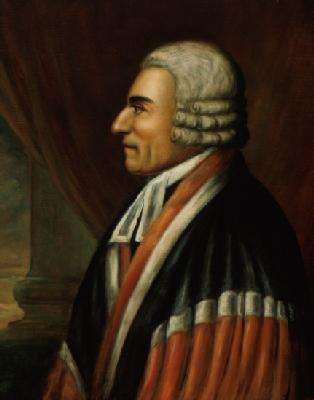
As of this past Saturday, Associate Justice Samuel Alito has been on the Supreme Court for twenty years. He joined the Court on January 31, 2006.
On October 31, 2005, President George W. Bush nominated then-Judge Samuel Alito to replace Justice Sandra Day O'Connor after the withdrawal of White House Counsel Harriet Miers' nomination. The next day, I had this op-ed in the Wall Street Journal profiling the nominee.
Judge Alito is a supremely qualified nominee who should (though he may not) win a quick and easy confirmation. Some Senate Democrats will find reasons to oppose him, but he once held their support. He was confirmed unanimously by a Democratic Senate in 1990 only two months after he was first nominated by George H.W. Bush.
There being no question about Judge Alito's accomplishments and credentials, the debate over this nomination will focus squarely on his jurisprudence. Already at least one Democratic aide reportedly called Judge Alito a "right-wing wacko." Such epithets grossly distort his record. He is not a dogmatic conservative; his record shows a man more interested in getting the law right and faithfully applying applicable precedents than scoring rhetorical points or advancing an ideological agenda. As he commented in an interview earlier this year, "Judges should be judges. They shouldn't be legislators, they shouldn't be administrators."
Judge Alito is most often compared to Antonin Scalia. Years ago one journalist even dubbed him "Scalito," and the name stuck. While the two share an ethnic heritage and a constitutionalist judicial philosophy, it would be easy to overstate the comparison. Judge Alito's opinions are rarely adorned with zingers or verbal barbs at his colleagues. What he may lack in rhetorical flair, however, he more than makes up for with analytical rigor. Whereas Justice Scalia's caustic wit and penchant for tweaking his colleagues (particularly Justice O'Connor) might have cost him in building court majorities, Judge Alito's subtle charm and cooler approach could make him a powerful intellectual force on the court.
I think it is fair to say the Justice Alito has been a more polarizing figure on the Court than I anticipated. Although he initially voted in virtual lockstep with Chief Justice Roberts, their approaches to the law began to diverge after several years on the Court.
After his confirmation hearing, I had a second WSJ op-ed piece discussing the partisan attacks on his nomination and the obsession with results-oriented evaluation of judicial decisions.
Samuel Alito has delivered an impressive performance under interrogation, revealing a humility -- and a command of legal matters -- well beyond that of his inquisitors. It was clear that many of those questioning him had little interest in the substance of his answers, particularly since he would not tell senators how he would resolve contentious issues that may come before the court. In response, Sen. Joseph Biden suggested in frustration that the Senate scrap confirmation hearings and simply debate the nominee's decisions as if they were considering legislation. . . .
Viewing judges as life-tenured politicians who get to impose their own policy preferences furthers the downward spiral of judicial politicization. To be sure, judges themselves are not blameless. The Supreme Court's willingness to inject itself into controversies traditionally resolved by the political branches of government only encourages interest groups to devote resources to shaping the federal bench.
Reversing the trend will be difficult. In today's political climate, to say that the judiciary should not resolve an issue is itself viewed as taking a side. Ironically, the same senators who worry that Judge Alito shows insufficient respect for the political branches are aghast that he might leave some thorny issues for the elected branches to sort out. In Thursday morning's questioning, Sen. Russ Feingold could scarcely believe that some aspects of constitutional separation of powers cannot be resolved by the courts.
A majority of Senate Democrats would seek to filibuster Justice Alito, voting against cloture on the nomination. He was confirmed nonetheless, albeit not by a filibuster-proof margin
Twenty years later, the confirmation process has only gotten worse. Confirmation hearings are an even more embarrassing spectacle and it is rare that Senators support nominees from across the aisle.
Justice Alito joined the Court to replace Associate Justice Sandra Day O'Connor, then the "median" justice, but he would not find his place in the middle of the Court. Instead, Justice Alito is often on the right flank, and on some issues may even be the most conservative justice on the Court. In some respects, he is the model of President Obama's "empathetic judge," albeit one who shows empathy for quite different groups and constituencies than Obama had in mind. I also expect him to remain on the Court for several more years to come.
Although a federal judge declined to issue a preliminary injunction requested by Minnesota and the Twin Cities, the plaintiffs should still prevail on their claims that the federal government’s actions there are unconstitutional.
Federal district court Judge Katherine Menendez issued a ruling Saturday denying a motion for a preliminary injunction blocking the deployment of thousands of ICE and other federal agents to the Twin Cities.
Minnesota and the cities of Minneapolis and St. Paul filed an important lawsuit on January 12 arguing that Operation Metro Surge, as the Trump administration refers to the mass federal deployment, violates the 10th Amendment. They argue that the administration is using the deployment to try to coerce them into giving up their "sanctuary" laws, which restrict state and local assistance to federal immigration enforcement. They also say the administration's actions have disrupted state and local government functions, including the state constitutional guarantee to education and the ability of state and local law enforcement to address crime and protect Minnesotans' safety — which is "one of the most basic rights reserved to the States and their municipalities" in our federalist system.
Preliminary rulings like the one that came down this weekend often presage the court's decision on the merits. But, unusually, the judge emphasized that her decision doesn't necessarily foreshadow a final ruling for the federal government, and that it is instead based on her uncertainty about some key issues. The ultimate outcome of the case remains unclear, especially since any decision reached by the district court will almost certainly be appealed. But the suit deserves to prevail; a contrary decision would set a dangerous precedent.
What is the 10th Amendment?
The 10th Amendment states that "powers not delegated to the United States by the Constitution, nor prohibited by it to the States, are reserved to the States respectively, or to the people." In Federalist 28, Alexander Hamilton assured readers that: "It may safely be received as an axiom in our political system, that the State governments will, in all possible contingencies, afford complete security against invasions of the public liberty by the national authority." He emphasized that they can use their control of "the organs of the civil power" to "adopt a regular plan of opposition." Minnesota's resistance to oppressive — and, likely, illegal — federal policies is an example of such "opposition," and the 10th Amendment protects the state and its local governments against federal usurpation of their authority over their own employees and resources.
A series of Supreme Court decisions primarily supported by conservative justices, such as New York v. United States (1992), Printz v. United States (1997), and Murphy v. NCAA (2018), hold that the federal government cannot "commandeer" state and local officials to do the federal government's bidding or to help enforce federal laws. And in multiple decisions during the first Trump administration and continuing in the second, numerous lower federal courts ruled that the president could not order states to aid in immigration enforcement actions and could not withhold federal funds from sanctuary jurisdictions where doing so would be coercive or where Congress had not authorized immigration-related grants.
Control over state and local government personnel is one of the powers reserved to the states by the 10th Amendment and is a central element of state autonomy and sovereignty. If the federal government could coerce states into giving up that control, it could essentially neuter and render them almost totally subservient to the federal government.
Evidence described in the plaintiffs' filings and Menendez's decision extensively documents what appears to be the federal government's main motive for launching Operation Metro Surge: to pressure Minnesota's state and local governments into giving up their sanctuary policies. I highlighted additional evidence in a recent Lawfare article about this case, such as statements by Trump "border czar" Tom Homan last week that the administration would scale back the crackdown if state and local officials cooperated and provided greater access to jails.
An "Unprecedented" Case
As Menendez noted in her opinion, the current case isn't precisely analogous to previous court decisions on commandeering and federal coercion of states, and raises "unprecedented" issues. The earlier precedents largely dealt with either congressional laws directly imposing coercion or the withholding of federal funds from state and local governments. It is also true that many federal policies and law enforcement efforts can indirectly burden states in various ways and that the federal government often has the option of increasing enforcement efforts in states that refuse to help. Legal scholar Jonathan Adler emphasizes these points in his defense of the government's position in the case.
But, in this case, the "enforcement" effort has been undertaken for the specific, openly avowed purpose of punishing and coercing the states, not merely increasing enforcement to make up for its limitations on cooperation. In addition, the fact that many of the federal actions — including violations of First Amendment rights, illegal detentions, warrantless searches, and unjustified killing of protestors — are independently illegal also makes them coercive, in much the same way that a Mafia boss threatening to break your legs is coercive while threatening something he has a legal right to do is not. This illegality means private parties can bring lawsuits on other grounds, as some have. But it also bolsters a Tenth Amendment suit by states and localities. And the latter can be more effective for reasons I noted in my earlier Lawfare article.
Furthermore, as the Minnesota lawsuit documents, many of the federal actions here directly disrupt state and local government functions, such as public schools, emergency services, and local police. For example, federal raids and the threat of additional ones have forced many schools to close, preventing state and local officials from meeting their state constitutional obligations to provide an education, the state and cities say. That creates direct coercion of the states for purposes of commandeering, and is different from cases where federal enforcement efforts merely have an incidental impact on the states.
Even Otherwise Lawful Actions Can Be Coercive
Even otherwise legal federal actions become coercive if done on a large enough scale for the purpose of pressuring states. For example, Spending Clause coercion cases such as NFIB v. Sebelius (2012) — the famous Obamacare case — hold that conditioning a large enough amount of federal grants on state cooperation with a federal program qualifies as coercion, even though Congress generally has broad discretion to impose conditions on federal grants to states and local governments. Sending 3,000 armed federal officers to harass the public and disrupt state and local government functions is at least comparably coercive to threatening to withhold a large amount of grant money.
Chief Justice John Roberts famously described the grant condition struck down in NFIB as a metaphorical "gun to the head." Several lower court cases addressing attempted denial of federal funds to sanctuary cities reached similar conclusions. Operation Metro Surge is pretty close to a literal gun to the head, featuring coercion by actual armed agents with guns.
As I explained in my earlier Lawfare article, similar violence could be used to coerce states on a wide range of policy issues. The most obvious example is that of conservative "gun sanctuary" states, which limit cooperation with federal enforcement of gun control laws. If the federal government sent thousands of agents to harass gun owners and disrupt local government operations in order to coerce gun sanctuary jurisdictions into helping the feds, that would surely violate the 10th Amendment. If courts allow such coercion-by-violence, there would not be much left the anticommandeering rule or any other constitutional protection for state autonomy.
While NFIB and other conditional-grant cases dealt with Spending Clause issues, similar reasoning applies here. In both cases, federal government action, even if otherwise legal, becomes unconstitutional if it seeks to coercively usurp state government control over their own resources and personnel. Indeed, the 10th Amendment — a provision explicitly protecting state autonomy — is a more logical basis for restricting such coercion than the Spending Clause.
Menendez decided not to grant a preliminary injunction in part because the "unprecedented" nature of the situation weighs against doing so and in favor of waiting for a full resolution on the merits. Such hesitation is understandable. But it is important to remember that the situation is unprecedented in large part because coercion by armed paramilitary agents is actually more blatant and egregious than the type of commandeering addressed in previous cases.
Judge Menendez's Uncertainty
In addition, Menendez held back because of uncertainty over two other issues. First, though she recognized there was extensive evidence that the Trump administration's motive was to commandeer state resources for immigration enforcement, she suggested other evidence indicated there may be other motives, such as increasing enforcement of the law and combatting welfare fraud.
There has indeed been considerable welfare fraud in Minnesota, some of it committed by Somali immigrants. But there is no reason to think the deployment of thousands of armed federal agents can somehow curb welfare fraud, which requires investigation by accountants and other experts, not armed men in the streets. Similarly, as I have noted previously, it is implausible to think that such a massive effort is needed for enforcement of immigration laws, given that Minnesota has a much lower percentage of illegal migrants in its population than national average. And an administration genuinely interested in politically neutral law enforcement would itself not be engaging in widespread, brazen violations of the law in the process of "enforcement." Ultimately, the evidence overwhelmingly indicates that there would be no such massive federal operation in Minnesota absent a desire to engage in commandeering.
Second, Menendez worried there was no clear basis for determining exactly where to draw the line between legitimate federal law-enforcement efforts and unconstitutional coercion:
Quantitatively, Plaintiffs cannot point to what number of federal officers would demonstrate a de facto Tenth Amendment anticommandeering violation. Qualitatively, there is no clear way for the Court to determine at what point Defendants' alleged unlawful actions (e.g., racial profiling, excessive force, deployment of chemical irritants, wearing face coverings, switching license plates, overusing city parking lots, among others) becomes so problematic that they amount to unconstitutional coercion and an infringement on Minnesota's state sovereignty.
It may indeed be impossible to draw a precise numerical line. Commandeering and coercion are among the many legal doctrines that take the form of standards, rather than bright-line rules. Other examples include the Fourth Amendment's ban on unreasonable searches and seizures and the First Amendment's protection for freedom of speech, which does not draw a clear line between protected pure speech and unprotected speech closely linked to illegal conduct. Despite line-drawing difficulties, courts routinely enforce these doctrines.
Considerable precision is possible here, even if it cannot be absolutely perfect. Courts can and should enjoin federal operations — regardless of scale — that would not have been undertaken but for an unconstitutional motive related to coercion and commandeering. That seems clearly true of Operation Metro Surge. The line becomes even easier to draw when the operations in question also feature apparently extensive illegal actions by federal agents. As already noted, such illegality magnifies the coercion in question.
As Menendez noted, the plaintiffs "made a strong showing that Operation Metro Surge has had, and will likely continue to have, profound and even heartbreaking, consequences on the State of Minnesota, the Twin Cities, and Minnesotans. Since Operation Metro Surge began, there have been multiple shootings of Minnesota residents by federal immigration enforcement agents." In the last few weeks, federal agents killed two Minneapolis residents, Renee Good and Alexander Pretti, and shot another in the leg. The judge added that there was evidence that federal agents "have engaged in racial profiling, excessive use of force, and other harmful actions," and that the administration had done "nothing to refute the negative impacts described by Plaintiffs in almost every arena of daily life, from the expenditure of vast resources in police overtime to a plummeting of students' attendance in schools, from a delay in responding to emergency calls to extreme hardship for small businesses."
When such things are done for the avowed purpose of coercing state and local governments, we have a violation of the 10th Amendment. Menendez should so rule when she decides the case on the merits, and appellate courts should uphold any such decision.
A revised and updated version of my article "Immigration is Not Invasion" now up on SSRN, and also under submission to law reviews. This latest version has additional evidence on the history and original meaning of "invasion." It is also updated with material on the latest developments in ongoing litigation over the meaning of "invasion," most recently the Trump administration's extraordinary admission that their interpretation of the Alien Enemies Act would allow the president to invoke it in response to the "British Invasion" of rock stars, such as the Beatles.
Here is the abstract:
In recent years, state governments and the second Trump Administration have increasingly advanced the argument that illegal migration and cross-border drug-smuggling qualify as "invasion" under the Constitution, and the Alien Enemies Act of 1798 (AEA). If these arguments are accepted by courts, or if they rule the issue is committed to the unreviewable discretion of the executive, the consequences will be dire. Such an outcome would pose a grave threat to the civil liberties of both immigrants and US citizens. It would also enable state governments to initiate war without federal authorization. This article makes the first comprehensive case against claims that illegal migration and drug smuggling qualify as "invasion." As James Madison explained in 1800, "Invasion is an operation of war." Illegal migration and drug smuggling do not qualify.
Part I summarizes the history of the "invasion" debate and currently ongoing litigation over it. Part II explains why the broad interpretation of "invasion" is manifestly wrong under the text and original meaning of the Constitution. The concept does not include illegal migration or drug smuggling. This conclusion is supported by the constitutional text, extensive evidence from the Constitutional Convention and the ratification process, and references to "invasion" in the Federalist Papers.
In Part III, I consider the meaning of "invasion" in the Alien Enemies Act of 1798. The text and public meaning indicate it is essentially the same as that in the Constitution. Under the Act, an invasion requires a military attack. This reality is not changed by the fact that many Americans die as a result of overdosing on illegal drugs, or by recent US military attacks on suspected drug smugglers in international waters. The more recent US military intervention in Venezuela also cannot be used to justify invocation of the AEA.
Part IV outlines the dire implications of the broad view of invasion. State governments would have the power to wage war in response to undocumented migration and smuggling, even if such warfare were not authorized by Congress. This would be a major undermining of Congress' power to declare war and threatens to involve the United States in warfare at the behest of a single state government. Even worse, the broad view would also effectively give the federal government the power to suspend the writ of habeas corpus at any time. These dangerous implications strengthen the originalist case against a broad definition of "invasion." They also cut against the broad definition from the standpoint of various living constitution theories of interpretation.
Finally, Part V explains why courts should not defer to the president or to state governments on either the meaning of "invasion" or the factual issue of whether an "invasion" – properly defined – has actually occurred.
The version on SSRN includes appendices listing all references to "invasion" at the Constitutional Convention, the state ratifying conventions, and in the Federalist Papers. But, for law reviews, I have submitted the appendices as a separate file, and the article could ultimately be published without this material, which can simply be referenced and posted online elsewhere, at my website.
Recently, the University of Arkansas Law School made an offer to a dean candidate, and then promptly rescinded it, apparently because she joined an amicus brief in the transgender athletics case. The AALS and other groups charged this rescission violated norms of academic freedom. Not quite. Individual professors have academic freedom rights, but Deans, in their administrative capacities do not. At state institutions, deans are at-will employees who are appointed by politically accountable bodies.
Ilya Shapiro and I discuss this situation in the Washington Post. Here is the introduction:
The University of Arkansas School of Law hired Professor Emily Suski as dean in early January, but promptly rescinded that offer less than a week later based on "feedback from key external stakeholders."
It turns out that Suski joined a Supreme Court brief arguing that federal law guarantees biological males the right to participate in female sports. That position might seem self-evident in the ivory tower, but in the real world, there's consensus across the political spectrum that this position is wrong as a matter of law, policy and science.
Elite academics predictably cried foul. The Association of American Law Schools charged that the job rescission was a "blatant violation of academic freedom" and a "threat to the legal profession." That group of august law professors might need to go back to school. While individual professors, including Suski in her scholarly capacity, enjoy academic freedom protections, there's no First Amendment right to a deanship. The dean is appointed by the university's governing body as an at-will employee to serve the university's interests. A public university in particular could reasonably have concluded that Suski might have had a hard time interacting with the legislature, executive branch officials, alumni and donors. This red state was the first to ban medical treatment for minors with gender dysphoria.
Perhaps we would have more sympathy for the AALS's claim, but this organization has done nothing to protect conservative dean candidates who are systematically excluded from higher education. Now, legislatures in red states are finally pushing back:
States must ensure that university officials can faithfully serve their communities without alienating either side of the political spectrum. Candidates with obvious blue flags should be vetted so they can effectively interact with "key external stakeholders." They should also be able to credibly deal with a Republican-run Department of Education, as well as state supreme courts that are removing the far-left American Bar Association's monopoly on law school accreditation.
In an ideal world, politics would play no role in dean selection. But we're far from an ideal world. Those who dissent from progressive orthodoxy have been excluded from legal academia for generations — we've both personally felt that sting in our careers — and the AALS has done nothing. But as soon as one progressive dean is axed, the fainting couches come out.
Finally, I am proud to announce my new affiliation as an adjunct scholar with the Manhattan Institute. You will hear more about my work with MI in due course.
But Council Member Peter Ortiz had gotten a temporary order that was in effect for nearly four months; the underlying disputed stemmed from a controversy related to a "Drag Queen story time."
From Ortiz v. Saenz, decided Friday by the California Court of Appeal (San Diego County Superior Court Judge Victor Rodriguez sitting by designation, joined by Judges Mary Greenwood and Cynthia Lie):
Saenz operated a social media account under the username "@ESSJTIMES" which, at the relevant time, was accessible to the public and had almost 80,000 followers. Saenz used the account to disseminate news pertaining to the Eastside San Jose community….
During the time period at issue in this case, Ortiz was a member of the San Jose City Council. In the fall of 2023, Saenz posted a video on his account criticizing another elected member of the San Jose City for promoting a children's event known as "Drag Queen story time." In the video, Saenz claimed the event was "inherently sexual" and posed a threat to children. He included the council member's social media account in his post (a practice commonly referred to as "tag" or "tagging"), after which Saenz's followers began posting negative messages on that council member's account.
Ortiz, in defense of his colleague, used his social media account to report Saenz to the platform for hate speech and misinformation, and posted a statement on his account suggesting that Saenz and his followers were targeting and threatening his fellow council member. Ortiz and his girlfriend, Brenda Zendejas {Saenz alleged Zendejas was also Ortiz's campaign manager}, also posted messages on their accounts asking the public to report Saenz to the social media platform for hateful speech.
In response, Saenz shared their messages on his account, with his added comment stating, in part, "You are throwing a ralley [sic] to label this page a hate page? Are you kidding me. I am only saying this once this last time." Saenz's followers responded by posting negative remarks about Ortiz and Zendejas, including accusing Ortiz of being a pedophile for defending his fellow council member.
A few months later, in December 2023, Saenz posted a video and message on his account referring to Ortiz and the same colleague as "brown puppets" and tagged Ortiz's social media account. Saenz stated that they did "not represent the Latino and Mexican community at all. Especially the majority of the community that is against grooming our children. We need those brown puppets pushing that crap on our children out of City Hall ASAP!" In the video, Saenz called Ortiz a "showered cholo" and alluded to Ortiz being a "sick fuck." Other account users responding to Saenz's post referred to Ortiz as a pedophile.
From Kentucky A.G. opinion 26-01, released Jan. 5 but just posted on Westlaw:
The "basic policy" of the Open Meetings Act … "is that the formation of public policy is public business and shall not be conducted in secret and the exceptions provided for by KRS 61.810 or otherwise provided for by law shall be strictly construed." Under KRS 61.840, "[n]o condition other than those required for the maintenance of order shall apply to the attendance of any member of the public at any meeting of a public agency" and "[a]ll agencies shall permit news media coverage, including but not limited to recording and broadcasting."
The Office has previously found that "KRS 61.840 vests members of the public with a virtually unconditional right to attend all meetings of a public agency." Indeed, the only conditions of attendance permitted by the Act are "those required for the maintenance of order."
Regarding the recording of public meetings, the Office has found that public agencies that did not allow members of the public to record their meetings violated KRS 61.840…. For the purpose of KRS 61.840, there is little difference between recording a meeting on a cellphone and live-streaming a meeting on a cellphone. Indeed, KRS 61.840 also requires the "broadcasting" of public meetings to be permitted.
On January 27, in United States v. Hembree, the Fifth Circuit held that the federal felon firearm ban (18 USC 922(g)(1)) based on a conviction for simple possession of methamphetamine violates the Second Amendment. Coincidentally, on March 2 the Supreme Court will hear oral argument in another case that came from the Fifth Circuit, United States v. Hemani, which concerns whether the federal firearm ban by an unlawful user of drugs (18 USC 922(g)(3)) violates the Second Amendment.
The opinion by Judge Higginson, joined by Judge Willett and Judge Engelhardt, is rendered with the backdrop that the Fifth Circuit has upheld the felon-in-possession ban facially, but has recognized the viability of as-applied challenges. Given that the government sustained its burden to show the ban's facial constitutionality, it argued that the burden shifted to Hembree to demonstrate its unconstitutionality as applied to him. The court relegated that argument to a footnote citing Rahimi: "It is the government's burden to demonstrate that the challenged regulation is 'relevantly similar to laws our tradition is understood to permit.'"
While "in some instances, we have remanded to allow party presentation of history and discussion of intervening caselaw before the district court," here "the government provided robust historical discussion in its briefing and specifically 'offer[ed] analogues to other felonies,' for our review as well." It's a good sign that litigants have learned to proffer what they deem to be the historical analogues required by Bruen, given the initial criticisms of the text-history method that lawyers and judges are incapable to doing anything more than analysis of means-ends scrutiny.
But that's where the government fell short. First, it cited historical laws imposing severe punishment for possession of contraband, including "laws punishing the knowing receipt of a stolen horse, the theft of mail, and the counterfeiting and forgery of public securities with death." But in a prior decision, the Fifth Circuit refuted such purported analogues: "Those Founding-era offenses—knowing receipt of a stolen horse, mail theft, and counterfeiting—'concern theft, fraud, or deceit,' not the 'use and sale of addictive drugs.'" None of these alleged analogues are firearms regulations and thus could not possibly demonstrate a historic tradition of firearm regulation.
Second, the government pointed to historical laws "disarming dangerous people," adding that "drug crimes are inherently dangerous," even mere possession, which "entails the dealing with and enriching of drug traffickers." However, the government offered nothing about "the dangerous nature of narcotics" other than the mere fact of Hembree's conviction.
In contrast to the government, which failed to meet its burden of showing that a felony based on drug possession aligned with "the Nation's history and tradition of disarming individuals whose past criminal conduct demonstrates a special danger of misusing firearms," Hembree pointed out that possession of drugs, including opium, was not unlawful at the Founding and that non-medical drug use became unlawful only in the 20th century. Moreover, without evidence of intoxication at the time the person used a firearm, no historical analogue existed based on a person's habitual or occasional drug use. That is, of course, the issue right now before the Supreme Court in Hemani.
The government relied on Rahimi to urge "dangerousness" as the criteria, but that was at too high a level of generality. As the court replied, "Indeed, not one piece of historical evidence suggests that, at the time they ratified the Second Amendment, the Founders authorized Congress to disarm anyone it deemed dangerous."
Judge Willett wrote a concurring opinion, as he often does, to make some broader points questioning the overgrowth of federal power. When the Federalists advocated adoption of the Constitution without a bill of rights because powers not delegated are reserved, Patrick Henry replied: "Why not say so? Is it because it will consume too much paper?"
Even without the Second Amendment, does the felon-in-possession ban rest on an enumerated power of Congress? The Constitution delegates power to Congress "To regulate Commerce … among the several States." Judge Willett writes: "Perplexingly, the Supreme Court once declared that this power 'is not confined to the regulation of commerce among the states.'" That's from United States v. Darby, 312 U.S. 100, 118 (1941). More recently, the Court has tried to better define and limit the commerce power.
Hembree's argument that no enumerated power exists for the felon ban is foreclosed by Fifth Circuit precedent. However, as Judge Willett wryly remarks, "where the enumerated-powers belt slips—as the Anti-Federalists foresaw—the Second Amendment suspenders hold, at least for Hembree." And Judge Willett "remain[s] open to reconsidering whether § 922(g)(1) truly falls within Congress's enumerated powers."
It is noteworthy that the Hembree court engaged in no discussion whatever about the dangers of methamphetamine, as would have been highlighted in the pre-Bruen days of intermediate scrutiny. The drug originally became popular in Germany in the 1930s. Because it could keep soldiers alert and aggressive, it became a staple of Germany's Blitzkrieg attacks. As shown in a recent documentary, the Brits and Americans discovered its enhanced qualities and issued doses by the millions to their soldiers.
I first encountered "crystal meth" or "crank" in the '80s when court-appointed to represent a defendant on federal gun charges. The guys on a construction crew were addicted to the drug. Their dealer sought to avoid prosecution for trafficking by introducing the crew members to an undercover ATF agent who pretended to be the top dealer. He said no more meth to you guys unless you get me firearms (that was his hook to bring gun charges). They couldn't find any real guns so they built pipe bombs for the undercover agent. The ATF agent created the crime to get credit for having it prosecuted.
The government should not seek cert in Hembree. To date, both the Biden Administration in Rahimi (involving a violent wife beater) and the Trump Administration in Hemani (involving a pot head who also allegedly possessed cocaine and supposedly had connections to terrorism) have brought cases to the Court with unsympathetic defendants and fact patterns. It would be unfortunate if meth heads, gang bangers, and stoners became the test case rights claimants in foundational Second Amendment cases.
Methamphetamine is listed on Schedule II as it does have medical uses, but it can be addictive and dangerous. We'll see what the Supreme Court does with Hemani, which concerns gun possession by a marijuana user.
In my remarks, I explained how the decisions in both FCC v. Consumers' Research and Loper Bright Enterprises v. Raimando are entirely consistent with what I have called "The Delegation Doctrine." Indeed, I might even suggest that these two decisions largely confirm the hypothesis.
In short, the claim is that, while the Supreme Court has been unable or unwilling to reinvigorate the nondelegation doctrine, it has heightened its focus on the question of delegation and, in particular, carefully scrutinizes the extent to which federal agencies are exercising power that Congress affirmatively delegated to them. This principle, I suggest, unifies wide swaths of the Court's recent administrative law jurisprudence, including its handling of Chevron, the Major Questions Doctrine, and its resolution of nondelegation claims. This argument grows out of a serious of articles I have written in this space and is summarized in this article from the Harvard Journal of Law & Public Policy which was written and published before the Loper Bright decision.
For those interested in the discussion of this and related questions, video of the forum is below:
The New York Times reports that Gregory Bovino, the Border Patrol Field Leader, criticized sabbath observance by Daniel Rosen, the U.S. Attorney for the District of Minnesota:
A day before six career federal prosecutors resigned in protest over the Justice Department's handling of the killing of Renee Good in Minneapolis, lawyers in the office had a conversation with Gregory Bovino, the Border Patrol field leader, that left them deeply unsettled.
According to several people with knowledge of the telephone conversation, which took place on Jan. 12, Mr. Bovino made derisive remarks about the faith of the U.S. attorney in Minnesota, Daniel N. Rosen. Mr. Rosen is an Orthodox Jew and observes Shabbat, a period of rest between Friday and Saturday nights that often includes refraining from using electronic devices.
Mr. Bovino, who has been the face of the Trump administration's immigration crackdown, used the term "chosen people" in a mocking way, according to the people with knowledge of the call. He also asked, sarcastically, whether Mr. Rosen understood that Orthodox Jewish criminals don't take weekends off, the people said.
Mr. Bovino had requested the meeting with Mr. Rosen to press the Minnesota office to work more aggressively to seek criminal charges against people Mr. Bovino believed were unlawfully impeding the work of his immigration agents.
Mr. Rosen delegated the call to a deputy. During the call, with a handful of prosecutors listening in, Mr. Bovino complained that Mr. Rosen had been unreachable for portions of the weekend because of Shabbat. Mr. Bovino's remarks followed his complaints about having difficulty reaching Mr. Rosen.
I'll assume this report is accurate.
Bovino's comments, are deeply unfortunate. For an administration that is so deeply committed to fighting antisemitism and protecting religious liberty, I don't see how these sorts of remarks can stand. Indeed, Trump's daughter and son-in-law are sabbath observant Jews. Bovino's wisecrack about the "chosen people" reflects an even-deeper prejudice. The details might come out in some future Giglio proceeding.
Still, I think Bovino's comments reflects a far greater issue. Some people have a very hard time understanding why observant Jews follow certain religious beliefs. The most obvious example are the dietary rules, known as the laws of Kosher. People simply cannot understand why Jews will not eat pig or lobster. They get annoyed when we ask whether some dish has chicken or pork in it; as if it makes a difference? Moreover, they cannot fathom why chicken, which is an kosher animal, cannot be eaten in a non-Kosher restaurant. (The rules for slaughtering and preparing kosher meat are extremely complex.)
Another example is the rules on shabbat. The biblical prohibition on working during the sabbath has many practical consequences. Observant Jews cannot drive and cannot use electronic devices. They can't even write with a pen or pencil. They can't even flip on a light switch. These rules do not only apply on Shabbat (Friday night till Saturday night). These rules apply during approximately eleven days every year where there is an observance that prohibits work. But even well-meaning people do not understand.
There is no shortage of cases to illustrate the point that courts misunderstand and misapply even basic practices of Judaism. In one case concerning the reach of the Religious Freedom Restoration Act, a judge gave the example of a law requiring someone to "turn on a light switch every day" as a statute that could not conceivably impose a substantial burden on religion. Oral Argument at 1:00:40-50, E. Tex. Baptist Univ. v. Burwell, 793 F.3d 449 (5th Cir. 2015) (No. 14-20112), vacated and remanded, 578 U.S. 403 (2016). However, he was mistaken. That requirement would substantially burden Orthodox Jewish religious practices. On the Sabbath, Jews are forbidden from kindling flames, and Orthodox rabbis agree that this prohibition extends to turning on a light switch. See Exodus 35:3; see also Aryeh Citron, Electricity on Shabbat, Chabad.org, https://tinyurl.com/mrx4ynkk. The judge certainly did not intend to demean Judaism or suggest that Jewish practices should not qualify for protection. He was simply unaware of a practice that is central to the life of Orthodox Jews.
I doubt Bovino is familiar with any of these rules. He simply exhibits frustration with the U.S. Attorney not agreeing to meet with him on Shabbat. He is not alone.
I can think of at least one other recent example where a member of the executive branch expressed frustration that an observant Jew was not responsive on Shabbat.
Think back to Friday, March 28, 2025. That afternoon, Judge Murphy in Boston (where else?) issued a nationwide injunction blocking the government from removing three aliens to South Sudan. This is the case that would become DHS v. D.V.D. That evening, Erez Reuveni, an employee in the Department of Justice, frantically tried to reach certain individuals at DOJ to learn whether aliens were being staged for removal. He worried that the government would not comply with the purported universal injunction. Reuveni would describe his process in his whistleblower complaint:
With this clear disconnect, it was evident to Mr. Reuveni that DHS had received direction contrary to the guidance OIL had provided concerning the scope of the injunction. Mr. Reuveni had attempted to contact Ensign and Flentje multiple times by phone between 10:40 p.m. and 12:04 a.m., and [Acting Assistant Attorney General Jacob] Roth via email, but no one answered.40
FN40: 40 Ensign was teleworking from Arizona as he often did and later told Mr. Reuveni that he missed the calls because his phone was silenced.
A footnote explains why Ensign did not respond, but the implication is that Roth simply ignored the calls. I can confidently state that Jacob Roth (a longtime friend) was not checking his phone on Friday night because it was Shabbat. I suspect Reuveni, based on his background, knew about Roth's observance. Roth was my co-counsel for the JCRL amicus brief I referenced above.
This sort of conflict happens a lot. Jewish students, in particular, often have a difficult time with deadlines, exams, and other extra-curricular assignments that fall on Shabbat or holidays. It is not intentional. People simply do not consider Jewish observance. For whatever reason, briefs tend to be due by the close of business on Friday. In winter months, that time usually falls after the beginning of shabbat. And it would be reckless to risk filing a brief when the computer needs to shut before the filing deadline. Indeed, during the Foreign Emoluments litigation, Seth Barrett Tillman and I had a string of briefs that were all due during Jewish holidays. (If you ever wondered why we filed some of our briefs early, now you know).
Let me take a step back. I have been giving a lot of thought to antisemitism of late. I now have to explain this pernicious concept to my young children. I am convinced that one of the reasons why antisemitism exists in every generation is because our customs are simply difficult to understand, and make us unable to interact on other people's timelines. Why can't Jews do anything on Friday night to Saturday night? Why can't Jews eat the same foods we eat? Why can't they break bread with us at our table? Why are they so different? To be sure, all religions have unique customs, but Judaism is particularly rigorous in how these rules are enforced. Other faiths are more permissive. These rules have the necessary consequence of excluding Jews from interacting with non-Jews in many fashions. I am developing this theme for a future writing. Stay tuned.
It's a pretty obvious way to think about it, but I thought it might be the sort of obvious that was still worth making explicit:
Imagine a right-wing advocacy group is very upset about a mosque, because it thinks one of the imams is a supporter of anti-American Islamic extremism.
They go to the mosque in the middle of services, and start shouting "the time for Judgment had come," blowing whistles, chanting "Muslim Extremists Out!," "Remember 9/11!," and the like. They approach the imam and congregants in a way that some perceive as menacing, and loudly berate the imam with questions about jihadism and Muslims wanting to implement Sharia.
They chant, "This ain't God's house. This is the house of the devil." They approach a female congregant, who is there with two young children, and demand to know in an allegedly hostile manner why she doesn't support the protesters. They call people "Nazis," and ask children, "Do you know your parents are Nazis? They're going to burn in hell."
They block the stairs leading to the mosque's childcare area and make it difficult and allegedly hazardous for parents to retrieve their children. After causing most of the congregants to flee, some of them chant, "Who shut this down? We shut this down!"
There's a person accompanying them to livestream the events to his large audience. He's generally politically aligned with their message, so there's reason to think he shares their goals. He understands the whole point of what the other defendants were doing is to make things "traumatic and uncomfortable" for the congregants: He tells his viewers that "the whole point of [the operation] is to disrupt."
While the intrusion is happening, he asks one of the disrupters, "Who is the person that we should talk to? Is there an imam or something?" He joins the others in approaching the imam and largely surrounding him, standing close to him and peppering him with questions. He doesn't leave when the imam asks him to leave. He stands at the main door of the mosque, where he confronts some congregants and allegedly physically obstructs them as they try to exit the mosque to challenge them with what he says are "facts" about extremist Islam.
Before the incident, he had met all the other defendants for a pre-op briefing, during which the organizers advised the other defendants and him that their operation would target the mosque, and provide instruction on how the operation would be conducted. He is careful to maintain operational secrecy by reminding his driver not to disclose the target of the operation, and he steps away briefly during the planning session so his microphone wouldn't accidentally divulge certain portions of what the planners are saying. He assures the other defendants that he won't prematurely disclose the target of the operation.
Would you be inclined to think that the livestreamer is guilty of conspiring with others to physically obstruct the worship services? Or would you say that there isn't enough evidence of conspiracy, which is to say (to oversimplify) an express or implied agreement to act in concert in order to accomplish the disruption?
As you might gather, the hypothetical facts above are closely drawn from the allegations (which of course at this point are just allegations) in the Don Lemon indictment (see here and here), but changed to reflect the hypothetical right-wing disruption of the mosque rather than a left-wing disruption of a church.
The indictment in U.S. v. Levy-Armstrong has been unsealed; I excerpted the key allegations as to the disruption itself in this post. But what about Don Lemon, the former longtime CNN reporter who livestreamed the disruption?
If a person breaks a speech-neutral law in order to record and publish something, his motivation generally doesn't give him any First Amendment right to break the law. That's true as to trespass laws, wiretapping laws, and more. And that's true whether the person is working for a professional news outlet or just acting on his own.
At the same time, the government still has to show all the elements of the crime as to each defendant, and sometimes it might be unable to do that as to the person who is just trying to report on the event. An example: The crime of burglary generally (to oversimplify) requires unlawfully entering onto property with the intent to commit a further crime there, often theft. If a gang of people break into a store in order to steal from it, they may well be guilty of commercial burglary.
But if someone else walks into the store and livestream them doing it, then the elements of commercial burglary wouldn't be satisfied, because he didn't enter with the intent to commit a further crime. He is therefore not guilty—not because his acting as a journalist gives him a First Amendment immunity, but because his lack of intent to steal means the elements of the crime are absent as to him.
Lemon, together with other defendants, was indicted for violating 18 U.S.C. § 241, which in relevant part makes it a crime to
conspire to injure, oppress, threaten, or intimidate any person … in the free exercise or enjoyment of any right or privilege secured to him by the Constitution or laws of the United States
and 18 U.S.C. § 248(a)(2), which in relevant part makes it a crime to
by force or threat of force or by physical obstruction, intentionally injures, intimidates or interferes with or attempts to injure, intimidate or interfere with any person lawfully exercising or seeking to exercise the First Amendment right of religious freedom at a place of religious worship.
To convict Lemon, the government has to show all the elements of the crime as to him. It has to show that he conspired with the others to oppress people in their free exercise of religion, which is to say that he entered into an express or implicit agreement with them to commit the underlying unlawful acts (§ 241). And it has to show (to oversimplify slightly) that he either personally used force or threat of force or physical obstruction to intentionally interfere with their religious worship (§ 248), or that he is guilty as a coconspirator or an accomplice.
Whether the government can do that, I assume, will be a matter for trial (or perhaps for pretrial motions practice, though I doubt that such motions will resolve the issue). Here are the government's factual allegations as to Lemon—again recall that they largely aim to prove a conspiracy between Lemon and the others, and not (with some exceptions) specific obstructive actions by Lemon:
The indictment (in U.S. v. Levy-Armstrong) is here. The allegations are that defendants violated 18 U.S.C. § 241 which in relevant part makes it a crime to
conspire to injure, oppress, threaten, or intimidate any person … in the free exercise or enjoyment of any right or privilege secured to him by the Constitution or laws of the United States
and 18 U.S.C. § 248(a)(2), which in relevant part makes it a crime to
by force or threat of force or by physical obstruction, intentionally injures, intimidates or interferes with or attempts to injure, intimidate or interfere with any person lawfully exercising or seeking to exercise the First Amendment right of religious freedom at a place of religious worship.
(Section 248(a)(1), the most commonly used part of the same statute, prohibits the same as to "obtaining or providing reproductive health services"; the statute is called the Freedom of Access to Clinic Entrances Act, but it has always covered both abortion clinics and places of worship.)
Here is the heart of the allegations about what happened at the church. I will blog separately about how the indictment bears on Don Lemon (the former long-time CNN reporter) who livestreamed the event:
Overt Act# 12: Continuing on the morning of January 18, 2026, all of the defendants, together with other co-conspirators, entered the Church sanctuary, with the first wave positioning themselves among the congregants and the second wave, led by defendants ARMSTRONG and ALLEN, commencing the disruptive takeover operation, in which the first wave of agitators then actively joined.
Overt Act# 13: As the pastor was beginning his sermon, defendant ARMSTRONG interrupted the service with loud declarations about the Church harboring a "Director of ICE" and indicating that the time for Judgment had come, and other co-conspirators immediately joined in by yelling and blowing whistles in a takeover attack on the Church, all of which quickly caused the situation in the Church to become chaotic, menacing, and traumatizing to Church members.
Overt Act# 14: While inside the Church, defendants ARMSTRONG, ALLEN, KELLY, RICHARDSON, LUNDY, CREWS, and AUSTIN and others led and/or joined with their co-conspirators in various chants, including "ICE Out!," "Hands Up, Don't Shoot!," and "Stand Up, Fight Back!," while gesturing in an aggressive and hostile manner, which congregants and the pastor perceived as threats of violence and a potential prelude to a mass shooting.
There may be lots of things wrong with the way the Trump Administration is handling immigration enforcement in Minneapolis, but commandeering is not among them.
Speaking of commandeering, today in Minnesota v. Trump, federal district court Judge Kate Menendez rejected Minnesota's request for an injunction against the Trump Administration's "Operation Metro Surge" immigration enforcement initiative in Minneapolis. Unlike my co-blogger Ilya Somin, I believe Judge Menendez was entirely correct to do so, as existing law does not remotely support Minnesota's claims.
As Judge Menendez recognized, the anti-commandeering doctrine is relatively narrow. It bars the federal government from issuing directives to state or local governments, Under the relevant cases, the federal government may not force state or local governments to administer or enforce a federal regulatory scheme or adopt federal law enforcement or regulatory priorities. For this reason, states are not obligated to assist the Department of Homeland Security in identifying, detaining, and deporting unlawfully present aliens any more than state or local law enforcement is required to assist the Drug Enforcement Agency in arresting and prosecuting those who use or possess (or even distribute) marijuana.
But the anti-commandeering doctrine does not prevent the federal government from pressuring states to cooperate, nor does it insulate states from the potentially burdensome or disruptive effects of federal law. Indeed, the relevant cases are quite clear on this. So, for example, New York v. United States held that it was permissible for the federal government to impose more stringent regulatory constraints and greater tax burdens on states that failed to address low-level radioactive waste in accord with the federal government's preferences. Under the Clean Air Act, states that fail to adopt and maintain adequate State Implementation Plans are not subject to injunctions, but can face more stringent offset requirements and direct federal regulation that promises to be more onerous and less sensitive to local concerns than state or local regulation would be. (Threatening highway funds, on the other hand, might be a bridge to far.)
Other cases, such as Garcia v. SAMTA and Reno v. Condon also make it abundantly clear that states get no special exemption from the burdens or disruptions that may be caused by federal law. That's the way federal supremacy works. If a given federal action is otherwise constitutional, it takes more than state or local displeasure to make the action unconstitutional. Indeed, were it otherwise state and local governments would have a de facto objectors veto (cf. heckler's veto) over efforts to enforce federal laws to which state and local governments object.
In her opinion in Minnesota v. Trump, Judge Menendez seemed particularly concerned with the line-drawing problem: How to differentiate permissible federal enforcement decisions from those that are unconstitutionally coercive. Recognizing that the federal government is entitled to focus or concentrate federal enforcement efforts in line with federal priorities, including by focusing such efforts in non-cooperating jurisdictions, on what basis can such efforts constitute commandeering? As noted above, that such decisions may be unwelcome, burdensome, or even punitive is not enough under current law. Even in the conditional spending context it takes more than a naked threat to withdraw a large pot of money for inducement to become compulsion, such as the sort of reliance interests we saw in NFIB v. Sebelius.
None of this means that everything the Trump Administration is doing in Minnesota is lawful (let alone desirable). Congressional oversight of the Trump Administration's immigration enforcement efforts, including (but not limited to) the tragic deaths of anti-ICE activists, is more than welcome. (Indeed, it is long overdue.) My point here is simply that whatever the legal or other problems with "Operation Metro Surge," the idea that it constitutes unconstitutional commandeering or otherwise violates the Tenth Amendment is not among them--and even though she may not have wanted to, Judge Menendez agreed.
This weekend car owners in New Hampshire were supposed to be done with regular automobile emission inspections. Although such inspections had been part of the New Hampshire's State Implementation Plan (SIP) under the federal Clean Air Act, the state legislature passed a law abolishing the program last year, effective today, January 31. Now, however, the inspections may be required after all.
Gordon-Darby Holdings, which owns the company that administered the program under a contract with the state did not want the program (and its associated revenue) to go away, so it filed suit, seeking an injunction to force New Hampshire to continue requiring automobile emission inspections. According to Gordon-Darby, New Hampshire was required to maintain the program unless and until it received approval from the federal Environmental Protection Agency. On this basis, the company went to court and—quite shockingly—prevailed.
In an order issued this past Tuesday in Gordon-Darby Holdings v. NH Department of Safety, federal district court judge Landya McCafferty enjoined New Hampshire from taking any action "to terminate, suspend, or otherwise cease implementation or enforcement" of the vehicle inspection program, on the grounds that ending the program would violate the Clean Air Act. Because the program was part of the state's EPA-approved SIP, it was now required under federal law.
Judge McCafferty's decision is shocking because it is well-established that the federal government cannot require that state governments adopt or enforce regulatory measures. Such "commandeering" is unconstitutional under clear and controlling Supreme Court precedent.
As the Supreme Court explained in New York v. United States¸ "the federal government may not compel the States to enact or administer a federal regulatory program." Rather, the federal government may offer inducements to states to encourage their cooperation. This is what is generally called "cooperative federalism." (Whether this is "cooperative" or adversarial in practice is of course another question.)
Under the Clean Air Act, should a state fail to submit, maintain, or enforce a SIP, the federal government will regulate in its stead (through a Federal Implementation Plan or FIP), impose more stringent requirements, and perhaps withhold some sources of federal funding (although perhaps not highway funding). A federal command or court injunction, on the other hand, is not an option. Indeed, that these are the only ways to get a state to comply has been black letter law since the 1970s when the federal government briefly considered arguing that states could be required to adopt particular regulatory measures, including (as it happens) vehicle emission inspection programs.
Were this not enough, the Court has also made clear that federal law may not force a state to maintain state laws that the federal government likes. Accordingly, in Murphy v NCAA the Court rejected the federal government's attempt to prevent New Jersey from repealing its laws on sports gambling (and on this point, no justice dissented). Congress can prohibit sports gambling if it wants to, but it cannot force states to enact or maintain such prohibitions. As the Court explained in Murphy, "A more direct affront to state sovereignty is not easy to imagine."
Judge McCafferty's declaration that "federal law continues to require New Hampshire to maintain an inspection program" is profoundly wrong. What is most astonishing, however, is that New Hampshire never argued otherwise. To the contrary, the state's attorneys conceded that "the requirements of the SIP are enforceable, that the SIP requires the State to enforce and implement the I/M program[, and] that this Court is obligated to issue appropriate orders directing the State to implement and enforce the SIP."
That a federal judge would get such a basic, and well-established, doctrine as anti-commandeering so profoundly wrong is concerning. After all, it is typically taught to first-year law students in the introductory Constitutional Law course. But the judge's omission is far less shocking than the New Hampshire Attorney General's office's concession. A federal judge can be forgiven for not considering an argument that was not raised by the parties (particularly if the argument is one that may be waived). Harder to explain is why a state AG would fail to defend his state's prerogatives in the face of an unconstitutional claim.
The court was correct that repeal of the emission inspection program renders New Hampshire's SIP noncompliant. But so what? Under the Clean Air Act there are procedures for redressing SIP inadequacies and imposing constitutionally permissible sanctions. There are even opportunities for private interests to sue the EPA if they believe the EPA is not responding to a state's failure with sufficient alacrity (Judge McCafferty's claim to the contrary notwithstanding). But nothing in the Clean Air Act (let alone the Constitution) gives the federal government (including a federal district court judge) to simply command a state to maintain a given regulatory program.
Tuesday's order only imposed a preliminary injunction against the state, so there may still be time for the state to vindicate its interest and undo this unconstitutional command. In the meantime, the state's failure to defend its sovereign interests is leaving New Hampshire car owners holding the bag.