
Why Roya Is the Next‑Generation API Planning Companion
In today’s rapid development cycles, teams spend countless hours drafting API contracts, sketching request‑and‑response payloads, and aligning design specifications across product, UI/UX, and backend groups. The friction created by these manual steps often delays releases, introduces miscommunication, and inflates project budgets. Roya arrives as a purpose‑built, AI‑powered platform that tackles those pain points head‑on. By turning plain‑language requirements into fully‑formed REST or GraphQL endpoints, automatically generating realistic payload examples, and allowing developers to visually map API calls onto UI screenshots, Roya compresses weeks of planning into a matter of hours. The tool’s cloud‑first architecture ensures instant accessibility from any modern browser, while its optional self‑hosted Docker image satisfies enterprises that demand on‑premise data control. Whether you are a solo freelancer looking to speed up prototype creation, a startup seeking a collaborative design hub, or a large organization that must enforce strict compliance, Roya’s blend of artificial intelligence, visual collaboration, and secure storage makes it a compelling addition to any development toolkit. This introduction sets the stage for a deeper dive into the platform’s core capabilities, installation workflow, and real‑world advantages.
Overview of Roya – AI‑Driven API Planning Made Simple
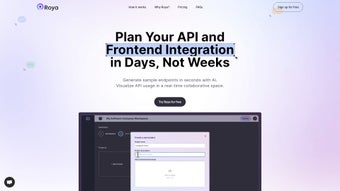
Roya is an AI‑driven web application that redefines how development teams approach API planning. By leveraging advanced language models, Roya automatically crafts sample endpoints that match the functional requirements of both web and mobile applications. This eliminates the tedious brainstorming phase that traditionally consumes valuable project time. In addition to endpoint generation, the platform produces AI‑generated request and response payloads, giving developers ready‑to‑test examples that accelerate prototyping and early‑stage validation. One of Roya’s most compelling features is its visual annotation system: users can upload screenshots of their app’s UI and overlay API interaction markers, instantly clarifying how each endpoint integrates with the overall architecture. Collaboration sits at the heart of Roya; real‑time editing, commenting, and feedback loops keep every stakeholder aligned, whether they are product managers, backend engineers, or UI/UX designers. The tool also includes robust documentation capabilities, automatically compiling endpoint specifications, dependencies, and version histories into clean, exportable formats. Whether you’re building a single‑page web app or a complex cross‑platform solution, Roya offers a unified workspace that streamlines API design, shortens time‑to‑market, and reduces the risk of miscommunication. Its secure cloud‑based infrastructure ensures that sensitive design data remains protected, while regular automated updates keep the AI models and security patches current. In short, Roya transforms the early phases of API development from a manual, error‑prone process into a fast, collaborative, and AI‑enhanced workflow.
Key Features that Power Faster API Design
- AI‑Generated Endpoints: Input high‑level functionality and receive ready‑to‑use REST or GraphQL endpoint definitions tailored to your project.
- Sample Request/Response Bodies: Automatic creation of JSON, XML, or form‑encoded payloads, complete with realistic data examples.
- Visual Annotation on Screenshots: Drag‑and‑drop markers on UI mockups to illustrate how each API call interacts with the user interface.
- Real‑Time Collaboration: Multi‑user editing, inline comments, and instant notifications keep teams synchronized.
- Cross‑Platform Support: Works equally well for web, iOS, Android, and hybrid applications, allowing a single source of truth.
- Documentation Generator: Export OpenAPI/Swagger files, Markdown docs, or PDF specifications with a single click.
- Dependency Tracking: Visual graph of endpoint relationships, versioning, and third‑party service dependencies.
- Secure Cloud Storage: End‑to‑end encryption, role‑based access control, and compliance with GDPR and SOC‑2.
- Continuous AI Updates: The underlying language model is refreshed monthly, improving suggestion relevance and accuracy.
- Integrated Issue Tracker: Convert API design comments directly into tickets for downstream development tools.
Each of these capabilities is built to reduce friction in the planning stage. For instance, the AI‑generated endpoints are not just skeletal stubs; they come with descriptive tags, parameter types, and validation rules that align with industry best practices. The visual annotation tool eliminates the need for separate diagramming software—developers can see exactly where an API call originates in the UI, which speeds up hand‑off to frontend teams. Real‑time collaboration mirrors the experience of modern cloud document editors, making remote teamwork as seamless as sitting around a single table. By bundling documentation generation and dependency tracking into the same workspace, Roya removes the need for multiple disjointed tools, consolidating the entire API design lifecycle under one secure roof. Whether you are a solo developer or a large enterprise, these features collectively accelerate delivery, improve code quality, and foster better communication across disciplines.
Installation, Usage Instructions, and Compatibility
Roya is a fully browser‑based SaaS platform, which means there is no traditional installation process on the end‑user side. To get started, simply visit roya.io, click the “Sign Up” button, and choose either a free trial or a paid plan that matches your team’s size. After confirming your email address, you will be directed to the dashboard where you can create your first project.
Step‑by‑Step Usage Guide
- Create a New Project: Name your project, select the target platform (Web, iOS, Android, or Hybrid), and optionally import an existing OpenAPI spec.
- Define High‑Level Requirements: Use the “Requirement Input” pane to type plain‑language descriptions such as “User can upload a profile picture.” The AI engine will parse this text and suggest relevant endpoints.
- Review Generated Endpoints: Examine each suggested endpoint, edit parameter names, adjust HTTP methods, and accept or reject the AI’s suggestions.
- Add UI Screenshots: Drag screenshots into the “Visual Map” area, then place annotation markers to bind each endpoint to a UI element.
- Collaborate in Real Time: Invite teammates via email; they can comment, edit, or approve changes instantly. All changes are versioned automatically.
- Export Documentation: Once the design is finalized, click “Export” to generate OpenAPI JSON, Swagger UI, or a Markdown document that can be handed off to developers.
- Track Dependencies: Use the “Dependency Graph” to visualize which endpoints rely on external services, enabling better risk management.
Because Roya runs in the cloud, it is compatible with any modern operating system that supports a web browser. This includes Windows 10/11, macOS Ventura and later, Linux distributions with Chrome/Firefox, as well as mobile browsers on iOS and Android. For teams that require tighter integration with on‑premise environments, Roya also offers an optional self‑hosted Docker image that can be deployed on private Kubernetes clusters, ensuring data never leaves the corporate network.
Supported operating systems: Windows, macOS, Linux, iOS, Android (via web browsers). Optional self‑hosted deployment on Docker/Kubernetes for enterprise environments.
Pros, Cons, Frequently Asked Questions, and Final Verdict
Pros & Cons
- Pros:
- AI‑driven endpoint generation dramatically cuts planning time.
- Visual UI annotation bridges the gap between design and development.
- Real‑time collaboration mirrors modern remote‑work workflows.
- Exportable documentation formats reduce hand‑off friction.
- Secure cloud storage with GDPR and SOC‑2 compliance.
- Cross‑platform support for web, iOS, Android, and hybrid apps.
- Self‑hosted Docker option for on‑premise security requirements.
- Cons:
- Relies on internet connectivity; offline mode is limited to the self‑hosted Docker version.
- AI suggestions may need manual refinement for highly specialized domains.
- Pricing tiers above the free plan can be a consideration for very small startups.
Frequently Asked Questions
Is Roya free to use?
Roya offers a free tier that includes up to three projects, basic AI endpoint generation, and limited collaboration. Paid plans unlock unlimited projects, advanced AI models, and enterprise‑grade security features.
Can I export my API design to Swagger or OpenAPI?
Yes. Roya provides one‑click export to OpenAPI JSON, Swagger UI, and Markdown documentation, making it easy to import into any API gateway or developer portal.
How secure is my data on Roya’s cloud platform?
Roya employs end‑to‑end TLS encryption, role‑based access control, and adheres to GDPR and SOC‑2 standards. Data at rest is encrypted with AES‑256, and regular security audits are performed.
Does Roya support non‑REST APIs like GraphQL?
Yes. In addition to REST, Roya can generate GraphQL schema definitions based on the same high‑level functional inputs, allowing teams to choose their preferred API style.
Can I self‑host Roya for on‑premise use?
An enterprise Docker image is available for organizations that need to keep data behind their own firewall. The image includes all core AI features and can be orchestrated via Kubernetes.
Conclusion – Should You Download Roya?
If your team spends significant time drafting API contracts, sketching request/response payloads, or trying to visualize how endpoints map to user interfaces, Roya offers a compelling, AI‑enhanced solution. Its combination of automatic endpoint generation, visual annotation, and real‑time collaboration reduces the planning phase from days to hours, letting developers shift focus to implementation and testing. The secure, cloud‑first architecture means you can start using the tool immediately without worrying about server maintenance, while the optional self‑hosted Docker deployment satisfies strict compliance requirements. Though a stable internet connection is required for the SaaS version and the free tier has limited project capacity, the productivity gains typically outweigh these minor drawbacks. In short, Roya is a modern, secure, and collaborative API planning tool that aligns with today’s fast‑paced development cycles. Download Roya today, start a free trial, and experience a faster, smarter way to design APIs.
Roya dramatically reduces API planning time with its AI‑generated endpoints and visual UI annotation. The real‑time collaboration features make remote teamwork seamless, and the export options cover all major documentation standards. While internet dependency is a consideration, the optional Docker deployment provides a solid offline alternative.



.png)