

All Activity
- Today
-
 talking_Royals joined the community
 -
 Image courtesy of © David Richard-Imagn Images / © Jay Biggerstaff-Imagn Images The Kansas City Royals’ offense was in the middle to bottom half of Major League Baseball for many of the offensive categories. To name a few, the Royals finished 26th in runs, 18th in hits, 26th in home runs, 15th in average, 22nd in on-base percentage, and 18th in slugging. The 82-80 record in 2025 was a reflection of the poor offense at times, but there is reason to believe that the lineup in 2026 could help lead to better results for a Royals team looking to get back to playoff baseball. The Silver Slugger Group Last season, the Royals had four players nominated for an American League Silver Slugger Award. Salvador Perez was nominated at the catcher position, Vinnie Pasquantino was nominated at first base, Bobby Witt Jr. was nominated at shortstop, and Maikel Garcia was nominated for the utility position. These four combined to hit 101 of the Royals’ 159 total home runs, really driving the force for a team that lacked offensive firepower. Speaking at the Royals rally on Saturday at Kauffman Stadium, Royals general manager J.J. Picollo spoke about the level of production from this group and how they continue forward. “Trying to evaluate our offense, it’s like the tale of two stories,” Picollo said. “You’ve got an outfield that didn’t produce at all, and then you’ve got an infield that was the best infield in baseball.” The Royals were one of only three teams that had at least four players nominated for the Silver Slugger award, showing that the top end of their lineup can produce with the best teams in baseball Perez, Pasquantino, and Witt Jr. have all hit 30-plus home runs in a season before. Mixed in with the power-speed combo that Garcia brings, these four give the Royals a chance to have a special top half of the lineup in 2026. The Recent Acquisitions In the past two offseasons, the Royals have brought in Jonathan India and Isaac Collins by way of trade and Lane Thomas on a one-year, $5.25 million contract. These three players are going to be key to help lengthen the Royals’ lineup in 2026. India’s first season as a Royal didn’t go as he or the team alike had hoped for when they acquired the former Rookie of the Year from the Cincinnati Reds. India batted .233 with nine home runs and 45 RBIs, while also posting a career low .346 OBP. A career .249 hitter, the Royals need India to find that 15-20 home run range, which could only get easier with the recent dimension change at Kauffman Stadium. Collins was brought in along with reliever Nick Mears in December for reliever Ángel Zerpa in mid-December. In Collins’ first full season at the MLB level, the outfielder batted .263 with nine home runs, 54 RBIs, and a .368 OBP. Part of what Picollo was talking about this past Saturday is the need for more outfield production, and the hope is that Collins can provide that from the left side of the plate. One cause for concern is the second-half slump Collins entered. Over the 28-year-old’s final 30 games, the average dipped to .189 with one home run and 13 driven in. Where Collins struggled with the bat at times, the sharp eye remained, finishing the season in the top 10 percentile in MLB for base on ball rate, walking at a 12.9% clip. Thomas was brought in to help bring more production to an outfield that struggled for much of 2025. A bounce-back candidate after a tough 2025 that saw Thomas appear in only 39 games, batting .160, with four home runs and 11 RBIs. The three seasons prior, Thomas blasted 17, 28, and 15 home runs, so the power threat is there. A career .292 hitter against left-handed pitchers, Thomas brings what Picollo was looking for to the Royals lineup. “Going back to the beginning of the offseason, I think we were pretty clear that we needed to address our outfield,” Picollo said at the time of the signing. “The more we had our meetings, the more we dove into things, the more we talked about what players fit us well, right-handed became very apparent to us. And then versatility. Somebody who could play all three outfield spots, and more importantly, take time in center field. We went through several meetings with our pro personnel department and front office,e and we kept coming back to Lane.” The Rookies 2025 saw both Jac Caglianone and Carter Jensen make their MLB debuts. Both players flashed potential that could help make them mainstays in the Royals’ lineup for years to come. Caglianone went through struggles many power-hitting rookies face while adjusting to pitching at the MLB level. The 22-year-old batted .157, with a .237 OBP, slugging seven home runs and driving in 18 runs. The 22.8% strikeout rate is concerning, but the outfielder flashed the ability to drive the ball, posting a max exit velocity of 114.1 MPH, which slots in the 10th percentile for all MLB batters. Jensen was called up to make his MLB debut on September 1 and impressed during the final month of the regular season. The catcher batted .300 across 60 plate appearances, swatting three home runs and driving in 13 runs, to go along with an impressive .391 OBP. In the 20 games, Jensen’s barrel percentage was 20.8%, a strong number for the 22-year-old. If Jensen builds on what was a strong September showing, the Royals will find ways to keep both Perez’s and Jensen’s bat in the lineup by utilizing catcher, first base, and designated hitter to bring a steadier offense to the lineup. The Rest Of The Offense The rest of the Royals’ lineup will be made up of Michael Massey, Kyle Isbel, and a couple of Dairon Blanco, Nick Loftin, Kameron Misner, John Rave, and Drew Waters as the Royals hunt for better offensive results in 2026. View full article
 -
A Look At How The Royals' Offense Stacks Up Heading Into 2026
Michael Coyle posted an article in Royals
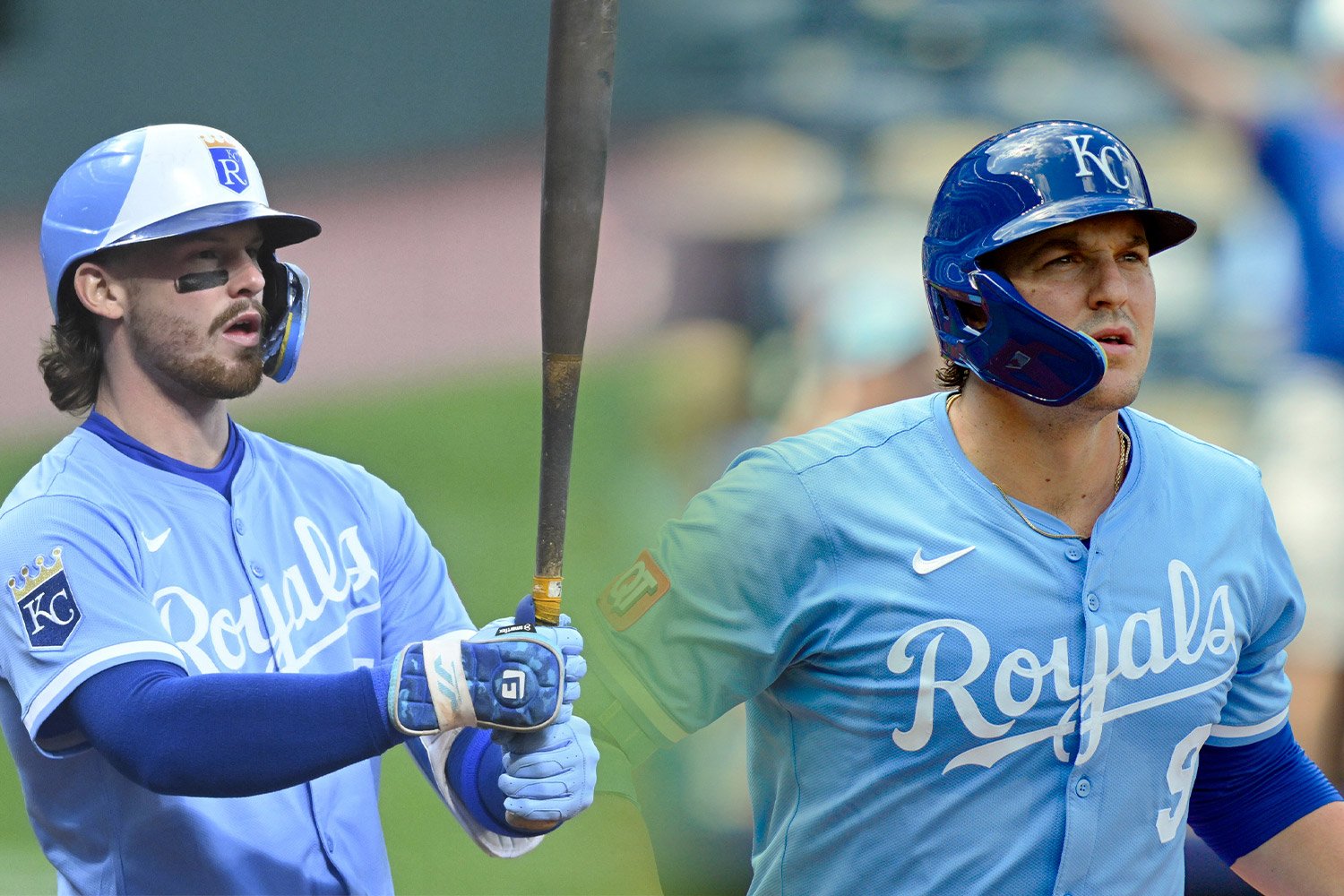 The Kansas City Royals’ offense was in the middle to bottom half of Major League Baseball for many of the offensive categories. To name a few, the Royals finished 26th in runs, 18th in hits, 26th in home runs, 15th in average, 22nd in on-base percentage, and 18th in slugging. The 82-80 record in 2025 was a reflection of the poor offense at times, but there is reason to believe that the lineup in 2026 could help lead to better results for a Royals team looking to get back to playoff baseball. The Silver Slugger Group Last season, the Royals had four players nominated for an American League Silver Slugger Award. Salvador Perez was nominated at the catcher position, Vinnie Pasquantino was nominated at first base, Bobby Witt Jr. was nominated at shortstop, and Maikel Garcia was nominated for the utility position. These four combined to hit 101 of the Royals’ 159 total home runs, really driving the force for a team that lacked offensive firepower. Speaking at the Royals rally on Saturday at Kauffman Stadium, Royals general manager J.J. Picollo spoke about the level of production from this group and how they continue forward. “Trying to evaluate our offense, it’s like the tale of two stories,” Picollo said. “You’ve got an outfield that didn’t produce at all, and then you’ve got an infield that was the best infield in baseball.” The Royals were one of only three teams that had at least four players nominated for the Silver Slugger award, showing that the top end of their lineup can produce with the best teams in baseball Perez, Pasquantino, and Witt Jr. have all hit 30-plus home runs in a season before. Mixed in with the power-speed combo that Garcia brings, these four give the Royals a chance to have a special top half of the lineup in 2026. The Recent Acquisitions In the past two offseasons, the Royals have brought in Jonathan India and Isaac Collins by way of trade and Lane Thomas on a one-year, $5.25 million contract. These three players are going to be key to help lengthen the Royals’ lineup in 2026. India’s first season as a Royal didn’t go as he or the team alike had hoped for when they acquired the former Rookie of the Year from the Cincinnati Reds. India batted .233 with nine home runs and 45 RBIs, while also posting a career low .346 OBP. A career .249 hitter, the Royals need India to find that 15-20 home run range, which could only get easier with the recent dimension change at Kauffman Stadium. Collins was brought in along with reliever Nick Mears in December for reliever Ángel Zerpa in mid-December. In Collins’ first full season at the MLB level, the outfielder batted .263 with nine home runs, 54 RBIs, and a .368 OBP. Part of what Picollo was talking about this past Saturday is the need for more outfield production, and the hope is that Collins can provide that from the left side of the plate. One cause for concern is the second-half slump Collins entered. Over the 28-year-old’s final 30 games, the average dipped to .189 with one home run and 13 driven in. Where Collins struggled with the bat at times, the sharp eye remained, finishing the season in the top 10 percentile in MLB for base on ball rate, walking at a 12.9% clip. Thomas was brought in to help bring more production to an outfield that struggled for much of 2025. A bounce-back candidate after a tough 2025 that saw Thomas appear in only 39 games, batting .160, with four home runs and 11 RBIs. The three seasons prior, Thomas blasted 17, 28, and 15 home runs, so the power threat is there. A career .292 hitter against left-handed pitchers, Thomas brings what Picollo was looking for to the Royals lineup. “Going back to the beginning of the offseason, I think we were pretty clear that we needed to address our outfield,” Picollo said at the time of the signing. “The more we had our meetings, the more we dove into things, the more we talked about what players fit us well, right-handed became very apparent to us. And then versatility. Somebody who could play all three outfield spots, and more importantly, take time in center field. We went through several meetings with our pro personnel department and front office,e and we kept coming back to Lane.” The Rookies 2025 saw both Jac Caglianone and Carter Jensen make their MLB debuts. Both players flashed potential that could help make them mainstays in the Royals’ lineup for years to come. Caglianone went through struggles many power-hitting rookies face while adjusting to pitching at the MLB level. The 22-year-old batted .157, with a .237 OBP, slugging seven home runs and driving in 18 runs. The 22.8% strikeout rate is concerning, but the outfielder flashed the ability to drive the ball, posting a max exit velocity of 114.1 MPH, which slots in the 10th percentile for all MLB batters. Jensen was called up to make his MLB debut on September 1 and impressed during the final month of the regular season. The catcher batted .300 across 60 plate appearances, swatting three home runs and driving in 13 runs, to go along with an impressive .391 OBP. In the 20 games, Jensen’s barrel percentage was 20.8%, a strong number for the 22-year-old. If Jensen builds on what was a strong September showing, the Royals will find ways to keep both Perez’s and Jensen’s bat in the lineup by utilizing catcher, first base, and designated hitter to bring a steadier offense to the lineup. The Rest Of The Offense The rest of the Royals’ lineup will be made up of Michael Massey, Kyle Isbel, and a couple of Dairon Blanco, Nick Loftin, Kameron Misner, John Rave, and Drew Waters as the Royals hunt for better offensive results in 2026.
 - Yesterday
-

Breaking Down the American League Central ZiPS Projections
DiamondCentric posted an article in DiamondCentric
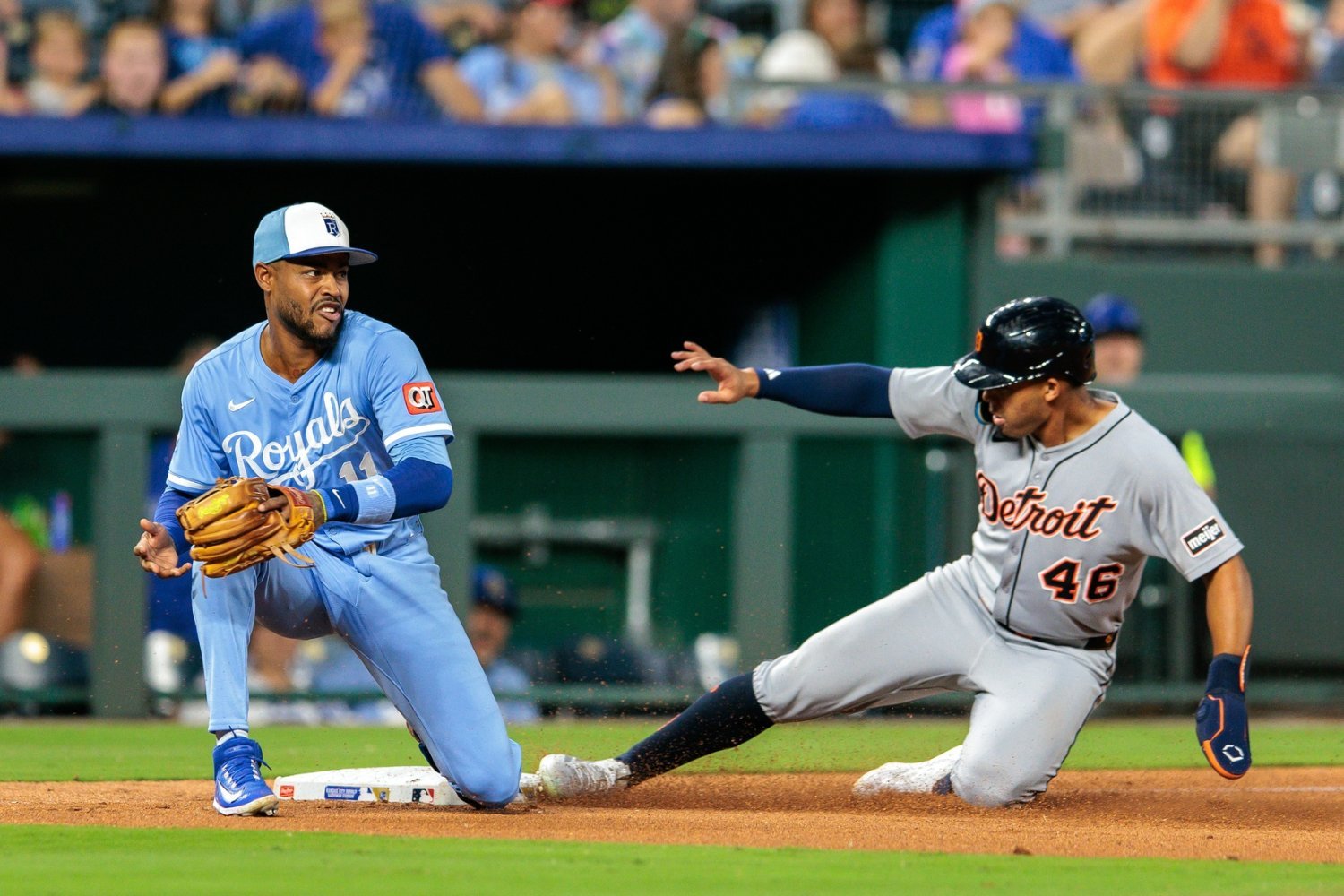 Tigers and Royals hold lead in the latest projections, but the division should be more competitive from top to bottom.View the full article
 -
 Image courtesy of Jay Biggerstaff-Imagn Images One of the best Royals stories from 2025 was the emergence of rookie left-handed pitcher Noah Cameron. In his first MLB season, the rookie from St. Joseph, Missouri, made 24 starts and pitched 138.1 innings after starting the season initially in Triple-A Omaha (seven starts and 32.2 IP with the Storm Chasers). In that MLB sample, he posted a 2.99 ERA, 1.10 WHIP, 2.65 K/BB ratio, and 1.8 fWAR. In a season where Cole Ragans, Kris Bubic, Seth Lugo, and Michael Lorenzen all missed some time on the IL, Cameron became a workhorse at the bottom of the Royals' rotation. As a result, he not only finished fourth in AL Rookie of the Year voting, but he also earned the Bruce Rice Pitcher of the Year team award, which goes to the best Royals pitcher that season. Safe to say, Cameron did everything in 2025 to prove that he belongs in the Royals rotation in 2026 and beyond. That said, there were a couple of minor red flags from the past year that could affect his outlook for the upcoming season, based on surface-level metrics alone. While he posted a sub-three ERA, which is pretty elite, his xERA was 4.08, his FIP was 4.18, and his xFIP was 4.08. Those aren't bad metrics by any means, especially for a No. 4 or No. 5 starter in the rotation. At the same time, each of those indicators has a difference of over 1, which is a significant gap. Add that with a .241 BABIP and 84% LOB% (strand rate), and it seems likely that Cameron will be unable to sustain his 2025 numbers into 2026, especially with the new park dimensions at Kauffman Stadium. At the same time, Cameron remains a strong pitcher with a solid repertoire and the ability to minimize hard contact. Therefore, how much regression should Royals fans expect from the 26-year-old lefty this year? Will he pitch himself out of the rotation, especially with options like Ryan Bergert, Stephen Kolek, and Luinder Avila likely starting the season in Triple-A Omaha? Or will Cameron's regression be minor? In this post, I am going to look at his pitch repertoire and quality, what the batted ball and spray chart metrics from last season illustrate, and some final takeaways about Cameron's outlook for 2026 and beyond. (All stats and graphics courtesy of TJ Stats and Baseball Savant). Excellent Repertoire, but Poor Four-Seamer Cameron doesn't sport an elite fastball, which is why he was a bit of an underrated pitching prospect in the Royals system after being drafted in the seventh round (199th overall) out of Central Arkansas in the 2021 MLB Draft. However, he succeeded in the Minors thanks to his super command. Cameron posted a 6.7% walk rate and 21.1% K-BB% over 128.2 innings with Double-A Northwest Arkansas Naturals and Omaha Storm Chasers in 2024. While the St. Joseph-born lefty limited walks, he also succeeded with a five-pitch mix that kept hitters off balance. That trend continued in the Majors, as he sported a diverse pitch mix, throwing all of his pitches at least 14.3% of the time. While that's not Lugo's level of pitch variety (very few pitchers can throw 10 pitches), it's still strong enough to keep hitters at bay. Furthermore, he was able to sport not just decent stuff with his pitches but also strong chase and whiff rates, as well as a reasonable xwOBACON, as seen in his TJ Stats summary below. Cameron doesn't generate a ton of extension on pitches, as his 6.3 average rates as slightly below average. Thus, it's not a surprise that he doesn't generate a ton of velocity on his offerings either. Four of his five offerings last year rated as below average in terms of velocity, with the only exception being his curve, which was slightly above with an 80.9 MPH velocity. That said, he still produced strong movement and quality on the pitches. That led to four of his five offerings earning decent to above-average ratings for TJ Stuff+. Furthermore, non-Royal folks have rated his repertoire pretty highly, pointing out his advanced "feel" for his pitches, as well as his ability to tunnel pitches with one another effectively. Speaking of "tunneling", Cameron does do a good job of pairing offerings with one another soundly, which makes it tough for hitters to hone in on his offerings, even if they aren't "elite" in terms of stuff or velocity. Below is a look at his pitch movement plot from 2025, and notice how he pairs certain offerings with one another on the chart. His four-seamer and changeup are both paired with one another, which is an effective combo, especially considering the 11 MPH difference between the two pitches. He also does a nice job blending his cutter, slider, and curve, a strategy that proved sound for him last year. All sport downward, glove-side movement, but to different degrees of break. That is hard on hitters because the slightest difference in movement on breaking pitches can lead to poor swings, resulting in weak contact or whiffs, as seen below against Seattle. When it comes to breaking down his offerings individually, his cutter was his most standout pitch from last year and his second most-thrown offering at 21.5%. It also had a 103 TJ Stuff+, tied for the best grade of his five offerings. The cutter was an interesting pitch location-wise, as Cameron tended to throw it more in and up on righties and down and away against lefties, as illustrated by his TJ Stats pitch heatmap summary. He threw the pitch more against righties (23% to 16.9% against lefties), but in terms of CSW, it was far more effective against lefties. It sported a 36.8% CSW and 39.1% whiff rate against left-handed hitters, compared to 24% and 18.9% rates against right-handed hitters. There wasn't much difference, though, in terms of chase (34.1% O-Swing% against lefties and 30% O-Swing% against righties) and xwOBACON (.371 against lefties; .366 against righties). In terms of fastball offerings, his cutter was by far better than his four-seamer. When it comes to breaking offerings, the curve was Cameron's best swing-and-miss offering against righties. It sported a 100 TJStuff+, which was 3 points lower than his slider. Nonetheless, despite the lower grade, it was a key part of his repertoire last year (19% usage). Unlike his cutter, he threw the pitch in one area, down and glove-side, against both righties and lefties. However, it was more effective against righties, as illustrated by his 33.8% CSW, which can be seen below. Lefties did worse in terms of production on the pitch, as they had a .291 xwOBACON against Cameron's curve, which was 21 points lower than his xwOBACON allowed against righties. That said, when Cameron needed whiffs against righties, it seemed like his curveball was his best offering. Conversely, when it came to getting swing-and-miss against lefties, his slider was the better pitch, as seen below in the slider heatmap data. There was a huge gap in slider usage for Cameron against lefties (28.7%) and righties (9.8%). It made sense, as Cameron's slider generated a 39.2% CSW and 34.9% whiff rate, which is pretty impressive, to put it mildly. Interestingly enough, righties chased more on the slider (45.3% O-Swing%), and his xwOBACON was lower (.292 to .331 against lefties). Still, fewer strikes were generated against righties with the slider, as evidenced by his 28% CSW. His last solid offering was his changeup, which had a 98 TJ Stuff+, the second-lowest mark of his five offerings. It didn't necessarily have elite qualities, but he had superb command on the pitch, especially against right-handers (22.9% usage). Against righties, his changeup generated a 30.5% usage, 43.5% whiff rate, and 27.7% O-Swing%. He also seemed to effectively throw the pitch away and arm-side to right-handed hitters, while his command of the offspeed pitch against lefties was more erratic. Against lefties, the changeup had a CSW of 8.7% and a whiff rate of 7.7%, and a .541 xwOBACON (nearly 200 points higher than his split against righties). Thus, it wasn't really an ideal pitch against lefties in any context. Then again, he threw the pitch less than five percent of the time, so it was more of a "get-me-over" offering than a regularly utilized one against lefties. Unfortunately, when it comes to pitch repertoire, the main concern with Cameron is his four-seamer. The primary offering sported a lackluster pitch quality with an 87 TJ Stuff+. That's not a good pitch for any pitch, let alone one he throws the most in a given game. Unsurprisingly, he generated lackluster CSW and whiff marks with the pitch against both lefties and righties. However, he did at least command the pitch effectively: in the upper edges of the strike zone. Hitters didn't chase much on the pitch, and most of his CSW rates came from called strikes rather than swinging ones. He was better against lefties with xwOBACON (.393) than righties (.510), which is interesting to see for a left-handed pitcher. When it comes to Cameron moving forward with the four-seamer, he's at a bit of a crossroads with the pitch. It's an essential part of his repertoire, and I think it's more effective against righties because it tunnels well with the changeup (a pitch that righties struggled against). That said, when he makes mistakes with the pitch, it's hit hard. The .550 xSLG and .390 xwOBA on the pitch illustrate that. Thus, I don't think it's as easy as "throwing the four-seamer less" because I think that could come at a cost of his other offerings, especially the cutter, which has emerged as one of his best offerings. Rather, I wonder if new assistant pitching coach Mike McFerran can help Cameron make some tweaks to the pitch, perhaps generating more vertical movement to at least make it a slightly below-average offering in 2026 rather than a greatly below-average one. The right tweak on his four-seamer could help him avoid a major regression on the mound in 2026. Induces Weak Contact; But Will Results Change with "New" Kauffman? When it comes to contact, Cameron was obviously above average at getting hitters to not "connect" as often as they would like. When looking at his Statcast percentiles via TJ Stats from last season, he ranked in the upper percentiles of the league in terms of minimizing the kind of contact that could result in a lot of production (i.e., home runs, extra-base hits, etc.). Cameron ranked in the 91st percentile in average exit velocity allowed, 86th in barrel rate, and 85th in hard-hit rate. He also ranked in the 71st percentile in whiff% and Z-Contact%. That's pretty elite, especially for a pitcher with fastball velocity that ranked in the 24th percentile and extension that ranked in the 29th percentile. On a more negative note, he was mediocre in terms of his zone, chase, K%, BB%, and K-BB% (all under 50%). While his GB% and CSW% ranked in the 52nd percentile, they need to be higher going forward, especially since it's unlikely that the Z-Contact% and CSW will remain at such high levels with his stuff profile. A key hint that regression may be coming on the batted-ball end could be seen in his rolling xwOBA chart from 2025 via Savant. He maintained a below-average xwOBA for the first half of his season, but that trend spiked around the 350th plate appearance and stayed above the league average for the remainder of the season (above-average is NOT good in this case). Now, he still posted a 2.99 ERA last year despite this trend. Thus, let's take a look at how this correlated with his actual wOBA chart trend from 2025. Cameron saw a spike in rolling wOBA, but there was a decline at the 500th plate appearance. He also appeared to be "unluckier" around his 100th to 250th plate appearances, as his wOBA trend was higher than his xwOBA. Still, that big gap in wOBA and xwOBA from the 500th plate appearance to the end of the year is a bit concerning and could be a hint that regression could be coming to his overall metrics in 2026 unless proper adjustments are made. Speaking of adjustments, the 26-year-old lefty will be pitching in a new Kauffman Stadium in terms of dimensions. When looking at his spray chart at home from 2025, it did seem that he would've given up a few more home runs at the K when taking into consideration the new dimensions (which would be similar to Target Field in Minnesota). Notice the number of outs that would have been homers below, especially in right field. When it comes to right field, he would've given up six more home runs at Kauffman Stadium had these new dimensions been in play last year. That's a huge boost, and it could've resulted in his ERA not just being higher than his 2025 mark, but his FIP mark as well (which was already in the four range). For Cameron to overcome these new "possible" ballpark issues, he will need to increase the swing-and-miss in 2026. After all, strikeouts can't go for extra-base hits or home runs in any park. On a positive note, he showed a strong whiff trend at the beginning of the year before it tailed off around the 300th swing mark. For roughly 100 swings after the mark, the swinging-and-missing percentage stayed subpar. Thankfully, he made some adjustments and got it back to above league-average around the 425th swing mark. Getting more swing-and-miss in 2026 won't be easy, especially considering the limitations of his velocity and stuff (98 TJ Stuff+ overall). However, Cameron is a student of the game who made strong adjustments to succeed in 2024 in the Minors after a rough stint in Double-A the previous year. He also made the proper adjustments to succeed in the Majors in 2025. Perhaps he has a couple of more tweaks in him to help him become a better swing-and-miss pitcher. Final Breakdown on Cameron Cameron is well-loved by Royals fans as a local kid from Northern Missouri. However, he also had gotten plenty of attention from non-Royals fans, with Roster Economics showing some praise of the Royals' homegrown product in a breakdown of Cameron on Twitter on January 29th. The Royals have a solid asset on their hands in Cameron, even if he may never be more than a No. 3 starter over the course of his career. He still isn't arbitration-eligible until 2029 and won't be a free agent until 2032, so Cameron won't be an arm that they'll financially have to worry about for a long time (which is nice after the tough arbitration negotiations with Bubic this offseason). That kind of profile is needed for teams, especially small-market ones, trying to stay competitive each season. And yet, regression seems likely for Cameron in 2026. The stuff profile isn't there to be a sub-three ERA pitcher again, and the below-average extension will make it harder for him to add more perceived velocity on his offerings as well (Bubic succeeds with below-average velocity because his strong extension gives him more perceived velocity). When it came to this offseason, I was more willing to part with Cameron as a trade asset than Bubic simply because I believe Bubic's stuff profile makes him more dependable long-term than Cameron (even with Bubic being older and hitting free agency next year). At the same time, the Royals' pitching coaches have shown they can help pitchers make the right tweaks and adjustments to succeed and avoid long stretches of poor performance. While McFerran doesn't have the history of former assistant pitching coach Zach Bove (who's now the White Sox's head pitching coach), his background suggests he's cut from a similar cloth and will be able to do the same things Bove did. I am hoping that McFerran and Sweeney can identify the right tweaks with Cameron to get more movement and quality out of his four-seamer because that seems to be the key to what his regression could look like in 2026. A similar fastball in TJ Stuff+ in 2026 is likely to result in much worse outcomes. However, a newer, slightly better one? Perhaps Cameron could give another dependable 130-150 innings with an ERA in the 3.00-3.50 range. If that's the case, the Royals will not just have one of the best rotations in the AL Central, but perhaps in all of baseball (as long as they stay healthy, of course). View full article
 -
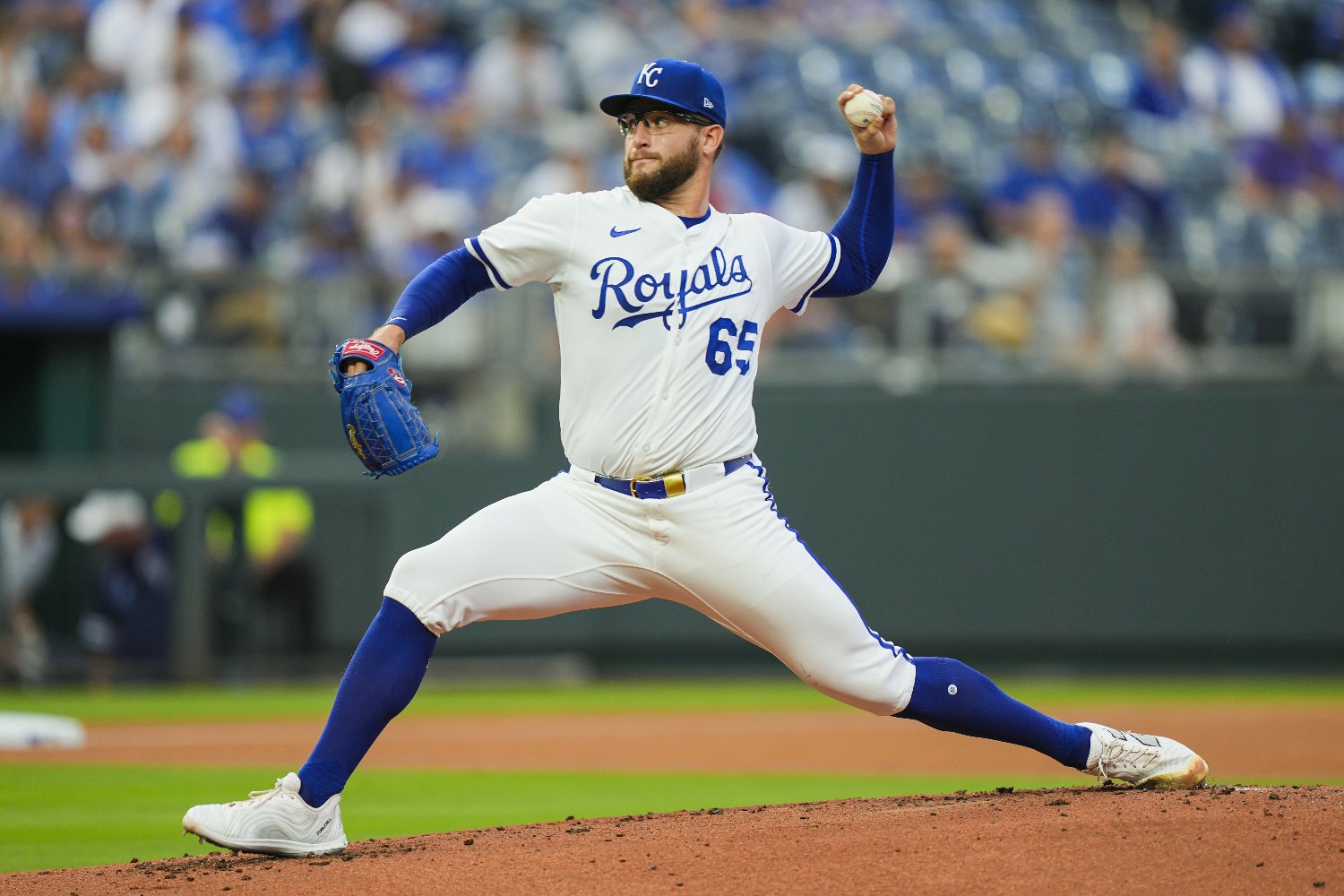 One of the best Royals stories from 2025 was the emergence of rookie left-handed pitcher Noah Cameron. In his first MLB season, the rookie from St. Joseph, Missouri, made 24 starts and pitched 138.1 innings after starting the season initially in Triple-A Omaha (seven starts and 32.2 IP with the Storm Chasers). In that MLB sample, he posted a 2.99 ERA, 1.10 WHIP, 2.65 K/BB ratio, and 1.8 fWAR. In a season where Cole Ragans, Kris Bubic, Seth Lugo, and Michael Lorenzen all missed some time on the IL, Cameron became a workhorse at the bottom of the Royals' rotation. As a result, he not only finished fourth in AL Rookie of the Year voting, but he also earned the Bruce Rice Pitcher of the Year team award, which goes to the best Royals pitcher that season. Safe to say, Cameron did everything in 2025 to prove that he belongs in the Royals rotation in 2026 and beyond. That said, there were a couple of minor red flags from the past year that could affect his outlook for the upcoming season, based on surface-level metrics alone. While he posted a sub-three ERA, which is pretty elite, his xERA was 4.08, his FIP was 4.18, and his xFIP was 4.08. Those aren't bad metrics by any means, especially for a No. 4 or No. 5 starter in the rotation. At the same time, each of those indicators has a difference of over 1, which is a significant gap. Add that with a .241 BABIP and 84% LOB% (strand rate), and it seems likely that Cameron will be unable to sustain his 2025 numbers into 2026, especially with the new park dimensions at Kauffman Stadium. At the same time, Cameron remains a strong pitcher with a solid repertoire and the ability to minimize hard contact. Therefore, how much regression should Royals fans expect from the 26-year-old lefty this year? Will he pitch himself out of the rotation, especially with options like Ryan Bergert, Stephen Kolek, and Luinder Avila likely starting the season in Triple-A Omaha? Or will Cameron's regression be minor? In this post, I am going to look at his pitch repertoire and quality, what the batted ball and spray chart metrics from last season illustrate, and some final takeaways about Cameron's outlook for 2026 and beyond. (All stats and graphics courtesy of TJ Stats and Baseball Savant). Excellent Repertoire, but Poor Four-Seamer Cameron doesn't sport an elite fastball, which is why he was a bit of an underrated pitching prospect in the Royals system after being drafted in the seventh round (199th overall) out of Central Arkansas in the 2021 MLB Draft. However, he succeeded in the Minors thanks to his super command. Cameron posted a 6.7% walk rate and 21.1% K-BB% over 128.2 innings with Double-A Northwest Arkansas Naturals and Omaha Storm Chasers in 2024. While the St. Joseph-born lefty limited walks, he also succeeded with a five-pitch mix that kept hitters off balance. That trend continued in the Majors, as he sported a diverse pitch mix, throwing all of his pitches at least 14.3% of the time. While that's not Lugo's level of pitch variety (very few pitchers can throw 10 pitches), it's still strong enough to keep hitters at bay. Furthermore, he was able to sport not just decent stuff with his pitches but also strong chase and whiff rates, as well as a reasonable xwOBACON, as seen in his TJ Stats summary below. Cameron doesn't generate a ton of extension on pitches, as his 6.3 average rates as slightly below average. Thus, it's not a surprise that he doesn't generate a ton of velocity on his offerings either. Four of his five offerings last year rated as below average in terms of velocity, with the only exception being his curve, which was slightly above with an 80.9 MPH velocity. That said, he still produced strong movement and quality on the pitches. That led to four of his five offerings earning decent to above-average ratings for TJ Stuff+. Furthermore, non-Royal folks have rated his repertoire pretty highly, pointing out his advanced "feel" for his pitches, as well as his ability to tunnel pitches with one another effectively. Speaking of "tunneling", Cameron does do a good job of pairing offerings with one another soundly, which makes it tough for hitters to hone in on his offerings, even if they aren't "elite" in terms of stuff or velocity. Below is a look at his pitch movement plot from 2025, and notice how he pairs certain offerings with one another on the chart. His four-seamer and changeup are both paired with one another, which is an effective combo, especially considering the 11 MPH difference between the two pitches. He also does a nice job blending his cutter, slider, and curve, a strategy that proved sound for him last year. All sport downward, glove-side movement, but to different degrees of break. That is hard on hitters because the slightest difference in movement on breaking pitches can lead to poor swings, resulting in weak contact or whiffs, as seen below against Seattle. When it comes to breaking down his offerings individually, his cutter was his most standout pitch from last year and his second most-thrown offering at 21.5%. It also had a 103 TJ Stuff+, tied for the best grade of his five offerings. The cutter was an interesting pitch location-wise, as Cameron tended to throw it more in and up on righties and down and away against lefties, as illustrated by his TJ Stats pitch heatmap summary. He threw the pitch more against righties (23% to 16.9% against lefties), but in terms of CSW, it was far more effective against lefties. It sported a 36.8% CSW and 39.1% whiff rate against left-handed hitters, compared to 24% and 18.9% rates against right-handed hitters. There wasn't much difference, though, in terms of chase (34.1% O-Swing% against lefties and 30% O-Swing% against righties) and xwOBACON (.371 against lefties; .366 against righties). In terms of fastball offerings, his cutter was by far better than his four-seamer. When it comes to breaking offerings, the curve was Cameron's best swing-and-miss offering against righties. It sported a 100 TJStuff+, which was 3 points lower than his slider. Nonetheless, despite the lower grade, it was a key part of his repertoire last year (19% usage). Unlike his cutter, he threw the pitch in one area, down and glove-side, against both righties and lefties. However, it was more effective against righties, as illustrated by his 33.8% CSW, which can be seen below. Lefties did worse in terms of production on the pitch, as they had a .291 xwOBACON against Cameron's curve, which was 21 points lower than his xwOBACON allowed against righties. That said, when Cameron needed whiffs against righties, it seemed like his curveball was his best offering. Conversely, when it came to getting swing-and-miss against lefties, his slider was the better pitch, as seen below in the slider heatmap data. There was a huge gap in slider usage for Cameron against lefties (28.7%) and righties (9.8%). It made sense, as Cameron's slider generated a 39.2% CSW and 34.9% whiff rate, which is pretty impressive, to put it mildly. Interestingly enough, righties chased more on the slider (45.3% O-Swing%), and his xwOBACON was lower (.292 to .331 against lefties). Still, fewer strikes were generated against righties with the slider, as evidenced by his 28% CSW. His last solid offering was his changeup, which had a 98 TJ Stuff+, the second-lowest mark of his five offerings. It didn't necessarily have elite qualities, but he had superb command on the pitch, especially against right-handers (22.9% usage). Against righties, his changeup generated a 30.5% usage, 43.5% whiff rate, and 27.7% O-Swing%. He also seemed to effectively throw the pitch away and arm-side to right-handed hitters, while his command of the offspeed pitch against lefties was more erratic. Against lefties, the changeup had a CSW of 8.7% and a whiff rate of 7.7%, and a .541 xwOBACON (nearly 200 points higher than his split against righties). Thus, it wasn't really an ideal pitch against lefties in any context. Then again, he threw the pitch less than five percent of the time, so it was more of a "get-me-over" offering than a regularly utilized one against lefties. Unfortunately, when it comes to pitch repertoire, the main concern with Cameron is his four-seamer. The primary offering sported a lackluster pitch quality with an 87 TJ Stuff+. That's not a good pitch for any pitch, let alone one he throws the most in a given game. Unsurprisingly, he generated lackluster CSW and whiff marks with the pitch against both lefties and righties. However, he did at least command the pitch effectively: in the upper edges of the strike zone. Hitters didn't chase much on the pitch, and most of his CSW rates came from called strikes rather than swinging ones. He was better against lefties with xwOBACON (.393) than righties (.510), which is interesting to see for a left-handed pitcher. When it comes to Cameron moving forward with the four-seamer, he's at a bit of a crossroads with the pitch. It's an essential part of his repertoire, and I think it's more effective against righties because it tunnels well with the changeup (a pitch that righties struggled against). That said, when he makes mistakes with the pitch, it's hit hard. The .550 xSLG and .390 xwOBA on the pitch illustrate that. Thus, I don't think it's as easy as "throwing the four-seamer less" because I think that could come at a cost of his other offerings, especially the cutter, which has emerged as one of his best offerings. Rather, I wonder if new assistant pitching coach Mike McFerran can help Cameron make some tweaks to the pitch, perhaps generating more vertical movement to at least make it a slightly below-average offering in 2026 rather than a greatly below-average one. The right tweak on his four-seamer could help him avoid a major regression on the mound in 2026. Induces Weak Contact; But Will Results Change with "New" Kauffman? When it comes to contact, Cameron was obviously above average at getting hitters to not "connect" as often as they would like. When looking at his Statcast percentiles via TJ Stats from last season, he ranked in the upper percentiles of the league in terms of minimizing the kind of contact that could result in a lot of production (i.e., home runs, extra-base hits, etc.). Cameron ranked in the 91st percentile in average exit velocity allowed, 86th in barrel rate, and 85th in hard-hit rate. He also ranked in the 71st percentile in whiff% and Z-Contact%. That's pretty elite, especially for a pitcher with fastball velocity that ranked in the 24th percentile and extension that ranked in the 29th percentile. On a more negative note, he was mediocre in terms of his zone, chase, K%, BB%, and K-BB% (all under 50%). While his GB% and CSW% ranked in the 52nd percentile, they need to be higher going forward, especially since it's unlikely that the Z-Contact% and CSW will remain at such high levels with his stuff profile. A key hint that regression may be coming on the batted-ball end could be seen in his rolling xwOBA chart from 2025 via Savant. He maintained a below-average xwOBA for the first half of his season, but that trend spiked around the 350th plate appearance and stayed above the league average for the remainder of the season (above-average is NOT good in this case). Now, he still posted a 2.99 ERA last year despite this trend. Thus, let's take a look at how this correlated with his actual wOBA chart trend from 2025. Cameron saw a spike in rolling wOBA, but there was a decline at the 500th plate appearance. He also appeared to be "unluckier" around his 100th to 250th plate appearances, as his wOBA trend was higher than his xwOBA. Still, that big gap in wOBA and xwOBA from the 500th plate appearance to the end of the year is a bit concerning and could be a hint that regression could be coming to his overall metrics in 2026 unless proper adjustments are made. Speaking of adjustments, the 26-year-old lefty will be pitching in a new Kauffman Stadium in terms of dimensions. When looking at his spray chart at home from 2025, it did seem that he would've given up a few more home runs at the K when taking into consideration the new dimensions (which would be similar to Target Field in Minnesota). Notice the number of outs that would have been homers below, especially in right field. When it comes to right field, he would've given up six more home runs at Kauffman Stadium had these new dimensions been in play last year. That's a huge boost, and it could've resulted in his ERA not just being higher than his 2025 mark, but his FIP mark as well (which was already in the four range). For Cameron to overcome these new "possible" ballpark issues, he will need to increase the swing-and-miss in 2026. After all, strikeouts can't go for extra-base hits or home runs in any park. On a positive note, he showed a strong whiff trend at the beginning of the year before it tailed off around the 300th swing mark. For roughly 100 swings after the mark, the swinging-and-missing percentage stayed subpar. Thankfully, he made some adjustments and got it back to above league-average around the 425th swing mark. Getting more swing-and-miss in 2026 won't be easy, especially considering the limitations of his velocity and stuff (98 TJ Stuff+ overall). However, Cameron is a student of the game who made strong adjustments to succeed in 2024 in the Minors after a rough stint in Double-A the previous year. He also made the proper adjustments to succeed in the Majors in 2025. Perhaps he has a couple of more tweaks in him to help him become a better swing-and-miss pitcher. Final Breakdown on Cameron Cameron is well-loved by Royals fans as a local kid from Northern Missouri. However, he also had gotten plenty of attention from non-Royals fans, with Roster Economics showing some praise of the Royals' homegrown product in a breakdown of Cameron on Twitter on January 29th. The Royals have a solid asset on their hands in Cameron, even if he may never be more than a No. 3 starter over the course of his career. He still isn't arbitration-eligible until 2029 and won't be a free agent until 2032, so Cameron won't be an arm that they'll financially have to worry about for a long time (which is nice after the tough arbitration negotiations with Bubic this offseason). That kind of profile is needed for teams, especially small-market ones, trying to stay competitive each season. And yet, regression seems likely for Cameron in 2026. The stuff profile isn't there to be a sub-three ERA pitcher again, and the below-average extension will make it harder for him to add more perceived velocity on his offerings as well (Bubic succeeds with below-average velocity because his strong extension gives him more perceived velocity). When it came to this offseason, I was more willing to part with Cameron as a trade asset than Bubic simply because I believe Bubic's stuff profile makes him more dependable long-term than Cameron (even with Bubic being older and hitting free agency next year). At the same time, the Royals' pitching coaches have shown they can help pitchers make the right tweaks and adjustments to succeed and avoid long stretches of poor performance. While McFerran doesn't have the history of former assistant pitching coach Zach Bove (who's now the White Sox's head pitching coach), his background suggests he's cut from a similar cloth and will be able to do the same things Bove did. I am hoping that McFerran and Sweeney can identify the right tweaks with Cameron to get more movement and quality out of his four-seamer because that seems to be the key to what his regression could look like in 2026. A similar fastball in TJ Stuff+ in 2026 is likely to result in much worse outcomes. However, a newer, slightly better one? Perhaps Cameron could give another dependable 130-150 innings with an ERA in the 3.00-3.50 range. If that's the case, the Royals will not just have one of the best rotations in the AL Central, but perhaps in all of baseball (as long as they stay healthy, of course).
 - Last week
-
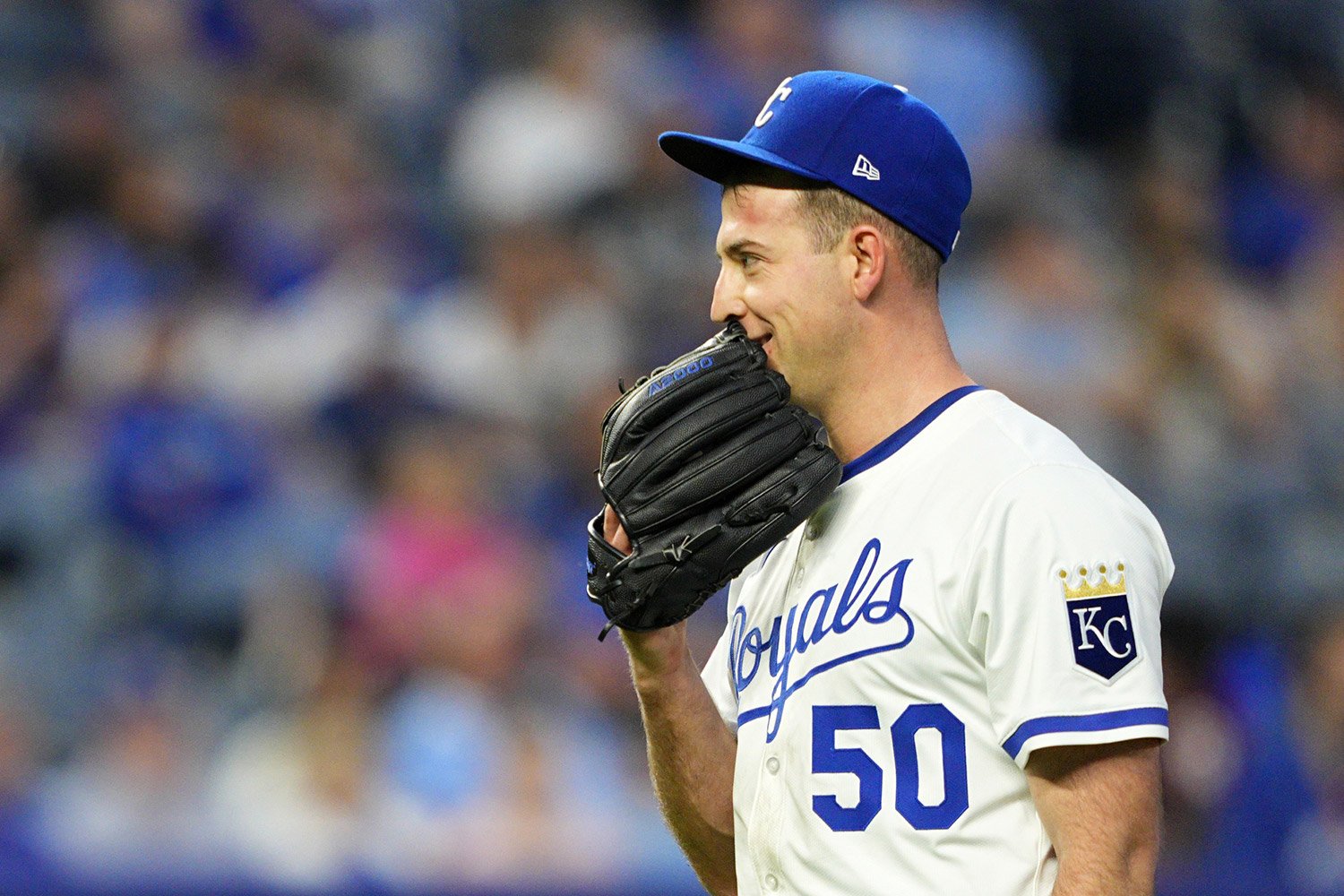 Kris Bubic’s tenure in Kansas City has been complicated. Bubic made his debut in the pandemic-shortened season in 2020, where he started 10 games and posted a 4.32 ERA. His performance was respectable for a rookie, but not necessarily indicative of becoming the centerpiece of a rotation. In his 2021 season, Bubic posted similar stats with a 4.43 ERA in 130 innings. In that season, he showed signs of being effective in a hybrid role. In the nine appearances where he did not start, Bubic was used following an opener as a starter/long reliever hybrid pitcher. Out of the bullpen, he gave up nine earned runs in 26 1/3 innings, good for a 3.08 ERA, which was noticeably better than his 4.77 ERA as a starter. A bigger indicator of his performance as a starter versus a reliever would be his OPS against. As a starter, batters hit for an .823 OPS against him, but batters only hit for an OPS of .598 when he came out of the bullpen. In 2022, Bubic struggled as a full-time starter, posting a 5.58 ERA in 129 innings. He averaged fewer than five innings per start and struggled once he got through the lineup a third time. Batters hit for an OPS of .989 in their third plate appearance against Bubic in 2022. In 2023, had a decent start to the season with a 3.94 ERA in three starts and was showing signs of improvement, but he missed the rest of the 2023 season to undergo Tommy John surgery. After his rehab, Bubic joined the team in July of 2024 and made 27 relief appearances, never pitching more than two innings in an outing. He graded at above the 90th percentile in his key statcast metrics, reflected in his TJStats summary below. In 2025, Bubic won a spot on the starting rotation with some small regression in his metrics (TJStats summary below for his 2025 season), which is to be expected when moving from the bullpen to the rotation. In his 20 starts last season, he had a career-best 2.55 ERA over 116 1/3 innings. He also earned a career-best 3.1 fWAR and earned his first All-Star Game appearance. However, at the end of July, he suffered a rotator cuff strain that shut him down for the season despite not needing surgery. After suffering his second major injury, what does 2026 look like for Bubic? The Royals may have an opportunity to use Bubic in a creative way in 2026, and maybe 2021 could serve as the blueprint. This approach could be a way to preserve Bubic’s health and take advantage of the Royals’ strength in rotation depth, particularly if Bubic is still not fully recovered at the start of the season. While last season Bubic improved in his ability to go deeper into games, averaging 5.8 innings per start, scaling back his workload could be beneficial. One option would be to pair Bubic with Ryan Bergert, who averaged fewer than five innings per start, or Stephen Kolek as another hybrid starter. Pairing either of them with Bubic would also mean that the Royals would be pairing a right-handed pitcher with Bubic as a lefty. This could prove useful if the Royals face a team that is platoon-heavy. This plan would also allow the Royals to keep one of Bergert or Kolek on the major league roster following their strong performances in Kansas City after being acquired from San Diego at the 2025 trade deadline. Bergert, in particular, saw much less success against batters once the opposing lineup got to their third plate appearance. Batters jumped from having a .587 OPS in their first plate appearance to a .841 OPS by their third plate appearance. Pairing him with another starter and limiting his exposure could help mitigate that weakness. In addition to the benefit of Bubic not needing to overextend and hopefully allowing him the opportunity to pitch for a full season, pairing two starters would allow the bullpen a planned day of rest. There is a chance both pitchers could struggle and not last a combined nine innings, but that risk may be worth taking if it helps the Royals keep their rotation healthy. The tradeoff, however, would be carrying one less reliever in the bullpen, making bullpen management critical. There is precedent for this approach. The Milwaukee Brewers experimented with a version of this idea in 2025, with DL Hall and Quinn Priester piggybacking for a single start on three occasions, all of which resulted in a Brewers victory. In each of those games, Hall, who is normally a long reliever, would start and pitch three innings, then Priester, normally a starter, would pitch five or six innings of relief. Despite its success when used, this strategy was used sparingly by the Brewers. While this concept may sound good in theory, would it work in practice? Bubic is coming off a career year despite it being shortened by injury. He is also entering his last season of arbitration before free agency. It is also important to mention that Bubic and the Royals still have not agreed to a salary for the 2026 season and are headed to an arbitration hearing. It has been well reported that players often leave arbitration hearings feeling hurt. It is tough to hear your employer tell the arbitrator how bad they are, then go and play that season as if that never happened. For Bubic, being asked to transition to a hybrid role after an arbitration hearing, during his walk year, could be difficult... Being constrained to a hybrid role would hurt his value in the free-agent market and potentially limit his ability to earn a larger contract. There is certainly a scenario where Bubic does not accept a limited role. This offseason, the only free agent relievers who signed for more than $10 million per year are closers, and the only starting pitchers who are earning below that mark are pitchers who have recently struggled or are at the end of their careers. In order to maximize his earnings, Bubic would ideally want to remain a starter. All of this could be moot because the Royals could choose to trade Bubic before the season starts. The Royals have been open about their willingness to trade from their pitching depth to acquire an impact bat for their lineup. As free agents slowly come off the market, teams may be more willing to trade for a pitcher like Bubic. Given that Bubic is soon to be a free agent, the Royals might want to trade him now before losing him for nothing. If the Royals end up keeping Kris Bubic for the 2026 season, it would be wise for them to prioritize his health so that he can pitch for the entire season. His experience in the bullpen could make him a logical candidate to come in for long relief and work in tandem with someone like Bergert or Kolek. However, both the Royals and Bubic should be careful not to drop Bubic’s value in the case of him looking for a payday in the offseason or the Royals needing to find a trade partner at the deadline.
 -
 Image courtesy of © Jay Biggerstaff-Imagn Images Kris Bubic’s tenure in Kansas City has been complicated. Bubic made his debut in the pandemic-shortened season in 2020, where he started 10 games and posted a 4.32 ERA. His performance was respectable for a rookie, but not necessarily indicative of becoming the centerpiece of a rotation. In his 2021 season, Bubic posted similar stats with a 4.43 ERA in 130 innings. In that season, he showed signs of being effective in a hybrid role. In the nine appearances where he did not start, Bubic was used following an opener as a starter/long reliever hybrid pitcher. Out of the bullpen, he gave up nine earned runs in 26 1/3 innings, good for a 3.08 ERA, which was noticeably better than his 4.77 ERA as a starter. A bigger indicator of his performance as a starter versus a reliever would be his OPS against. As a starter, batters hit for an .823 OPS against him, but batters only hit for an OPS of .598 when he came out of the bullpen. In 2022, Bubic struggled as a full-time starter, posting a 5.58 ERA in 129 innings. He averaged fewer than five innings per start and struggled once he got through the lineup a third time. Batters hit for an OPS of .989 in their third plate appearance against Bubic in 2022. In 2023, had a decent start to the season with a 3.94 ERA in three starts and was showing signs of improvement, but he missed the rest of the 2023 season to undergo Tommy John surgery. After his rehab, Bubic joined the team in July of 2024 and made 27 relief appearances, never pitching more than two innings in an outing. He graded at above the 90th percentile in his key statcast metrics, reflected in his TJStats summary below. In 2025, Bubic won a spot on the starting rotation with some small regression in his metrics (TJStats summary below for his 2025 season), which is to be expected when moving from the bullpen to the rotation. In his 20 starts last season, he had a career-best 2.55 ERA over 116 1/3 innings. He also earned a career-best 3.1 fWAR and earned his first All-Star Game appearance. However, at the end of July, he suffered a rotator cuff strain that shut him down for the season despite not needing surgery. After suffering his second major injury, what does 2026 look like for Bubic? The Royals may have an opportunity to use Bubic in a creative way in 2026, and maybe 2021 could serve as the blueprint. This approach could be a way to preserve Bubic’s health and take advantage of the Royals’ strength in rotation depth, particularly if Bubic is still not fully recovered at the start of the season. While last season Bubic improved in his ability to go deeper into games, averaging 5.8 innings per start, scaling back his workload could be beneficial. One option would be to pair Bubic with Ryan Bergert, who averaged fewer than five innings per start, or Stephen Kolek as another hybrid starter. Pairing either of them with Bubic would also mean that the Royals would be pairing a right-handed pitcher with Bubic as a lefty. This could prove useful if the Royals face a team that is platoon-heavy. This plan would also allow the Royals to keep one of Bergert or Kolek on the major league roster following their strong performances in Kansas City after being acquired from San Diego at the 2025 trade deadline. Bergert, in particular, saw much less success against batters once the opposing lineup got to their third plate appearance. Batters jumped from having a .587 OPS in their first plate appearance to a .841 OPS by their third plate appearance. Pairing him with another starter and limiting his exposure could help mitigate that weakness. In addition to the benefit of Bubic not needing to overextend and hopefully allowing him the opportunity to pitch for a full season, pairing two starters would allow the bullpen a planned day of rest. There is a chance both pitchers could struggle and not last a combined nine innings, but that risk may be worth taking if it helps the Royals keep their rotation healthy. The tradeoff, however, would be carrying one less reliever in the bullpen, making bullpen management critical. There is precedent for this approach. The Milwaukee Brewers experimented with a version of this idea in 2025, with DL Hall and Quinn Priester piggybacking for a single start on three occasions, all of which resulted in a Brewers victory. In each of those games, Hall, who is normally a long reliever, would start and pitch three innings, then Priester, normally a starter, would pitch five or six innings of relief. Despite its success when used, this strategy was used sparingly by the Brewers. While this concept may sound good in theory, would it work in practice? Bubic is coming off a career year despite it being shortened by injury. He is also entering his last season of arbitration before free agency. It is also important to mention that Bubic and the Royals still have not agreed to a salary for the 2026 season and are headed to an arbitration hearing. It has been well reported that players often leave arbitration hearings feeling hurt. It is tough to hear your employer tell the arbitrator how bad they are, then go and play that season as if that never happened. For Bubic, being asked to transition to a hybrid role after an arbitration hearing, during his walk year, could be difficult... Being constrained to a hybrid role would hurt his value in the free-agent market and potentially limit his ability to earn a larger contract. There is certainly a scenario where Bubic does not accept a limited role. This offseason, the only free agent relievers who signed for more than $10 million per year are closers, and the only starting pitchers who are earning below that mark are pitchers who have recently struggled or are at the end of their careers. In order to maximize his earnings, Bubic would ideally want to remain a starter. All of this could be moot because the Royals could choose to trade Bubic before the season starts. The Royals have been open about their willingness to trade from their pitching depth to acquire an impact bat for their lineup. As free agents slowly come off the market, teams may be more willing to trade for a pitcher like Bubic. Given that Bubic is soon to be a free agent, the Royals might want to trade him now before losing him for nothing. If the Royals end up keeping Kris Bubic for the 2026 season, it would be wise for them to prioritize his health so that he can pitch for the entire season. His experience in the bullpen could make him a logical candidate to come in for long relief and work in tandem with someone like Bergert or Kolek. However, both the Royals and Bubic should be careful not to drop Bubic’s value in the case of him looking for a payday in the offseason or the Royals needing to find a trade partner at the deadline. View full article
 -
 Throwing the World Series isn't as easy as it seems. And you thought the Astros were sketchy.View the full article
 -
Image courtesy of © William Purnell-Imagn Images Sources told MLB.com that on Thursday, the Kansas City Royals and first baseman Vinnie Pasquantino agreed to a two-year deal worth more than $11 million guaranteed contract, avoiding the need for the two sides to head to an arbitration hearing. Pasquantino will have one more year of arbitration eligibility in 2028 before becoming a free agent for the 2029 season. Pasquantino’s camp filed for $4.5 million, while the Royals filed for $4 million. The deal could reach $16 million, including incentives. Last season, Pasquantino appeared in a career high 160 games, posting a slash line of .264/.323/.475, turning in a career high in slugging across 621 at-bats. The 28-year-old totalled a career high in hits with 164, doubles with 33, home runs with 32, and runs batted in with 113. All four of Pasquantino's big league seasons have been with the Royals. The former 11th-round selection in 2019 has a career average of .266 with a .330 OBP, 70 home runs, and 262 RBIs, often occupying one of the top five spots in the Royals' batting lineup. In 2025, Pasquantino had the highest barrel percentage of his career, coming in at 10.8%, up from the previous high of 8.8% set back in year one. Pasquantino was ranked in the 84th percentile in terms of squaring up the ball, while also being in the 84th percentile in whiff and 83rd for strikeout percentage, all strong numbers by the power-hitting first baseman. Pasquantino will be in action when the World Baseball Classic kicks off in early March, representing Team Italy. Pasquantino also represented Italy in 2023, when Italy was knocked out by the eventual champions Japan in the quarterfinals by a score of 9-3. In five games, Pasquantino batted .200 with a .273 OBP across 20 plate appearances. Pasquantino could be in line for another big season in 2026, with Kauffman Stadium moving the dimensions to make the park more hitter-friendly; the Royals’ first baseman could be set for another big year in the power department. The walls are being lowered from 10 feet to 8 feet, and the left-field corner will move in from 356 feet to 353 feet. The left-center and right-center gaps are going to be brought in from 389 feet to 379 feet, making the power alleys much more reachable. Center field remains untouched at 410 feet. View full article
-
Royals And Vinnie Pasquantino Agree To Two-Year Deal To Avoid Arbitration
Michael Coyle posted an article in Royals
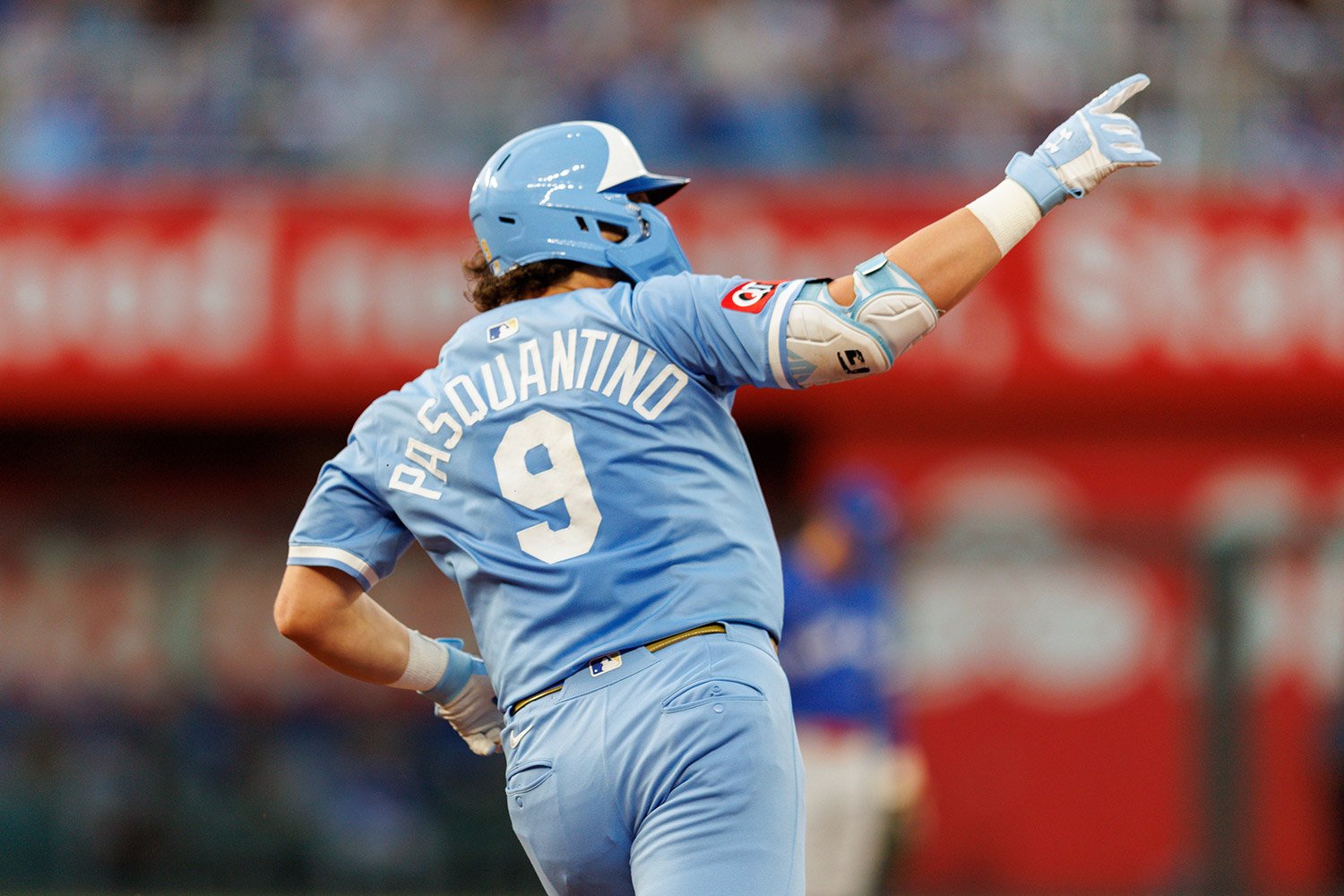 Sources told MLB.com that on Thursday, the Kansas City Royals and first baseman Vinnie Pasquantino agreed to a two-year deal worth more than $11 million guaranteed contract, avoiding the need for the two sides to head to an arbitration hearing. Pasquantino will have one more year of arbitration eligibility in 2028 before becoming a free agent for the 2029 season. Pasquantino’s camp filed for $4.5 million, while the Royals filed for $4 million. The deal could reach $16 million, including incentives. Last season, Pasquantino appeared in a career high 160 games, posting a slash line of .264/.323/.475, turning in a career high in slugging across 621 at-bats. The 28-year-old totalled a career high in hits with 164, doubles with 33, home runs with 32, and runs batted in with 113. All four of Pasquantino's big league seasons have been with the Royals. The former 11th-round selection in 2019 has a career average of .266 with a .330 OBP, 70 home runs, and 262 RBIs, often occupying one of the top five spots in the Royals' batting lineup. In 2025, Pasquantino had the highest barrel percentage of his career, coming in at 10.8%, up from the previous high of 8.8% set back in year one. Pasquantino was ranked in the 84th percentile in terms of squaring up the ball, while also being in the 84th percentile in whiff and 83rd for strikeout percentage, all strong numbers by the power-hitting first baseman. Pasquantino will be in action when the World Baseball Classic kicks off in early March, representing Team Italy. Pasquantino also represented Italy in 2023, when Italy was knocked out by the eventual champions Japan in the quarterfinals by a score of 9-3. In five games, Pasquantino batted .200 with a .273 OBP across 20 plate appearances. Pasquantino could be in line for another big season in 2026, with Kauffman Stadium moving the dimensions to make the park more hitter-friendly; the Royals’ first baseman could be set for another big year in the power department. The walls are being lowered from 10 feet to 8 feet, and the left-field corner will move in from 356 feet to 353 feet. The left-center and right-center gaps are going to be brought in from 389 feet to 379 feet, making the power alleys much more reachable. Center field remains untouched at 410 feet.
 -
A Breakdown of the 25 Non-Roster Invites to Royals Spring Training
Philip Ruo posted an article in Royals
 On Tuesday, the Royals announced that 25 players not currently on the 40-man roster will be attending major league spring training in Surprise, Arizona. This group of players will typically include free agents who recently signed minor league contracts with the club, along with top prospects in the minor leagues. Last year, free agents Cavan Biggio and Taylor Clarke were in this group, who would eventually spend time on the active roster. Here is an overview of the players invited and who might break into the team. Royals Pitchers RHP Héctor Neris Neris was signed to a minor league deal on Monday. Neris spent time in 2025 with the Braves, Angels, and Astros. For those three teams, he pitched 26 2/3 innings with a 6.75 ERA, good for a -0.8 bWAR. Earlier in his career, Neris was trusted in high-leverage positions, being either the closer or main setup man for the Phillies, Cubs, and Astros. Entering his age-37 season, he is now more often used as a middle reliever. FanGraphs projects him to have around 0.1 WAR. One concern is his declining groundball rate, which dropped to a career-low of 26.1%. With the fences moving in at Kauffman Stadium next year, that could make him more susceptible to giving up home runs. His FIP being lower than his ERA last season could indicate that he was unlucky last season, and his experience in high-leverage positions could help him earn one of the last spots in the bullpen going into 2026. RHP Jose Cuas Cuas was signed to a Minor League deal in December. Cuas pitched in Kansas City in 2022 and 2023 and has since spent time with the Cubs, Blue Jays, Phillies, and Braves. Last season, Cuas struggled at the Phillies’ Triple-A affiliate with a 13.5 ERA in 7 appearances. He also appeared in 18 games for the Braves' Double-A affiliate, posting a 3.63 ERA across 22.1 innings. This winter, Cuas also pitched in the Dominican Winter League, allowing only one earned run in 12.1 innings pitched. While he may face an uphill battle to make the Royals’ roster, his winter performance could earn him a longer look to make the team. RHP Aaron Sanchez Sanchez was signed to a minor league deal this Tuesday. In 2017 with the Toronto Blue Jays, he finished 7th in NL Cy Young voting and won the ERA title. Sanchez has battled injuries and has not made an MLB appearance since 2022. He did make 8 starts in the Dominican Summer League with only a 1.55 ERA across 46 1/3 innings, which caught the Royals’ attention. He will face tough competition for a spot in the Royals’ deep rotation. While it is unlikely that Sanchez will make the Opening Day roster, he could potentially attract trade interest from other teams or provide depth if the Royals end up trading one of their starters (assuming he is willing to accept spending time in Triple-A). LHP Helcris Olivarez Olivarez has recently spent time in the Giants organization, and the Royals signed him to a minor-league deal this offseason. Last season, he threw for 37 innings with a 3.65 ERA across the Giants' Double-A and Triple-A affiliates. He is more likely to start the season with the Omaha Stormchasers, but with the Royals still looking to add a left-handed reliever, Olivarez could eventually get a chance to make an impact in the major league bullpen. Former Draft Picks Right-handers A.J. Causey, Dennis Colleran, Shane Panzin, i and left-hander Chazz Martinez, Frank Mozzicato (No. 20 Prospect), and Hunter Patteson will also have the chance to make an impression at the big league camp this spring. Royals Catchers Jorge Alfaro The Royals signed Alfaro to a minor-league deal earlier this month. Last season, he played in 14 games for the Washington Nationals, slashing .256/.256/.308 with a 60 OPS+ and -0.3 bWAR. With Salvador Perez and Carter Jensen as locks to make the roster, it is very unlikely that Alfaro will be on the opening day roster. However, he could be in a good position to bring a veteran presence to Omaha and be called up in case either Perez or Jensen gets injured this season, much like Luke Maile last season. Elih Marrero Marrero has spent time in the Rangers and Red Sox systems and has yet to break through to the major league level. Entering his age-29 season, he will likely be battling with Jorge Alfaro to earn a spot in Triple-A next season. Blake Mitchell Currently the Royals’ No. 2 prospect, Mitchell has only progressed as far as High-A in the minor league system. While there is a lot of excitement around him, it is unlikely that he will make an impact at the major-league level in 2026. This camp invitation will provide Mitchell with experience to help his career progression. Other Catchers Other prospects and former draft picks Canyon Brown, Omar Hernandez, Ramon Ramirez (No. 8 prospect), and Luca Tresh have also been invited to the major-league camp. Royals Infielders All four infielders with non-roster invites are middle infielders. After Jonathan India, Michael Massey, and Nick Loftin all struggled in 2025, the Royals have brought these players in to challenge for the infield depth roster spot. Each of these players had their own struggles in 2025, so it will be interesting to see if any of them can make a meaningful impression in spring training. Kevin Newman Last month, Newman was signed to a Minor League deal. Newman struggled last season with the Angels, slashing .202/.209/.272 with a 33 OPS+. He is only one year removed from a 2.2 bWAR season where he batted .278/.311/.375 with an 80 OPS+. Despite last year's struggles, Newman was a plus defender, grading in the 83rd percentile in fielding run value. He is also able to hit for good contact, grading above average in whiff rate and strikeout rates. If he could return to that 2024 form, he could prove to be an option at second base in 2026. Josh Rojas Earlier this month, Rojas was signed to a Minor League Deal. Similar to Newman, Rojas struggled greatly in 2025 with the White Sox after having a good year in 2024 with the Mariners. Even in his struggles, Rojas has maintained a good chase rate of 19.6% and a walk rate near-average at 9%. If he can pair his plate discipline with better batted ball production, he could be an asset for the Royals in 2026. However, entering his age-32 season, he is at an age where it is rare for a player to develop those skills. Abraham Toro Toro was signed to a Minor League deal in December. Last year, Toro was acquired by the Red Sox to play first base, despite mostly playing second and third base in his career, when Triston Casas was lost to a season-ending knee injury. Toro went on to have little success in Boston, slashing .239/.289/.371 with an 83 OPS+. Toro is a contact hitter, grading in at least the 74th percentile in whiff rate, zone contact rate, and strikeout rate. However, his contact is rarely for power, and he rarely walks. Connor Kaiser In November, the Royals signed the Blue Valley West graduate to a Minor League deal. Kaiser has yet to make a meaningful impact at the major-league level with either the Rockies or the Diamondbacks, with a career slash line of .091/.130/.136 in 23 career plate appearances. He is unlikely to make the major league roster, and this will likely be one of his last opportunities to make an impression. Daniel Vazquez The Royals’ No. 14 prospect, Vazquez has also been invited to the big league camp. Despite having a good run of games in the Arizona Fall League, slashing .329/.459/.468, he is unlikely to break into the major league roster this spring. Peyton Wilson Rounding out the infielders is Peyton Wilson. He was the Royals’ second-round pick in the 2021 draft and spent time in Double-A and Triple-A last season. Wilson had great success in Double-A with an OPS of 1.195 in 19 games. However, he was unable to extend that success in Trip-le-A, slashing .223/.309/.309 in 84 games. His inclusion in camp should provide valuable experience as he continues his development. Royals Outfielders Last year, the Royals’ outfielders struggled on offense. To address those issues, the Royals added Isaac Collins, Lane Thomas, and Kameron Misner in the offseason. With nine outfielders currently on the 40-man roster, it is unlikely that either of these players will break into the big-league roster in spring training, but both could be called upon if the outfield struggles continue into 2025. Gavin Cross Cross is a former Royals top prospect and 1st round draft pick from 2022. Injuries have impacted his career, and his stock has dropped so far that he went unselected in the Rule 5 Draft this offseason. Cross is a bounce-back candidate after seeing moderate success the past two seasons in Double-A, slashing .250/.314/.420 and stealing 53 bases. Carson Roccaforte Roccaforte is the Royals’ No.16 prospect. Last season, he broke into the Double-A team and showed signs of power, slashing .290/.387/.475. He continued to show power in his 18 games in the Arizona Fall League, slashing .279/.393/.485. He will be someone to watch for the future.
-
- 1
-

-
- hector neris
- jose cuas
- (and 8 more)
-
Image courtesy of © Mark J. Rebilas-Imagn Images On Tuesday, the Royals announced that 25 players not currently on the 40-man roster will be attending major league spring training in Surprise, Arizona. This group of players will typically include free agents who recently signed minor league contracts with the club, along with top prospects in the minor leagues. Last year, free agents Cavan Biggio and Taylor Clarke were in this group, who would eventually spend time on the active roster. Here is an overview of the players invited and who might break into the team. Royals Pitchers RHP Héctor Neris Neris was signed to a minor league deal on Monday. Neris spent time in 2025 with the Braves, Angels, and Astros. For those three teams, he pitched 26 2/3 innings with a 6.75 ERA, good for a -0.8 bWAR. Earlier in his career, Neris was trusted in high-leverage positions, being either the closer or main setup man for the Phillies, Cubs, and Astros. Entering his age-37 season, he is now more often used as a middle reliever. FanGraphs projects him to have around 0.1 WAR. One concern is his declining groundball rate, which dropped to a career-low of 26.1%. With the fences moving in at Kauffman Stadium next year, that could make him more susceptible to giving up home runs. His FIP being lower than his ERA last season could indicate that he was unlucky last season, and his experience in high-leverage positions could help him earn one of the last spots in the bullpen going into 2026. RHP Jose Cuas Cuas was signed to a Minor League deal in December. Cuas pitched in Kansas City in 2022 and 2023 and has since spent time with the Cubs, Blue Jays, Phillies, and Braves. Last season, Cuas struggled at the Phillies’ Triple-A affiliate with a 13.5 ERA in 7 appearances. He also appeared in 18 games for the Braves' Double-A affiliate, posting a 3.63 ERA across 22.1 innings. This winter, Cuas also pitched in the Dominican Winter League, allowing only one earned run in 12.1 innings pitched. While he may face an uphill battle to make the Royals’ roster, his winter performance could earn him a longer look to make the team. RHP Aaron Sanchez Sanchez was signed to a minor league deal this Tuesday. In 2017 with the Toronto Blue Jays, he finished 7th in NL Cy Young voting and won the ERA title. Sanchez has battled injuries and has not made an MLB appearance since 2022. He did make 8 starts in the Dominican Summer League with only a 1.55 ERA across 46 1/3 innings, which caught the Royals’ attention. He will face tough competition for a spot in the Royals’ deep rotation. While it is unlikely that Sanchez will make the Opening Day roster, he could potentially attract trade interest from other teams or provide depth if the Royals end up trading one of their starters (assuming he is willing to accept spending time in Triple-A). LHP Helcris Olivarez Olivarez has recently spent time in the Giants organization, and the Royals signed him to a minor-league deal this offseason. Last season, he threw for 37 innings with a 3.65 ERA across the Giants' Double-A and Triple-A affiliates. He is more likely to start the season with the Omaha Stormchasers, but with the Royals still looking to add a left-handed reliever, Olivarez could eventually get a chance to make an impact in the major league bullpen. Former Draft Picks Right-handers A.J. Causey, Dennis Colleran, Shane Panzin, i and left-hander Chazz Martinez, Frank Mozzicato (No. 20 Prospect), and Hunter Patteson will also have the chance to make an impression at the big league camp this spring. Royals Catchers Jorge Alfaro The Royals signed Alfaro to a minor-league deal earlier this month. Last season, he played in 14 games for the Washington Nationals, slashing .256/.256/.308 with a 60 OPS+ and -0.3 bWAR. With Salvador Perez and Carter Jensen as locks to make the roster, it is very unlikely that Alfaro will be on the opening day roster. However, he could be in a good position to bring a veteran presence to Omaha and be called up in case either Perez or Jensen gets injured this season, much like Luke Maile last season. Elih Marrero Marrero has spent time in the Rangers and Red Sox systems and has yet to break through to the major league level. Entering his age-29 season, he will likely be battling with Jorge Alfaro to earn a spot in Triple-A next season. Blake Mitchell Currently the Royals’ No. 2 prospect, Mitchell has only progressed as far as High-A in the minor league system. While there is a lot of excitement around him, it is unlikely that he will make an impact at the major-league level in 2026. This camp invitation will provide Mitchell with experience to help his career progression. Other Catchers Other prospects and former draft picks Canyon Brown, Omar Hernandez, Ramon Ramirez (No. 8 prospect), and Luca Tresh have also been invited to the major-league camp. Royals Infielders All four infielders with non-roster invites are middle infielders. After Jonathan India, Michael Massey, and Nick Loftin all struggled in 2025, the Royals have brought these players in to challenge for the infield depth roster spot. Each of these players had their own struggles in 2025, so it will be interesting to see if any of them can make a meaningful impression in spring training. Kevin Newman Last month, Newman was signed to a Minor League deal. Newman struggled last season with the Angels, slashing .202/.209/.272 with a 33 OPS+. He is only one year removed from a 2.2 bWAR season where he batted .278/.311/.375 with an 80 OPS+. Despite last year's struggles, Newman was a plus defender, grading in the 83rd percentile in fielding run value. He is also able to hit for good contact, grading above average in whiff rate and strikeout rates. If he could return to that 2024 form, he could prove to be an option at second base in 2026. Josh Rojas Earlier this month, Rojas was signed to a Minor League Deal. Similar to Newman, Rojas struggled greatly in 2025 with the White Sox after having a good year in 2024 with the Mariners. Even in his struggles, Rojas has maintained a good chase rate of 19.6% and a walk rate near-average at 9%. If he can pair his plate discipline with better batted ball production, he could be an asset for the Royals in 2026. However, entering his age-32 season, he is at an age where it is rare for a player to develop those skills. Abraham Toro Toro was signed to a Minor League deal in December. Last year, Toro was acquired by the Red Sox to play first base, despite mostly playing second and third base in his career, when Triston Casas was lost to a season-ending knee injury. Toro went on to have little success in Boston, slashing .239/.289/.371 with an 83 OPS+. Toro is a contact hitter, grading in at least the 74th percentile in whiff rate, zone contact rate, and strikeout rate. However, his contact is rarely for power, and he rarely walks. Connor Kaiser In November, the Royals signed the Blue Valley West graduate to a Minor League deal. Kaiser has yet to make a meaningful impact at the major-league level with either the Rockies or the Diamondbacks, with a career slash line of .091/.130/.136 in 23 career plate appearances. He is unlikely to make the major league roster, and this will likely be one of his last opportunities to make an impression. Daniel Vazquez The Royals’ No. 14 prospect, Vazquez has also been invited to the big league camp. Despite having a good run of games in the Arizona Fall League, slashing .329/.459/.468, he is unlikely to break into the major league roster this spring. Peyton Wilson Rounding out the infielders is Peyton Wilson. He was the Royals’ second-round pick in the 2021 draft and spent time in Double-A and Triple-A last season. Wilson had great success in Double-A with an OPS of 1.195 in 19 games. However, he was unable to extend that success in Trip-le-A, slashing .223/.309/.309 in 84 games. His inclusion in camp should provide valuable experience as he continues his development. Royals Outfielders Last year, the Royals’ outfielders struggled on offense. To address those issues, the Royals added Isaac Collins, Lane Thomas, and Kameron Misner in the offseason. With nine outfielders currently on the 40-man roster, it is unlikely that either of these players will break into the big-league roster in spring training, but both could be called upon if the outfield struggles continue into 2025. Gavin Cross Cross is a former Royals top prospect and 1st round draft pick from 2022. Injuries have impacted his career, and his stock has dropped so far that he went unselected in the Rule 5 Draft this offseason. Cross is a bounce-back candidate after seeing moderate success the past two seasons in Double-A, slashing .250/.314/.420 and stealing 53 bases. Carson Roccaforte Roccaforte is the Royals’ No.16 prospect. Last season, he broke into the Double-A team and showed signs of power, slashing .290/.387/.475. He continued to show power in his 18 games in the Arizona Fall League, slashing .279/.393/.485. He will be someone to watch for the future. View full article
-
Earlier today, reports came out that Maikel Garcia would be playing for Team Venezuela in the WBC. Later in the evening, the Dominican Republic WBC selection team announced on their social media that Carlos Estevez would be playing for his home country in this upcoming tournament. Like Garcia, this will be Estevez's first WBC appearance. That said, the Royals closer has long expressed his desire to play for the Dominican Republic in the WBC as far back as April, as quoted in an article from Robert Rizzo of Latino Sports on April 17th. It was a stellar first season in Kansas City for the 32-year-old reliever. In 67 appearances and 66 IP, he posted a 2.45 ERA, 1.06 WHIP, 3.67 FIP, and 1.1 fWAR. Furthermore, his 42 saves were not just a career-high, but also led all of Major League Baseball. He is the first Kansas City closer since Dan Quisenberry to lead the majors in saves. Estevez's 20.1% K rate was 3.5% down from the previous season, and his 11.9% K-BB% was six percent lower than his 2024 mark. However, the Dominican-born closer found success by pounding the strike zone and keeping the ball in the yard (5.2% HR/FB rate, a career-low). Estevez has the stuff to succeed in the WBC and in 2026 as the Dominican Republic and Royals' closer, respectively. While he struggled to generate chase and whiff with the Royals in 2025, his strong TJ Stuff+ numbers (103 TJ Stuff+ overall) illustrated that he still overwhelmed batters in high-leverage situations. In addition to Garcia and Estevez, Salvador Perez (Venezuela), Vinnie Pasquantino (Italy), and Bobby Witt Jr. (USA) have all been confirmed to play in this year's World Baseball Classic. Jac Caglianone (Italy) and Seth Lugo (Puerto Rico) have committed to play if selected, but they have not officially been named to their respective rosters just yet. MLB Network will unveil all the official WBC rosters on February 5th. Photo Credit: Denny Medley-Imagn Images View full rumor
-
 Earlier today, reports came out that Maikel Garcia would be playing for Team Venezuela in the WBC. Later in the evening, the Dominican Republic WBC selection team announced on their social media that Carlos Estevez would be playing for his home country in this upcoming tournament. Like Garcia, this will be Estevez's first WBC appearance. That said, the Royals closer has long expressed his desire to play for the Dominican Republic in the WBC as far back as April, as quoted in an article from Robert Rizzo of Latino Sports on April 17th. It was a stellar first season in Kansas City for the 32-year-old reliever. In 67 appearances and 66 IP, he posted a 2.45 ERA, 1.06 WHIP, 3.67 FIP, and 1.1 fWAR. Furthermore, his 42 saves were not just a career-high, but also led all of Major League Baseball. He is the first Kansas City closer since Dan Quisenberry to lead the majors in saves. Estevez's 20.1% K rate was 3.5% down from the previous season, and his 11.9% K-BB% was six percent lower than his 2024 mark. However, the Dominican-born closer found success by pounding the strike zone and keeping the ball in the yard (5.2% HR/FB rate, a career-low). Estevez has the stuff to succeed in the WBC and in 2026 as the Dominican Republic and Royals' closer, respectively. While he struggled to generate chase and whiff with the Royals in 2025, his strong TJ Stuff+ numbers (103 TJ Stuff+ overall) illustrated that he still overwhelmed batters in high-leverage situations. In addition to Garcia and Estevez, Salvador Perez (Venezuela), Vinnie Pasquantino (Italy), and Bobby Witt Jr. (USA) have all been confirmed to play in this year's World Baseball Classic. Jac Caglianone (Italy) and Seth Lugo (Puerto Rico) have committed to play if selected, but they have not officially been named to their respective rosters just yet. MLB Network will unveil all the official WBC rosters on February 5th. Photo Credit: Denny Medley-Imagn Images
 -
On Thursday evening, the Kansas City Royals added to their Spring Training roster by signing right-handed reliever Eli Morgan to a Minor League contract with an invitation to Spring Training. Royals fans should be familiar with Morgan, as he pitched for four seasons with the Cleveland Guardians from 2021 to 2024. His best season with Cleveland came in 2024, as he posted a 1.93 ERA, 0.98 WHIP, 3.64 FIP, 3.09 K/BB ratio, and 0.3 fWAR in 32 appearances and 42 IP. He was also a key reliever for them in the postseason, as he came in and pitched in some high-leverage spots. The Guardians traded him to the Chicago Cubs before the 2025 season in exchange for outfield prospect Alfonsin Rosario. Unfortunately, Morgan struggled to transition that success from Cleveland to the North Side. In 7.1 IP, he posted a 12.27 ERA, 8.59 FIP, and 1.33 K/BB ratio. His K rate dropped from 20.4% in 2024 to 11.4% last year. However, it's likely that he wasn't healthy at the start of the year, as he was put on the 60-Day IL on April 15th for right elbow impingement, related to an inflamed ulnar nerve. While he was activated off the IL on September 21st, he didn't return to the Majors last season. He posted a 5.06 ERA and 3.96 FIP in 10.2 IP with the Triple-A Iowa Cubs. The Cubs did not tender Morgan a contract this offseason. Morgan is a three-pitch pitcher who leans heavily on his changeup (41.7% usage last year). Even though his overall stuff wasn't impressive on a TJ Stuff+ end (98 overall), he did an excellent job of generating chase. He sported a 41.1% chase rate last year, with all three of his offerings having a chase rate of 40% or above, according to TJ Stats. Morgan will need to improve his command in 2026, as he lagged in zone rate (44.7%) and generating whiffs (21.7%) last year. However, the Royals' front office has been valuing and targeting pitchers who can induce chase, and Morgan fits the bill perfectly. Royals pitching coach Brian Sweeney also has experience working with Morgan in Cleveland, so it's likely that Sweeney and GM JJ Picollo felt Morgan was worth taking a risk on due to their familiarity with him. The former Gonzaga product has a Minor League option remaining, which gives the Royals some roster flexibility with him should he make the team. The Morgan acquisition now increases the Royals' non-roster invitee list to 26. Photo Credit: Sergio Estrada-Imagn Images View full rumor
-
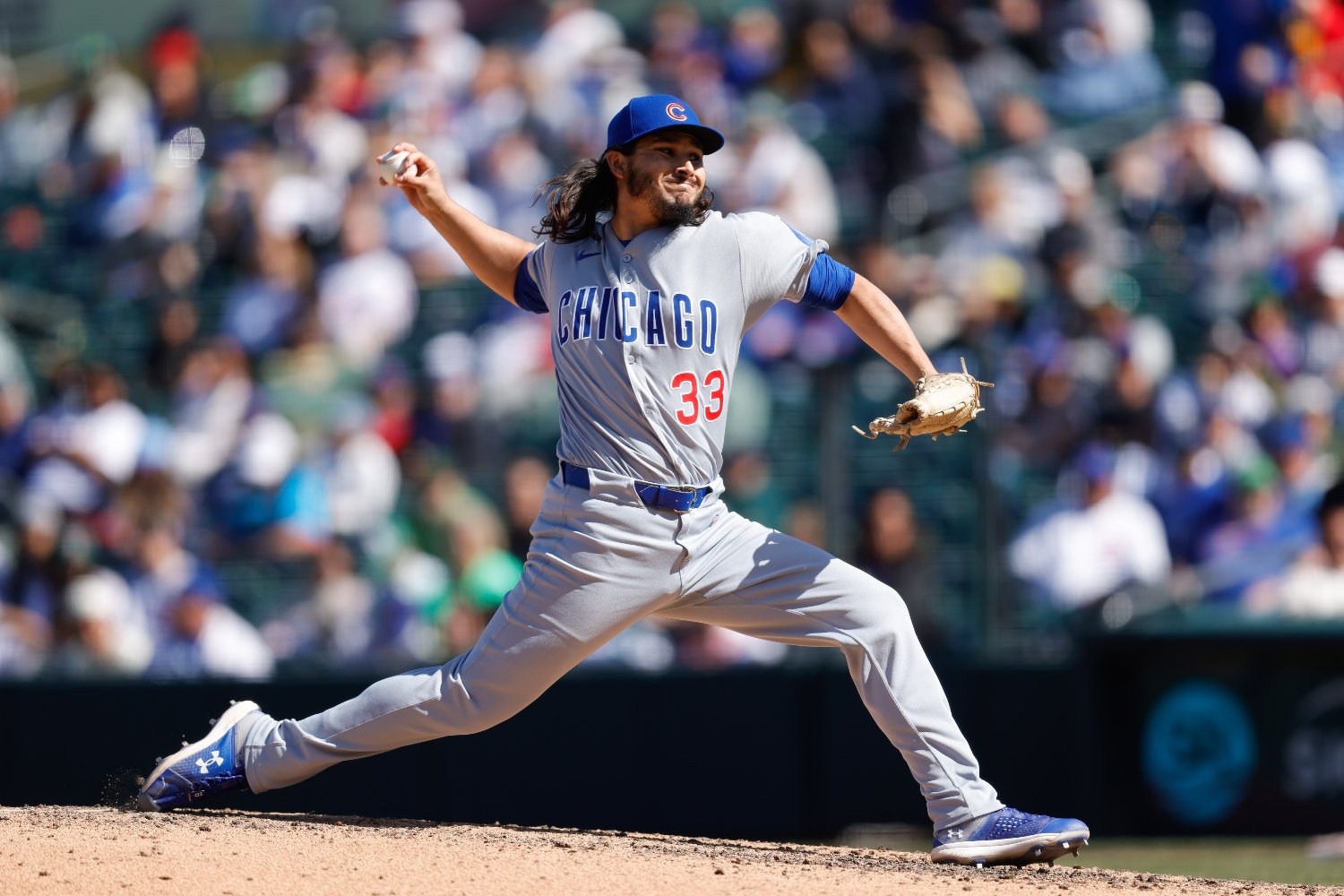 On Thursday evening, the Kansas City Royals added to their Spring Training roster by signing right-handed reliever Eli Morgan to a Minor League contract with an invitation to Spring Training. Royals fans should be familiar with Morgan, as he pitched for four seasons with the Cleveland Guardians from 2021 to 2024. His best season with Cleveland came in 2024, as he posted a 1.93 ERA, 0.98 WHIP, 3.64 FIP, 3.09 K/BB ratio, and 0.3 fWAR in 32 appearances and 42 IP. He was also a key reliever for them in the postseason, as he came in and pitched in some high-leverage spots. The Guardians traded him to the Chicago Cubs before the 2025 season in exchange for outfield prospect Alfonsin Rosario. Unfortunately, Morgan struggled to transition that success from Cleveland to the North Side. In 7.1 IP, he posted a 12.27 ERA, 8.59 FIP, and 1.33 K/BB ratio. His K rate dropped from 20.4% in 2024 to 11.4% last year. However, it's likely that he wasn't healthy at the start of the year, as he was put on the 60-Day IL on April 15th for right elbow impingement, related to an inflamed ulnar nerve. While he was activated off the IL on September 21st, he didn't return to the Majors last season. He posted a 5.06 ERA and 3.96 FIP in 10.2 IP with the Triple-A Iowa Cubs. The Cubs did not tender Morgan a contract this offseason. Morgan is a three-pitch pitcher who leans heavily on his changeup (41.7% usage last year). Even though his overall stuff wasn't impressive on a TJ Stuff+ end (98 overall), he did an excellent job of generating chase. He sported a 41.1% chase rate last year, with all three of his offerings having a chase rate of 40% or above, according to TJ Stats. Morgan will need to improve his command in 2026, as he lagged in zone rate (44.7%) and generating whiffs (21.7%) last year. However, the Royals' front office has been valuing and targeting pitchers who can induce chase, and Morgan fits the bill perfectly. Royals pitching coach Brian Sweeney also has experience working with Morgan in Cleveland, so it's likely that Sweeney and GM JJ Picollo felt Morgan was worth taking a risk on due to their familiarity with him. The former Gonzaga product has a Minor League option remaining, which gives the Royals some roster flexibility with him should he make the team. The Morgan acquisition now increases the Royals' non-roster invitee list to 26. Photo Credit: Sergio Estrada-Imagn Images
 -
On Thursday afternoon, the Royals shared on social media that Maikel Garcia will play for Venezuela in the upcoming World Baseball Classic. This will be Garcia's first appearance in the WBC with his home country. His inclusion on the Venezuelan team was merited, especially after a breakthrough season in 2025. In 666 plate appearances last year, he hit 16 home runs, scored 81 runs, collected 74 RBI, stole 23 bases, and hit .286. He also posted a 121 wRC+ and a 5.6 fWAR, the latter being the second-best mark of Royals players last season. In 449 career MLB games, Garcia has accumulated a 9.1 fWAR. In addition to his gaudy metrics, he played in his first All-Star game, won a Gold Glove, and won the team's Special Achievement award (which typically goes to the second-best player on the team). The stellar campaign helped Garcia earn a five-year, $57.5 million extension this offseason. He is guaranteed to stay under contract in Kansas City until 2031. The Royals' third baseman will be joining family member Ronald Acuna Jr. (of Atlanta) and teammate Salvador Perez in the World Baseball Classic. Perez was named the captain of Team Venezuela back in November. Pool play for the WBC will begin on March 5th and go until March 11th. The WBC final will be on March 17th at loanDepot Park in Miami. For more information, check out the World Baseball Classic's official site here. Photo Credit: Jay Biggerstaff-Imagn Images View full rumor
-
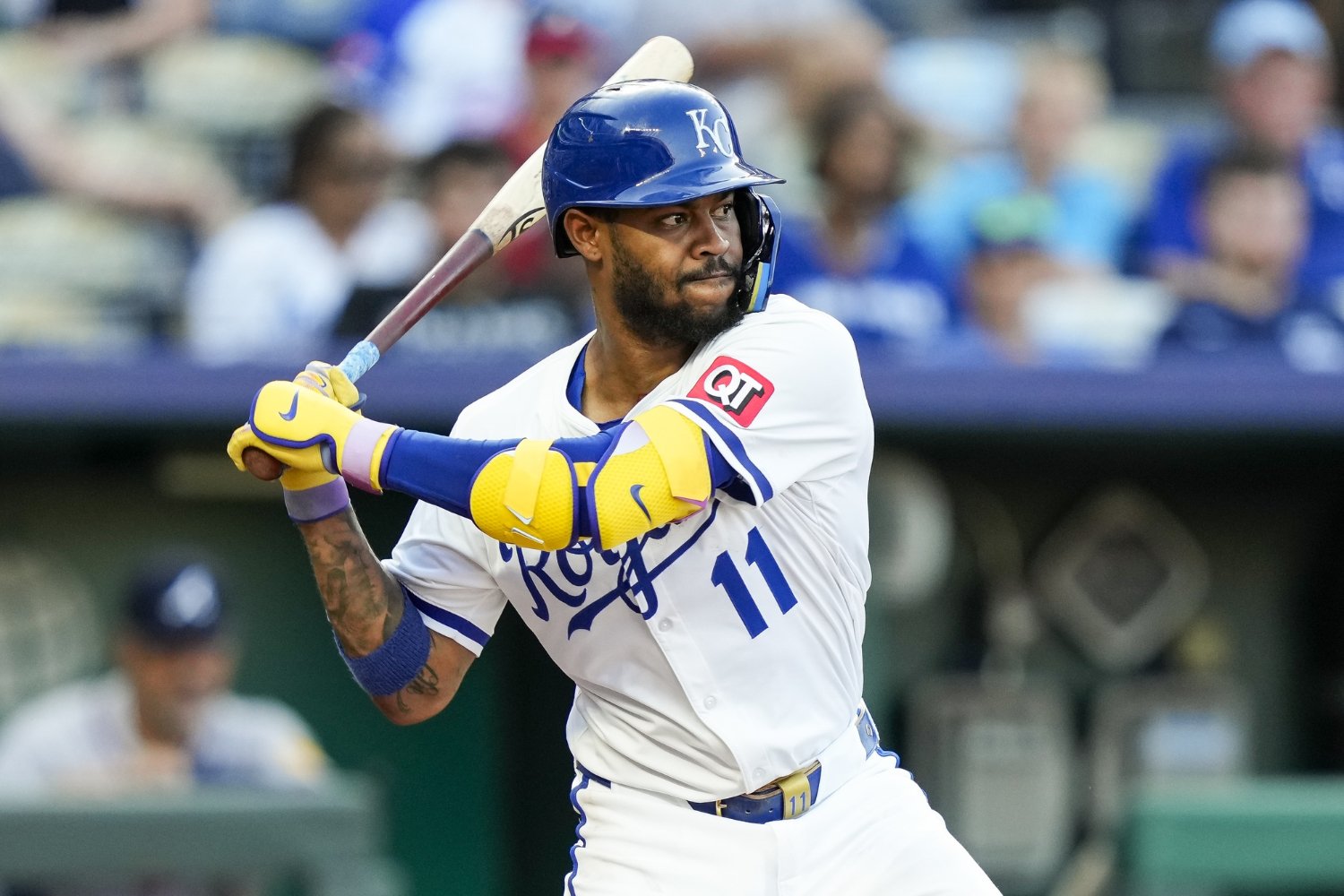 On Thursday afternoon, the Royals shared on social media that Maikel Garcia will play for Venezuela in the upcoming World Baseball Classic. This will be Garcia's first appearance in the WBC with his home country. His inclusion on the Venezuelan team was merited, especially after a breakthrough season in 2025. In 666 plate appearances last year, he hit 16 home runs, scored 81 runs, collected 74 RBI, stole 23 bases, and hit .286. He also posted a 121 wRC+ and a 5.6 fWAR, the latter being the second-best mark of Royals players last season. In 449 career MLB games, Garcia has accumulated a 9.1 fWAR. In addition to his gaudy metrics, he played in his first All-Star game, won a Gold Glove, and won the team's Special Achievement award (which typically goes to the second-best player on the team). The stellar campaign helped Garcia earn a five-year, $57.5 million extension this offseason. He is guaranteed to stay under contract in Kansas City until 2031. The Royals' third baseman will be joining family member Ronald Acuna Jr. (of Atlanta) and teammate Salvador Perez in the World Baseball Classic. Perez was named the captain of Team Venezuela back in November. Pool play for the WBC will begin on March 5th and go until March 11th. The WBC final will be on March 17th at loanDepot Park in Miami. For more information, check out the World Baseball Classic's official site here. Photo Credit: Jay Biggerstaff-Imagn Images
 -
 Here is a player you remember, but on a team that you probably don't.View the full article
 -
 The 2026 MLB season is right around the corner, and we're looking to expand our video coverage. Have you ever considered being on-camera and talking about the Royals? If yes, we'd love to talk to you about it. Our videos are typically in a wide variety of styles: breaking news, analysis, and historical study. We're open to any and all ideas as long as they're centered around the Kansas City Royals. We're looking for serious baseball talk, so leave the hot takes at home. If you'd like to learn more about this cool little side gig, please email Brock Beauchamp at [email protected]. Here is an example of a recent Royals video from us: View full rumor
 -
 The 2026 MLB season is right around the corner, and we're looking to expand our video coverage. Have you ever considered being on-camera and talking about the Royals? If yes, we'd love to talk to you about it. Our videos are typically in a wide variety of styles: breaking news, analysis, and historical study. We're open to any and all ideas as long as they're centered around the Kansas City Royals. We're looking for serious baseball talk, so leave the hot takes at home. If you'd like to learn more about this cool little side gig, please email Brock Beauchamp at [email protected]. Here is an example of a recent Royals video from us:
 -
 The Kansas City Royals bullpen put together a strong season in 2025, seeing Carlos Estévez lead Major League Baseball in saves, Lucas Erceg lead all Royal receivers with a FIP of 3.49, and John Schreiber appeared in the 10th most games amongst all relievers, totalling 64 innings. The off-season has seen the Royals go out and acquire Matt Strahm from the Philadelphia Phillies and Nick Mears from the Milwaukee Brewers, to help bolster a Royals bullpen that recorded the seventh-lowest earned run average and eighth-least home runs in MLB. Héctor Neris was picked up on a minor league deal, Luinder Avila flashed potential in September, and Daniel Lynch IV found success in the left-hander’s first full season as a reliever. With under one month until pitchers and catchers report for spring training, here is a look at Luke Jackson, Justin Wilson, and Scott Barlow, as relievers the Royals could look to add prior to camp opening. Luke Jackson Jackson appeared in 52 games in 2025, totalling 51 innings across three teams. The 34-year-old pitched for the Texas Rangers and Detroit Tigers before closing out the season with the Seattle Mariners. Jackson totalled a record of 2-5 with a 4.06 ERA and 1.35 WHIP. The numbers don’t jump off the screen at you, but it was Jackson’s third stop of 2025 with the Mariners that gave reason to believe that Jackson still has the ability to be elite. The Mariners have a history of helping pitchers reach a new level, and that is what pitching coach Pete Woodworth may have helped Jackson do. In 10 games after being acquired by the Mariners, Jackson posted an ERA of 2.38, FIP of 2.69, WHIP of 0.88, and held opposing batters to an average of .162 in those 11 ⅓ innings. The strikeout numbers also jumped, sitting down 10 batters via a punch out across those appearances. Justin Wilson Wilson has pitched with seven franchises over his 13-year career, most recently spending 2025 with the Boston Red Sox. In 61 games, Wilson posted a record of 4-1, an ERA of 3.35, and a WHIP of 1.41. This was the second straight season that the left-hander pitched in at least 60 games, and the seventh time overall. Wilson totalled a FIP of 2.95 in 2025 and struck out 57 batters in 48 ⅓ innings. Wilson held left-handed batters to an average of .212 and would give Royals manager Matt Quataro another trusted arm alongside the current lefties, Strahm and Lynch IV. In Wilson’s career, the 36-year-old has made the postseason seven times, recording a career ERA of 1.29, while limiting opposing batters to an average of .129. Wilson pitched in one playoff game in 2025 for the Red Sox, going 1 ⅔ innings against the New York Yankees, allowing no hits. The veteran presence could help give a young Royals team someone to turn to as the development of arms continues in 2026. Scott Barlow A potential reunion of the former Royals closer, Barlow, who spent the 2025 season with the Cincinnati Reds. In 75 games, Barlow posted a record of 6-3, totalling 4.21 ERA and 1.39 WHIP. In 68 ⅓ innings, Barlow struck out 75 batters. Barlow is a pitcher who takes the ball when his name is called. In the past five seasons, Barlow has appeared in 71, 69, 63, 63, and 75 games. As many fans know, injuries can mount at any time, and having a durable arm that can routinely take the ball can help save bullpens from being overworked. Barlow’s FIP totalled in at 4.70 in 2025, the highest of the right-hander’s career, but the strikeouts were still there. Barlow retired 75 batters via the strikeout, up from 2024 when Barlow struck out 68. Opposing batters were only able to hit .200 off Barlow, the second-lowest average against of the 33-year-old’s career.
 -
Image courtesy of © Albert Cesare/The Enquirer / USA TODAY NETWORK via Imagn Images The Kansas City Royals bullpen put together a strong season in 2025, seeing Carlos Estévez lead Major League Baseball in saves, Lucas Erceg lead all Royal receivers with a FIP of 3.49, and John Schreiber appeared in the 10th most games amongst all relievers, totalling 64 innings. The off-season has seen the Royals go out and acquire Matt Strahm from the Philadelphia Phillies and Nick Mears from the Milwaukee Brewers, to help bolster a Royals bullpen that recorded the seventh-lowest earned run average and eighth-least home runs in MLB. Héctor Neris was picked up on a minor league deal, Luinder Avila flashed potential in September, and Daniel Lynch IV found success in the left-hander’s first full season as a reliever. With under one month until pitchers and catchers report for spring training, here is a look at Luke Jackson, Justin Wilson, and Scott Barlow, as relievers the Royals could look to add prior to camp opening. Luke Jackson Jackson appeared in 52 games in 2025, totalling 51 innings across three teams. The 34-year-old pitched for the Texas Rangers and Detroit Tigers before closing out the season with the Seattle Mariners. Jackson totalled a record of 2-5 with a 4.06 ERA and 1.35 WHIP. The numbers don’t jump off the screen at you, but it was Jackson’s third stop of 2025 with the Mariners that gave reason to believe that Jackson still has the ability to be elite. The Mariners have a history of helping pitchers reach a new level, and that is what pitching coach Pete Woodworth may have helped Jackson do. In 10 games after being acquired by the Mariners, Jackson posted an ERA of 2.38, FIP of 2.69, WHIP of 0.88, and held opposing batters to an average of .162 in those 11 ⅓ innings. The strikeout numbers also jumped, sitting down 10 batters via a punch out across those appearances. Justin Wilson Wilson has pitched with seven franchises over his 13-year career, most recently spending 2025 with the Boston Red Sox. In 61 games, Wilson posted a record of 4-1, an ERA of 3.35, and a WHIP of 1.41. This was the second straight season that the left-hander pitched in at least 60 games, and the seventh time overall. Wilson totalled a FIP of 2.95 in 2025 and struck out 57 batters in 48 ⅓ innings. Wilson held left-handed batters to an average of .212 and would give Royals manager Matt Quataro another trusted arm alongside the current lefties, Strahm and Lynch IV. In Wilson’s career, the 36-year-old has made the postseason seven times, recording a career ERA of 1.29, while limiting opposing batters to an average of .129. Wilson pitched in one playoff game in 2025 for the Red Sox, going 1 ⅔ innings against the New York Yankees, allowing no hits. The veteran presence could help give a young Royals team someone to turn to as the development of arms continues in 2026. Scott Barlow A potential reunion of the former Royals closer, Barlow, who spent the 2025 season with the Cincinnati Reds. In 75 games, Barlow posted a record of 6-3, totalling 4.21 ERA and 1.39 WHIP. In 68 ⅓ innings, Barlow struck out 75 batters. Barlow is a pitcher who takes the ball when his name is called. In the past five seasons, Barlow has appeared in 71, 69, 63, 63, and 75 games. As many fans know, injuries can mount at any time, and having a durable arm that can routinely take the ball can help save bullpens from being overworked. Barlow’s FIP totalled in at 4.70 in 2025, the highest of the right-hander’s career, but the strikeouts were still there. Barlow retired 75 batters via the strikeout, up from 2024 when Barlow struck out 68. Opposing batters were only able to hit .200 off Barlow, the second-lowest average against of the 33-year-old’s career. View full article
-
 After a hiatus, America's pasttime is returning to the Olympic stage.View the full article
 -
 On Tuesday evening, the Seattle Mariners made a minor move: they designated pitcher Jackson Kowar for assignment in order to make room for catcher Jhonny Pereda. Royals fans should be familiar with Kowar, as he was drafted 33rd overall by the Royals in the 2018 MLB Draft. Yes, that infamous draft in which the Royals selected pitchers with their first five picks. Those pitchers, in addition to Kowar, included Brady Singer (18), Daniel Lynch IV (34), Kris Bubic (40), and Jonathan Bowlan (58). Austin Cox (152) and Jonathan Heasley (392) were also pitchers selected who made it to the Major Leagues, while position players Kyle Isbel (94) and Nate Eaton (632) also came from that draft. While that draft was chock full of names, Kowar may have possessed the most upside at the time of that bunch. In 2019, Kowar was ranked fourth among the Royals' prospects by MLB Pipeline (he was behind Bobby Witt Jr., Singer, and Lynch). However, he had a sterling scouting report, with many scouts feeling he had middle-of-the-rotation upside, maybe more, if it all clicked. Here's a look at his scouting report from Pipeline that season. While there was hope that Kowar would be a crucial part of this rotation, much like Singer and Bubic, or even bullpen, like Lynch and, to an extent, Bowlan, things never came together for Kowar in Kansas City. In 39 appearances and 74 IP, he posted a 9.12 ERA, 2.10 WHIP, 5.99 FIP, and 1.47 K/BB ratio. As a result, the Royals decided to move on from Kowar, trading him to Atlanta in a deal for pitchers Kyle Wright and Nick Anderson before the 2024 season. After the trade, Kowar was traded to Seattle in a deal for outfielder Jarred Kelenic. Injury and Tommy John surgery kept Kowar out of action in 2024 and limited him to only 33 IP combined in 2025 in Triple-A and Seattle. That said, the 29-year-old showed some flashes of progress with the Mariners last season, and could be an intriguing pickup by the Royals, who are already familiar with his talent and pitching style. Let's take a look at what Kowar did with the Mariners in 2025, a pitch that could be key for him in 2026, and why Kansas City should take a flier on their former competitive round draft pick. Small Sample; Decent Results in Seattle As stated before, Kowar didn't see much action in either Triple-A Tacoma or Seattle due to his recovery from Tommy John surgery in 2024. That said, he produced respectable numbers at both levels. In 16 appearances and 18 IP with the Rainiers, he posted a 2.81 ERA, 1.31 WHIP, and 4.28 FIP. His command was a work-in-progress in his return to the mound, as he only had a 21.9% K rate and 1.60 K/BB ratio. However, he only allowed an 86.1 MPH EV, induced a 55.6% groundball rate, and sported a 30.1% CSW in Triple-A. According to his Statcast profile via TJ Stats, Kowar did an excellent job limiting exit velocity on batted balls (91st percentile) and barrels (75th percentile). That said, he did give up a lot of hard hits (14th percentile), and his control was an issue at times, based on zone rate (4th percentile). Obviously, this is not a perfect profile, but it was encouraging, especially for a pitcher who missed over a full season of play in the previous year. Kowar got the call-up to the Mariners later in the season, and his numbers were fine, but not as impressive as his Triple-A metrics. In 15 outings and 17 IP, he posted a 4.24 ERA, 1.24 WHIP, and 2.14 K/BB ratio. That said, he struggled with home runs, giving up a 14.8% HR/FB rate, and his FIP was much higher at 5.84. While he induced groundballs at a high level, that didn't translate so much to the Majors, as illustrated by his 31.3% GB%. In addition, his Statcast metrics were mediocre with the Mariners (as seen below), which explains why he wasn't a part of the Seattle bullpen mix at any point in the postseason. Kowar sported plus fastball velocity (95th percentile), but everything else was below average, with the exception of a 64th percentile whiff rate. The CSW was a big surprise: it ranked in the 95th percentile (30.3%) in Tacoma but in the second percentile (24.2%) in Seattle. That was one of many examples of when Kowar thrived in Triple-A but couldn't translate those skills and performance to the MLB level. This has been a long-term problem for Kowar, especially during his time with the Royals. In 2021, he posted a 3.46 ERA, 3.05 FIP, a 34% K%, and a 3.38 K/BB ratio in 17 outings (16 starts) and 80.2 IP with the Storm Chasers. Those strong numbers helped him earn Triple-A East Pitcher of the Month at one point that season. Hence, it may be a case where Kowar is simply a good Four-A pitcher who can succeed in Triple-A, but doesn't quite have the "it" factor to do the same in the Majors. Then again, he was recovering from injury and hadn't pitched since 2023. Thus, some growing pains, especially in command, were to be expected and aren't exactly a "death knell" on his outlook as a pitcher in 2026. Kowar's Pitcher Repertoire (And Why the Slider Could Be Key) When looking at Kowar's pitch arsenal, he's a limited three-offering pitcher. That's not great for a starter, but it's more than serviceable for a reliever. While his fastball velocity has also rated highly, the pitch has lacked shape and thus has rated slightly below average in most stuff models, including TJ Stuff+, as seen below. Kowar doesn't get a ton of extension on his pitches, and his four-seamer didn't spot a ton of vertical break either. That explains why it sported a 97 TJ Stuff+, the worst mark of his four offerings last year. The metrics, especially whiff (12.8%) and xwOBACON (.423), also illustrated that his four-seamer was a mediocre offering that was thrown way too much last year (57.7%). Conversely, Kowar's three other offerings were superb. His slider, changeup, and sinker had TJ Stuff+ marks of 107, 111, and 103, respectively. As a result, his overall TJ Stuff+ was 102, which is more than serviceable for a middle-innings reliever. Looking at his TJ Stats summary from 2023, his last year in Kansas City, Kowar saw incremental progress with the Mariners, especially with his secondary pitches. Kowar's four-seamer had a bit more vertical break and spin in Seattle than it did in Kansas City, which was encouraging. However, the slider saw the best improvement with the Mariners. The slider was three points better in terms of TJ Stuff+ and had a better chase rate (36.5% to 32.9%) and whiff (52.3% to 32.4%). It seemed like Kowar's slider sported more movement. Kowar's primary breaking offering had 1.2 more inches of vertical break, 0.8 more inches of horizontal break, and 322 more RPM in spin. I created a clip compilation below that showcases his progression in his slider movement from 2022 to 2025. The slider was more of a harder offering with the Royals. With the Mariners, it sported much more movement and, as a result, became a better chase and whiff pitch for Kowar last season. Even when looking at the heatmap data of Kowar's slider over his past two seasons, it's obvious that the Mariners seemed to help him fully tap into the pitch in ways that he couldn't in Kansas City. Here's his slider heatmap from last season with Seattle. Kowar struggled a bit against lefties with the pitch, as he left it up in the middle far too often, based on his heatmap. The .412 xwOBACON also confirms that inconsistency. That said, he also generated a 34.4% CSW and 45.2% whiff rate with the slider against lefties, so it was effective when located properly. As for his sldier against righties, it had a much lower xwOBACON (.274), while still maintaining strong CSW (28.2%) and whiff rate (69.2%). Now, let's take a look at his slider heatmap data from 2023 with the Royals. In terms of CSW, Kowar's slider wasn't that much worse against lefties in 2023 (31.2%). However, it generated less whiff (27.3%) and got hit much harder (.522 xwOBACON). The same CSW and whiff rate trend was true for righties, with his whiff being 35.9% lower than his rate in 2025. That said, he still minimized effective contact with the slider against righties, as illustrated by his .273 xwOBACON. If Kowar can continue to show progress with the slider, he may take another step as a reliever in 2026. The pitch has the potential to be that good in the long term. Why the Royals Should Bring Back Kowar While Brian Sweeney was with the Royals in Kowar's last year with Kansas City, Sweeney and company were still figuring out the lay of the land during the 2023 "evaluation" season. Even though Sweeney and Zach Bove tried some things with the Royals' pitching staff (many who returned from 2022), I don't believe they pushed the envelope too much, especially as the losses piled up. Their goal was to determine who was worth keeping and who wasn't (Kowar obviously fell in the latter category at the time). However, if Kowar were to return to Kansas City, Sweeney, assistant pitching coach Mike McFerran, and bullpen coach Mitch Stetter would likely be more aggressive in their approach with Kowar in 2026. I believe they would not only help him continue the changes he made in Seattle but also look to make some adjustments to his pitch mix and repertoire. It also wouldn't be surprising to see Sweeney and McFerran help Kowar add a pitch, something they have done with many Royals pitchers to various levels of success. There's upside here for Kowar to be a solid middle-innings reliever who can fill in high-leverage spots from time-to-time, much like Taylor Clarke a season ago. Granted, Kowar is out of Minor League options, which could scare Royals GM JJ Picollo from taking a chance on Kowar, especially with other "out-of-options" pitchers in the bullpen, such as Nick Mears and Bailey Falter. That said, if the Royals are able put a claim on Kowar and get him to Spring Training in Surprise, they should explore the possibility. If he can respond just as well to Sweeney as he did to Seattle's Pete Woodworth (who's cut from the same cloth as Sweeney in terms of philosophy and approach), then the Royals could finally benefit from the Kowar that they dreamed about when they selected him 33rd overall in the 2018 MLB Draft.
-
Recent News
-
Recent Topics
-
Recent Blogs
