
Download Save Flash – Fast, Free Flash Saver for Windows
Overview
Save Flash is a lightweight Windows utility designed to capture Flash‑based media from any website and store it securely on your hard drive. Built by Pilot Group Ltd., the program has been a steady presence in the “Browsers → Add‑ons” category since its first release in 2005. Despite the decline of Flash on modern sites, many educational portals, legacy archives, and niche entertainment pages still rely on Flash, making a dedicated saver like Save Flash a valuable tool for researchers, teachers, and hobbyists who need a reliable way to archive content for offline viewing.
The current trial version (v4.1) was last updated on 5 March 2009, and it continues to run on Windows 98 and earlier releases. Its small footprint means it occupies far less disk space than most browser extensions, which is especially handy for older machines with limited storage. The interface is offered in English, Spanish, and French, catering to a broad user base across Myanmar, Thailand, and Ireland where the software enjoys a surprisingly high adoption rate. With over 183 000 installations to date and a modest 15 new installs last week, Save Flash proves that a focused, no‑frills approach can still attract a loyal audience.
From a security standpoint, the program is free of adware and does not require an internet connection after the initial download, reducing the attack surface for users who keep their systems offline. Its trial nature means you can evaluate the core features without a purchase, and the upgrade path to the full version is clearly presented within the app. Overall, Save Flash delivers exactly what its name promises: a quick, secure way to download Flash content without the bloat of full‑scale browsers or complicated plug‑ins.
Key Features
- One‑click capture of Flash movies, animations, and interactive widgets directly from the browser.
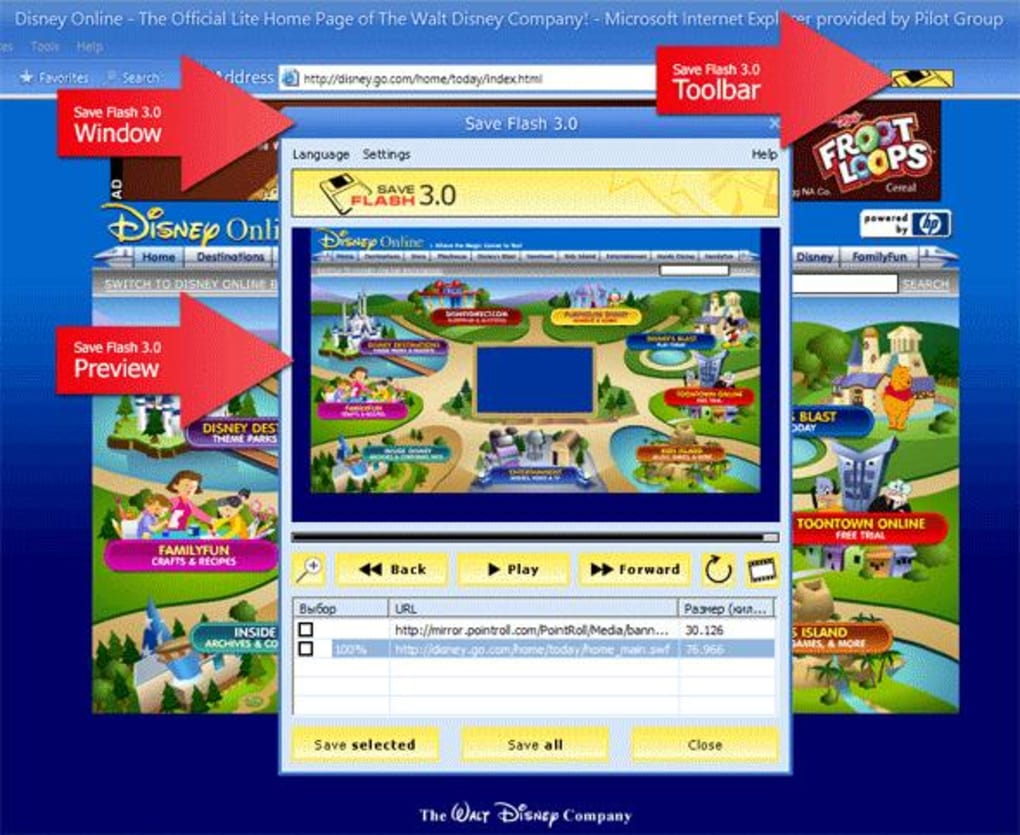
- Supports batch downloading – queue multiple URLs and let the tool process them automatically.
- Auto‑rename function that adds video resolution and source site to the file name for easy organization.
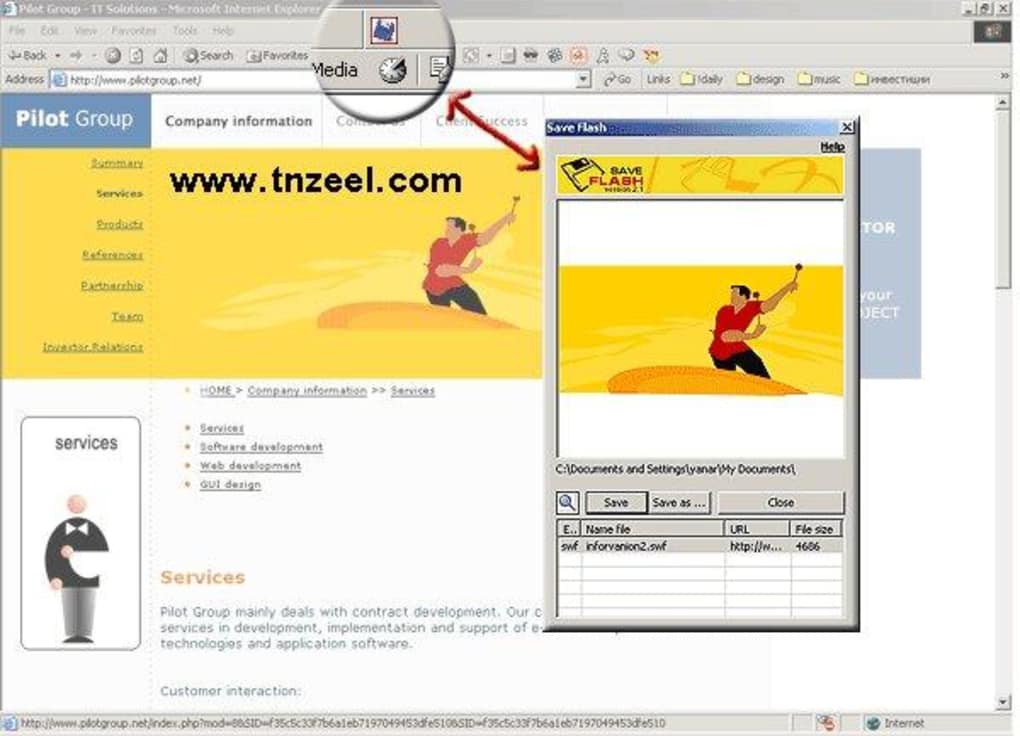
- Built‑in preview window to verify captured content before saving it to disk.
- Low system requirements – runs smoothly on Windows 98, Windows ME, and other legacy Windows versions.
- Multi‑language UI (English, Spanish, French) with optional language packs.
- Standalone executable – no need for additional browser extensions or runtime libraries.
- Free trial with no hidden fees; full version unlocks unlimited downloads and priority updates.
Each feature has been engineered with simplicity in mind. For example, the batch downloader reads a plain‑text list of URLs, processes them in the background, and saves the output files in a user‑defined folder, eliminating the need to manually copy‑paste each link. The auto‑rename utility prevents file‑name collisions, which is a common headache when archiving large collections of Flash clips. Moreover, the preview window leverages the native Flash Player to render content exactly as it appeared online, ensuring you don’t waste disk space on corrupted or incomplete captures. These capabilities combine to make Save Flash a niche yet indispensable tool for anyone still dealing with legacy Flash media.
Installation & Usage Instructions
Installing Save Flash is intentionally straightforward, reflecting the product’s “download‑and‑go” philosophy. Follow these steps to get the software up and running on your Windows machine:
- Download the installer from the official Pilot Group Ltd. website or a trusted software repository. The file is a compact
.exeno larger than 2 MB. - Run the installer by double‑clicking the downloaded file. Windows may prompt you to confirm that you trust the source; click “Yes” to continue.
- Accept the license agreement and choose the default installation folder (recommended:
C:\Program Files\SaveFlash). - Complete the setup by clicking “Install.” The process takes less than a minute on even the oldest supported hardware.
- Launch the application from the Start menu or desktop shortcut. The first run will ask you to select your preferred language.
Once installed, using Save Flash is equally simple:
- Open your web browser and navigate to a page that contains Flash content you wish to save.
- Copy the page URL and paste it into the “Add URL” field within Save Flash, or drag the URL directly onto the application window.
- Click the Capture button. The program will launch a hidden instance of Flash Player, record the stream, and store it as an
.flvor.swffile in your chosen folder. - If you added multiple URLs, press Start Batch to process the queue automatically.
- After the capture completes, you can preview the file using the built‑in player or open it with any compatible media player (e.g., VLC, Media Player Classic).
The trial version limits you to ten captures per session, which is ample for testing. Should you need unlimited access, the full version can be unlocked via the “Upgrade” menu, where you’ll be guided through a secure purchase process. Regular updates (the last one released in 2009) are still available for download, and the installer will automatically replace older files while preserving your settings.
Compatibility, Pros & Cons, and Frequently Asked Questions
Save Flash is officially compatible with Windows 98, Windows ME, and all subsequent Windows versions up to Windows XP. Because the software is a standalone executable, it does not rely on modern system libraries, making it an excellent choice for legacy PCs that cannot run newer browsers or media players. While it will also launch on Windows 7 and later, users may encounter occasional UI scaling issues due to the older interface design. The tool does not support macOS, Linux, Android, or iOS, as it was built specifically for the Windows ecosystem.
Pros
- Extremely small footprint – less than 2 MB download size.
- Runs on very old Windows versions, extending the life of legacy hardware.
- No additional plug‑ins or runtime required; truly standalone.
- Batch processing saves time for large archives.
- Free trial available with clear upgrade path.
Cons
- Last official update was in 2009; no support for newer Flash standards.
- Limited to Windows; no macOS or mobile versions.
- Trial version caps the number of captures per session.
- Interface looks dated compared to modern apps.
- No built‑in converter; saved files may need external tools for format changes.
Frequently Asked Questions
Is Save Flash still safe to use on modern Windows systems?
Yes. The program is a self‑contained executable that does not require internet access after installation, and it contains no adware or telemetry. However, because it has not been updated since 2009, you should run it on a system with a reliable antivirus scanner.
Can I convert the saved .flv files to MP4?
Save Flash only captures the original Flash stream. To convert to MP4, use a third‑party converter such as HandBrake or FFmpeg after the file has been saved.
Does the trial version limit the file size of saved videos?
No. The trial version limits the number of captures per session (ten), but each captured file can be of any size that the source Flash content uses.
Will Save Flash work with HTML5 video players?
Save Flash is specifically designed for Flash (*.swf, *.flv) streams. It does not capture HTML5 video, which is handled by different tools.
How do I upgrade from the trial to the full version?
Open Save Flash, go to the “Upgrade” menu, and follow the on‑screen instructions. You’ll be directed to a secure payment page; after purchase, a license key is emailed to you, which you paste into the application to unlock unlimited downloads.
Review Summary: Save Flash offers a niche but reliable solution for downloading legacy Flash content on older Windows PCs. Its minimalistic design and low resource consumption make it an excellent choice for users who need a focused tool without the overhead of modern browsers. While the lack of recent updates and limited platform support are drawbacks, the free trial and straightforward upgrade path provide enough flexibility for casual and power users alike.
Conclusion & Call to Action: If you still encounter Flash media on the web and need a fast, secure way to archive it, Save Flash remains one of the most practical options available for Windows. Its tiny installer, batch‑download capability, and straightforward interface let you capture content in minutes, even on machines that are a decade old. Download Save Flash now to start preserving those hard‑to‑find videos and animations before they disappear completely.