My Commonplace Book: January 2026

A selection of quotes and pictures to represent January’s reading:

Image

commonplace book
noun
a book into which notable extracts from other works are copied for personal use.

~

I love the cycle of it, the repetition. Whatever changes in life, wherever I end up, the patterns of the garden will always be the same.

A Slow and Secret Poison by Carmella Lowkis (2026)

~

Round and round they run in that long-ago, and in the now Angie realizes her face is wet with tears, tears as silent as the space between her and that other life. Nostalgia is nothing more than a trick of the mind, she tells herself. A way to turn plain memories into great ones.

Penitence by Kristin Koval (2025)

~

Image

Richard II and Henry IV

They both loved the excitement of the chase, learning to ride with hawks on their wrists and greyhounds at their heels. Otherwise, the two boys were finding that they had little in common, even apart from the suspicions Richard had already begun to harbour about the political intentions of Henry’s father. On both sides, greater familiarity bred, if not contempt, then at least a profoundly wary distance.

The Eagle and the Hart by Helen Castor (2024)

~

‘I wish only to paint well. To please those who employ me, and to create something beautiful to offset the darkness in the world.’

The House of Barbary by Isabelle Schuler (2025)

~

The obvious tactic would be to make a good impression in the courtroom. If she’s deliberately doing the opposite, I think that must be because she really is sure of her innocence. After all, the defendant knows better than anyone else whether they committed the crime.

Suspicion by Seichō Matsumoto (1982)

~

Image

The winter of 1962/63
Photo by Richard Johnson, CC BY-SA 2.0, Link

“And though he was not much given to thinking about love, did not much care for the word, thought it had been worn to a kind of uselessness, gutted by the advertising men and the crooners, and even by politicians, some of whom seemed, recently, to have discovered it, it struck him that in the end it might just mean a willingness to imagine another’s life. To do that. To make the effort.”

The Land in Winter by Andrew Miller (2024)

~

Is it that they reinforce each other’s strengths and compensate for each other’s weaknesses? Or is it the reluctance to be alone that bonds them? It doesn’t apply only to romantic couples either, but to friends, relatives, colleagues. How many good things, and how many crimes, have been the work of a bonded pair?

The Killer Question by Janice Hallett (2025)

~

His profession was strangely intimate: selling an apartment or a house was a big deal. It was selling a piece of your life, a piece of your memories – sometimes even a whole life. It was closing a door that you would never open again.

An Astronomer in Love by Antoine Laurain (2023)

~

Image

Saint Brigid of Kildare
By Octave 444CC BY-SA 4.0, Link

But it is an easy thing to be angry with someone you do not care about. To be angry with one you love, that has weight to it.

Brigid by Kim Curran (2026)

~

What makes you sad about the thought of dying? had been one of the questions. The team had debated whether to ask it. But they had posed the question and none of the interviewees had seemed to mind. She remembered the most poignant of the answers: ‘There will always be unread books.’

Room 706 by Ellie Levenson (2026)

~

That night I really grasped the fact that most of the time we have no notion of what we really want, or we lose sight of it. And the even more important fact that what we really want, just doesn’t fit in with life as a whole, or very seldom. Most folk learn slowly, and never altogether learn at all. I seemed to learn all at once.

All the Fear of the Fair by various authors (2025) – quote from The Swords by Robert Aickman

~

My favourite books read in January:

The Killer Question

Authors read for the first time in January:

Kristin Koval, Seichō Matsumoto, Antoine Laurain, Ellie Levenson, Eleanor Smith, L.P. Hartley, Tod Robbins, W.L. George, Charles Birkin, Robert Silverberg, Richard Middleton, Charles Davy, J.D. Beresford, Gerald Kersh

Places visited in my January reading:

England, US, Switzerland, Japan, Ireland, France, India, Madagascar, Isle de France (Mauritius)

~

Reading notes: January was a good month for me in terms of reading. You’ll have noticed that I tried lots of new authors, which I’m pleased about, although most of them appeared in the short story collection All the Fear of the Fair, a book I’m hoping to review soon. I read Seichō Matsumoto’s Suspicion for the Japanese Literature Challenge and as that particular challenge continues to run throughout February, I’ll see if I can fit in something by another Japanese author as well.

Also in February, Karen of Kaggsy’s Bookish Ramblings is hosting another #ReadIndies month, highlighting books published by independent publishers, and I’m sure I’ll have at least a few reviews to post that will count towards that event. I didn’t take part in the Read Christie challenge in January because I’d already read all of the suggested titles, but I’m planning to join in with Mrs McGinty’s Dead in February.

How was your January? Do you have any plans for your February reading?

Room 706 by Ellie Levenson

Image When Kate goes to meet her lover in a London hotel one morning, she has no idea what the day has in store for her. She expects it to be just like all the other times: an hour or two with James, then back home to pick up the kids from school and pretend to her husband, Vic, that nothing has happened. Switching on the television in the hotel room, however, she is horrified to discover that terrorists have taken control of their hotel and it’s not safe to leave the room. She doesn’t know how she’s going to explain this to Vic – that’s if she and James even make it out alive.

As the afternoon unfolds and they remain trapped in their room, afraid to even turn on a light or run water in case it alerts the gunmen to their presence, Kate begins to reflect on her life, her marriage and the choices she has made that have led her to be in the hotel on this fateful day.

Room 706 is Ellie Levenson’s debut novel. I enjoyed it overall, but it wasn’t really the exciting thriller I thought it would be. Every chapter set in the hotel alternates with one describing the early days of Kate and Vic’s marriage and another explaining how she came to be having an affair with James. This means only a third of the book is set during the terrorist attack and the rest is Kate’s backstory. Some of the hotel chapters are genuinely tense and suspenseful, for example when Kate and James hear other guests in the corridor, unaware of what’s going on, and are unable to warn them, but I would have liked more of this, more information on the terrorist group, what they wanted and what was being done to stop them.

The thoughts that go through Kate’s head during the hostage situation are both fascinating and believable. Thinking she may only have hours left to live, she makes a note of the online shopping password for her husband, empties her inbox in case someone finds her phone, writes on a piece of paper because her children might want to see her handwriting in years to come. In contrast, James makes no provision for his death at all, spending what could be his final moments working on a report for work on his laptop.

I loved Vic, although we only meet him through flashbacks and the texts he sends Kate while she’s under siege in the hotel. He seems to be the perfect husband and father and I couldn’t understand why Kate was cheating on him with James, who comes across as cold, aloof and completely unlikeable. We do get an answer to that, but it’s not one that made me feel sympathetic towards Kate! We don’t get answers to much else, though, so be prepared for that. I was frustrated by the way the book ended, although I think I understand what the author was trying to do.

Although this book wasn’t quite what I had expected, I did like it and as it’s Ellie Levenson’s debut novel, it will be interesting to see what she writes next.

Thanks to Headline for sending me a copy of this book for review.

The Inn at Penglas Cove by Lauren Westwood

Image I loved this! Lauren Westwood is a new author for me, but before I was even halfway through this one I was looking to see which other books she had written and mentally adding them to my wishlist.

When Juno Cartwright discovers that her husband is cheating on her, she takes her two children – seventeen-year-old Bridget and her younger brother, Connor – and heads for Cornwall, where she has conveniently just inherited a cottage from a distant relative. At least, she thinks it’s a cottage…until they arrive at the Cross Keys, a crumbling old inn on the Cornish coast. Discovering that the inn is actually her inheritance, Juno intends to put it up for sale, but the longer she spends there the more she begins to feel at home. Connor is having fun exploring the cliffs, caves and beaches of Penglas Cove, but Bridget is disgusted with the whole situation – the inn has no internet connection, no showers, and she just wants to go back to London.

Two centuries earlier, in 1820, Bess Trevelyan arrived in Cornwall to marry Lord Robert Penhelion. It was an unhappy marriage and, according to legend, Bess had a lover – Penhelion’s brother, a sea captain – and had taken refuge in the Cross Keys Inn to wait for the return of his ship. When Penhelion learned of the affair, he paid the innkeeper, Old John Dog, to murder her. Juno is fascinated by this legend, particularly as she and Bridget seem to bear a striking resemblance to the portrait of Bess Trevelyan hanging on the wall in the inn. As Juno tries to find out more about Bess and her tragic story, it seems that history is beginning to repeat itself.

This is such an atmospheric novel! Penglas Cove and the Cross Keys Inn – complete with an adjoining smugglers’ museum and pirate cave with waxwork figures playing out the story of Bess Trevelyan – are so vividly described they feel like real places. In her author’s note, Westwood acknowledges Daphne du Maurier’s Jamaica Inn and Frenchman’s Creek and Winston Graham’s Poldark series, as well as her own visits to Cornwall, and you can see the influence of all of these on her writing.

I loved our narrator, Juno, but she also has a strong cast of supporting characters around her; my favourites were Cliff and Elspeth, two elderly people who run the museum and pirate cave and who become almost like family to Juno and her children. And then there’s Bess, whose story unfolds in the form of a dual narrative. We don’t spend as long with Bess as we do with Juno, but it’s long enough to get to know her and to discover that there’s more to her story than anyone in the present day knows. Both threads of the novel were fascinating and it was all so readable that I finished it in two days, which could have been less if I’d had nothing else to do!

Although smuggling and piracy are things we tend to associate with times gone by, they do of course still exist today and in the modern day storyline Westwood explores the forms smuggling and trafficking can take in the 21st century. This gives the novel more relevancy and a more serious tone, but I personally would have preferred just to focus on the Bess mystery and Juno’s efforts to renovate the inn and build a new life for herself and the children. Still, I found The Inn at Penglas Cove a very entertaining and enjoyable read and just need to decide which Lauren Westwood book I should read next.

Thanks to Boldwood Books for providing a copy of this book for review via NetGalley.

Top Ten Tuesday: Authors I discovered in 2025

Image

This week’s topic for Top Ten Tuesday (hosted by That Artsy Reader Girl) is: Bookish Discoveries I Made in 2025

There were lots of authors I tried for the first time last year, but the ten I’m listing below are all authors whose work I enjoyed and would like to explore further (or in some cases, already have).

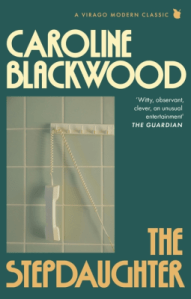
1. Caroline BlackwoodThe Stepdaughter was a very dark and unsettling novella but I was gripped by it and will be looking for more of her books.

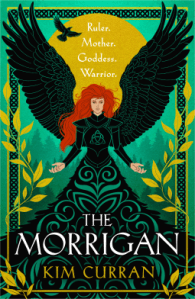
2. Kim Curran – I read The Morrigan for Reading Ireland Month last year and have just finished her new book, Brigid, which I’ll be reviewing soon.

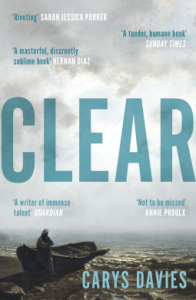
3. Carys Davies – This time, an author I read for Reading Wales Month! Clear was a beautifully written book and I would be happy to try her previous ones.

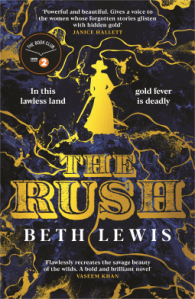
4. Beth LewisThe Rush, set in Canada during the Gold Rush, was one of my books of the year in 2025. Her previous books all sound interesting, but very different.

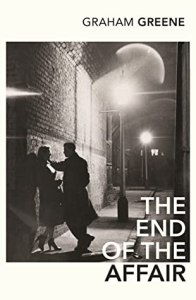
5. Graham Greene – I liked, though didn’t love, The End of the Affair, my first Greene novel. I’m definitely planning to read more of his books and have put Brighton Rock on my new Classics Club list.

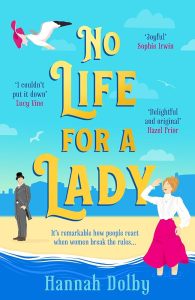
6. Hannah Dolby – I loved No Life for a Lady and will be reading How to Solve Murders Like a Lady soon. I can’t wait to meet our heroine Violet Hamilton again!

7. Patrick Ryan – Ryan’s family saga Buckeye was possibly my favourite of all the books I read last year. It’s his first adult novel, although he has previously written young adult novels and short stories.

8. Benjamin WoodSeascraper was another of my books of the year for 2025. I read it for Novellas in November and thought it was beautiful.

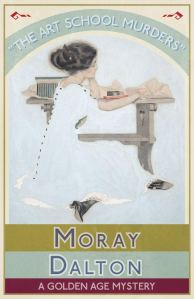
9. Moray Dalton – I read The Art School Murders for Dean Street December and was very impressed. Luckily, there are lots of other books in the series for me to look forward to!

10. Tarjei Vesaas – I read two books by this Norwegian author last year – The Birds and The Ice Palace – and enjoyed both. He has a few other books also available in English.

~

Have you read any of these authors? Which new-to-you authors did you try for the first time in 2025?

The Land in Winter by Andrew Miller

Image Andrew Miller’s The Land in Winter had a lot of success last year, being shortlisted for the Booker Prize and winning the Walter Scott Prize for Historical Fiction. It also appeared on a lot of people’s end of year ‘best of’ lists so I had high hopes for it, particularly as I’ve previously enjoyed two of his other books, Pure and Now We Shall Be Entirely Free.

The novel is set in the winter of 1963, one of the coldest winters on record in the UK. Beginning in late December 1962 and lasting until March, temperatures plummeted, blizzards blanketed most of the country in deep snow and rivers and lakes froze over. Against this backdrop, we see the stories of two married couples play out. Dr Eric Parry has recently moved to rural Somerset with his wife, Irene, who is pregnant. Eric is enjoying being a country doctor, but Irene is finding it hard to adapt; it’s so different from her life in London and she misses her sister, who has gone to live in America. Despite her pregnancy, she feels that she and Eric are growing apart – and she’s right to feel that way because, unknown to Irene, Eric is having an affair with one of his patients.

Bill and Rita Simmons, who live at a nearby farm, are also newly arrived in the countryside. To the disappointment of his wealthy father, who wanted him to join the family business, Bill has chosen to follow a very different path and become a dairy farmer. It’s proving to be more difficult than he expected, but he’s sure that with new ideas and investment, he’ll be able to turn things around. He just needs to convince the bank to lend him the money! His wife Rita, like Irene, is pregnant and, also like Irene, she feels lonely and out of place, so it’s probably not surprising that the two women quickly form a bond and a friendship begins to develop.

Apart from a long chapter in the middle of the book in which Irene hosts a Boxing Day party and several other key characters converge on the Parrys’ house, the main focus is on the two couples, their daily lives and the relationships between them. All four characters are believable and strongly drawn, but I think Rita is the one I found most interesting. Before marrying Bill, she had been a dancer in a Bristol nightclub, so the transition to life as a farmer’s wife in a small, quiet community is particularly difficult for her. She has started hearing voices in her head, a sign of her vulnerable, fragile mental state, but Bill isn’t able to give her the support she needs, feeling that he doesn’t truly know who his wife is and preferring to ignore her past.

Although I did enjoy following the stories of Eric and Irene, Rita and Bill, I felt that I was held at a distance for most of the book and never quite connected with the characters on an emotional level as much as I would have liked to. Maybe it was just me, or maybe it was a result of the bleak, frozen setting reflecting their troubled, isolated lives and the coldness of their marriages. Still, this is an impressive novel overall and despite not quite managing to love it I can see why it’s so highly regarded.

The Classics Club 26 in 2026

Image The Classics Club recently posted a questionnaire for members to complete. It’s a shorter, updated version of an earlier questionnaire from 2014 with 50 questions – I participated in that one and found it interesting to go back and look at my answers! There are 26 questions in this version (because it’s 2026) and here they are:

1. When did you join The Classics Club? How many titles have you read for the club so far? Share a link to your latest classics club list.

I joined in 2012 when it was first formed. Since then I’ve read 150 books for the club (100 from my first list and 50 from my second). I recently posted a third list of 50, which you can see here.

2. What classic are you planning to read next? Why? Is there a book first published in 1926 that you plan to read this year?

I just posted my new Classics Club list last week and am still deciding which book I want to pick up first! I have one title published in 1926 on the list – Lolly Willowes by Sylvia Townsend Warner, which I’m definitely intending to read this year.

3. Best book you’ve read so far with the club? Why?

My re-reads of The Count of Monte Cristo, Rebecca and Wuthering Heights, but I already knew I was going to love those books before I read them again, so that’s probably not a fair answer! Considering only books I read for the first time as part of the club, my favourites include Scaramouche by Rafael Sabatini, A Tale of Two Cities by Charles Dickens and The Woodlanders by Thomas Hardy.

4. Classic author who has the most works on your club list? Or, classic author you’ve read the most works by?

I’ve restricted myself to no more than two books per author on my current club list. The classic author I’ve read the most works by overall, not just from my club lists, must definitely be Agatha Christie. Since I started blogging in 2009, I’ve read 64 of her books and still have more left to read!

5. If you could explore one author’s literary career from first publication to last — meaning you have never read this author and want to explore him or her by reading what s/he wrote in order of publication — who would you explore? Obviously this should be an author you haven’t yet read, since you can’t do this experiment on an author you’re already familiar with. Or, which author’s work you are familiar with might it have been fun to approach this way?

I can’t really think of an author I haven’t read who I would want to explore in that way, because if I haven’t tried them yet I don’t know if I would like them enough to read everything they wrote. However, I think it would have been interesting to work through Agatha Christie’s books from the beginning – I’ve just been reading them at random as I come across them. Daphne du Maurier is another author I wish I’d approached in that way; I’ve read all of her novels and short stories and have noticed differences between her earlier and later books so it would have made sense to read them in order.

6. First classic you ever read?

I see there’s a separate question coming up about children’s classics, so for this one I’ll stick to adult classics. I think the first one I read was probably Wuthering Heights when I was thirteen (at least the first one I read on my own rather than at school). At that age I loved the passion of the writing and the dark, Gothic atmosphere. I’m not sure how I would have felt if I’d read it for the first time as an adult.

7. Favorite children’s classic?

There are so many! My absolute favourite is probably Watership Down by Richard Adams – I still loved it when I re-read it as an adult – but others that I enjoyed as a child include The Secret Garden, The Hobbit, The Chronicles of Narnia, Black Beauty, Anne of Green Gables and anything by Enid Blyton!

8. Which classic is your most memorable classic to date? Why?

Memorable in a good or a bad way? I don’t think I’ll ever forget the experience of reading Samuel Richardson’s Clarissa as part of a year-long readalong in 2012 – all 1,536 pages of it! It wasn’t actually the length that was the problem – it was the repetitiveness and the way the plot just seemed to go round in circles for hundreds of pages at a time without moving forward. The good parts were good enough to make it worth persevering.

9. Least favorite classic? Why?

I don’t think I could single out a ‘least favourite’. There are some very popular classics that I just didn’t get on with at all, such as To the Lighthouse by Virginia Woolf, A Farewell to Arms by Ernest Hemingway and Tender is the Night by F. Scott Fitzgerald. I also hated John Steinbeck’s The Pearl when we read it at school, but I suspect I was probably just too young to appreciate it.

10. Favourite movie or TV adaptation of a classic?

My favourite is probably Alfred Hitchcock’s Rebecca starring Joan Fontaine and Laurence Olivier. I also love The Lady Vanishes, Hitchcock’s adaptation of Ethel Lina White’s The Wheel Spins – one of the few cases where I’ve enjoyed the film much more than the book!

11. Favorite biography about a classic author you’ve read, or the biography on a classic author you most want to read, if any?

I haven’t read a lot of biographies of classic authors, but I did like Daphne du Maurier and Her Sisters by Jane Dunn; Daphne is a favourite author of mine, but it was also interesting to learn more about her sisters Angela, also an author, and Jeanne, an artist. Another biography I enjoyed is The Real Enid Blyton by Nadia Cohen, a fascinating exploration of Blyton’s life and work.

12. Favourite classic author in translation? Do you have a favorite classics translator? What do you look for in a classic translation?

As The Count of Monte Cristo is my all-time favourite classic and I also loved The Black Tulip and The Three Musketeers and its sequels, I’ll say Alexandre Dumas as my answer to the first part of the question. I don’t think I have a favourite classics translator, though.

13. Do you have a favorite classic poet/poem, playwright/play? Why do you love it?

I don’t read a lot of either poetry or plays (the title of my blog is a clue) but I do enjoy both from time to time. I loved The Importance of Being Earnest by Oscar Wilde, so I included another of his plays on my current club list, and I can also highly recommend Edmond Rostand’s Cyrano de Bergerac. Both were very clever and witty in different ways!

14. Which classic character most reminds you of yourself? Which classic character do you most wish you could be like?

I never really think about whether characters remind me of myself, but maybe someone like Elinor Dashwood from Sense and Sensibility – the quiet, sensible sister rather than the impulsive, passionate one.

15. What is the oldest classic you have read or plan to read? Why?

The oldest I’ve read is definitely The Epic of Gilgamesh which was composed 4000 years ago in ancient Mesopotamia. The second oldest would be Homer’s Odyssey, dating from the 8th or 7th century BC. I enjoyed both!

16. If a sudden announcement was made that 500 more pages had been discovered after the original “THE END” on a classic title you read and loved, which title would you be happiest to see continued?

The Mystery of Edwin Drood by Charles Dickens! I knew before I started reading it that Dickens never completed it, but it was still frustrating not knowing how it ends. I don’t think it would need another 500 pages, though – just enough to finish the story!

Image 17. Favorite edition (or series) of a classic you own, or wished you owned, if any?

My lovely hardback copy of A Christmas Carol, which I’ve had since my childhood, with beautiful colour illustrations and black and white line drawings by Arthur Rackham.

18. Do you reread classics? Why, or why not?

Yes, I do, but not as much as I used to before I started blogging. I should really do more of it, because the handful of classics that I have reread over the last few years were just as great on a second (or subsequent) read as they were the first time. I also find that I get different things out of books when reading them at different stages of my life.

19. Has there been a classic title you simply could not finish?

Not really. There are some that I started to read then got distracted by other books, but that doesn’t mean I wasn’t enjoying them and don’t want to try again. Dickens’ The Old Curiosity Shop is one of those, which is why I’ve put it on my current Classics Club list. There are also titles that I abandoned and dismissed as not for me, but later had another attempt and made it to the end – for example, Middlemarch and Crime and Punishment.

20. Has there been a classic title you expected to dislike and ended up loving?

I was convinced I wouldn’t like East of Eden by John Steinbeck, after my experience at school with The Pearl, so I was surprised by how much I loved it. When I looked back at my answers to the 2014 version of this questionnaire I noticed I had named East of Eden as the book on my list that I was most avoiding. I’m glad I did eventually read it!

21. List five fellow Classic Clubbers whose blogs you frequent. What makes you love their blogs?

I follow a lot of great bloggers who are part of the Classics Club and don’t like leaving people out, but the first five that come to mind are FictionFan, What? Me Read?, BooksPlease, Just Reading a Book and What Cathy Read Next. It made me sad to see my original answer to this question as three of the bloggers I listed in 2014 are no longer blogging.

22. If you’ve ever participated in a readalong on a classic, tell us about the experience? If you’ve participated in more than one, what’s the very best experience? the best title you’ve completed? a fond memory? a good friend made?

I already mentioned the experience of taking part in a Clarissa readalong in my answer to question 8. I’ve participated in several others during my time as a blogger, including a War and Peace readalong which was supposed to take a full year, but I decided halfway through that the schedule wasn’t working for me and finished it at my own pace. I also joined in with a group read of The Moorland Cottage by Elizabeth Gaskell, which I enjoyed because the book was only eleven chapters long and the host posted helpful annotated summaries of each chapter with pictures and facts (sadly her blog has since been deleted).

23. If you could appeal for a readalong with others for any classic title, which title would you name? Why?

I’m not sure about this one. I would consider joining a readalong of any of the books on my current list or any other book that sounds interesting, but I don’t have any specific titles to suggest.

24. What are you favourite bits about being a part of The Classics Club?

The Classics Spins, which are always fun to join in with and help motivate me to read the books on my list. Otherwise, I like the sense of community that comes with being part of a group of people who all enjoy reading classics.

25. What would you like to see more of (or less of) on The Classics Club?

Maybe more features like this questionnaire that encourage members to interact and get to know each other. I used to enjoy the monthly memes, but I appreciate that things like that create more work for the moderators, who are doing a great job as it is!

26. Question you wish was on this questionnaire? (Ask and answer it!)

Name five classics you loved and haven’t mentioned yet in this questionnaire: The Woman in White by Wilkie Collins, Persuasion by Jane Austen, Alone in Berlin by Hans Fallada, The Private Memoirs and Confessions of a Justified Sinner by James Hogg and The Tenant of Wildfell Hall by Anne Brontë.

~

I hope you enjoyed reading my answers to these questions!

A Slow and Secret Poison by Carmella Lowkis

Image It’s 1925 and Vee Morgan is on her way to Harfold Manor in Wiltshire to take up the position of gardener. She knows she’s lucky to get the job; although she loves being outdoors and was a Land Girl on a farm during the war, she has no horticultural qualifications and no references, not to mention that women gardeners are not at all common and not exactly in high demand. After arriving at her new workplace, however, she learns that none of the local men wanted the job and are reluctant to come anywhere near Harfold Manor and its strange inhabitant, Lady Arabella Lascy.

Arabella, alone in the world apart from her estate manager and cousin, Maurice Reacher, believes she and her family have been cursed. First her parents died, then all four of her brothers, each within three years of the one before, leaving only Arabella to inherit the family estate. Now another three years have passed and Arabella is convinced that she will be the next victim. But are the Lascys really under a curse or is there a more human explanation for what has been happening?

A Slow and Secret Poison is the second novel by Carmella Lowkis; I had mixed feelings about her first, Spitting Gold, a retelling of a Charles Perrault fairy tale, but I found this one more enjoyable. Vee interested me from the beginning – she’s a very flawed heroine, as we discover as the story unfolds and secrets from her past come to light – but I liked her as a character and I thought her practical, no-nonsense personality provided a good counterpart to the reclusive, fanciful Arabella. I was intrigued to learn from the author’s note at the end of the book that the character of Arabella was inspired by Stephen Tennant, one of the Bright Young Things of the 1920s.

The book has a lot of Gothic elements: the crumbling old house and its eccentric owner, the supposed Lascy family curse, sightings of a mythical hare and, of course, the poisonings hinted at in the title. I was reminded very much of Laura Purcell’s books, although this one isn’t as dark as those. I did find some of the secrets and twists quite easy to predict and some parts of the plot felt a little bit implausible (particularly regarding property ownership, which becomes an important part of the story later on), but otherwise it was a quick, entertaining read.

Thanks to Doubleday for providing a copy of this book for review via NetGalley.