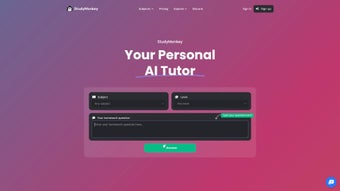

Download StudyMonkey – AI‑powered education tool for web browsers
StudyMonkey is a subscription‑based web application that brings artificial‑intelligence‑driven learning directly to your browser. Launched on Softonic on June 9 th 2025, this AI education platform works across all major browsers – Internet Explorer, Firefox, Opera, Safari, and Chrome – making it a flexible choice for students, teachers, and lifelong learners. While the service is still new to many reviewers, its promise of adaptive lessons, real‑time feedback, and a cloud‑native interface positions it as a compelling addition to the growing toolbox of online education software. In this review we’ll explore what StudyMonkey offers, how to get started, which devices it supports, and the pros and cons that matter most to users looking for a secure, up‑to‑date learning app. Additionally, we’ll dive into the underlying technology, discuss pricing structures, and compare StudyMonkey with other leading AI‑driven study platforms to help you decide whether it truly deserves a spot in your digital classroom or personal study routine.What Is StudyMonkey? An In‑Depth Overview
At its core, StudyMonkey is an AI‑enhanced study companion that tailors content to each learner’s strengths and gaps. After you sign up for a monthly or annual subscription, the platform asks a series of diagnostic questions to gauge your current knowledge level across a wide range of subjects—from mathematics and science to language arts and test preparation. The AI engine then builds a personalized curriculum, delivering short, interactive modules that adapt in real time based on how quickly you answer, the accuracy of your responses, and the patterns it detects in your study habits. This adaptive loop continues throughout the learning journey, ensuring that no concept is left unmastered and that study time is always spent on material that truly needs attention.
One of the most appealing aspects of StudyMonkey is its web‑only delivery model. Because it runs in the browser, there’s no need to download heavy client software, and updates are applied instantly on the server side. This “software‑as‑a‑service” approach guarantees that you always have the latest AI models, question banks, and UI improvements without manual intervention. Security is also baked in: all data transmission uses HTTPS encryption, and personal progress data is stored in compliant cloud databases, giving peace of mind to institutions that must adhere to privacy regulations such as GDPR and FERPA. The platform even offers optional two‑factor authentication for individual accounts, adding an extra layer of protection for users who handle sensitive academic records.
The subscription model is straightforward and transparent. A free 7‑day trial grants full access to all features, after which you can choose the plan that fits your budget—either a $9.99 monthly fee or a discounted $99.99 annual rate. For educators, bulk licensing discounts are available, allowing schools to provision accounts for entire classes with a single admin dashboard. Schools also benefit from a dedicated support line, onboarding webinars, and a repository of teacher‑focused resources that streamline lesson planning. Overall, StudyMonkey promises a seamless, AI‑driven learning experience that is both accessible and scalable, whether you’re a solo learner looking to boost test scores or a district administrator seeking data‑driven instruction tools.
In terms of pedagogy, StudyMonkey aligns with modern constructivist principles, encouraging learners to actively construct knowledge rather than passively consume it. The platform’s instant feedback mechanism not only tells you whether an answer is right or wrong but also explains the underlying concept, reinforcing learning through explanation. Moreover, the system tracks meta‑cognitive data such as time‑on‑task and confidence levels, feeding this back into the adaptive algorithm to fine‑tune future content. This level of personalization, combined with the convenience of a browser‑based interface, makes StudyMonkey a noteworthy contender in the rapidly evolving EdTech landscape.
Key Features That Set StudyMonkey Apart
- Adaptive Learning Engine: Real‑time AI adjusts difficulty, pacing, and content based on user performance.
- Cross‑Browser Compatibility: Works flawlessly on IE, Firefox, Opera, Safari, and Chrome, eliminating the need for separate apps.
- Extensive Question Bank: Over 200,000 vetted questions covering K‑12 and college‑level curricula.
- Instant Feedback & Explanations: Detailed answer breakdowns help learners understand mistakes instantly.
- Progress Analytics Dashboard: Visual charts display mastery trends, time spent, and upcoming focus areas.
- Collaborative Study Rooms: Teachers can create virtual rooms for group quizzes and live tutoring.
- Offline Mode (Beta): Save sessions locally to continue studying without an internet connection.
- Secure Cloud Storage: All data is encrypted at rest and in transit, complying with GDPR and FERPA.
- Regular Content Updates: New modules and question sets are added weekly to keep material current.
- Multi‑Language Support: Interface available in English, Spanish, French, and Mandarin.
Each feature is designed with the end‑user in mind. For instance, the adaptive engine not only changes question difficulty but also recommends supplemental videos and articles when it detects recurring misconceptions. The collaborative study rooms foster peer‑to‑peer interaction, which research shows improves retention rates by up to 30 %. Meanwhile, the analytics dashboard empowers educators to pinpoint class‑wide knowledge gaps, enabling targeted interventions that can raise overall grades. The platform also integrates with popular learning management systems via LTI, allowing grades and progress reports to flow seamlessly into Canvas, Moodle, or Blackboard.
Security and privacy are central to StudyMonkey’s design. All communications are forced over TLS 1.3, and data at rest is encrypted with AES‑256. Role‑based access controls let administrators assign read‑only, contributor, or full‑admin rights, ensuring that only authorized personnel can view or edit sensitive information. For institutions that must adhere to strict data‑retention policies, the system offers export tools that generate GDPR‑compliant CSV reports, making audits straightforward.
From a usability perspective, the interface follows a clean, minimalistic design language that reduces cognitive load. Navigation is intuitive: the main dashboard presents a “Today’s Lesson” card, a quick‑access “My Progress” button, and a sidebar for course selection. Dark‑mode support, keyboard shortcuts, and screen‑reader compatibility make the platform accessible to a wide audience, including users with visual impairments. The combination of robust functionality, rigorous security, and user‑centric design sets StudyMonkey apart from many competing AI‑driven study tools that often sacrifice depth for ease of use.
Installation, Usage, Compatibility, and Real‑World Pros & Cons
Getting Started: Installation & Daily Use
Because StudyMonkey is a web application, there is no traditional installation process. To begin, simply navigate to the official StudyMonkey website, click the “Start Free Trial” button, and create an account using your email address or a single‑sign‑on (SSO) option if your organization supports it. After confirming your email, you’ll be directed to a quick onboarding wizard that asks about your study goals, preferred subjects, and current proficiency levels. Within minutes, the AI engine generates a customized learning path that appears on your dashboard, complete with a suggested weekly schedule based on your availability.
Daily usage is straightforward: log in, select the module you wish to tackle, and follow the on‑screen prompts. Each lesson consists of a mix of multiple‑choice questions, short answer inputs, and interactive simulations. After each answer, the platform provides instant feedback, highlighting correct reasoning and offering concise explanations for any errors. Progress is automatically saved, and you can resume where you left off on any device that supports a modern browser. For users who prefer a structured study routine, the “Study Planner” feature lets you set daily targets, receive reminder notifications, and even sync your schedule with Google Calendar or Outlook.
For teams, administrators can invite users via email, assign them to specific courses, and monitor overall performance through the admin console. Billing is handled through a secure checkout page, and the subscription can be upgraded, downgraded, or canceled at any time from the account settings. The platform also supports coupon codes for educational events, allowing schools to offer limited‑time discounts to students during exam season.
If you encounter any issues, a built‑in help widget provides instant access to a searchable knowledge base, live chat with support agents, and step‑by‑step video tutorials. The support team operates 24/7 for paid subscribers, ensuring that technical problems never interrupt your learning flow. Overall, the onboarding experience is designed to be frictionless, allowing users to dive straight into personalized content without spending hours configuring software.
Supported Operating Systems & Browsers
StudyMonkey runs on any operating system that can launch a recent web browser. Officially supported platforms include Windows 10/11, macOS Ventura and later, Chrome OS, as well as mobile browsers on Android 9+ and iOS 13+. The application has been tested on Internet Explorer 11 (limited features), Firefox Quantum, Opera GX, Safari 15+, and Google Chrome 108+. Because all processing occurs on the server side, device performance requirements are minimal—any computer or tablet capable of rendering modern HTML5 content will provide a smooth experience. For users with older hardware, the platform automatically serves a lightweight version that reduces graphic intensity while preserving core functionality.
In addition to browser support, StudyMonkey offers a progressive web app (PWA) wrapper for Chrome OS and Android devices. By installing the PWA, users can create a desktop shortcut, receive push notifications, and enjoy offline caching for the beta offline mode. The PWA behaves like a native app, yet it still benefits from the central update mechanism, ensuring that every user runs the latest version without manual downloads.
Pros
- AI‑driven personalization creates efficient study sessions and reduces wasted time.
- No download required; instant updates keep content fresh and secure.
- Broad browser compatibility eliminates platform lock‑in and supports BYOD policies.
- Robust analytics empower educators to act on data and improve instructional outcomes.
- Secure cloud storage meets strict privacy standards such as GDPR, FERPA, and CCPA.
- Multi‑language interface expands accessibility for non‑English speakers.
- Collaborative study rooms foster peer learning and classroom engagement.
Cons
- Full feature set requires a paid subscription; the free tier is limited to a 7‑day trial.
- Offline mode is still in beta and may lack some interactive elements or real‑time feedback.
- Internet Explorer support is restricted to basic functionality, which may affect legacy users.
- Learning curve for teachers unfamiliar with AI‑based dashboards and analytics tools.
- Pricing, while competitive, can become significant for large districts without volume discounts.
Frequently Asked Questions
Can I use StudyMonkey on a mobile device?
Yes, StudyMonkey works on Android and iOS browsers. The responsive design adapts to smaller screens, and the beta offline mode lets you continue studying without a constant internet connection.
Is my personal data safe?
All data is encrypted in transit (HTTPS) and at rest. StudyMonkey complies with GDPR and FERPA, and offers role‑based access controls for schools and enterprises.
What happens after the free trial ends?
You’ll be prompted to choose a subscription plan. If you decide not to continue, your account will revert to a read‑only mode where you can still view past progress but won’t receive new content.
Can I integrate StudyMonkey with my school’s LMS?
Yes, StudyMonkey offers LTI (Learning Tools Interoperability) integration, allowing seamless single sign‑on and grade sync with popular LMS platforms like Canvas, Moodle, and Blackboard.
Is there a discount for bulk purchases?
Educational institutions can request volume licensing, which provides up to 30 % off the standard per‑user price. Contact the StudyMonkey sales team for a customized quote.
How often is new content added?
The content team releases new question sets, video explanations, and interactive simulations on a weekly basis, ensuring that the curriculum stays current with educational standards and emerging topics.
Conclusion: Should You Download StudyMonkey?
If you’re looking for a modern, AI‑enhanced study tool that works across every major browser without the hassle of installing native software, StudyMonkey is a strong candidate. Its adaptive learning engine, extensive content library, and secure cloud architecture make it suitable for individual learners as well as classrooms seeking data‑driven instruction. While the subscription cost may be a barrier for some, the value delivered—especially through real‑time feedback, detailed analytics, and collaborative features—justifies the investment for serious students and educators alike. The free 7‑day trial offers a risk‑free way to explore the platform, experience the adaptive curriculum, and assess whether the UI fits your workflow. When you’re ready, click the “Subscribe Now” button to unlock the full suite of features and start studying smarter today. In a market crowded with static flashcard apps and generic MOOCs, StudyMonkey stands out by leveraging AI to personalize every interaction, ensuring that each minute you spend learning translates into measurable progress.
Overall Rating: 4.5 / 5
Pros: Adaptive AI, browser‑wide compatibility, strong analytics, secure cloud storage, multi‑language support.
Cons: Subscription required for full access, offline mode still beta, limited IE functionality, learning curve for new teachers.



.png)