
Screenshots
App details
- Version
- 0.118.0
- Size
- 1.01 MB
- Updated
- May 13, 2022
- Requires
- Windows 8.1
- Language
- English
- License
- Free
- Developer
- Termux
- Category
- Windows OS
About Termux
Download Termux – Free Linux Emulator for Windows Desktop
Introduction & Overview
Termux has long been celebrated as a powerful terminal emulator for Android, but the project’s ambition didn’t stop at mobile devices. Termux for PC brings the same open‑source spirit to Windows desktops and laptops, delivering a fully functional Linux development sandbox without the need for virtual machines, dual‑boot setups, or complex configuration files. The application installs a minimal base system, then lets you expand it with the familiar apt package manager. Whether you’re a seasoned sysadmin, a developer who needs quick access to Bash, Zsh, or Fish, or a hobbyist looking to experiment with GCC, Python, or Git, Termux offers a lightweight, secure, and instantly ready environment.
The appeal of Termux lies in its “no‑root, no‑setup” philosophy. After a quick download, the program automatically provisions a core set of utilities—coreutils, bash, OpenSSH, and a handful of essential libraries—so you can start typing Linux commands the moment the window opens. From there, the extensive repository of over 3,000 packages gives you the ability to install editors like Vim, Emacs, or Nano; version‑control tools such as Git and Subversion; networking utilities like curl and wget; and compilers including GCC and Clang. Because the package collection mirrors the Debian/Ubuntu ecosystem, most commands you already know from a typical Linux distro work exactly the same way on Windows.
Security is another strong point. Termux runs in a sandboxed process, isolated from the rest of the Windows file system unless you explicitly grant access. The built‑in OpenSSH client allows you to manage remote servers safely, and the ability to use rsync for encrypted backups means your data stays protected. In short, Termux for PC is a modern, free, and open‑source alternative to commercial terminal emulators such as Cygwin, MobaXterm, or Hyper, providing a native‑like Linux experience that feels right at home on a Windows machine.
Core Features That Set Termux Apart
- Full Linux command‑line environment powered by
aptpackage manager. - Support for multiple shells: Bash, Zsh, Fish, and more.
- Integrated OpenSSH client for secure remote server access.
- Extensive package repository (>3,000 packages) covering editors, compilers, and utilities.
- Lightweight installation – no virtual machines or heavyweight emulators required.
- Sandboxed execution to protect the host Windows system.
- Cross‑shell scripting with Python, Perl, Ruby, and Node.js support.
- Version‑control integration with Git, Subversion, and Mercurial.
- File‑transfer tools like
rsync,scp, andcurl. - Customizable environment variables and startup scripts.
Beyond the list, Termux’s design philosophy focuses on modularity and extensibility. When you install a new package, the tool automatically resolves dependencies, updates the local package index, and configures the environment so the newly added command is instantly available. This means you can start with a bare‑bones terminal and evolve it into a full development platform, adding languages such as Go, Rust, or Java on demand. The inclusion of popular editors like Vim, Emacs, and Nano ensures that you can edit files directly within the terminal, preserving the workflow of seasoned Linux users.
Networking and remote administration are also first‑class citizens. The built‑in OpenSSH client supports key‑based authentication, port forwarding, and X11 tunneling, allowing you to manage cloud instances, containers, or on‑premise servers without leaving the Windows desktop. For those who need to synchronize data, rsync offers fast, incremental transfers with checksum verification, making backup routines reliable and efficient.
Finally, Termux embraces the open‑source community. The source code is hosted on GitHub, and contributions are welcomed. Frequent updates keep the package list current, and the community often shares custom scripts and dotfiles that can be imported to personalize your environment. Whether you’re automating tasks with Bash scripts, compiling C++ projects with GCC, or testing REST APIs via curl, Termux delivers a robust, free, and secure toolset that rivals many commercial alternatives.
Installation, Usage & Compatibility
Getting started with Termux on a Windows PC is intentionally straightforward. First, download the installer from the official website or a trusted software repository. The installer is a small .exe file (typically under 30 MB) that runs with standard user privileges—no administrator rights are required unless you wish to add Termux to the system PATH for global access.
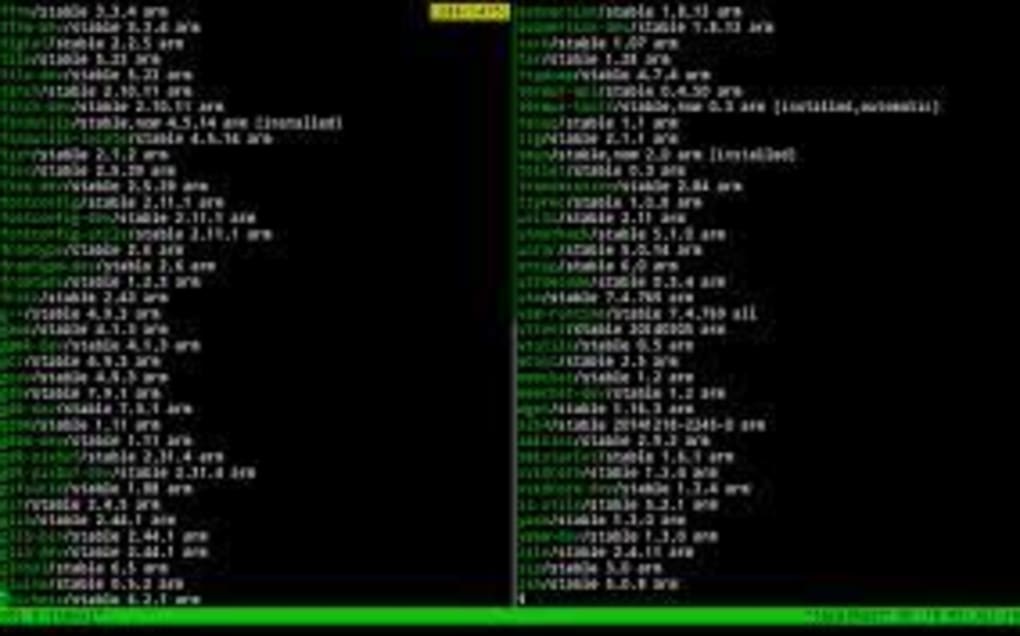
Once you launch the installer, a wizard walks you through a brief setup: you choose an installation folder (the default works for most users), agree to the license, and click “Install”. The program then extracts the core binaries, sets up a minimal Linux filesystem in the chosen directory, and registers a shortcut on the desktop and in the Start menu. The first time you open Termux, it performs an initial apt update && apt upgrade to ensure the package index is current, after which you’re presented with a prompt that looks exactly like a typical Bash shell.
From here, usage mirrors any Debian‑based distro. To install a package, simply type pkg install or apt install . For example, pkg install vim git python will pull in the Vim editor, Git version‑control system, and Python interpreter in one go. The command line also supports tab completion, history navigation, and shell scripting, allowing you to automate repetitive tasks just as you would on a native Linux box.
Termux is compatible with the following Windows operating systems:
- Windows 10 (64‑bit, version 1809 or later)
- Windows 11 (64‑bit)
- Windows Server 2019 and 2022 (optional, for enterprise environments)
Because Termux runs as a regular user‑mode process, it does not interfere with Windows updates or security policies. The sandbox isolates the Linux filesystem under the application’s directory, and you can explicitly mount Windows drives (e.g., /mnt/c) if you need to access local files. This design ensures that the Windows host remains stable and secure, while you retain the full power of a Linux terminal.
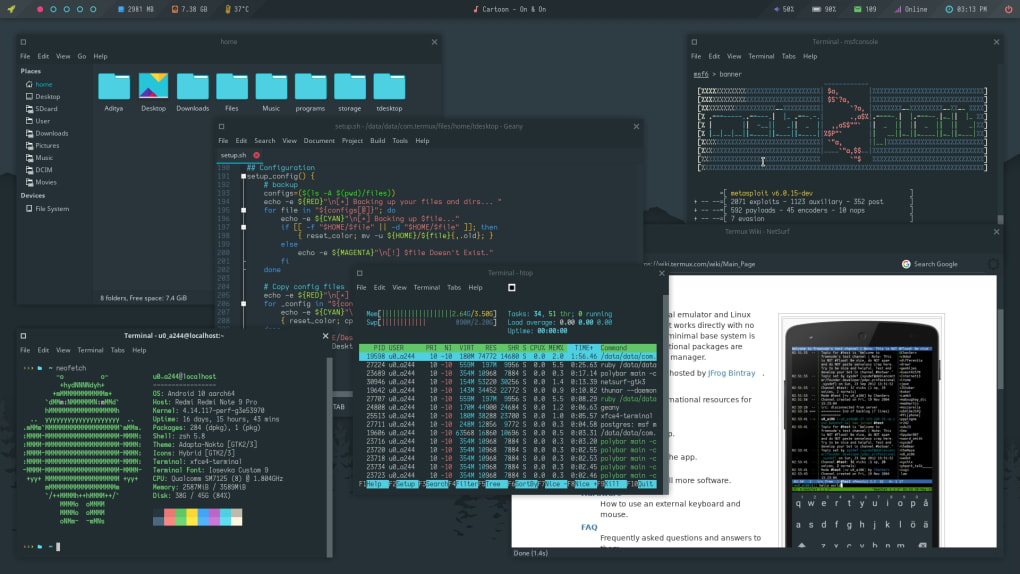
Advanced users often integrate Termux with Windows Terminal, Visual Studio Code, or any other IDE that supports an external terminal. By configuring the IDE to launch termux.exe as the integrated shell, you gain syntax highlighting, linting, and debugging capabilities while still working inside the familiar Windows environment. This hybrid workflow combines the best of both worlds: the robustness of Windows development tools and the flexibility of a native Linux command line.
Pros and Cons – A Balanced Look
Pros
- Completely free and open‑source, no hidden fees or licensing.
- Lightweight installation – runs instantly without virtual machines.
- Rich package ecosystem via
apt, mirroring Debian/Ubuntu. - Secure sandboxed environment protects the host Windows system.
- Multiple shell options (Bash, Zsh, Fish) and editor choices (Vim, Emacs, Nano).
- Built‑in OpenSSH client for secure remote server management.
- Excellent for scripting, automation, and quick prototyping.
- Active community with frequent updates and community‑driven scripts.
Cons
- Limited graphical support – primarily a command‑line tool.
- No native Windows‑style GUI integration (e.g., drag‑and‑drop file explorer).
- Some advanced Linux packages may require manual compilation.
- Performance may be slower for very large builds compared to native Linux.
- Learning curve for users unfamiliar with Linux command‑line basics.
Overall, Termux offers a compelling balance of power and simplicity for Windows users who need a reliable Linux terminal. Its free nature, extensive package list, and secure sandbox make it an attractive alternative to commercial solutions, while the few drawbacks mainly revolve around the lack of GUI features and the typical learning curve associated with any Linux environment.
Frequently Asked Questions
Is Termux for PC truly free?
Yes. Termux is released under the Apache 2.0 license, meaning you can download, use, and even modify the software at no cost.
Can I run graphical Linux applications inside Termux?
Termux is primarily a terminal emulator, so it does not provide native X‑server support. However, you can forward GUI apps to an external X server like VcXsrv or Xming if needed.
Do I need administrator rights to install Termux?
No. The installer works with standard user permissions. Administrator rights are only required if you want to add Termux to the system PATH globally.
How does Termux handle Windows file system access?
By default, Termux isolates its Linux filesystem, but you can manually mount Windows drives under /mnt (e.g., /mnt/c for the C: drive) to read or write files.
Is Termux suitable for professional software development?
Absolutely. With compilers like GCC and Clang, version‑control tools, and support for Python, Node.js, and more, developers can build, test, and deploy code directly from the Termux terminal.
Conclusion & Call to Action
Termux for PC delivers a remarkably full‑featured Linux environment on Windows without the overhead of virtual machines or the expense of commercial terminal suites. Its free, open‑source nature, combined with a powerful apt package manager, makes it a go‑to tool for developers, system administrators, and tech enthusiasts who want to harness the command‑line power of Linux while staying on a Windows workstation. The sandboxed architecture ensures that your Windows host stays secure, and the seamless integration of OpenSSH, Git, and a wide range of editors means you can manage remote servers, version your code, and edit files all from a single window.
If you’ve been looking for a lightweight, secure, and extensible terminal emulator that can grow with your needs, Termux is worth a download today. Simply click the link below, run the installer, and start exploring the world of Linux right from your Windows desktop. Whether you’re compiling a C program, automating backups with rsync, or learning Bash scripting for the first time, Termux provides the tools you need—free of charge and ready to use.
Ready to experience Linux on Windows? Download Termux now and unlock a new level of productivity.
Guides & Tutorials
How to install Termux
- Click the Download button above.
- Once redirected, accept the terms and click Install.
- Wait for the Termux download to finish on your device.
How to use Termux
This software is primarily used for its core features described above. Open the app after installation to explore its capabilities.
User Reviews
No reviews yet. Be the first to share your experience.
You may also like
more
Llama 2
Free-to-use large language model As the new addition to Meta’s arsenal of langua...

NotebookLM
Revolutionizing the note-taking and idea-generation process NotebookLM is an exp...

Github co pilot
AI-inspired software development and coding platform GitHub Copilot is a browser...

Google Gemma
Google’s lightweight AI models Introducing Google Gemma , a family of cutting-ed...

AI Image Enlarger
A free app for Windows, by ai-image-larger. AI Image Enlarger is a free software...

DALL E
AI-driven text-to-image transformation engine DALL·E is a free graphic and desig...
