
Download TICAS – scientific computing, modular programming, lightweight tool, efficient workflow, independent executables, flexible computing
Overview
TICAS is a specialized software tool designed for scientific computing, offering a modular architecture that redefines how users interact with computational environments. Unlike traditional applications that require a monolithic installation, TICAS operates through independent .exe files, allowing users to install only the necessary components without relying on a base package. This approach supports a highly flexible and efficient workflow, particularly beneficial in environments where system resources are limited or where precision in tool selection is critical.
The application is tailored for both novice and experienced developers who engage in scientific programming, algorithm development, and computational analysis. By enabling direct access to individual modules, TICAS reduces overhead and accelerates setup times, making it ideal for researchers, engineers, and students working on complex calculations. Its lightweight nature ensures rapid execution and minimal system impact, enhancing performance even on older or less powerful machines.
Although the developer did not provide additional technical details, TICAS has been available since 2012, indicating a long-standing presence in the scientific computing community. Its design philosophy emphasizes user accessibility despite underlying complexity, positioning it as a valuable utility within the productivity category. Real-world use cases include data modeling, algorithm prototyping, and modular script execution in academic and technical settings.
Key Features & Functionality
- Modular Architecture: Every command in TICAS is an independent executable file, allowing users to selectively install and run only the modules they need. This eliminates unnecessary bloat and supports a lean, purpose-driven workflow.
- Lightweight Performance: With a file size of just 10.0 MB, TICAS is optimized for speed and efficiency. It loads quickly and operates with minimal resource consumption, making it suitable for low-end systems and environments requiring rapid deployment.
- User-Friendly Interface: Despite its technical foundation, TICAS presents a simplified interface that abstracts advanced functionalities. This enables users of varying skill levels to navigate and utilize the tool effectively without extensive training.
- Programmable Environment: The software supports script execution and algorithm development, allowing users to customize workflows and extend functionality based on specific project needs.
- Direct Module Access: Users can download and install individual modules without requiring a base installation, streamlining the setup process and enhancing accessibility for targeted use cases.
For example, a researcher analyzing climate data might install only the statistical processing and visualization modules, avoiding the need to load unrelated components. Similarly, a student learning programming could begin with basic arithmetic and logic modules, gradually expanding their toolkit as needed. This adaptability ensures that TICAS remains relevant across diverse technical scenarios.
Interface, UX & Performance
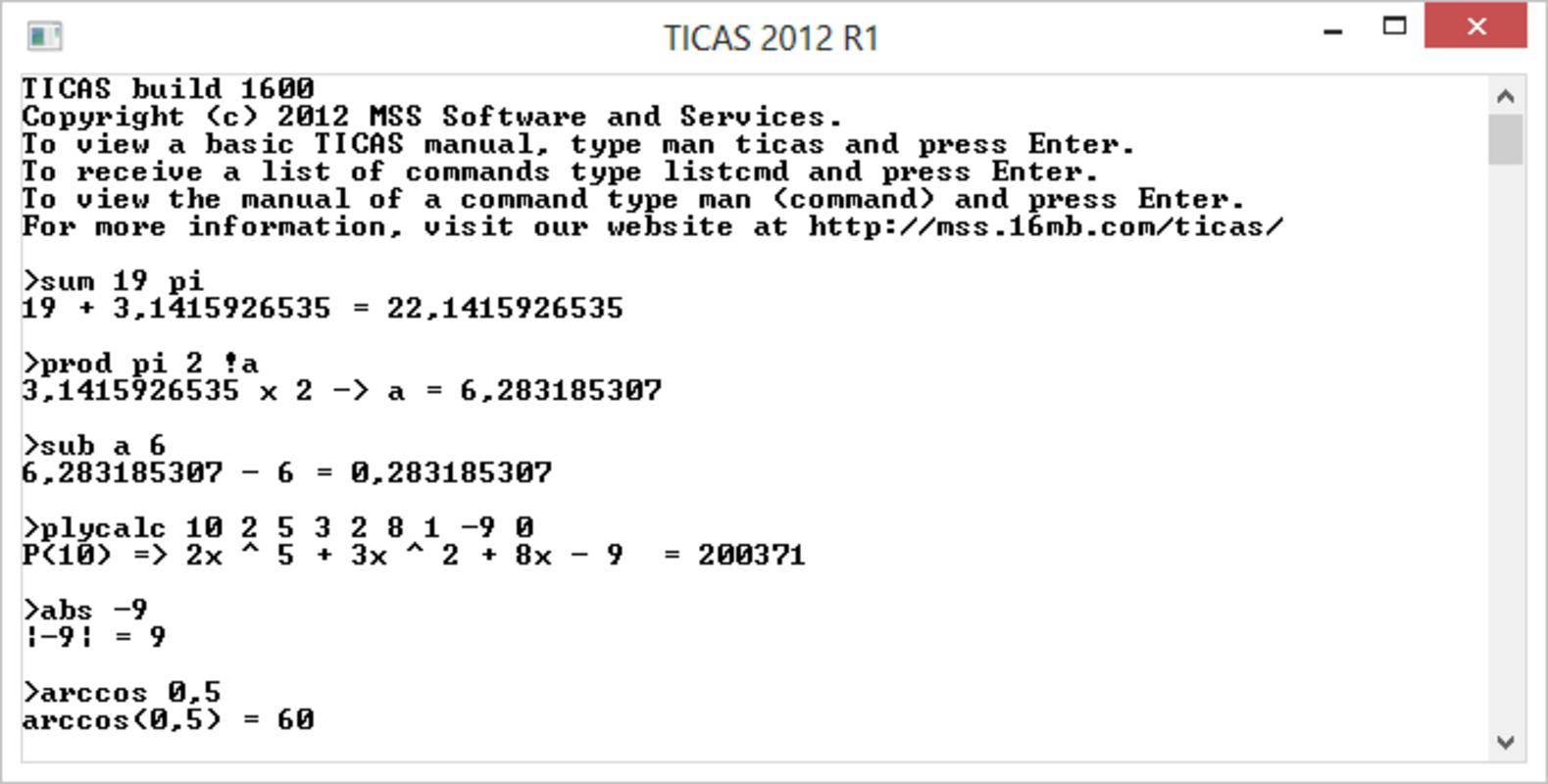
The interface of TICAS is designed with usability in mind, balancing technical depth with intuitive navigation. While specific visual details are not disclosed, the application maintains a clean and functional layout that supports efficient interaction. Users can access modules through a straightforward menu or command-line interface, depending on their preference.
Navigation is consistent across functions, with logical grouping of related tools and clear labeling of executable files. The workflow is streamlined, minimizing the number of steps required to initiate a task. Although the developer did not list formal performance metrics, the application’s lightweight design suggests strong responsiveness, even on older hardware.
Stability appears to be a priority, given the tool’s longevity since 2012. Users can expect reliable execution of individual modules without frequent crashes or errors. The application’s modular nature also enhances fault tolerance—failure in one module does not compromise the entire system. This contributes to a robust and dependable user experience, particularly in mission-critical computational tasks.
Platform Compatibility & Technical Requirements
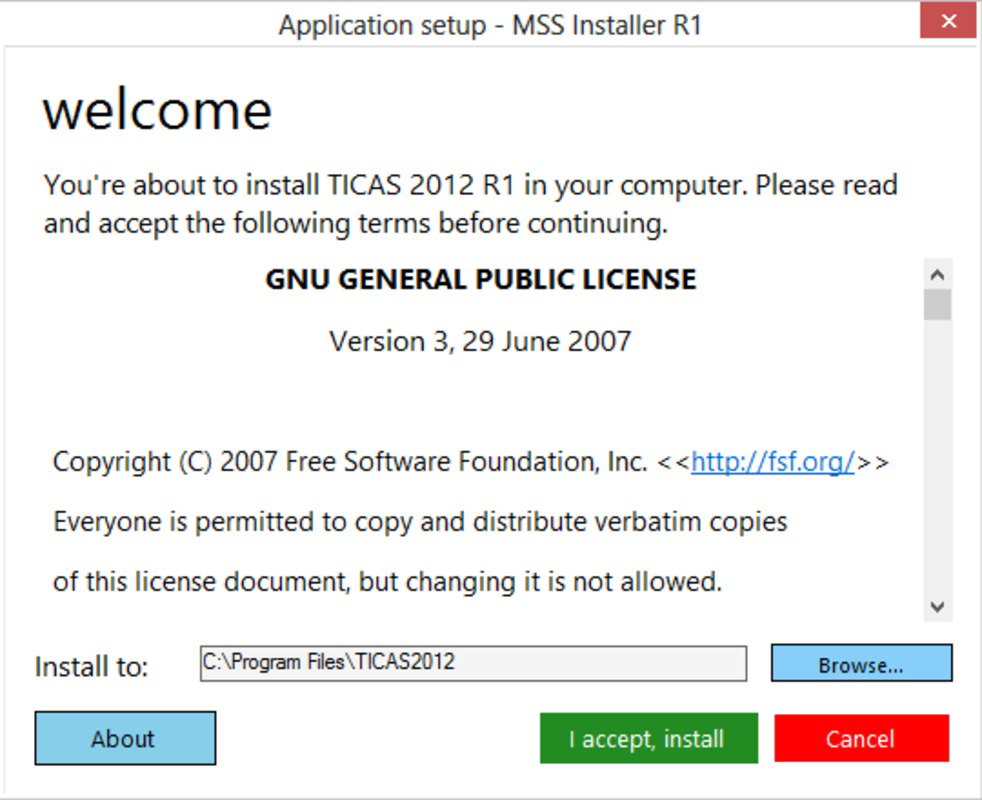
TICAS is designed for the Windows operating system and is compatible with Windows-based systems. The application runs as a standalone executable, requiring no installation process beyond placing the .exe files in a designated directory. The software version is 1.0, with a file size of 10.0 MB, indicating a compact and efficient footprint.
The developer did not specify minimum OS requirements or version compatibility details. However, given its release date of October 1, 2012, it is likely compatible with older Windows versions such as Windows 7 and 8. Users on modern systems like Windows 10 or 11 may still be able to run it, though compatibility is not guaranteed without further testing.
Although the developer did not list formal technical specifications, the lightweight nature of the application suggests it can operate on devices with limited RAM and processing power. For users seeking a secure, efficient tool for scientific computing, TICAS presents a viable option, especially in environments where resource conservation is essential.
Pros and Cons
Pros
- Modular design enables selective installation of only required components.
- Extremely lightweight with a small file size of 10.0 MB.
- Supports both novice and experienced users through a simplified interface.
- Allows direct access to individual modules without a base package.
- Optimized for speed and efficiency, ideal for low-resource systems.
Cons
- Compatibility with modern Windows versions is not confirmed.
- No official updates or maintenance details have been disclosed since 2012.
- Technical documentation or user guides were not provided.
- Interface and visual design details are not publicly available.
- Limited support channels due to lack of active developer engagement.
FAQ
Is TICAS available for free?
Yes, TICAS is offered at no cost. The application is free to download, install, and use without licensing fees.
Can I run TICAS on Windows 11?
While TICAS was released in 2012, it may run on Windows 11. However, the developer did not confirm compatibility with newer operating systems. Users are advised to test the application in a safe environment.
Do I need to install a base package to use TICAS?
No. TICAS allows users to download and run individual modules directly without requiring a base installation. This modular approach enhances flexibility and reduces setup time.
Is TICAS secure to use?
As a standalone executable tool, TICAS operates without requiring administrative privileges. However, users should ensure they download the software from trusted sources to avoid potential risks associated with unverified files.
How do I update TICAS?
The developer did not provide update mechanisms or version release notes. Since the last version was released in 2012, users should assume no active updates are available.
Final Thoughts
TICAS stands out as a unique solution in the productivity and scientific computing space, offering a rare blend of modularity, efficiency, and accessibility. Its lightweight design and independent executable structure make it an excellent choice for users who value precision, speed, and control over their computational environment. While the lack of recent updates and formal documentation may limit its appeal to some, its core functionality remains relevant for targeted tasks.
Researchers, developers, and students seeking a flexible, low-overhead tool for scientific programming will find significant value in TICAS. Its ability to operate without a base package and its minimal system requirements position it as a practical alternative in constrained environments.
Download TICAS now


