
Download TXTcrypt – free Mac encryption tool, secure text converter
Overview
TXTcrypt is a lightweight, free utility designed exclusively for macOS users who need a quick and reliable way to encrypt and decrypt plain‑text files. Created by developer Vlad Alexa, the application falls under the Education & Reference category with a specific focus on scientific text handling. Although its download count is modest—recording a single installation since its addition to our catalog in 2016—TXTcrypt offers a niche but valuable set of features for researchers, students, and anyone who regularly works with sensitive textual data. The current stable release, version 1.4.2, was last updated on 1 April 2017 and remains compatible with macOS X and earlier versions. The interface is presented entirely in English, making it accessible to a broad audience of English‑speaking scholars and professionals. As a free program, TXTcrypt eliminates the financial barrier often associated with encryption software while still delivering robust security mechanisms that conform to contemporary cryptographic standards.
Key Features and Functional Highlights
- Simple one‑click encryption and decryption for .txt files.
- Support for AES‑256 encryption, providing strong protection against brute‑force attacks.
- Integrated password manager that stores keys securely in the macOS Keychain.
- Batch processing capability, allowing multiple files to be encrypted or decrypted simultaneously.
- Clear visual indicators showing the encryption status of each file.
- Command‑line interface (CLI) for advanced users who prefer terminal‑based workflows.
- Automatic update checker that notifies users when a newer version is available.
- Lightweight installer with a footprint of less than 5 MB, ensuring fast download and minimal disk usage.
Why These Features Matter
Security professionals often emphasize that ease of use is as critical as the strength of the encryption algorithm itself. TXTcrypt’s one‑click design removes the learning curve typically associated with cryptographic tools, enabling users to protect their documents without consulting a manual. The inclusion of AES‑256—a gold‑standard symmetric key cipher—means that even if a file falls into the wrong hands, the data remains practically indecipherable without the correct password. By leveraging the macOS Keychain, the application avoids storing passwords in plain text, aligning with Apple’s own security recommendations.
Batch processing is particularly valuable in academic settings where researchers may need to encrypt dozens of data logs, experiment notes, or draft manuscripts at once. The CLI support extends TXTcrypt’s utility to automated scripts and workflows, making it suitable for integration into larger data‑management pipelines. Finally, the automatic update checker ensures that users stay protected against emerging threats without the hassle of manually checking the developer’s website.
Installation, Usage Instructions, and Compatibility
Step‑by‑Step Installation Guide
Getting started with TXTcrypt is straightforward. Follow these steps to download and install the application on your Mac:
- Visit the official download page and click the “Download TXTcrypt” button. The file is delivered as a .dmg package.
- Open the .dmg file; macOS will mount a virtual drive containing the TXTcrypt.app bundle.
- Drag the TXTcrypt icon into your Applications folder. This copies the app to the standard location for macOS applications.
- Launch TXTcrypt from the Applications folder. The first run may trigger a security prompt asking if you trust the developer; click “Open” to proceed.
- When prompted, allow the app to access the macOS Keychain. This permission is necessary for secure password storage.
Basic Usage Workflow
Once installed, using TXTcrypt involves just a few clicks:
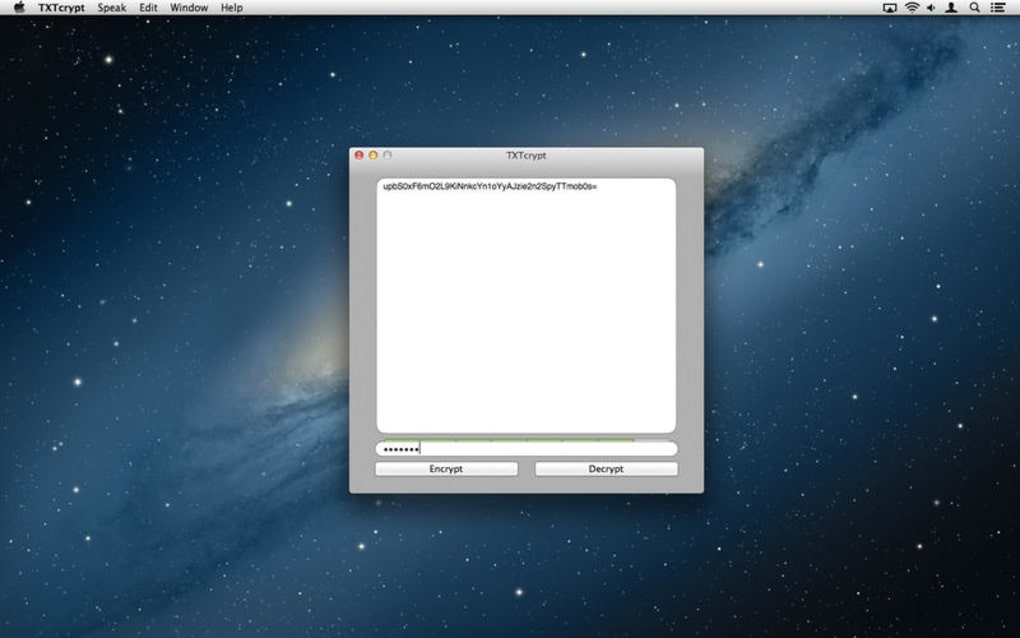
- Open the app and drag the .txt file you wish to protect onto the main window.
- Enter a strong password in the “Encryption Key” field. The application evaluates password strength in real time.
- Click the “Encrypt” button. TXTcrypt creates a new file with the extension .enc alongside the original, leaving the original untouched for verification.
- To decrypt, simply drag the .enc file back into the window, supply the correct password, and click “Decrypt.” The original plain‑text file is restored.
System Compatibility
TXTcrypt is built exclusively for macOS. The software supports macOS X (10.10) and later, as well as earlier releases that still retain the classic “Mac OS X” architecture. Users running the latest macOS Ventura or Monterey will experience full functionality, though they may need to adjust security preferences to allow apps from unidentified developers if the application is not notarized. Because TXTcrypt is a native macOS app, it does not run on Windows, Linux, Android, or iOS platforms. However, macOS users can still leverage the command‑line version on any Unix‑like environment that macOS provides through Terminal.
Pros, Cons, and Frequently Asked Questions
Pros
- Completely free with no hidden fees or subscription model.
- Intuitive one‑click interface suitable for non‑technical users.
- Strong AES‑256 encryption ensures high‑level data protection.
- Batch processing and CLI support for power users.
- Lightweight installer that does not bloat system resources.
Cons
- Limited to macOS; no Windows or Linux versions available.
- No built‑in cloud synchronization; users must manage backups manually.
- Last official update was in 2017, raising concerns about long‑term maintenance.
- Interface lacks advanced customization options (e.g., custom file extensions).
- Installation size not disclosed, which may be a drawback for users with strict bandwidth limits.
FAQ – Your TXTcrypt Questions Answered
Is TXTcrypt safe to use on sensitive research data?
Yes. TXTcrypt employs AES‑256 encryption, which is considered industry‑standard for protecting confidential information. As long as you choose a strong, unique password, the encrypted files are extremely resistant to unauthorized access.
Can I encrypt file types other than .txt?
The graphical interface is optimized for plain‑text files, but the command‑line version allows you to specify any file type. However, the default file extension for encrypted output remains .enc, regardless of the original format.
What happens if I forget my encryption password?
TXTcrypt does not store passwords in a recoverable form. If you lose the password, the encrypted file cannot be decrypted. It is strongly recommended to keep a secure backup of your passwords using a reputable password manager.
Does TXTcrypt support automatic updates?
The application includes an update checker that notifies you when a newer version is released. Since the last official release was in 2017, you may not see frequent update prompts, but the feature remains functional.
Is there a way to integrate TXTcrypt with cloud storage services?
TXTcrypt does not have native cloud integration. However, you can manually place encrypted files into your preferred cloud folder (iCloud, Dropbox, Google Drive, etc.) after encryption. Decryption can be performed on any Mac with the app installed.
Conclusion – Should You Download TXTcrypt?
TXTcrypt fills a specific niche in the macOS ecosystem: a no‑cost, easy‑to‑use tool that safeguards plain‑text documents with strong AES‑256 encryption. Its minimalistic design makes it ideal for students, researchers, and casual users who need quick protection without navigating complex settings. While the lack of a Windows version and the age of the last update may give some users pause, the core cryptographic functionality remains solid and reliable.
If you are looking for a straightforward way to encrypt notes, experiment logs, or any sensitive text files on a Mac, TXTcrypt is a sensible choice. The free price tag, combined with batch processing and CLI support, offers enough flexibility for both beginners and power users. To get started, simply click the download button below, follow the short installation guide, and begin encrypting your data securely today.
Ready to protect your text files? Free – USD