
Download User Protector – free Windows health tool to reduce computer strain
User Protector is a lightweight home‑and‑hobby utility designed to lessen the negative physical effects that can arise from long periods of computer use. Developed by Infofac, the trial version runs exclusively on Windows platforms as far back as Windows 98 SE, making it a rare find for legacy systems still in operation today. Since its debut in 2007, User Protector has accumulated more than five thousand downloads, with a particularly strong user base in India and Turkey. The program supports multiple languages—including English, Spanish, and Italian—so it can serve a diverse audience that needs simple, on‑screen reminders and posture‑adjustment prompts. Although the software is no longer actively updated, its modest system footprint and straightforward interface continue to make it a practical choice for anyone looking to protect their eyes, neck, and wrists while working at a PC.
Key Features of User Protector
- Periodic Break Alerts: Configurable timers remind users to step away from the screen at regular intervals, reducing eye strain and encouraging movement.
- Posture Guidance: On‑screen graphics illustrate proper sitting posture, helping to prevent neck and back discomfort.
- Multi‑Language Support: Native language options for English, Spanish, and Italian ensure clear communication of health tips.
- Low Resource Consumption: The program occupies less than 5 MB of disk space and uses minimal CPU, keeping older machines responsive.
- Customizable Notification Sounds: Users can choose from a set of gentle chimes or mute alerts entirely, adapting the experience to personal preferences.
- Simple Installation Process: A one‑click installer guides users through setup without requiring advanced technical knowledge.
- Trial Version Accessibility: The free trial provides full feature access for evaluation before deciding on a purchase.
Installation, Setup, and Daily Usage
Getting User Protector up and running is intentionally straightforward. After downloading the installer from a trusted source, double‑click the .exe file. The wizard walks you through a standard Windows installation sequence: accept the license agreement, choose an installation folder (the default is perfectly adequate for most users), and click “Install.” Once the process finishes, the program automatically launches and places an icon in the system tray for quick access.
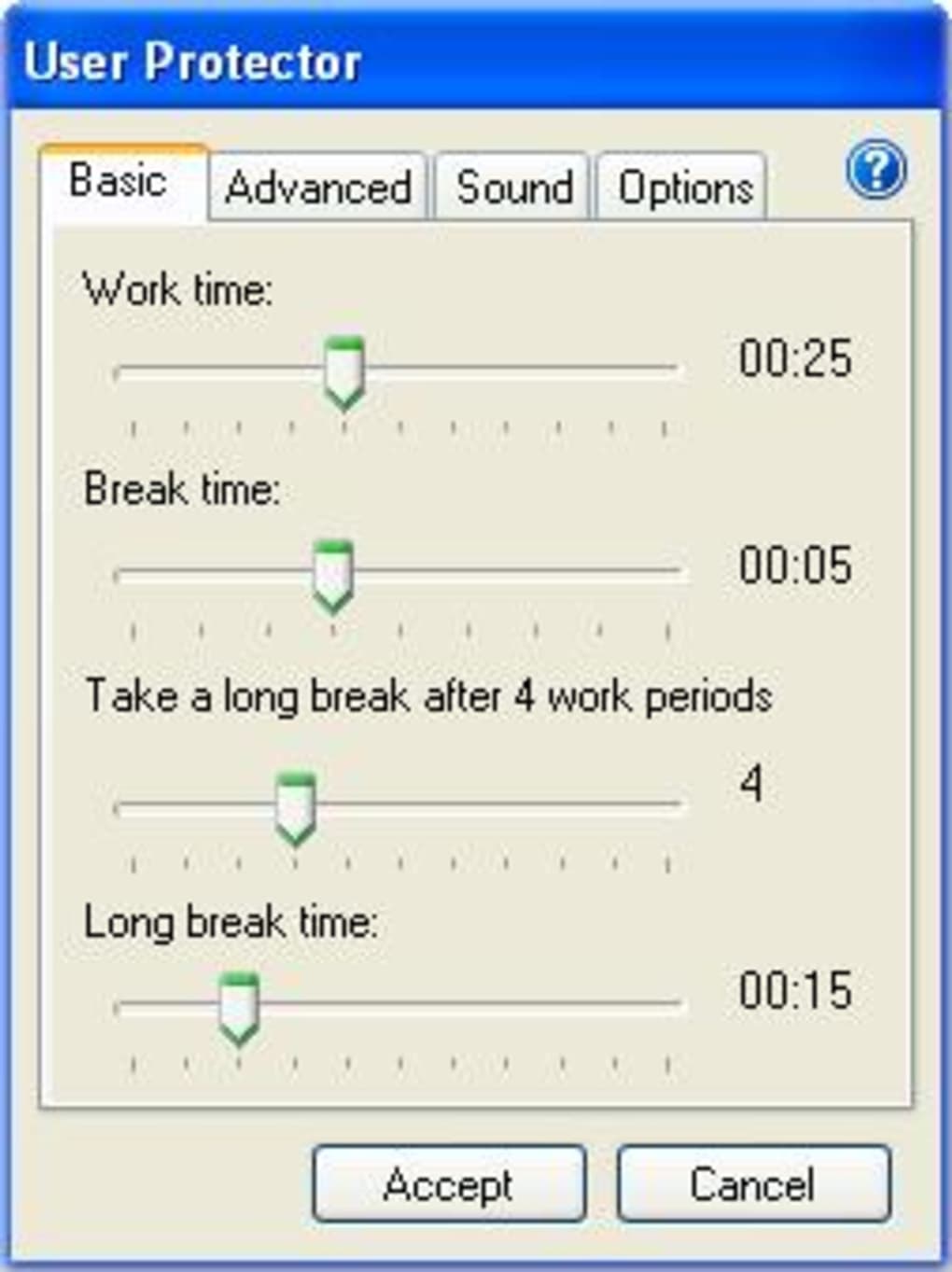
The first time you open User Protector, you’ll be prompted to select a language and set your preferred break interval—common choices are 20 minutes of work followed by a 5‑minute break. You can also adjust the type of reminder (visual pop‑up, audible chime, or both) and enable posture tips that appear as overlay graphics on the screen. All settings are stored in a small configuration file, allowing the program to retain your preferences across reboots.
During daily use, the application monitors active window time and triggers alerts precisely when the defined interval elapses. The break window displays a friendly message, a countdown timer, and optional stretching suggestions. Users who click “Snooze” can postpone the break for a short period, while those who click “Skip” acknowledge the alert without resetting the timer—useful for urgent tasks. The program also logs the number of breaks taken each day, giving you a quick health‑metric overview in the tray menu.
Compatibility and System Requirements
User Protector is engineered for legacy Windows environments, supporting Windows 98 SE, Windows ME, Windows 2000, and Windows XP. The software runs on both 32‑bit and 64‑bit architectures, though it was originally compiled for 32‑bit systems. Because it does not rely on modern .NET frameworks or DirectX, it can be installed on machines that lack recent updates, making it especially valuable for institutions still using older hardware.
Windows 98 SE and later (including Windows 2000, XP, and compatible 32‑bit/64‑bit editions) is the official operating system range. The program requires a minimum of 20 MB free disk space and less than 10 MB of RAM while running. No additional drivers or third‑party libraries are necessary. For users on newer versions of Windows (such as Windows 7, 8, or 10), the installer may still function, but because the software has not been updated since 2007, compatibility cannot be guaranteed and occasional visual glitches might appear.
The application is not available for macOS, Linux, Android, or iOS, which aligns with its classification under the “Home & hobby – Health” category. Users seeking cross‑platform ergonomics tools will need to look at modern alternatives, but for Windows‑only environments—especially those with older hardware—User Protector remains a viable, free option.
Pros and Cons – Quick Reference
Pros
- Free trial provides full functionality without hidden fees.
- Very low system footprint; ideal for older PCs.
- Multi‑language interface expands accessibility.
- Simple, user‑friendly installation and configuration.
- Effective reminders help reduce eye strain and improve posture.
Cons
- No official updates since 2007; may encounter compatibility issues on newer Windows versions.
- Lacks advanced health analytics found in modern ergonomics suites.
- Only a trial version is publicly available; full version requires purchase through limited channels.
- No mobile or cross‑platform support.
- Interface design reflects early‑2000s aesthetics, which may feel dated.
Frequently Asked Questions
Is User Protector still safe to download?
Yes, as long as you obtain the installer from a reputable source (such as the original developer’s site or a trusted software archive). The program is lightweight and does not contain adware or hidden malware.
Can I use User Protector on Windows 10?
The software was designed for Windows 98 SE through XP. It often runs on Windows 10, but you may encounter visual glitches or minor compatibility warnings. For a fully supported experience, consider using a virtual machine with an older Windows version.
Does the trial version have any limitations?
The trial version unlocks all features for a limited period (usually 30 days). After the trial expires, you’ll need to purchase the full license to continue receiving break alerts and posture guidance.
How does User Protector help with eye strain?
By prompting regular short breaks, the program reduces continuous screen exposure. The break notifications encourage users to look away, blink, and optionally perform eye‑relaxation exercises, which are proven methods to alleviate digital eye fatigue.
Is there customer support available?
Support is limited to email correspondence with Infofac. Because the software is older, response times may be slower than with contemporary applications, but basic troubleshooting guidance is still offered.
Final Verdict
User Protector fills a niche for users of legacy Windows systems who need a simple, no‑cost way to remind themselves to take regular breaks and maintain better posture. Its ultra‑light footprint and multilingual interface make it a solid choice for schools, small offices, or home users still running Windows 98 SE or XP. While the lack of modern updates and limited analytics prevent it from competing with newer ergonomics suites, the core functionality remains valuable. If you’re looking for a free, secure tool that can be installed in minutes and start protecting your health right away, User Protector is worth a download.
Ready to give your eyes and back a break? Click the download button below, install the trial, and experience a healthier computing routine today.