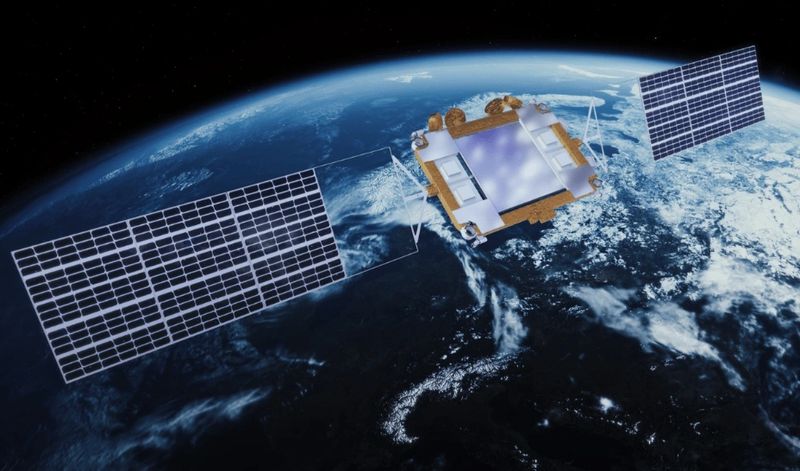
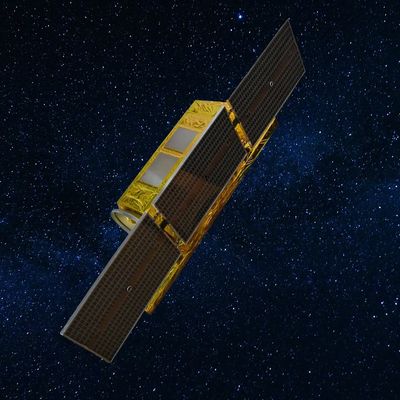
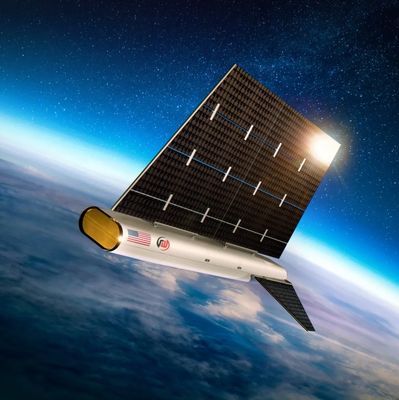
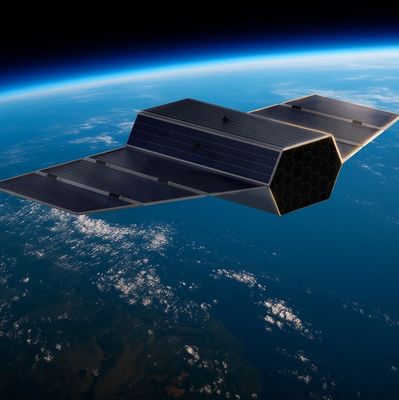
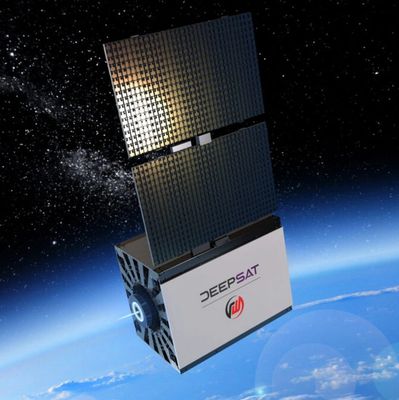
Vaxon Space operates air-breathing satellites at 180-250km, 2x closer than traditional LEO, delivering unprecedented resolution, latency, and persistence.
EXPLORE TECHNOLOGYOperating at 180-250km, 2x closer than traditional LEO, Vaxon's air-breathing satellites deliver sub-30cm imagery, under-15ms latency, and persistent coverage for defense and commercial customers.
Our Air-Breathing Electric Propulsion system harvests atmospheric molecules as propellant, enabling unlimited mission duration with no propellant mass penalty.
Operating 3x closer to the surface in very low Earth orbit (VLEO) with altitudes of 180-250 km, Vaxon satellites revolutionize space-based imaging and intelligence. VLEO operation enables image resolutions under 30 cm with revisit times of 1-2 hours, serving the US government and its allies to ensure leaders and soldiers have the pivotal information they need to make vital decisions. We also provide information to the commercial market, providing agriculture, energy, infrastructure, forestry and mapping services.
Golden Dome is the DoD's next big challenge and Vaxon Space is ready to partner. Our satellites enable more precise navigation for hypersonic and intercept missiles by decreasing latency. Faster response for hypersonic tracking is paramount and enabled by Vaxon's patented air-breathing electric propulsion subsystem. Precise navigation also extends to our commercial customers, such as maritime tracking and traffic route optimization.
Vaxon Space is a bus provider for satellite partners looking to bring connectivity to another level. With advancements in AI and data transmission exponentially increasing, satellites operating in VLEO provide best-in-class performance. As Internet providers increase their footprint in space, we will be right there with them to revolutionize information dissemination. Lower latency also enhances financial trading, remote surgery, directed energy weapons and military communications.
Satellites in low Earth orbit (LEO) are susceptible to orbital debris, e.g. by anti-satellite attacks or careless operations. Operating in VLEO has the advantage of being "self-cleaning" where debris falls down into Earth's atmosphere within a few weeks versus decades or years for LEO satellites. Vaxon satellites, as well as partnering companies using Vaxon buses for payload operations, will have this survivability advantage over traditional satellites as we create the next generation of proliferated satellites.
Air-breathing electric propulsion (ABEP) harnesses atmospheric molecules as propellant, enabling continuous operation in ultra-low Earth orbits where conventional satellites cannot survive.

Operating three times closer to Earth delivers up to twice the imaging precision. Our proprietary Air Intake System (Vaxon Space IP) achieves this without the need for heavier optical systems.
A five-times shorter signal path means near-real-time performance that's unattainable at higher altitudes.
Natural atmospheric drag continuously clears debris, keeping the orbit safe and sustainable in weeks instead of years.
Traditional satellites cannot operate between 150 and 250 km due to extreme atmospheric drag that would quickly deorbit them. ABEP transforms this challenge into an advantage, using the atmosphere itself as fuel, turning a former enemy into an ally.
Technical comparison across altitude, resolution, latency, revisit time, and mission life.
| PLATFORM | ALTITUDE | RESOLUTION | LATENCY | REVISIT | PROPULSION LIFE |
|---|---|---|---|---|---|
| Vaxon Space | 180–250 km | <30 cm | <15 ms | <2 hr | Unlimited (ABEP) |
| Company A | 475–525 km | 50 cm–3 m | ~65 ms | 4–12 hr | 3–5 yr (propellant) |
| Company B | 420–450 km | 50 cm | ~60 ms | ~1–4 hr | 3–5 yr (propellant) |
| Company C | 530–570 km | N/A (comms) | 20–40 ms | Continuous (comms) | 5 yr (propellant) |
| Company D | 617 km | 31 cm | ~82 ms | <1 hr (single sat) | 10+ yr (GEO-class) |


Decades of experience from Lockheed Martin, the US Army, US Air Force, NRO, DARPA, and the world's leading aerospace research institutions.
India-based Bellatrix Aerospace was selected by Korean optical-payload maker TelePIX to build a very low Earth orbit demonstration satellite, supplying the bus and air-breathing electric propulsion while TelePIX provides its Chouette optical payload. Targeting operations between 180 and 230 km with a launch no earlier than 2028, the deal reflects accelerating global momentum behind ABEP, the same domain Vaxon Space is advancing for US defense and commercial customers.
A new Bay Area Space Ecosystem map highlights the region's growing concentration of space startups, suppliers, investors, and research organizations. Vaxon Space is included among the companies contributing to this expanding ecosystem, reflecting continued momentum around next-generation satellite architectures, VLEO platforms, defense applications, connectivity, and commercial space infrastructure.
Paris-based UNIVITY secured Series A funding to advance VLEO 5G demonstration and commercial deployment by 2028, signaling strong investor confidence in the VLEO connectivity market that Vaxon is positioned to lead in the US defense and commercial sectors.
The European Defence Agency launches a major initiative exploring VLEO for enhanced ISR and new mission architectures. The 36-month VLEO-DEF project, a consortium of 17 organizations led by Spain, validates the strategic importance of sub-200km satellite operations for modern defense applications worldwide.
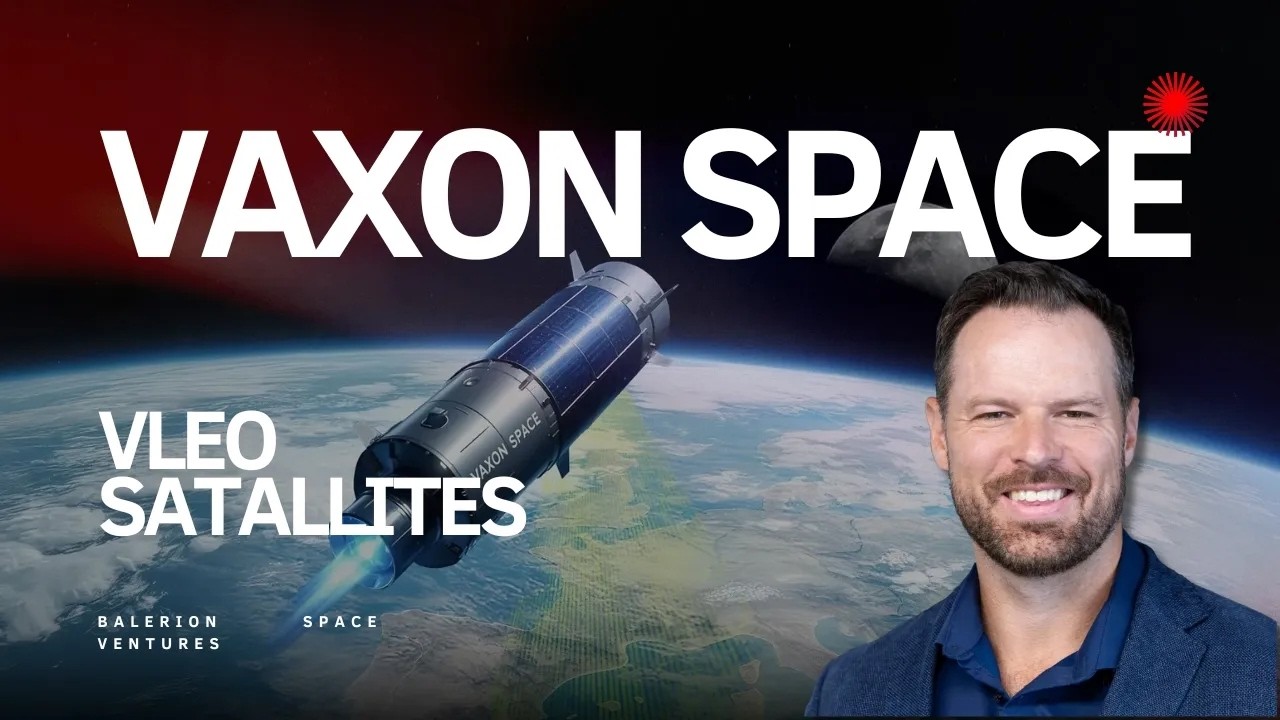
Vaxon Space CEO Dr. Steven P. Shepard has a conversation with Aidan Daoussis of Balerion Space Ventures, discussing the momentum behind very low Earth orbit (VLEO) satellites and the mission use cases being built at Vaxon Space. The discussion includes why VLEO is becoming such an important domain for the next generation of space infrastructure, including opportunities for enhanced ISR, missile defense sensing and new AI-enabled space capabilities.
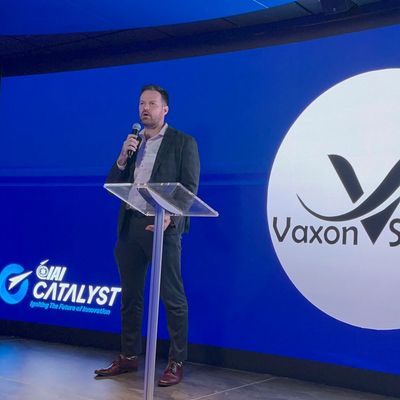
Selected for the IAI Catalyst cohort focused on autonomous systems, advanced sensing, AI computing, and VLEO satellites. Vaxon joins a prestigious group of defense-focused startups advancing next-generation space capabilities for US and allied forces.
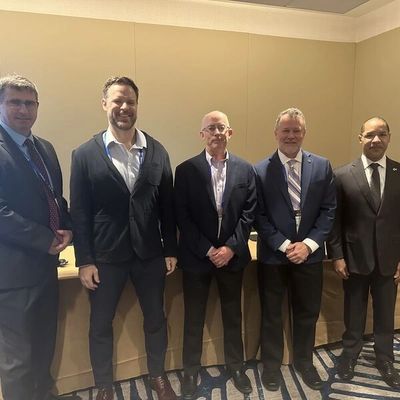
Dr. Shepard spoke on ABEP, emerging VLEO use cases, and growing alignment across academia, industry, and government. The panel highlighted the maturation of VLEO technology and its increasing relevance for both defense and commercial applications.
Redwire receives a $44M Phase 2 DARPA contract under the Otter program for air-breathing satellite development, validating ABEP as a defense priority. This contract confirms the maturation of air-breathing electric propulsion technology that forms the technical foundation of Vaxon's propulsion system.
Kreios Space raises funding to develop VLEO satellite technology, joining a growing global ecosystem of companies validating the commercial and defense case for sub-250km orbital operations.
DeepSat wins a US Air Force AFWERX Direct to Phase II SBIR contract to develop a VLEO constellation architecture, further confirming DoD interest in persistent low-altitude space-based intelligence assets.
Defense contractors, investors, and commercial partners may submit inquiries below. All communications are handled with appropriate discretion.