Not all monsters look like one. Nor are they all made in a laboratory, mutated from radiation or unleashed from hell.
Evil can be human. And that’s the worst type of monster, isn’t it? We are born with a heart and mind that should guide us away from violence and our darker instincts, not toward it. But in the case of the worst human monsters, evil is inherent. It can be hidden but will eventually show itself.
The Classic Movie Blog Association’s Fall Blogathon, “Early Shadows and Precode Horror,” seeks to explore films made from early cinema up to the end of the pre-Code era in 1934 that “blend horror and societal unease, revealing terror not only in monsters but in human frailty, darker instincts, and existential dread.”
The description immediately brought to mind a fascinating character from a 1927 silent film who took his darker instincts and need for love to a macabre place. “The Unknown,” my choice for the blogathon, is a silent masterpiece that was one of 10 collaborations between director Tod Browning and star Lon Chaney.
It is a gruesome and unpleasant movie filled with that existential dread that somehow also has touching moments that can leave you heartbroken. That’s all from one character, Alonzo, who is masterfully played by Lon Chaney. Alonzo will fool you for a while, but he is pure evil.
Alonzo is hiding out in a gypsy circus as Alonzo the Armless, a man without arms. He is adept at using his toes and feet like most people use their hands and it’s a marvel to watch. He thrills circus goers as he flings knives and fires a gun at a lovely young Manon, who smiles and doesn’t seem to mind.
Lon Chaney is amazing using his feet to do everyday things like put sugar in his tea in “The Unknown.”
At times I can’t take my eyes off Alonzo/Chaney like when he uses his feet to light a cigarette, scratch his nose, put sugar in his tea and lift the cup to his mouth. (How does he do any of that?). But I also turn my head at his cruelty and sadism.
Alonzo loves Manon, the circus owner’s daughter, who is played by a lovely 18-year-old Joan Crawford. Also in love with her is the handsome circus strongman Malabar the Mighty (Norman Kerry), who also loves to show off his muscles. First impression is that he’s full of himself, but which guy would seem the choice to win a woman’s heart? The good-looking guy with two arms, of course. But not in this case because Manon is disgusted by a man’s touch.
“Hands. Men’s hands – how I hate them,” she says without ever giving a reason why. The armless Alonzo is the only man she can go to without fear, and she often does to seek comfort and guidance.
A moment of misread tenderness between Alonzo (Lon Chaney) and Manon (Joan Crawford) in “The Unknown.”
With Manon, Alonzo is kind and gentle, even giving her a lovely shawl. His face relaxes with her. You’ll like him and even feel for this armless man – but only briefly. Alonzo thinks they have a future because of her kindness toward him, but as much as we would wish he could find some happiness, we can tell something is off with the man.
As good as he is to Manon, he is equally menacing with others because of his blind obsession with her. He taunts Malabar to take Manon in his arms and the clueless muscle man doesn’t need to be told twice. Bad move on both their parts. Sure, Alonzo will be there to comfort the distraught Manon as always, but what kind of man would play on a woman’s fears to control her? A monster.
Alonzo doesn’t just love Manon, he wants her at any cost and away from other men including her father. When he’s not with her, Alonzo shows his true self. The gentle smile is gone and replaced by a sneer and scowl that increasingly deepens through the film. There are times when his face becomes nearly unrecognizable and that’s the genius of Chaney. He’s well known as the man of 1,000 faces and he displays many here depending on who he is interacting with. Even his laugh can be disturbing and at his worst moments his face will contort until it looks like he will explode.
A terrifying Lon Chaney in “The Unknown.”
Manon’s father has seen those looks and wants Alonzo to stay away from his daughter with tragic results.
Remember when I said Alonzo is hiding out in the circus? He’s the man responsible for a series of thefts in towns where the circus stops – and that’s the least of his crimes. But police are looking for a man with double thumb on his left hand, hence Alonzo’s clever disguise as a man without arms.
When Alonzo says “There is nothing I won’t do to win her heart,” he means it in the most violent and depraved ways. And he will kill to keep his secret – no matter how close the person is to his beloved Manon. His mind – and heart – are so twisted that he will inflict merciless pain against all, even himself, to keep her.
We know Manon and Alonzo can’t happen, as does his only friend, Cojo, who reminds him of that. If she hugs him, she’ll feel his arms; if they marry, he’ll have to share his dark secret. Worst of all, she’ll see the double thumbs and know he killed her father. In his warped mind, the solution to keeping her is a ghastly and delusional act that illustrates the depth of his perversion. Even Cojo recoils at the idea.
Lon Chaney brings out Alonzo’s maniacal side through chilling facial contortions in “The Unknown.”
When Alonzo realizes the joke’s on him because Manon and Malaber have fallen in love, it unleashes a terrifying fury and one final sadistic act. As his face contorts into a terrifying mask, we get a real look into his black, merciless soul and understand he could never be saved.
Large, star-studded film festivals often focus on, well, the stars. Reports from the red carpet are considered just as important (sometimes more) than the films. And movie fans are often left out because of logistics (how do we get to Cannes?) and the highs costs.
But there are other festivals that are welcoming to the average movie fan. Filling the void are regional film festivals across the United States that are made for movie fans: they’re affordable, friendly and have celebrity guests, too.
One such event is the fun and celebratory “It Came from Texas” film festival, returning for its third year from Sept. 12-14 in Garland, Texas. As you can tell by its name, the three-day fest is all about movies made in Texas.
The theme this year is “True Texas Tales” and includes screenings of four award-winning films based on true stories: “The Alamo” (1960), “Bernie” (2011), “Bonnie and Clyde” (1967) and “The Great Debaters” (2007). They all include visits by very special guests.
For the closing night screening of “The Alamo,” the 1960 historical epic directed by and starring John Wayne, Wayne’s granddaughter Anita La Cava Swift will be in attendance. Joining her is Alamo historian and author Jack Edmondson.
It will be followed by a 1969 film with a far different tone, the satirical comedy “Viva Max!” And that’s just how festival director Kelly Kitchens likes to mix it up. (You’ll see comedy sprinkled throughout the fest.)
“Yes, I know this one isn’t based on a true story, but can you imagine a Mexican General coming to retake the Alamo in 1969? That premise is just too funny,” Kitchens said. “Come see it with me, and let’s laugh ourselves into the next week.”
“Bonnie and Clyde,” the 1967 Oscar winner starring Warren Beatty and Faye Dunaway, will be augmented with appearances by two family members of the real-life characters. Rhea Leen Lindeer, Bonnie Parker’s niece, and Buddy Barrow, Clyde’s nephew, are both working to have Bonnie’s body buried next to Clyde’s. It will be fascinating to hear them talk about their efforts on behalf of their relatives.
Screenwriter Skip Hollandsworth and actor Larry Jack Dotson will be in attendance for the 2011 dark comedy “Bernie.” The true story about a popular small-town mortician and his relationship with a rich Texas widow is based on a story in Texas Monthly magazine by Hollandsworth, who then wrote the screenplay with director Richard Linklater. Dotson plays the minister in the film.
There will be a double feature of “The Greater Debaters” (2007) and the documentary “The Real Great Debaters” (2008). The 2007 feature was directed by and stars Denzel Washington as Melvin B. Tolson, the professor who started a debate team at the predominately black Wiley College (Marshall, Texas) in 1935. In attendance will be Wiley University debate coach Ernest Mack.
Also:
Film historian Gordon K. Smith returns to provide the deep backstory of films including “The Alamo” and “Bonnie and Clyde.”
For more laughs, there will be a secret screening with live riffing from the comedy troupe Mocky Horror Picture Show. “Since I love to laugh, I had to throw in some merriment in this festival with a Secret Screening of a Larry Buchanan film with live riffing from the Mocky Horror Picture Show comedy troupe,” Kitchens said.
A deep dive into true Texas film footage from the William G. Jones Film Archives at the SMU Libraries (Southern Methodist University).
Better yet, I am devoted to Turner Classic Movies.
That must be said right at the top of this piece because I am about to make a confession you won’t like: I was not always a fan of “Summer Under the Stars.”
There, I said it. Please don’t hate me. I have learned the error of my ways.
“Summer Under the Stars” (SUTS) is one of TCM’s most popular programming franchises. Every year in August, the network devotes a full day of movies to a different star, hence 31 stars in 31 days. Viewers love it. They really love it.
But then there was me. Too many times, my TCM viewing in August was noticeably lighter because I didn’t know how to watch “Summer Under the Stars.” I looked specifically for my favorite stars (because this was all about me, of course). Then I looked at other names, and if I wasn’t a fan I wouldn’t tune in.
Boy, did I miss out.
If I had just done the math – 12 movies on the daily schedule would equal 408 films in the month – it would be obvious there would be so many great films that it didn’t matter who was the star of a particular day. Plus, it would be a chance to discover films I had never seen or that could give me a new appreciation for an actor. And all of that is exactly why I watch TCM every day!
Now, instead of searching only for my favorite actors during “SUTS,” I study the full schedule, first star-by-star and then – and here’s the big change – film-by-film.
Take this year, for example. Jennifer Jones has her day on Aug. 17 and while I’m never going to watch a full day of her films, I am excited that two of the lovely movies she made with Joseph Cotten (they did four together) are showing: The magical “Portrait of Jennie” (1948) and the mystery romance “Love Letters” (1945 – note that this is not the A.R. Gurney story).
While I enjoy the work of Christopher Plummer – who makes his “SUTS” debut on Aug. 2 – I won’t be watching “The Sound of Music” for the 50th time. But the DVR is already set for the early-morning showing of the 1975 remake of “The Spiral Staircase” with Jacqueline Bisset.
And so it goes because there really is so much to watch and I’ve already made a list.
A fun lobby card for the Claude Rains thriller “The Unsuspected.”
MY 10 HIGHLIGHTS FOR ‘SUTS’
Claude Rains, Aug. 5. This day showcases some of the greatest movies ever made in classic film history and they all star Mr. Claude Rains including “Now, Voyager,” “Notorious” (he breaks my heart in this one), “Casablanca” and “Mr. Smith Goes to Washington.” I’m looking forward to watching two other movies he did with director Michael Curtiz: “Stolen Holiday,” a 1937 romantic drama with Kay Francis, and a fantastic 1947 murder mystery thriller called “The Unsuspected.”
TCM puts the spotlight on Ruby Dee on Aug. 7.
Ruby Dee, Aug 7. I want to watch everything being shown on her inaugural visit to “SUTS.” It’s embarrassing to admit, but I have only seen two of her movies that are on the schedule, so this is a great way to catch up. I’m looking forward especially to “Black Girl,” directed by her husband Ossie Davis, and “Buck and the Preacher” (1979), a groundbreaking Western directed by Sidney Poitier and also starring Harry Belafonte. The DVR will be recording for the bulk of the day.
Elizabeth Taylor, Aug. 9: I can’t resist a double feature of Elizabeth Taylor and Richard Burton in the passionate (and lustful) “The V.I.P.s” (1963) and “The Sandpiper.” And who can ever tire of Taylor and Paul Newman in “Cat on a Hot Tin Roof”? The sexy, heat-soaked film is perfect August viewing.
Glenda Farrell, Aug. 11. Today we can see all seven films where Farrell played the spunky Torchy Blane. With 17 movies in total being shown, there’s plenty more to watch, too. All are from the 1930s and the day starts with “Little Caesar” (1931).
“The 3 Godfathers” will be shown on Aug. 12 as part of a day honoring Pedro Armendáriz, right, who stars with John Wayne and Harry Carey Jr.
Pedro Armendáriz, Aug. 12. I thought I didn’t know this Mexican actor, but I do – and I bet you do, too. There’s a chance to watch him in three of his most famous films with John Wayne including “Fort Apache” (1948), “3 Godfathers” (1949, yes he was one of the godfathers) and “The Conqueror” (1956). There’s also a great opportunity to see him in the Mexican-made “La rebellion de lost colgados” (“The Rebellion of the Hanged,” 1954).
Janet Leigh, Aug. 15. I won’t watch “Little Women” (I can’t listen to June Allyson’s “Marmie! Marmie!”) but I will enjoy (again!) the super fun “Bye Bye Birdie” (1963), which was one of my favorite screenings ever at a TCM Film Festival. And do not miss the crazy giant bunny horror film “Night of the Lepus” (1972).
Charles Bronson, Aug. 16. I will tune in on Charles Bronson Day as a tribute to my dad who would have set his DVR to record all 12 movies. While his favorites included “The Magnificent Seven,” “The Great Escape” and “The Dirty Dozen,” he would watch any Bronson film and so will I.
Watch James Gleason and Edna May Oliver in three of their Hildegarde Withers mysteries.
James Gleason, Aug. 18. Well, this is a long overdue celebration of the great character actor. TCM is showing 16 of his films including five of his six turns as Police Inspector Oscar Piper in the entertaining Hildegarde Withers mysteries: “The Penguin Pool Murder” (1932), “Murder on the Blackboard” (1934), “Murder on a Honeymoon” (1935), “The Plot Thickens” (1936) and “Forty Naughty Girls” (1937). Pick anything to watch – he’s great.
Gina Lollobrigida, Aug. 23. It will be fun watching “Trapeze” (1956) and “Buona Sera, Mrs. Campbell” (1968), but I’m thrilled to finally see her as Esmeralda in the 1956 remake of “The Hunchback of Notre Dame” with Anthony Quinn.
Alexis Smith, Aug. 29. Here’s another underappreciated actress. Some picks include “The Woman in White” (1948), “Steel Against the Sky” (1941, with future husband Craig Stevens), “Night and Day” with Cary Grant, and two films with Errol Flynn, “Gentleman Jim” (1942) and “San Antonio” (1945).
FINALLY GETTING THEIR DAY
This year, eight stars are getting their first full day of programming on “SUTS” and I have challenged myself to make sure I watch at least two films I haven’t seen by each of them.
In addition to Plummer (Aug. 2), there’s Ruby Dee (Aug. 7), Glenda Farrell (Aug. 11), Pedro Armendáriz (Aug. 12), Sterling Hayden (Aug. 14), Charles Bronson (Aug. 16), James Gleason (Aug. 18), Gina Lollobrigida (Aug. 23), Shirley Jones (Aug. 25), Tom Courtenay (Aug. 26) and a 100th birthday celebration for Donald O’Connor (Aug. 28).
THE “SUMMER UNDER THE STARS” SCHEDULE
Aug. 1: Lana Turner
Aug. 2: Christopher Plummer
Aug. 3: Audrey Hepburn
Aug. 4: Howard Keel
Aug. 5: Claude Rains
Aug. 6: Judy Garland
Aug. 7: Ruby Dee
Aug. 8: James Garner
Aug. 9: Elizabeth Taylor
Aug. 10: Clark Gable
Aug. 11: Glenda Farrell
Aug. 12: Pedro Armendáriz
Aug. 13: Shirley MacLaine
Aug. 14: Sterling Hayden
Aug. 15: Janet Leigh
Aug. 16: Charles Bronson
Aug. 17: Jennifer Jones
Aug. 18: James Gleason
Aug. 19: Hedy Lamarr
Aug. 20: James Cagney
Aug. 21: Patricia Neal
Aug. 22: Frank Sinatra
Aug. 23: Gina Lollobrigida
Aug. 24: Henry Fonda
Aug. 25: Shirley Jones
Aug. 26: Tom Courtenay
Aug. 27: Joan Crawford
Aug. 28: Donald O’Connor
Aug. 29: Alexis Smith
Aug. 30: Kirk Douglas
Aug. 31: Irene Dunne
To learn more and see the full daily schedule: Visit tcm.com.
Two people, once deeply in love but now married to others, are reunited for the first time in two years.
The woman reaches her hand out, then quickly pulls it back to remove her white glove before shaking his hand. “There,” she smiles.
That scene between actors Deborah Kerr and Walter Pidgeon in “If Winter Comes” is a quiet gesture that speaks volumes about the need for the human connection that runs through the 1947 melodrama.
Deborah Kerr removes her glove to touch Walter Pidgeon’s hand in a moment that speaks volumes throughout “If Winter Comes.”
The film is set in the picturesque English village of Penny Green, circa 1939, where cottages with rows of hedges and quaint gates surround a serene pond in the village center.
But don’t be fooled by the idyllic setting: It hides the nasty gossip of the villagers who judge others – even those within their own homes. Whether it’s because they’re mean-spirited or just unhappy is never clear, but the pain they cause is evident.
That’s why I chose “If Winter Comes” for the Classic Movie Blog Association’s spring blogathon, “Cry Me a River: Tearjerkers.”
It may not make tears roll down my face like a three-hanky tearjerker might, but my heart aches throughout the film as cruelty is used against those with good hearts, especially the caring and noble Mark Sabre played by Walter Pidgeon. And if it can cause an aching heart, it makes it a tearjerker to me – a quiet and understated one that clutches at you in the most unexpected ways. I wasn’t prepared for the emotional wallop the first time I watched it that comes from the suffering of one of the nicest, compassionate men on film.
Fans debate and agonize – yes, agonize – over their choices. If you want to see, say, a classic drama showing on Nitrate film at the Egyptian Theatre, can you then make it afterward to that pre-Code in the intimate House 4 of the TCL Multiplex a few blocks away? How do you make the impossible choice between finally seeing your favorite musical on the big screen or hearing an admired filmmaker discuss a movie? The choices are endless – and so are the decisions.
That’s why classic movie fans attending the fest painstakingly make their perfect itinerary by creating movie draft boards, spreadsheets and Google docs that break down the films and events.
Except for me. I’ve never gone to TCMFF with a full itinerary, like many of my fellow festival attendees. While I marvel at their preparation, I usually only have a few choices made in advance. In 2024, my list was one – yes, one – film and I absolutely had to see it: Craig Barron and Ben Burtt’s special presentation of “Them!” Not only do the Oscar winners put on entertaining and educational presentations, “Them!” is a film I often watched with my dad, so it’s very special to me.
In 2024, Craig Barron and Ben Burtt gave a fantastic presentation on the sci-fi classic “Them!” at the TCM Classic Film Festival. Go see them any chance you get.
I figured everything else would fall into place – and it did. I had a great time and saw many films despite my lack of planning.
But TCMFF 2025 has been different, starting as soon as the theme was announced: “Grand Illusions: Fantastic Worlds on Film.” Nothing describes my favorite movies more than fantastic films, so this festival was meant for me.
I love rainy days. Cloudy days are perfect, too. And it doesn’t get any better than sitting in the dark watching old black and white movies. Clearly, nothing about me says “sunshine” – until now.
This blog Watching Forever has been honored with a Sunshine Blogger award thanks to fellow bloggers Karen of Shadows and Satin and Ariette at the Classic Movie Muse. I admire and respect the work of Karen and Ariette so it means the world to have them nominate my blog for the awards.
The Sunshine Blogger Award is given by classic film bloggers to other writers in recognition of their work, as well as for bringing positivity, joy and creative content to the blogging world.
The clock was ticking. A friend was minutes away from her slot to reserve a cabin for the 2016 TCM Classic Cruise and called to see if I decided whether I wanted to go.
Tracy had taken a previous TCM cruise and loved it, but I wasn’t a “cruise person,” I told her. Plus I can’t swim and don’t tolerate heat well (the cruises usually go through the Bahamas or Caribbean). But this was also the year my beloved Angela Lansbury was at the TCM Film Festival, and I didn’t get up the nerve – nor money – to fly across the country to Hollywood to see her. I was mad at myself. It was time to stop hiding in Buffalo. So, yes, I would go on the cruise. I love TCM and classic films, plus I heard cruises are all-you-can-eat. My plan, then, was to watch movies and eat.
Haunting is such a dark word, conjuring thoughts of demons, ghosts and evil. For those of us with overactive imaginations, talk of paranormal experiences leads to restless nights and lights turned on (especially if watching a terrifying film like “The Haunting.”)
But haunting also can mean something unforgettable, profoundly sad or breathtakingly beautiful. It may be a book, music or movie that is so poignant and touches you so deeply that it leaves an indelible mark.
For me, that’s the movie “Somewhere in Time,” a gentle, enchanting romance where people are haunted by a powerful love that faces obstacles logic insists can’t be overcome.
It’s a favorite film of mine and I’m not the only one. Learn more about the fan group INSITE – The International “Somewhere in Time” Enthusiasts – at the end of this story. As much as the characters are haunted by their love, I am also haunted as a viewer through the passionate performances of stars Christopher Reeve and Jane Seymour, the lush soundtrack by John Barry and the unabashed romanticism that carries the entire movie.
In the fantasy romance “Somewhere in Time,” Richard Collier (played by Christopher Reeve) is haunted by a portrait of Elise McKenna (Jane Seymour) taken decades earlier. Why does she have such a serene look on her face?
Prolific writer Richard Matheson originally penned the story as his novel “Bid Time Return” about a man so deeply haunted by the portrait of a woman from decades earlier that he falls soul-stirringly in love despite all reason. (The film’s tagline says it all: “Beyond fantasy. Beyond obsession. Beyond time itself … he will find her.”)
This was a different type of story for Matheson who is widely known as a master of tales of terror and the supernatural. His novel “Hell House” was turned into the 1973 film “The Legend of Hell House” about researchers who investigate a house purportedly haunted by the victims of the home’s owner, a sadistic killer. He adapted five Edgar Allan Poe stories for Roger Corman including “House of Usher” and wrote 16 episodes of “The Twilight Zone.” And if that terrifying little Zuni warrior fetish doll from the 1975 film “Trilogy of Terror” hasn’t haunted you from the first time you saw it, I don’t know what will.
Elise (Jane Seymour) and Richard (Christopher Reeve) introduce themselves in a hauntingly beautiful scene from “Somewhere in Time.” This spot on Mackinac Island is now marked by a plaque donated by the fan group INSITE that reads “Is It You?,” the first words Elise spoke to him.
So yes, Matheson knew how to scare us with tales of horrific hauntings. But he also touched us with two romantic novels – both turned into films – that both showed how beauty in life and love can haunt us as well. “Bid Time Return” (published in 1975 and since republished as “Somewhere in Time” to tie in with the movie) and “What Dreams May Come” (1978 book, 1998 film) are about people who were bound together as soulmates and would transcend life, death and time to be together.
* * * * *
“Somewhere in Time” opens at Millfield College in 1972 during an after-party celebrating the premiere of “Too Much Spring” by promising young playwright Richard Collier (Christopher Reeve). The excited chatter is interrupted by an elderly woman who could be from another time with her upswept Gibson Girl hair and long black gown with high-neck collar.
College student Richard Collier (Christopher Reeve) is approached by an elderly woman (Susan French) who gives him a watch and whispers “Come back to me.”
All goes eerily silent as she presses a vintage pocket watch and chain into Richard’s palm and softy says “come back to me,” then departs. It’s a startling moment that leaves everyone speechless.
This is where composer John Barry’s exquisite orchestral score – which has a haunting beauty of its own comes in as she arrives at the Grand Hotel (a real historic hotel on Mackinac Island, Mich.). Filled with emotion, she plays Rachmaninoff’s sweet “Rhapsody on A Theme of Paganini” (Barry uses it masterly through the film as he blends it with his original music) and dearly holds the program from Richard’s play to her heart while peacefully gazing out a window. All of those details plus the replica of the Grand Hotel on a table next to her will tie everything together later.
In a touching moment early in “Somewhere in Time,” a mysterious woman (played by Susan French) clutches a theatrical program hear a replica of the Grand Hotel. How does all of this tie into her heartbreaking secret?
The questions come fast: Who is she? What’s the significance of that watch? How does she know Richard (if at all)? And what does she mean by “come back to me”?
* * * * *
Eight years later, Richard is now a renowned playwright with framed playbills filling the walls of his Chicago high rise. But all is not good: troubled by writer’s block and a romantic breakup, Richard drives off in his sporty silver Fiat to get away and happens upon the Grand Hotel. (We recognize it as the same place our mysterious woman went and start to make the connection.)
Wandering into the hotel’s Hall of History, Richard is drawn to a portrait of a sublimely beautiful woman. For a moment, the portrait is bathed in a ray of light, blinding Richard as it gives the impression that something magical or otherworldly is at work. He is entranced by the image of actress Elise McKenna but is taken aback to learn it was taken in 1912. (The reason for her ethereal expression in the portrait is another element that shows destiny is at work.)
Still, Richard can’t get her out of his mind, so he sets off to learn about her. He’s charmed by younger photos of her but is shocked to see the last picture taken of Elise reveals her to be our mysterious elderly woman.
Needing more answers, Richard finds Elise’s biographer, Laura Roberts (played by classic film actress Teresa Wright) who refuses to talk to him until he shows her the pocket watch. Now it’s her turn to be shocked.
“The watch was very precious to her – she never left it out of her possession,” Laura tells him. “It disappeared on the night she died.” (I clearly remember my stomach dropping the first time I heard that line.)
And there’s more. That replica of the Grand Hotel we saw earlier is a music box that plays Rachmaninoff. Another stunning moment. “That’s my favorite music in the whole world,” he quietly says. “I don’t understand what’s happening.”
Coincidences continue to mount. Elise repeatedly read a book by Richard’s former philosophy professor on time travel. A talk with the professor gives Richard the confidence to consider the impossible: time travel. He buys clothing and coins from the turn-of-the-century, removes anything modern from his hotel room including the TV, and attempts to will himself back in time.
From there, you must go all-in on what comes next as you do for any fantasy.
Elise (Jane Seymour) finally lets her guard down as she gets to know Richard (Christopher Reeve) in “Somewhere in Time.”
* * * * *
It’s not a spoiler to say Richard succeeds. And if you thought Richard gazing lovingly at Elise’s portrait was sentimental, wait until they are living in the same time. Their first meeting is one of the most beautiful moments I’ve seen on film as the two slowly walk toward each other with Barry’s music swelling to an emotional climax that feels like it’s the end of the film. (In fact, I wouldn’t have minded if it ended there because the hope was for them to be together and live happily ever after.)
“Is it you?” Elise asks, but the question doesn’t mean what he thinks. Her domineering manager William Fawcett Robinson (played by Christopher Plummer) has warned her to be afraid of men and will stop at nothing to keep Elise on the stage and away from all men, especially Richard as we’ll see.
The chemistry between Elise and Richard is immediate, strong and beautiful. Though she is hesitant to even speak with him, their connection is too strong to ignore. We are happy bystanders watching as they get to know each other in a lovely and serene montage set against Barry’s lush score. (If these pastel colored scenes in the past remind you of impressionist paintings by a French master, that’s what director Jeannot Szwarc wanted. For the 1912 scenes, soft-focus Fuji film was used, while the modern sequences owe their crisp – and somewhat cold – look to Kodak film.)
Complications will arise as they will when you mess with Father Time and Mother Nature, causing even a soft-focused world to turn dark with pain.
* * * * *
“Somewhere in Time” was released during an actors strike so it had a very small theatrical run and generally no publicity. It was unfairly ridiculed at the time – and often since – for its overt sentimentality and fantasy elements. Those are the same reasons why the film haunts me and I believe should be celebrated. There are many great love stories in literature and film, but they rarely go to such a poignant depth as “Somewhere in Time.”
There’s no arguing that the film’s unabashed sentimentality and profound emotions can be too much for some. That is nowhere more evident than in a painful moment when Richard is sobbing uncontrollably after a small “mistake” changes everything. Raw and difficult to watch, I’m sure it’s a turn off for viewers who aren’t comfortable seeing men break down in this manner.
I can’t think of another romance that is as heartfelt and haunting as “Somewhere in Time.” It is an often heartbreaking story of a love so great that a man wills himself back in time and a woman waits decades for him as they refuse to lose faith over the power of their unconditional love.
Richard (Christopher Reeve) and Elise (Jane Seymour) are as lovely as the picturesque setting of Mackinac Island, Mich. in “Somewhere in Time.”
THE GRAND HOTEL AND MACKINAC ISLAND
The film was shot entirely at the Grand Hotel, built in 1887, and Mackinac Island in Michigan. Matheson’s novel was set at the famous Hotel del Coronado in San Diego that was built in 1888 but was too modernized for the filmmakers. Instead, they chose the Grand Hotel which feels like destiny since the island does not allow general car travel. Instead, people must walk, ride bikes and take horse-drawn carriages – as they would have in 1912.
INSITE
In 1991, the first “Somewhere in Time” weekend was hosted at the Grand Hotel with passionate fans who came together through INSITE (International “Somewhere in Time” Enthusiasts), a newsletter/group founded by Bill Shepard to share his love for the movie with others. The weekend has been held every year since, welcoming such guests as Richard Matheson, Christopher Reeve, Jane Seymour and Jeannot Szwarc.
In addition to a newsletter, INSITE has also shared the legacy of the film in multiple ways including the creation of a plaque reading “Is It You?” that is at the site of Richard and Elise’s first meeting in the film. The group also funded a Hollywood Walk of Fame star for Christopher Reeve that was dedicated in 1997 and co-sponsored another star for Jane Seymour that was unveiled in 1999. INSITE also has raised more than $20,000 for spinal cord research in honor of Christopher Reeve, donated to the Christopher and Dana Reeve Foundation.
The group is now run by president and editor Jo Addie, who was an extra on the film. To learn more, visit the INSITE website.
When the new marquee at the Rome Capitol Theatre in Rome, N.Y. was turned on in 2022, no one could have imagined that it would one day become a “symbol of hope” for the city.
That’s what the marquee and the “blade” bearing the theater name have been called in the wake of a tornado that damaged the city in July, less than a month before the annual Capitolfest film festival.
This photo shows how the marquee and “blade” sign bearing the words Capitol Theatre survived the July tornado in Rome, N.Y., becoming a symbol of hope among the destruction. (Facebook)
On July 16, 2024, an EF-2 tornado touched down at 3:25 p.m. traveling through the heart of downtown Rome destroying businesses along West Dominick Street as it blew out storefronts, damaged roofs and knocked down buildings. Somehow, the marquee at the Rome Capitol Theatre was untouched amid the neighboring rubble.
And thankfully, there were no reported deaths in Rome.
The first time Ann Harding’s face appeared on film was in the opening minutes of the 1929 film “Paris Bound.”
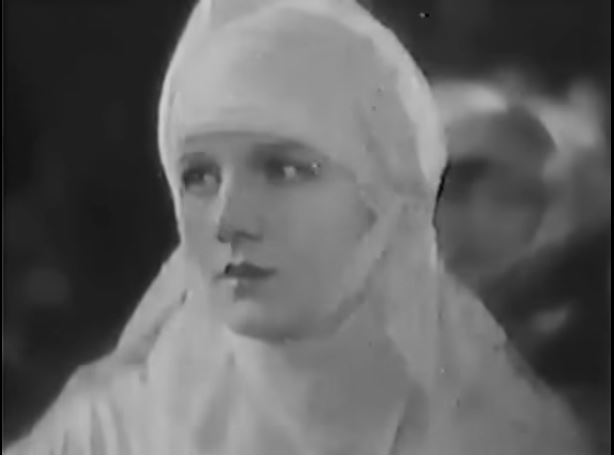
She’s a vision in white as a bride standing reverentially at her wedding altar next to her co-star, a baby-faced Fredric March. Her headpiece and veil tightly frame her face, with the veil wrapped around her forehead and hair, under her chin and across her neck.
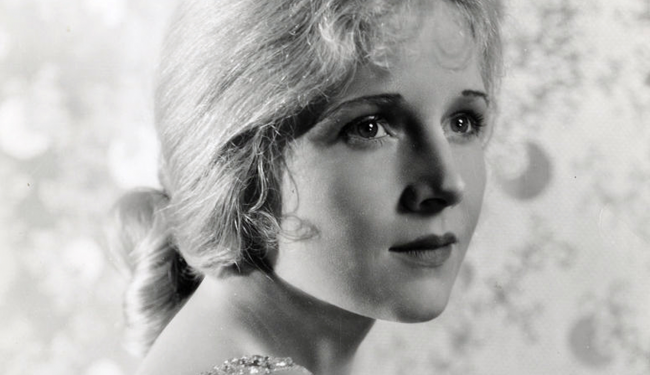
And there it is, captured in close-up and immortalized for us to see nearly 100 years later: the ethereal beauty of Ann Harding.
Ann Harding as the captivating bride in the first minutes of her film debut “Paris Bound.”
Even as a long-time fan of the actress, I was unprepared for the grace and luminescence she exuded right from the opening moments of her film debut. I guess I thought she somehow crafted her otherworldliness throughout her career, as if it was something that could be learned. Ridiculous, I know. She was born with it.



 Watching Forever
