ImageImage
  • Features
  • Videos
  • Podcasts
  • Specials
  • Articles
  • Shorts
Donate
  • English
  • Español (Spanish)
  • Français (French)
  • Bahasa Indonesia (Indonesian)
  • Brasil (Portuguese)
  • India (English)
  • हिंदी (Hindi)
  • বাংলা (Bengali)
  • Swahili
  • Videos
  • Podcasts
  • Articles
  • Short News
  • Feature Stories
  • The Latest
  • Explore All
  • About
  • Team
  • Contact
  • Donate
  • Subscribe page
  • Submissions
  • Privacy Policy
  • Terms of Use
  • Advertising
  • Wild Madagascar
  • For Kids
  • Mongabay.org
  • Reforestation App
  • Planetary Health Check
  • Conservation Effectiveness
  • Mongabay Data Studio

Latest

Image

Australia’s land-use squeeze

Rhett Ayers Butler 29 Jan 2026

Data show oil and gas blocks cover one-fourth of Ecuador, mostly in the Amazon

Aimee Gabay 29 Jan 2026

In the Brazilian Amazon, community conservation success comes with a cost: Study

Logan Rance 29 Jan 2026

More than 87m people impacted by climate-related disasters in 2025

Shanna Hanbury 29 Jan 2026

Worries grow for Sulawesi farmers as nickel mining company plans expansion

Richard Kent 29 Jan 2026

Drone-mounted eDNA hints at richness of life in the rainforest canopy

Abhishyant Kidangoor 29 Jan 2026
All news

Top stories

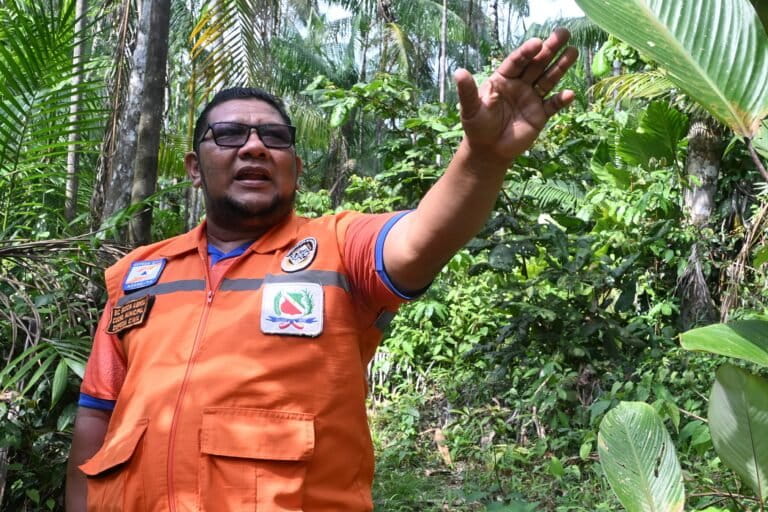
As COP30 unfolded in Belém this past November, civil defense coordinator Edson Abreu dos Santos decided to revisit the areas that had burned in Acará.

Seminarian-turned-fire-agent preaches new tactics to fight Amazon’s burn crisis

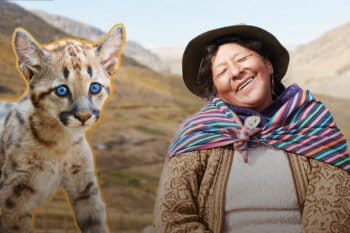
Collage featuring a puma and Ida Isabel Auris Arango, shepherd and Quechua woman

Women secure a future with pumas in the Andes

Romi Castagnino 28 Jan 2026
Image

Wildlife attacks and strange animal behavior — fake images spark conservation concerns

Sean Mowbray 28 Jan 2026
The government of Brazil’s Rio de Janeiro state has banned shark meat for meals in most of the schools it manages, after pressure from conservationists and school meal advisers raising health and environmental concerns.

Rio de Janeiro state bans shark meat for school meals

Karla Mendes 27 Jan 2026
Image

How US intervention could deepen Venezuela’s environmental crisis

Maxwell Radwin 20 Jan 2026

Subscribe

Stay informed with news and inspiration from nature’s frontline.
Newsletter

We’re a nonprofit

Help us tell impactful stories of biodiversity loss, climate change, and more
Donate

News and Inspiration from Nature's Frontline.

Collage featuring a puma and Ida Isabel Auris Arango, shepherd and Quechua woman
Videos
Image
Articles
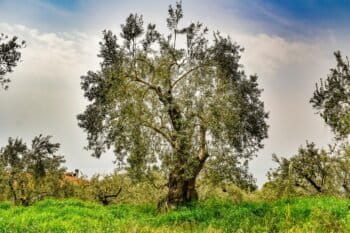
An olive tree and grove. Image by Dimitris Vetsikas via Pixabay.
Podcasts

Special issues connect the dots between stories

Carving up the Cardamoms

Young activists risk all to defend Cambodia’s environment

Young activists risk all to defend Cambodia’s environment

Andy Ball, Marta Kasztelan 2 Jul 2025
Across the Southern Cardamom REDD+ project in southwest Cambodia, communities have alleged abuse at the hands of the project developer. Image by Gerald Flynn / Mongabay.

Indigenous community calls out Cambodian REDD+ project as tensions simmer in the Cardamoms

Gerald Flynn 10 Mar 2025
A Ministry of Environment ranger on patrol in the Cardamom Mountains. Image by Andyb3947 via Wikimedia Commons (CC BY-SA 4.0).

Cambodian carbon credit project hit by rights abuse claims is reinstated

Gerald Flynn 11 Sep 2024
The sprawling Stung Meteuk hydropower dam being developed in the Cardamom Mountains appears to be illegally logging within Phnom Samkos Wildlife Sanctuary. Image by Gerald Flynn / Mongabay.

History repeats as logging linked to Cambodian hydropower dam in Cardamoms

Gerald Flynn, Vutha Srey 27 Jun 2024

The Cardamom Mountains sprawl across southwestern Cambodia and are among the best-preserved rainforests in the country. Protected by rugged terrain, heavy rains and a low population density, the Cardamoms remain a biodiversity hotspot, providing habitat for threatened elephants, pangolins and the region’s last viable fishing cat population. This Special Issues documents the myriad threats facing […]

Carving up the Cardamoms series

More specials

Image
9 stories

Can anyone save the Sumatran rhino?

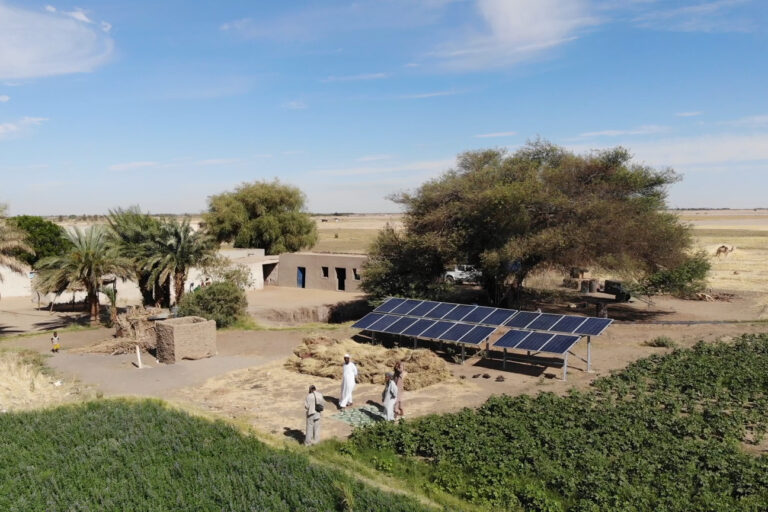
Solar panels in an arid part of Sudan.
9 stories

Negotiating Africa’s Energy Future

Image
6 stories

Letters to the Future

Free and open access to credible information

Learn more

Listen to Nature with thought-provoking podcasts

An olive tree and grove. Image by Dimitris Vetsikas via Pixabay.

Europe’s olive grove crisis affects nature & culture, but has solutions

Mike DiGirolamo 27 Jan 2026

Watch unique videos that cut through the noise

Collage featuring a puma and Ida Isabel Auris Arango, shepherd and Quechua woman

Women secure a future with pumas in the Andes

Moo Deng meme collage

Small hippo, big dreams: Can Moo Deng, the viral pygmy hippo, save her species? 

Sam Lee 14 Jan 2026
Izzy Sasada and orangutan

Orangutans rescued undergo re-training to return to the wild

Izzy Sasada, Sam Lee 17 Dec 2025
Image

South Greenlanders speak out on rare earths interests

Arina Kleist, Julia Rignot, Sandy Watt 11 Dec 2025
Collage: Elise Paietta, postdoctoral research scholar during fieldwork, with tropical forest

How do we stop the next pandemic?

Abhishyant Kidangoor 26 Nov 2025

We’re a nonprofit

Help us tell impactful stories of biodiversity loss, climate change, and more
Donate

In-depth feature stories reveal context and insight

A mule deer buck at Rocky Mountain Arsenal National Wildlife Refuge outside Denver, Colorado.
Feature story

Involuntary parks: Human conflict is creating unintended refuges for wildlife

Annelise Giseburt 15 Jan 2026
A man inspects logs near several wood pellet production companies in Gorontalo province, October 2024.
Feature story

After years of progress, Indonesia risks ‘tragedy’ of a deforestation spike

Jeff Hutton 14 Jan 2026
Purisima Creek, California in December 2025. Photo by Rhett Ayers Butler
Feature story

The conservation ledger: What we lost and what we gained in 2025

Rhett Ayers Butler 1 Jan 2026
Image
Feature story

Most Watched Video Stories of 2025

Lucia Torres 30 Dec 2025

Quickly stay updated with our news shorts

Data show oil and gas blocks cover one-fourth of Ecuador, mostly in the Amazon

Aimee Gabay 29 Jan 2026

Ecuador has 65 oil and gas lease blocks, 88% of them in the Amazon, covering a quarter of the country’s total area. That’s according to a new data set from the Stockholm Environment Institute (SEI).

Many of the lease blocks overlap with several Indigenous territories, including the Cuyabeno-Imuya Intangible Zone, which is home to 11 Indigenous communities from the Secoya, Siona, Cofán, Kichwa and Shuar nations. Oil and gas leases also overlap with other Indigenous Shuar communities in Pastaza and Morona Santiago provinces, among others.

Image

A Mongabay estimate based on the dataset found that roughly 21% of the leases overlap with protected areas and 61% overlap with Indigenous territories in Ecuador. Image by Andrés Alegría/Mongabay.

The SEI data set also shows lease blocks overlapping with protected areas, including the west side of Yasuní National Park.  In a historic referendum in 2023, more than 5.2 million Ecuadorians voted to halt all current and future oil drilling in the park. Cofán-Bermejo Ecological Reserve (RECB) and Cuyabeno Wildlife Reserve, both home to a great diversity of wildlife including pink river dolphins (Inia geoffrensis) and jaguars (Panthera onca), also host active oil and gas production blocks, according to the data.

Combined, the blocks cover 7 million hectares (17 million acres), one-fourth of Ecuador’s total land area.

Alexandra Almeida, president of Ecuadorian environmental organization Acción Ecológica, told Mongabay via WhatsApp messages that the chemicals used for oil production are highly toxic to both the environment and human health. “Many of these are released into the environment without any treatment, contaminating water and soil,” she said.

Numerous studies have shown that exposure to such toxic substances is associated with a host of health problems, from respiratory issues and cardiovascular diseases to miscarriage and cancer.

According to the data set, some lease blocks lie along active seismic faults, which increases the risk of landslides and damage to pipelines and wells. In April 2020, seismic activity and landslides caused the Trans-Ecuadorian Oil Pipeline System (SOTE) to rupture. As a result, more than 15,000 barrels of oil spilled into the Coca River,  impacting more than 27,000 Indigenous people.

A March 2025 rupture in the SOTE released 25,000 barrels of oil that polluted three rivers, killed wildlife and affected more than 5,000 people in northwestern Esmeraldas province, one of the country’s poorest regions.

Nearly a year later, the environment and local people continue to feel the impacts, Almeida said.

“According to our monitoring, there is still contamination — the rivers can’t be used,” she said. “The fish are contaminated because the [toxic] substances enter the food chain. They bioaccumulate.”

Mongabay reached out to Ecuador’s environment ministry and energy ministry for comment, but neither had responded by the time this story was published.

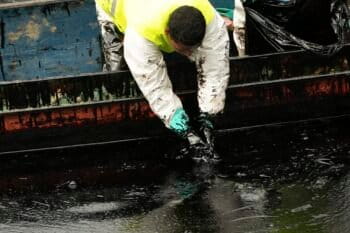
Banner image: State oil company workers clean up the Viche River in Ecuador’s Esmeraldas province on March 15, 2025, after an oil spill triggered by a mudslide that fractured a pipeline. Image by AP Photo/Dolores Ochoa.

Image

More than 87m people impacted by climate-related disasters in 2025

Shanna Hanbury 29 Jan 2026

In 2025, more than 200 climate-related disasters affected more than 87.8 million people worldwide, according to preliminary figures from the International Disaster Database analyzed by Mongabay. The disasters include flash floods, landslides, severe storms, wildfires and droughts.

Drought and food insecurity impacted the largest number of people. In Syria, which faced its worst drought in 36 years, an estimated 14.5 million people were left without enough food. In Kenya, a drought in January 2025 affected food supply for more than 2 million people. In Nepal’s Madhesh province, a September drought left 1.2 million people short of food.

In late November and early December, a rare convergence of two tropical cyclones and a typhoon caused thousands of deaths across Asia, making it the deadliest tropical storm system of 2025. Indonesia reported 1,109 deaths and Sri Lanka 826, with and hundreds more in Pakistan and Thailand.

The database shows that, globally, climate-related disasters claimed more than 8,000 lives in 2025, though the actual number is likely much higher, due to missing data from several events and unreported disasters from some countries.  

In October, the year’s most destructive storm, Hurricane Melissa, reached sustained wind speeds of 295 kilometers per hour (185 miles per hour) and affected millions of people across the Caribbean. It left at least 127 people dead in Jamaica, Haiti, Panama, the Dominican Republic and Cuba.

Human-caused warming from burning fossil fuels made Hurricane Melissa more intense and more likely, according to World Weather Attribution (WWA), a global research network that analyzes the impact of climate change on extreme weather.

Researchers warn that events like these are pushing the limits of climate change adaptation and mitigation. Fossil fuel emissions continue to rise despite the growth in renewable energy. Although 2025 was a cooler year than 2024, due to weak La Niña conditions, it was still the third-warmest year on record.

“The events of 2025 make it clear that while we urgently need to transition away from fossil fuels, we also must invest in adaptation measures,” WWA researchers wrote in an end-of-year report. “Many deaths and other impacts could be prevented with timely action.”

They added that, “Events like Hurricane Melissa highlight the limits of preparedness and adaptation: when an intense storm strikes small islands such as Jamaica and other Caribbean nations, even relatively high levels of preparedness cannot prevent extreme losses and damage.”

Banner image: An aerial view of Black River, Jamaica, in the aftermath of Hurricane Melissa. Image by AP Photo/Matias Delacroix.

An aerial view of Black River, Jamaica, in the aftermath of Hurricane Melissa. Image by AP Photo/Matias Delacroix.

Judge rules Massachusetts offshore wind project halted by Trump administration can continue

Associated Press 28 Jan 2026

BOSTON (AP) — A federal judge said Tuesday that a nearly completed Massachusetts offshore wind project can continue, as the industry successfully challenges the Trump administration in court. At U.S. District Court in Boston, Judge Brian Murphy halted the administration’s stop work order for Vineyard Wind, citing the potential economic losses from the delays and the developers’ likelihood of success on their claims. Vineyard Wind is one of five big offshore wind projects on the East Coast that the Trump administration froze days before Christmas, citing national security concerns — and the fourth that has since been allowed to go forward. Developers and states sued seeking to block the administration’s order.

By Jennifer McDermott and Michael Casey

Banner image: Wind turbines operate at Vineyard Wind 1 offshore wind farm off the coast of Massachusetts, July 19, 2025. (AP Photo/Carolyn Kaster, File)

Image

Poaching African lions for black market could pose existential threat

Bobby Bascomb 27 Jan 2026

African lions are increasingly targeted for trade in their bones, skin, teeth and claws, according to a newly published study.

Without urgent action, the authors warn, poaching may pose an existential threat to Panthera leo, which once numbered in the hundreds of thousands across Africa. Today, about 25,000 are relegated to just 6% of their historic range. They’re classified as Vulnerable on the IUCN Red List.

Poaching is especially rising in Mozambique and South Africa, said Peter Lindsey, the study’s lead author who directs the Wildlife Conservation Network’s  Lion Recovery Fund.

Officials seized more than 300 kilograms (660 pounds) of lion parts in Maputo, Mozambique’s capital, in 2023. That year, an Endangered Wildlife Trust  survey found just 122 lions in an area of South Africa’s Kruger National Park that had held 283 in 2005 — a drop of nearly 60%

Threats are pervasive. Prey is depleted by intensive bushmeat hunting. Lions are targeted for trophy hunting and poisoned in retaliatory killings by pastoralists when the cats hunt livestock.

However, deliberate, organized poaching for body parts now “represents an intensifying challenge to lion conservation, compounding other threats, many of which are also growing in intensity,” the authors wrote.

Luke Hunter, who heads the Wildlife Conservation Society’s big cats program, called trade-driven poaching “a defining threat to the future of Africa’s lions.”

Demand is growing. The study notes that cats are killed for their bones — used in tiger bone wine, an expensive traditional medicine coveted in China. Some 37 African countries use body parts in cultural, spiritual or traditional healing practices.

Though much remains unknown, the authors posed several theories for what’s driving trade, from local market demands to highly organized transnational networks.

Following restrictions on international trade in tigers, lion poaching spiked. Legal trade in lion parts from South African captive breeding operations helped feed the market, but the country stopped exports in 2019. This may have pushed trade “toward wild lions once the legal supply was restricted,” Lindsey told Mongabay.

Another possibility: International syndicates that traffic rhino horn and elephant ivory may be diversifying their business portfolios to target lions.

A central question for conservationists is what percentage of lions are deliberately killed for their parts versus “opportunistic poaching” — lions that died naturally or as a result of human-wildlife conflict and were later harvested?

Opportunistic poaching has historically been more common. But Lindsey said that may be shifting. “In some cases, lions are killed miles away from livestock and their parts harvested, suggesting that they are just being poached,” he said. “Also, we have had cases where poachers have indicated that they were sent to source parts to fulfill orders made.”

The review also highlights numerous ways to intervene: stronger enforcement, increased funding for protected areas, disruption of illegal trade — and, importantly, reducing demand.

“Urgent action is needed to acknowledge, understand, and address this crisis and safeguard the future of Africa’s lions,” the report concludes.

Banner image: A lion in South Africa. Image by Rhett A. Butler/ Mongabay.

Lion. Photo by Rhett Ayers Butler

Tree spirits: The unintended ecology of belief

Rhett Ayers Butler 26 Jan 2026

Founders briefs box
 
In parts of Indonesian Borneo, forests endure not because they are fenced off or regulated, but because they are feared. Among the Indigenous Iban people of Sungai Utik, large strangler fig trees are believed to house spirits that can mislead, sicken, or even kill those who disturb them. The belief is not abstract. It is anchored in stories, warnings and remembered loss, Mongabay’s Liz Kimbrough recently reported.

One such story recounts a boy who vanished near a rice field, only to be found hours later by a towering fig. He said spirits had called to him and hidden him in plain sight. His family took him to a shaman. His name was changed, to sever the spirits’ hold. The tree remained.

For researchers, these accounts might read as folklore. Yet new fieldwork shows that the consequences of such beliefs are visible on the land. When the Iban clear fields for farming, they leave large strangler figs standing. They also leave a buffer of forest around them, creating islands of vegetation scattered through farmland. The practice is called dipulau, a word that translates simply as “island.”

These islands occupy only a small fraction of the cultivated landscape, perhaps 1 or 2%. Still, they matter. Different species of strangler figs fruit at different times of the year and draw birds, primates and wild pigs when other food is scarce. Hunters once waited beneath them. Today, wildlife still moves between forest and field along these living stepping stones.

Measurements from Sungai Utik show that strangler figs are as common in farmland as in nearby old-growth forest. Those in fields often grow larger, unchallenged by neighboring trees. The result is an agricultural landscape that retains pockets of ecological relevance, not because of policy, but because of tradition.

The belief system that protects these trees is fraying. Most villagers are now Catholic. Some younger residents question whether spirits truly punish those who cut a fig tree. A few have done so and lived without obvious consequence. The taboo holds, but less tightly than before.

That erosion matters because the belief has a real effect. It preserves trees that shelter species and seed regeneration. It shapes land use without external enforcement. Researchers call this autonomous conservation. It depends on shared norms rather than incentives or threats.

Whether one accepts the presence of spirits in fig trees is beside the point. What matters is that a forest has been spared, repeatedly, because cutting certain trees felt like crossing a line. In a world searching for ways to protect what remains, that line deserves attention.

Read the full article here.

Banner image: Topik, a local guide in Sungai Utik, West Kalimantan, next to the extensive aerial roots of a strangler fig. Image courtesy of Ditro Wibisono Wardi Parikesit.

Image

Many Amazon climate disasters are missing from official records, study finds

Mongabay.com 24 Jan 2026

More than 12,500 extreme climate events were registered in the Amazon biome between 2013 and 2023, according to a recent study. But many more events were never recorded, as some Amazonian countries provided no or limited information, Gonzalo Ortuño López reported for Mongabay Latam.

The study aggregated available national data but found that the national governments of Venezuela, Suriname, Guyana and French Guiana didn’t provide any data on extreme weather events. As a result, data for the region overrepresents Brazil and to a lesser extent, Bolivia.

“How can we believe in the satellite data showing us that there is aridification, but that there are no heat waves in Venezuela or Colombia?” Liliana Dávalos, study co-author and a conservation biology professor at Stony Brook University, told López. “It isn’t credible. Either records are not being kept, or they are not being classified as disaster events within monitoring systems.”

Of the events analyzed by the study, researchers logged thousands of floods (4,233), landslides (3,089) and storms (2,607). The events are estimated to have affected more than 3 million people in a single year and caused extensive damage to public infrastructure.

For other types of climate disasters, however, the data were so poor that researchers couldn’t work with them. For example, only 105 heat waves were detected in the decade analyzed: 97% of them in Brazil and 3% in Bolivia. Roughly 95% of drought events were logged in just these two countries, while Peru reported just over 4%. Due to insufficient data, both disaster categories, droughts and heat waves, had to be discarded from the study.

Ane Alencar, scientific director of the Brazil-based Amazon Environmental Research Institute (IPAM) and study co-author, said the study identified several municipalities affected by climate events that have no official reports. Such gaps are particularly common in more remote areas where communities most vulnerable to climate disasters are often located.

Climate events don’t respect national borders, the authors highlighted, and transnational coordination on these events can help monitor impacts for local populations.

“It is essential to register data because then we can have a clear view of the problem. We will be able to compare what countries are doing to face climate events,” Alencar said.

Read the full story (in Spanish) by Gonzalo Ortuño López here.

Banner image: Neighborhood affected by floods in Arroio do Meio, Rio Grande do Sul, Brazil. Image courtesy of Ricardo Stuckert/Brazil federal government.

Neighborhood affected by floods in Arroio do Meio, Rio Grande do Sul, Brazil. Image courtesy of Ricardo Stuckert/Brazil federal government.

Share Short Read Full Article

Share this short

If you liked this story, share it with other people.

Facebook Linkedin Threads Whatsapp Reddit Email

Subscribe

Stay informed with news and inspiration from nature’s frontline.
Newsletter
ImageImage

News formats

  • Videos
  • Podcasts
  • Articles
  • Specials
  • Shorts
  • Features
  • The Latest

About

  • About
  • Contact
  • Donate
  • Impacts
  • Newsletters
  • Submissions
  • Terms of Use

External links

  • Wild Madagascar
  • For Kids
  • Mongabay.org
  • Reforestation App
  • Planetary Health Check
  • Conservation Effectiveness
  • Mongabay Data Studio

Social media

  • LinkedIn
  • Instagram
  • Youtube
  • X
  • Facebook
  • Tiktok
  • Reddit
  • BlueSky
  • Mastodon
  • Android App
  • Apple News
  • RSS / XML

© 2026 Copyright Conservation news. Mongabay is a U.S.-based non-profit conservation and environmental science news platform. Our EIN or tax ID is 45-3714703.

you're currently offline

Advertisement