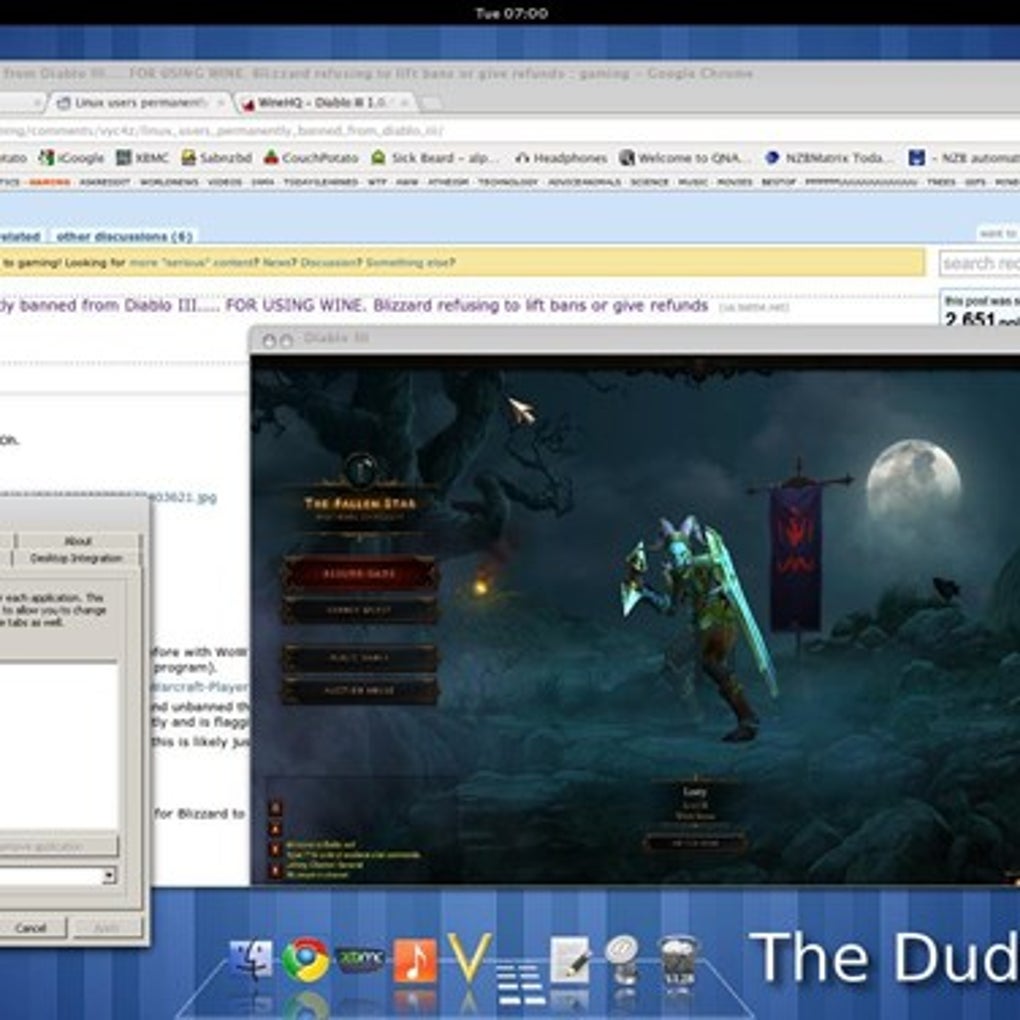

Download Wine – Run Windows Apps on Mac Free Secure Tool
Overview
Wine (originally “Wine Is Not an Emulator”) is a free, open‑source compatibility layer that lets you run native Windows applications on macOS without the overhead of a virtual machine or the need for a Windows license. By translating Windows API calls directly into POSIX calls, Wine enables programs such as ACDSee, Command & Conquer, and Microsoft Whiteboard to behave as if they were running on a genuine Microsoft system. The software is especially valuable for users who have encountered a Windows‑only tool that lacks a macOS counterpart—whether it’s a niche productivity app, an older game, or a specialized engineering package. Because Wine works at the API level rather than emulating an entire operating system, it consumes far less CPU and memory than traditional virtualization solutions. This lean footprint translates into faster startup times, lower power consumption on laptops, and the ability to run many applications side‑by‑side with native macOS software. Wine is continually updated by a global community of developers, and each release brings improved Direct3D support, bug fixes, and expanded compatibility lists. While the learning curve can be a bit steep for beginners, the payoff is a powerful, cost‑free method to bridge the Windows–Mac divide.
Key Features of Wine for macOS
- API Translation: Converts Windows system calls to macOS POSIX calls in real time.
- No Windows License Required: Runs Windows apps without purchasing Microsoft Windows.
- Lightweight Resource Usage: Uses minimal CPU and RAM compared to virtual machines.
- Extensive AppDB: Access to WineHQ’s compatibility database with Platinum‑rated apps.
- Direct3D & OpenGL Support: Enables 3D games and graphics‑intensive software to run smoothly.
- Cross‑Platform Compatibility: Works on macOS, Linux, and BSD.
- Winelib Development Kit: Allows developers to compile and port applications to other OSes.
- Regular Updates: Community‑driven releases improve stability and add new features.
- Free & Open‑Source: No hidden fees, fully transparent source code.
Each of these features contributes to a seamless experience when you need to launch a Windows‑only program on a Mac. The API translation layer is the heart of Wine, handling everything from file I/O to graphics rendering. Because it bypasses the need for a full Windows kernel, you avoid the performance penalties associated with hyper‑visors. The AppDB (Application Database) is an invaluable resource; it categorizes software into Platinum, Gold, Silver, Bronze, and Garbage based on real‑world testing, giving you a clear expectation of how well a particular app will run. Direct3D support has been a game‑changer for gamers and designers, allowing titles that rely on advanced graphics to operate with acceptable frame rates. Moreover, the Winelib library empowers developers to create native‑looking macOS builds from existing Windows codebases, fostering a healthier cross‑platform ecosystem. All of this is delivered at zero cost, under a permissive open‑source license, making Wine a uniquely attractive option for both power users and IT departments looking to reduce licensing expenses.
Installation & Usage Instructions
Getting Wine up and running on your Mac is straightforward, though it does involve a few command‑line steps. Follow this guide to download, install, and launch your first Windows program:
- Check System Requirements: Ensure you are running macOS 10.13 or later and have Homebrew installed (Homebrew is the recommended package manager for macOS).
- Install Homebrew (if needed): Open the Terminal app and paste:
/bin/bash -c "$(curl -fsSL https://raw.githubusercontent.com/Homebrew/install/HEAD/install.sh)"
Press Enter and follow the prompts. - Install Wine via Homebrew: In Terminal, run:
brew install --cask wine-stable
Homebrew will download the latest stable build, resolve dependencies, and place the Wine binaries in/Applications/Wine.app. - Configure Wine: Launch Wine for the first time to create a user‑specific “wineprefix” (a virtual Windows C: drive). Run:
winecfg
This opens a configuration window where you can set the Windows version emulation (default is Windows 10) and adjust audio or graphics settings. - Download a Windows Installer: Obtain the
.exeor.msifile of the Windows application you want to run. Save it to a known folder, e.g.,~/Downloads. - Run the Installer: In Terminal, navigate to the folder and execute:
wine setupfile.exe
Follow the Windows‑style installation wizard. Wine will place the program inside the~/.wine/drive_c/Program Filesdirectory. - Launch the Application: After installation, you can start the program with:
wine "C:\Program Files\YourApp\YourApp.exe"
Alternatively, create a simple shell script or drag the executable onto the Wine app icon for a double‑click experience. - Troubleshoot Compatibility: If the app fails to start, consult the WineHQ AppDB. Look for the specific version rating and any required tweaks (e.g., setting
Windows version = XPinwinecfgor installing additional libraries viawinetricks).
For users who prefer a graphical installer, third‑party wrappers such as WineBottler or Porting Kit provide drag‑and‑drop installers that automate many of these steps. However, the command‑line method gives you the most control and ensures you are using the latest stable build. Once installed, you can manage multiple wineprefixes to isolate applications that require different Windows versions or library sets, keeping your macOS environment tidy and stable.
Compatibility, Pros & Cons
Operating System Support
Wine runs natively on macOS (both Intel and Apple‑silicon via Rosetta 2), as well as on Linux and BSD platforms. The macOS version supports 64‑bit applications on Catalina and later. While 32‑bit Windows programs are still common, they may require additional configuration or a separate 32‑bit wineprefix, especially on newer macOS releases that have dropped native 32‑bit support. For the best experience, aim for applications listed as Platinum or Gold in the WineHQ AppDB, as these have been verified to work without major issues.
Pros
- Zero licensing cost – no need to purchase a Windows OEM.
- Low system‑resource footprint compared to virtual machines.
- Broad compatibility list with detailed user‑contributed ratings.
- Regular community updates improve performance and security.
- Supports Direct3D, enabling many games and graphics‑intensive tools.
- Cross‑platform nature allows the same configuration on Linux or BSD.
- Open‑source transparency – you can audit or modify the code.
Cons
- Steeper learning curve for users unfamiliar with Terminal.
- Not all Windows applications run perfectly; some may crash or exhibit glitches.
- 32‑bit application support on macOS Catalina and later can be tricky.
- Limited official Apple support; reliance on community documentation.
- Complex applications that depend on deep Windows kernel features may be unsupported.
Overall, Wine shines when you need to run a well‑supported Windows utility on a Mac without the overhead of a full VM. Its open‑source nature ensures continuous improvement, but the trade‑off is that edge‑case software may still require workarounds or alternative solutions.
Frequently Asked Questions
-
Is Wine safe to install on my Mac?
Yes. Wine does not install a Windows operating system; it only provides a compatibility layer that translates API calls. Because it runs without creating a separate virtual environment, there is no risk of compromising macOS security, provided you download the official version from Homebrew or the WineHQ website.
-
Can I run 32‑bit Windows apps on macOS Catalina using Wine?
Catalina dropped native 32‑bit support, but Wine can still run many 32‑bit applications by using a 32‑bit wineprefix. You may need to install additional libraries via
winetricksand ensure you are using the 32‑bit build of Wine. Performance may vary, and some apps might not launch. -
Do I need a Windows license to download and use Wine?
No. Wine is completely free and open‑source. It does not require a Windows product key because it never installs a copy of Windows; it simply translates Windows API calls into macOS equivalents.
-
How does Wine’s performance compare to a virtual machine like VirtualBox?
Wine typically outperforms full‑virtualization solutions because it avoids the overhead of emulating an entire operating system. CPU and memory usage are lower, leading to faster launch times and better battery life on laptops. However, VM solutions may offer higher compatibility for complex software that relies on low‑level Windows kernel features.
-
What are some good alternatives to Wine for running Windows apps on macOS?
Popular alternatives include WineBottler, Porting Kit, and Wineskin Winery, which provide graphical wrappers around Wine. For full‑system emulation, you can use Parallels Desktop, VMware Fusion, or the free VirtualBox. Each option balances ease of use, performance, and compatibility differently.
Conclusion & Call to Action
Wine remains one of the most efficient ways to bring essential Windows applications to macOS without paying for a separate Windows license or sacrificing system resources. Its open‑source nature, active community, and robust compatibility database make it a reliable choice for developers, gamers, and everyday users alike. While it does demand a modest amount of technical know‑how, the payoff—running your favorite Windows tools seamlessly on a Mac—is well worth the effort. If you have a specific Windows program that isn’t available for macOS, give Wine a try today. Download the latest stable build, follow the quick installation steps, and check the AppDB for compatibility ratings. With Wine, you can finally close the gap between Windows and macOS, keeping your workflow smooth and your budget intact.
Click here to download Wine for free and start running Windows applications on your Mac now!
Pros: Free, low resource usage, strong community support, extensive AppDB.
Cons: Learning curve, occasional compatibility gaps, 32‑bit limitations on newer macOS.