This was early in my days of exploring the rainforests of north Queensland and I knew well enough to keep away from the infamous stinging trees. But this species did not look one bit like Gympie Stinger (Dendrocnide moroides). If anything, it looked like a species of native fig (Ficus spp.)
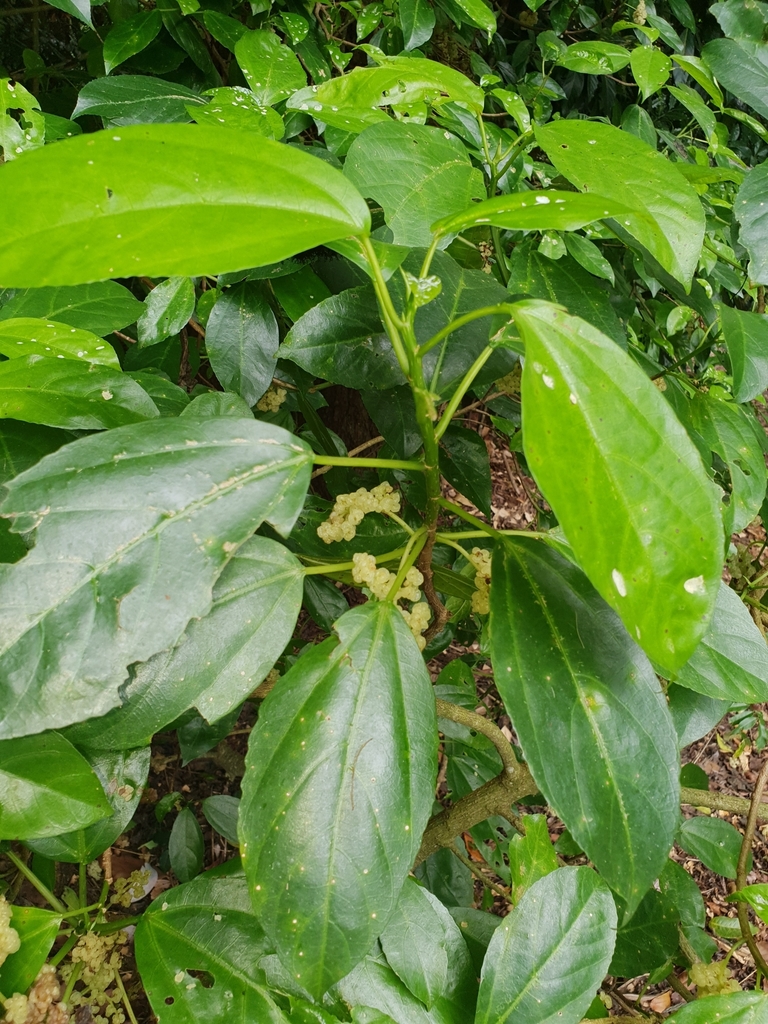
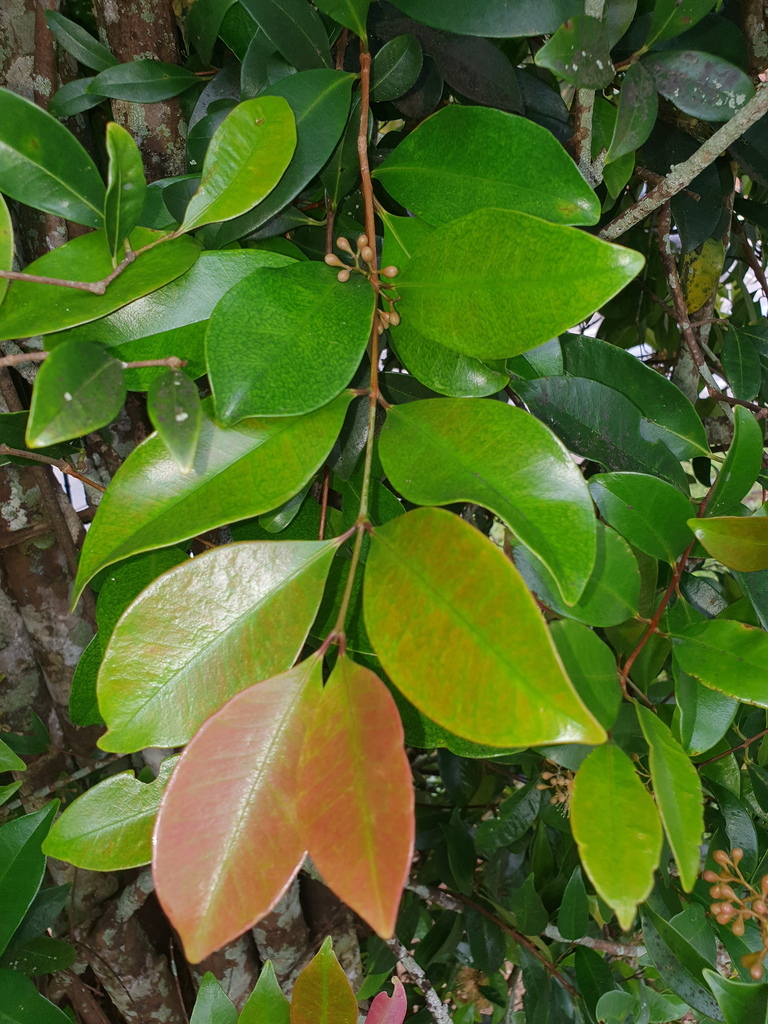
The common name for this tree is apt – Shiny Leaf Stinging Tree. The leaves are very bright green and shiny
Of course, at that time, the specimen I was examining had no fruits, so I might have taken more care. So I touched the leaf and brushed my fingers over the underside.
And ouch.
The good news is that the sting of this plant is nowhere as bad as the Gympie Stinger, and the pain fades, I’d say, within the hour. Definitely a plant to be aware of.
Other than the pain of accidentally brushing up against one, this tree is among one of the more magnificent large trees one can encounter in the upland Mabi forests in the region.
Temperate botanists might raise an eyebrow at a tropical ash tree. The tropical botanist might not know what an ash tree is. Ash trees, the genus Fraxinus, are mostly temperate, but have both temperate and tropical members (see also my recent post).
In the Wet Tropics, the Tropical Evergreen Ash (Fraxinus griffithii) is a commonly cultivated tree. This tree forms more or less neat crowns, and which is not particularly eye-catching when not flowering or fruiting. Moreover, it does not tend to be deciduous unlike its temperate relatives.
How ashes are related to olives is not intuitive. The native olive trees and relatives (Olea and Chionanthus, and even some Jasminum spp.) have simple opposite leaves, and the fruits are usually drupes, like olives) The tropical evergreen ash (and other ash trees) however, has opposite pinnate leaves with a terminal leaflet. Also, the mature fruits are not drupes, but rather, they are elongated samaras, which refer a type of fruit in which a flattened wing of fibrous, papery tissue.
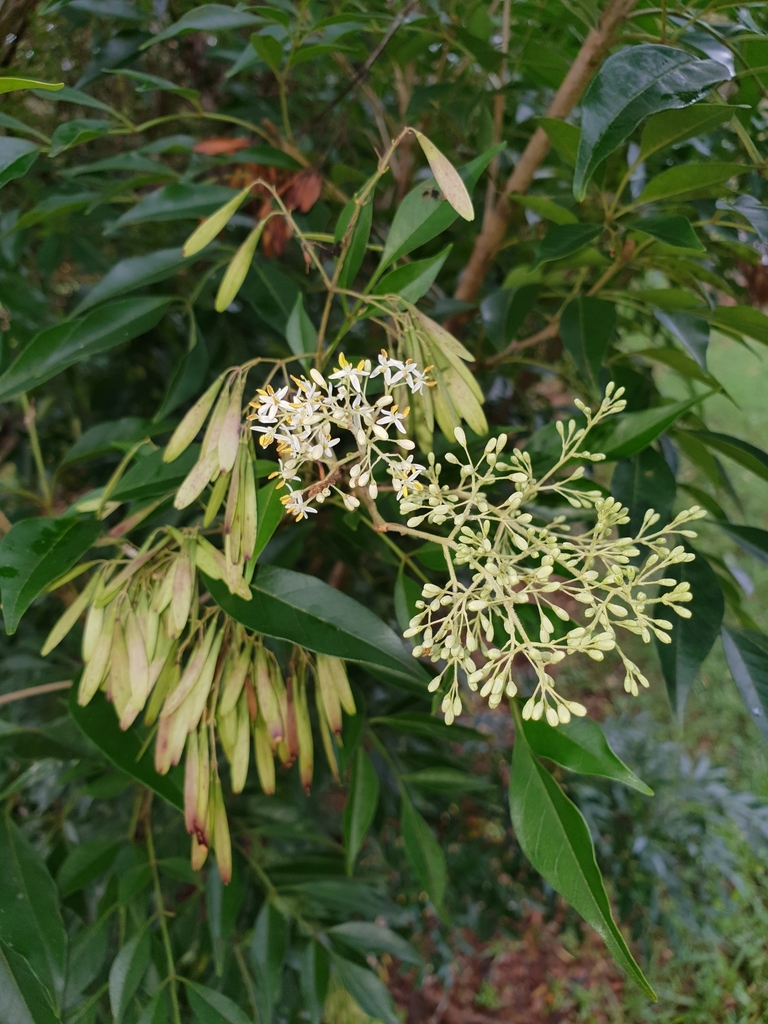
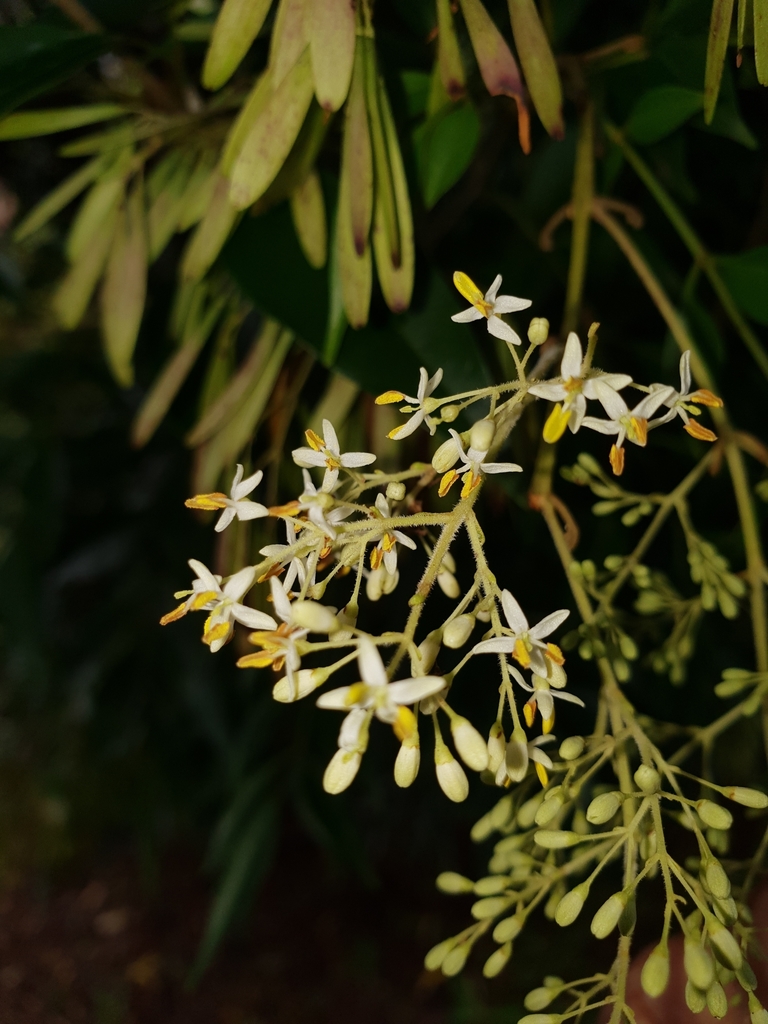
Despite all these differences, the flowers of the Evergreen Tropical Ash shows that it is a relative of the olive tree. The small fragrant flowers with white petals are borne in erect panicles, and shows the very same four-petaled floral structure of other members of the olive family (Oleaceae), which one would easily also recognize in the native olives (Olea and Chionanthus spp.) in the region.
In some ways, this ornamental tree is an introduction to the famous temperate ash trees in mythology. For those not familiar with this, some scholars consider the central sacred tree in Norse mythology (Yggdrasil) around which everything exists, to be an European ash (Fraxinus excelsior).
It is not hard to imagine why a world tree mythology could have developed around a tree like the European Ash. European Ashes can grow to an imposing stature of over 20m (which is large in Europe), and throughout the world various big trees have been considered to be world trees. The Wet Tropics of Australia would certainly have its own candidates, like the Rose Gum (Eucalyptus grandis), Red Tulip Oak (Argyrodendron spp.), Black bean (Castanospermum australe) and some figs (Ficus spp.) if size alone is the criterion.
The Evergreen Tropical Ash is a far cry from its famous temperate cousin in terms of stature, and grows only up to around 8m or so. I haven’ really seen one that large yet actually. But nevertheless, having an ash tree in the Wet Tropics, albeit an introduced one, can be a reminder of the sacred symbolism of trees.
Another picture perfect non-native orchid at the Cairns Botanic Gardens, Gould’s Dendrobium is native to Papua and New Guinea and the Solomon Islands, and in its native range occurs as a large to giant sized epiphyte or lithophyte in riverine forests, coastal forest, swamp forests, and beaches. It is no wonder that the climate of Cairns suits this beautiful orchid well.
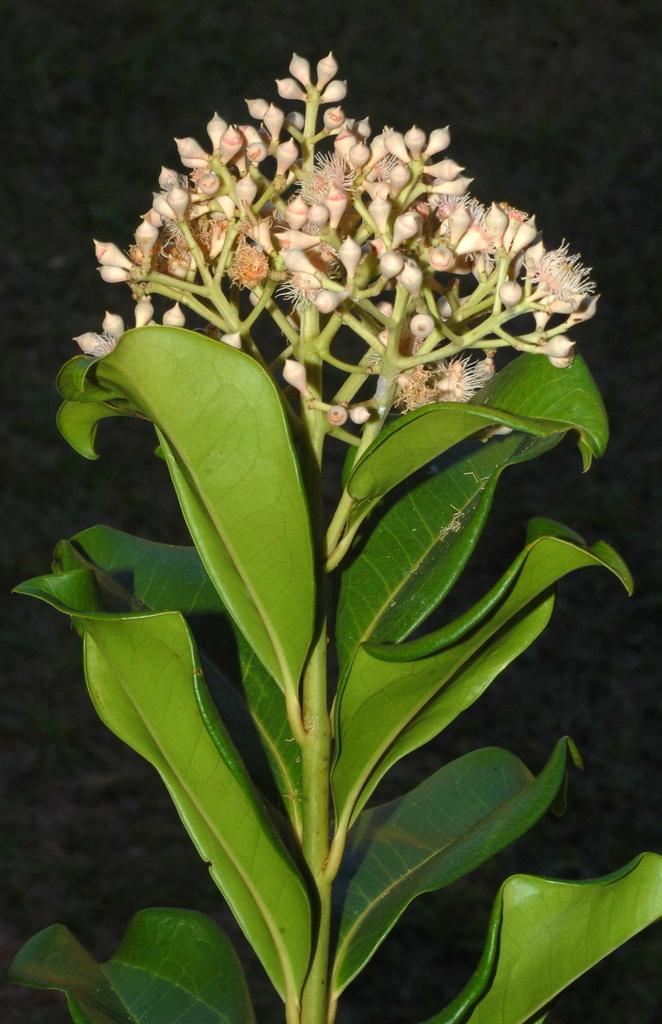
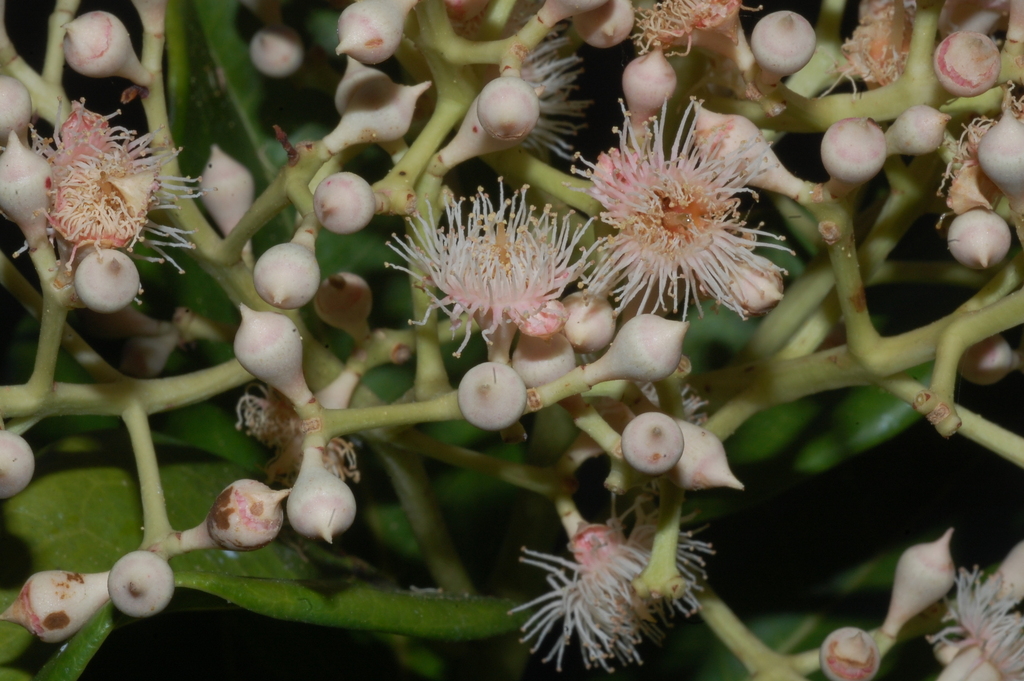
Meet the gargantuan Grey Satinash (Syzygium gustavioides), one of the largest species of endemic Syzygiums one will find in the Wet Tropics.
In my time in the Wet Tropics, I have had the rare privilege of seeing this both in flower and in fruit in the canopy, while doing research and plant collections up in the Daintree Rainforest Observatory canopy crane, some 25-30m up in the canopy.
That doesn’t mean that I am not properly awed by the tree when I am on the ground. In fact, I would say that the level of awe is somewhat more pronounced when I am at the base of the tree experiencing its grandiosity.
One nice thing about the Grey Satinash is that it is found in both well developed lowland and upland forests, and so when you go exploring the forests in both these regions, be sure to look out for these big trees with brown-orangey bark and buttresses.
The fruits of the Grey Satinash are among some of the largest in the region, and they are peculiarly rough skinned and hard – not like the fleshy or juicy red, purple or black berries one would associate with satinashes.
Other ID notes:
The rough hard fruits are reminiscent of a couple of other species in the genus such as S. glenum, S. graveolens, and S. divaricatum.
The mature leaves of this species are rather distinctive. They are quite leathery and elliptic, and the veins form loops well within the leaf margin.
Temperate raspberries and blackberries are great treats, but I love also the tropical counterparts, if I can get to them before the birds.
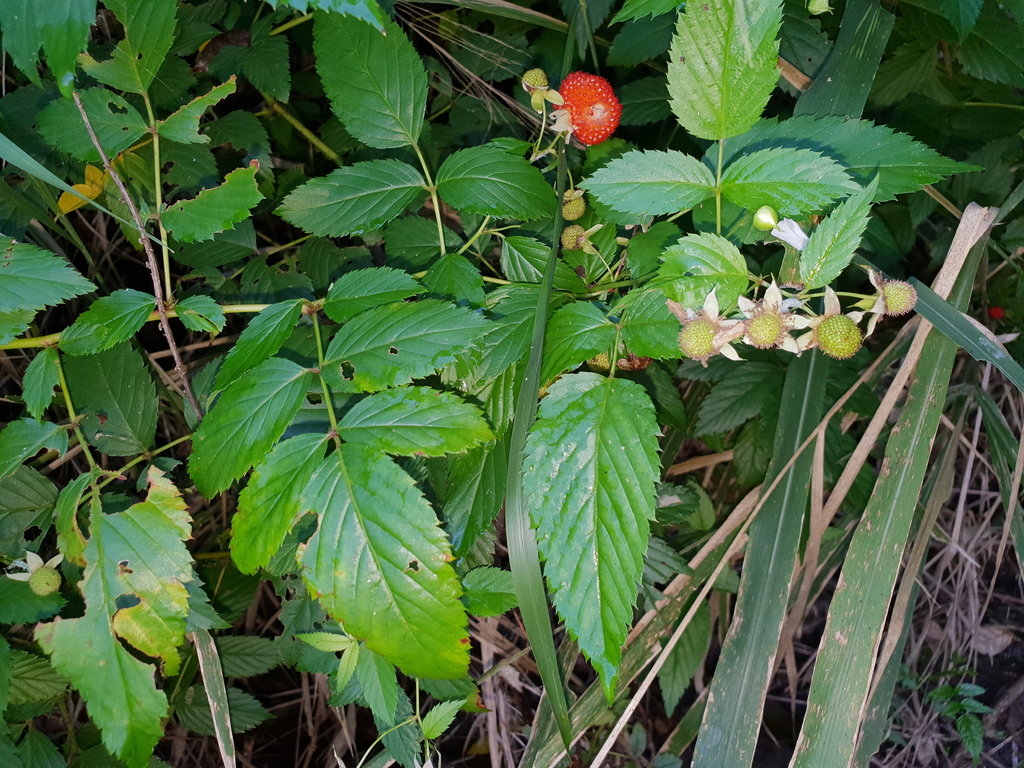
It is nice to know that the tropics produce “berry” like fruits that are more associated with temperate regions. In the Wet Tropics of north Queensland there are four native species of the genus Rubus, R. moluccanus, R. parviflorus, R. queenslandicus, and this species, R. probus.
This species produces delicious orange to red fruits (if you are lucky enough to find a good strain), and is highly deserving of cultivation for production. Sometimes these native raspberry fruits (either R. probus or R. queenslandicus) are sold at classy grocers at premium prices, presumably because of the effort it takes to collect the species from wild bushes.
Other ID notes: The species is very similar to Rubus queenslandicus, and these two species are difficult to distinguish when there are no fruits available. When fruiting, it is obvious that the compound fruit head of R. queenslandicus are a bit longer than wide, whereas those of R. probus are wider than long.
When I first arrived in Far North Queensland, one of the first native Syzygiums I encountered was the Fibrous Satinash. I had seen it at Cattana Wetlands, where I frequented in my free time. “Fibrous Satinash” really is a poor choice of a name for this beautiful native satinash (Syzygium fibrosum).
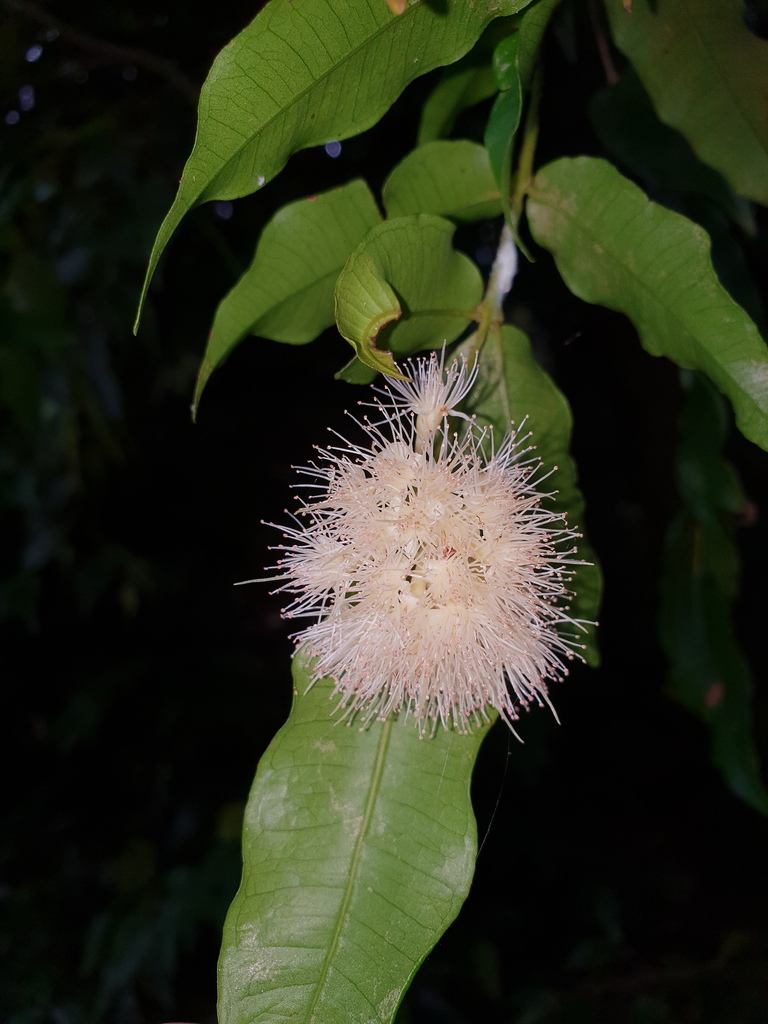
The flowers are showy, and are borne in the leaf axils. Each flower comprises abundant long-stalked stamens (the part bearing the pollen) which are like luminous golden tentacles borne on gentle rosy receptacles.
Tender golden rays from a rose heart emanates A garden thus warmed
The fruits that follow are equally showy, and consist of tight bountiful clusters of red berries, like a bonanza of little apples. One of the common names for the plant is indeed Small Red Apple. These fruits, while edible, are quite acrid though.
The species is so common in cultivation that it is not hard to find it outside of its range. Normally, this is a plant of lowland forests, typically near watercourse. I have more commonly seen it cultivated, and even in the uplands, where they seem to fare ok.
ID notes:
Something about the leaves of S. fibrosum sets it apart from most of the other Syzygiums I know, but I have trouble putting a finger to it. The elliptic leaves have a rather shiny leathery look to them, and the midrib is sunken on the top. In some ways, the leaves look like a large Syzygium smithii (just not obovate like that species). The youngest flushing of leaves are reddish-orange.
Probably few people would notice, but this little non-native annual herb must be one of the most common members of the carrot family in the Wet Tropics. Now that I am sensitized to its threadlike green leaves and and small umbels of spherical flowers, I see it often in open field or near urban dwellings. Depending on whether it is growing in drier or wetter conditions, the plant can also vary in height and appearance (shorter in dry places, lengthier in moister places).
Known variously as Marsh Parsley, Fir-leaved celery or Slender Celery, this species is actually a native of Mexico and tropical South America, where it grows primarily in the seasonally dry tropical biome. It has now found throughout warm temperate to tropical regions in the world (see distribution) and is considered a noxious weed in some places. Nevertheless, there are also some purported uses of the plant as it has been used as medicine to treat unspecified medicinal disorders, and as animal food.
Delving into the Syzygiums is one of my favourite learning activities as a botanist. There is a strange satisfaction learning about them one by one, and unravelling their individual quirks. The small tree, Syzygium apodophyllum is another one of the many species of Syzygium in the Wet Tropics region, and an endemic of Queensland. At the moment, I have only gotten to know one specific individual at the Cairns Botanical gardens near the Gondwanan collection.
Commonly known as Rex Satinash, this is a little known rainforest species that have winged stems and short leaf stalks. The scientific name makes a point of the latter fact. The prefix “apodo-” comes from Greek origins, with “a-” meaning “without” or “lacking,” and “podo-” derived from “pous” meaning “foot.” Together, “apodo-” generally means “without feet” or “footless.” Thus, “apodophyllum” alludes to the leaves lacking a distinct petiole, appearing sessile or directly attached to the stem.
The inflorescences of the Rex Satinash are borne in the leaf axil. However, the Rex Satinash seems to be a little shy to show its flowers, and appears to “hide” it behind the leaves. Given the interesting way it “holds” its flowers, I am curious to know the kind of pollination syndrome this species uses.
Like some of the less well known Syzygiums of the region, there is not a lot known about the ecology or conservation needs of Rex Satinash, and a better assessment of their populations would help with understanding their conservation value.
More ID notes:
This species is one of a set of species that have twig “wings” and very short petioles, like Syzygium alatoramulum and S. hedraiophyllum. It looks like a small version of S. hedraiophyllum.
Let me put it straight to you. Few families do vines like the great Fabaceae. If you think that vines are dainty or feeble little things, it’s time to change your perspective. Come to the tropics to experience the power and majesty of true vines. And vines from the great Fabaceae family are truly some of the most magnificent I have seen. Ok, I’ll concede that the ornamental Wisterias of the temperate zones are also very attractive. But they don’t come close to what’s in the tropics.
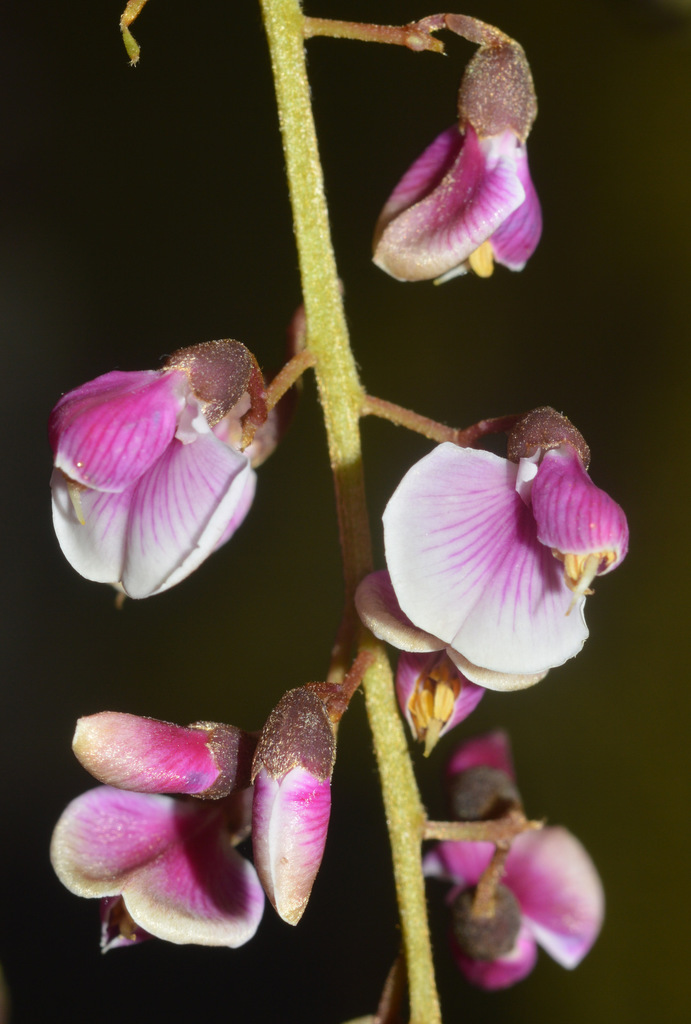
But look at the Northern blood vine (Austrosteenisia stipularis). Who can say these are not pretty. When they are in flower, they are a spectacle to witness, and an attractant to insect pollinators.
They are also not called “stipularis” for nothing. The Northern blood vine has very obvious stipules where the compound leaves are attached to their stems.
And lastly, when I say “power and majesty” of vines, I mean big vine stems, and by big, I mean larger than my thigh.
Some other notes for ID:
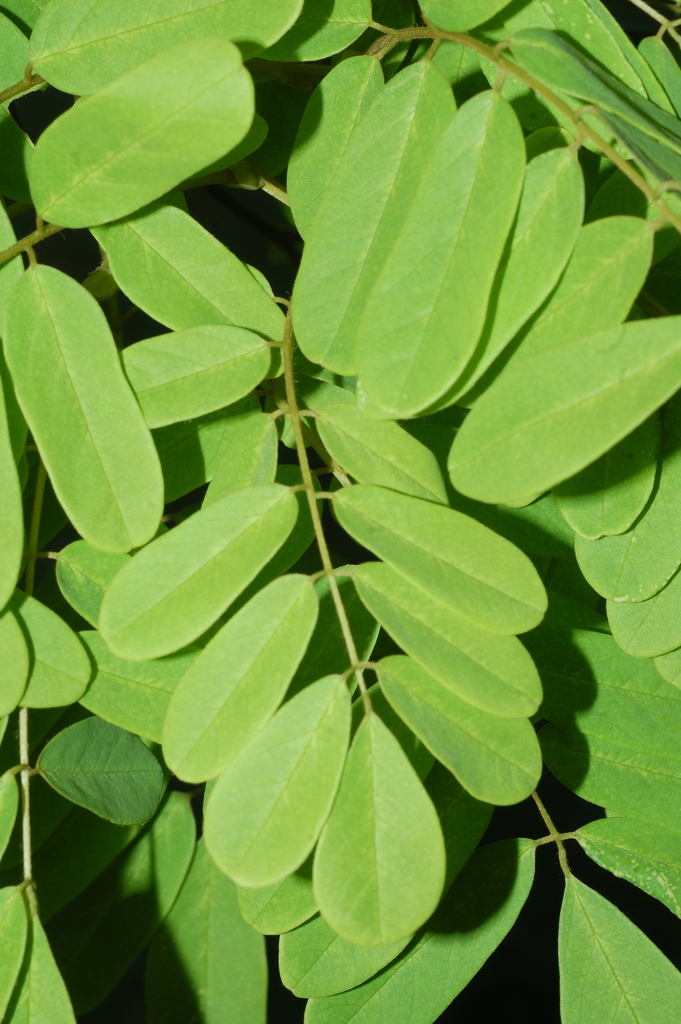
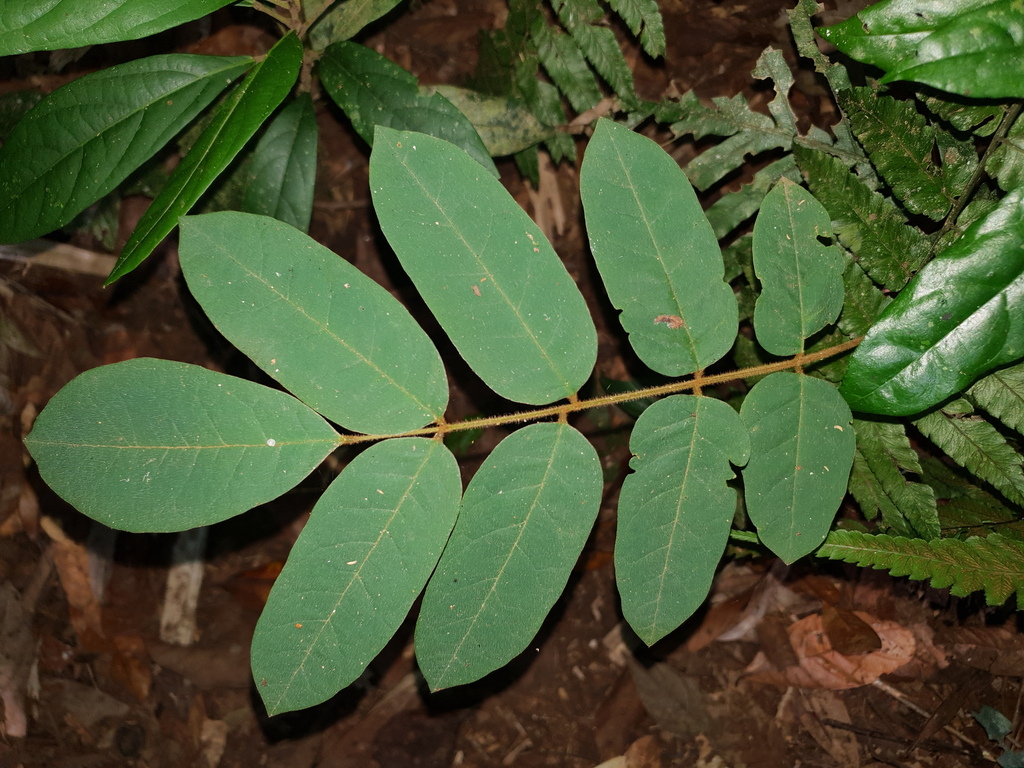
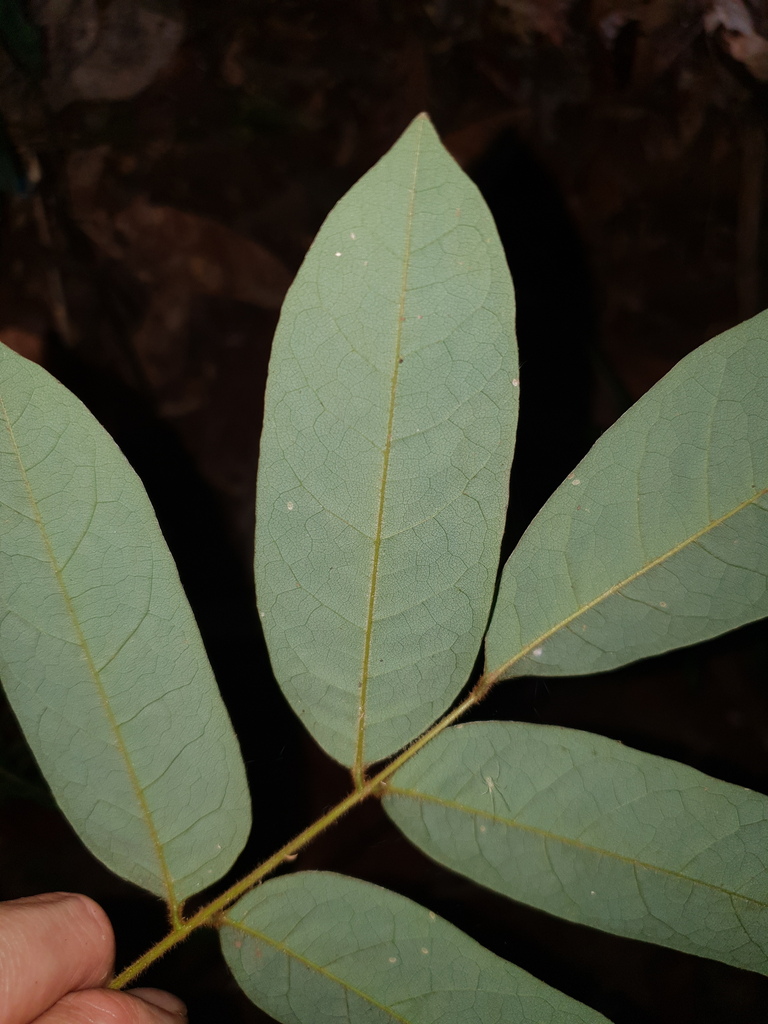
The leaves are compound, with 9 or more somewhat rectangular leaflets that are a bit hairy and have a light green appearance. The undersides of the leaves are even paler green. In the understorey of the forest, it is not uncommon to see young saplings or sometimes shoots off a stem of the northern blood vine. And under these shaded conditions the compound leaves are larger in dimensions (images below) than those encountered growing in full sun (above image).
One of the most striking botanical phenomenon in the tropical rainforest is cauliflory, in other words the bearing of flowers or fruits on the main trunks of a tree. Cauliflory does not happen with every species of tree, but it is very conspicuous, and occurs in members from diverse families, including the soursop family (Annonaceae), the Hibiscus family (Malvaceae), the Mahogany family (Meliaceae) and the Lychee family (Sapindaceae), among various others.
The topic of cauliflory merits a whole post in and of itself, but in the case of the Myrtle family, and in this region, it is most commonly seen in the genus Syzygium, where it manifests in a sizable number of species (S. branderhorstii, S. cormiflorum, S. erythrocalyx, S. kuranda and S. monospermum)
The Bumpy satinash (S. cormiflorum), a Queensland endemic is a good example of a cauliflorous satinash, and is one of the species that is most likely to be encountered when wandering through rainforests in the lowlands or the uplands.
When the time comes to flower, clusters of large white flowers erupt from protruding corm-like bumps on the trunk of the tree. This is then followed by an abundance of large white fruit, which must be a bounty for rainforest animals.
Spectacular as the bumpy satinash is, there is something quite grotesque about it as well. The corm-like bumps where the flowers and fruits are produced are like disfigurements on the trunks. These appear to be predetermined areas where the tree will produce flowers every time, like pustules on the body of the tree that sporadically erupt. And these bumps become larger (up to a certain point) through time as the tree grows and are also almost instantly diagnostic of the bumpy satinash when you see such a feature on a rainforest tree.
ID notes: However, it’s always best not to be complacent and to check the leaves, as there are a number of species that are quite similar, and which also exhibit cauliflory, such as S. erythrocalyx and S. monospermum.
The bumpy satinash has stalked elliptic leaves that become quite easy to recognize after a while, due to their ladder-like venation.
S. erythrocalyx and S. monospermum has very short stalks or stalkless leaves and also leaf bases that appear cordate. S. bamagense has leaves that are similar in appearance to S. cormiflorum, but the leaf stalks are longer, and also the fruits are borne on the branches.
Been in Australia for over two decades gazing at plants, both large and small, grasses and trees, in rain forest and savanna, in the tropics and in temperate zones. I love connecting with people with similar interests. You can read more about me on my About page and at my personal BLOG.













 Leaf Whispering in the Tropics
