

 Karen Radner
580 California St., Suite 400
San Francisco, CA, 94104
…
36 pages

P. Notizia, A. Rositani, L. Verderame (eds.), dNisaba za3-mi2 : Ancient Near Eastern Studies in Honor of Francesco Pomponio, dubsar 19, Zaphon: Münster, 181-197., 2021
ĝiš-rin2 sa ak pu2 niĝ2-ĝiri3-a-kam dam-gar3 ku-li-ni-ir lu2 na-an-tuku-tuku "Weighing scales made with a net are a trap made for the feet; A man should not take a merchant for his friend" SP 3.64 (Alster 1997, 92
in P. Carlier†, Fr. Joannès, Fr. Rougemont, J. Zurbach (Eds.), PALATIAL ECONOMY IN THE ANCIENT NEAR EAST AND IN THE AEGEAN FIRST STEPS TOWARDS A COMPREHENSIVE STUDY AND ANALYSIS Acts of the ESF Exploratory Workshop held in Sèvres, 16-19 Sept. 2010, PISA – ROMA FABRIZIO SERRA – EDITORE MMXVI [2017]
The reader should note that this paper was delivered in 2010, and published a full seven years later! Even by the slow pace of ANE studies, this delay is significant, and poses a few problems of updatings and supersessions. But so be it: the author hopes that it may still be useful to some.
The "Metallist" origin of money, used as a medium of exchange, is based on the presumed low efficiency of barter. However, barter is usually ill-defined and archaeological evidence about it is inconclusive. Moreover, the transaction costs associated with barter seem to have been exaggerated by metallists. Indeed, the introduction of a unit of account reduces the complexity of the relative prices system usually associated with barter. Similarly, in-kind transactions have timing constraints which are often labeled as "the double coincidence of wants"; with a system of debt and credit, delayed exchange, that is lending, is possible. Such adaptability of barter is confirmed by the study of Mesopotamian and ancient Egyptian palatial economies. They provide evidence that non-monetary transactions have persisted during millennia, challenging the metallist vision about the origin of money.
Al-Adab Journal
Ancient Iraq is very well known as an agricultural economic country, especially, the middle and the southern parts of Mesopotamia, which was called “the Land of Sumer and Akkad “, it's a very rich agricultural country. Sumer's economy was based on agriculture, fishing, and cattle and sheep breeding. Lived on the products of the fertile, irrigated soil, and this situation was clearly reflected in the cuneiform texts unearthed from many sites from the third and second millennium BC. And due to the young geological composition of Mesopotamia, the alluvial plain of ancient Sumer lacked so much important raw materials, these of materials were needed by the craftsmen of Sumer and Akkad for the industry, works of art and daily life. These raw material were, deferent kinds of stone, timber, and metal, therefore, the need for these materials led to exchange what the people had from the agricultural production and industrial goods and material produced by the workshops of temple or pa...
Merchants, Measures and Money: Understanding Technologies of Early Trade in a Comparative Perspective , 2021
is second volume in the series collects papers from two workshops held at the University of Göttingen in 2019 and 2020. e international meetings tackled questions related to merchants and money in a comparative perspective, with examples spanning from the Bronze Age to the early Modern period and embracing Europe, the Mediterranean, Asia and East Africa. e rst part of this volume presents historical case studies of how merchants planned and carried out commercial expeditions; how risk, cost, and potential pro t was calculated; and how the value of goods was calculated and converted. e papers in the second part address current theories and methods on the development and function of money before and a er the invention of coinage. e introduction of balance scales around 3000 BCE enabled the formation of overarching indexes of value and the calculation of the commercial value of goods and services. It also allowed for a selected set of commodities to take on the role of currency. Around 650 BCE, this led to the invention of coinage in the Eastern Mediterranean.
Journal of the Economic and Social History of the Orient 48(3), 2005
For some products in the Ur III period, a sufficient number of texts provide their silver equivalences, and the ancient value of the products can be estimated. This paper suggests that we should envision two exchange systems in the Ur III period, which operated within two separate and rather different economic spheres. Local exchange took place, at a stated time and place, for the purpose of individual exchange of goods and services. Through this exchange, regular people would obtain a number of different necessities of life that were not provided by the temple and palace households. This was a barter exchange and the silver values encountered in the Ur III texts do not relate to this exchange. Silver was only used in large-scale transactions of goods and in more significant sales of real estate, humans or livestock. Although we may assume that there was a connection between the official silver equivalences and the actual values of the products and commodities in the local exchange, minor fluctuations and changes in the large-scale exchange system would not affect the bartering values in the local exchange.
OLD ASSYRIAN METAL TRADE, ITS VOLUME AND INTERACTIONS-Belleten, 2019
Wiener Zeitschrift fur die Kunde der Morgenland. Band 104, 2014
Review Article of Ouyang, Xaoli: Monetary Role of Silver and its Administration in Mesopotamia during the Ur III Period (c. 2112-2004 BCE). A Case Study of the Umma Province. Madrid: CSIC 2013, (BPOA 11).
Notae-Numismaticae-Zapiski Numizmatyczne XVI, 2021
Review

Loading Preview
Sorry, preview is currently unavailable. You can download the paper by clicking the button above.

AI
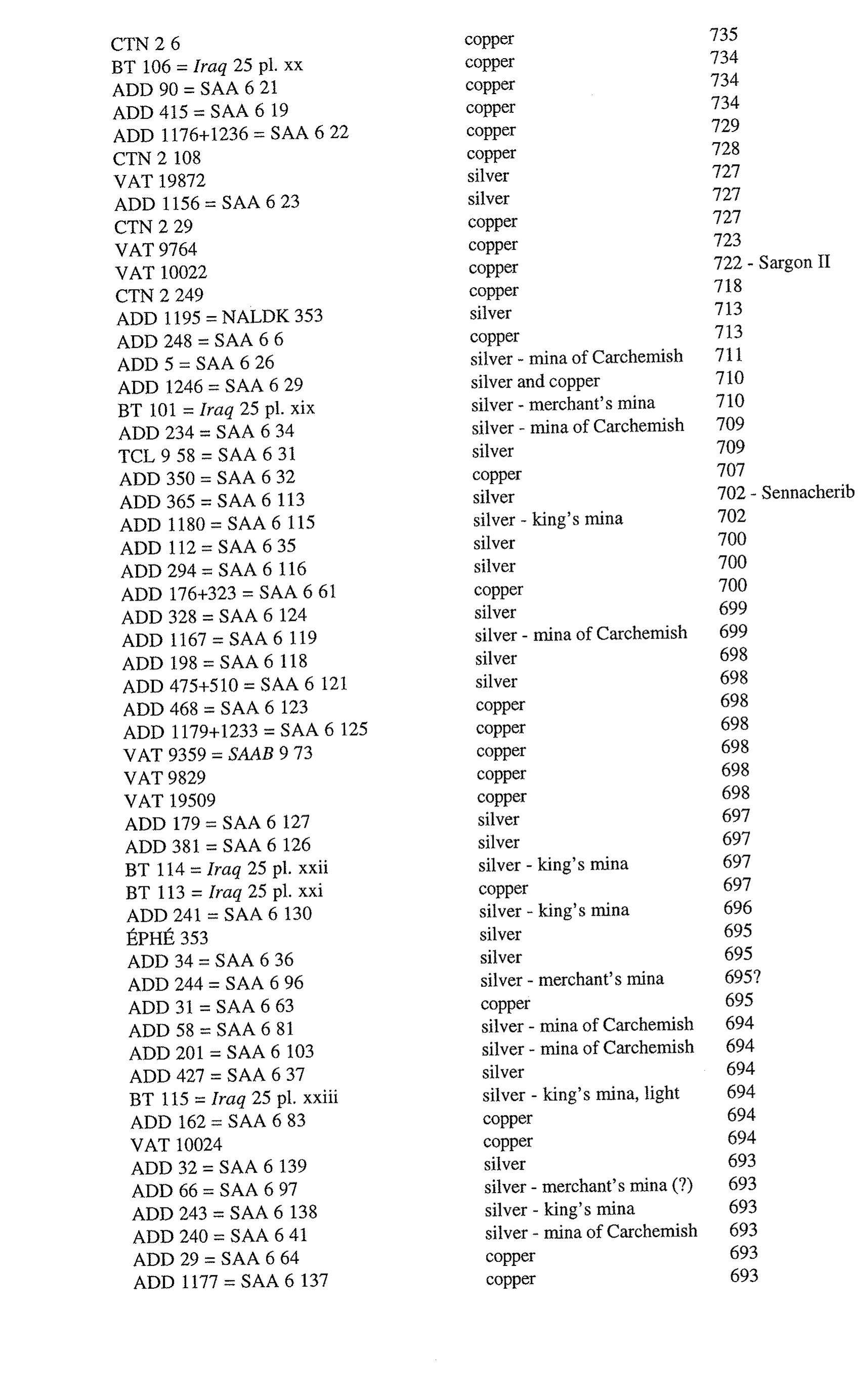
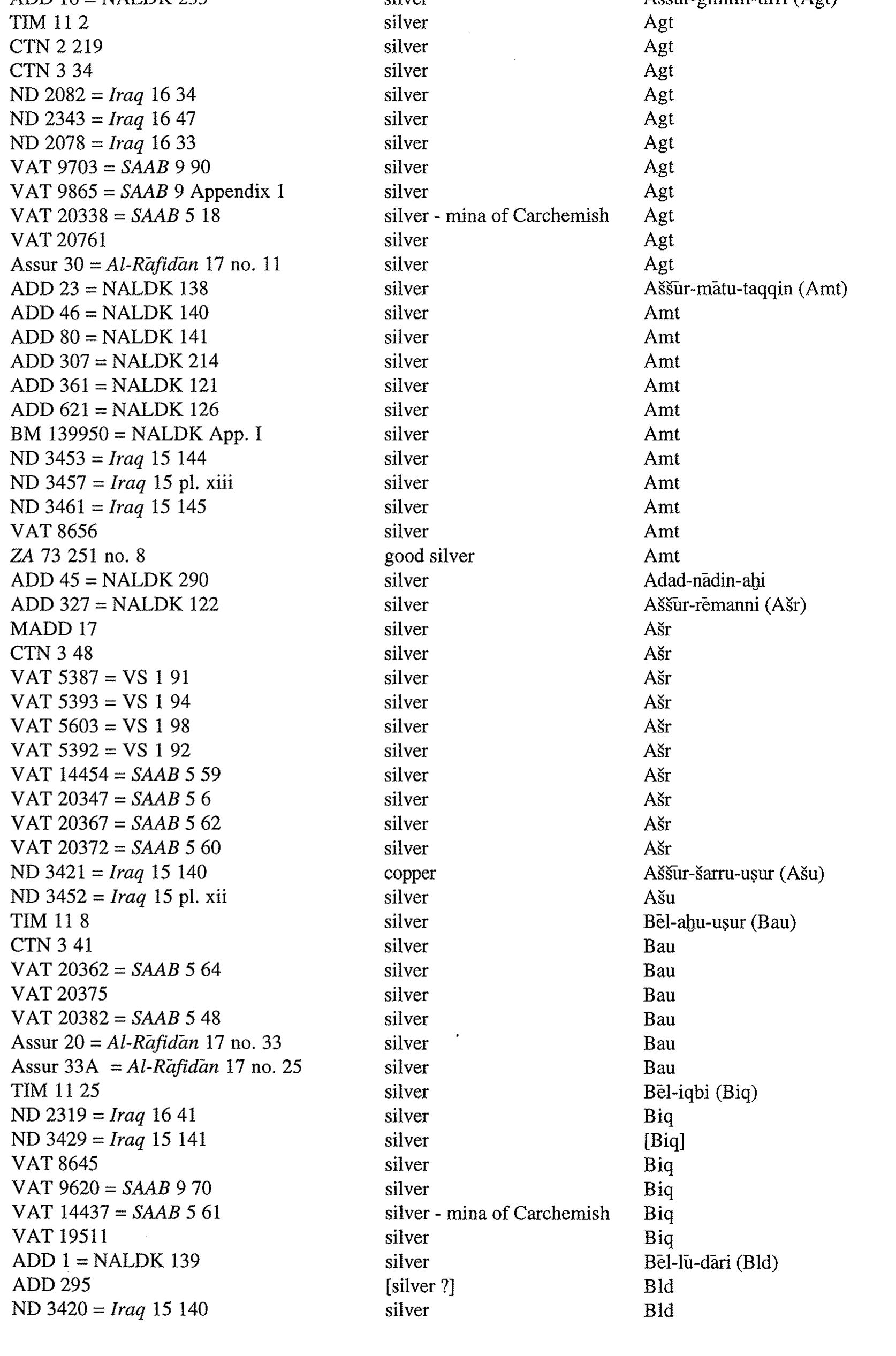
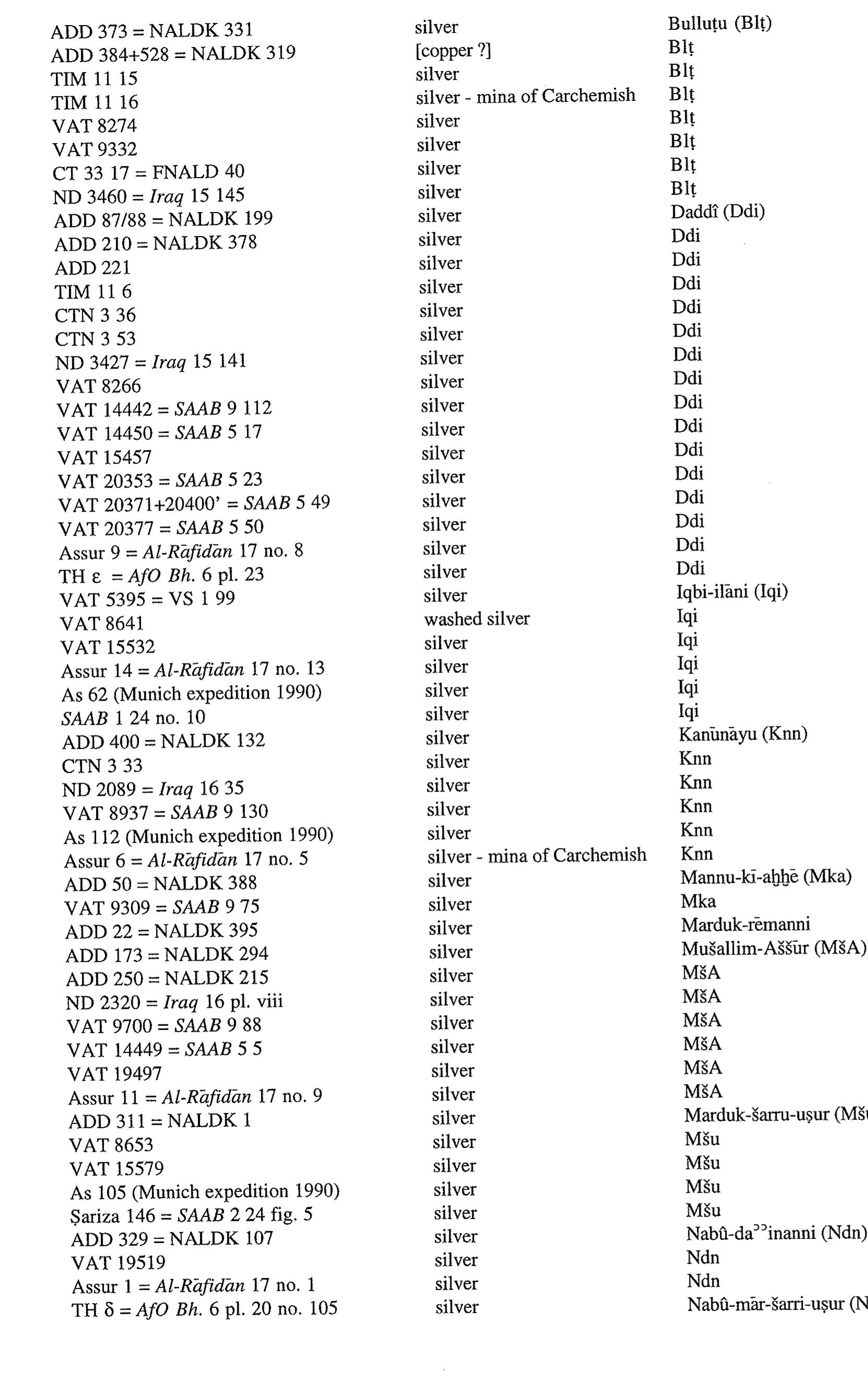
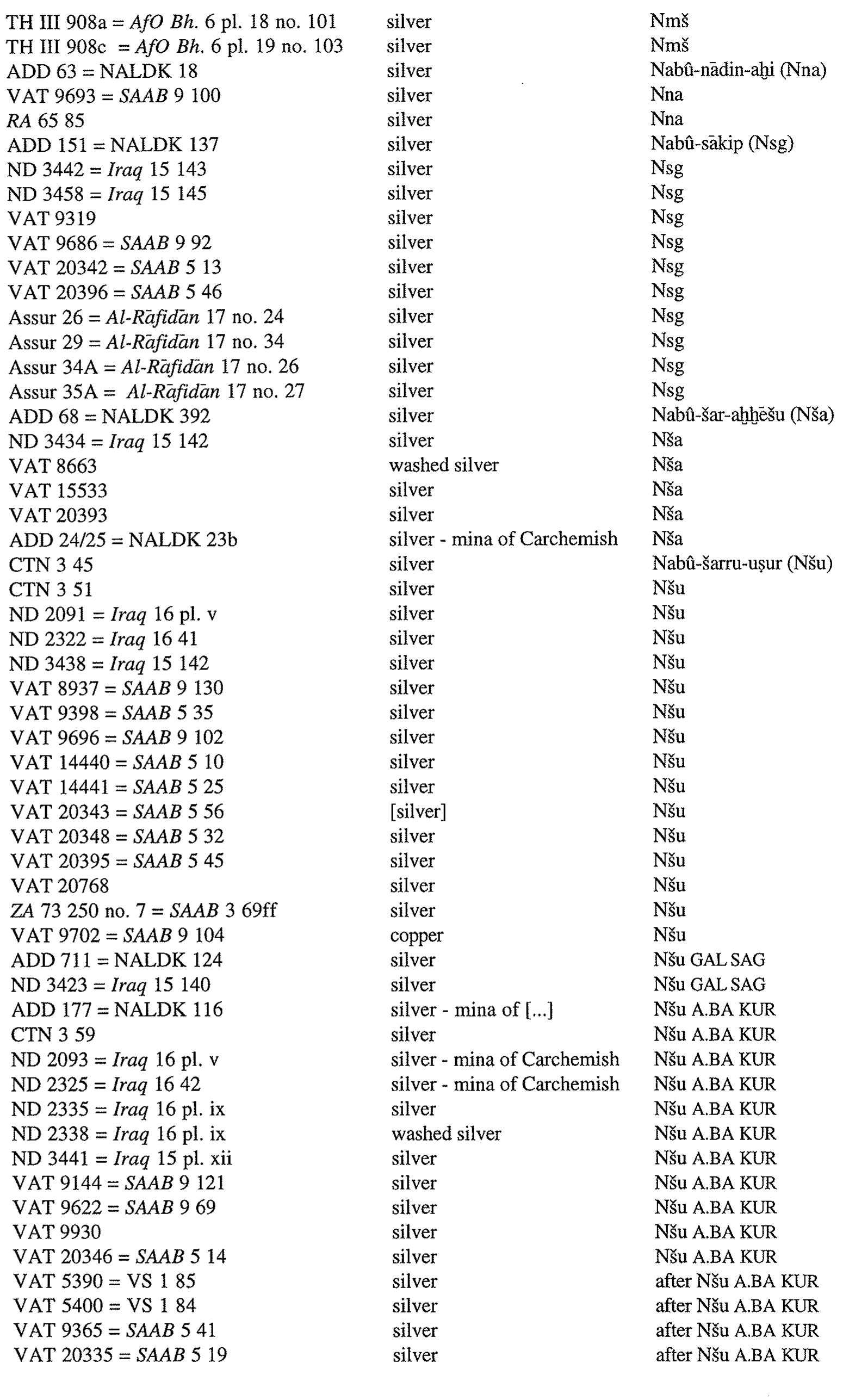
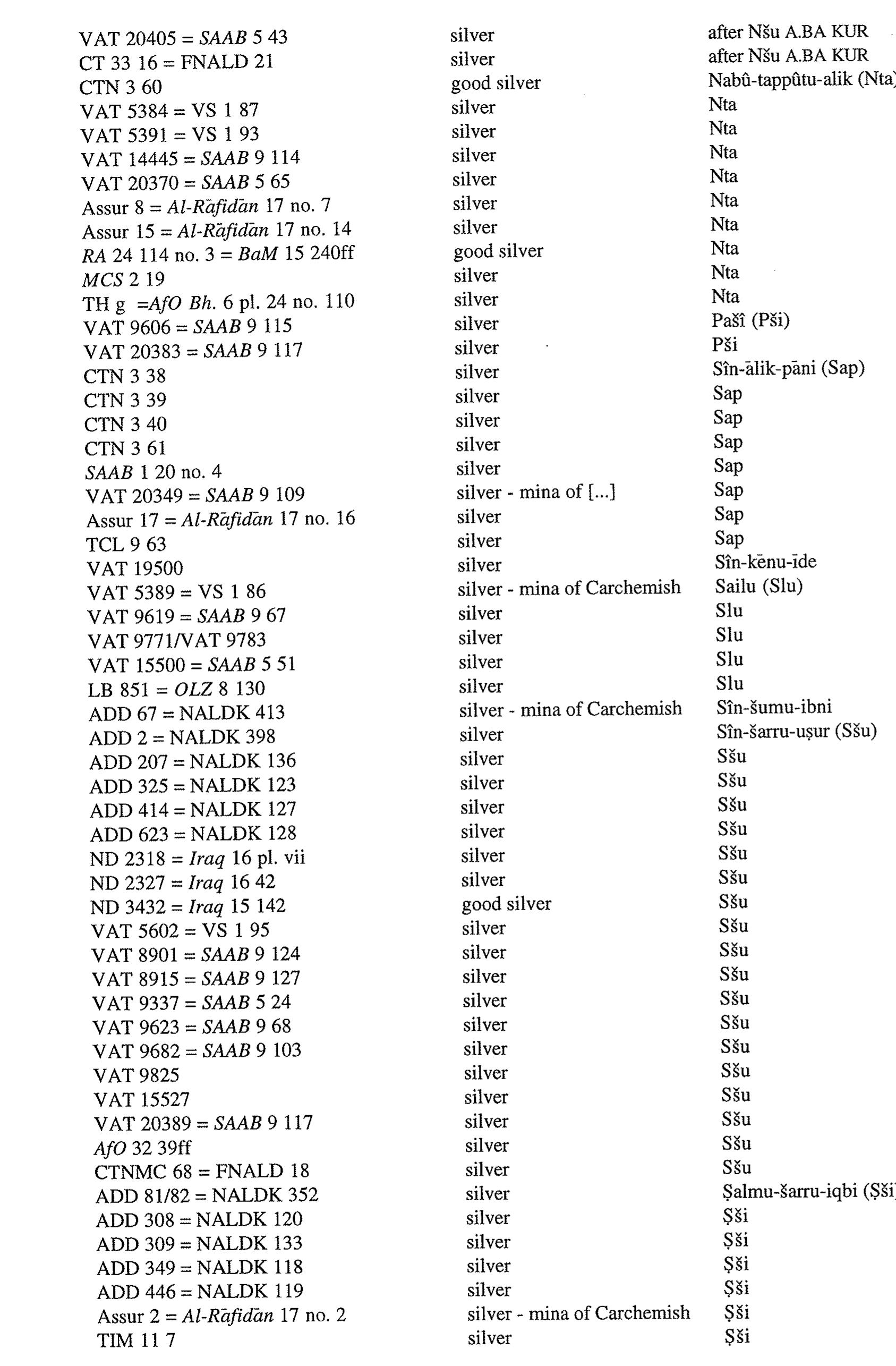
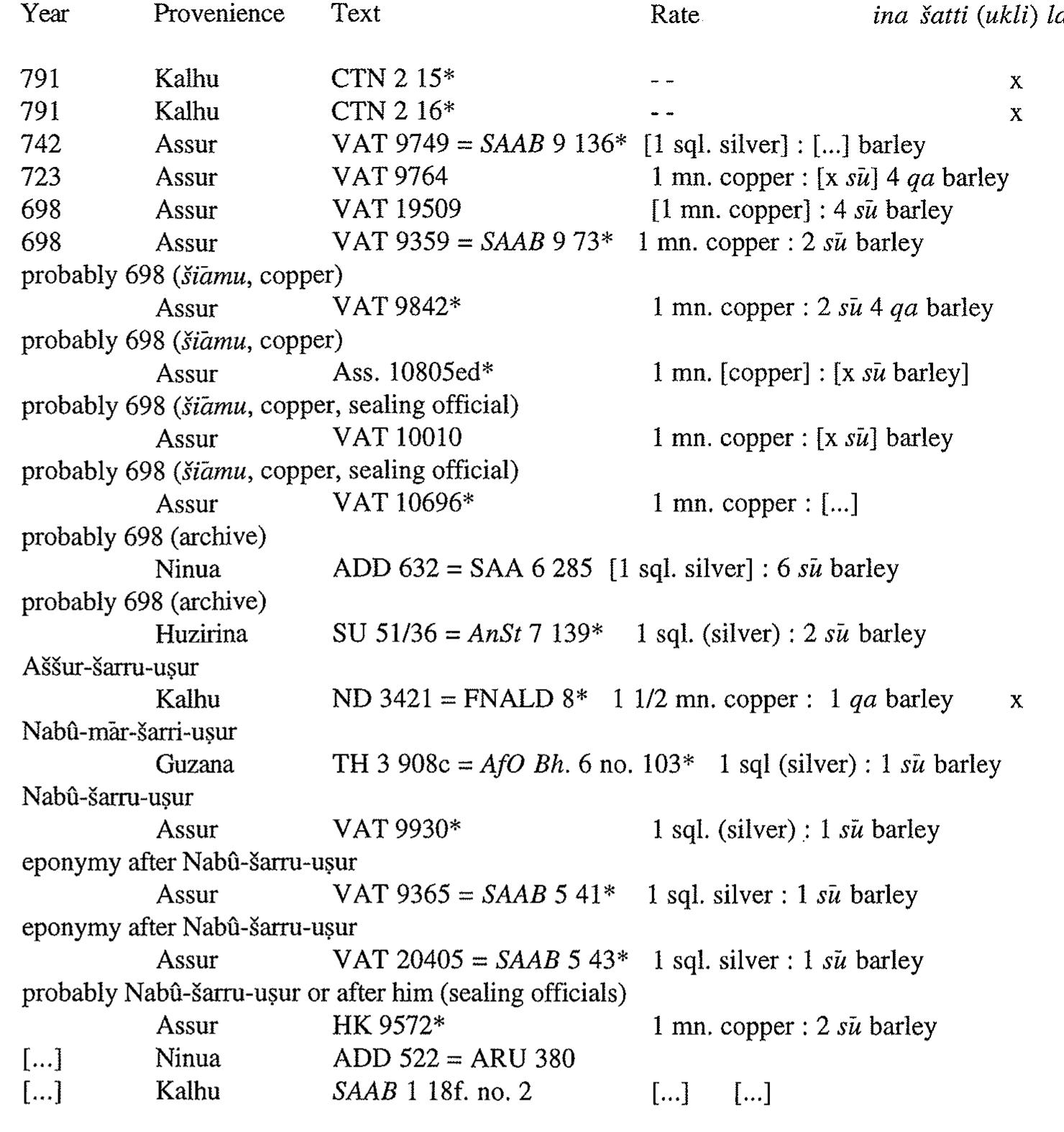
Sargon's campaigns led to silver replacing copper as the primary currency from 712 BC onwards, reflecting immense silver inflow, notably from Carchemish.
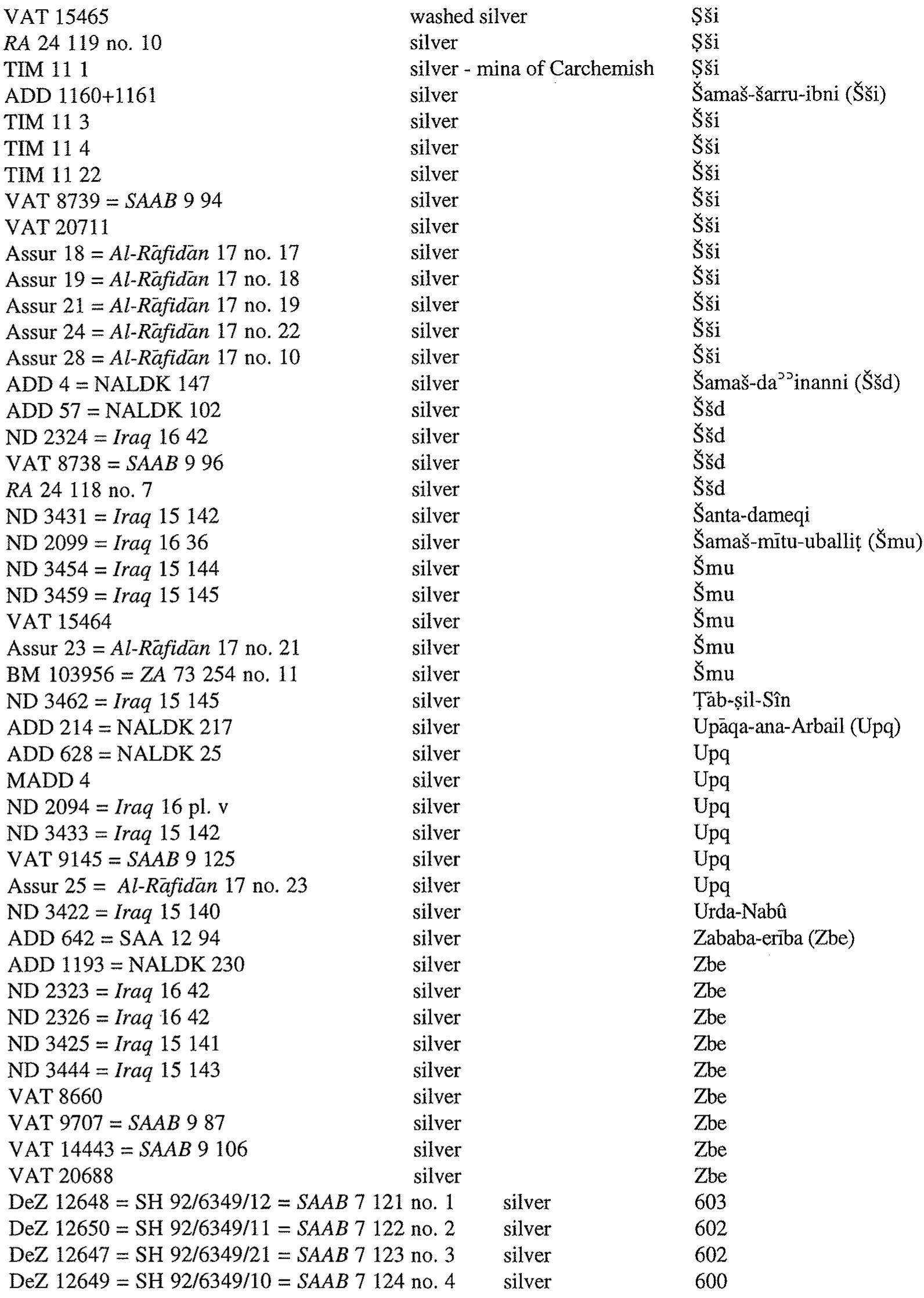
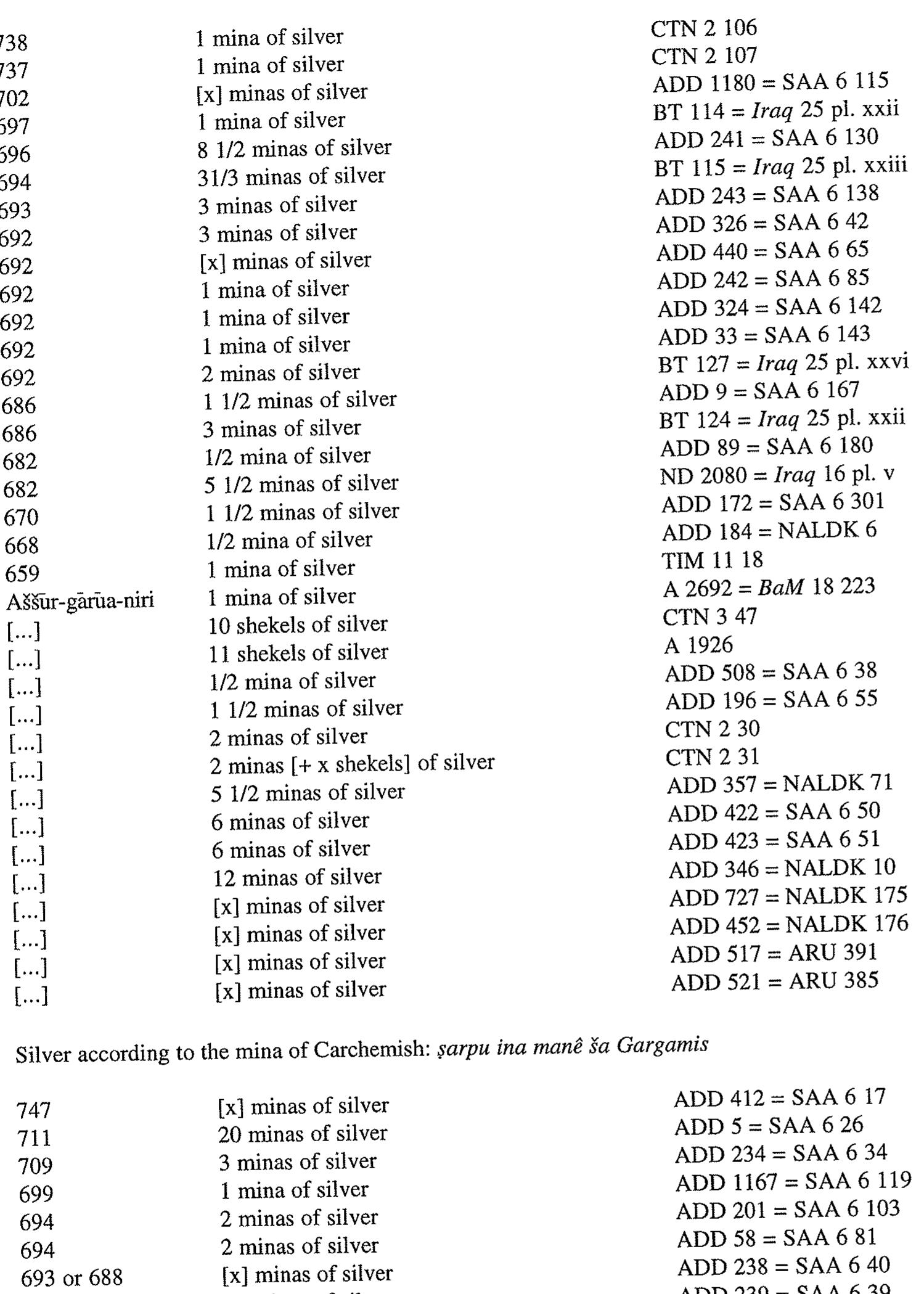
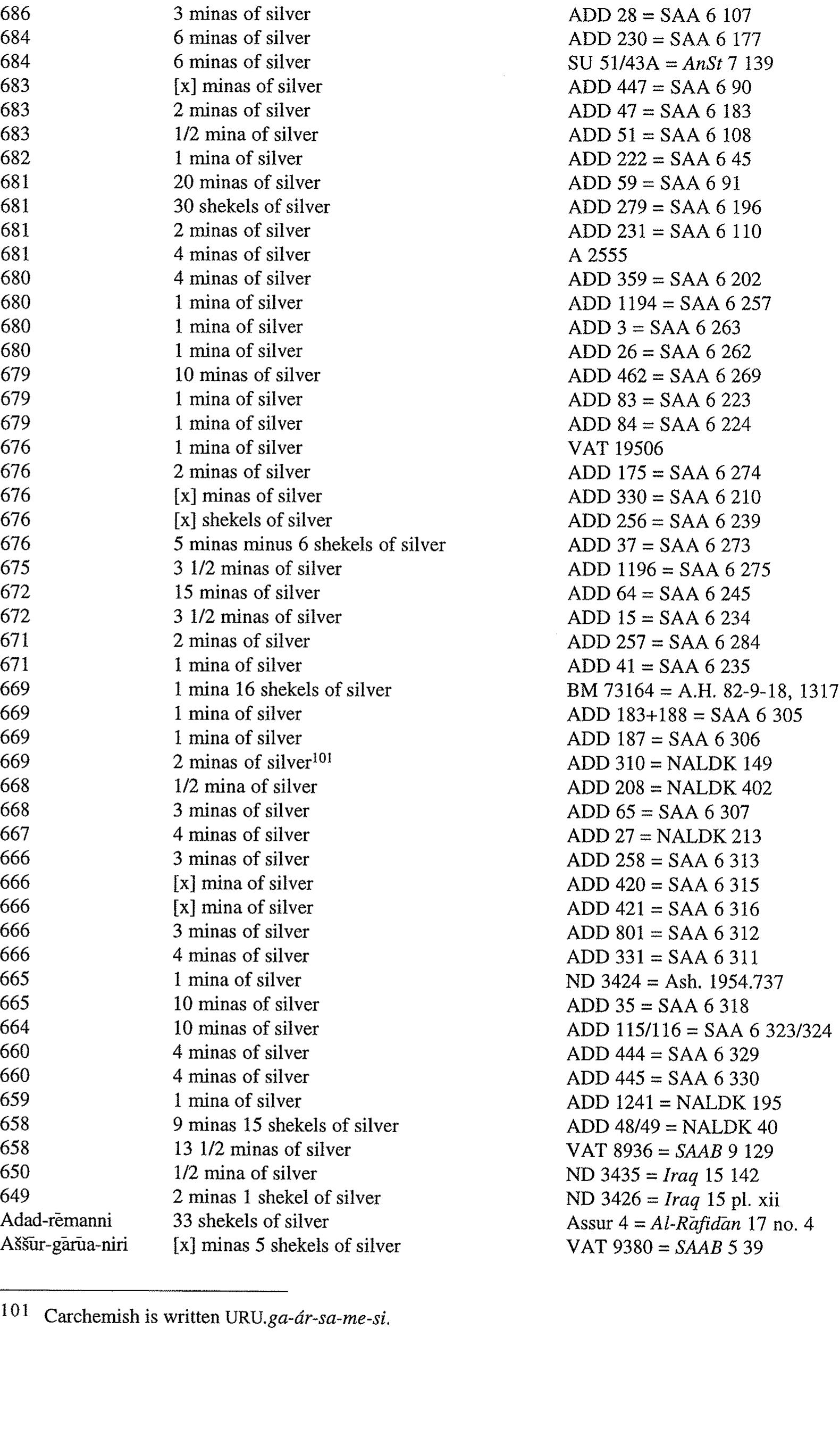
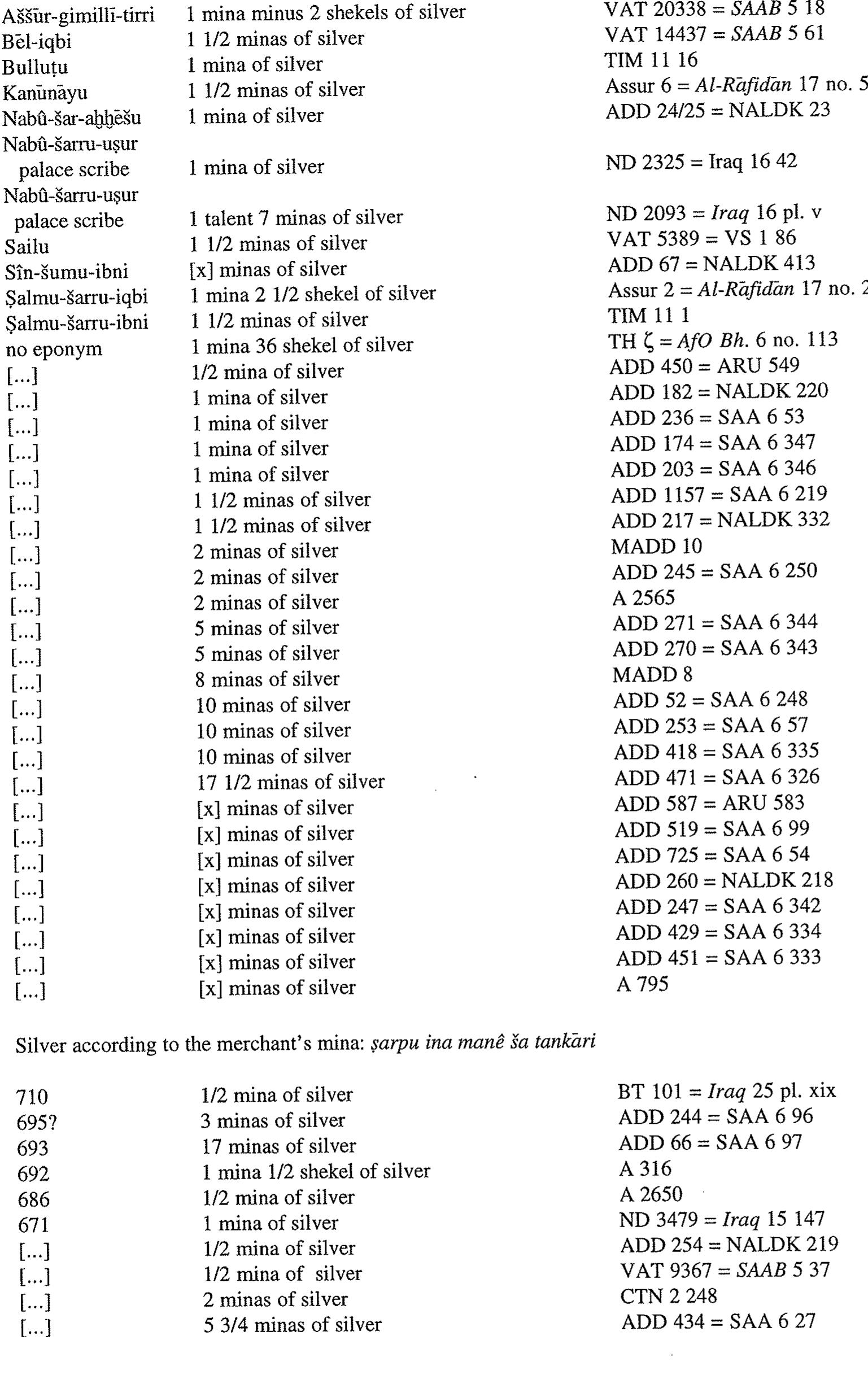
The study identifies three silver standards: the king's mina, the mina of Carchemish, and the merchant's mina, with 101 attestations predominantly for the Carchemish standard.
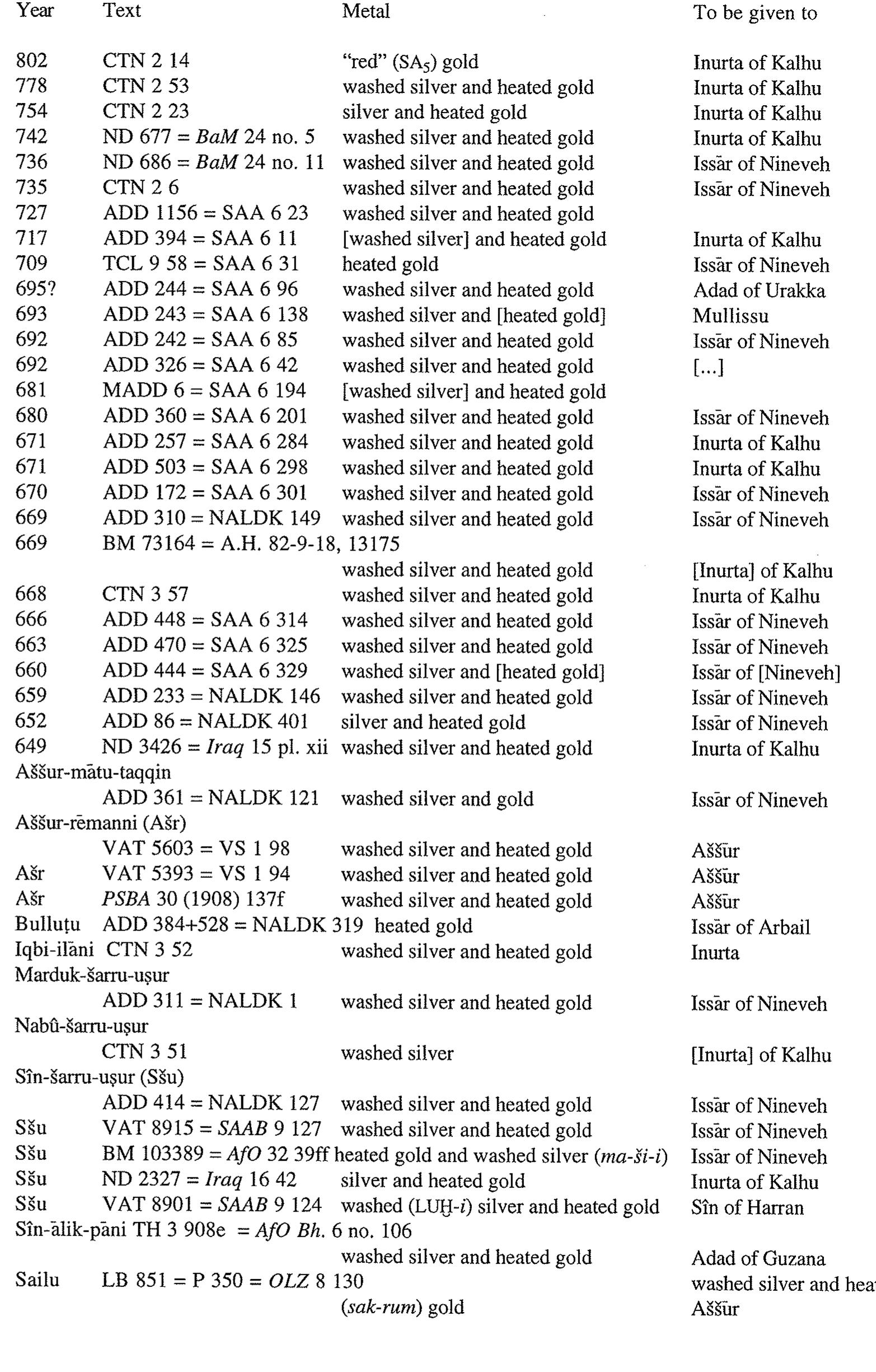
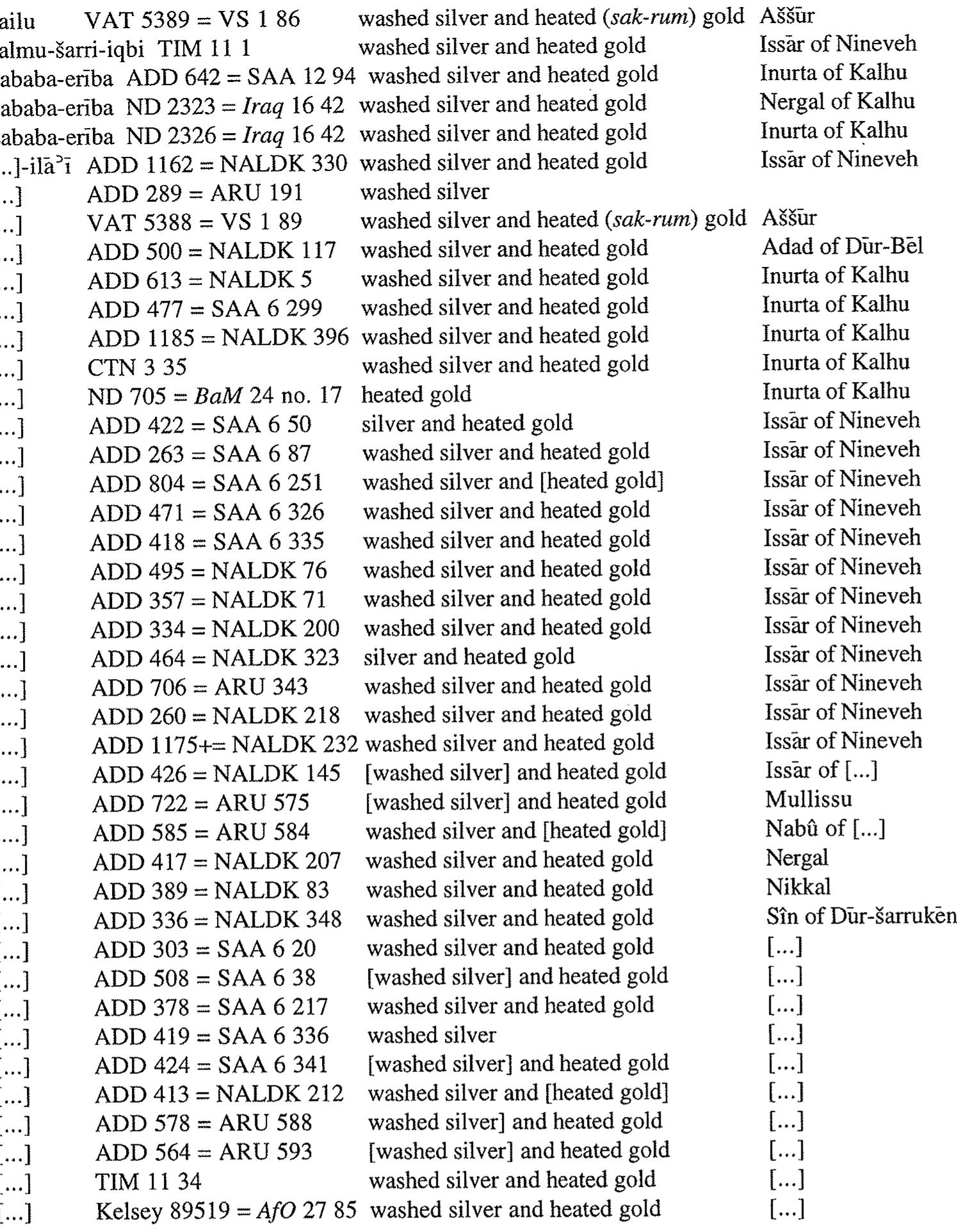
Refining methods included washing, burning, and firing silver, with 'washed silver' becoming particularly common in legal texts from 658 BC onward.
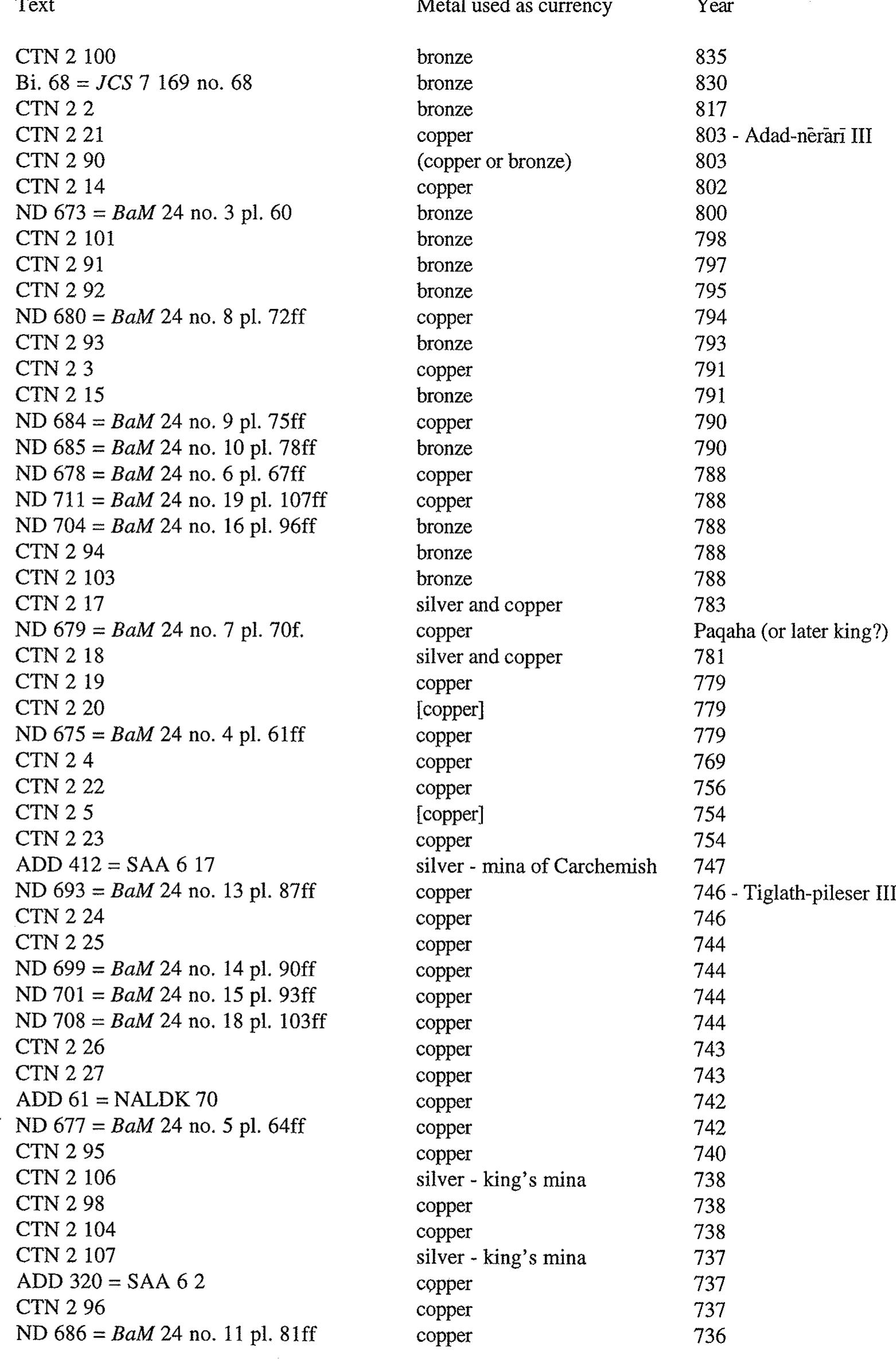
Copper, bronze, and silver were utilized as currency, with legal documents serving as payment, highlighting their economic significance.
Transactions involved meticulously weighing metals, often requiring multiple officials' presence, and sealing was employed post-weighing for security.

Alexander von Humboldt Professor of the Ancient History of the Near and Middle East
R.J. van der Spek, J.G. Dercksen, K. Kleber and M. Jursa, 'Money, silver and trust in Mesopotamia'. in: R.J. van der Spek & Bas van Leeuwen (eds.), Money, Currency and Crisis. In Search of Trust, 2000 BC to AD 2000 (London and New York 2018), 102-131, 2018
A discussion of the origin, substance, definition and use of money in Mesopotamia from the third to the first millennium BC. The text uploaded is the final manuscript. Attention is paid to the rich documentation of the Old-Assyrian trade between the city of Assur in Northern Mesopotamia and Kanesh in Anatolia (20th-19th century BC), the developments in the use of gold and silver currency (uncoined money) in Babylonia between c. 2000 and the arrival of Alexander the Great in 331 BC. The perception of money and the measure of monetization of the society are key issues.
Our current knowledge of the Old Assyrian trading system effectively challenges notions of centralized palace economies controlling the production, distribution, consumption and exchange of goods in the ancient Near East (and elsewhere). In the thousands of texts relating to the trade there is no direct mention of a "palace" at Assur. Yet the privately organized and financed trade required a level of state intervention. In Assur trade was facilitated by a civic assembly whose members were to a large extent themselves involved in commerce-either directly or through financing and legislation. Using new research on Old Assyrian trade, we shall problematize the rigid distinction between public and private economies, and consider its implications for the study of trade in other times and places in Mesopotamia and beyond.
The Old Assyrian trade with Central Anatolia is the best documented trade of the Ancient Near East, due to the thousands of cuneiform documents found at Kültepe-Kanesh. This article describes the traders and their trade and disccues evidence of prices, costs and profit.
PIHANS 118, pp. 37-53, 2011
Viene presa in esame la nascita in Mesopotamia delle banche, prestiti, interessi, anticresi, titoli al portatore, promissory note, mezzi di pagamento (primo tra tutti l'argento), contratti di compravendita, vendite a termine e commercio, L'attività di quelle genti poteva tendere anche al perseguimento di un profitto (come ad esempio nel commercio e nei prestiti a usura). Erano previste sanzioni in caso di inadempienza e, sovente per ragioni economiche, potevano insorgere controversie che potevano concludersi con sentenze emesse da tribunali. Quindi una struttura economico-finanziaria non di certo primitiva e basata sul baratto ma una civiltà che si avvaleva di una moneta e nella quale erano tra l'altro presenti credito, rischio e profitto; insomma una economia che usava in capo economico molti degli strumenti di cui si avvalgono - anche se in maniera più sofisticata - le nostre società.""
The information based on written sources about the period dated 1972-1718 BC, known as the Old Assyrian Colony Period in Anatolian history comes from more than 23500 Old Assyrian cuneiform texts which belong to the Assyrian traders’ personal archives which were discovered at Kültepe, ancient Kaniš. Accordingly, the main sources of the subject discussed here are Kültepe texts. However, there is a need to mention first the developments in Assur which underlie the international trade between Assur and some Anatolian city-states.
A History of Ancient Near Eastern Law (2 vols), 2000
The first part by Klaas Veenhof "The Old Assyrian Period" is a critical overview of our knowledge of and at the same time an introduction to the study of the Old Assyrian Period (first two centuries of the 2nd mill. B.C.), as we know it from discoveries in ancient Assur and in particular from the cuneiform archives of the Old Assyrian traders living in an commercial colony (called karum) in the lower town of ancient Kanesh (modern Kültepe) in Central Anatolia. The first chapters establish what "Old Assyrian" is and analyze the chronology and the available sources (material and written). There follows a critical sketch of the publications of and research on the Old Assyrian sources, subdivided in a dozen thematic studies. After a sketch of Old Assyrian history, follows an overview of "the Old Anatolian scene", which deals with the cities, local rulers and the about 40 Old Assyrian commercial settlements in Northern Mesopotamia and Anatolia. A special chapter analyzes the important Old Assyrian commercial treaties. The contribution ends with a detailed presentation of the Anatolian titles and officials and the religious festivals and agricultural seasons that figure as terms of payments in Anatolian debt-notes. The second part by Jesper Eidem "Apum: A Kingdom on the Old Assyrian Route" summarises recent evidence for the history of northern Syria during the period contemporary with the late phase of the Old Assyrian trade. To the detailed study of the sources an Appendix of important texts is added. The book is fully indexed (subjects, texts, geographical names, kings and rulers, gods and temples, persons, Assyrian words) and contains a extensive bibliography.
Csabai, Zoltán: Antedated Paying of Interest in the Neo-Babylonian and Achaemenid Periods. In: Grüll, Tibor (ed.) Mobility and Transfer : Studies on Ancient Economy. ANEMS 3. Pécs - Budapest, L'Harmattan, 2018, 17-34.
Die Welt des Orients, 2016
This article provides a first edition of an intact Neo-Assyrian estate sale from the final period of the empire in the late seventh century BCE. The publication is not based on the original tablet but on a cast kept at the Akademie der Wissenschaften und der Literatur in Mainz. At the moment the location of the original tablet is unknown, but it was almost certainly found in modern southeastern Turkey, most likely in the Mardin area, close to the Syrian border. The document uses the standard formulae known from many Neo-Assyrian legal transactions, and the tablet's excellent state, reflected by the cast, makes it exemplary. Moreover, the text adds to our knowledge new, previously unattested personal names, and we also get to know the identities of two high officials (a mayor and a royal delegate) and a chariot driver who all act as witnesses. * We would like to thank Daniel Schwemer, Nils Heeßel and the other participants of the Würzburg Cuneiforum for their suggestions for improvements of our readings of the cast; Tuviah Kwasman, Karen Radner and Enrique Jiménez for reading and commenting a draft of the article; Gerfrid Müller, Michele Cammarosano and Ignaz Hetzel for providing us with a 3D-model of the cast and Gernot Wilhelm and Daniel Schwemer for the permission to publish the cast.

