Logo

Recruitment’s digital experience platform

Outpace the market with a platform engineered for growth.

SourceFlow combines high-performance recruitment website design, seamless ecosystem integration, and advanced AI marketing tools to transform your site into your most powerful revenue driver.

Powering recruitment marketing worldwide
This section contains a moving carousel of client logos including:partner, partner, partner, partner, partner, partner.
WHAT WE DO

We deliver results for
ambitious recruitment firms

Drive productivity and efficiency to increase revenue

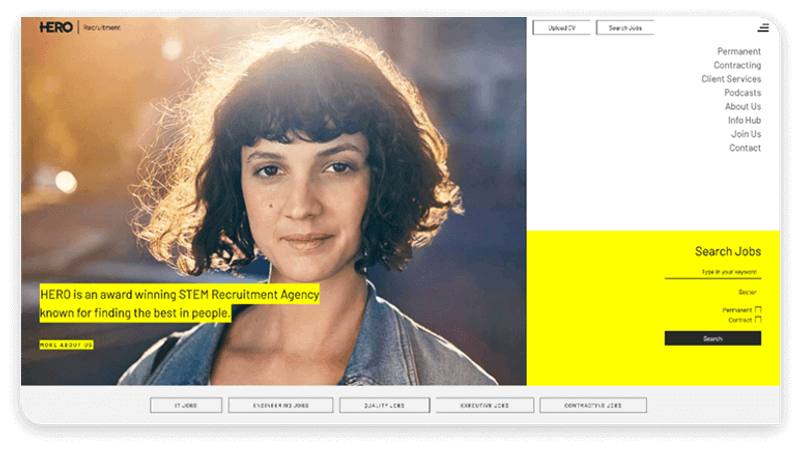
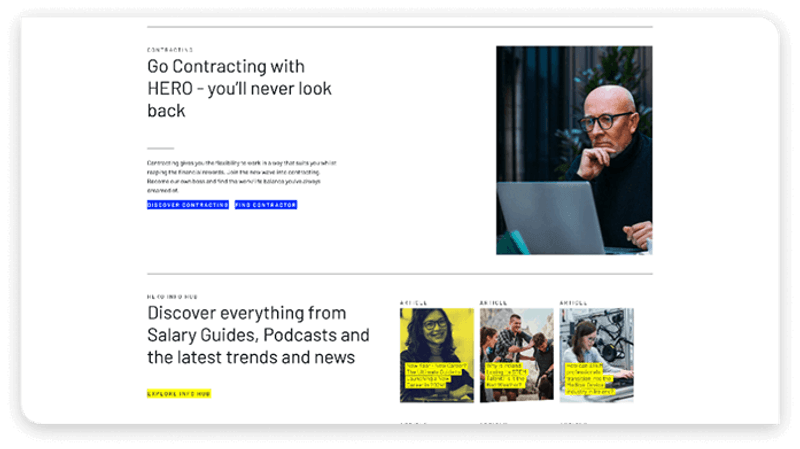
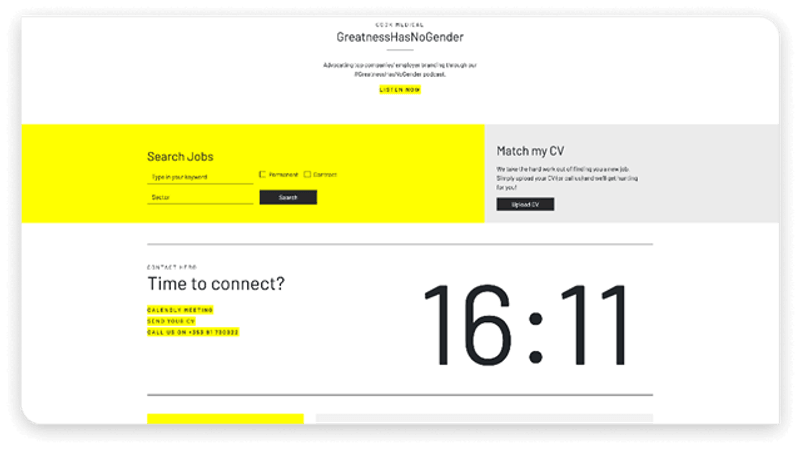
Recruitment website design produces long-term growth
Win more business by getting a website that has been built by industry experts
"Direct traffic has grown by 202.6% compared to our previous site and total page views have risen by 173%, showing how much more value candidates and clients get from the site.”
Róisín McNamara
DIRECTOR
Image
CLIENT
Client logo
ImageImageImage
PLATFORM FEATURES

One digital experience platform. Unlimited opportunities.

Every aspect of our platform has been designed to supercharge your growth through industry-leading recruitment website marketing.

Simple content 
management

Image
Feature benefits:
  • PageBuilder - Build new pages at lightning speed whenever you need them.
  • AI Copy Writer - Generate written content within our platform - no need to switch tools.
  • AI SEO - Use our AI meta data generator to populate your SEO fields in seconds.

Analytics that 
empower marketers

Image
Feature benefits:
  • Revenue Analytics - Stop guessing recruitment website ROI. Our tool calculates it in a fraction of a second.
  • Source tracking - Analyse the online journeys of your candidate and clients with our source tracking tool.
  • AI analytics insights - Our tool summarizes your recruitment website’s traffic and user trends.

Indepth seamless 
integrations

Image
Feature benefits:
  • Instant hiring process - Applications will fly directly from your site into your ATS / CRM via our integration.
  • Trigger marketing campaigns - When users convert, our integration will add them to automation workflows.
  • Follow-up leads fast - Stopping missing opportunities. Our integration delivers leads straight into BD lists.

Designed to perform 
on Google

Image
Feature benefits:
  • Google For Jobs - Your job adverts will be displayed on Google For Jobs because of our page structure.
  • Simple SEO - Manage your SEO easily within the platform. Use our AI meta data generator for fast updates.
  • Turbo page loading - Your pages will load at lightning speed thanks to our headless CMS technology.

Elite AI for 
recruitment websites

Image
Feature benefits:
  • Transformative AI jobs search pages - Complete with candidate matching technology, these pages score candidates compatibility to roles and show rock star candidates that DIDN’T apply to consultants.
  • Generative AI for your site - There are features across the platform that enable markets to use gen AI to produce written copy, SEO meta data, and job adverts.
  • AI analytics summaries - Don’t waste time interpreting Google Analytics data. Our platform uses AI to generate written summaries about how your site is performing.
Image

Cutting-edge integrations for everything else

SourceFlow’s industry-leading website integrations empower busy recruitment teams and amplify the performance of their tech stacks.

By seamlessly connecting our platform with major RecTech tools, we make your hiring processes more efficient, and your marketing automation campaigns more successful.

Image
Image
Image
Image
Image
Image
Image
Image
Image
Image

Job Board Integrations

We automate job advert distribution and ensure your vacancies reach the right talent instantly through our integration with leading global job boards.

Marketing Integrations

We supercharge client and candidate engagement by connecting website behaviour with marketing automation tools to deliver personalised, high-conversion recruitment marketing campaigns.

Job Poster Integrations

We integrate with your job poster tool so you can effortlessly broadcast vacancies to your website, multiple job boards, and social channels with a single, effortless click.

XML Feeds

We ensure maximum visibility for your roles with automated, real-time data exports that keep the rest of your tech stack and partners perfectly synchronised.

Bespoke Integrations

We future-proof your tech stack with custom-built integrations tailored to your unique workflows, ensuring our platform works exactly how you do.

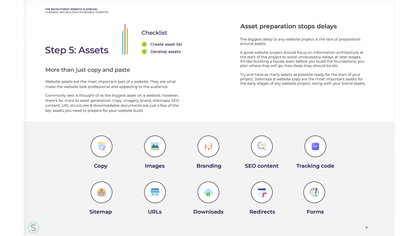
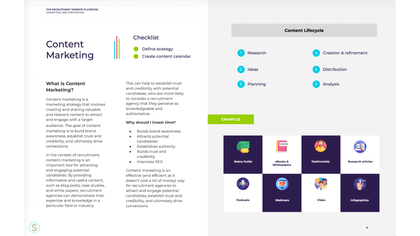
The recruitment marketing playbooks

Want to amplify lead generation from your website? Download our essential guides that have been created by expert recruitment marketers.

CLIENT TESTIMONIALS

Trusted by the 
recruitment industry

We’re driven by our clients’ successes. 
Take a look at the results our platform is delivering for 
staffing and recruiting firms across the globe.

Delivery was excellent; they captured my brand requirements perfectly while ensuring top-tier technology and functionality. Despite tight deadlines and the project’s scale, they worked closely with us to overcome every challenge.
Rebecca Lauder-Fletcher
Marketing Director | SGI
SourceFlow has been an extension of our marketing team since we chose to partner with them. They’re big enough to cope and small enough to care, which is exactly what we need from a web partner.
Rob Andrews
Rob Andrews
Marketing Director | Camino
The user-friendly backend makes it easy for our team to edit content and reflect continuous improvements. We are also pleased with the impressive response times of the support team whenever we raise a ticket.
Janan Gok
Janan Gok
Head of Marketing | Xcede Group
"SourceFlow are industry-leading recruitment website builders. Since moving to them, job page views are up 1,664% and active users have increased by 1,210%. They provided the technical expertise we needed to drastically improve our online visibility."
Alastair Tulloch
Alastair Tulloch
MD | Vetro
Since launch, average engagement time is up 683.2%. The upgraded designs and functionality have massively improved performance across key platforms. We finally have a website that truly reflects our style and represents the brand as it should.
Erin Smyth
Erin Smyth
Digital Marketing Manager | Maxwell Bond
SourceFlow has become a cornerstone of our strategy. With stronger search visibility and higher-quality engagement, our jobs page now attracts the right candidates. Tracking traffic sources has given our marketing team real confidence in the site’s performance.
Róisín McNamara
Róisín McNamara
Director | Hero
"We partnered with SourceFlow for their industry knowledge and exciting technical roadmap. They tailored to our needs quickly, and their team - from developers to leadership - was excellent. We couldn’t have done it without their hard work."
Hannah Richardson
Hannah Richardson
Global Marketing Director | Gravitas
"Our brand finally feels represented. The design, layout, and UX were exactly what I had in mind. It was great seeing that vision come to life so effectively."
Yasmin Rink
Yasmin Rink
Marketing Executive | Koda
"In the three months following launch, our homepage saw a 127.1% increase in organic search impressions, while the jobs page jumped by 152.2%. Our contact page also saw 156.8% growth compared to the previous period."
Chris Smith
Chris Smith
Digital Marketing Manager | Acre
"What a great, responsive, and fun team to work with. When recruitment website design runs through their DNA, it was a no-brainer to take on this quest with them."
Becca Ly
Becca Ly
Head of Marketing | Futureheads
"We launched four high-quality sites in record time, which is unheard of. We saw a positive SEO impact quickly and are driving inbound leads. Their user-friendly CMS and best-in-class UX integrated perfectly into our existing tech stack."
Helena Sullivan
Helena Sullivan
CMO | Trinnovo Group

Hear it from 
the source

Discover the latest recruitment marketing insights. 
Browse our blogs, vlogs, webinars and product 
explainer videos.

Rectech platform vs in-house build: what recruitment agencies should choose

Rectech platform vs in-house build: what recruitment agencies should choose

Should you build your own recruitment tech with AI? “If we can prompt it, we can build it.” That idea is gaining traction across recruitment. Landing pages, tools, automations. Built with AI, without developers, without long timelines. This is what’s known as vibe coding , or the use of AI tools to build software using natural language prompts. It’s being adopted because it lines up with common problems inside recruitment businesses: Disconnected systems Manual processes Limited visibility on what’s driving revenue So when AI offers a way to build exactly what you need, it feels like a way to take control. The question is how far that holds once the business grows. Why vibe coding recruitment tech is gaining attention The appeal upfront is that you can build something quickly. A landing page, a tool, a workaround for a process that’s slowing the team down. You don’t need a developer. A marketer or ops lead can create something usable with the right prompts. Cost is also part of it. There’s no contract. No platform fee. You only pay for what you use. For testing ideas or solving short-term problems, this sounds like the ideal. Where it becomes more complex is when that work moves into the core of the business. Where in-house recruitment systems become harder to manage Building a page or a tool is just one step. Running it alongside your CRM, website, and reporting is another. As soon as systems need to connect, the work shifts from building to maintaining. Updates require rework, integrations need ongoing attention, and changes introduce risk. Costs also change. Small fixes, repeated prompts, and ongoing adjustments make spend less predictable over time. Security and compliance also sit with you. Recruitment businesses handle sensitive data, and according to Veracode’s 2025 ‘GenAI Code Security Report’: 45% of AI-generated code fails security tests. Integrations are a key pressure point. APIs change, data structures shift, and when that happens, it affects how jobs, candidates, and data move through your systems. Internally, these systems often rely on a small number of people who understand how they’ve been built. As the business grows, it becomes harder to maintain, update, and troubleshoot without that same knowledge. Platform providers are constantly updating, improving, and fixing problems. That’s what allows businesses to keep pace as things change. Even large recruitment businesses with internal tech teams still invest in platforms for that reason. What a rectech platform is designed to solve A rectech platform is a purpose-built system designed to support recruitment businesses at scale. It connects the core parts of your tech stack: Website and candidate experience CRM integrations Marketing activity Reporting and data Instead of managing separate tools, the system is built to work as one. This becomes a great advantage because growth increases complexity. Platforms are designed to manage that complexity and removing friction between them, providing: Predictable cost structures Managed integrations and API updates Built-in security and compliance Ongoing support So, should we build or buy recruitment software? For most recruitment leaders, the decision comes down to impact. Does it help the business generate more revenue, make more placements, and operate more efficiently? Building internally can support specific use cases. But maintaining those systems takes time. And that time usually comes from the same people responsible for delivery, operations, or growth. That’s the trade-off. A platform becomes the better option when your tech needs to: Support day-to-day operations Connect multiple systems Handle candidate and client data Scale with the business If your team is spending time fixing, updating, or working around systems, it’s a sign the setup isn’t keeping pace with growth. At that point, the decision shifts from flexibility to reliability. Ask - where does your team create the most value? The strongest businesses don’t treat this as a binary choice; they use AI to move quickly where it makes sense, testing ideas or solving smaller problems. But the core of the business runs on systems that are designed to handle scale, manage integrations, and support consistency over time. Because speed helps you move but consistency is what allows you to grow. Final thought Your tech stack directly impacts revenue, efficiency, and candidate experience. AI has changed how quickly recruitment businesses can build, it hasn’t changed what it takes to scale. Consistency. Visibility. Control. If you want to see how a connected recruitment platform supports growth, book a demo with SourceFlow or explore how the platform brings your website, data, and integrations into one system. Explore how SourceFlow supports recruitment marketers
Will Astbury
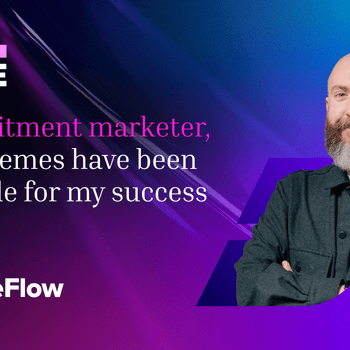
As a recruitment marketer, bonus schemes have been responsible for my success

As a recruitment marketer, bonus schemes have been responsible for my success

This article is part of SourceFlow’s “Should recruitment marketers be incentivised?” series, where recruitment leaders and marketers share different perspectives on incentives, commission structures and commercial performance in recruitment marketing. Across my seven-year career as a recruitment marketer, I always had a bonus scheme. From Marketing Administrator to Global Director, there was always one in place. I worked for two specialist tech recruitment agencies during that time. One was a smaller business of around 20 people where I was the lone marketer. The other had between 100 and 200 staff, and eventually I built the marketing team from one person to seven. In both businesses, bonus schemes played a huge role in shaping my motivation, my progression, my success, and my management of other marketers. What bonus schemes did for me early in my career When I was in junior roles, bonus schemes were an incredible motivator for me. Partly because of my personality and background: I’d been skint for years I’m competitive I like working independently I genuinely enjoy maths and data At the time, I had a manager who didn’t really want to spend time coaching or constantly chasing me for progress. The bonus scheme meant he didn’t have to. It gave me complete focus on the targets and tactics I needed to deliver. As my role grew, so did the incentives The first scheme I worked under was points-based and I could earn up to 500 per quarter. That might not sound like much, but when I was earning 22K, it was roughly 30% of my monthly salary. I worked hard to hit the numbers every quarter because I genuinely wanted and needed the money. At the start, the scheme focused more on tactical deliverables. Over time, as my role progressed, the rewards became more commercially linked. I started receiving profit share, tied to quarterly profits, and bonuses linked to SQL generation. By the time I was a Marketing Executive, I could earn up to 1,600 per quarter through bonuses. Again, maybe that does not sound huge to everyone, but at that stage it was around 65% of my monthly salary. I was grateful for it and highly motivated to achieve it. I also received incentives beyond cash. The business paid for my CIM Level 6 Diploma in Strategic Marketing, which gave me the opportunity to build the skills I needed to progress further in my career. From the employer’s perspective, the schemes were working too. The incentives helped create consistency around our content and SEO strategy. We managed to rank number one for the search term “IT recruitment agency”, generated a strong number of SQLs and contributed significantly to revenue growth. What changed when I started leading a marketing team When I became a Marketing Manager and started building a team of my own, I wanted to implement a similar scheme because I believed it would motivate people in the same way it had motivated me. I also introduced schemes that were linked to personal development plans and promotion opportunities. They absolutely helped focus activity around strategic objectives like SEO, traffic, leads, event attendees and key project delivery. They also aligned the whole team around what the business was trying to achieve. During the 20212022 financial year, the marketing team was flying and, as a result, so was the business. Turnover increased by 83% to 45 million - the largest turnover to date. But this was also the point where I learnt that recruitment marketers are motivated very differently from one another. I had some team members who would do absolutely anything to achieve their goals, but others simply wanted to do a good job day-to-day without feeling pressure to constantly hit targets in order to progress. They wanted fair salary increases, promotions, stability and recognition for consistently doing good work and being loyal but they don’t want everything to be targeted. I think people like that also deserve to share in the success of the business when things are going well. Profit share, for example, can work really well in those situations. So, should recruitment marketers be incentivised? From my experience, bonus schemes and incentives can be incredibly effective for driving marketing strategy and positive outcomes in recruitment businesses. But I’ve also learnt that money and career progression are not the core motivator for every marketer. For some people, soft skills, creativity, delivering work they are proud of and working within a good culture are just as important. I think respect, freedom and the right amount of pressure need to be bundled in with financial rewards if recruitment marketers are to excel. About the contributor Will Astbury is Global VP of Growth at SourceFlow. Before joining SourceFlow, he spent seven years working in recruitment marketing, starting as a Marketing Administrator and progressing to Global Marketing Director within specialist tech recruitment businesses. Other perspectives in this series: Wayne Brophy: Should recruitment marketing be incentivised? My view after 20+ years in recruitment Amity Watts: Why recruitment marketers should be commercially incentivised Robert Woodford: Recruitment marketers SHOULDN’T be incentivised The views expressed in this article are those of the individual contributor and do not necessarily reflect the views of SourceFlow Want more insight on recruitment marketing incentives? Download the Recruitment Marketing Playbook from SourceFlow for more perspectives from recruitment leaders and marketers on incentives, performance and commercial growth in recruitment.
Will Astbury
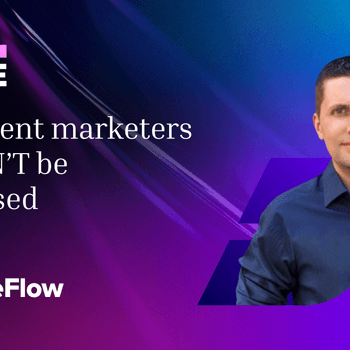
Recruitment marketers SHOULDN’T be incentivised

Recruitment marketers SHOULDN’T be incentivised

This article is part of SourceFlow’s “Should recruitment marketers be incentivised?” series, where recruitment leaders and marketers share different perspectives on incentives, commission structures and commercial performance in recruitment marketing. You are not a recruiter. So why are you asking for the trip, the commission and the number without any of the risk? Recruitment marketers want bonuses. And the recruitment business owners hiring them are starting to think that is simply how it works. That is understandable when many agency leaders built their own careers on commission and learned to equate money with motivation. On the billing desk, that logic makes sense. Commission exists because recruiters operate under constant commercial pressure. The upside is tied directly to performance and the consequences of missing target are real. Marketing is a different role entirely, and that model does not automatically travel. Wanting the upside is not the same as deserving it I find the assumption quietly offensive. The idea that a marketer needs a financial top-up to do their best work implies their default setting is somewhere below that. That without the incentive, you are getting a lesser version. That professionalism itself has a price. And to be clear, marketers are driving this narrative as much as anyone. They sit close enough to the billing desk to see the commissions, the incentive trips and the visible rewards of a good quarter. Naturally, they want the same. That is human nature. But wanting something and deserving it on the same terms are two very different things. Recruitment marketing does not carry the same risk as recruitment Let’s be honest about context. Marketing in recruitment does not carry the same existential risk that a billing consultant operates under every single day. A consultant who wants the commission, the incentive trip and to protect their seat at the table is operating under genuine pressure. Miss the target for long enough and the conversation changes quickly. That risk is priced into the model and it is a reasonable trade. Marketing does not work that way. The role comes with stability the billing desk simply does not have. No monthly number deciding whether you still have a job by Friday. That security has value whether it gets discussed openly or not. Incentive structures can damage long-term thinking I have also seen what happens when businesses bolt bonus structures onto marketing roles. The marketer starts chasing the short-term metric that triggers the payout and quietly stops investing in the things that actually build the business over time, such as, brand, content, long-term pipeline, and market positioning. The things that do not necessarily show up in this quarter’s numbers but matter enormously twelve months from now. Recruitment marketing is a different role and it requires a different mindset. Borrowing incentive structures from the billing floor can actively damage that. So, should recruitment marketers be incentivised? My view is no. At least not in the same way recruiters are. If you want the bonus, the incentive trip and the commission structure, then it is fair to ask whether you are also prepared to carry the number and accept the consequences that come with missing it. Almost universally, the answer is no. And that tells you everything. Profit share is the exception Profit share is different; that is a genuine alignment of interests. If a business performs well, it is fair and right to share that success with the people who helped build it. But commission, trips and bonus structures without the corresponding jeopardy is something else entirely. That is wanting the upside of recruiter life without any of the risk attached to it. If that is what you want, become a recruiter. Results are the job, not the exception From where we sit as a recruitment marketing consultancy, none of this is abstract. We are brought in at a rate cheaper than a full-time hire and the arrangement is straightforward: Deliver results or lose the contract. There is no bonus for doing what we were engaged to do. Results are the standard, not the exception, and there is a certain professional pride in treating them that way. The marketers who consistently build pipelines, protect brand and generate commercial impact should be doing it because that is what the role demands. Not because a quarterly incentive scheme temporarily raised the stakes. Do that well, do it consistently, and then you have every right to demand to be paid properly for it. If the incentive is the only thing driving the work, that is a different problem entirely. About the contributor Robert Woodford is Founding Director of The Marketing Junction , a recruitment marketing consultancy supporting agencies with strategy, lead generation and commercial growth. He has spent more than a decade advising recruitment businesses on marketing strategy and performance. Other perspectives in this series: Wayne Brophy: Should recruitment marketing be incentivised? My view after 20+ years in recruitment Amity Watts: Why recruitment marketers should be commercially incentivised Will Astbury: As recruitment marketer, bonus schemes have been responsible for my success The views expressed in this article are those of the individual contributor and do not necessarily reflect the views of SourceFlow Want more insight on recruitment marketing incentives? Download the Recruitment Marketing Playbook from SourceFlow for more perspectives from recruitment leaders and marketers on commercial performance, incentives and growth in recruitment.
Robert Woodford
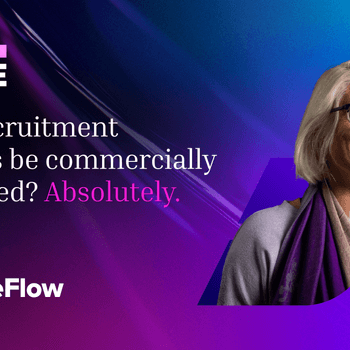
Should recruitment marketers be commercially incentivised? Absolutely.

Should recruitment marketers be commercially incentivised? Absolutely.

This article is part of SourceFlow’s “Should recruitment marketers be incentivised?” series, where recruitment leaders and marketers share different perspectives on incentives, commission structures and commercial performance in recruitment marketing. Recruitment is a ruthlessly commercial sector. Money is the language, revenue is the metric, targets are the heartbeat. And yet, for years, the people responsible for building the brand, filling the pipeline and supporting business development have been operating without a stake in the game. I think this needs to change. Two very different motivations: who joins recruitment and why Consultants are, at their core, commercially wired. Nobody stumbles into recruitment because they fancy a career in altruism. They get in because they’re good with people, they understand people and business, and they are financially motivated. That combination makes them very well suited to the job. Sales and money go hand in hand, and there’s nothing wrong with that. Marketers are different. They come in through creativity, curiosity, problem-solving, words, design and data. Historically, marketing has been underpaid across most sectors, with a quiet expectation that you do it for the love of the craft. There’s a lingering “arty” stigma attached to creative roles that has suppressed salaries for decades. Put those two worlds together in the same business and you can see exactly where the siloed departments have come from. Marketing used to be a bolt-on. It isn’t anymore. For a long time, recruitment businesses treated marketing as a nice-to-have. Make the brand look presentable. Update the social channels. Take the team photos. Write a few blogs. It was lovely until it lasted, but things have changed. The challenges recruitment businesses have faced over the last several years: tightening markets, harder business development, more noise and more competition, have fundamentally changed what marketing needs to do. Sales does the one-to-one. Marketing does the one-to-many. Both should be pointing in the same direction. Marketing is still seen as a cost centre Here’s the mindset shift too many recruitment businesses still haven’t made: marketing is not a cost centre, it is a revenue driver. Treating it as the former is an outdated way of running a business, and it shows. When marketing is positioned as overhead rather than investment, it gets under-resourced, under-briefed and undervalued. Goals become vague. Strategy gets disconnected from the commercial plan. And the marketer, however talented, is set up to underperform because nobody has clearly defined what winning looks like for them. The marketing function, regardless of its size or make-up, should have specific goals and genuine alignment with the business strategy. Not a version of the strategy that gets shared six months late. The actual strategy, from the start. So, should recruitment marketers be commercially incentivised? Absolutely. Marketing is no longer a support function. It is a revenue function. So why aren’t we treating them that way? Recruitment businesses already incentivise the people responsible for converting opportunities into revenue. It makes no sense to exclude the people responsible for building the brand, generating demand, supporting business development and creating those opportunities in the first place. A properly executed salary guide generates conversations, introductions and placements. That drives revenue. An event supported by the marketing team, with the right attendee list and customer experience, gives consultants room to do what they do best. That drives revenue. A well-built SEO strategy brings more relevant traffic to the website, more CV uploads and more placement opportunities. That drives revenue. A database management and automation strategy can reactivate dormant clients and resurface relationships that would otherwise have been lost. That drives revenue. Done well, and with the right support and investment, your marketer could be as commercially valuable as your top-billing consultant. Key principles to remember 1. Marketing is no longer a bolt-on Marketing can no longer sit at the side of the business looking decorative. It needs to perform, contribute to revenue and work alongside sales towards the same commercial outcomes. 2. Recruitment marketing should be commercially incentivised If you want the best from people, you incentivise them. That’s not controversial. The strongest incentive models connect marketing reward to measurable business outcomes: placements, lead generation, revenue influence, and commercial objectives. 3. Fixed-sum models often work best The gold standard is tying marketing reward directly to placement value, but marketers should not absorb the volatility of inconsistent consultant performance. That’s why fixed-sum models can work well: 250 per website placement 3% of placement value Quarterly commercial objectives tied to clear KPIs Simple enough to administer. Meaningful enough to motivate. 4. It’s not all about cash The businesses that really get this are the ones bringing marketers into the wider commercial culture: Quarterly trips Lunch clubs Team incentives Shared commercial recognition That changes the dynamic and gets the marketing department thinking differently. 5. Incentivisation should create alignment, not friction The marketer wants the consultant to convert. The consultant wants the marketer to deliver the lead. Done well, commercial incentivisation creates alignment around the same strategy and the same commercial goals. That’s how high-performing recruitment businesses operate. 6. Clear objectives matter Incentives only work when expectations are clear. SMART objectives, measurable goals and commercial alignment should form the foundation of any reward structure. And if the business hits or exceeds its targets? Everyone should share in that. About the contributor Amity Watts is Client Services Director at Kitto , a recruitment marketing agency built on the belief that recruitment is a marketing job. With more than 20 years in marketing, including seven years building marketing functions inside recruitment businesses, she advises, mentors and advocates for marketing’s place at the commercial table. Other perspectives in this series: Wayne Brophy: Should recruitment marketing be incentivised? My view after 20+ years in recruitment Robert Woodford: Recruitment marketers SHOULDN’T be incentivised Will Astbury: As recruitment marketer, bonus schemes have been responsible for my success The views expressed in this article are those of the individual contributor and do not necessarily reflect the views of SourceFlow Want more insight on recruitment marketing incentives? Download the Recruitment Marketing Playbook from SourceFlow for more perspectives from recruitment leaders and marketers on what drives commercial growth in recruitment.
Amity Watts

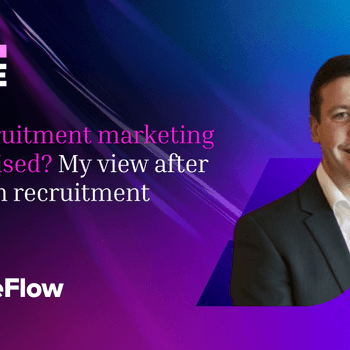
Should recruitment marketing be incentivised? My view after 20+ years in recruitment

Should recruitment marketing be incentivised? My view after 20+ years in recruitment

This article is part of SourceFlow’s “Should recruitment marketers be incentivised?” series, where recruitment leaders and marketers share different perspectives on incentives, commission structures and commercial performance in recruitment marketing. I absolutely believe recruitment marketing should be incentivised, but only when it’s tied to genuine commercial value. With more than 20 years’ experience in recruitment, I’ve seen first-hand how effective marketing can become a major revenue generator for a recruitment business. For me, recruitment marketing is not simply a support function or a brand-building exercise. It keeps the business front of mind, creates demand, attracts candidates, warms up clients and generates high-quality inbound leads. What I don’t agree with is rewarding vanity metrics. Likes, followers, impressions and engagement may have some value, but they should not form the foundation of a reward scheme. Otherwise, you risk encouraging noise instead of meaningful business activity. Instead, marketing incentives should be tied to quality lead generation, conversion and revenue influence. At Cast, some of the most successful incentive structures we introduced focused on marketing-generated inbound leads. These leads were tracked carefully and consistently converted into retained business at a higher rate than many consultant-generated leads. As a result, the marketing team was rewarded when their work created genuine commercial opportunities. The importance of attribution For marketing incentives to work, there needs to be a clear and trusted system for tracking where leads come from. In my business, marketing leads had to come through specific routes such as: Website forms A dedicated marketing inbox Tracked phone lines Everything was logged in the CRM, and the source of each opportunity was visible across the wider business. This avoided disputes over ownership and made marketing’s contribution far easier to measure. The risk of rewarding the wrong output One of the challenges with incentivising marketing is that teams can become too focused on the wrong outputs. I’ve seen businesses reward lead volume without enough focus on lead quality or commercial value. The strongest incentive schemes connect marketing activity to conversion, retained work and revenue. I also think recruitment businesses can change direction too quickly. Market positioning, brand building and demand creation are not quick fixes. They require consistency, patience and proper execution. Recruitment businesses also need to think beyond short-term billings I also believe recruitment businesses need to think beyond short-term billings. While short-term incentives can create energy and momentum, they should not come at the expense of long-term market positioning. Recruitment marketing often creates value before a deal exists by building trust, visibility and credibility in the market, especially in larger or scaling businesses where brand, content and market presence can materially improve future sales performance. So, should recruitment marketing be incentivised? I believe recruitment marketing should be incentivised when it can prove a meaningful contribution to commercial outcomes. It should be directly connected to quality lead generation, conversion and revenue influence. The strongest incentive schemes do not reward visibility for visibility’s sake. They reward marketing for creating the demand, trust and market attention that ultimately leads to revenue. Key principles to remember: 1. Treat recruitment marketing as a revenue generator Marketing should not sit on the sidelines as a support function. It can become one of the biggest contributors to growth. 2. Do not reward vanity metrics Likes, followers and impressions should not be incentivised unless they connect to genuine business outcomes. 3. Incentivise quality, not volume The focus should be on high-quality inbound leads, retained opportunities and revenue influence not simply the number of leads generated. 4. Build a clear attribution process Tracked forms, dedicated inboxes, call tracking and CRM discipline are essential if marketing incentives are going to be trusted. 5. Balance short-term revenue with long-term market positioning Recruitment businesses often reward immediate billings, but marketing also plays a vital role in building future demand, trust and credibility. About the contributor Wayne Brophy is the founder and former owner of Cast UK, Cast USA and The Talent Team. With more than 20 years’ experience in recruitment, he has built and scaled specialist recruitment businesses across multiple markets. Other perspectives in this series: Amity Watts: Why recruitment marketers should be commercially incentivised Robert Woodford: Recruitment marketers SHOULDN’T be incentivised Will Astbury: As recruitment marketer, bonus schemes have been responsible for my success The views expressed in this article are those of the individual contributor and do not necessarily reflect the views of SourceFlow Want more insight on recruitment marketing incentives? Download the Recruitment Marketing Playbook from SourceFlow for more insights from recruitment leaders, founders and marketers on what drives commercial growth in recruitment.
Wayne Brophy
Inside SourceFlow’s recruitment marketing event (and why you should be at the next one)

Inside SourceFlow’s recruitment marketing event (and why you should be at the next one)

Inside SourceFlow’s recruitment marketing event (and why you should be at the next one) Most recruitment marketing looks good until you try to run it inside an agency. Different teams, different priorities, and usually half the data missingthat’s where most strategies start to fall apart. Here’s a look back at our recent event, and a few highlights worth taking back to your team From The Source x Manchester: Lunch & Learn Our latest Manchester session brought together marketers, agency leaders, and ops teams in the Northern Quarter for an afternoon of speaker sessions and a leadership panel. The discussion was about how marketing is assessed inside real businesses: cost, contribution, and commercial impact. Between them, the speakers covered agency leadership, in-house marketing, and commercial strategy. The sessions stayed close to the questions teams are dealing with day to day. Here’s a topline view of what was covered: Ben Browning - Revenue Architect & Founder, Be Resonant Ben broke down how sales and marketing alignment plays out inside agencies, and what changes when both functions work towards the same outcomes. He challenged the idea of running them separately, pushing instead for a single operating model (Account Based Sales) built around shared pipeline and revenue goals. Jenny Wood - Global Head of Marketing, Salt Jenny brought the focus back to brand clarity. As more content becomes automated and reliant on AI LLMs, teams that aren’t clear on who they help and how, quickly blend in. She advocated for identifying the uniqueness and expertise within agencies’ company brands, and of the personal brands of their consultants. Kris Holland - Founder, Kitto Kris tied marketing back to commercial outcomes. Meetings, vacancies, and placements, not just activity. The point wasn’t perfect tracking, but consistent use of data to show what’s working and have better conversations with leadership. Panel discussion Wayne Brophy, Brian Johnson, Jeanette Barrowcliffe, and Victoria Short, shared how marketing is judged inside agencies, specifically, where strategies hold up and where they fall short. Here are just a few of the hottest takeaways from the day: Marketing only adds value when it connects to how the business makes money. Most gaps happen after the campaign. Follow-up, ownership, and data consistency Marketing and consultants need to work to the same goals, with shared targets and pipeline Leaders look for simple, visible progress over complex plans For a deeper dive, you can read the full recap here . Join us at From The Source X LDN in May Join us in London for the next event in the series, From The Source X LDN. On the day, we’ll cover: How marketing is being used to generate pipeline, not just activity What’s working across websites, content, and campaigns How teams are aligning marketing and consultants more effectively Where strategies fall short once they hit real-world pressure There’s also time built in to talk things through with others doing similar roles. Whether that’s comparing approaches, challenges, or what you’re trying to improve this year. We’re also working more closely with The Lonely Marketers , who are now officially supporting the series. If this is something you’re working through in your own team, the next session builds on exactly the same conversations. Learn more about the event here: From The Source X LDN recruitment marketing event May 2026
Will Astbury
COMMUNITY

Ingrained in the recruitment industry

Operating at the heart of the recruitment community, we work closely with industry-leading trade bodies, networks, and partners to ensure we remain state-of-the-art and our platform delivers the solutions you need.

Matt Comber Recruitment Marketing Experience
SourceFlow Lunch & Learn Recruitment marketing event
SourceFlow TRN webinar Darren Curtis
community partners
Logo Partner 0
Logo Partner 1
Logo Partner 2
Logo Partner 3
Logo Partner 4
Logo Partner 5
Logo Partner 6
Logo Partner 7
Logo Partner 8
Logo Partner 9
Logo Partner 10
Logo Partner 11
Logo Partner 12
Logo Partner 13
Logo Partner 14
Logo Partner 15
Logo Partner 16
Logo Partner 17
Logo Partner 18
Logo Partner 19

Harness the power
of SourceFlow for
your business

See how you can integrate your tech stack, automate your marketing, amplify lead generation, and deliver a best-in-class candidate experience with one digital experience platform.