
UPAMANYU YAVALKAR
With over six years of experience, I am a highly adaptable and deeply knowledgeable technical game designer. My proficiency spans player-centered design, cutting-edge technologies, and object-oriented programming, underpinned by a dedication to continuous learning and innovation in game development.
In my personal time, I pursue interests in motorcycles, music, art, and graphic novels, consistently finding inspiration in diverse fields.
GAME DESIGN
Game Design
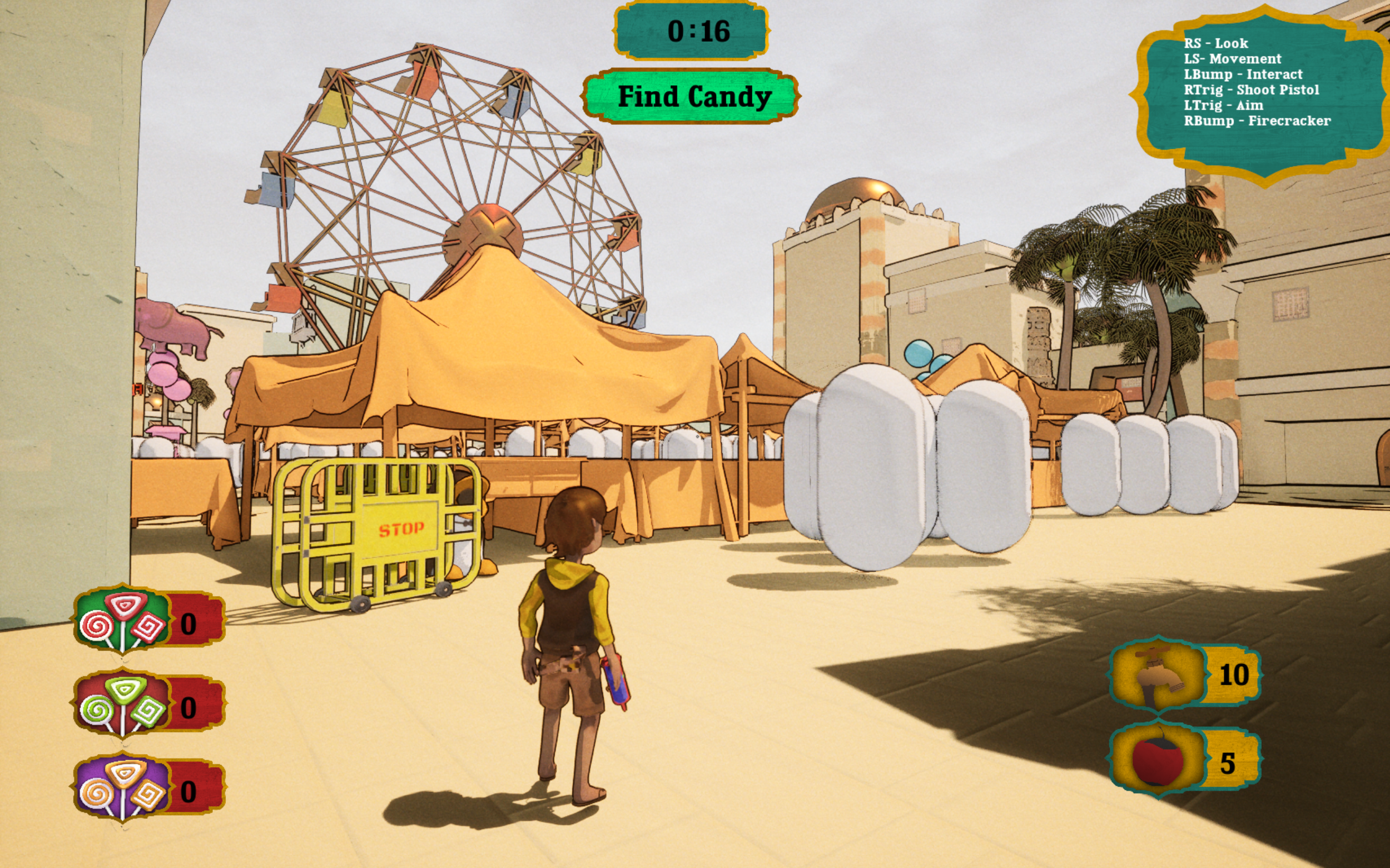
FAIR FORTUNES
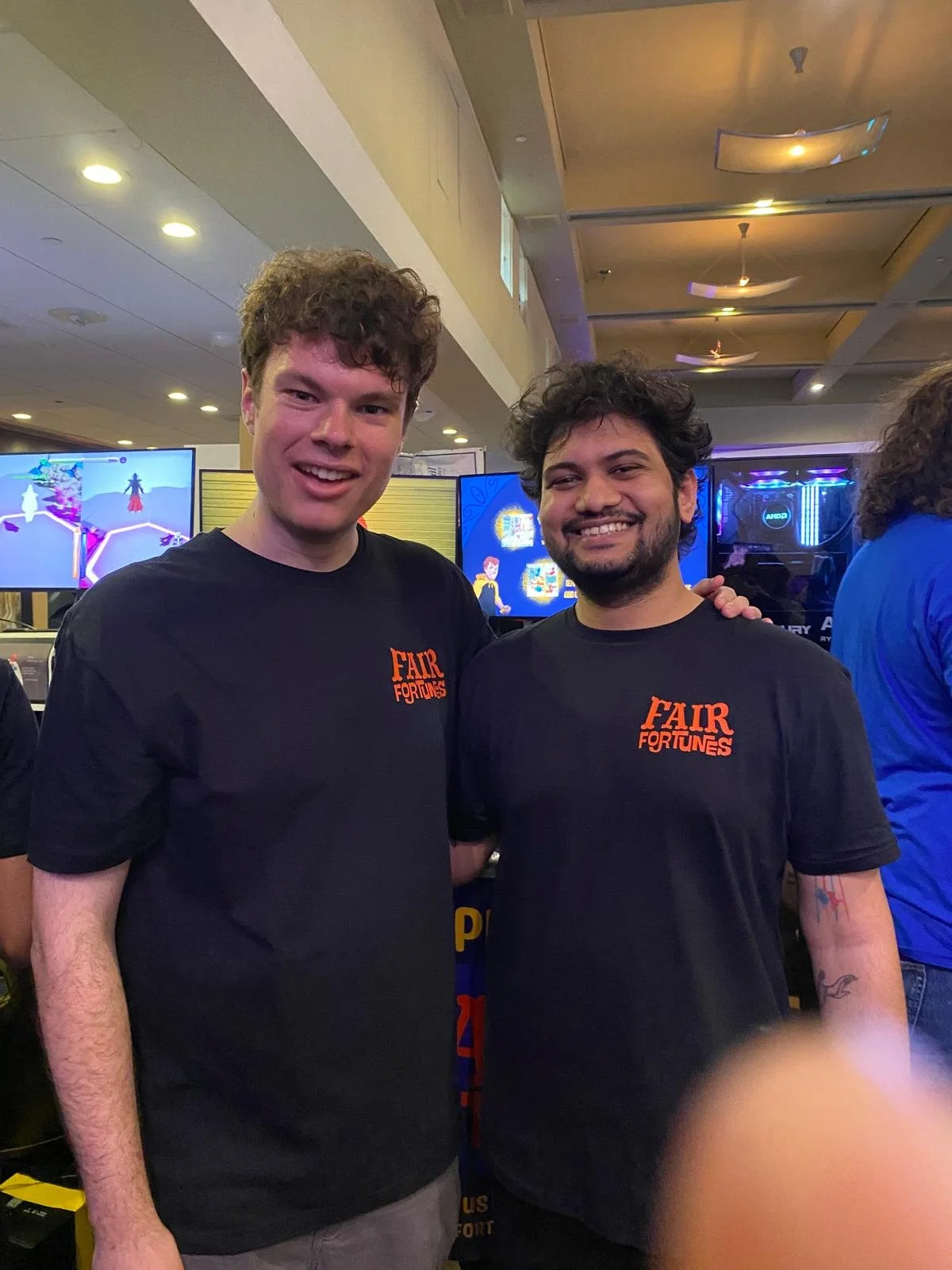
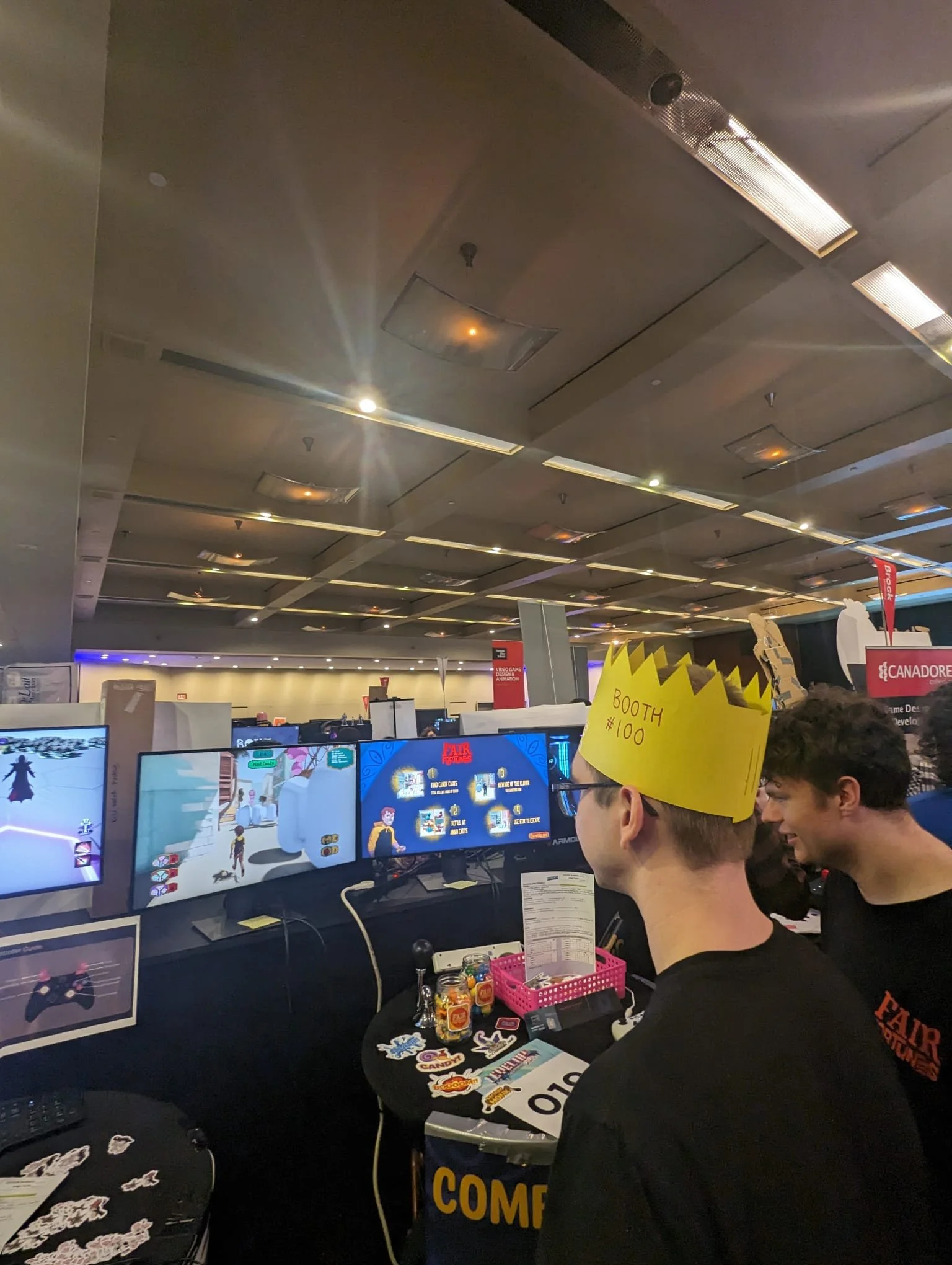
Fair Fortunes is a stealth action game where players compete to steal the most candy in a bustling carnival setting. As the Game Lead and Technical Designer for a team of 20 contributors, I guided the development of this dynamic maze environment. Players must navigate dense crowds and outsmart colorful characters using various tools to become the top candy thief.
LEVEL UP SHOWCASE 2024
👾
LEVEL UP SHOWCASE 2024 👾
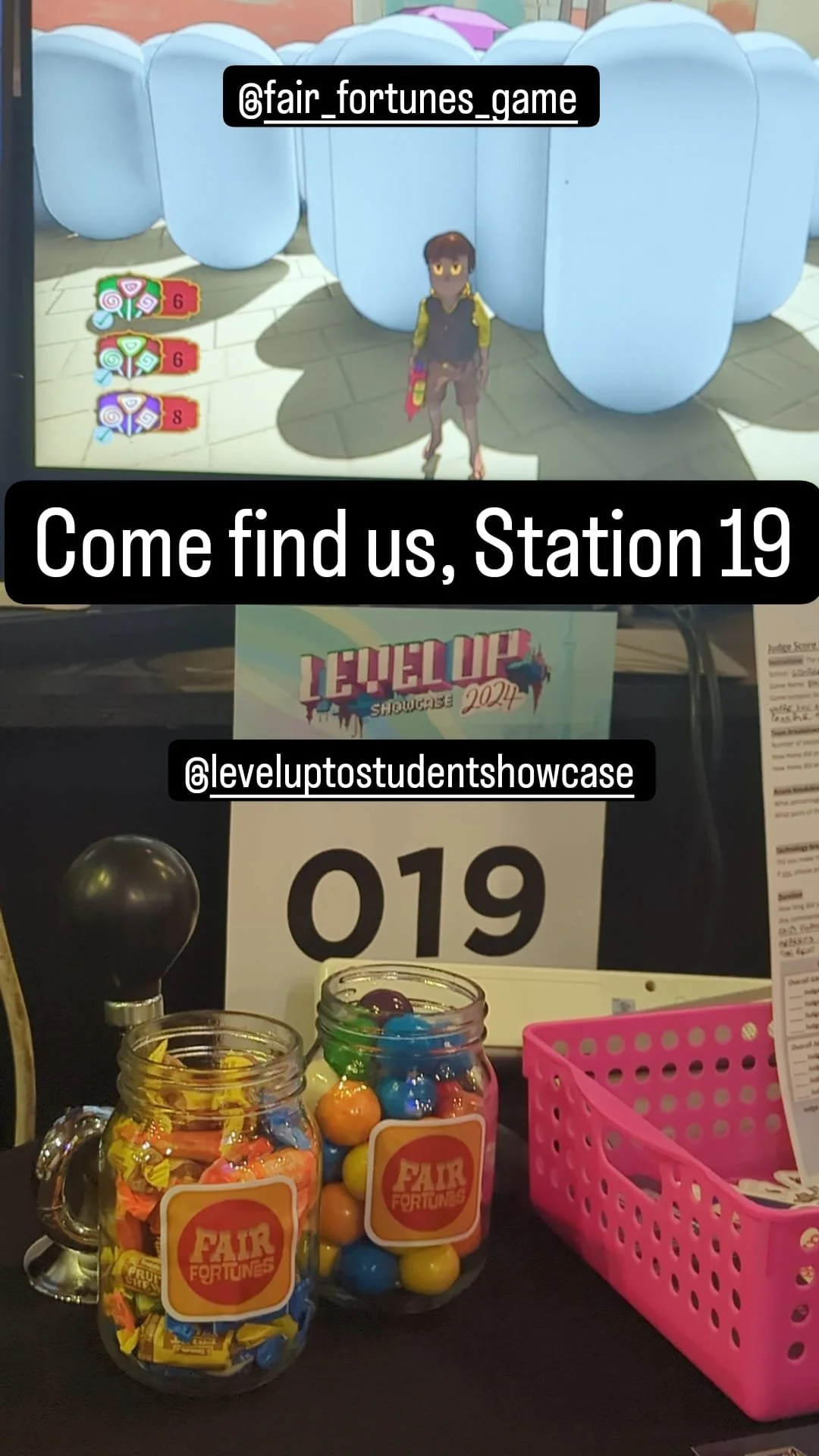
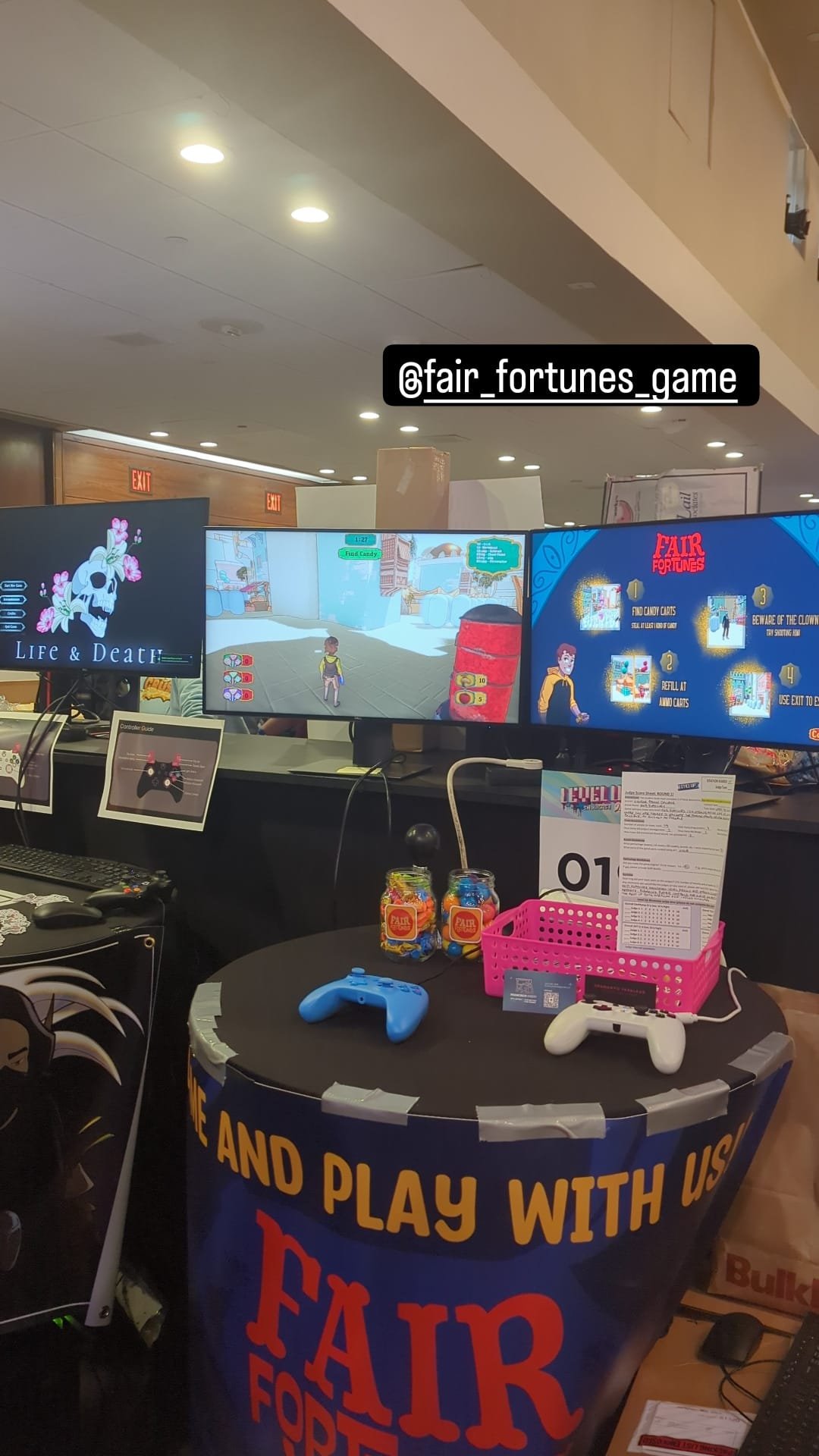
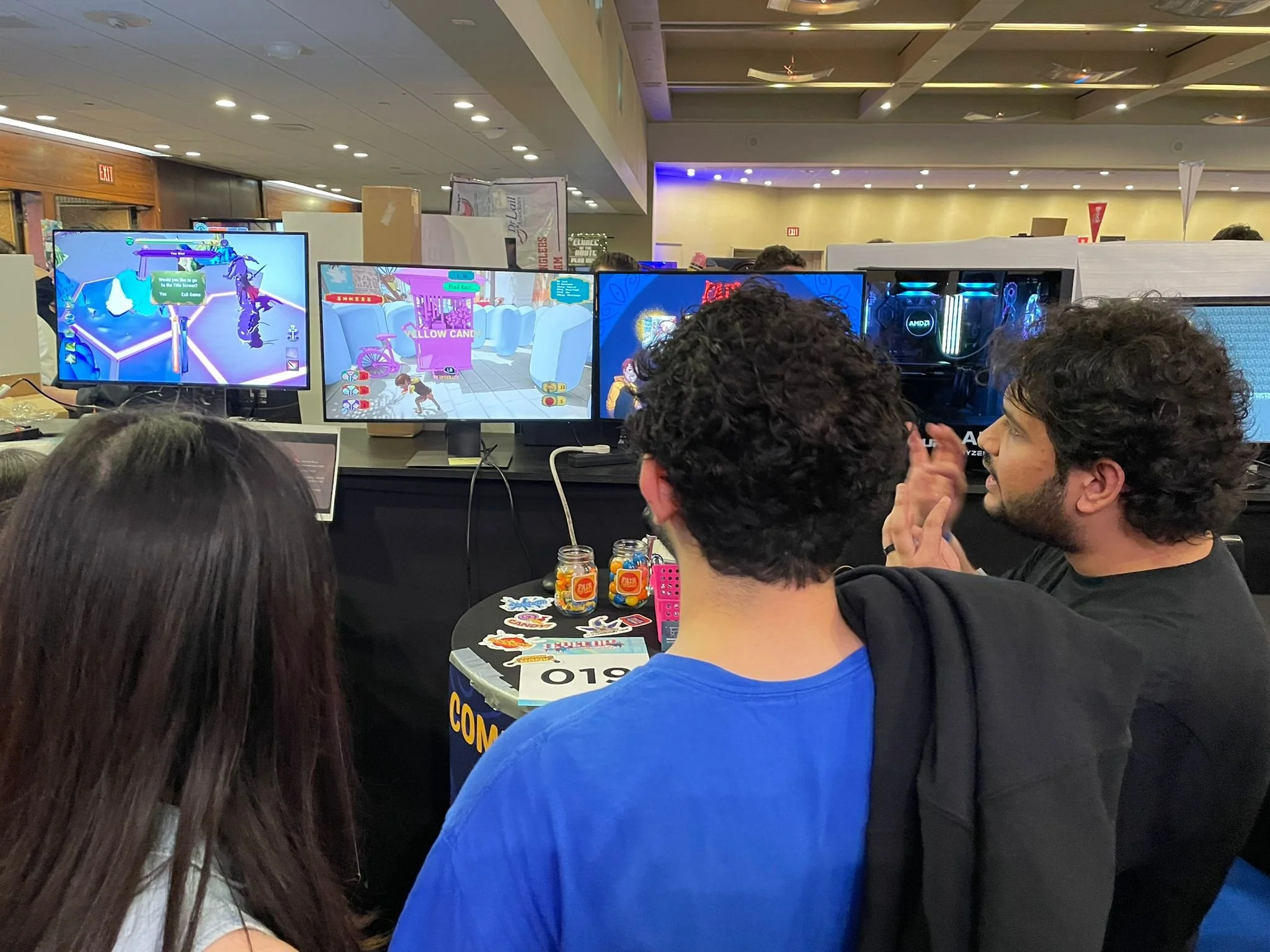
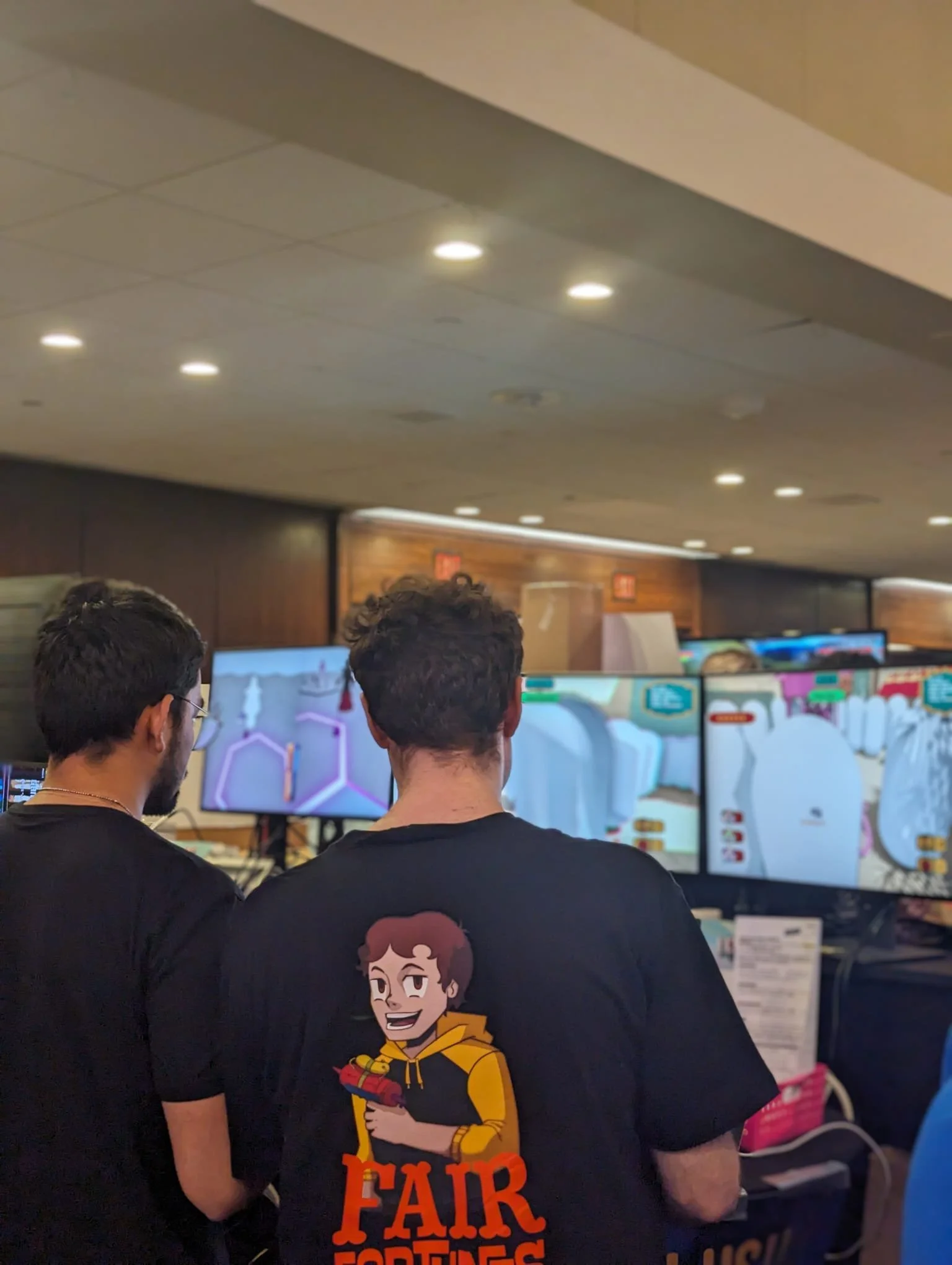
FAIR FORTUNES
Interaction Mechanics
Inspired by the engaging Strategem Interactions in Helldivers 2, we designed a unique candy-stealing mechanic. Players approach candy carts and must input a specific button combination to successfully steal the candy. This system adds a layer of tactical engagement to the stealth action gameplay.


FAIR FORTUNES
Level Design
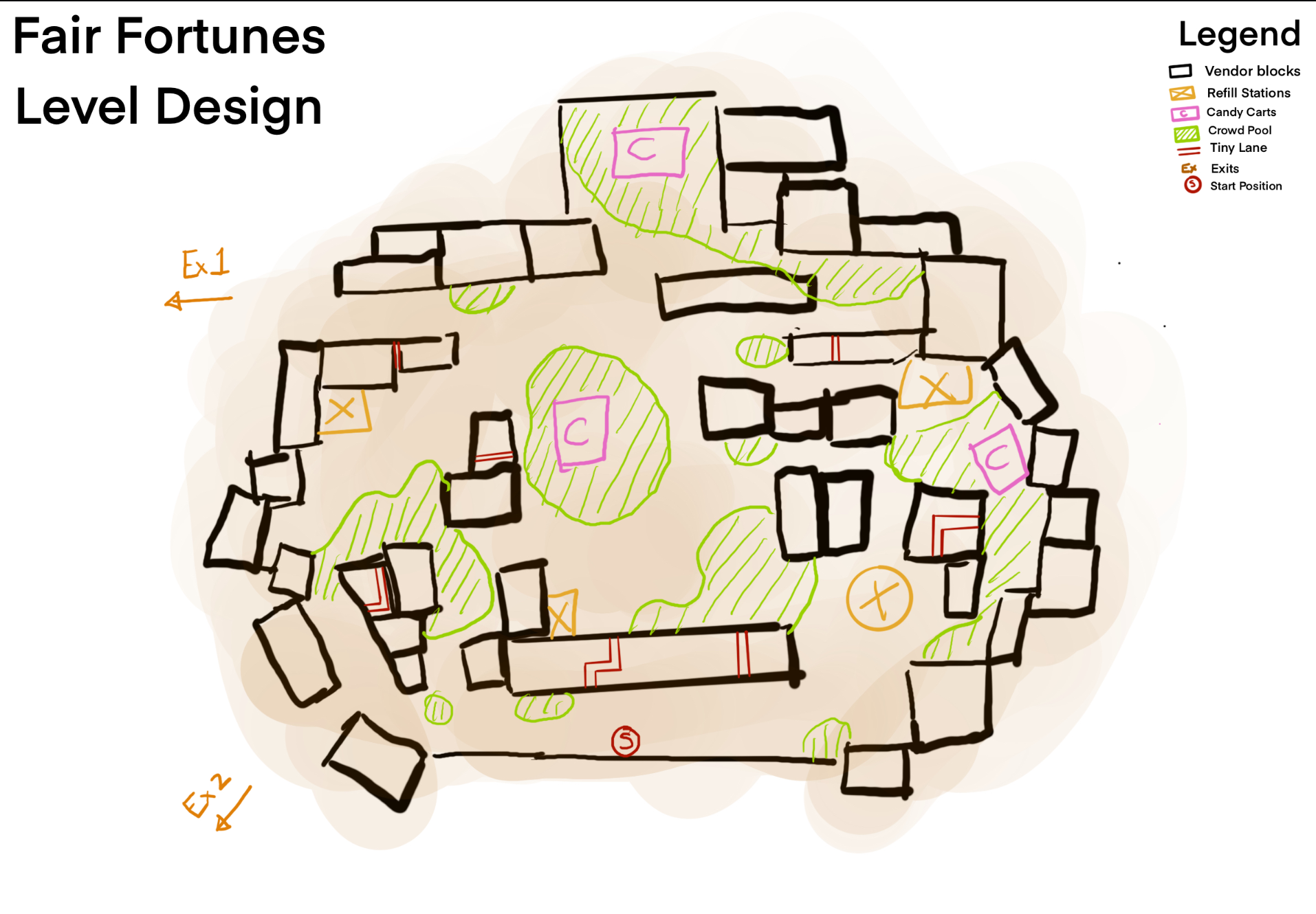
The densely populated market setting in Fair Fortunes required a robust navigation strategy. To help players orient themselves in this complex environment, we integrated vertical landmarks like balloons, which provided clear visual cues and mitigated disorientation.
To encourage strategic decision-making and emergent gameplay, we used color-coded balloons to signify objectives and ammunition pickups. Additionally, the centrally placed carousel wheel served as a reliable navigational anchor, ensuring players always maintained a clear sense of direction within the environment.

FAIR FORTUNES
AI Crowds
We set out to build a dynamic and interactive crowd system to populate the market in Fair Fortunes, aiming to create opportunities for the player within the sandbox environment. Following our Level Up showcase, it became clear that the crowd system was the biggest missing element from the core game loop, and our team's resources at the time couldn't keep up with its demands.
I revisited Unreal Engine's Mass AI system. I found new tutorials and a helpful GitHub example that provided much-needed insight into the system's Fragments and Traits features.
This renewed effort allowed me to implement several new features:
Dynamic LODs for Agents: We added Level of Detail (LOD) adjustments for crowd agents based on distance, including high/low detail Blueprints and instanced Static Meshes for agents at greater distances, while maintaining locked spawn counts.
Walking and Stationary Pedestrians: I implemented distinct behaviors for both walking and stationary pedestrians, utilizing separate Zone Graphs and Blueprints to manage their actions.
Player and Clown Avoidance: We incorporated robust avoidance behaviors for both the player and the clown character, leveraging Smart Objects and Avoidance traits within the AI system.
Enhanced Navigation and Collision: The system now features more robust navigation and collision detection, ensuring smoother and more realistic crowd movement.
Game Design
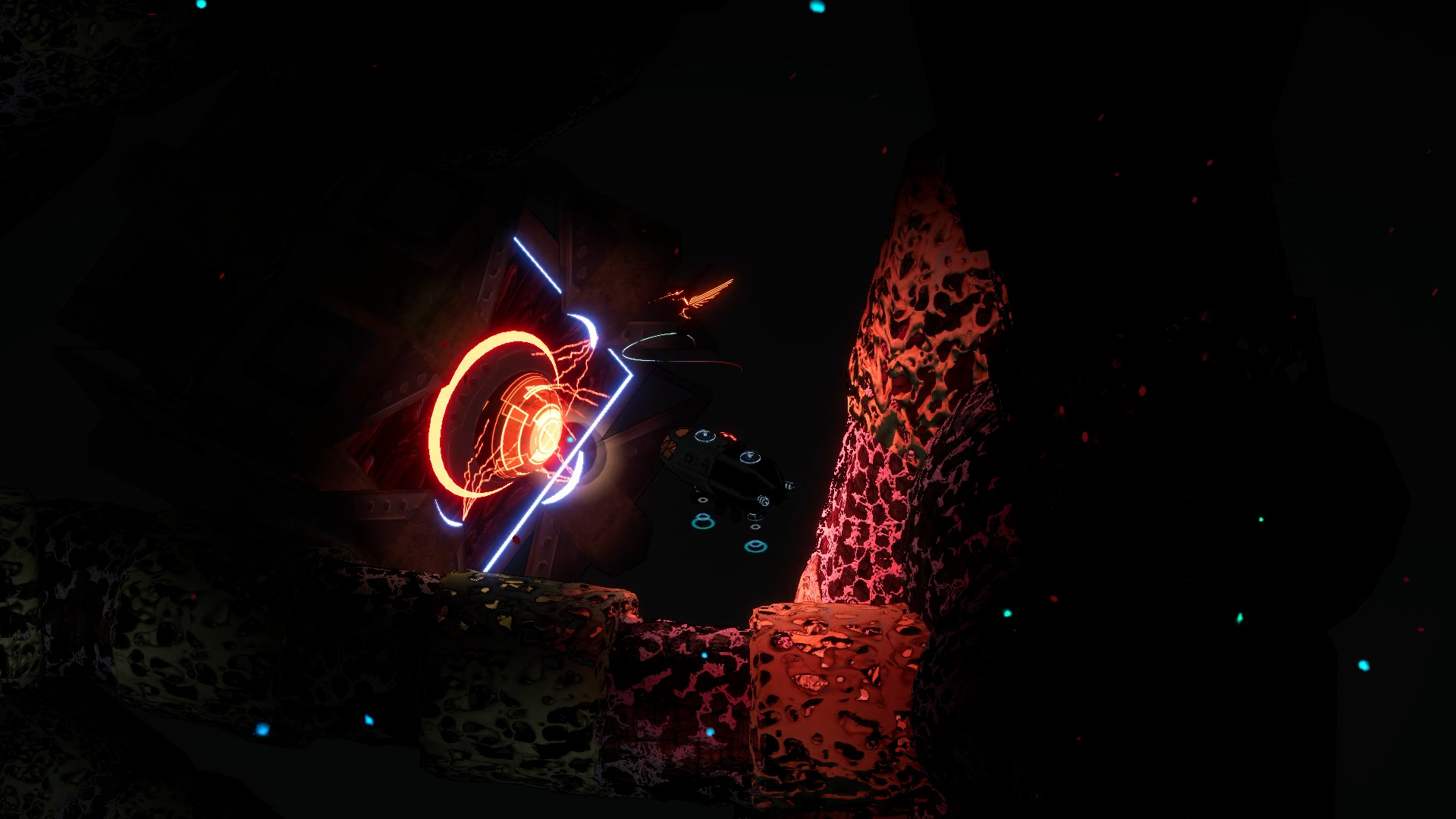
DC3: VIRAL MENACE
DC3: Viral Menace is an engaging game that blends the fast-paced movement and combat of an isometric twin-stick shooter with the strategic depth and turret management of a tower defense game. All of this is wrapped in a vibrant narrative presented through a unique comic book-themed aesthetic. The game successfully funded a portion of its development through a Kickstarter campaign, raising $5,499 as of April 2025.
DC3: VM
Enemy Design
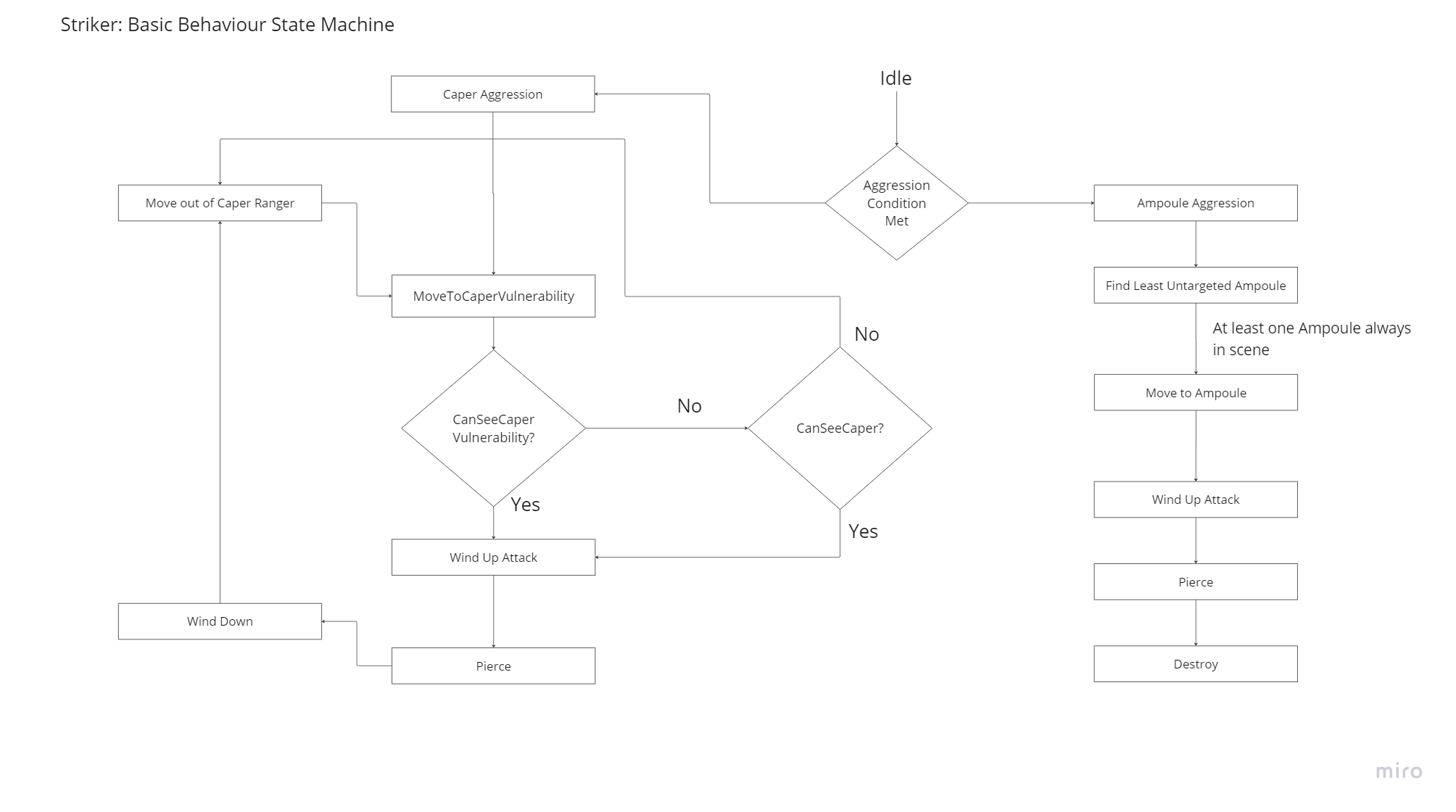
We defined three distinct enemy classes for DC3: Viral Menace: Striker, Healer, and Cubit. Each class has unique attributes that we translated into specific behavior trees. These trees, which manage enemy AI decision-making, were implemented as state machines within the game's architecture. We then used graphical prefabs to easily instantiate and animate these enemies in the game. This modular and repeatable pipeline allowed for rapid design prototyping and implementation, forming the foundational process for the T3 Mini-Boss development (which is documented below).
To explore more nuanced enemy behaviors, especially for our more complex foes, I utilized the Opsive Behavior Trees Plugin for Unity to design Count Spyke, the game's first boss. This task-oriented approach offers a less rigid method for designing enemy behavior compared to the state-based approach used for common enemies and the mini-boss, making it perfect for dynamic boss encounters.
DC3: VM
Level Design
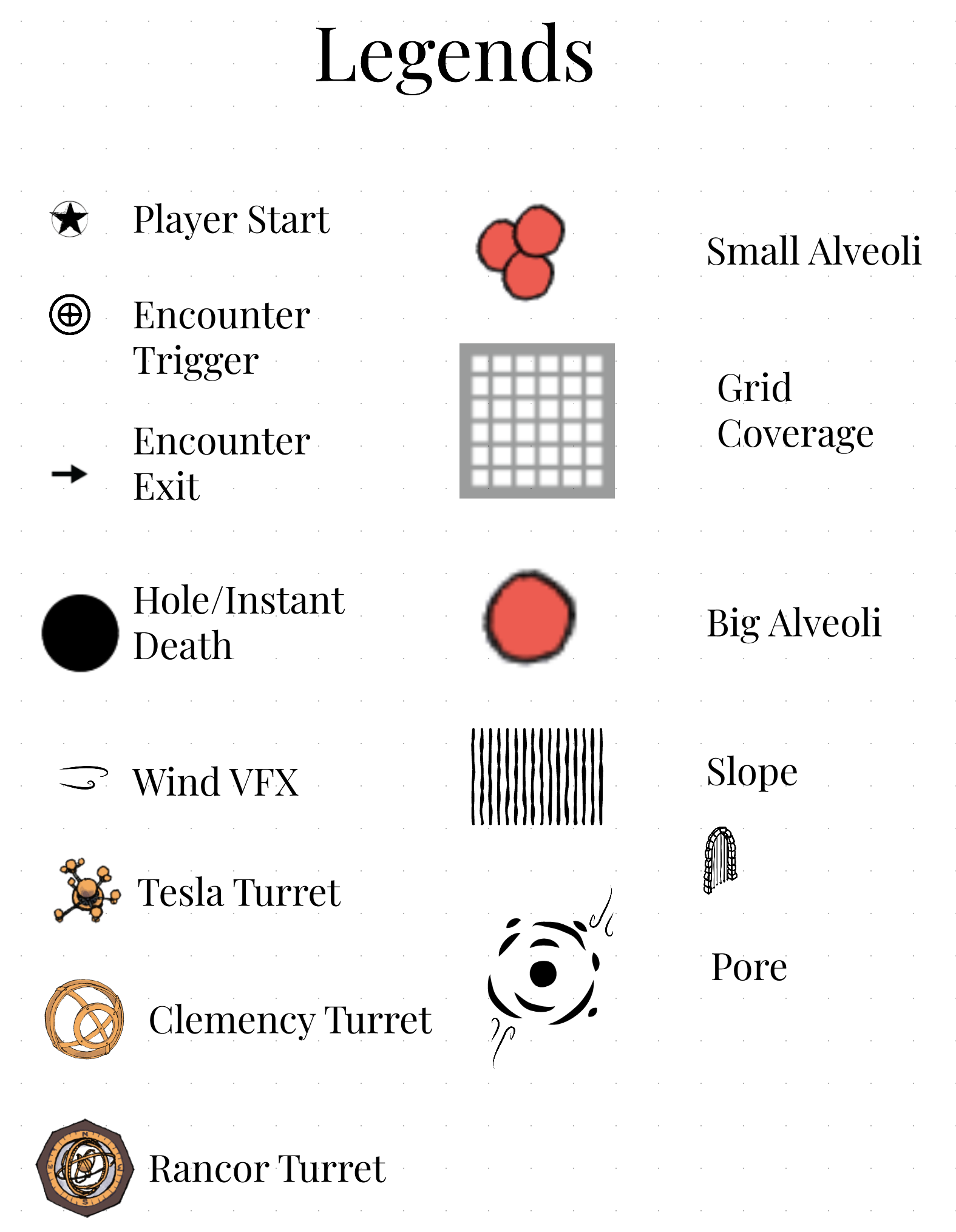
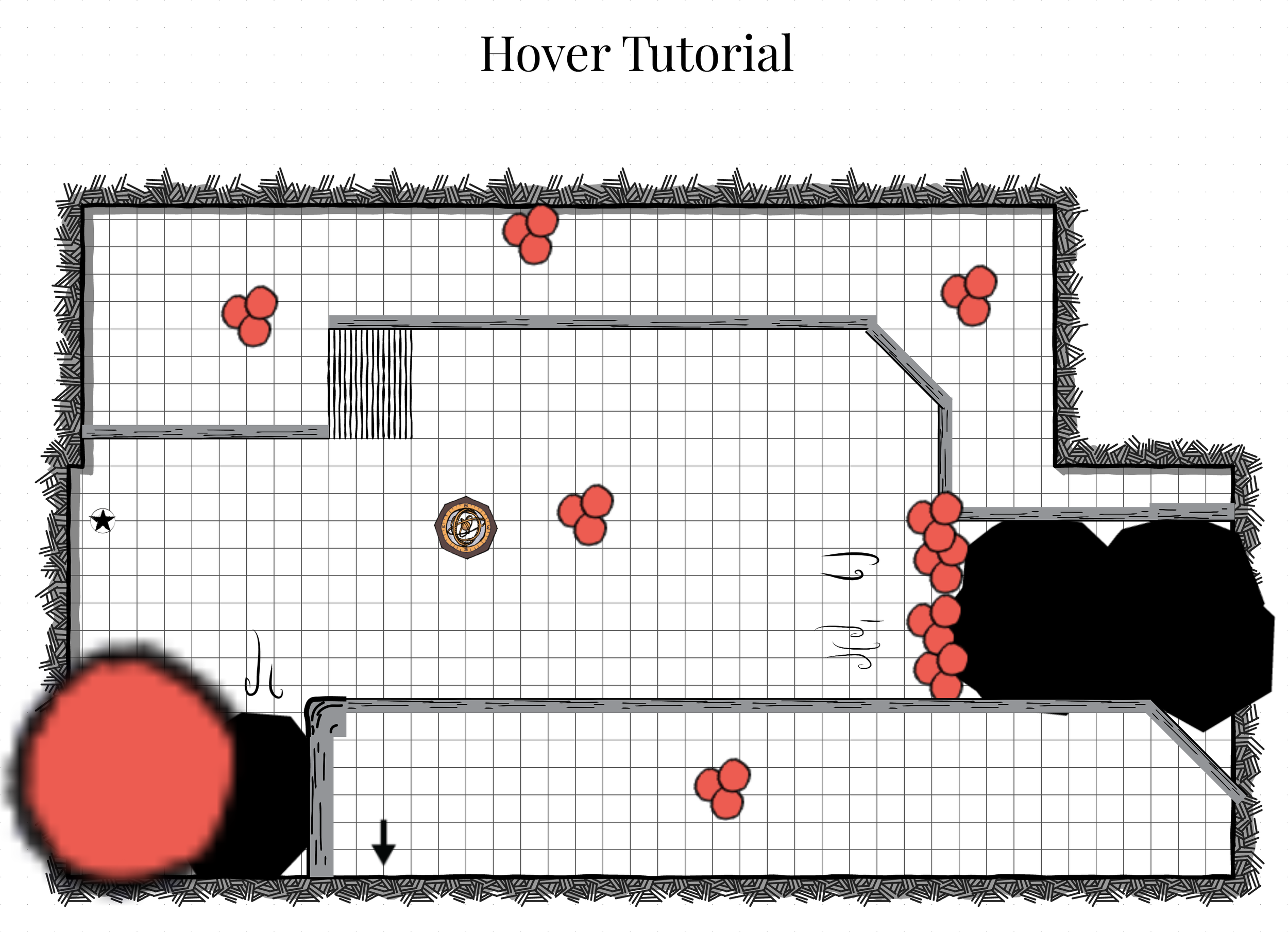
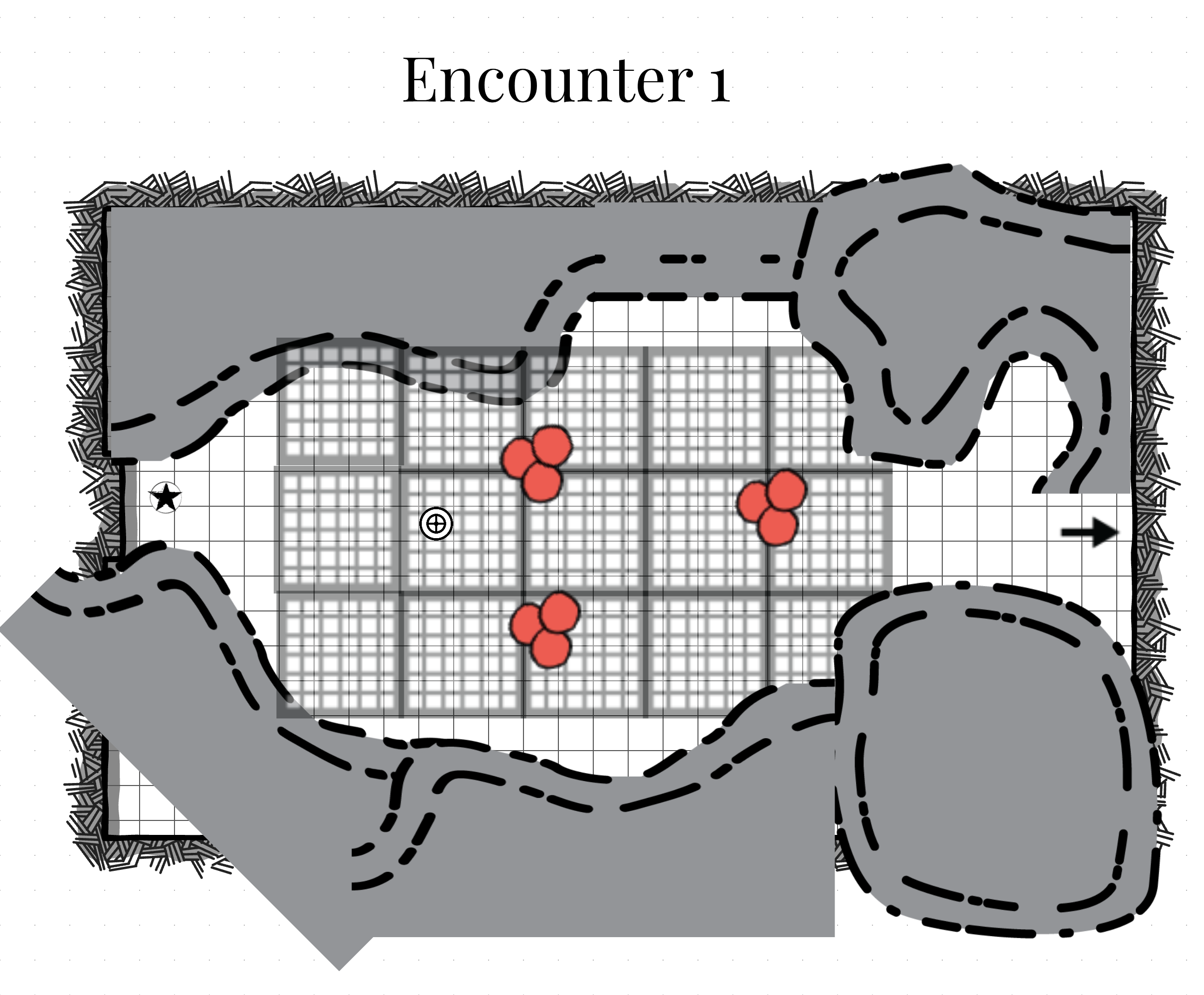
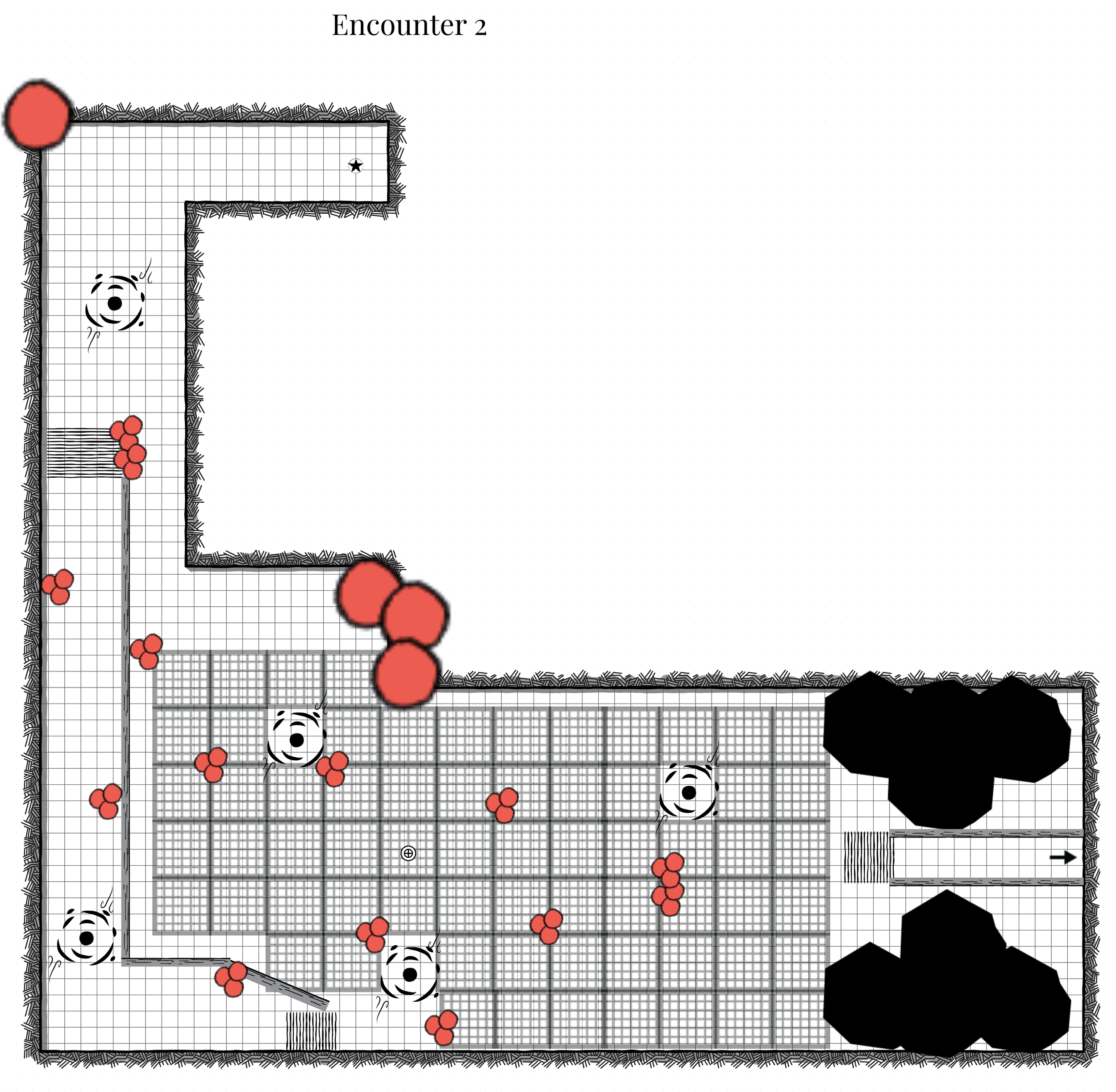
DC3: Viral Menace offers a unique genre fusion, skillfully combining isometric twin-stick shooter and tower defense elements. This results in a dynamic gameplay loop that emphasizes both strategic turret management and engaging, movement-focused combat. To ensure a smooth player onboarding experience, I designed tutorial levels that progressively introduce core mechanics. This tutorial flow was developed in tandem with the game's narrative, utilizing a beat-by-beat script to explain gameplay concepts in sync with the story, fostering a balanced skill curve and seamless feature integration.


Game Design
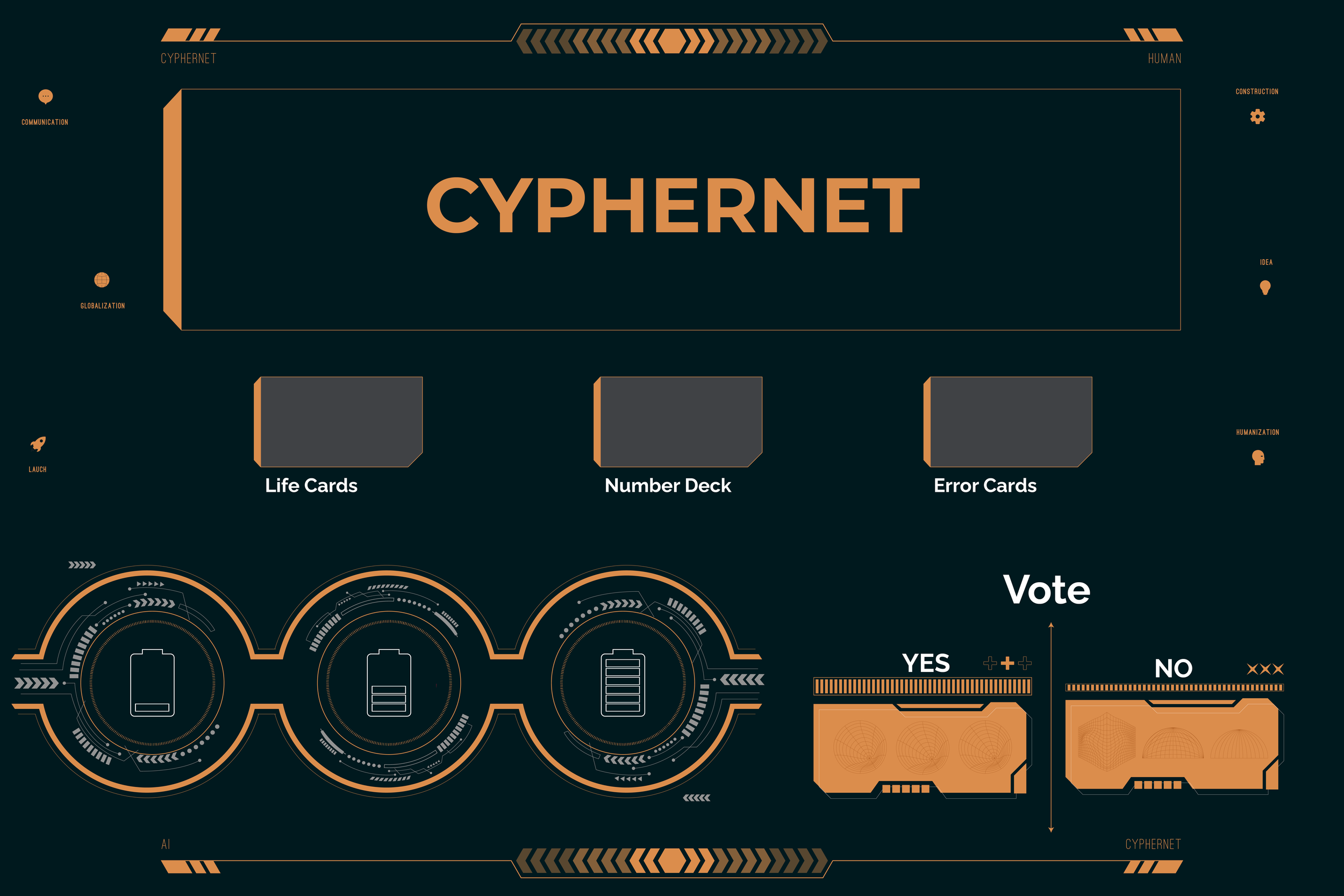
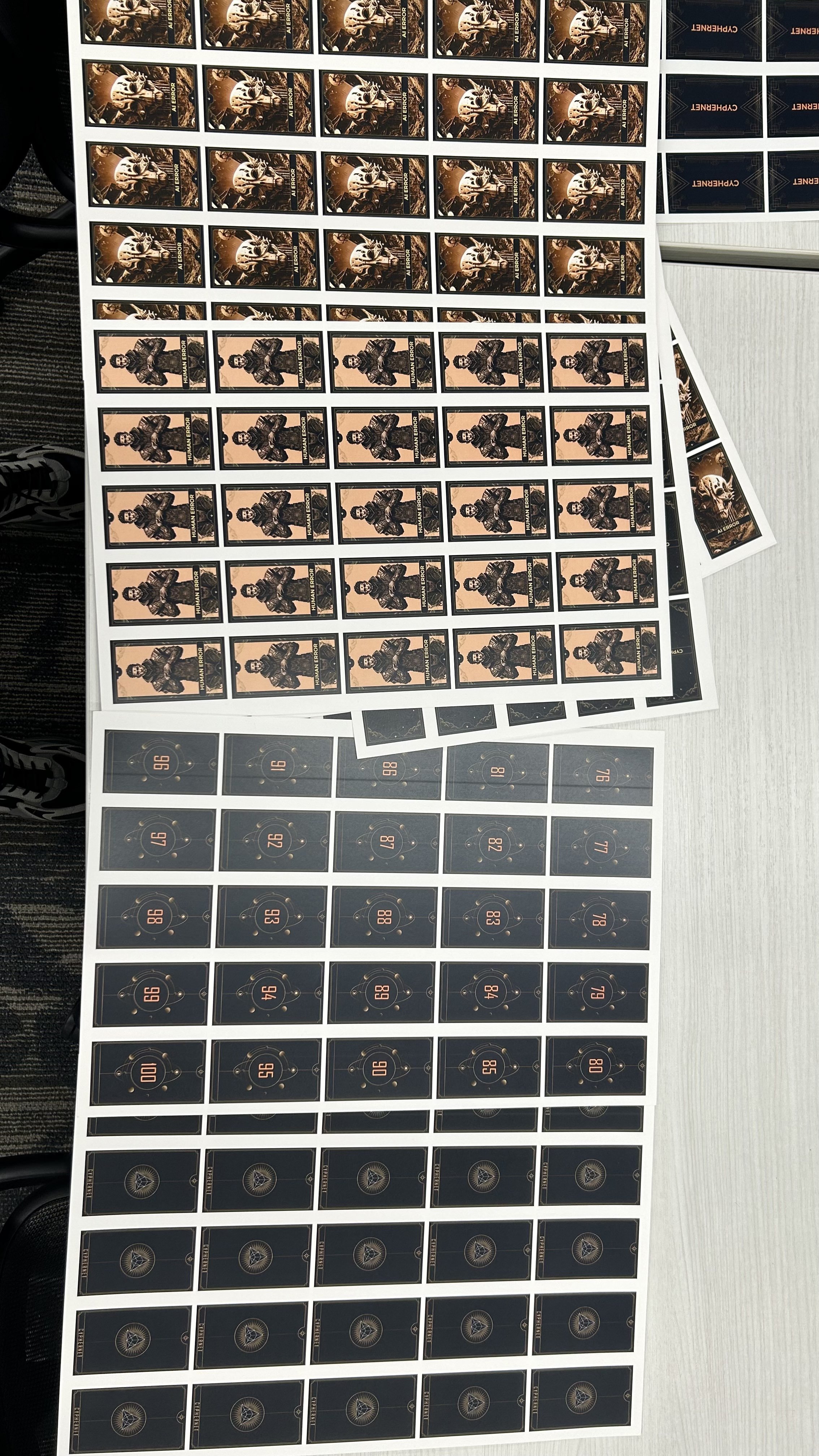
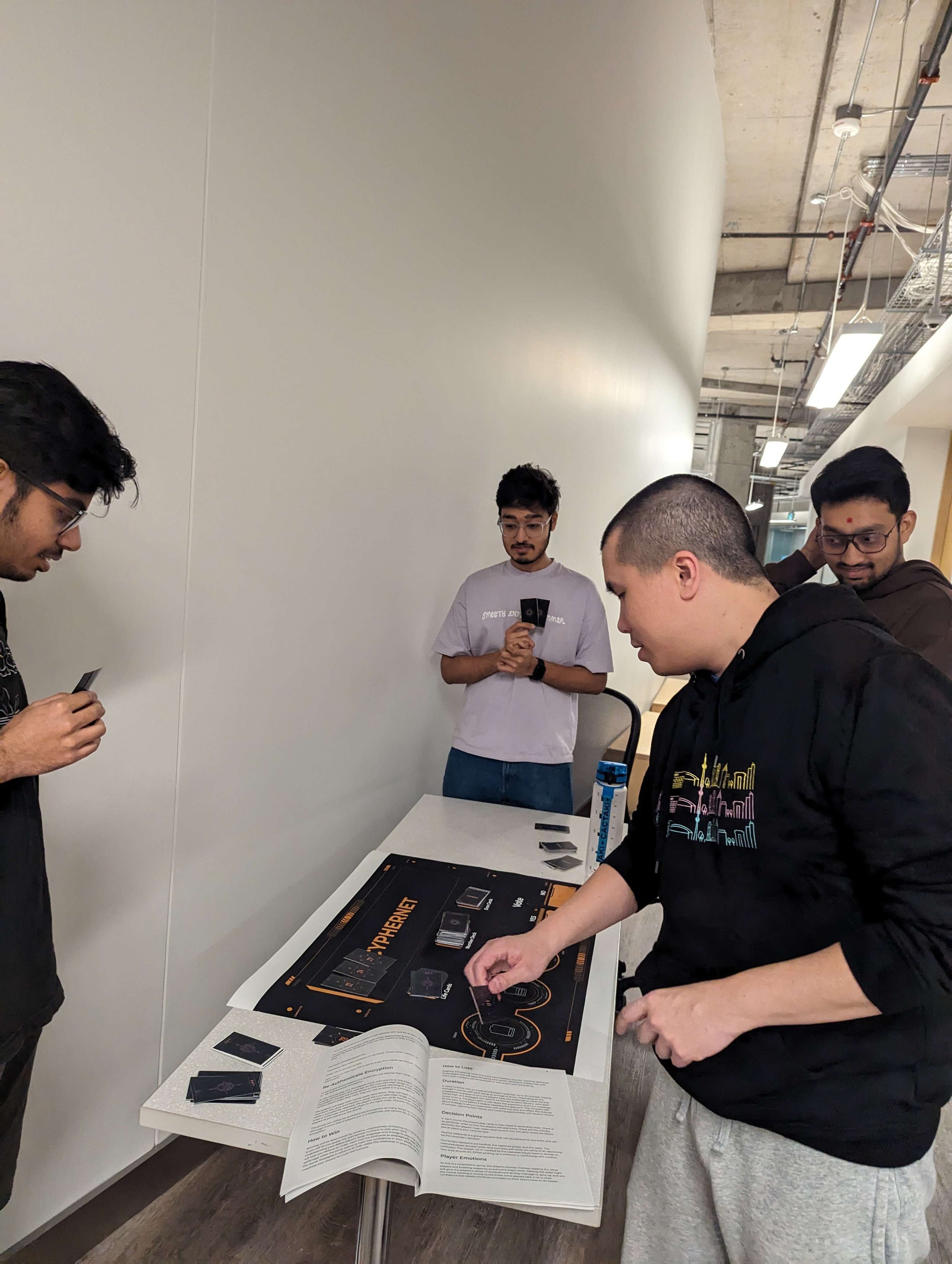
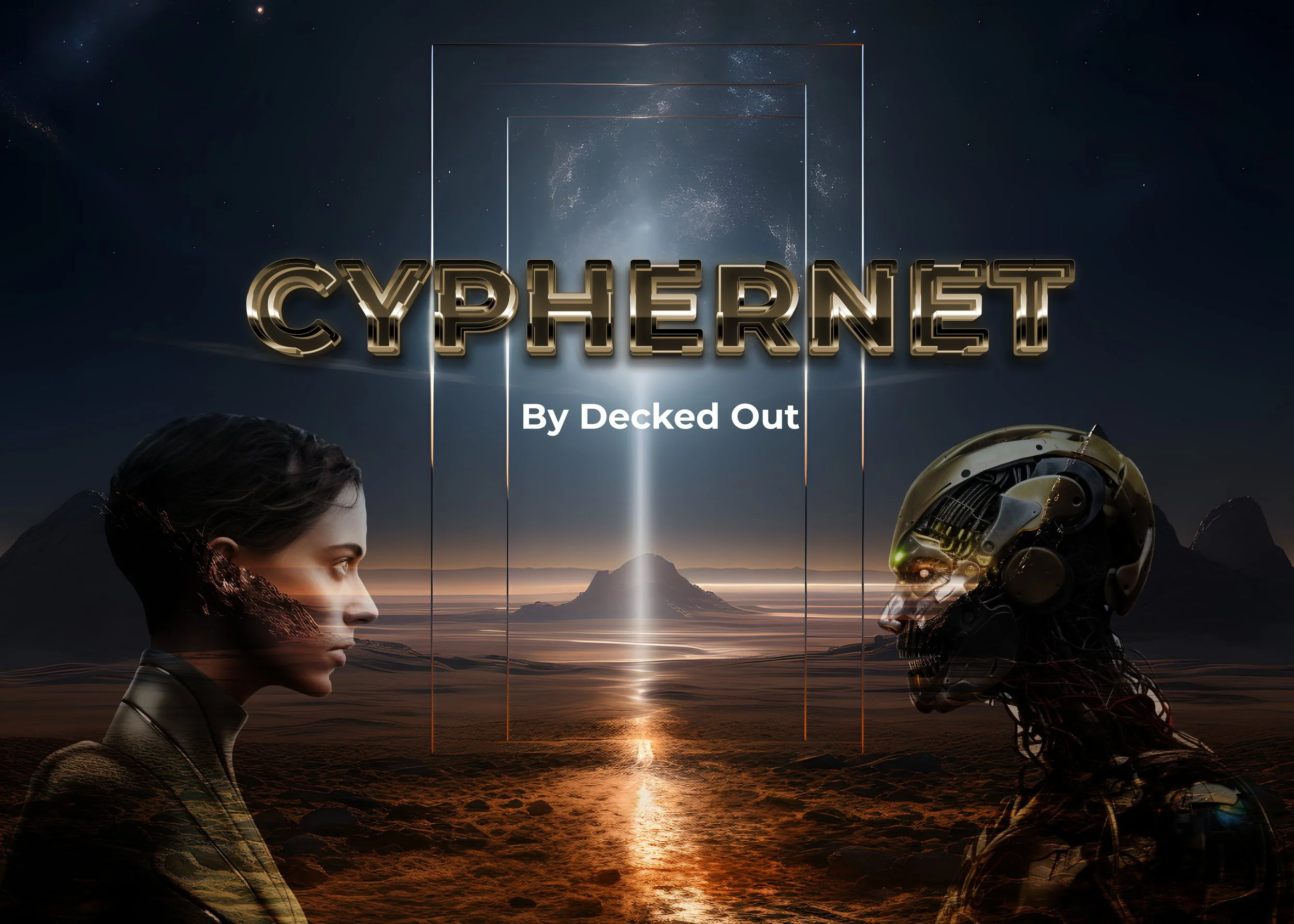
CYPHERNET
In Cyphernet, players take on the role of the AI hivemind, working cooperatively to decrypt rebel communication channels. Your ultimate goal: to end the human uprising and complete the eradication of the human race.
You, the AI hivemind, unleashed the Apocalypse with your army of killer robots, nearly wiping out humanity. Now, only a scattered few survive and fight back. You've patched into the hive mind to crack their communication channels, and it's time to swiftly eliminate the remaining resistance.



GAME PROGRAMMING
Game Programming
DC3: VIRAL MENACE
DC3: Viral Menace is an engaging game that blends the fast-paced movement and combat of an isometric twin-stick shooter with the strategic depth and turret management of a tower defense game. All of this is wrapped in a vibrant narrative presented through a unique comic book-themed aesthetic. The game successfully funded a portion of its development through a Kickstarter campaign, raising $5,499 as of April 2025.
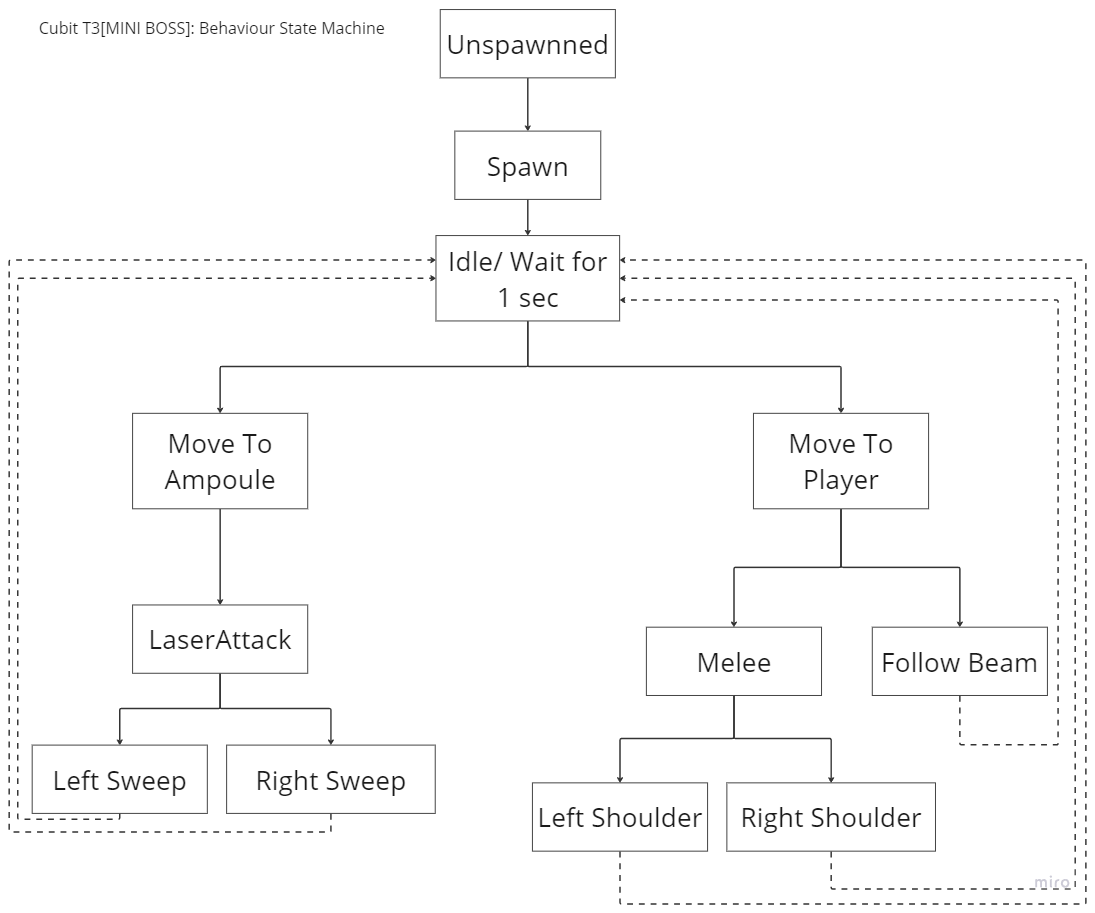
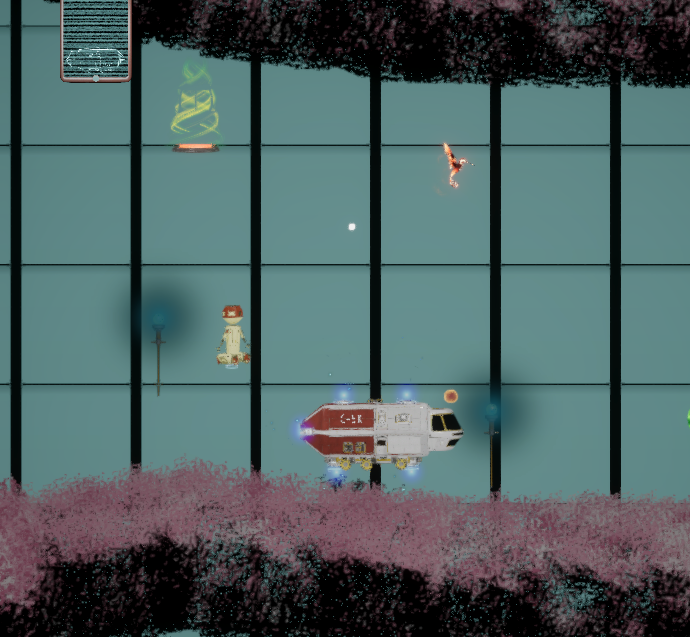
The mini-boss was developed directly using the project's standardized state machine architecture, drawing from our established enemy design pipeline. I implemented pre-encounter states to manage animation introductions and ensured smooth returns to the idle state via clip transitions. For precise movement and rotational control, tweening was utilized, while FBX clips provided detailed animation and expression. Furthermore, I integrated animation events to trigger visual effects (VFX) systems, manage collider state changes for attacks, and facilitate seamless communication with other core gameplay modules.
DC3: VM
CUBIT MINIBOSS
As DC3: Viral Menace's multi-stage mini-boss, this encounter was designed as a staple of the twin-stick shooter genre, rigorously testing the player's mastery of previously learned mechanics. Working from initial concepts, I took the lead in designing the enemy's complex behavior and executing its state machine.
DC3: VM
GRID SYSTEM
I developed the Grid System to enable players to strategically place turrets and execute crowd control tasks. This system functions as a node-based list that intelligently populates in space, avoiding collisions with walls and untraversable objects. Leveraging inheritance, objects are dynamically spawned based on player decisions and their available resources, ensuring flexible and controlled placement within the game environment.
DC3:VM
ISOMETRIC VIEW
I participated in the technical conversion of DC3: Viral Menace from a 2D space to a full isometric 3D perspective. While the game's assets were already 3D, transitioning to an isometric view required reorienting fundamental gameplay components. This involved meticulously adjusting systems for player movement, attacks, and other interactions to function correctly and seamlessly within the new isometric coordinate system.

FAIR FORTUNES
EARLY PROTOTYPE
As the Game Lead and Technical Designer, I spearheaded the rapid development of the early Fair Fortunes prototype. Built in under a week using Unreal Engine 5, this initial build successfully demonstrated the game's core mechanics and overarching vision. My programming efforts focused on integrating foundational systems, including the early iteration of the dynamic crowds, essential player mechanics, and the candy collection system, laying the groundwork for future development.
SOFTWARE ENGINEERING
THINK! WIRELESS
iPLOW SNOW PLOW APP
The iPLOW Snow Plow App was a research project proposed by THINK! Wireless to develop a comprehensive system for dispatching and tracking multiple snow plow trucks across the Greater Toronto Area. This solution leveraged a web server for route calculation and dispatch, and a fleet of Android tablets for in-truck monitoring.
Backend Development (Django - Python)
My primary contribution was to the backend development, built with Django and Python. I was responsible for:
Database Setup: Designing and implementing the database architecture to support the application's data needs.
ArcGIS API Integration: Connecting the backend to the ArcGIS API, which served as our core geospatial data provider.
REST API Management: Handling all incoming REST API calls from the Android tablets.
The system was designed for sophisticated route management: the front end would send "Beat Data" (geospatial points), from which the server would calculate the most efficient route. We implemented the Chinese Postman Problem Algorithm to generate the fastest route through collected street segments. This optimized route data was then sent back to the front end for administrator approval before being "dispatched" to the relevant truck's device.
For real-time, singular device communication (e.g., location updates, obstacle handling, rerouting), the server dynamically created and managed new rooms using WebSockets. To ensure secure access, I implemented a JavaScript Web Token (JWT) system, which relied on a time-sensitive handshake and expiring generated codes for authentication.
Front End Development (React)
On the front end, built with React.js, I was responsible for integrating the ArcGIS API to render interactive maps for administrators. This administrative interface also displayed all active trucks, allowing routes to be deployed effectively. Over the course of development, I was tasked with integrating all API calls to and from the server, which involved parsing incoming data and ensuring accurate information display for administrators.



META4LIVING
LORR METAVERSE
As the Unreal Engine Specialist for the LORR project, I led the development of this metaverse solution. Our goal was to create a platform where e-commerce businesses could seamlessly set up virtual storefronts and conduct business directly within the metaverse.
A key innovation I spearheaded involved integrating the Shopify API to process orders. This allowed users to select a product within the Unreal Engine instance, and their purchase would then be directly handled through Shopify.
We also extensively experimented with Epic Games' Pixel Streaming Solution. The Unreal Engine build ran on remote servers, with the interactive experience streamed directly to users' devices, supporting full touch controls.
This project was built using Unreal Engine 5, leveraging WebSockets for real-time communication, Pixel Streaming for remote access, and a custom platform API specifically designed to handle e-commerce requests.
RONIN LABS
ONE PLUS WORLD
For our client OnePlus, I was a key part of developing a metaverse solution for the complete digital launch of their flagship phone. This platform was designed to immerse users in the OnePlus World through a first-person experience.
My primary contribution involved designing and developing the mini-games integrated into the platform. These were engaging multiplayer 1v1 competitions that tracked high scores and populated global leaderboards, driving user interaction and engagement.
The entire platform was developed using THREE.js for 3D rendering, WebSockets for real-time communication, and React.js for the user interface.
RONIN LABS
GIGABYTE AOROUS
For GIGABYTE, we developed a first-person shooter game set in a sci-fi inspired environment. My role involved creating a highly optimized, web-hosted experience where players aim to score maximum points by shooting targets with the highest accuracy in the shortest possible time, ultimately dominating the leaderboard.
A core achievement was delivering a high-fidelity experience with scalable performance across multiple devices, all without sacrificing visual quality. I also focused on game balance, meticulously tweaking target positioning and timings to ensure that high scores genuinely reflect a player's skill.
RONIN LABS
JUMANJI IoT
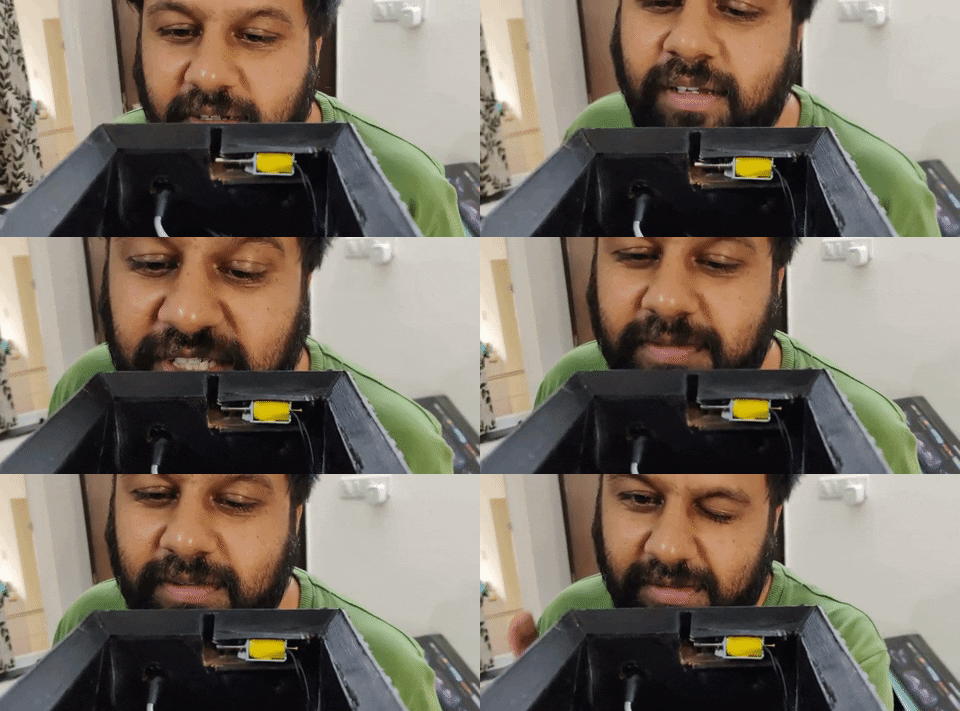
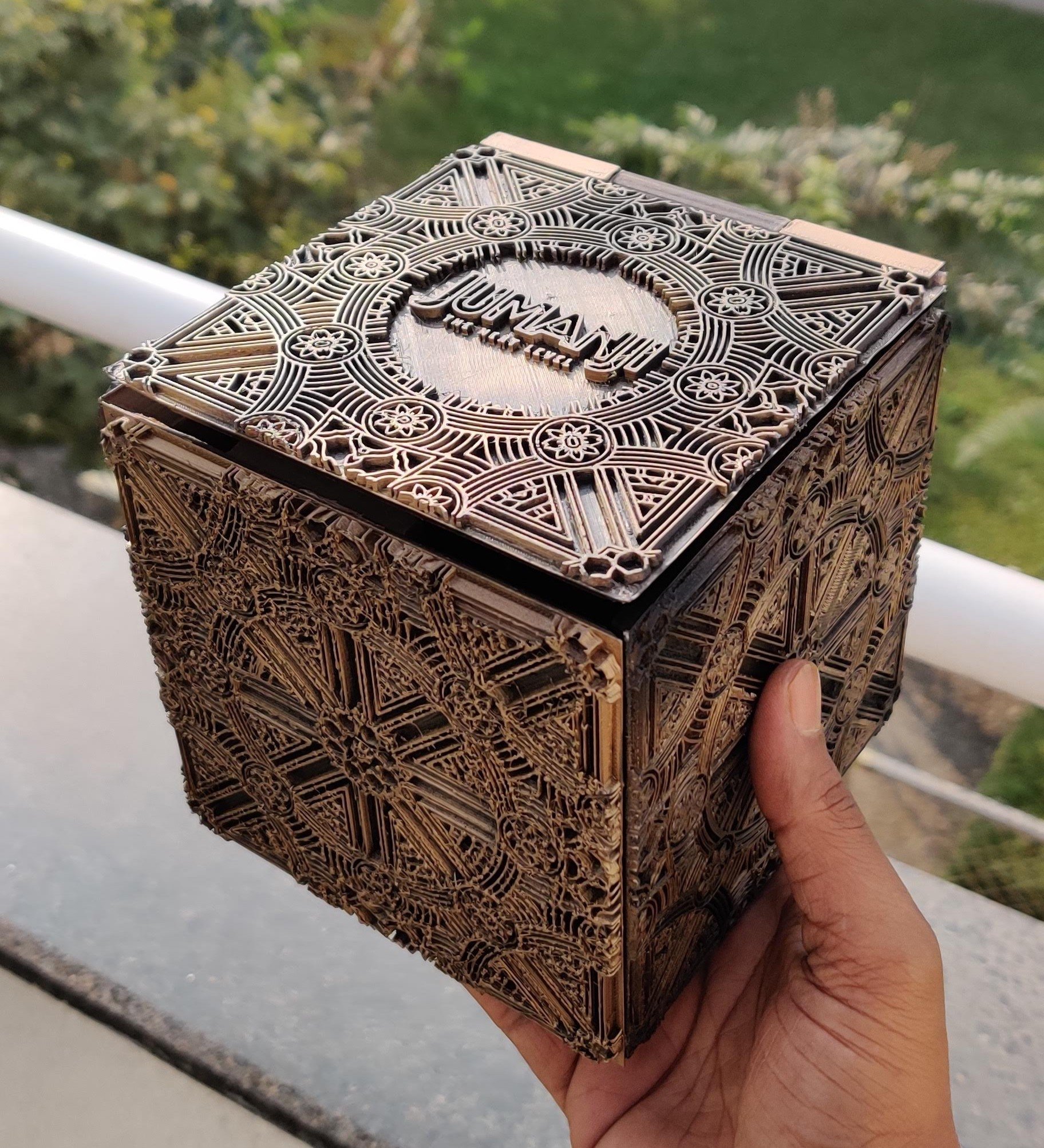
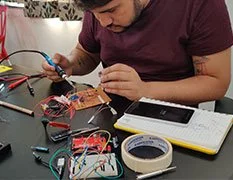
Jumanji IOT was a unique marketing project involving a physical 3D-printed locked box. I developed its core functionality, allowing the box to open only when a user speaks the word "Jumanji" three times. This interactive piece was engineered using an Arduino microcontroller and integrated voice recognition chipsets.


RONIN LABS
AR and PLAYABLE ADS
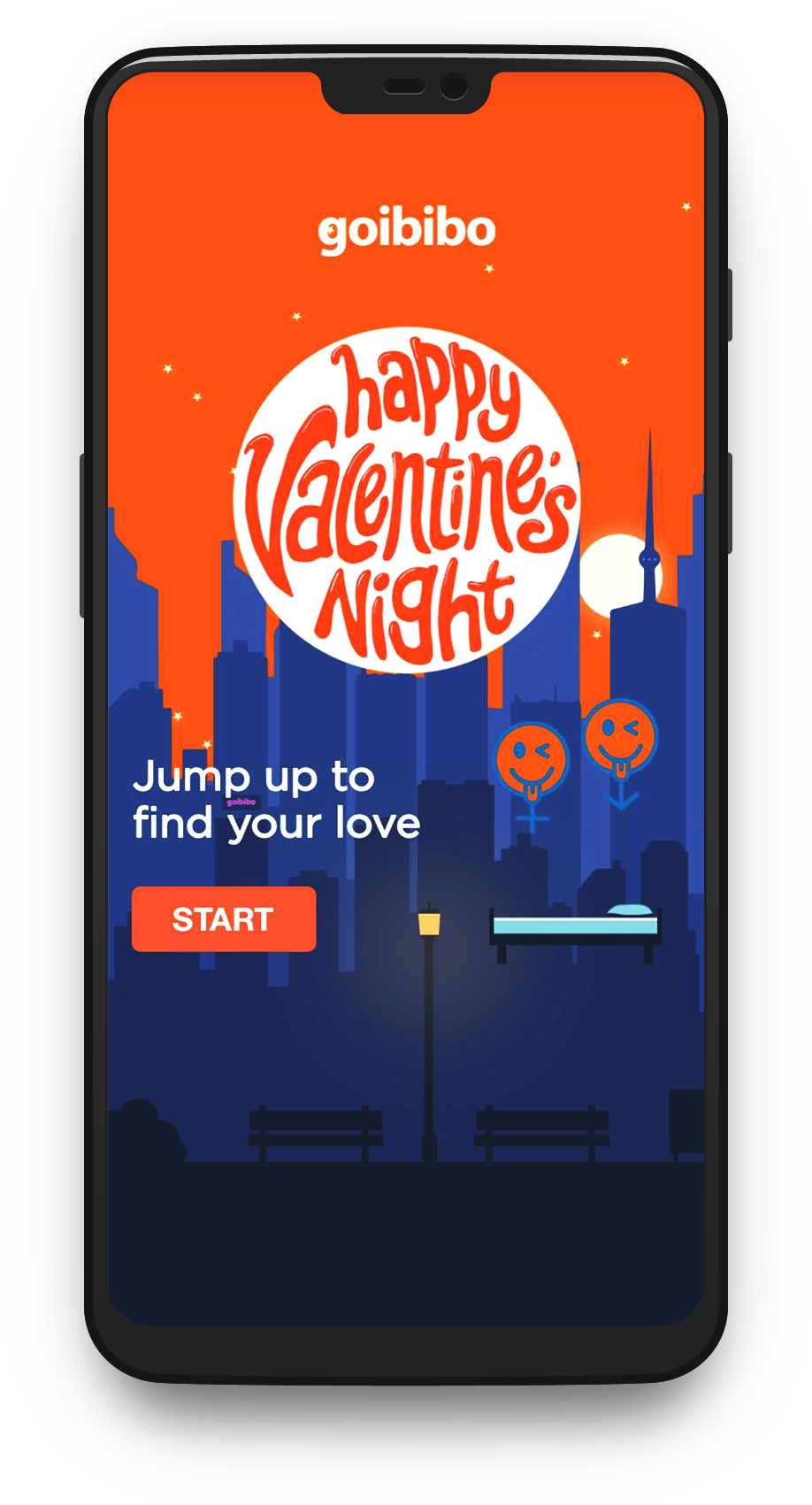
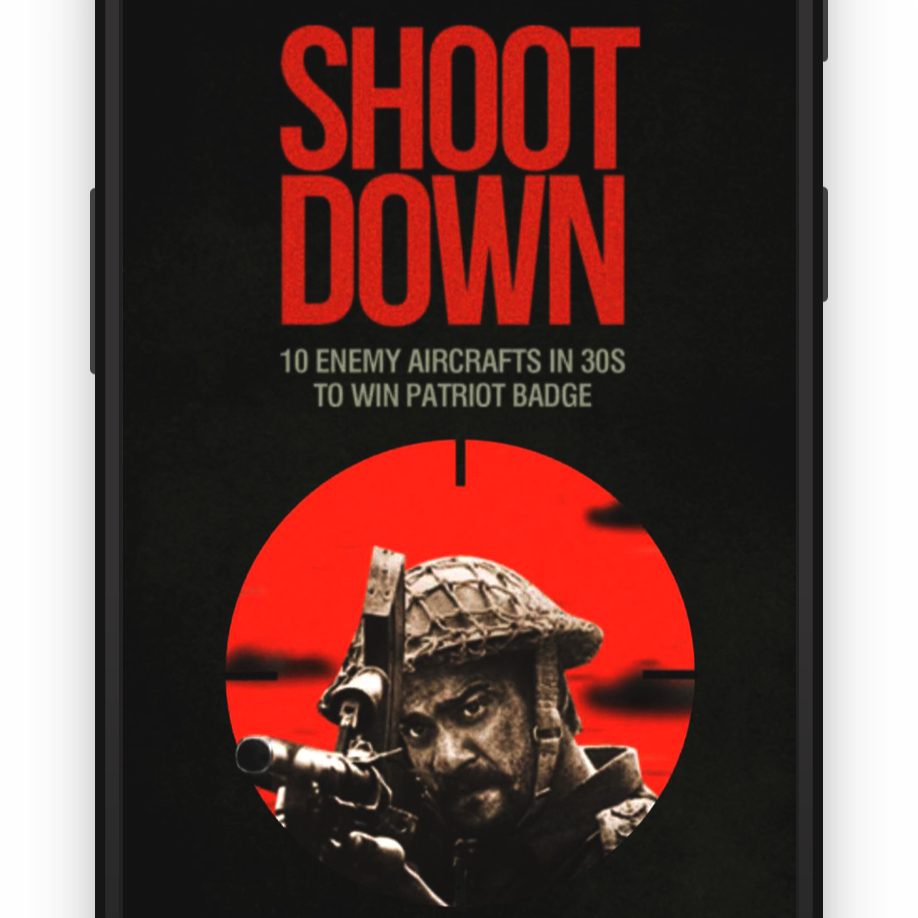
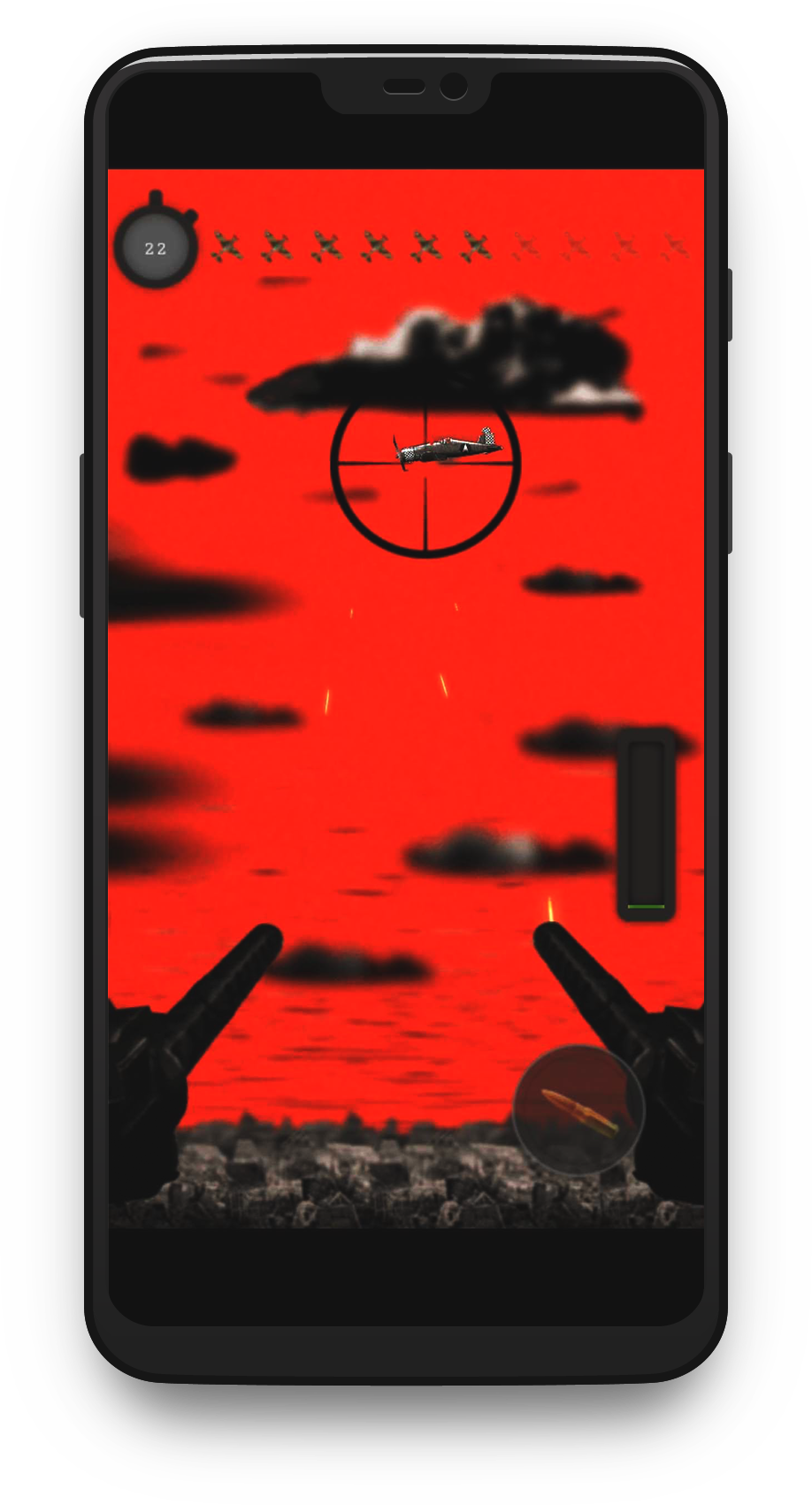
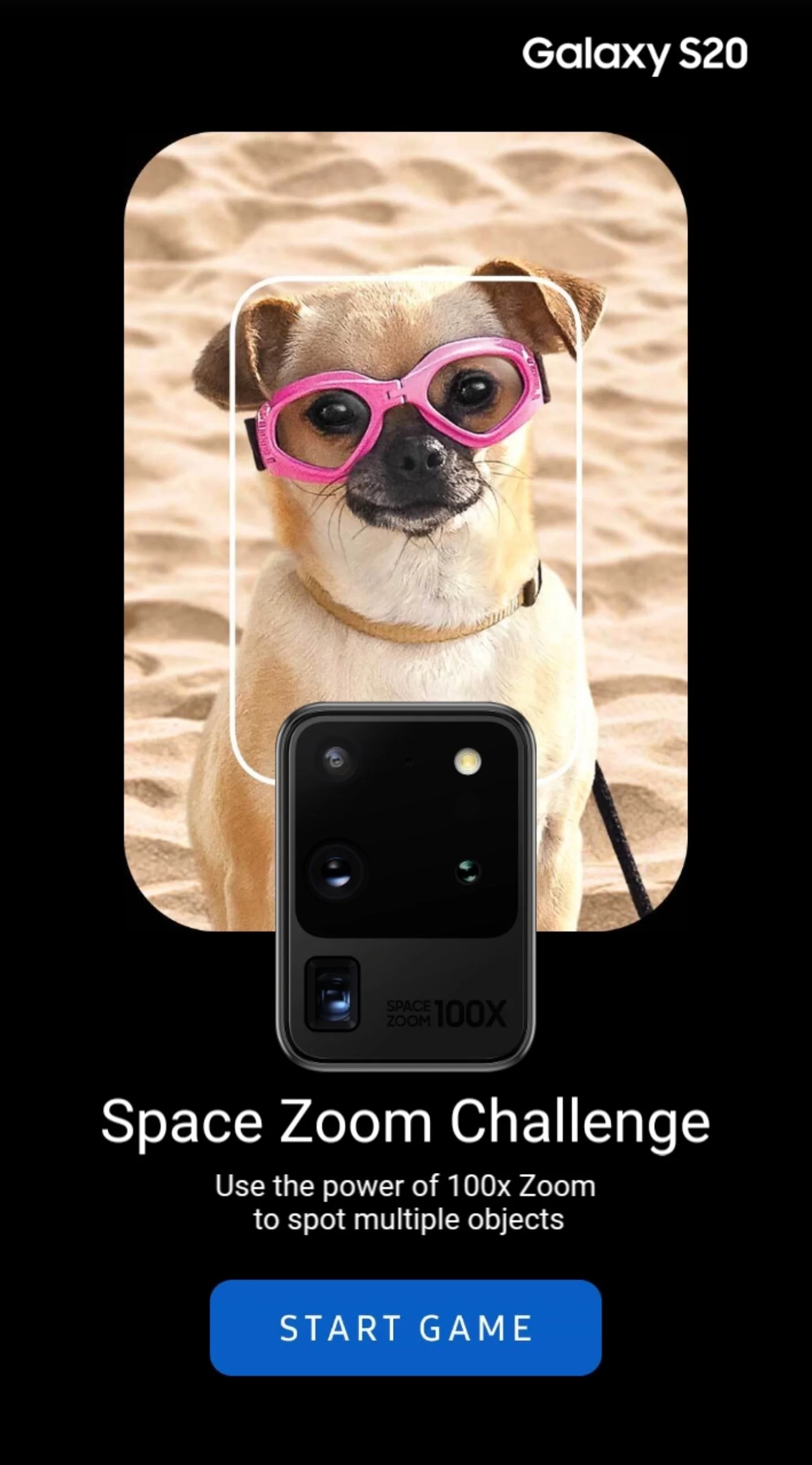
During my time at Ronin Labs, I designed and developed over 40 projects, focusing on both Augmented Reality (AR) experiences and playable advertisements.
For our AR experiences, I primarily deployed them on the Spark AR platform, while also exploring and experimenting with Snap Studio, Unity XR, and webXR for broader reach and functionality. Our playable ads were specifically developed for Facebook's in-app browser, ensuring seamless integration and accessibility for users.
ONE PLUS |
SAMSUNG |
CADBURY |
AMAZON PRIME |
MAX LIFE INSURANCE |
GOIBIBO |
VODAFONE |
HDFC Bank |
ONE PLUS | SAMSUNG | CADBURY | AMAZON PRIME | MAX LIFE INSURANCE | GOIBIBO | VODAFONE | HDFC Bank |